By Adi Khanna | CEO, Crunchy Tech
There’s a pattern I’ve watched play out for 20 years in hospitality AV, and it always ends the same way…
A brand builds a concept around technology. Screens everywhere. Memorabilia on the walls. An immersive theme that costs a fortune to install (maintaining it is another story entirely).
The opening is spectacular. The first year is strong. And then the technology ages, the novelty wears off, and the brand discovers that the thing they built their identity around is now the thing that’s dragging them under.
I like to call this the Spectacle Trap. And it doesn’t only happen to the big chains you’ve read about. It happens in sports bars, restaurants, hotels, and entertainment venues of every size; any time technology is treated as the concept instead of the enabler of the concept.
TL;DR
- The Spectacle Trap: When technology IS the concept, it becomes a depreciating spectacle with a novelty shelf life. When technology enables the concept, it becomes a compounding investment.
- The pattern is broader than themed restaurants: Sports bars with unused screens, hotels with static video walls, restaurants with unzoned audio – all symptoms of technology bought as a thing, not designed as a tool.
- The cost center trap: Technology-as-spectacle needs constant refresh with declining returns. Technology-as-infrastructure enables outcomes that compound over time.
- Experience-enabled wins: The brands thriving in hospitality treat technology as invisible infrastructure that delivers atmosphere, revenue, and operational efficiency.
- The four-question audit: Can you name the outcome? Has the system been maintained? Can staff operate it? Would removing it matter? If not, it’s a cost center.
The Pattern: Technology as Identity vs. Technology as Infrastructure
The clearest examples come from the themed restaurant boom of the 1990s. Brands invested tens of millions into technology-centric experiences, including animatronic jungles, celebrity memorabilia walls, and immersive sound-and-light productions. The technology WAS the product. And for a while, the novelty drove traffic.
But the economics were brutal. These concepts demanded enormous capital upfront and constant maintenance to keep the spectacle alive. A single animatronic figure could cost over $20,000 to build, and the repair bills never stopped. When foot traffic inevitably softened – as it does with any novelty-driven concept – the cost structure couldn’t flex. The technology kept costing money AND the guests stopped coming.
“The concept demands costly maintenance, which isn’t possible without consistently high foot traffic. Beyond the pricey initial construction, reduced operating budgets have resulted in venues that remain gimmicky, but not exactly nostalgic.”
— Tasting Table, on the decline of 1990s themed restaurant chains
The operators who are thriving share a different trait entirely – their technology serves the business. It doesn’t try to BE the business.
The proof is in the numbers. Brands that peaked at 40 to 50 locations in the 1990s have shrunk to fewer than 20. Others filed for bankruptcy, closed most of their footprint, and survive on nostalgia alone. The pattern is the same every time: technology as spectacle has a shelf life. When the novelty expires, there’s nothing underneath to sustain the business.
In 2024, 20 large restaurant chains filed for bankruptcy (the most since the pandemic). Many of them faced the same fundamental challenge: high fixed costs built around concepts that couldn’t adapt. The operators who are thriving share a different trait entirely – their technology serves the business. It doesn’t try to BE the business.
How This Pattern Plays Out for the Modern Hospitality Operator
You might be thinking: “I’m not building a themed restaurant. I own a sports bar.” And that’s fair. But the Spectacle Trap is not limited to animatronic jungles and celebrity memorabilia. It shows up in a subtler form in hospitality venues everywhere.
It shows up when a sports bar owner installs $200,000 in screens because “more TVs = better experience” – without a sightline strategy, audio zoning, or a content plan. The TVs age. The system can’t flex. Nobody knows how to operate it. The technology doesn’t drive revenue. It just costs money.
It shows up when a hotel installs a video wall in the lobby because the designer thought it would look impressive – without tying it to the property management system, daypart-specific content, or a strategy for how the display serves the guest journey. The video wall runs the same loop for five years. It becomes invisible wallpaper. It was a capital expense that never returned a dollar.
It shows up when a restaurant installs a sound system because “we need music” – without acoustic analysis, zone design, and understanding that the wrong audio can push guests out the door. Research shows that 68% of adults say loud dining environments are annoying, and that atmosphere is as important as food when choosing where to eat. The sound system isn’t neutral. It’s either making you money or losing you money. There’s no middle ground.
In our experience across 32 cities and more than 3,000 projects, the operators who fall into this trap almost always made the same mistake: they bought technology as a thing, not as a tool. They asked “what should we install?” when the better question is, “what should this room accomplish?”
The Cost Center Trap
Here’s the business mechanics of how it works.
When technology is the concept, it’s a depreciating spectacle. It needs constant refresh to stay relevant. Each year, the maintenance cost stays flat or increases while the novelty value decreases. The ROI curve goes in one direction… down.
After five years, the brand is spending a ridiculous amount of money maintaining technology that no longer impresses anyone.
When technology is the infrastructure, it’s a compounding investment. It enables revenue outcomes – more drinks sold because the sightlines are right, higher check averages because the digital signage is promoting the right items, better guest retention because the atmosphere is dialed in, more efficient operations because the staff can actually use the controls.
The technology depreciates on paper, but the business outcomes it enables compound over time.
This is the fork in the road every hospitality operator faces. And the industry data is clear about which direction pays off.
According to AVIXA, the commercial AV industry is shifting from transactional installations to long-term, service-based partnerships; a recognition that the value of AV is in the outcomes the equipment enables. The industry itself is moving away from the spectacle model.
And the data supports the experience-led approach. Properties implementing experience-driven technology strategies report an increase in guest satisfaction. In the experience economy, dwell time – the time a guest spends at a venue – correlates directly with higher check averages and brand loyalty.
The Alternative: Experience-Enabled, Not Technology-Centric
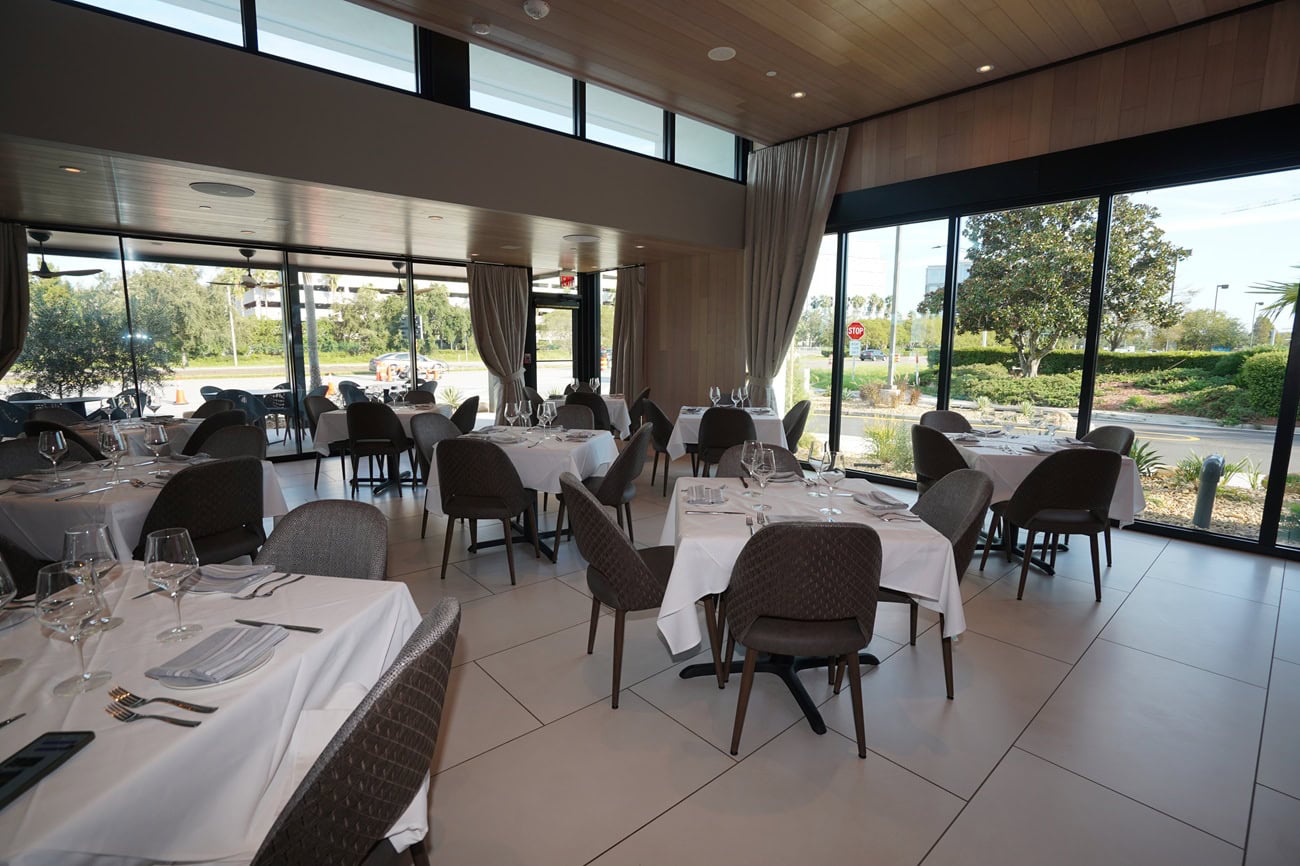
The brands that are winning in hospitality right now are the ones where the technology is invisible; where it creates an experience the guest feels but can’t point to.
Just think about the best sports bar you’ve ever been to. The one where every seat had a sightline, the audio was electric at the bar but comfortable in the dining room, the staff could shift the entire room from brunch mode to game-day mode in one tap, etc. You didn’t think about the technology. You thought about the experience. And that right there is the difference.
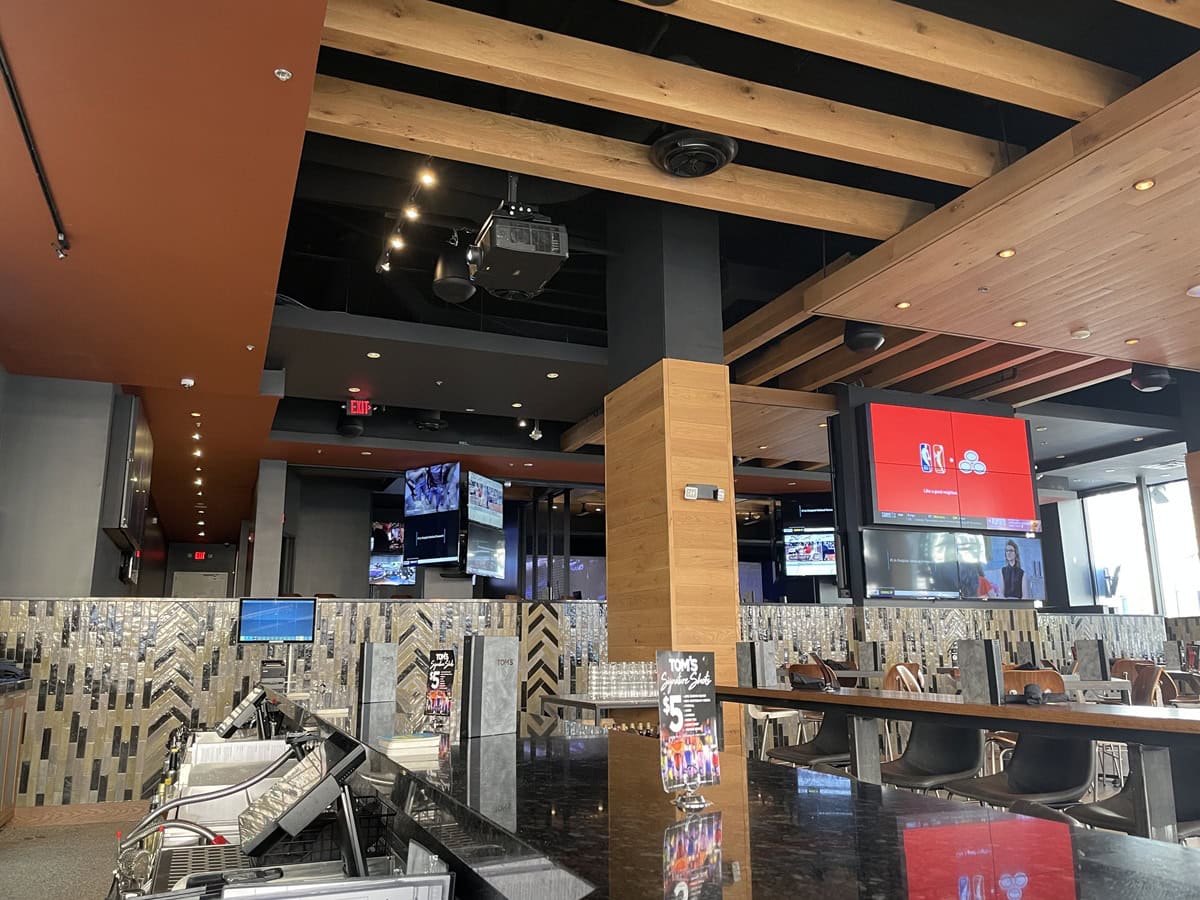
For example, Tom’s Watch Bar doesn’t market its AV system. It markets the experience: “better than a ticket to the game.” The AV is the infrastructure that delivers that promise – 360-degree viewing, independent audio zones, content routing that puts the right game on the right screen. But the guest doesn’t think about the AV. They care about the energy, atmosphere, and the fact that this is the best place to watch the game.
That’s the model. Technology as enabler – multi-zone audio distribution, commercial displays, video walls, AV over IP systems, low voltage lighting, and intuitive AV control interfaces – all invisible to the guest, all driving business outcomes behind the scenes.
How to Audit Your Own AV Strategy
If you’re a hospitality operator, whether you run a sports bar, a restaurant group, a hotel, or an entertainment venue, here’s how to know if your AV strategy is an asset or a liability.
Is your technology driving a specific business outcome?
Not “we have screens” – but “our digital signage promotes featured items during happy hour and we track the lift.” Not “we have a sound system” – but “our audio zones are designed for different dayparts and our dinner guests stay 15 minutes longer since we tuned the ambient levels.” If you can’t name the outcome, the technology is a cost center.
Has your AV been touched since install?
If the answer is no – if nobody has updated the content, tuned the audio, optimized the control scenes, or upgraded the firmware in more than two years – your system is already obsolete. Technology that isn’t maintained is a technology decaying.
Can your staff actually use it?
If the manager is the only person who knows how the system works, you have a dependency, not a system. The Spectacle Trap at scale starts with the Spectacle Trap in your own building: technology that nobody can operate, maintain, or explain the ROI of.
Could your venue survive without it?
This is the ultimate test.
If you removed all the technology tomorrow, would the business fundamentally change? If the answer is no, if the technology is just decorative, that is, then it’s a cost center by definition. If the answer is yes, meaning the sightlines, audio, content, and control are genuinely driving guest experience and revenue, then you have an investment, not an expense.
In our 17 years building commercial AV systems for hospitality venues, the operators who treat AV as an investment call us back every three years. The ones who treat it as a cost call us back when something’s on fire. Both happen. But only one of those patterns compounds into a better business.
If you want an honest assessment of your current audio and video strategy, let’s do an audit. We’ll walk your space, evaluate your technology against the four outcome categories: revenue, operations, experience, and productivity, and give you a clear picture of where you stand.
Get your audio and visual strategy audited. Let’s find out if your technology is working for your business or just sitting on the wall.
Frequently Asked Questions (FAQs)
What is the Spectacle Trap in hospitality AV?
The Spectacle Trap is a pattern where hospitality brands build their concept around technology and theming rather than using technology to enable business outcomes. When the technology IS the attraction, it becomes a depreciating spectacle that requires constant investment to stay relevant. When technology is the infrastructure enabling sightlines, audio quality, content strategy, and operational efficiency, it becomes a compounding investment that drives revenue over time.
Why do restaurant technology investments fail?
Most restaurant technology investments fail because they’re purchased as things instead of as tools. The operator asks “what should we install?” instead of “what should this room accomplish?” Without outcome-based design, think sightlines mapped to seating, audio zoned to dayparts, and content tied to revenue goals, the technology becomes a static cost that never returns on investment.
How do I know if my restaurant’s AV is a cost center?
Ask four questions: Is the technology driving a specific, named business outcome? Has the system been updated or optimized since install? Can your staff actually operate it under real conditions? Would removing it fundamentally change the business? If you can’t answer the first three with a confident yes, or if the answer to the fourth is no, your AV is functioning as a cost center.
What’s the difference between technology-centric and experience-enabled hospitality design?
Technology-centric design makes the technology the attraction: screens as spectacle, theming as identity. It has a novelty shelf life and an ever-increasing maintenance cost. Experience-enabled design makes the technology invisible: it creates atmosphere, drives guest behavior, enables staff efficiency, and produces measurable business outcomes. The guest feels the experience. They don’t notice the technology.
How often should I update my hospitality AV system?
Operators who treat AV as a strategic investment review and optimize their systems every two to three years, adjusting content strategy, updating firmware, tuning audio zones, and refreshing control scenes based on how the venue’s operations have evolved. Operators who treat AV as a sunk cost don’t touch the system until something breaks. The first approach compounds value. The second approach guarantees obsolescence.