“Where’s my quote?”
It’s one of if not the most common question in commercial AV sales. You reached out to an integrator, described your project, maybe had a great initial call… and now you’re waiting.
Here’s the honest answer: if all you needed was a price on TVs and speakers, you’d have it in no time. But a real proposal is an engineered solution, a system designed backward from what your space needs to accomplish, with every component selected and every integration point accounted for.
The time between your first call and your final proposal is design time. And that design time is what separates a system that works flawlessly on opening night from one that racks up change orders and regret.
TL;DR
- A commercial AV proposal is an engineered solution: The time between your call and proposal is design time: site surveys, engineering, sourcing, and review that prevent costly problems.
- Fast quotes lead to expensive change orders: Projects with insufficient planning see an average 15% cost increase from budget changes.
- The 6-stage pipeline exists for a reason: Discovery, site survey, design, engineering review, sourcing, and proposal assembly each prevent specific downstream problems.
- Site surveys catch 80% of change order issues: Structural obstacles, electrical limitations, and acoustic interference are all discoverable before design begins.
- You can speed up the process: Floor plans, clear goals, a single decision-maker, and fast responses are the biggest accelerators in your control.
What is an AV Quote?
An AV quote is a detailed proposal for a commercial audiovisual system that outlines the equipment, design, labor, and total project cost required to deliver a working solution for a specific space.
It goes beyond a price list. A proper audio visual quote reflects an engineered plan based on how the system will be used and how the room behaves, as well as how every component connects.
In most cases, a commercial AV quote includes:
- A scope of work describing what will be installed
- A bill of materials (displays, speakers, control systems, etc.)
- System design considerations (audio coverage, display placement, signal flow)
- Installation and programming labor
- Timeline and project phases
- Assumptions, exclusions, and support terms
A fast quote typically lists AV equipment and rough pricing. A real quote accounts for the environment, infrastructure, user experience, etc. That difference is what prevents rework, delays, and budget overruns later in the project.
The Cost of a Fast Quote for AV Installations
The construction industry tells the cautionary tale: according to a Procore-commissioned survey, 75% of project owners exceed their planned budgets, with an average of six budget changes per project and a 15% average increase in costs. In AV specifically, unmanaged scope changes erode margins by 15 to 30%.
Those numbers are straight-up insufficient upfront planning. A fast AV system upgrade quote skips the steps that prevent those outcomes.
In our 17 years of commercial AV integration, the pattern is consistent: the projects that go smoothly are the ones where the proposal took the right amount of time.
| Quote Speed | What You Get | What It Costs You |
| Same-day / 24-hour | Equipment list with prices. No engineering. No site-specific design. | Change orders, rework, budget overruns of 15-30%. |
| 3-5 business days | Basic design with standard assumptions. Limited site customization. | Some rework likely. May need supplemental proposals. |
| 1-3 weeks (Design-Build) | Fully engineered design. Site-surveyed. Tiered options with tradeoffs. | The proposal prevents problems. Change orders minimal. |
AV Quotations: The 6-Stage Pipeline
Here’s what happens while you’re waiting. Each stage exists because skipping it creates a specific, predictable problem downstream.
Stage 1: Discovery Conversation (Day 1)
The initial call or meeting. The integrator’s goal is to understand what you’re trying to accomplish. What type of space? What’s the primary purpose? How many zones? Expansion plans? Existing infrastructure? Timeline?
A good discovery call takes 30 to 60 minutes. The AV integrator is building a mental model of your project before anyone touches design software.
Stage 2: Site Survey (Days 2-5)
Everything starts with a well-executed site survey. According to AVIXA, a proper AV site survey protects performance, protects budget by reducing change orders and rework, protects the project schedule, and aligns stakeholders around real-world constraints.
| Element | What’s Assessed | Why It Matters |
| Room dimensions | Exact measurements, ceiling heights, columns, windows | Speaker coverage, display sightlines, equipment placement |
| Structural conditions | Wall composition, ceiling type, load-bearing capacity | Safe mounting for video walls, displays, speaker arrays |
| Electrical infrastructure | Available circuits, panel capacity, dedicated lines | Prevents power issues, identifies if electrical work needed |
| Network infrastructure | Existing cabling, switch locations, bandwidth, VLANs | AV over IP feasibility, network upgrade requirements |
| HVAC and acoustics | Duct locations, ambient noise, reflectivity, isolation | Audio interference prevention, acoustic treatment needs |
| Ambient lighting | Natural light sources, fixture types, controllability | Display brightness requirements, low voltage lighting integration |
| Existing AV systems | Current equipment inventory, condition, reusability | What can be retained vs. replaced, budget impact |
In our experience across 32+ cities, the site survey is where we catch 80% of the issues that would otherwise become change orders.
Stage 3: System Design (Days 3-10)
Design and engineering services typically represent 5% to 12% of total project cost, but they prevent errors like incorrect equipment placement and under-sized cabling that result in rework.
This is where a Design-Build methodology fundamentally differs from bid-and-spec. The design team makes decisions about audio zones, display technology, network architecture, and control interfaces, all of which are tailored to the specific space.
Stage 4: Engineering Review (Days 7-12)
This stage catches design-level errors that are invisible to the client but catastrophic on install day. Think a discontinued speaker model, a display that can’t overcome afternoon sun, a control processor one port short, and so on.
According to AVIXA, the AV design and integration process should include clear layout drawings, intuitive schematics, and both high-level and low-level designs. The engineering review is where those documents get stress-tested.
Stage 5: Equipment Sourcing and Pricing (Days 8-14)
Equipment availability changes constantly. Supply chain disruptions and tariff pressures in 2025-2026 have made equipment pricing more volatile than at any point in the past decade, with some components seeing 10 to 25% price swings within a single quarter.
The procurement team locks in current pricing, verifies lead times, and identifies substitutions, all before the client sees a number.
Stage 6: Proposal Assembly and Internal Review (Days 10-15+)
A properly built proposal includes scope of work, tiered options with explanations, bill of materials, project timeline, AV installation and programming labor, staff training, warranty terms, support options, and a clear list of assumptions and exclusions.
A proposal is essentially a promise. Every line item is something we’re committing to deliver. That’s why we review it internally before it reaches the client. When we hand you a proposal, we’re saying ‘we can build this, for this price, on this timeline.’
We don’t make that commitment lightly.
The Full Timeline: What to Expect
| Project Type | Timeline | Why |
| Single conference room / small restaurant | 5-7 business days | Straightforward survey, limited integration, standard equipment |
| Mid-size sports bar / hotel meeting space | 7-12 business days | Multiple zones, complex audio, POS/scheduling integration |
| Large venue / multi-room campus | 2-4 weeks | Multiple surveys, complex engineering, GC coordination, extensive sourcing |
| Multi-location rollout | 3-6 weeks (first) | Full design for first location; subsequent locations adapt the template |
These timelines assume the integrator has what they need from you. The most common cause of proposal delays is waiting on information from the client.
When Speed Is Actually a Red Flag in AV Proposals
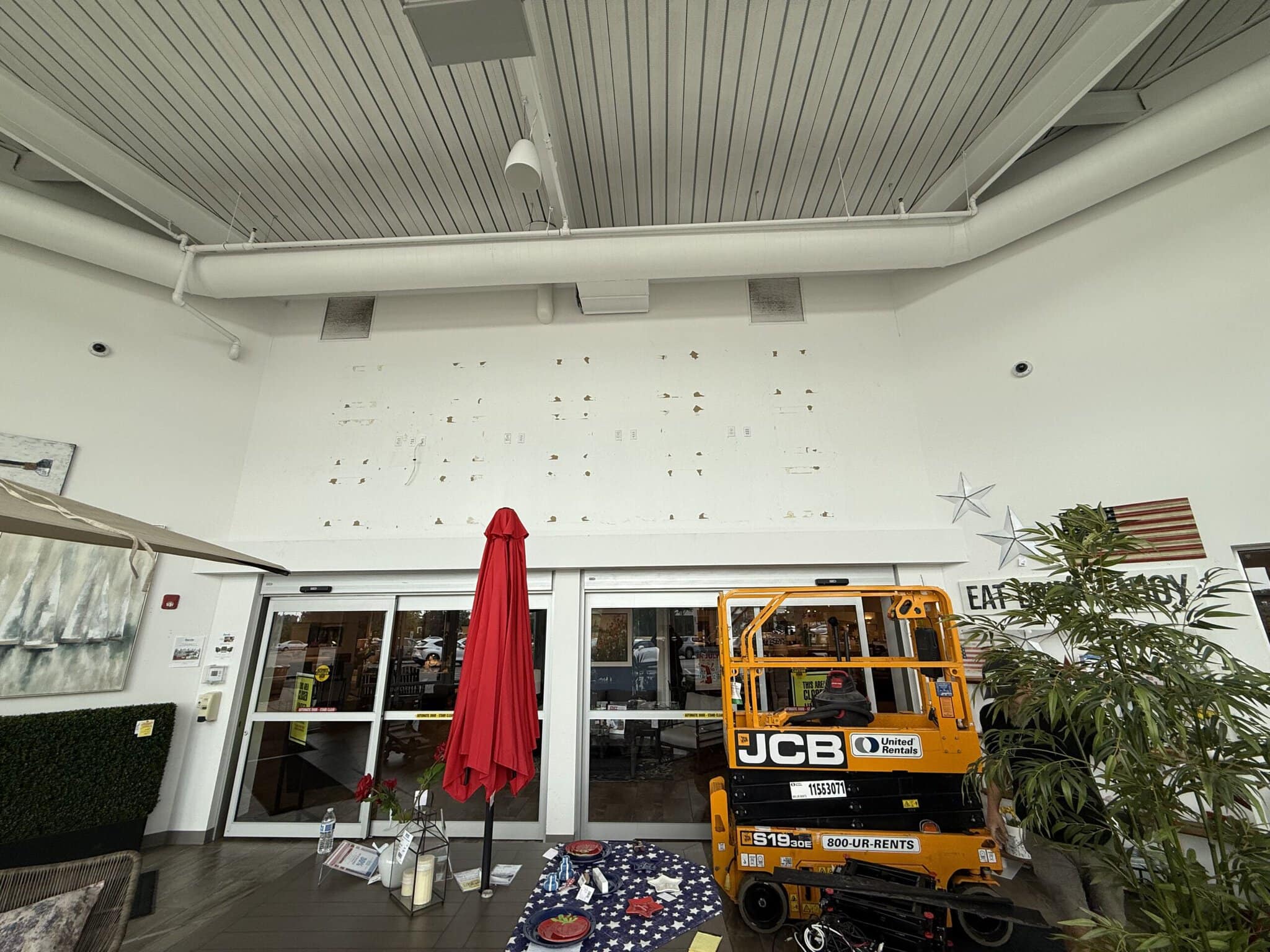
Across 3,000+ projects, we’ve learned to recognize the warning signs of a rushed proposal. If you get one back the same day you called, ask: Did they visit my site? Did they ask about my business goals? Did they verify electrical and network infrastructure?
If the answer to any of those is no, what you have isn’t really a proposal but a guess with a price tag.
We’d rather take an extra three days and hand you a proposal that’s right than rush one out the door and spend six weeks cleaning up change orders. Every day we spend on design saves the client a week on the install side and thousands of dollars they’d otherwise spend fixing problems that should have been caught upfront.
What you can do to speed up the process
Have your floor plans ready. Even rough ones help. Photos from multiple angles with approximate dimensions are better than nothing.
Know your goals before the discovery call. What do you want the space to feel like? What’s your busiest day? How many zones? Expansion plans?
Designate a single decision-maker. Nothing slows down a proposal like “I need to check with my partner / my landlord / my corporate office.”
Be responsive. A same-day response to integrator questions keeps the project moving. A three-day delay on one question can push the whole timeline back a week.
What to do next
When evaluating AV companies, ask them to walk you through their proposal process. A good one will be happy to explain what happens between your first call and your final proposal.
Ready to see what a thorough Design-Build AV proposal process looks like? Start a conversation with our team or explore our commercial AV integration services.
Frequently Asked Questions (FAQs)
How long does it take to get a commercial AV quote?
Typically 5 business days for simple projects, 7-12 days for mid-size spaces, and 2-4 weeks for large venues or multi-location rollouts. Timeline depends on complexity and how quickly clients provide required information.
Why can’t I get an audiovisual quote over the phone?
A meaningful proposal requires a site survey to assess physical space, structural conditions, electrical capacity, network infrastructure, and acoustics. Without visiting the site, an integrator is guessing. And guesses become change orders.
What is included in a commercial AV site survey?
Room measurements, ceiling assessment, structural load capacity, electrical panel evaluation, network infrastructure, HVAC and ambient noise assessment, lighting analysis, and documentation of existing AV systems.
What should a good AV proposal include?
A scope of work, tiered options, a bill of materials, project timeline, installation and programming labor, staff training, warranty terms, support options, and a clear list of assumptions and exclusions.
How can I speed up the AV proposal process?
Have floor plans ready, know your business goals, designate a single decision-maker, and respond quickly when the design team asks for information.