Visual clutter is the silent killer of a well-designed commercial space. You can spend millions on bespoke marble countertops, stylish, custom millwork, high-end lighting; only to have the aesthetic interrupted by bulky black speaker boxes, tangled nests of HDMI cables, and massive TVs that look like dark voids when not in use.
Discreet audiovisual solutions allow high-performance technology to exist without demanding center stage. Integrating hardware into the literal fabric of a building helps companies provide immersive sound and crystal-clear visuals that seem to appear out of thin air.
This approach is rightfully diverting the focus from the gadget to the atmosphere. The objective here is to make sure the first thing a client or customer notices is your brand, not your equipment rack. Let’s get to grips with how you can achieve this for your organization.
Strategic Solutions for Discreet Audiovisual Integration
For starters, creating a hidden AV system requires a shift in how we think about hardware. That involves not treating speakers and screens as afterthoughts to be bolted onto walls, but as architectural elements.
This necessitates a combination of specialized invisible hardware and clever engineering to ensure that hiding the gear doesn’t muffle the sound or overheat the processors.
Crunchy Tech partners with industry-leading brands like QSC, Crestron, and Biamp to provide AV solutions that integrate seamlessly into your space’s existing design without sacrificing performance.
Without more ado, the following strategies represent the core pillars of a truly invisible technology setup.
1. Eliminate visual noise with architectural audio
The most common intruder in a clean design is the traditional box speaker.
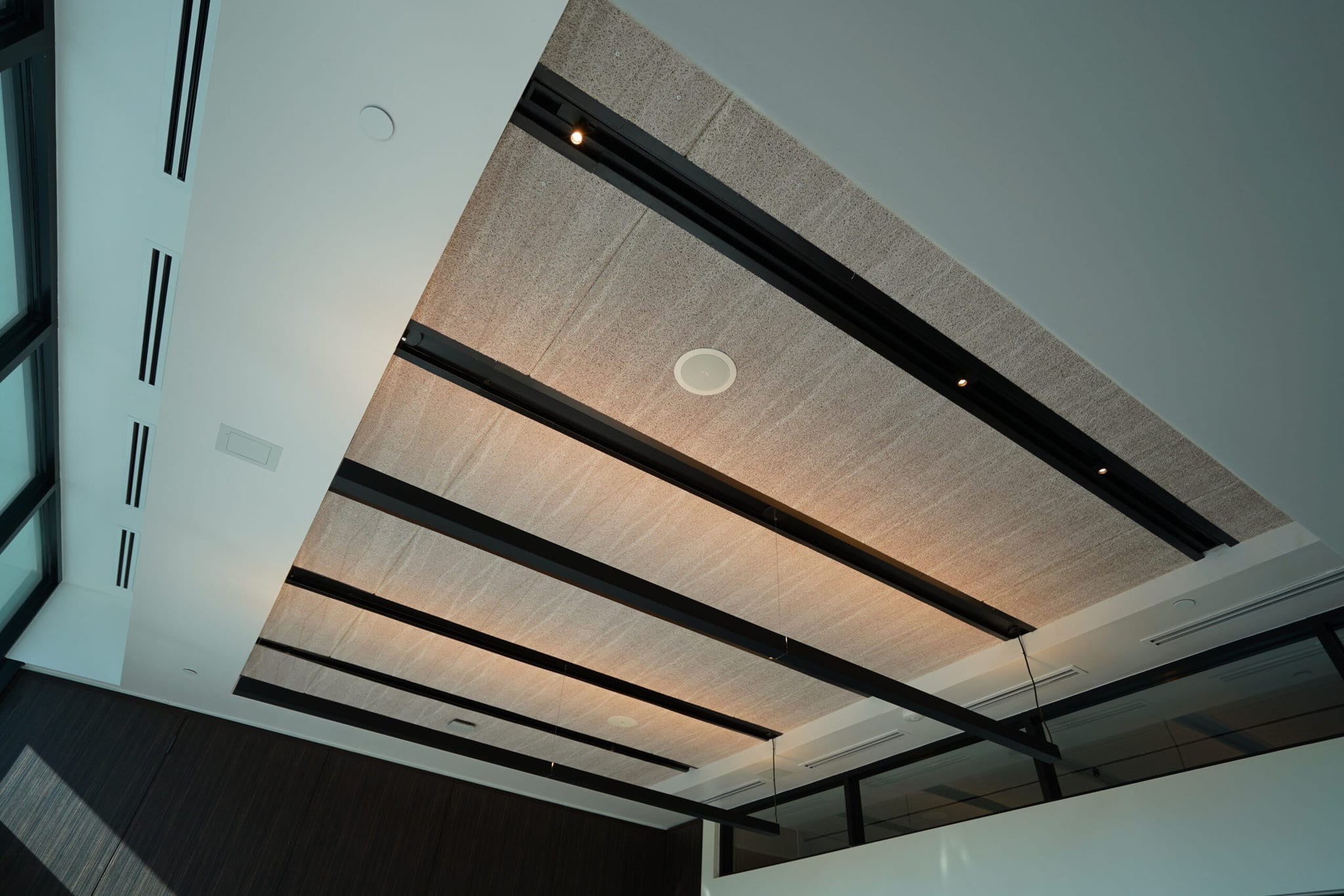
Architectural audio replaces these with “invisible” speakers that sit flush with the drywall or ceiling. Once installed, these units are covered with a finish such as paint, wallpaper, or even light wood veneer, rendering them completely undetectable to the eye.
Because they use the surface of the wall itself to vibrate and produce sound, the audio remains crisp and omnidirectional. They fill a lobby or restaurant with music that has no visible source.
2. Conceal displays with motorized lifts and art
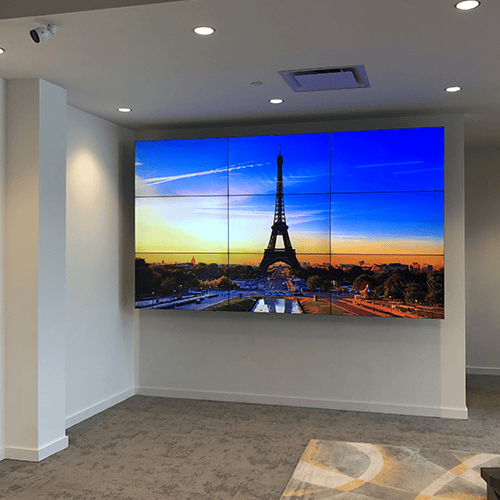
A large flat-screen TV is a necessity for presentations or digital signage, but it can be an eyesore when powered down. Hidden AV solutions utilize motorized lifts that can hide a screen inside a custom credenza, a ceiling cavity, or even behind a piece of framed artwork.
In a boardroom, for example, the screen only descends from the ceiling when a meeting starts. It keeps the room’s clean lines intact during casual conversations or brainstorming sessions.
3. Use high-performance projection and ambient light rejection
In spaces where a massive 100-inch display is needed but a physical screen would jeopardize the view, projection is the ideal alternative.
Modern laser projectors can be tucked away in soffits or motorized compartments. When paired with an ambient light rejecting (ALR) screen that rolls up into the ceiling, you get a cinema-quality viewing experience that completely disappears within seconds of the “off” command being pressed.
4. Centralize equipment in ventilated racks
One of the biggest contributors to tech clutter is the stack of amplifiers, receivers, and media players usually found sitting under TVs. A professional discreet installation moves all this brain power to a centralized equipment rack located in a closet or utility room.
By using long-range signal extenders, the only thing left in the public-facing space is the screen and the speakers. This also simplifies maintenance, as AV technicians can service the entire system without impeding the flow of your business operations.
5. Implement hidden cable management systems
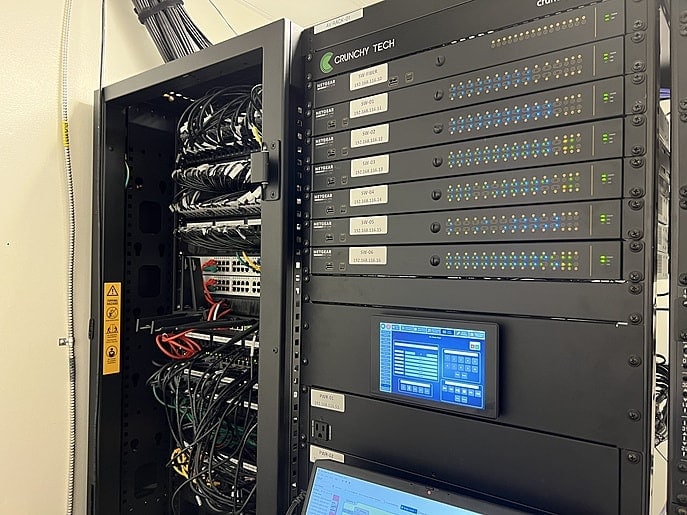
Even a single visible wire can break the illusion of a high-end space. Hidden cable management involves dedicated in-wall conduits and specialized connectors that prevent signal degradation over long distances.
Proper cable management also addresses thermal issues. It reassures that wires don’t overlap in ways that create heat or interference, which ultimately extends the lifespan of the entire audio video ecosystem.
6. Optimize performance with short-throw technology
If your commercial space lacks the depth for a traditional projector, ultra-short-throw (UST) projectors offer a discreet workaround. These devices can sit just inches from a wall on a low-profile cabinet and project a massive, bright image.
When the projector is off, it looks like a small, sleek piece of furniture as opposed to a piece of industrial equipment. This makes it perfect for smaller retail footprints or high-traffic corridors.
7. Leverage smart control for a minimalist interface
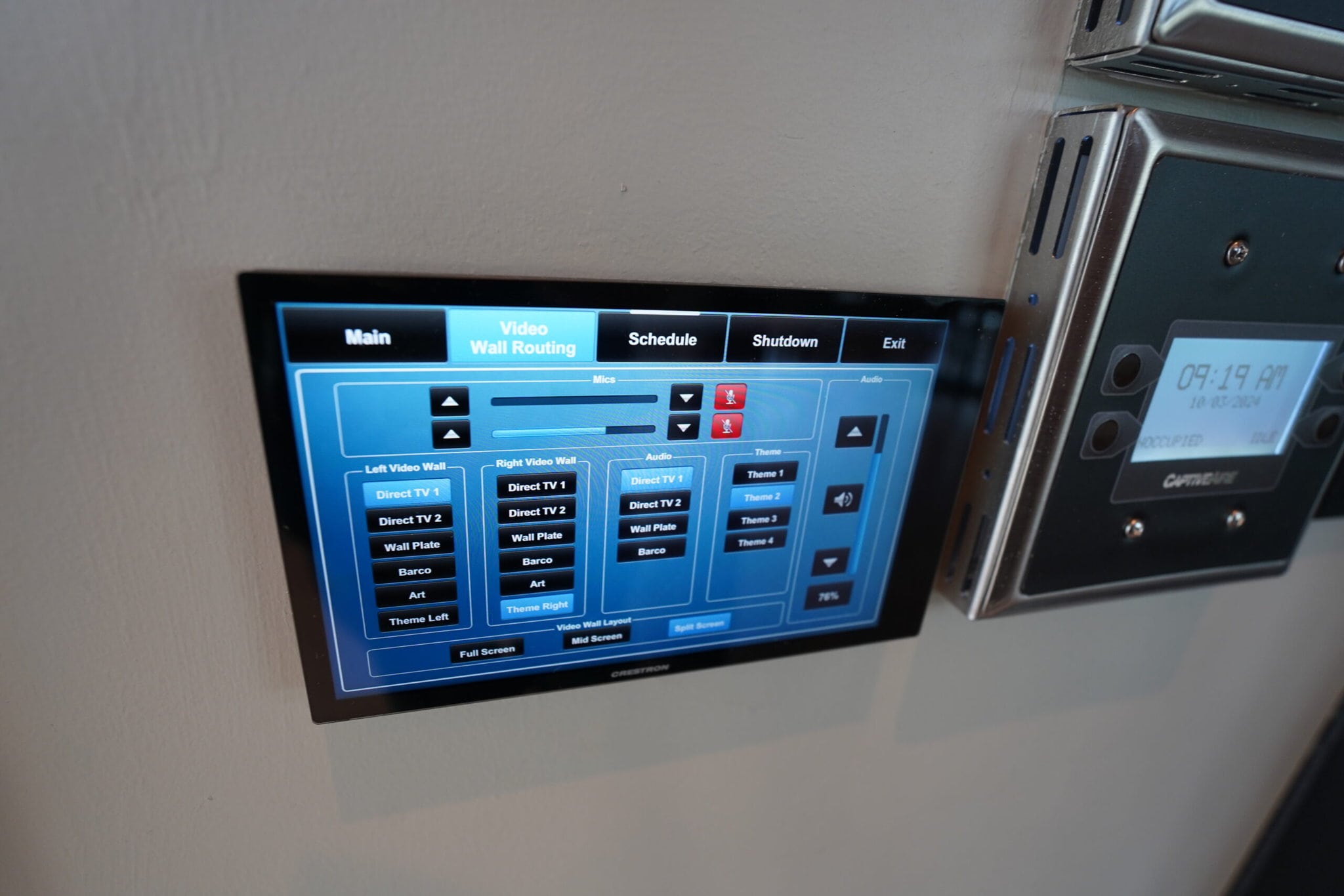
Having ten different remotes on a conference table is the opposite of discreet. A hidden system should be managed through a single, streamlined interface, usually a flush-mounted wall tablet or a mobile app. Crunchy Tech-trusted brands like Crestron and Savi allow staff to adjust volume, switch inputs, or dim the lights without ever seeing the complex hardware doing the heavy lifting behind the scenes.
The Design-Build Approach to Hidden Technology
The most successful hidden AV projects share one common trait: they were planned before the first nail was driven. At Crunchy Tech, we utilize a design-build methodology that bridges the gap between interior design and technical engineering. If you wait until a room is finished to hide the wires, you are limited by the existing structure. It almost inevitably results in compromises in both aesthetics and performance.
Coordinate with architects during the planning phase
True invisibility happens at the blueprint level. By working with your architects early on, we can designate tech-ready zones within the walls and ceilings. This ensures that there is enough depth for in-ceiling speakers or the necessary structural support for motorized heavy-duty lifts.
It’s a proactive coordination that prevents the need for messy retrofits or unsightly bulkheads that weren’t part of the original design vision.
Focus on thermal management and accessibility
The biggest risk of hiding technology is heat. When you put a powerful amplifier inside a sealed cabinet or behind a wall, it can quickly overheat and fail. Your design process must include integrated ventilation strategies, such as:
- Installing silent, thermostatically controlled fans within millwork.
- Using perforated materials that allow heat to escape while remaining opaque to the eye.
- Designing “pull-out” racks that allow easy access for repairs without needing to tear down a wall.
Future-proof the infrastructure
Technology changes much faster than architecture. A hidden AV gear is a long-term investment so the infrastructure must be flexible. We focus on installing oversized conduits and high-bandwidth cabling that can support the next generation of 8K or 16K video.
When it’s time to upgrade your displays, you can do so without a full-scale renovation of your physical space.
Put Your Tech in the Walls and Your Brand Center Stage.
In a post-COVID world where every business is competing for the attention of a distracted consumer, the environment you create is a POWERFUL differentiator. A restaurant where the music feels like it’s part of the air, or a hotel lobby where digital art seamlessly transitions into a guest information screen, leaves a lasting impression of sophistication.
Make no mistake, however, that hidden AV is about being shy with your technology. It’s got to do more with being intentional with your design. Removing the distractions of wires, boxes, and bulky screens allows your customers to focus entirely on this trifecta: messaging, the product, and the overall experience.
Crunchy Tech specializes in these high-stakes integrations. We understand that for a luxury brand or a modern corporate headquarters, good enough is out of the question. Partner with us so your AV equipment performs flawlessly while remaining completely out of sight and out of mind.