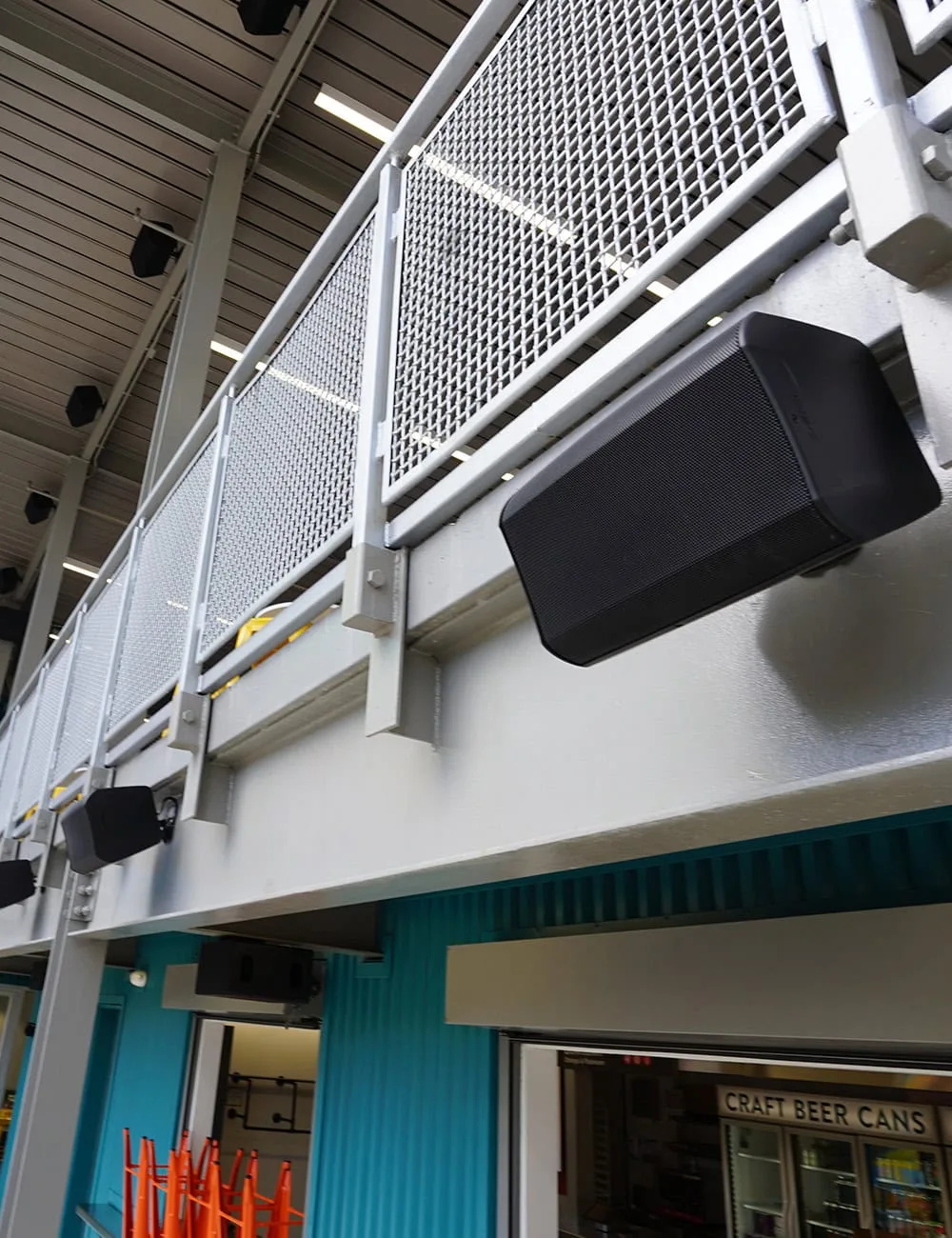
warehouse public address system

Warehouse Public Address System

warehouse pa system installation

What is a Warehouse Public Address System?

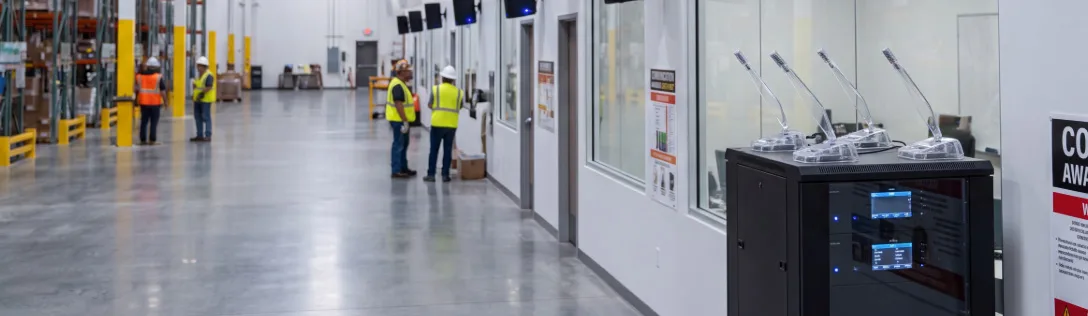
A warehouse public address (PA) system is a facility-wide audio system used to deliver unambiguous announcements to teams across the building. It typically includes microphones or paging stations, loudspeakers placed for consistent coverage and control equipment that manages volume, zones and message priority.

In a warehouse, the goal is intelligible communication that penetrates through machinery noise and distance. As such, a well-designed system makes routine pages lucid, supports urgent alerts when needed and can also handle background music in appropriate areas without hampering operations.

Why Invest in a Warehouse PA System?

A warehouse is one of the toughest environments for audio. Forklifts, pallet jacks, conveyors, compressors, dock doors, general movement, etc create a constant noise floor that shifts throughout the day. On top of that, teams are spread out. Some are in receiving, some in racking aisles, some packing, whilst others may be outside at the dock.

In that kind of space communication cannot depend on shouting, runners or hoping against hope someone checks their phone at just the right time. A PA system for warehouse operations gives you a reliable way to coordinate work and keep priorities moving in the same direction across shifts.

Communication failures cost time and create safety risk

A forklift operator who misses a call about a blocked aisle keeps moving until the problem becomes an urgent necessity. A supervisor who cannot reach a section of the warehouse has to stop what they are doing to find someone, which pulls attention away from quality and safety oversight.

The best warehouse PA system reduces all the extra motion that comes from “repeating and chasing.” It gives you one clear channel for instructions that need to be heard right now.

Clear audio supports compliance and incident response

In many facilities, communication is part of the safety plan. Emergency instructions need not only be immediate but also understandable and consistent. The system ought not to require people to guess what was said or depend on a particular person being near a bluetooth speaker.

A properly designed PA system for storehouse use can support emergency messaging, evacuation direction and clear facility-wide notifications. Not every warehouse has the same requirements but the principle stays the same: when it matters most, the system must not merely be loud but dependable and comprehensible.

What a P.A. System for Warehouse Needs to Do

One prevalent mistake is thinking the solution is simply more volume.

In a warehouse loud audio that you cannot understand is not helpful. It becomes background noise. People tune it out, especially if it sounds harsh or distorted. The system then loses its authority when you truly need attention.

That said, you need a warehouse audio system that puts a premium on intelligibility, coverage and control. That is what guarantees that announcements are heard clearly across zones; and yet, the facility remains comfortable and workable.

Reach every zone with consistent unambiguity

Warehouses are not one uniform space. You may have long aisles with racking, open staging areas, receiving and shipping docks, packing zones, offices, break rooms, etc. Some facilities also need coverage outside, namely loading bays, yard areas or entry points.

A functional Warehouse PA Systems design accounts for these zones from the outset. That means speaker placement, speaker type (e.g., horn speakers) and tuning are planned around not what looks symmetric on a ceiling plan but where people actually work.

Stay understandable over machinery and movement

Warehouses have shifting noise conditions. Peak noise does not stay constant. It can surge during loading windows or shift change movement. A system that sounds “fine” during a quiet moment can fail completely when the building is at full speed.

That is why proper design focuses on clarity in the vocal range, controlled output and tuning that fits the acoustic reality of the space. When aptly done, the audio manages through without becoming painful or grating.

Support multiple message types

Warehouse announcements can be routine operational pages, time-sensitive updates or safety instructions. If your system treats every message as identical, you lose flexibility and credibility.

A commercial Warehouse PA System can support different message needs, including background music and the ability to keep routine messaging calm while making certain critical alerts are delivered with the degree of priority they require.

Common Warehouse PA System Problems We Fix

Most warehouses that call for help have lived with a setup that no longer matches their operation. Sometimes the system started small and grew in patches. Sometimes it was installed without a real coverage plan. Sometimes the warehouse public address solution is simply old and tired.

Here are the issues we see most often when industrial facilities and manufacturing plants ask about upgrading storehouse PA systems.

Dead zones and “it’s loud but I can’t understand it” audio

This is the number one complaint. There are areas where announcements never land clearly. People hear noise but the words are not readable. That often leads to repeats, confusion and supervisors walking the floor to confirm messages.

Feedback and harsh sound that gets ignored

If your PA squeals or sounds sharp, your team learns to tune it out. Even when the content matters, the warehouse sound system itself becomes the problem. Over time people stop reacting quickly because the system is annoying or uncomfortable.

A strong PA System should sound firm and clear, the goal being attention without irritation.

Single-zone setups that create confusion

Many systems run the entire building as one zone. That means an announcement intended for receiving blasts into offices and break rooms. It also means volume needs in one area dictate volume for every other area.

When every message goes everywhere at the same level, people stop listening. Zoning helps keep messages targeted and reduces unnecessary noise across the facility.

Unreliable gear that fails mid-shift

Warehouses cannot afford equipment that cuts out or drops unexpectedly. When a system is pieced together with consumer components or aging infrastructure, tendency is it fails at the worst times, which creates downtime and frustration.

Commercial warehouse public address systems are built for long hours and stable performance. They are also designed to be serviceable in order for problems to be diagnosed and resolved without turning into a long disruption.

Warehouse Public Address Systems We Design and Install

A warehouse is a collection of work zones with different noise levels, priorities and ways people move through the day. 

Crunchy Tech builds PA systems warehouse managers can count on and that are planned around your workflow and your establishment layout. The goal is simple: crystal-clear pages where you need them, controlled volume where you do not and a system that stays reliable through peak operational windows.

Paging and zone control by area or function

Zoning is one of the most meaningful upgrades a warehouse can make.

With a properly zoned PAS for warehouse operations, you can page receiving without blasting the offices. You can also build logical groupings that match your operation, such as shipping, staging, aisles and dock doors.

Control matters just as much as zoning. The system should be easy for the right people to use while staying protected from accidental changes that create volume spikes or inconsistent levels.

In practice, this means supervisors get straightforward access to paging and zone selection while deeper system settings stay locked. Your team gets a system that is practical to run without becoming a daily variable.

Indoor and outdoor coverage

Warehouses and distribution centers need paging beyond the main floor.

Loading docks can be partially indoors and partially exposed. Yard zones can matter during active receiving and shipping windows. Some facilities need exterior coverage at entry points, staging areas or gate zones.

A warehouse communication system can be designed to extend outside in a controlled way, using weatherproof equipment where needed and zoning that prevents outdoor coverage from dictating indoor volume. Outdoor audio should never force you to crank the entire building. It should be its own manageable zone, tuned for the actual conditions it faces.

High-ceiling and open-structure speaker strategies

Warehouses rarely have ceiling conditions that behave like retail or office spaces.

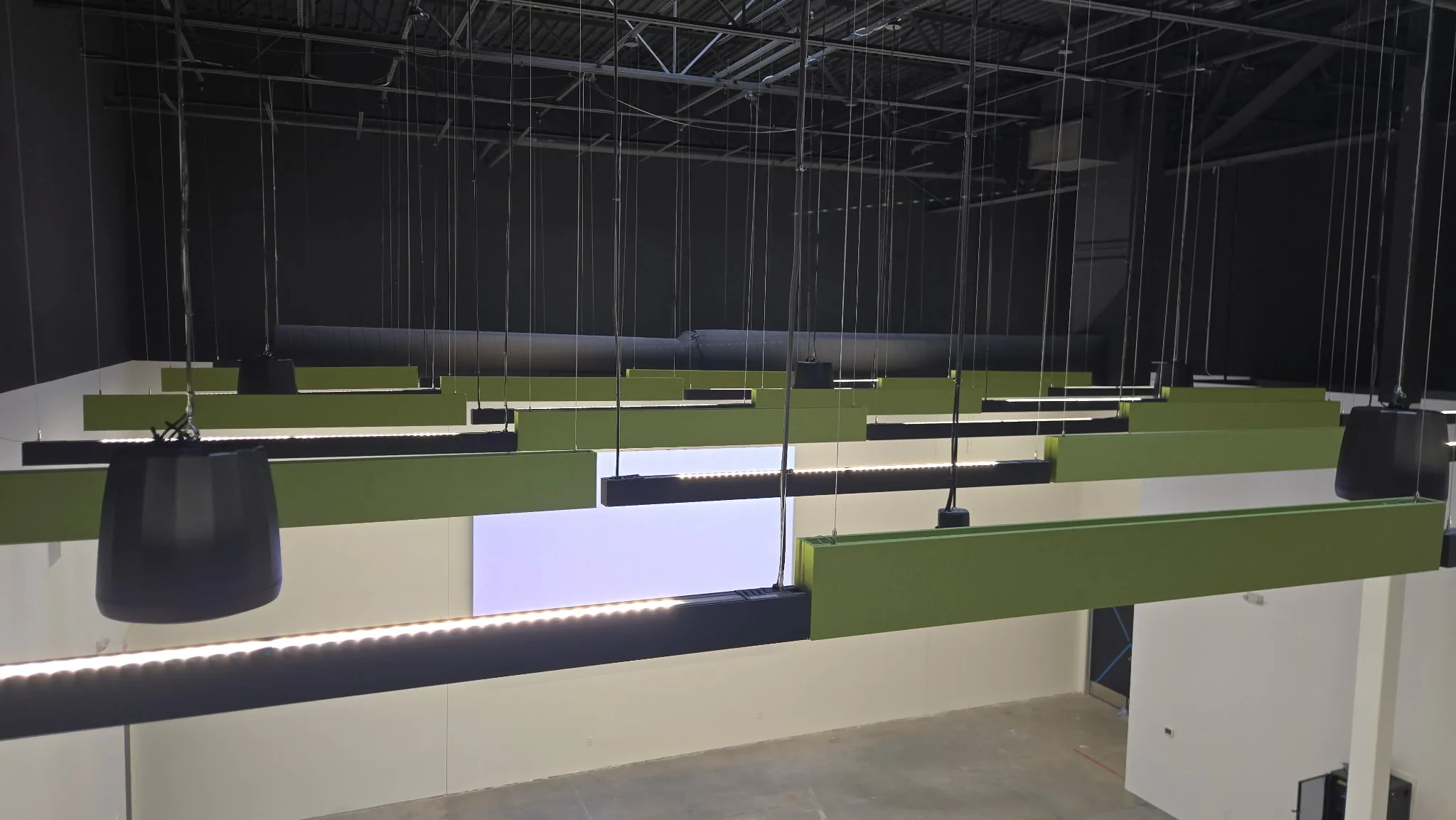
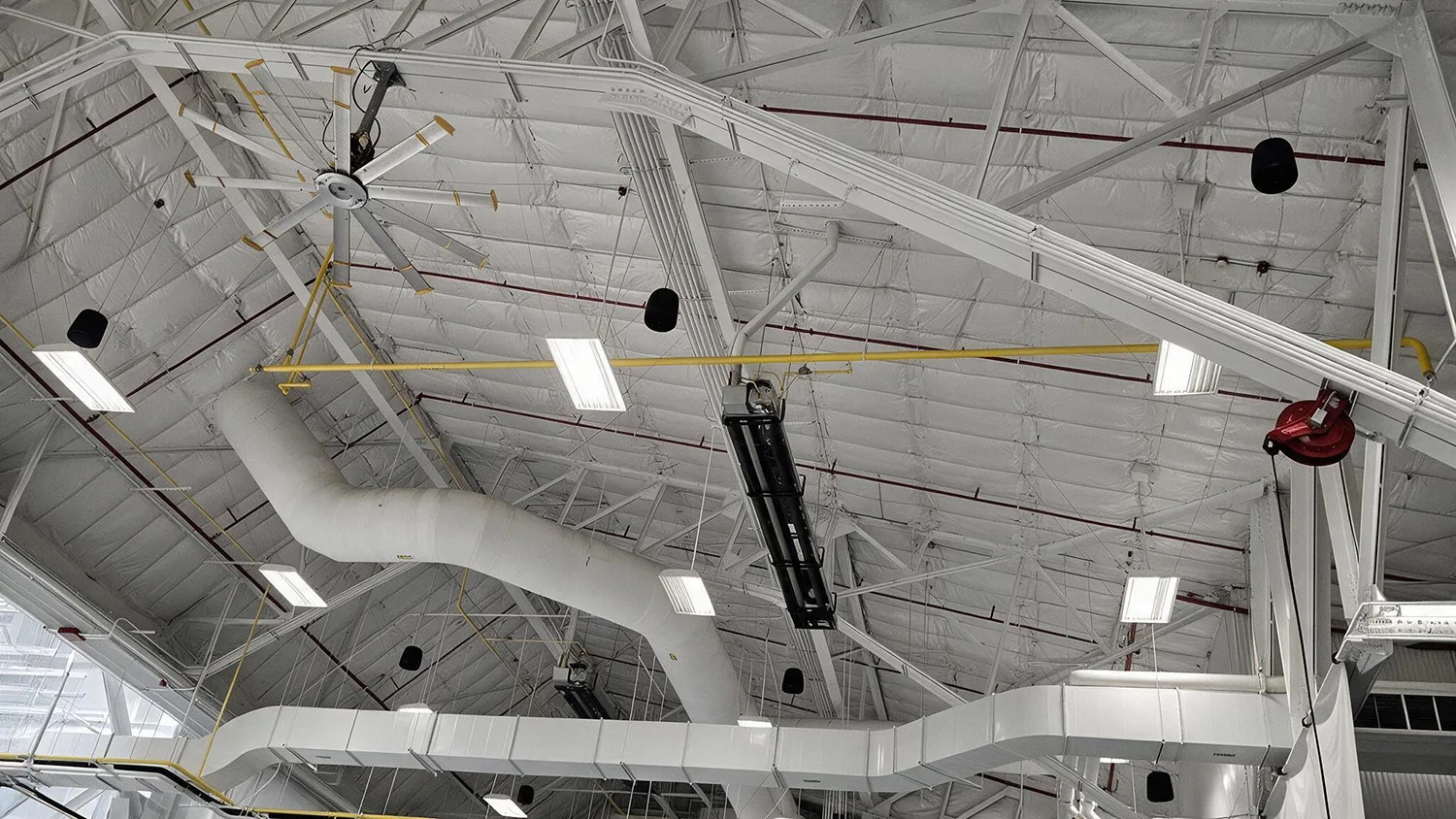
High ceilings change how sound disperses. Open structure and racking can create reflections, absorption pockets and uneven intelligibility if speaker placement is not planned properly. Add forklifts and constant movement and you have a challenging environment for speech.

The right approach depends on your facility but the objective stays consistent: announcements that remain readable in aisles, across open floor areas and in the corners where communication is most vulnerable to falling apart.

Emergency messaging and priority overrides

Not every warehouse needs the same emergency messaging requirements but every warehouse benefits from a plan for urgent communication.

A commercial Warehouse PA Systems design can support priority behavior where critical messages interrupt routine audio when required. That disallows emergency instructions from competing with normal operations pages or background content.

Key Features That Make a Warehouse PA System Work

A lot of systems look similar on paper. The differences show up during real use – busy shifts and those moments when a single missed message can create a chain of confusion.

These are the features that matter most in daily warehouse life.

Clear speech tuning and smart limiting

Speech is not music. A warehouse PA solution succeeds or fails based on lucidity.

That means the system must be tuned so announcements are understandable across your facility’s noise conditions. It also denotes output must be controlled so vocal clarity does not turn into harshness and volume changes do not create spikes that irritate warehouse employees or cause people to tune out.

Smart limiting likewise protects the culture of the space. If the PA system is painful, people stop listening. If it is clear and consistent, it becomes a trusted channel.

Zoning, scheduling and controlled access

A PA System for Warehouse operations is healthier when it does not require constant manual management.

Scheduling can support predictable operational needs, such as shift change cues or routine reminders, without forcing a supervisor to repeat the same announcements daily. Zoning keeps messages targeted so the whole building is not drowning in irrelevant pages.

Controlled access is the final piece. The system should be easy for the right people to run but protected enough that it does not eventually degrade from accidental adjustments. That balance is what keeps audio coverage consistent from shift to shift.

Integration options when needed

Some warehouses want a simple standalone paging solution. Others want theirs to tie into existing workflows.

Depending on your needs and infrastructure, integration can support things like paging from a handset or IP phone system, linking paging stations or connecting with other systems already in place. The point is not complexity. The point is convenience and reliability, so your team uses the system correctly under pressure.

Our Process (What You Can Expect)

An industrial PA System should feel straightforward to own. The work happens upfront in planning and design; the finished system behaves consistently and stays easy to operate.

Here is what a typical Crunchy Tech process looks like.

Site walk and coverage plan

We start by understanding how your industrial facility runs. That encompasses identifying noise sources, ceiling height, racking layout, dock flow and the areas where communication breaks down today.

We also pay attention to real workflow. Case in point: where do supervisors stand when they page, where do teams cluster, which zones cannot miss instructions, which areas should stay quieter, and so on. That information becomes the foundation for a coverage plan that matches operations.

System design and equipment selection

Once the coverage plan is clear, we design the system around intelligibility, control and reliability.

This is where warehouse speaker system type, placement strategy, amplification and zone layout are decided. The objective is not to “add sound.” It is to build a system that makes speech clear-cut and repeatable across your site’s real acoustic conditions.

Installation, tuning and handoff

Installation is only part of the value. Tuning is where the system becomes usable.

After install, the system is calibrated for speech precision and consistent output. We also structure controls for your team to operate it without accidental changes that create problems later.

Handoff includes training; your supervisors should know how to page by zone, manage volume safely and run the system confidently during a live shift.

Support after install

Warehouses change. Layouts shift. Teams grow. Priority zones evolve.

A good Warehouse PA Systems partner helps you maintain performance and expand intelligently when needed. The goal is to keep the system aligned with operations and not force you into patch solutions that slowly degrade clarity and control.

Frequently Asked Questions (FAQs)

How to set up a PA sound system in a warehouse?

Start with a coverage plan first. Identify your priority zones (docks, aisles, packing, offices, break areas), main noise sources and where messages get missed today. Then design speaker placement and zoning for speech clarity, select commercial-grade amplifier and paging controls and finish with tuning and limiter settings so announcements stay clear and consistent across shifts.

What type of PA system for warehouse use is best?

Most do best with a zoned commercial warehouse paging system built for speech intelligibility. The “type” depends on your building: high-ceiling and racking-heavy facilities may need speaker patterns designed for long aisles, whereas open floors may need broader coverage. If you also need yards or docks covered, choose a system that supports outdoor-rated zones and priority override for critical messaging.

How many speakers do we need for a warehouse audio system?

It depends on layout, ceiling height and noise conditions. A warehouse with high ceilings and racking aisles will need a different approach than an open floor with packing stations. Intelligibility across every priority zone requires a coverage plan rather than a guess based on size.

A well-designed system uses multiple speaker locations at controlled levels to create even coverage. That produces clearer sound than trying to cover a large facility with a small number of PA speakers pushed too hard.

Can we page different departments or areas separately?

Yes. Zoning is one of the main reasons businesses invest in warehouse paging and public address system upgrades.

With zone control, you can page shipping without interrupting offices or reach receiving and docks without blasting break areas. Many warehouses also benefit from grouping zones by function so supervisors can choose exactly who needs to hear a message.

Will a PA solution for warehouse use work in high-noise areas?

It can when it is designed for the actual noise environment.

High-noise zones need the right speaker system strategy, proper placement and tuning. If a system is built solely around volume, it becomes loud but unclear, which defeats the purpose. 

Can the system cover outdoor loading docks or yard areas too?

Yes. Facilities benefit from extending paging to docks, exterior staging or yard access points. The key is using appropriate equipment for exposure and creating independent control so outdoor speaker coverage does not dictate indoor levels. 

A good design keeps the sound contained to the work area and lets you adjust it based on outdoor conditions and operational needs.

Can we keep the warehouse sound system simple for staff to use?

Yes, a commercial PA Warehouse System should not feel complicated day to day.

The best systems, whether they be a wired or wireless PA system, are designed with clear controls, simple zone selection and predictable volume behavior. Storehouse managers can operate the system quickly and deeper settings remain protected for the system to stay consistent. The aim is a setup that works under pressure without turning paging into a who-knows-how-to-run-this situation.

Brands We Install

A warehouse works better when there’s clear communication the first time. A reliable public address system gives you control over how messages land across your building without constant adjustment and without the exasperation of dead zones or unclear announcements. If you are exploring a new build, expanding operations or upgrading an older setup that no longer keeps up, Crunchy Tech can help you plan the right solution. We design PA systems for warehouse environments around clarity, coverage and control, so paging becomes a tool your team trusts instead of a system they work around.

warehouse sound system installation

Crunchy Tech Website Sub Page Form