
A restaurant sound system is a commercial audiovisual system built on a fixed sequence of decisions: room acoustics, zone layout, wiring topology and speaker spacing.
Product selection comes last. Two ceiling speakers with comparable specifications from different manufacturers perform about the same when layout and processing are correct.
Poor design shows up in guest behavior. In a CDC analysis of national survey data, 68% of adults said loud restaurants were annoying and 64.8% said they were likely to avoid one. Reflective finishes and badly spaced speakers drive much of that noise, and a different speaker brand corrects neither.
This guide covers acoustics, zoning, wiring, speaker spacing, system sizing, patio IP ratings, manufacturers and day-to-day control and licensing in a restaurant setting.
Room Acoustics: Reflections, RT60 and Ambient Noise
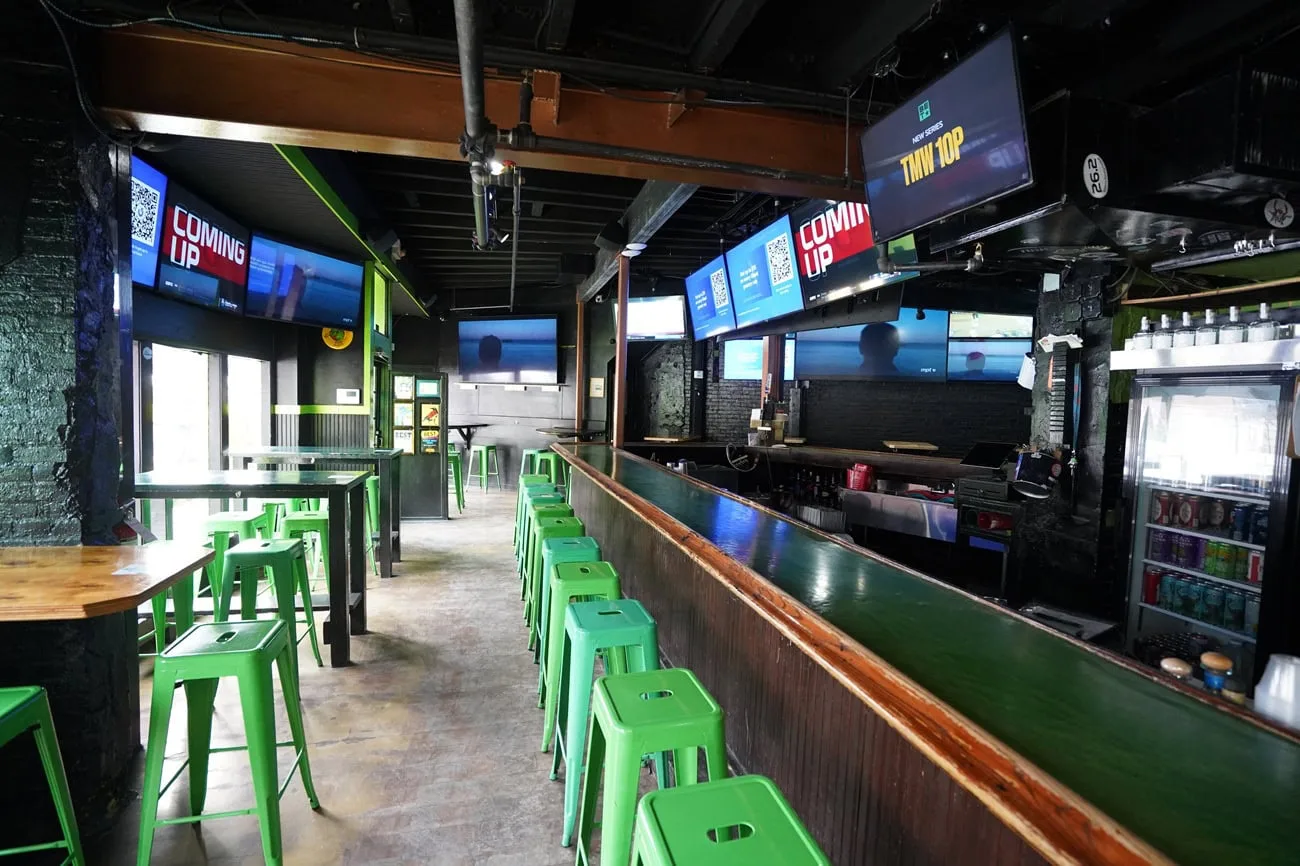
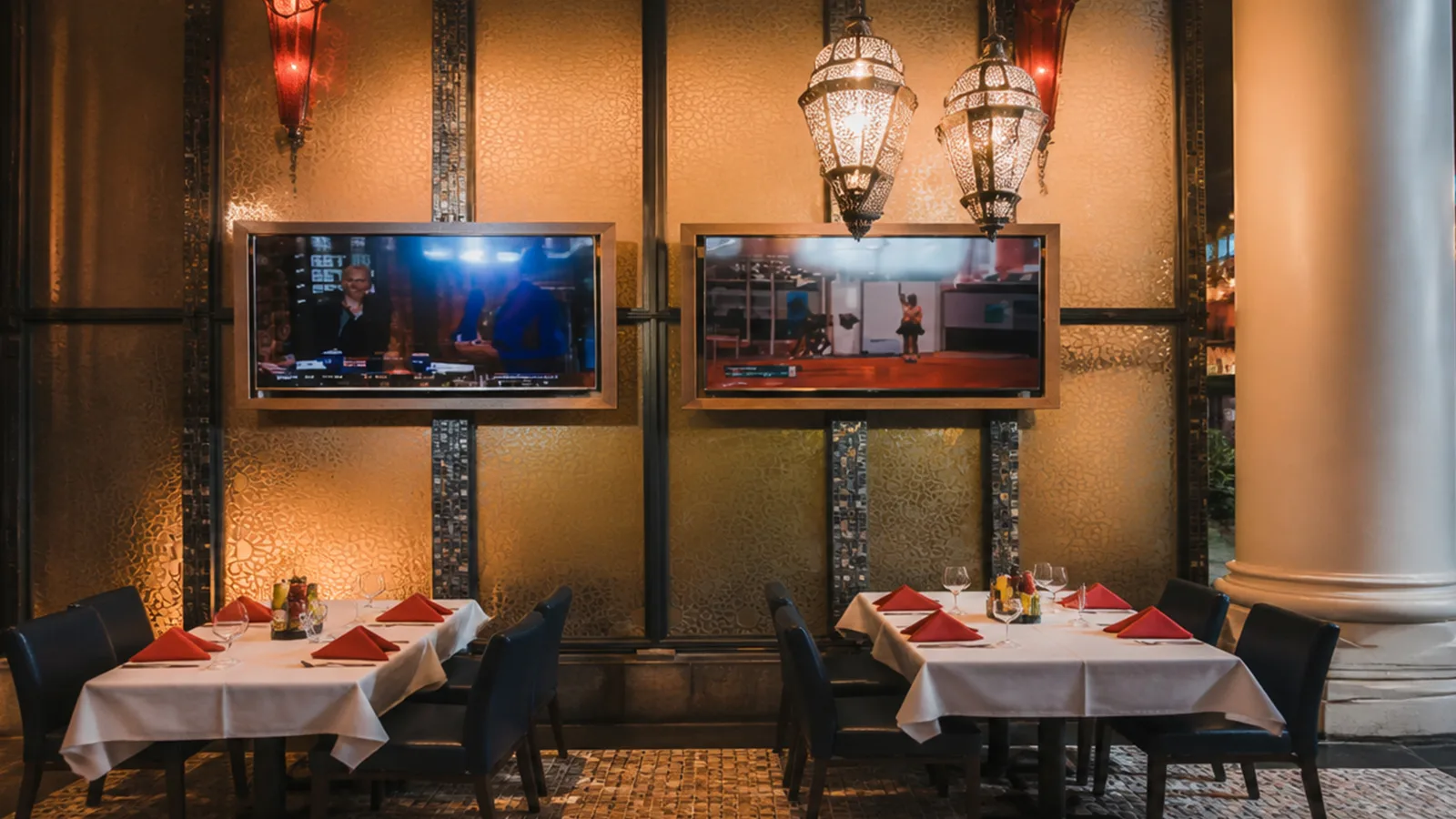
Hard surfaces reflect sound back into the room. Concrete, glass, tile, exposed ductwork and bare tabletops absorb little energy. The reflections arrive milliseconds after the direct sound and blur speech and music together.
Reverberation time (RT60) is the time sound takes to decay by 60 dB after the source stops. A long RT60 lowers speech intelligibility. It also raises the room's overall level at the same occupancy, because guests speak louder to be heard over the reflections.
Document ceiling height and finish materials before specifying speakers, then measure ambient noise at peak occupancy. In a room with a long RT60, acoustic treatment such as ceiling baffles or fabric wall panels improves clarity more than added speakers.
Zoning: Independent Sources and Levels per Area
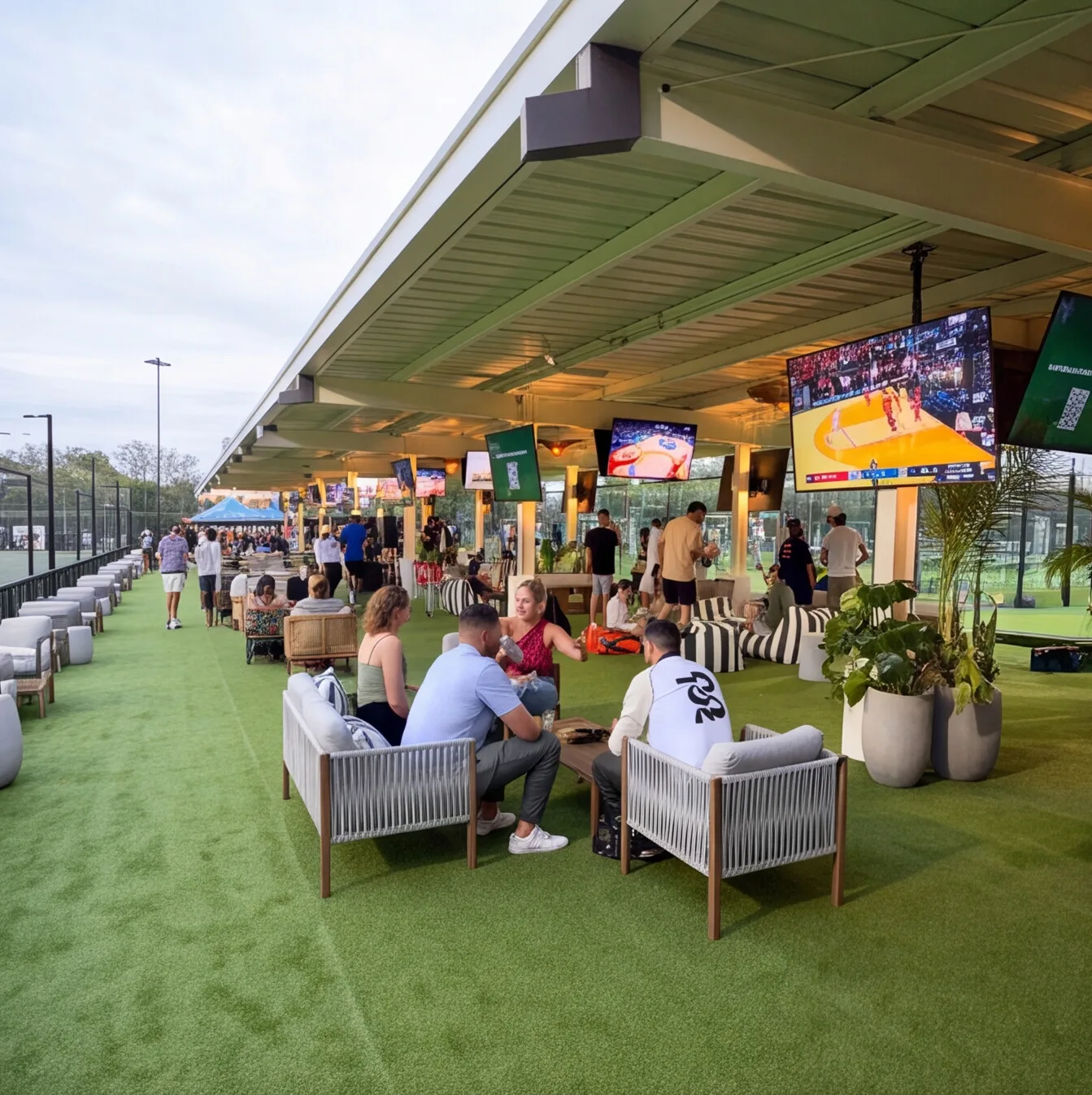
A zone is any area that needs its own source, level or EQ. A full-service restaurant typically runs five: host stand, main dining, bar, private dining and patio. Restrooms and back-of-house can share a paging zone.
Zones are defined in the digital signal processor (DSP) and in the wiring. Each zone needs its own amplifier channel and a dedicated speaker cable run to the equipment rack. Adding a zone after the ceiling closes means reopening it.
The DSP handles per-zone EQ, delay, limiting and routing. It can duck music automatically during a page and send one source to every zone for a major game. Some DSP platforms add ambient noise compensation, which adjusts zone levels from a sensing microphone.
SEE ALSO: Real Price of Cheap Restaurant Sound Systems
70-Volt vs. Low-Impedance Wiring
70-volt distributed systems put a step-down transformer at each speaker. The installer sets each speaker's power with a tap, and one amplifier channel can drive many speakers over long runs with low line loss. Size each channel to the sum of its taps plus headroom, commonly about 20%.
Low-impedance systems (4 or 8 ohm) connect speakers directly with no transformer. They give better low-frequency response and suit subwoofers and short runs. Each channel supports fewer speakers before the combined load falls below the amplifier's rated minimum impedance.
A typical restaurant uses both. Dining areas run 70-volt ceiling speakers, and the bar subwoofer runs low-impedance on a dedicated channel.
Speaker Spacing by Ceiling Height
Coverage is geometry. A ceiling speaker with 90° conical coverage covers a circle at ear height with a diameter about twice the speaker-to-ear distance. Seated ear height is about 4 ft.
A 10 ft ceiling leaves 6 ft to seated ears and a 12 ft coverage circle. A 9 ft ceiling shrinks the circle to 10 ft and raises the speaker count for the same floor area. Edge-to-edge spacing leaves gaps where circles meet, and designs that need even coverage overlap them.
Sound level drops about 6 dB with each doubling of distance in open space. Turning one speaker up to reach a distant table overloads the table directly below it. ANSI/AVIXA A102.01, the audiovisual industry standard for audio coverage uniformity, sets the method for measuring how evenly a system covers a listener area, with the same level at every seat as the target.
Commercial Restaurant Sound System Sizing by Venue Type
Ceiling height and zone count predict speaker count better than square footage. Three common profiles follow.

Counter-Service Cafés and Small Dining Rooms
One or two zones cover the order counter and seating (plus a patio if present). Compact 70-volt in-ceiling speakers run from a single multichannel amplifier with a wall controller for source and volume. The common failure at this size is too few speakers run too loud.
Full-Service Restaurants With a Bar
Plan for three to five zones. Dining areas use 70-volt ceiling speakers, and the bar gets a dedicated zone with a subwoofer for game audio and late-night programming. Staff operate the system from a wall panel or tablet with scheduled presets.
Multi-Room and High-Volume Venues
These venues run five zones or more, with pendant speakers under open ceilings, subwoofers in several areas and a microphone input for announcements. A networked DSP runs scheduled scenes across every zone. Plenum ceilings require plenum-rated enclosures, such as the UL 2043 listed back can on the Extron SF 26CT.
Commercial Restaurant Audio System Comparison
The product families below are examples for each profile. Every manufacturer listed makes products for all four rows.
|
Venue profile |
Typical zones |
Speaker types |
Wiring |
Processing and control |
Example product families |
|---|---|---|---|---|---|
|
Café or counter service |
1 to 2 |
Compact in-ceiling |
70V or 8 ohm |
Basic DSP, wall controller |
Extron SoundField XD, Crestron Saros |
|
Full-service dining with bar |
3 to 5 |
In-ceiling plus bar subwoofer |
70V, sub on 8 ohm |
Multi-zone DSP, staff touch panel |
JBL Control Contractor, Q-SYS AcousticDesign |
|
Multi-room or high-volume |
5 or more |
In-ceiling, pendant and subwoofers |
70V plus 8 ohm where needed |
Networked DSP, scheduled scenes, paging |
Q-SYS, Crestron DM NAX |
|
Patio or rooftop |
Its own zone |
Weather-rated surface mount |
70V |
Dedicated amp channel, DSP limiter |
JBL Control 25-1 and 28-1, Q-SYS AD-S |
Patio and Rooftop Speakers: IP Ratings
Indoor speakers are not rated for outdoor use and can fail within a year from UV, humidity, temperature swings and water. Outdoor speakers carry an IP code under IEC 60529. The first digit rates protection from solids and dust, and the second rates protection from water.
|
Rating |
Solids |
Water |
Typical mounting |
|---|---|---|---|
|
IP-44 |
Objects larger than 1 mm |
Splashing water |
Covered patio |
|
IP-54 |
Dust protected |
Splashing water |
Covered or partly exposed |
|
IP-55 |
Dust protected |
Low-pressure water jets |
Exposed |
JBL's Control 28-1 is rated IP-44 and reaches IP-55 with the optional WeatherMax grille and panel cover. Q-SYS AcousticDesign AD-S surface speakers exceed IP-54 and are tested from -20° to 50° C.
Run the patio as its own zone on a dedicated amplifier channel, with a DSP limiter set to stay within local noise ordinances. Outdoor equipment costs more and has a shorter service life than indoor equipment, and the budget should carry both from the start.
Manufacturers Commonly Specified
-
Crestron: Saros in-ceiling speakers and the DM NAX networked audio platform. A logical fit where Crestron already handles video or lighting control.
-
Extron: SoundField XD ceiling speakers switch between 8-ohm and 70/100-volt operation from a selector behind the grille.
-
JBL Professional: The Control Contractor line covers ceiling, pendant and indoor/outdoor surface models.
-
Q-SYS: The AV division of QSC pairs AcousticDesign ceiling, pendant and surface speakers with its networked DSP platform.
Selection depends on the control platform already installed and the polar data for the specific ceiling height. Layout and processing determine performance more than the manufacturer does.
Control, Licensing and Commissioning
Control: Specify a wall panel or tablet with named presets and locked volume ranges. Staff should change sources and levels without access to DSP settings.
Licensing: Personal streaming accounts are licensed for personal use. Music played in a restaurant is a public performance and requires a commercial music service or licenses from performing rights organizations such as BMI and ASCAP. The system needs an input for a licensed commercial music service that connects to the control system.
Commissioning: Final EQ and limiter settings are made on site in the finished room with furniture in place. A multi-zone restaurant typically takes a couple of days of on-site tuning.
How Crunchy Tech Designs Commercial Restaurant Audio Systems

Crunchy Tech has designed and built commercial AV systems since 2008. Under a design-build process, one team handles the site survey, zone map, DSP programming, installation and post-opening support. Scope covers multi-zone audio, commercial displays, video walls, AV over IP distribution, low voltage lighting and staff control interfaces.
Systems are built for remote diagnosis, and many service issues are resolved before a technician needs to travel to site.
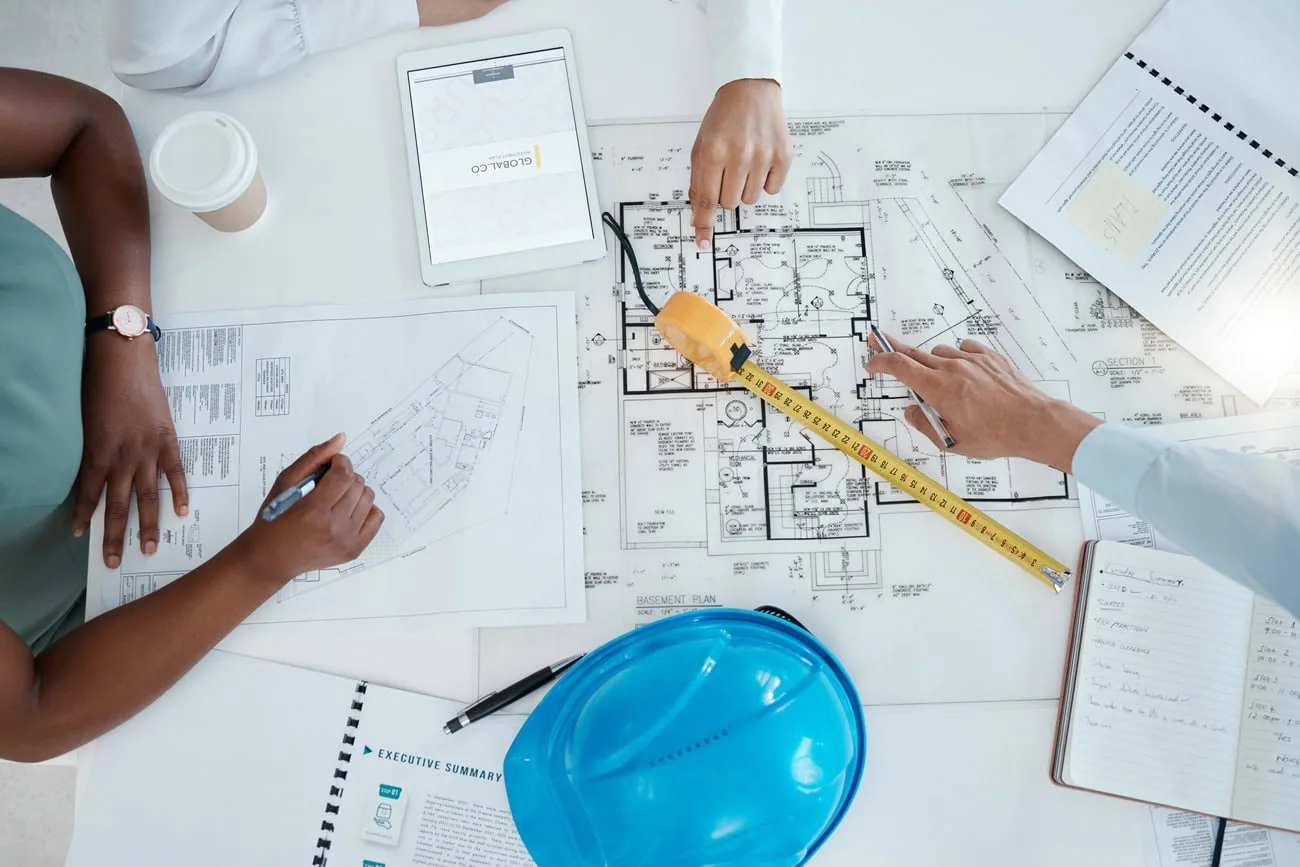
Planning a new restaurant or reworking the audio in an existing one starts with the floor plan and how each area is used on the busiest night. Bring the reflected ceiling plan to the first conversation. Speak to a Crunchy Tech AV expert today.