Audio Visual Memphis | Commercial AV Company
location_on Memphis, TN

Commercial Audio Visual Company in Memphis

Design-build audiovisual for Memphis distribution floors, offices, restaurants, and civic rooms, in a city whose biggest operations never once turn off.

In Memphis the biggest buildings havenooffswitch

This is the logistics capital of the continent, home to the busiest cargo airport in North America and the global superhub that feeds it, and the fact reshapes how AV gets installed here more than most integrators expect. The defining Memphis facility runs three shifts and ships around the clock, which means there is no midnight window to take it dark, no quiet Sunday to cut over a system, no maintenance holiday on the calendar at all. A design that assumes a few hours of downtime to swap the old for the new, standard practice almost everywhere, simply cannot execute in a building that hasn't stopped moving since it opened. The old system has to keep running until the exact second the new one takes its place.

So we sequence the install around the operation instead of asking the operation to pause for the install. New infrastructure goes in alongside the live system, tested in parallel while the floor keeps working, and the cutover happens zone by zone in the seams the operation allows rather than in a shutdown it can't afford. It takes more planning and more discipline, and it's the only honest way to work in a building that never blinks. Around that sits the usual craft: engineering priced for your contractor, a rack burned in at our shop, tuning, training, documentation, and support that mostly answers from our desks. Since 2008.

In Memphis the biggest buildings have no off switch
Install In Memphis the biggest buildings have no off switch Memphis, TN

Commercial AV AcrosstheMid-South

Downtown and Beale Street, the Medical District and Midtown, the airport-and-logistics belt, and the suburbs from Germantown to the DeSoto County line.

2008
Serving Memphis since
10
Neighborhoods
Downtown and Beale Street
Venues · Hotels · Institutional

Beale's music rooms host players nightly, so an installed system has to yield the stage on a preset and come back clean afterward.

Live rooms
The Medical District
Institutional · Corporate

The Medical District buys on committee calendars, where multi-building standards and audit-ready documentation earn their keep.

Institutional · standard
Midtown and Cooper-Young
Restaurants · Bars

Cooper-Young's storefronts share walls down the block, where a string of quiet speakers beats a loud few every night.

Party wall · coverage
Overton Square
Restaurants · Venues · Bars

The Square's rooms flip between dinner and show nightly, and presets carry that change better than a closer's memory.

Multi-mode
South Main and the arts district
Restaurants · Corporate · Venues

South Main's warehouse conversions hand the acoustics the first word, and the speaker layout answers to the brick.

Conversion · acoustics
The airport and logistics belt
Industrial

The freight belt never stops, so the install gets sequenced around a running floor rather than a shutdown that cannot happen.

24-hour · live cutover
East Memphis
Corporate · Restaurants

East Memphis buys conference floors that behave identically, a standardization brief we build for the long haul.

Multi-room standard
Germantown and Collierville
Corporate · Retail · Restaurants

Both suburbs run their own permits and newer stock, which rewards getting infrastructure into framing while it is cheap.

Separate cities · new build
Bartlett and the northeast suburbs
Restaurants · Institutional

The northeast cities permit independently, and their civic rooms hold to the same speech-first standard as the core.

Separate cities
Southaven and DeSoto County
Industrial · Retail

Across the state line sits Mississippi, its own licensing and reviewers, and the paperwork changes even when the design does not.

State line

What we do here

Memphis AV Design for OperationsThatNeverPause

Four kinds of buyers anchor our Memphis work, and the largest run on a clock that has no midnight.

Distribution, logistics, and 24-hour floors

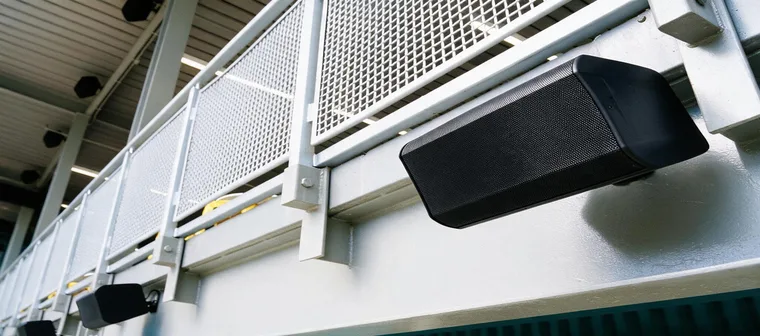
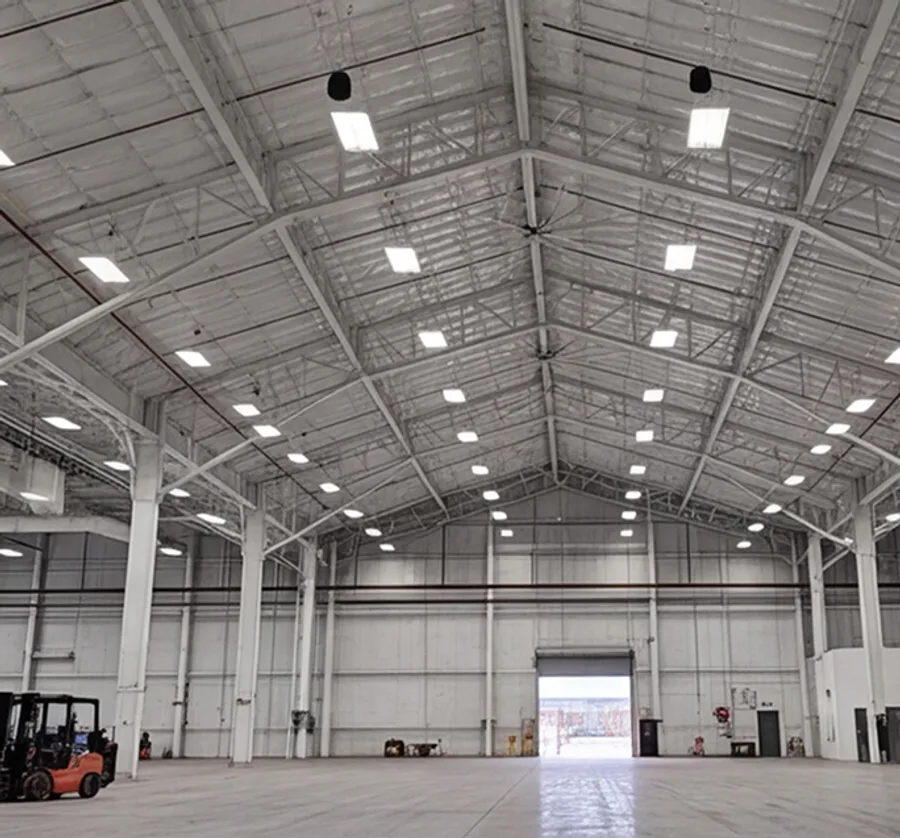
The distribution centers, sortation floors, and freight operations that define this economy present two hard problems at once, and both get solved from the front. The first is the install itself, which has to happen without stopping the line, so infrastructure goes in beside the running system and the cutover waits for the narrow seams the operation permits. The second is the audio brief, pure announcement engineering at enormous scale, where an instruction has to carry across an acre of moving equipment and land whole on a worker facing away with hearing protection on. That gets designed from measured sound levels on a live floor, never from a quiet-building guess. Shift turnover shapes the controls too, since three crews who never overlap will run the room, so simplicity and documentation carry the system across every handover.

Corporate, medical, and headquarters floors

Memphis carries real corporate and medical weight beyond the runways, headquarters operations, hospital systems, and the professional base around them, and their conference floors fail the ordinary ways: a bar built for a huddle aimed at a boardroom, a floor of rooms that drifted until staff quit trusting any. We fix it the durable way, sizing each room from what it physically is, confirming the platforms people genuinely use, and giving a whole floor a single behavior worth learning once. The medical side buys on committee time with documentation rules we meet as issued, and a hospital system spread across buildings gets one standard and one training so nobody relearns a room between campuses. The file gets written for the facilities manager who inherits it, because someone always does.

Restaurants, bars, and the Beale Street districts

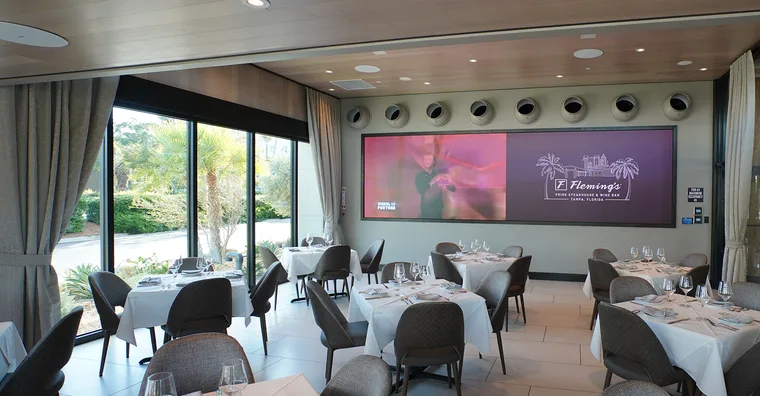
Memphis takes its rooms personally, from Beale's music halls to Cooper-Young's storefronts to the barbecue institutions with generations of regulars, and the building stock is old, hard, and proud of it. Brick and board fling sound around, so coverage comes from a patient string of small speakers each covering its stretch at conversation level, with zones that keep a roaring bar from flattening a quiet table and containment that keeps your night out of the room next door. Live music runs deep in this city, and where a room hosts players, the installed system yields the stage on a preset and returns after the set without ceremony. We do not book talent, we do not mix live shows, and we do not do production camera work. A visiting act finds a labeled tie-in and no interference.

Civic rooms, campuses, and public buildings

The public side of the metro, council chambers, courtrooms, libraries, and campus facilities, buys speech rooms on public calendars against a single test: the citizen in the back row follows every word or the money was wasted. Microphone strategy leads, feedback margin gets engineered rather than wished for, and controls get sized to the clerk who runs the meeting alone, because a staff technician was never funded. Public buyers arrive with bid formats and documentation rules, and we price to the current edition exactly as written. Larger facilities need announcements engineered as their own craft, and instructional rooms obey the rule we hold everywhere, whoever walks in starts teaching without a phone call. Rooms that feed a stream get the outlet designed in, and running the broadcast stays your job.

Our distribution floor runs 24/7. We literally cannot shut down to install AV. Now what?

Now we install around the operation instead of asking the operation to stop, which is the only method that actually works in a building like yours and a method we've built real discipline around. The plan starts by mapping what the floor genuinely allows: not a shutdown, because there isn't one, but the small seams, a zone that idles between waves, a shift change with a few quiet minutes, a section that can run on the old system while we prove the new one beside it. New cabling, racks, and speakers go in live, powered and tested in parallel with everything that's currently running, so nothing depends on the old system coming down first. Then the cutover happens in pieces, zone by zone, each one switched in the seconds its section allows and verified before we touch the next, with the old system carrying the load until the exact moment its replacement is proven. It's slower and more deliberate than a weekend rip-and-replace, and that's the honest cost of never going dark. Crunchy Tech has been doing this since 2008, and we started in support, keeping other people's systems alive under pressure, which is exactly the temperament a live cutover demands. Your floor keeps shipping. The system changes underneath it.

How do you make an announcement heard over a working sort floor?

By treating it as the acoustics problem it actually is, engineered from measurements rather than hoped into place. A sortation or distribution floor is one of the hardest audio environments there is: acres of hard surfaces, conveyors and equipment generating a steady wall of noise, workers spread across the volume facing every direction, many wearing hearing protection that a poorly designed system either can't beat or beats by becoming painful. So the design opens with a measured noise map of the live floor, level by level across the space, because the number that matters is the real one during real operations, not a quiet-building estimate that collapses the moment the shift starts. From that map comes a distributed system, many speakers placed for even coverage at the level intelligibility genuinely requires, tuned so speech cuts through the specific frequency signature of your equipment rather than just adding volume on top of it. Zoning lets an announcement reach one area without blasting the whole building, and integration with your existing safety and paging systems keeps the critical messages priority-routed. The test is simple and we run it on the finished floor: can a worker at the far corner, facing away, protection on, understand the words. If not, it isn't done.

Nobody around here searches for AV companies online. Are we going to find anyone good?

Memphis buys AV the way Memphis buys most things, on relationship and reputation, and the thin search market here reflects that rather than any shortage of good work. A city built on logistics, family operators, and institutions that have been here for generations hires the company that did the room down the street, not the one that ranked first this morning, and honestly that suits us, because a referral market rewards exactly the things we stake our name on: systems that keep working, documentation the next facilities manager thanks us for, and support that answers when something fails at an inconvenient hour. What the quiet search market means for you as a buyer is that online presence tells you almost nothing here, and portfolio, references, and one blunt question tell you almost everything. That question is the one we'd ask in your seat: when the system goes down mid-shift, who picks up, and how fast does it get fixed. Roughly 47% of our support tickets resolve from our desks inside an hour, and in a market like this one that number travels by word of mouth. Ask the operators you trust who built their rooms. That's how Memphis has always shopped, and we're comfortable being answerable to it.

We've got sites in Germantown and across the line in Mississippi. One project or several?

One operation, several sets of paperwork, and the paperwork stays entirely on our side of the desk. The Memphis metro is a jurisdictional patchwork that surprises operators: Germantown, Collierville, Bartlett, and the rest each run their own building departments in Tennessee, and the moment you cross into Southaven or the rest of DeSoto County you're in Mississippi, a different state with its own licensing rules and its own reviewers who care nothing for what Tennessee approved. Handling that is our job, correct trades credentialed for each state, correct filings in each jurisdiction, honest scheduling when one office moves slower than another, none of it becoming your problem beyond a timeline you can rely on. What crosses every line untouched is the operation your people experience: one interface, one preset logic, one training at every location, documentation consistent enough that support never asks which state a ticket came from, and roughly 47% of those tickets closing remotely inside an hour regardless of which side of the line the room sits on. You run one business across two states and a dozen city halls. Keeping that map straight is precisely what you're hiring us for.

What clients say

Operators who run on our systems

Client successes drive Crunchy Tech to become better. Below is how our customers feel about us.

Just do it. Spend the money. It’s well worth it. It’s not worth your time, hassle, energy, and stress of trying to make it look right and do it right when there’s somebody who has been doing it for years and has perfected the craft.

Matt Moore logo
Matt Moore
IT Systems Administrator · Capone's Hideout

You're a great partner with Florida Hospital and this project will make a difference in Children's Health.

Des Cummings logo
Des Cummings
Vice President of Florida Hospital · Florida Hospital

Working with Crunchy Tech was a fantastic experience from start to finish. They handled the sale and installation of all our sound and TV equipment at The County Bar in Aviston, IL, and absolutely nailed it. We were on a very tight deadline, and they not only met it—they delivered top-notch quality and service the entire way. Highly professional, responsive, and easy to work with. We couldn't be happier with the results.

Clint Flowers logo
Clint Flowers
Owner · The County Bar

Crunchy's AV Services are outstanding. Staff members are experts, who really extend themselves to find the right technology for helping us reach our marketing goals in creative ways. The best thing about working with Crunchy is collaborating with the staff – they are patient, responsive, knowledgeable, and available.

Shannon McHale logo
Shannon McHale
Marketing Specialist · IGT

Crunchy has been great to work with. They communicate well and deliver as promised.

Brian Dornbush logo
Brian Dornbush
Facilities & Operations Manager · Orange County Library System

The work Crunchy has been doing is a game changer for this industry.

Steven Fandozzi logo
Steven Fandozzi
VP of Information Technology · Foundation Partners

Being able to reuse the existing structure created a much lower cost for the client and they were ecstatic.

Seminole State College logo
Seminole State College
Facilities · Seminole State College

Crunchy has done an amazing job on our A/V install. The sound is perfectly balanced throughout our many zones and the entire system is super simple to use.
Steve Glum logo
Steve Glum
Chief Marketing Officer · Ace Cafe
Talk to a Memphis AV designer

Let's install it withoutturningyouoff

Tell us the address, the hours the operation actually keeps, and what the space has to do, because in this city the schedule is half the design. The consult covers the outcome and the cutover reality, the walk covers the building and its live noise floor where there is one, and the deliverable is an engineered scope that installs around your operation rather than through a shutdown you can't take.

  • Installs sequenced around 24/7 operations, with cutover in the seams you allow.
  • Sort-floor announcements engineered from a measured live noise map.
  • Tennessee and Mississippi trades, permits, and filings each kept native.
  • Delta humidity and storm season specified at selection, not discovered later.