Sports Bar AV in East Rutherford
location_on East Rutherford, NJ

Sports Bar AV in EastRutherford

Game-day AV for East Rutherford sports bars. Two NFL tenants means roughly double the home dates, so we design zone separation and independent audio that let two rival crowds share one room, with lot-facing patio screens and racks placed for lowland flood exposure.

Tworivalfanbases, one room, alternating weeks

Most sports bars serve one home team. A room near the Meadowlands serves two, and the two fanbases genuinely dislike each other. One week the room belongs to one crowd, the next week to the other, and some weekends both are in at once. Run that on one master volume with every screen visible from everywhere and a rivalry becomes a problem at the door. Nobody walks here, either. Guests drive in off the highway past acres of parking, so a room that looks ordinary from the lot loses them to the next exit.

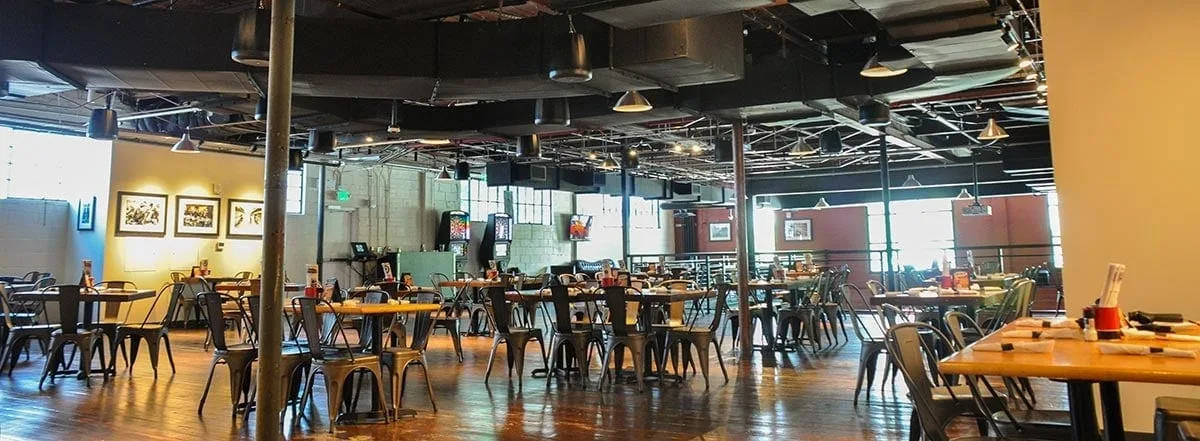
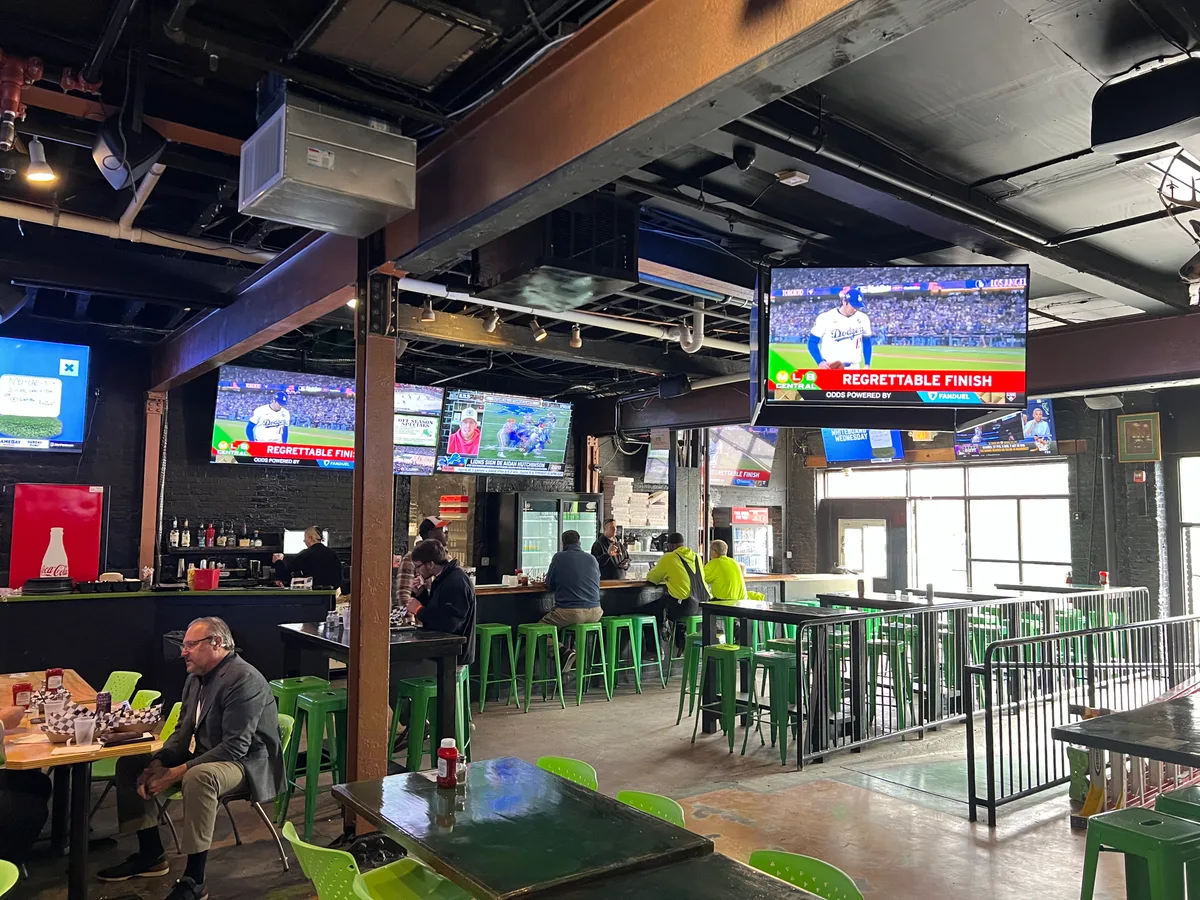
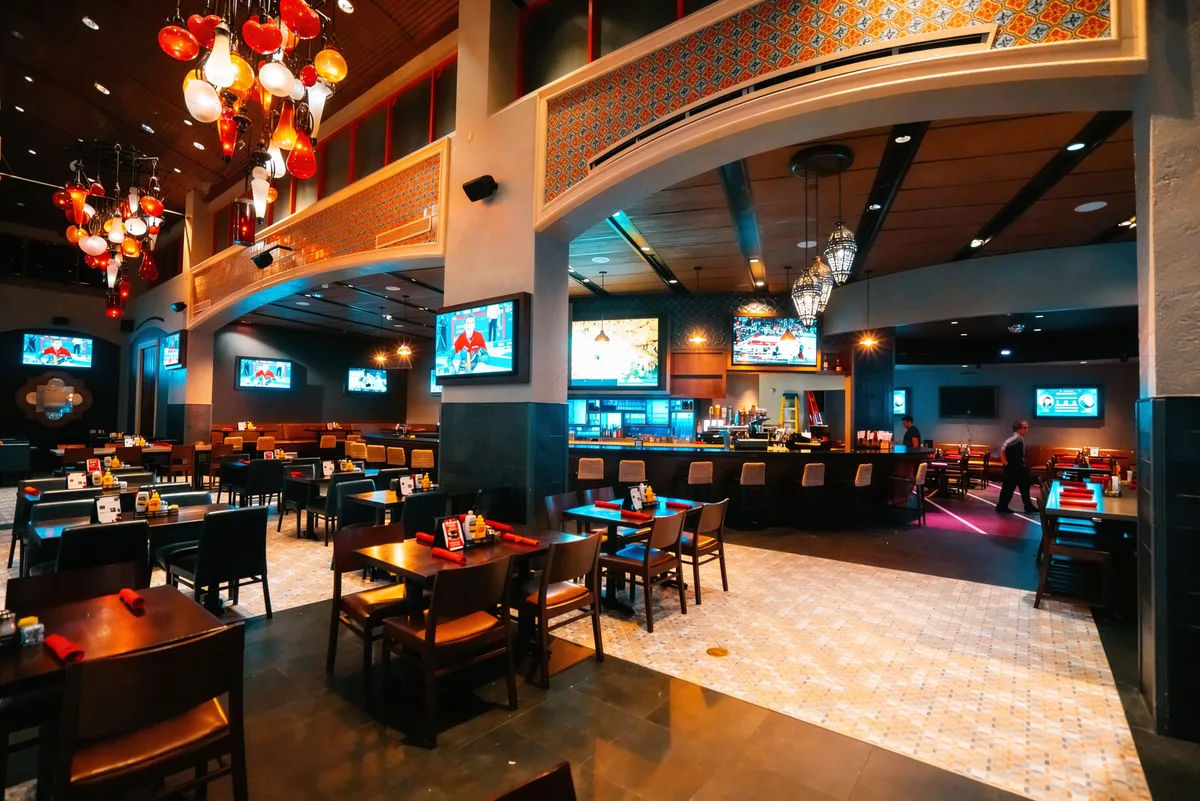
We design these rooms so two crowds can share a building without sharing a feed. Sightlines get mapped so each viewing area has its own wall and its own sound, separated enough that one fanbase is not watching the other's game over its shoulder. Audio runs in zones on a digital signal processor with real headroom, so a weekend with both crowds in stays intelligible instead of turning into one loud argument. Outside, the lot-facing patio gets the brightness and mounting to read from across the parking lot, and the rack sits elevated, because this is reclaimed lowland.

Reel Two rival fanbases, one room, alternating weeks East Rutherford, NJ

Sports Bar AV AcrosstheMeadowlands

From the complex itself out through Bergen and Hudson County, we build sports bar AV sized for a district that fills off the highway and empties all at once.

2008
Serving East Rutherford since
8
Neighborhoods
Meadowlands Sports Complex
Sports bars · Stadium overflow

These rooms take the fastest crowd surge in the state, so they get independently zoned walls sized for standing overflow and presets staff can run without stopping to think.

Peak surge · multi-zone
East Rutherford
Sports bars · Restaurants

Borough rooms swing between a packed home date and a quiet midweek, so daypart presets carry the room in both directions without anyone reconfiguring anything.

Dual-mode · presets
Rutherford
Neighborhood bars · Restaurants

Main street footprints are tighter, so the sightline map drives a leaner screen count placed where every seat gains something instead of filling available wall.

Small footprint · sightline-led
Secaucus
Hotel bars · Restaurants

Hotel bars here host visiting fans who want an out-of-market feed, so routing has to pull several games at once across independent zones.

Out-of-market · independent zones
Lyndhurst
Sports bars · Family restaurants

Regulars rather than events carry these rooms, so the control layer gets built for staff who turn over more often than the customers do.

Year-round · staff-simple
Carlstadt
Sports bars · Taprooms

Bigger rooms in this pocket need even coverage rather than raw volume, so sources get spread across the ceiling instead of pushed hard from the edges.

Large room · coverage-led
Hasbrouck Heights
Neighborhood bars · Restaurants

Higher ground changes the flood picture but not the winter one, so outdoor mounting still gets rated for wind and ice load.

Higher ground · winter-rated
Newark
Sports bars · Hotel bars

Downtown Newark rooms run on arena nights rather than stadium Sundays, so the system gets scheduled around a hockey and concert calendar.

Arena nights · scheduled
NFL · MetLife Stadium
Giants

Home dates empty tens of thousands of people into the district at once, so the room gets sized for standing overflow and the audio for a crowd well past seated capacity.

NFL · MetLife Stadium
Jets

A second NFL tenant means the same room serves a rival crowd on alternating weeks, which is why viewing areas get their own walls and their own independent audio zones.

NHL · Prudential Center
Devils

Hockey fills the weeknights between football dates, so presets bring the room up for a puck drop and back down after without a manager in the settings.

MLS · Harrison
Red Bulls

Match nights bring a singing section, so the audio has to hold that energy in one zone without drowning out the rest of the room.

NCAA · Rutgers
Scarlet Knights

College Saturdays run several games at once, so each zone carries its own matchup and staff flip feeds between windows in seconds.

How we work

Sightlines mapped for twohomecrowds

We do not start with a screen count. We start with the weekend both fanbases are in your building, and figure out where one crowd ends and the other begins.

The consult, then a walk on a home date

Rooms that fail on a rival weekend were usually quoted off a floor plan by somebody who had never seen the crowd split in person. So the first thing we do is a consult rather than a quote: what you want the room to feel like, its size, what it has to do, and the budget range you are working with. The site walk belongs to that consult, and around the Meadowlands we push to schedule it on a home date, because a quiet weekday shows you none of the pressure this room actually takes. Sightlines get measured from four positions: the bar-top, the high-tops, the booths with the worst angles, and the standing overflow that only exists at peak. Here that overflow is a primary zone, since the crowd arrives all at once from a stadium up the road.

Sightlines mapped for two home crowds
InstallSightlines mapped for two home crowds
Sightlines mapped for two home crowds
InstallSightlines mapped for two home crowds

Design you approve, then one crew on site

The second way these projects go sideways is that nobody sees the result until it is built and paid for. So you review the design first, including the view from whichever seats worry you, before any equipment gets committed. Control is programmed around the weekends you actually run, so a single-team home date, a shared weekend with two crowds, and a quiet Wednesday are presets rather than judgment calls for whoever is on shift. One crew handles the install, calibration, staff training, and documentation, and coordinates with your electrician and low-voltage trades. Before the season we write the runbook with your GM, lock the admin settings, and label the zones the way your staff already talk about the room.

What we build

What a Meadowlandsroom actually needs

A game-day room is several systems behaving as one. Here is what we design, program, and install, all of it built off the sightline map and the zone split.

What a Meadowlands room actually needs
InstallWhat a Meadowlands room actually needs

Zoned sound that keeps two crowds apart

The problem here is not volume, it is bleed. A system that is fine at half capacity turns to noise when the room is full, and when two rival crowds are reacting to different games at once, that noise becomes the guest experience. Coverage and headroom are what fix it, not a bigger amplifier. Speakers run around the perimeter leave the middle of the room uncovered while punishing anyone at the edge, so sources get spread evenly at a height and angle worked out for the space. Every viewing area gets its own zone on a digital signal processor with headroom held in reserve, so one section can carry a full-throated crowd while the section beside it follows a different game. Anything on the patio is weather-rated and zoned separately, because lot-facing audio is competing with highway noise.

Displays, video walls, and the lot-facing patio

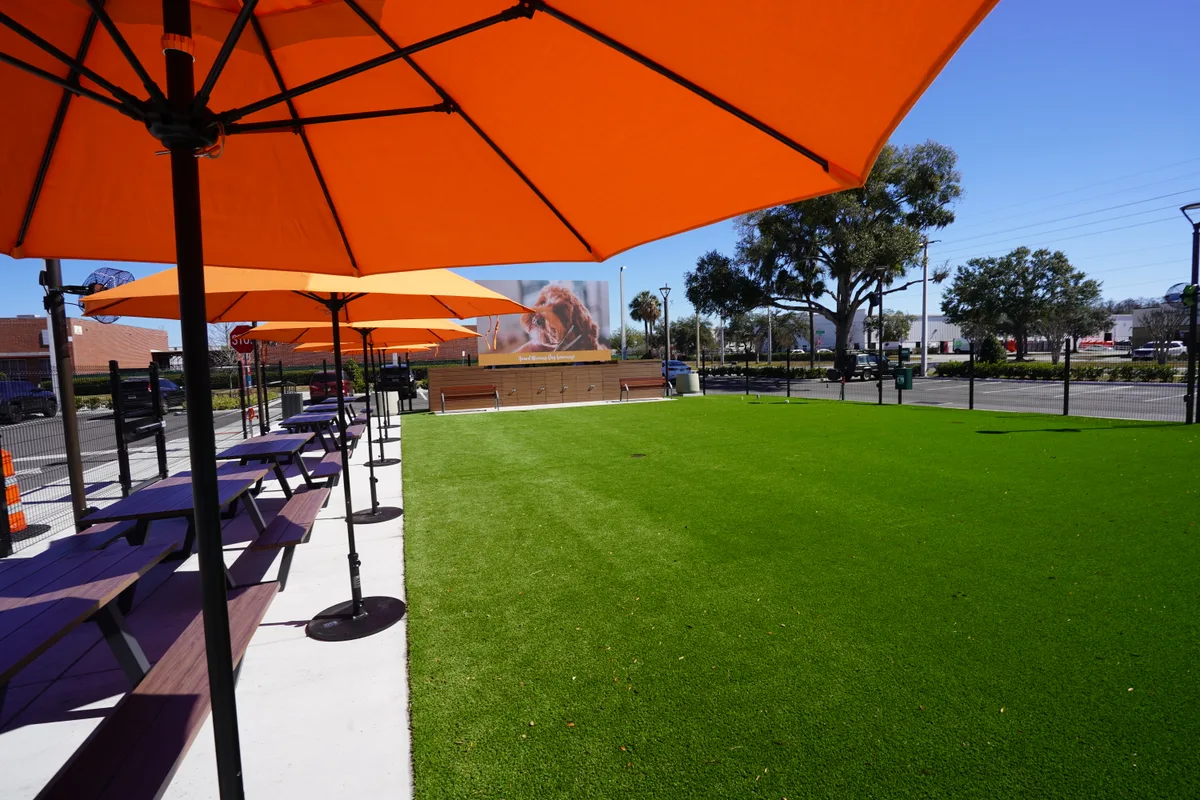
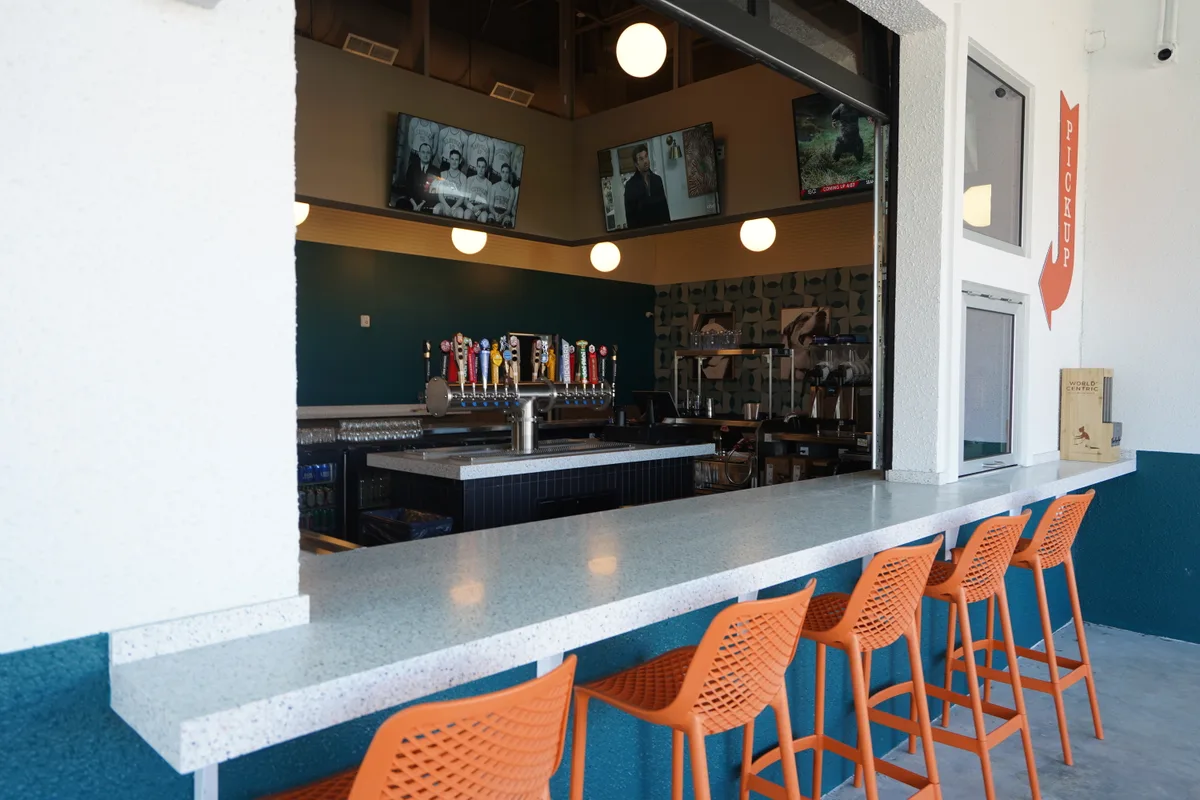
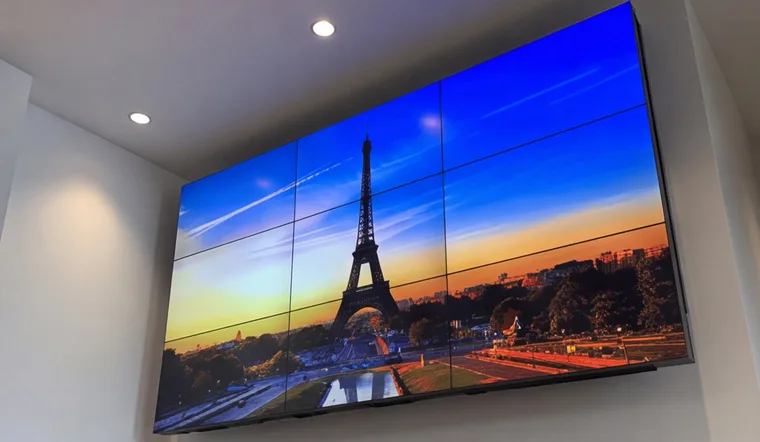
A television on a wall is not a sports bar. A screen should be a content source placed where people can actually watch it. Indoor displays are commercial grade, sized off the four sightline zones, with resolution set by how close the nearest seats sit and placement that keeps a standing crowd from looking at the back of someone's head. Where one screen cannot hold a section, a video wall does it: one large image for a home game, or a grid when two football games and a hockey feed are running together. Outside, your patio faces a parking lot rather than a sidewalk, so screens get high brightness with an ambient light sensor, sealed enclosures, and mounting rated for nor'easter wind and freeze-thaw. That patio is also your sign, and if it reads from the lot, people park.

Distribution, signage, and a network of its own

The part nobody sees is the part that fails at the worst moment. Content moves over an audiovisual network so any source reaches any screen at 4K without lag or signal drop, with matrix switching so you can route any game to any zone and build a viewing area around a crowd that showed up unannounced. Satellite, cable, and streaming sources get consolidated into one serviceable rack instead of a stack of boxes behind the bar, on a schedule so nobody misses a kickoff. Signage carries real weight on a shared weekend, with menu boards that flip to a limited event menu in one tap and displays showing scores and what is on next. All of it runs on a dedicated AV network that never shares bandwidth with point of sale or guest Wi-Fi, the most common reason a wall freezes mid-rush.

Why East Rutherford sports bars trust us with it

Built for doublethehomedates

This is the only market in the country where one building hosts two NFL franchises, which roughly doubles the home dates and puts two rival crowds through the same room. Here is where our depth shows, and where our scope ends.

Two fanbases, one footprint

Most markets hand you one home crowd and a manageable number of home dates. This one hands you two, on alternating weeks, plus a few weekends with both in the building. That makes zone separation a structural decision rather than a nicety: where the walls of sound land, which sightlines overlap, and how you seat two groups who would rather not share a screen. We model the booths one at a time, because partitions and the backs of adjacent booths make them the worst seats in the building. Standing overflow gets treated as a primary zone, since at peak most of your floor is on its feet. Get the split right and a shared weekend becomes your best revenue of the month instead of your hardest shift.

Built for double the home dates
InstallBuilt for double the home dates

Support when the calendar is this dense

Double the home dates means double the nights a failure is expensive. Crunchy Tech started in 2008 as an AV support operation, and learning to fix other people's work is how we learned to build: racks fully enclosed, every cable labeled at both ends, power separated from audio and data, so whoever opens it in three years can follow every run without guessing. Most of the cost of a bad AV install is not the install, it is everything that has to happen later because nobody can find anything. Around 47 percent of support tickets close inside an hour and roughly 72 percent within a day, usually without anyone driving out. With this many event dates on the calendar, remote resolution is the difference between a bad hour and a lost Sunday.

Highway frontage, lowland ground

Two things about this location change the engineering. The complex sits in a corridor of highway and parking rather than a walkable district, so your room has to earn a turn off the road from people who could just as easily keep driving, which puts real weight on the patio and anything visible from the lot. The second is the ground itself. This is reclaimed lowland with genuine flood exposure, so rack placement and elevation are design decisions rather than whatever closet happens to be free. Nor'easters and freeze-thaw finish the list, so outdoor mounting and enclosures get rated for wind, ice, and repeated thermal cycling. Indoors, hold the AV room at or below 75 degrees, because a rack of amplifiers in a sealed closet cooks itself and collects dust.

What it earns back

How a sharedweekend pays for itself

Two franchises in one stadium make the calendar unusually dense, which gives the room more chances to earn and more chances to fail. The return shows up in the seats you can actually sell and in how you scope the spend.

How a shared weekend pays for itself
InstallHow a shared weekend pays for itself

Holding a crowd that has options

You are not short of people on a home date, you are short of reasons for them to stop instead of driving past. That makes capture the whole game. A room where the back third cannot see or hear loses people inside twenty minutes, and in a district built on parking lots the next option is a short drive away. Fix the angles, the glare, and the coverage and the standing crowd stays through the fourth quarter. The lot-facing patio is the single biggest lever, because it adds event-day capacity without new indoor square footage and it advertises the room to everyone parking. On the many nights with no home game, the same screens run signage that moves menu items instead of sitting dark.

Good, Better, Best against one design

Owners usually price AV like retail, comparing a wall of televisions to a system that happens to include televisions. The gap is worth naming plainly: the rack, the distribution, and the control take a serious share of the budget before a single screen or speaker gets bought. So we price Good, Better, and Best against one design, broken out per zone, which lets the dining floor sit at Good while the main viewing area sits at Best. Good is a real recommendation and not a strawman: one room watchable from every seat, zoned audio, tablet control. Better is usually where this market tips, because it adds the second independent zone and the headroom a shared weekend demands. If the budget is short of the room you want, we would rather value engineer it honestly than hand you something you will be babysitting.

How a shared weekend pays for itself
InstallHow a shared weekend pays for itself

How do you design one room to serve two rival NFL fanbases in the same season?

By treating zone separation as structure rather than decoration, because this is the only market where one building hosts two NFL tenants and the home calendar roughly doubles. First, the sightline map is drawn to give each viewing area its own wall, so a crowd in one section is not looking at the other section's game over its shoulder. Second, each of those areas gets an independent audio zone on a digital signal processor with headroom held back, so one side can carry a full-throated reaction while the other still follows its own broadcast and the bar stays workable for taking orders. Third, we lay out seating and standing flow with the shared weekend in mind, since standing overflow here is a primary zone rather than an exception, and a crowd this size arrives all at once. Fourth, control runs on presets for a single-team date, a shared weekend, and a quiet midweek, so nobody is in a settings menu while a line builds at the door. We also try to walk the room on a home date, because a weekday walk tells you almost nothing here.

How much does a sports bar AV system cost in East Rutherford?

It depends on the indoor and outdoor scope, how many independent audio zones you need, the size and resolution of any video wall, and the size of the venue. The honest starting point most owners are not expecting is that the back-end rack, the distribution, and the control take a serious share of the budget before you have bought a single screen or speaker. From there we quote three tiers against the same design. Good gets one room watchable from every seat, with zoned audio, source distribution, and tablet control. Better usually adds the second independent zone and the audio headroom a shared weekend demands, and in this market that is where the return tends to tip. Best layers in multi-room video walls, signage, and integrated control. We break it out per zone, so your dining floor can be Good while your main viewing area is Best. If the number lands short of the room you are describing, we will say so and value engineer it rather than hand you something you will be nursing along.

We are in the Meadowlands flood plain. Where does the equipment actually go?

Not in the lowest closet, which is where it usually ends up. This is reclaimed lowland, so rack location and elevation get decided during design rather than at the end of the install when someone points at an empty space. We look at where water has come in before, where floor drains sit, and how service access works if the room is wet, then set the rack high enough and on the right side of the building. Cable pathways matter as much as the rack, so conduit routing and outdoor speaker and screen locations get planned around where water runs during a storm instead of where the pull was easiest. The rack also gets surge protection and clean power, since nor'easters bring blinks and outages along with the water. Then it all gets documented, with every cable labeled at both ends, so if you do have a wet night the recovery is a couple of hours rather than a rebuild.

Do you handle livestreaming, cameras, or video production?

No. We are a design-build AV integrator. We do not install or operate cameras, we do not shoot or edit video, and we do not run streaming as a service. What we do is build the infrastructure that supports whatever streaming or recording you choose: clean audio feeds to your partner's encoder, documented signal paths so a videographer knows exactly where to plug in, and a dedicated network engineered for the uplink. We design the system around how the bar actually runs, procure the hardware, install it, calibrate it, train your staff, document all of it, and support it for the life of the system. The content and streaming side belongs to specialists, and our job is to make their job easy.

Related Solution

Learn more about our Sports Bars AV solutions

View Sports Bars AV
What clients say

Operators who run on our systems

Client successes drive Crunchy Tech to become better. Below is how our customers feel about us.

Just do it. Spend the money. It’s well worth it. It’s not worth your time, hassle, energy, and stress of trying to make it look right and do it right when there’s somebody who has been doing it for years and has perfected the craft.

Matt Moore logo
Matt Moore
IT Systems Administrator · Capone's Hideout

Working with Crunchy Tech was a fantastic experience from start to finish. They handled the sale and installation of all our sound and TV equipment at The County Bar in Aviston, IL, and absolutely nailed it. We were on a very tight deadline, and they not only met it—they delivered top-notch quality and service the entire way. Highly professional, responsive, and easy to work with. We couldn't be happier with the results.

Clint Flowers logo
Clint Flowers
Owner · The County Bar

Crunchy has done an amazing job on our A/V install. The sound is perfectly balanced throughout our many zones and the entire system is super simple to use.
Steve Glum logo
Steve Glum
Chief Marketing Officer · Ace Cafe
Talk to an East Rutherford sports bar AV designer

Let's design for theweekendbothcrowdsshowup

Tell us about the venue: where you sit relative to the complex, the square footage, the indoor and lot-facing split, and what breaks when two crowds are in at once. We will start with a consult to understand what you are trying to accomplish, walk the room on a home date if we can, and come back with one engineered recommendation instead of a parts list.

  • Independent viewing areas and audio zones so two rival crowds can share one room.
  • Sightlines sized for peak crowd and standing overflow, not the seated layout.
  • Lot-facing patio screens engineered for nor'easter wind, ice, and freeze-thaw.
  • Rack placement and elevation decided around Meadowlands flood exposure.