Why outdoor screens let owners down
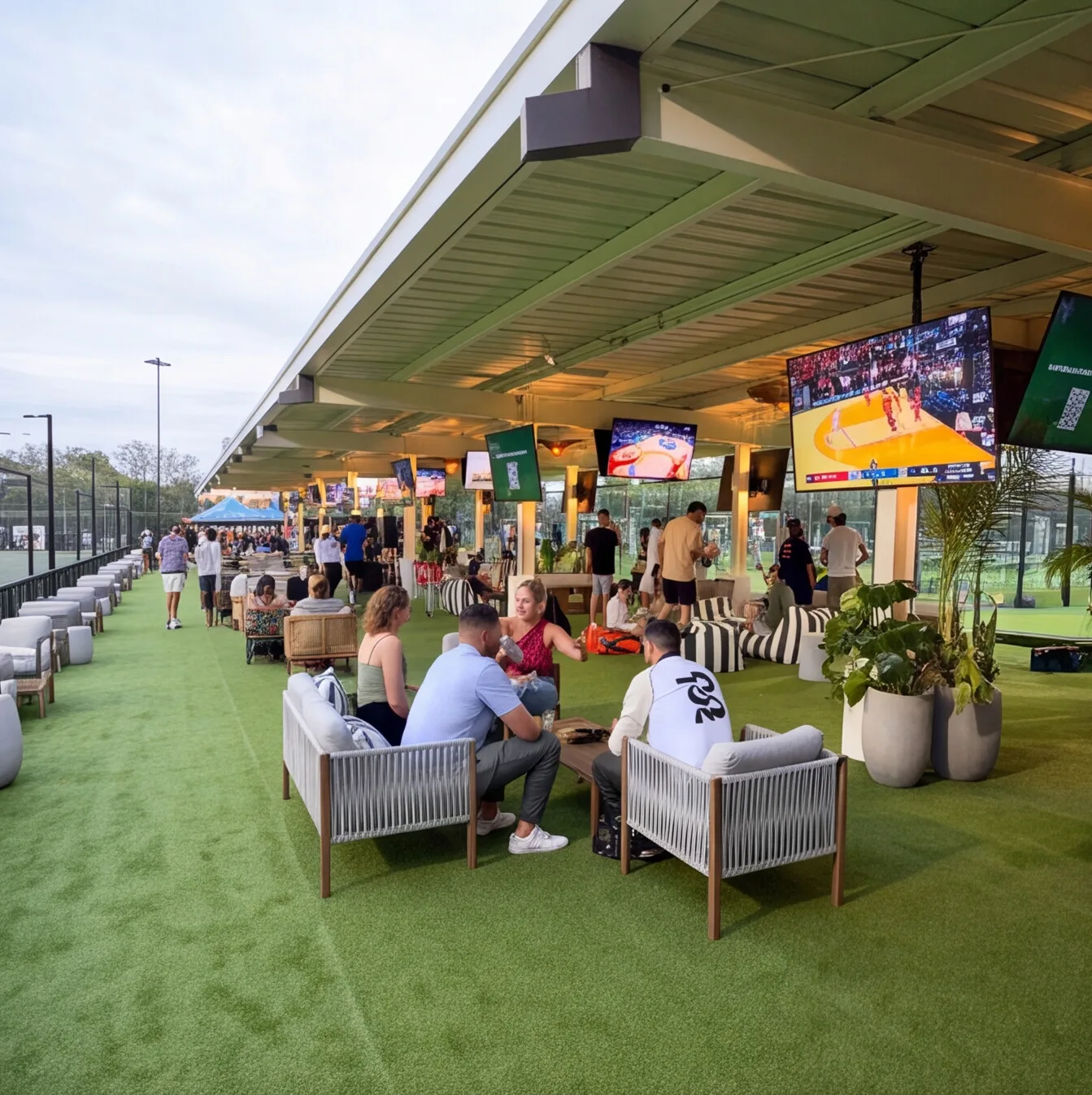
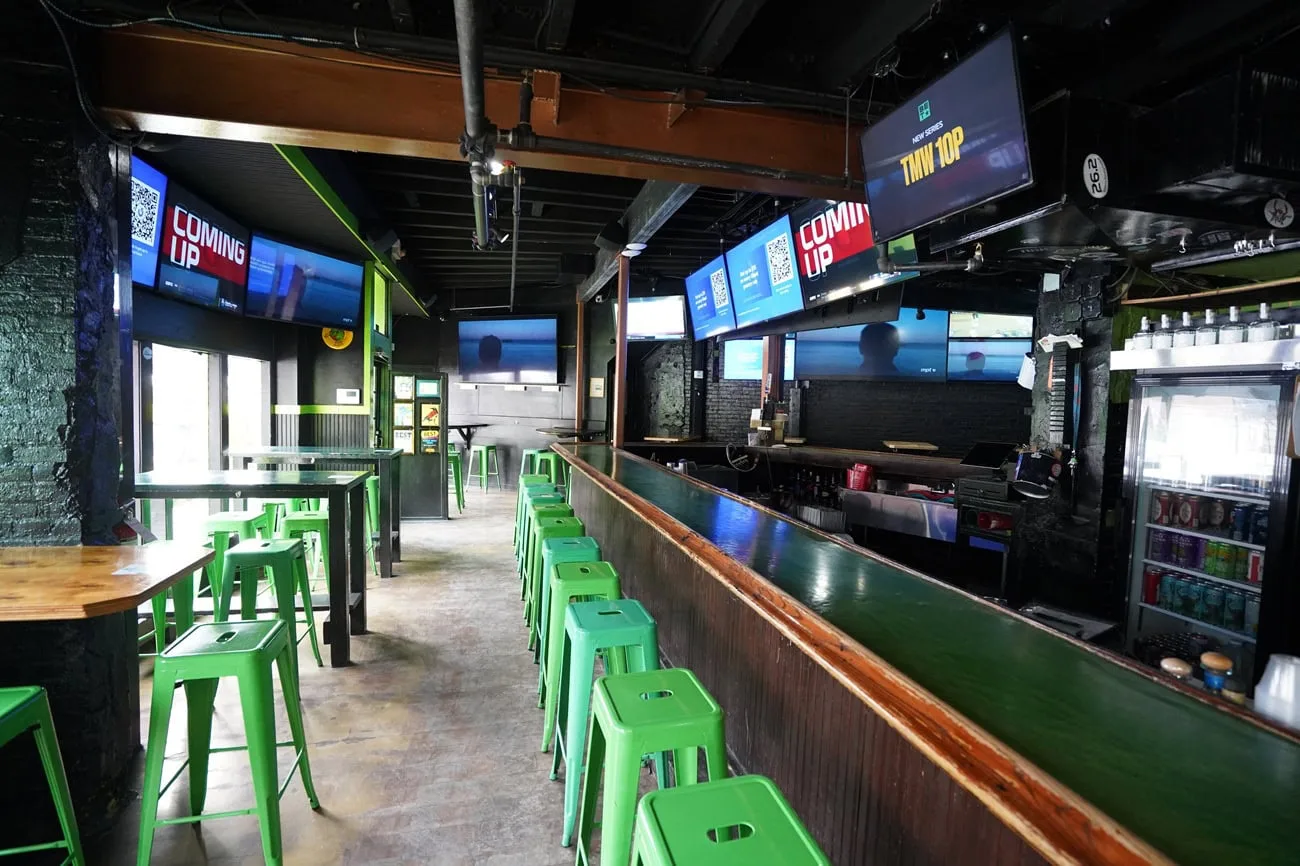
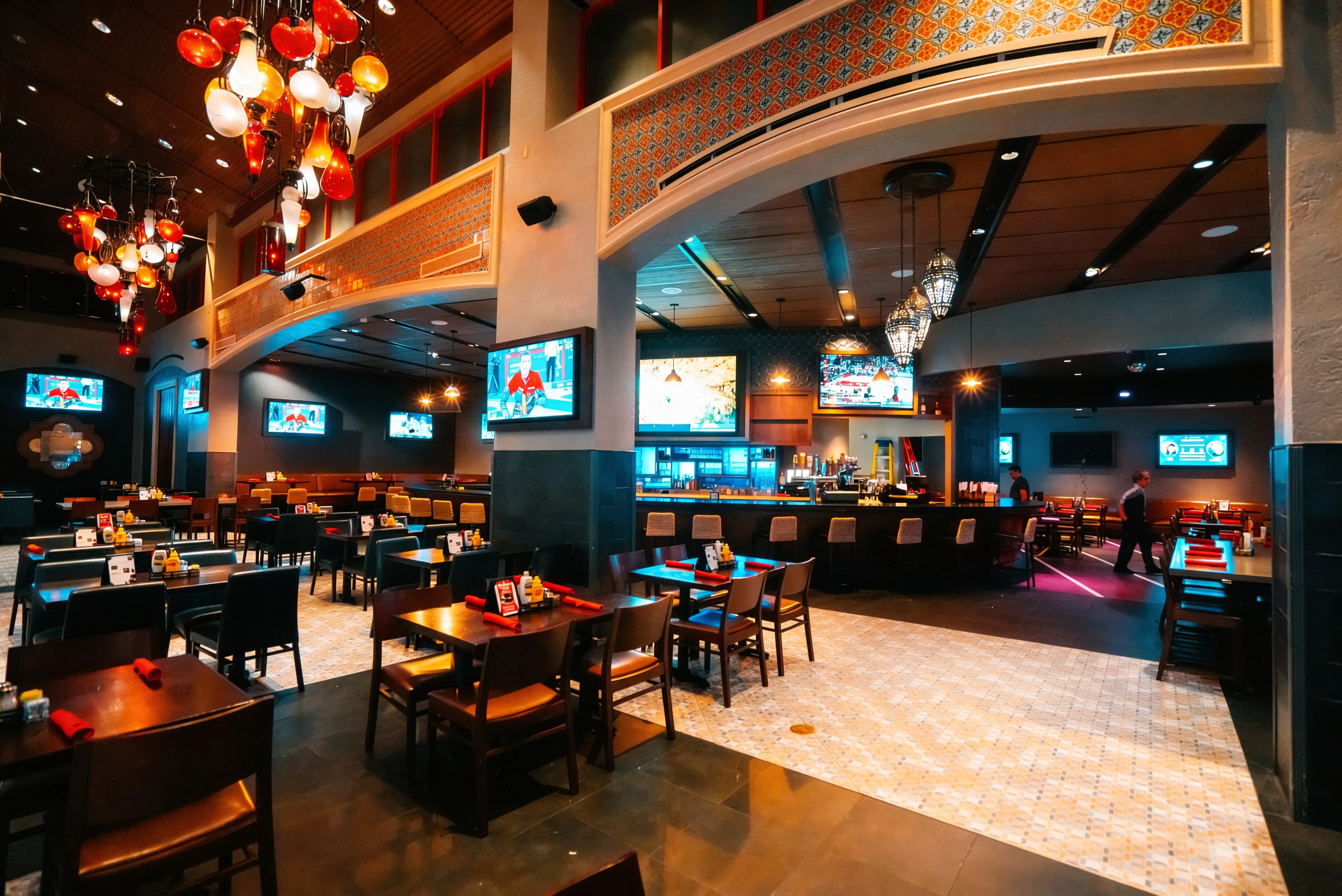
You can't see the game on the outdoor screens at noon. The TVs out there keep failing, and nobody wants to pay to replace them again. On a packed game day, the tables outside that can't see a screen are still full. Next time, those guests pick the patio down the street that got it right. It's fixable.
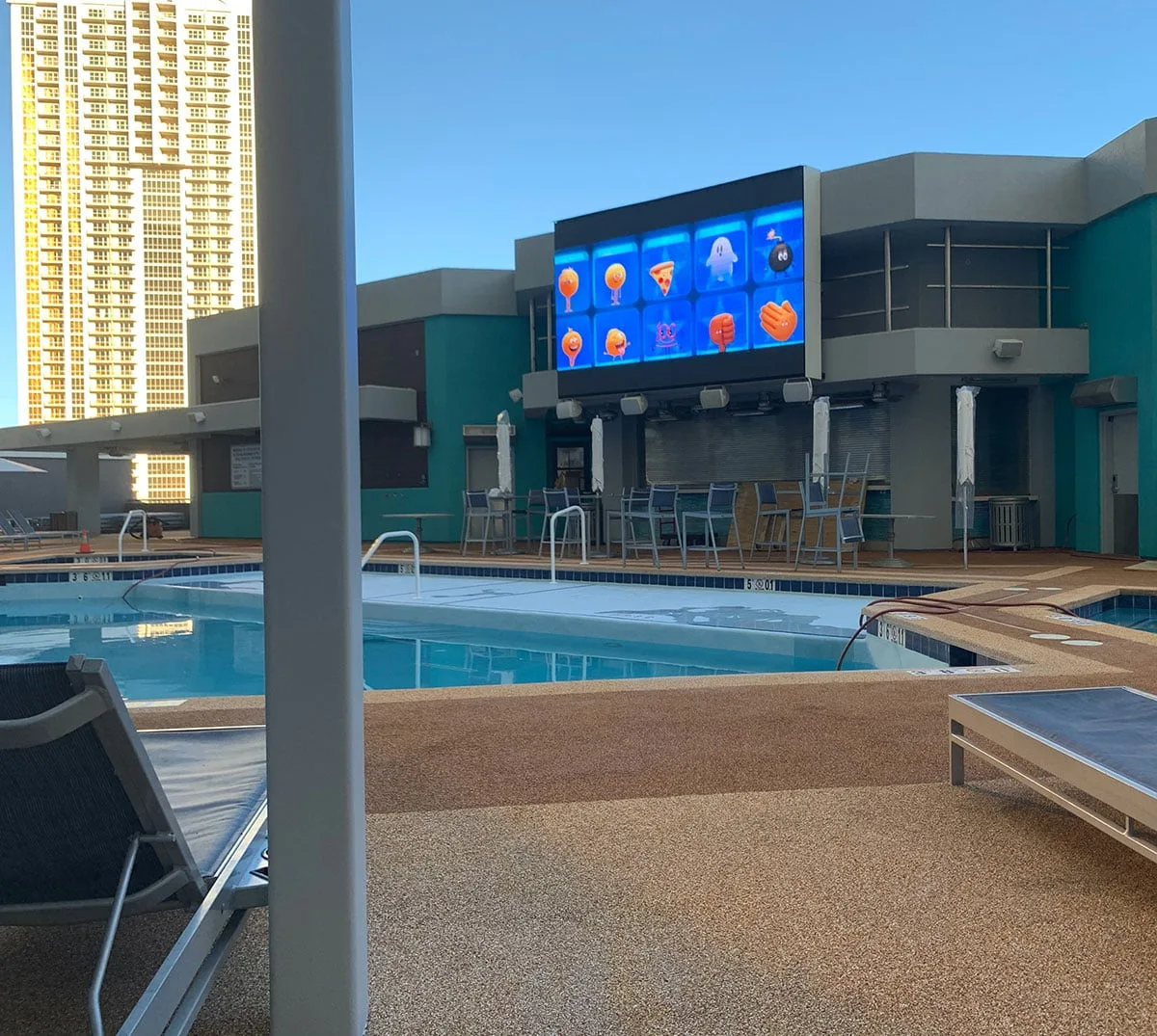
The cause is usually gear that was never built for outside, or a screen placed without checking the glare and the seats. An outdoor LED video wall fixes the brightness and the weather, as long as it's designed for the exact spot it goes in. That means the glare at game time, the humidity, the wind, the seats and who runs it on a Friday night. The same rules hold for any outdoor digital display, whether it faces a sports bar's outdoor seating, a hotel pool bar, a storefront's sidewalk or a venue's entrance.
Now the version that works. At noon on game day, the score reads from every seat on the patio, even in full sun. Tonight's drink special sits beside the game. After dark the speakers carry the roar and the bartender switches channels with one tap. Guests order another round instead of asking for the check.
We've supported commercial audiovisual systems for 18 years, since 2008. We started out with one contract supporting audiovisual systems for a global brand, and that's where we learned what breaks. This guide covers the outdoor specs we design to, and our commercial video wall buyer's guide covers how to compare installers on any video wall.
Can you use a regular TV or LED screen outdoors?
For a video wall outside, the answer is LED, every time. LED cabinets can be built for weather, and they run bright enough that a guest at the far table can follow the action at noon. Regular TVs put outside fail. Running a consumer TV in a business usually voids its consumer warranty too, so the replacement comes out of your pocket.
The same LED cabinets that make a game-day screen also make an outdoor LED sign for a storefront, a venue name or a showpiece at the entrance. One big image with no bezels reads from across the bar or down the street. Smaller displays and audio outside are their own topic, and our outdoor AV guide covers them.
The outdoor LED specs we design to
Outdoors, everything is trying to break the wall, from direct sun to rain to wide temperature swings. These are the specs we hold an outdoor LED wall to. Ask for the sheet on the exact cabinet in any quote and compare it against them.
- Weather rating. IP65 at a minimum, and IP66 or better where the screen takes direct rain or a pressure washer.
- Brightness. 5,000 to 8,000 nits to stay readable in direct sun.
- Pixel pitch. Wider than indoors, because people stand farther back, running up to 8mm and beyond for stadium-scale screens.
- Temperature. Fans and heaters engineered in to handle the swings.
- Mounting. Engineered to the wind load, rated to hold through a hurricane.
- Service access. Check whether the cabinet in your quote opens from the front, the back or both.
Service access matters most when the display mounts flat to a wall. Nobody can reach the back of it there, so a technician has to swap a failed module from the face of the screen. Confirm the cabinets open from the front before anyone draws the mount.
What an outdoor LED screen has to survive
Start with the patio and the equipment list follows. We design for your busiest day, your worst night and your most careless cleaning crew. An LED display outside has to handle water, dust, sun, heat, humidity and wind, so each one belongs in the spec.
Water and dust: read the IP rating
LED display cabinets carry an IP rating, a code from the IEC, the international standards body for electrical equipment. Electronics can fail when dust or water gets inside, and the code grades how well a cabinet keeps both out. The first digit covers solids. Its top score means no dust gets in. The second digit covers water. We spec IP65 at a minimum and IP66 or better for direct weather. Get the rating for the front and back of each cabinet in writing, then compare quotes digit by digit.
Heat: plan the cooling before the panels go up
Heat is the number one killer of LED lifespan, and LED walls draw 300 to 500+ watts per panel. Outdoors the sun adds to it. Ask for the display's operating temperature range and compare it with your hottest game-day afternoon. We engineer rear ventilation into the mount and use fans and heaters to handle the temperature swings.
Wind and storms: engineer the mount
We engineer outdoor mounts to the wind load, rated to hold through a hurricane, rather than trusting the panels to survive an impact on their own. Ask any vendor to say plainly what their mount is rated for and who engineered it.
How bright should an outdoor LED screen be?
Bright enough to read when daylight hits that spot hardest. LED handles midday light that would wash out a regular TV. Brightness is measured in nits, and our outdoor walls run 5,000 to 8,000 nits to stay readable in direct sun. Indoor walls, by comparison, run 600 to 2,500.
The right number depends on the exact spot. We measure ambient light at peak hours at the actual mounting position and model brightness per viewing zone, then recommend one spec. Ask any vendor for each cabinet's rated nits and how far it can dim for evening hours.
Pixel pitch and screen size for outdoor viewing
Start with the seats, because your closest regular viewer sets the pitch. Pixel pitch is the distance between pixels, measured in millimeters. A 0.9 mm screen packs its pixels far tighter than a 3.9 mm one. The wider the pitch, the lower the resolution and the price. A guest 5 feet away and a guest 30 feet away need very different screens.
Indoors people walk right up to a screen, so almost every indoor LED display we design is fine-pitch direct view, which holds 4K detail up close. Outdoors people usually stand farther back, so an outdoor screen doesn't need that fine a pitch. Fine-pitch outdoor cabinets do exist. When the closest table sits well back from the screen, they cost more for detail nobody is close enough to need. For example, a storefront screen read from the sidewalk needs a finer pitch than a venue sign read from the parking lot.
Then walk every seat. Check the bar rail, the high-tops and the standing room. Note where the glare falls at kickoff. We map sightlines from every seat before a single panel is ordered, because guests who have to crane their necks stop watching. Our LED video wall page covers pitch and processing in more depth.
Who handles structure, power, permits and the network
Clear roles keep the patio opening on schedule. Settle service access before anyone draws the mount. On our projects, the rest of the work usually splits like this.
- Structure. We engineer the structural backer and the mount to the wind load, and tell your GC what blocking each display needs.
- Permits. We handle the permitting, which usually takes several weeks. On new construction, our engineering set goes into the GC's permit submission.
- Power. LED walls draw 300 to 500+ watts per panel, so get the screen's maximum power draw to your electrician early. We document low-voltage needs, pathways and dedicated power up front.
- Network. The wall lives on its own dedicated AV VLAN and never shares a network with POS, guest Wi-Fi or security cameras. We bring a network requirements document for your IT team.
- The rack. We rack, wire and program the whole system in-house and test every path before it ships.
Timing matters most. On new construction, bring the AV designer in early. AV power and pathways left off the plans become change orders mid-build.
What happens when an LED module fails
A dark screen on a packed Saturday is the failure guests remember. Outdoors, a well-built LED wall lasts about a decade with weather-cycle maintenance. Modules still fail along the way. When one does, it isn't repaired in place. It gets swapped out, so the questions that matter are how fast a replacement arrives and whether it matches.
LED panels from different production batches are visibly different colors, and the mismatch is permanent. We source every panel on a wall from one production batch and keep batch-matched spares from that run in our climate-controlled Tampa warehouse, labeled by project and batch number. On a failure, we ship a matched spare, and the failed module goes back to the manufacturer for repair and re-enters that revolving pool. You're never waiting on a new production run.
Running the screen: games, specials and sound
The person running the screen might be a bartender with a full rail and a game about to start. If running it takes a hunt through menus, the system has failed, because staff won't fight it. That's why every system we hand over has to pass a ten-second operator test before sign-off. The game stays on the wrong channel while the bartender digs through menus instead of pouring.
The video processor takes every feed, including cable boxes and media players, and maps it across the LED screen. It can run tonight's drink special beside the game in the guests' eye line. Keep it off the play. Daypart automation swaps lunch specials for game-night ones on a schedule, and scene presets tied to your operating calendar power the screen down after close. Our digital signage work covers the content side.
Plan the sound with the picture. Outdoor speakers must be weather-rated. Give them their own zone so the bar outside can run louder than the dining room during the game.
How to budget for an outdoor LED video wall
Outdoor walls cost more than indoor ones. Weather-rated cabinets, high-brightness panels, engineered mounting, permitting and batch-matched spares all add to the first number. Treat them as part of the investment. Skip them and the bill comes later. The low bid is only cheaper on install day.
Price moves with panel type, pixel pitch, total surface area and how much content and control the screen has to handle. Pitch is the biggest lever you control. A finer pitch costs more, and it only pays off when guests sit close. A small interior LCD wall and a large outdoor LED installation live in different orders of magnitude, so a site assessment sets the real price. Plan for annual maintenance too. The industry standard runs 8 to 12% of equipment value.
We build proposals in three tiers, Good, Better and Best, so you can see what each level of investment changes on the patio before you weigh it against the cost. For what an installed project adds beyond an online package price, see the video wall buyer's guide.
How we design it: see it in your venue before you buy it
We work design-build, so one partner designs, installs and supports the screen. Phase one buys clarity. We map sightlines from every seat, document ambient light at peak hours and show you a visualization of the screen on your patio before you spend anything on equipment. Phase two buys certainty. You get a full engineering package with pixel pitch math, structural mounting drawings and a network requirements document, plus a phased proposal with clear options.
Questions to ask before you buy an outdoor LED video wall
Ask every vendor these, and ask us too. Here's how we answer each one.
- Will I see it in my space before I buy? Yes. We produce a visualization of the screen in your venue before you spend anything on equipment, then a full engineering package with clear options.
- What is the mount rated for? We engineer it to the wind load, rated to hold through a hurricane.
- What happens when a module dies? We ship a batch-matched spare from your wall's original production run, kept on your behalf for the life of the install.
- Who handles structure and permits? We engineer the structural backer and the mount, and we handle the permitting.
- What happens after install? Proactive remote monitoring, scheduled annual recalibration, weather-cycle maintenance and SLA-backed response.
Where to start: schedule a site assessment
Let's talk about what your patio could do on its busiest Saturday. Schedule a site assessment, and we'll walk the space with you to check the light, the seats and the structure. Then we'll tell you straight whether an outdoor LED video wall belongs there. If it does, you'll see it in your space before you spend money on equipment. We design, install and support video walls along with the sound, control, signage and low voltage lighting around them.