Just do it. Spend the money. It’s well worth it. It’s not worth your time, hassle, energy, and stress of trying to make it look right and do it right when there’s somebody who has been doing it for years and has perfected the craft.
Sports Bar AV in Fort Myers
Game-day AV for Fort Myers sports bars. Sightline-mapped displays, zoned indoor and outdoor audio, and coastal-rated hardware designed into the build instead of added after it.
A rebuilt room is a chance to get the wiring right
More of this market is new construction than almost anywhere else in Florida. Rooms along the river and out toward the beach were rebuilt after 2022, and plenty of operators used the reset to open a bigger patio, raise the equipment out of harm's way, and rethink a floor plan they had lived with for years. The part that usually gets missed is the AV. Conduit, mounting backing, and rack location are decided during framing whether anyone thinks about them or not, and if the AV shows up after the drywall, the room spends the next decade working around choices nobody made on purpose.
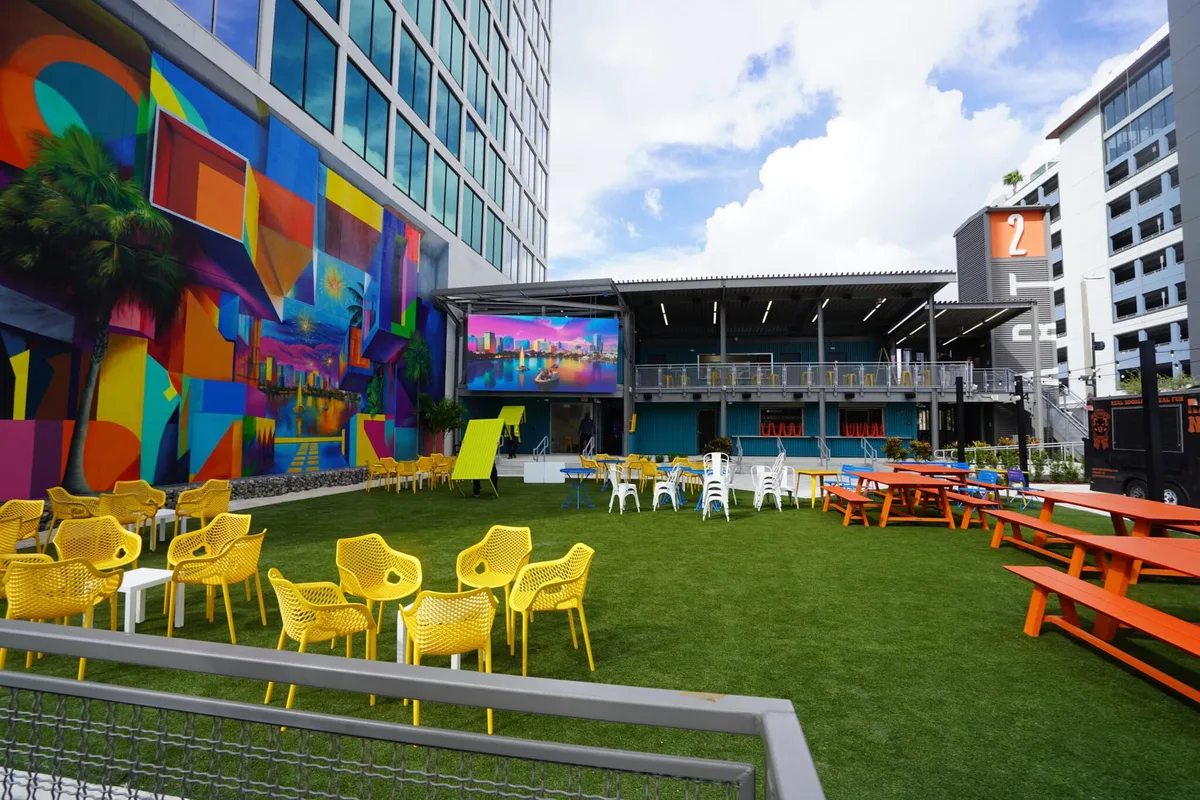
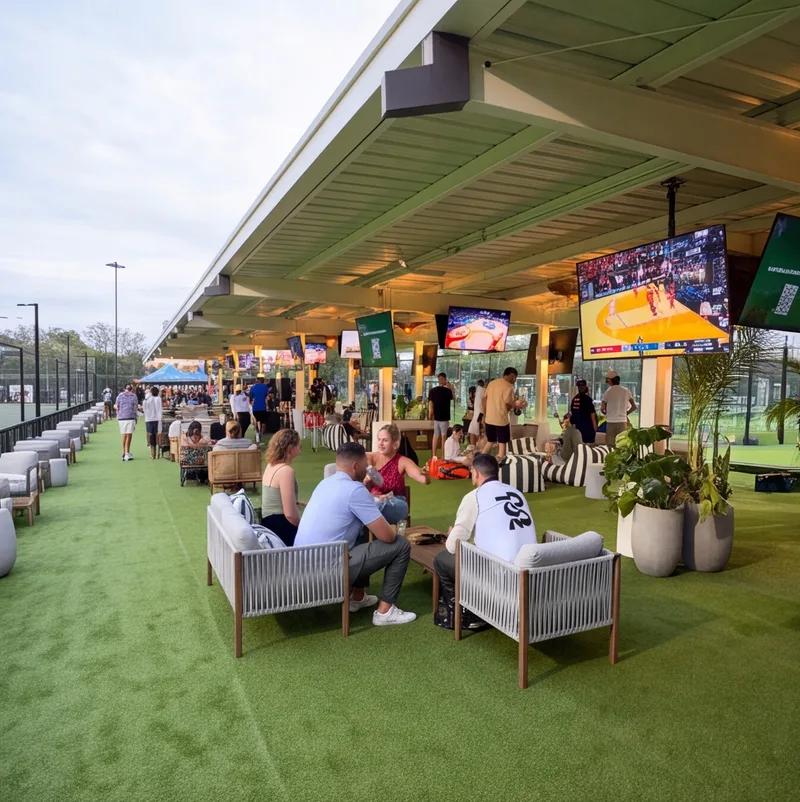
The other thing shaping a Fort Myers build is that a serious share of the seats are outside. Riverfront decks, tiki bars, and open patios are where people want to be for most of the year, and that half of the room is usually treated as an afterthought with an indoor speaker moved outdoors and a screen nobody can read at four in the afternoon. So the design starts with sightlines across the whole property, inside and out, then specifies outdoor displays for sun and outdoor speakers for salt and humidity, with the rack placed and cooled somewhere it can survive.

Sports Bar AV Across Lee County
From the downtown River District to the beach, Cape Coral, and Estero, we build sports bar AV that holds up indoors and on the deck, in a climate that is hard on everything.
Salt corrodes anything unprotected, so outdoor speakers, displays, and mounting hardware get specified for marine exposure rather than upgraded later.
Moisture forms inside enclosures, so outdoor gear gets sealed and drained properly and the rack stays inside the conditioned envelope.
Wind and water drive rack placement and mounting, so equipment sits elevated and protected rather than in the first place there was room for it.
Sun crosses the deck through the day, so outdoor displays run high brightness with ambient light sensors and exposed materials get selected for UV.
How we work
Sightlines mapped before the drywall goes up
We do not start with a screen count. We start with the whole property, indoors and out, and with what has to be in the walls before anyone closes them.
The consult and the site walk
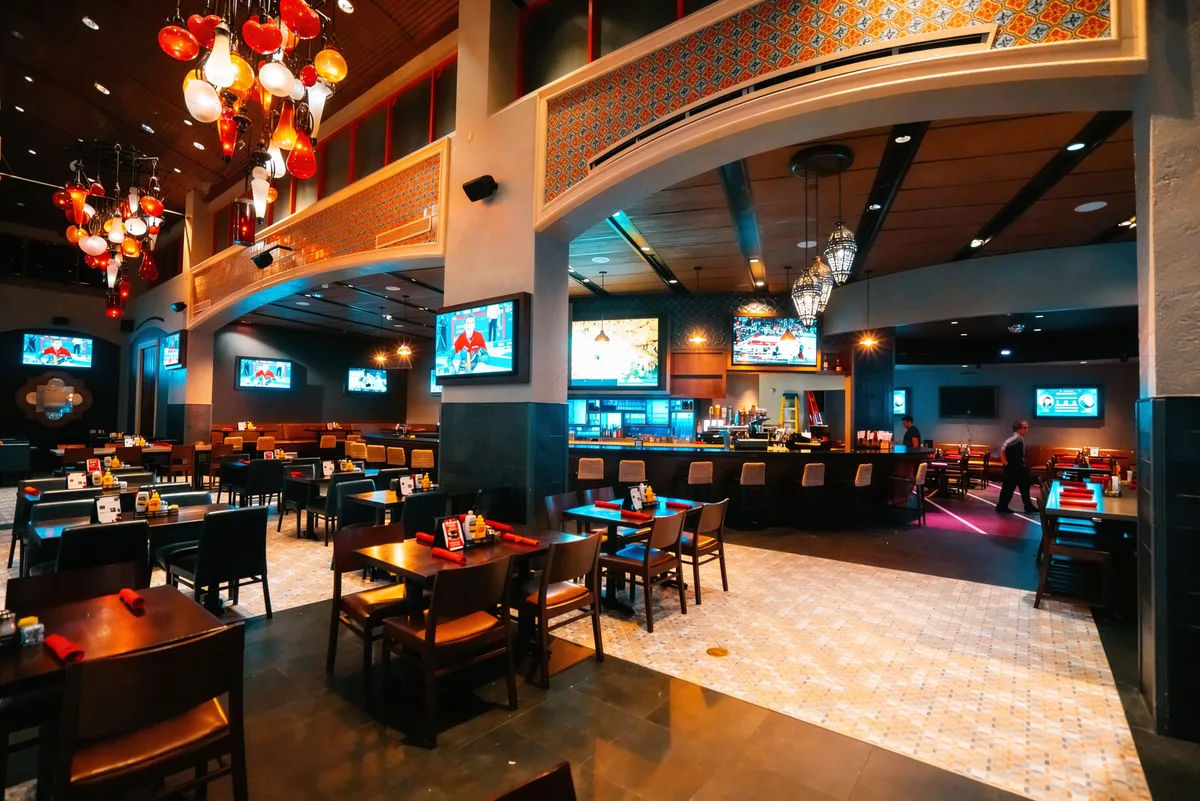
Most disappointing game-day rooms were quoted off a floor plan by someone who never stood in the back booth. So we start with a consult rather than a quote: what you want the room to feel like, how big it is, what it needs to do, and the budget you are working with. Then we walk it, ideally on a busy night, and measure sightlines from the four places people actually sit: the bar-top, the high-tops, the booths with the worst angles, and the standing overflow that only exists when the room is full. In Fort Myers we walk the patio and the deck the same way, in daylight, because a screen that looks fine at eight in the evening can be unreadable at four in the afternoon.
Design you can see, then one team on site
On a rebuild or a new build we would rather be in the conversation during framing, when conduit paths, mounting backing, and rack location still cost almost nothing to get right. You see the design before you commit to equipment, including the view from the seats you were worried about. Control gets programmed around the modes you actually run, so a packed Sunday, a quiet August afternoon, and a doors-open evening are presets rather than arguments. One team handles the install, calibration, staff training, and documentation, and coordinates with your general contractor, electrician, and low-voltage trades.
What we build
The AV stack a Fort Myers sports bar runs on
A game-day room is a handful of systems working as one, and here the outdoor half counts as much as the indoor half.
Audio that works inside and out
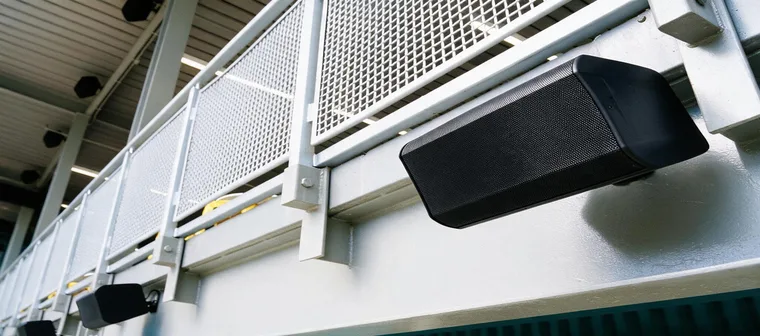
Indoors the job is even coverage at a level a full room can hear without punishing whoever sits nearest a speaker, which means more sources at lower level rather than a few loud ones at the edges. Outdoors it is a different problem entirely. Open air gives you nothing back, so sound disappears instead of reflecting, and the fix is more speakers spread across the deck rather than louder ones at the door. Hardware gets specified for salt, humidity, and driving rain rather than treated as an indoor speaker moved outside. Indoor and outdoor run as separate zones on a processor, so the patio can carry the game while the dining room stays conversational.
Displays, video walls, and the daylight problem
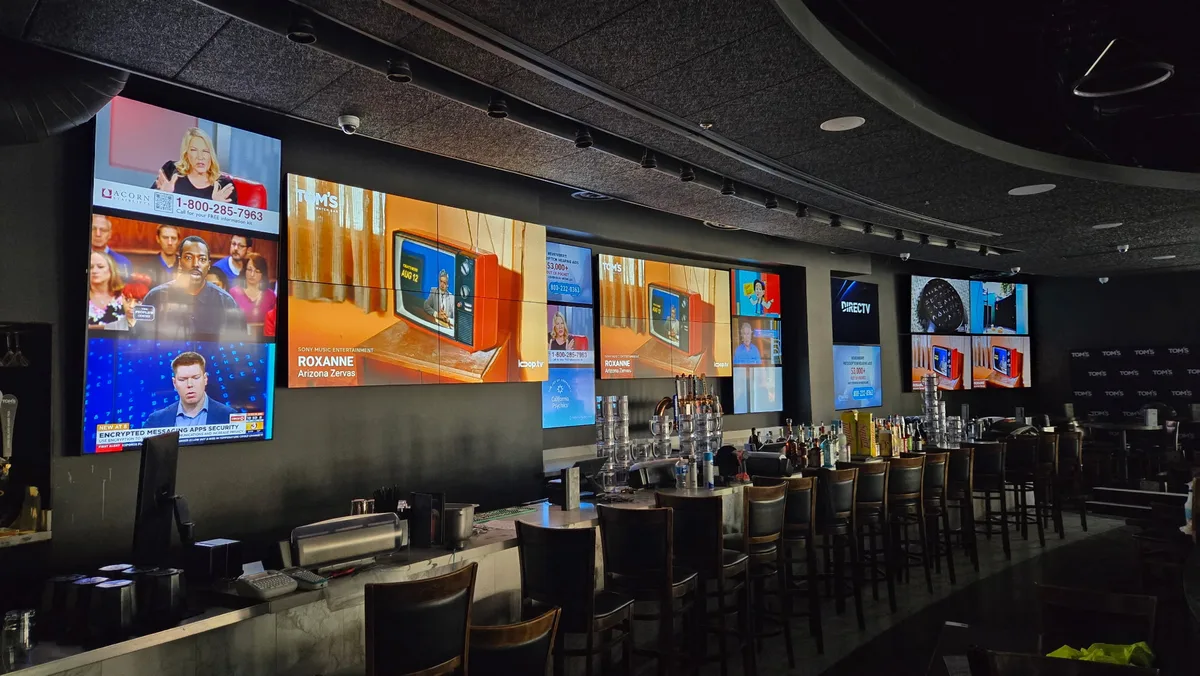
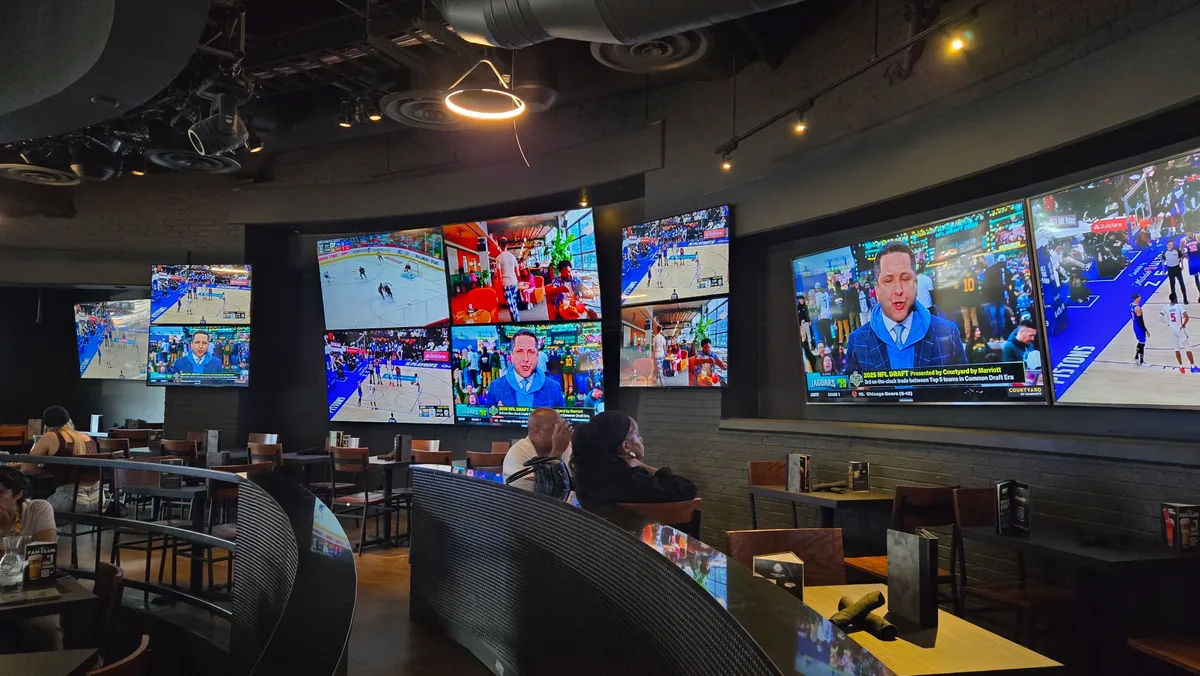
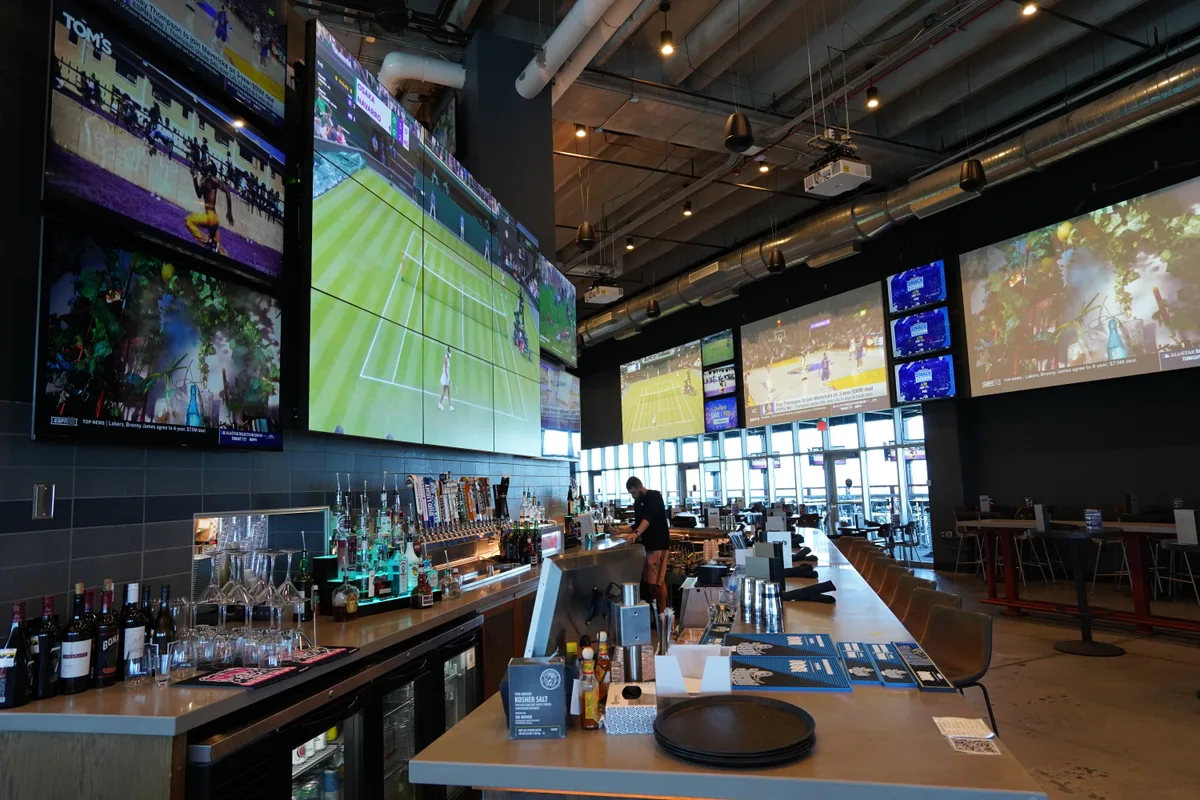
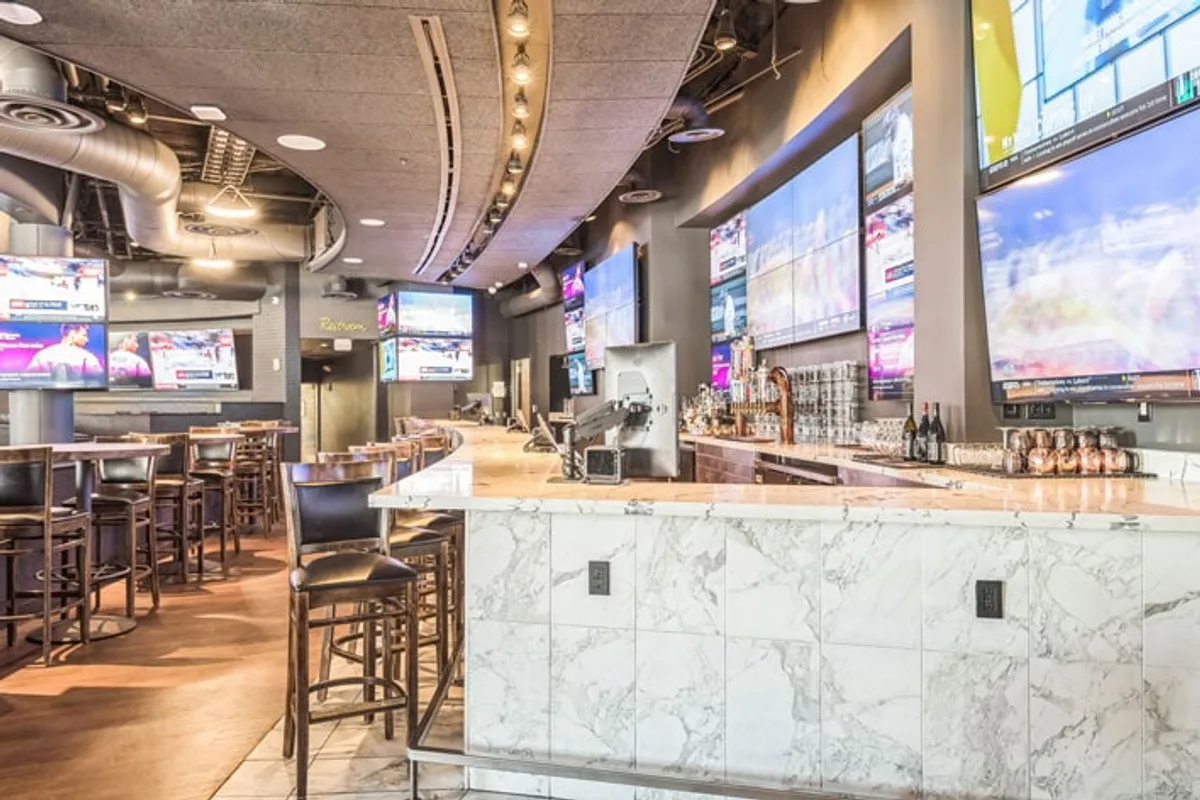
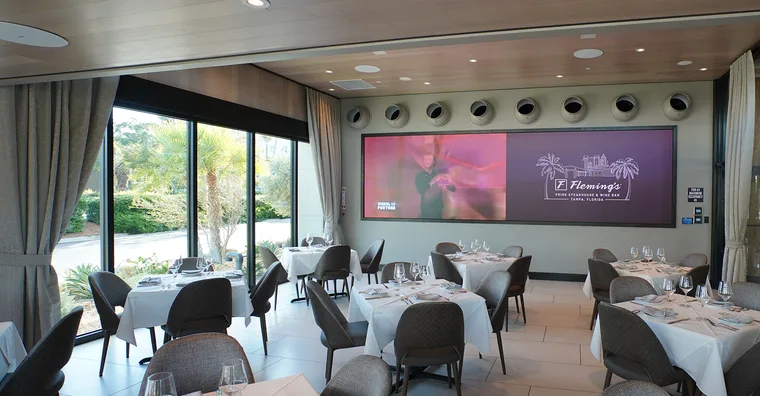
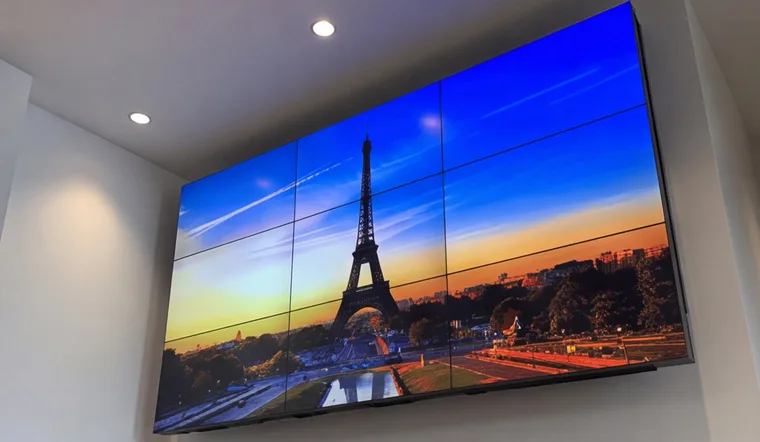
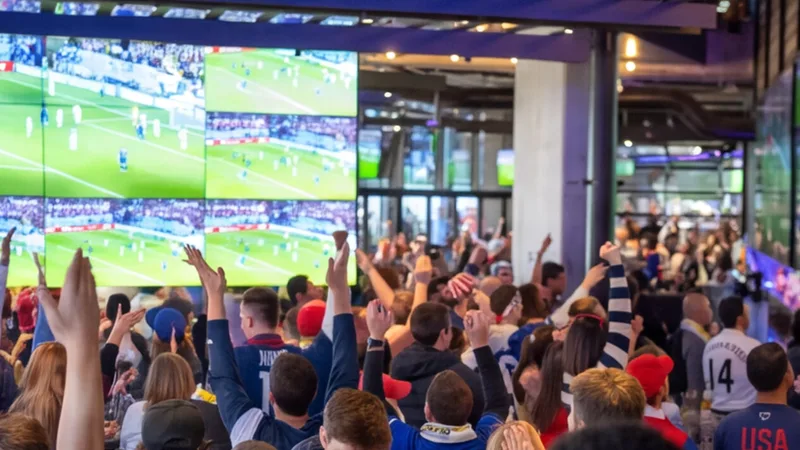
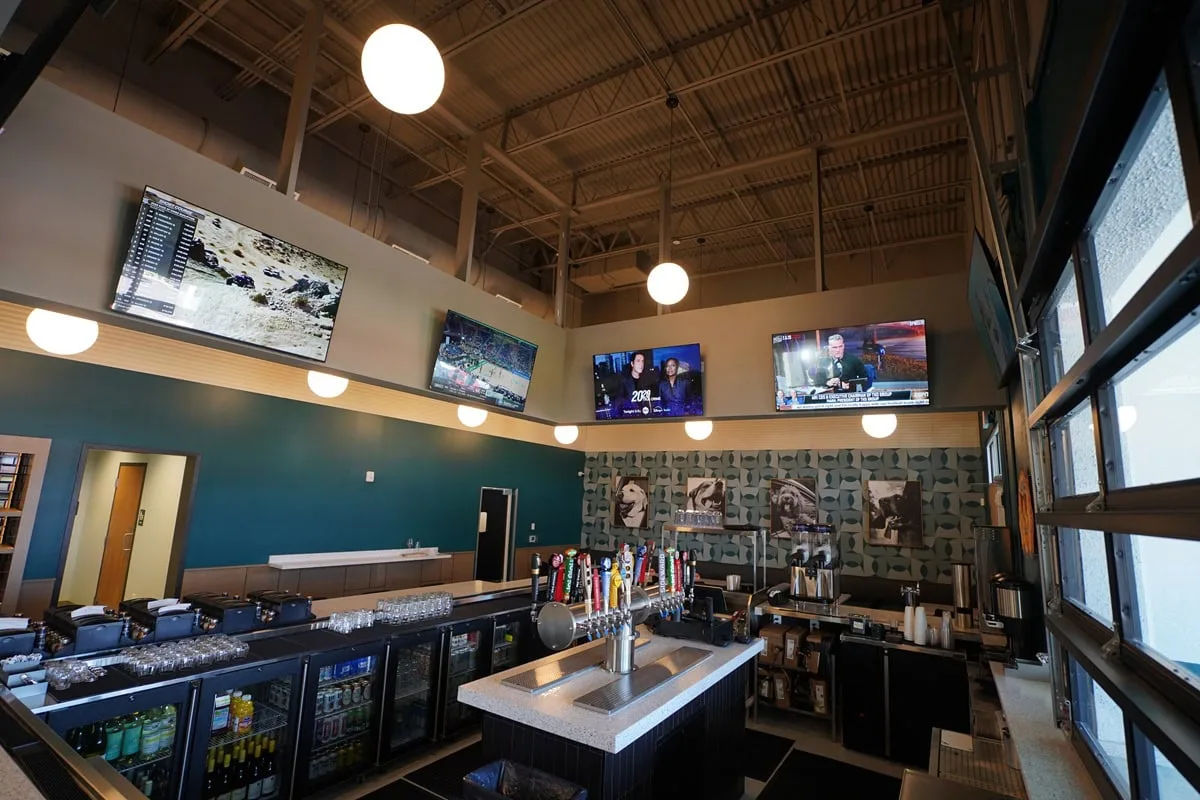
A television on a wall is not a sports bar. A screen should be a content source placed where people can actually watch it, and outdoors in Florida that means real outdoor-rated displays with the brightness to beat afternoon sun, not a consumer panel under an awning. Indoor displays are commercial grade and sized off how close the nearest seats really sit. Where one screen cannot carry a section, a video wall does the work: a single large image for a Sunday, or split into a grid so one wall holds several games at once. Any source reaches any screen from a tablet, indoors or out.
Distribution, signage, and control
The part nobody sees is the part that fails at the worst moment. Content moves over an audiovisual network so any source reaches any screen without lag or signal drop, with matrix switching so you can route any game to any zone and build custom viewing areas, all at 4K. Satellite, cable, and streaming sources get consolidated into one clean rack instead of a pile of boxes behind the bar. Digital signage earns its keep between games: menu boards you can update live, and displays carrying scores and what is on next. All of it runs on a dedicated AV network rather than sharing bandwidth with your point of sale, with surge protection specified rather than assumed.
Why Fort Myers sports bars trust us with it
Built for open-air seating and a coastal climate
Southwest Florida is hard on equipment and generous with outdoor seating. Here is where our depth shows, and where our scope ends.
The patio is not a smaller version of the bar
Sightline mapping is what separates a real sports bar from a restaurant with televisions, and outdoors the mapping changes entirely. Sun moves across a deck through the afternoon, so a screen that reads perfectly at one table is washed out at the next, and the seats facing west during a late game are a different design problem from the ones under a roof. So we model the outdoor positions individually and in daylight. Watch for people craning their necks to see a screen instead of talking to their table, and you are watching a design failure, outside as much as inside.
Support after opening night
Crunchy Tech started in 2008 as an AV support operation, which is an unusual origin for an integrator and the reason the systems get built the way they do. When you spend years fixing other people's work, you learn exactly where installations cut corners. That shows up in a rack you can actually service: fully enclosed, every cable labeled at both ends, power separated from audio and data. We have opened racks that looked fifteen years old after three months in an uncooled closet, with dust caked on every surface. Most of the cost of a bad install is not the install, it is everything that happens later because nobody can find anything. Around 47 percent of support tickets close inside an hour and roughly 72 percent within a day.
Salt, humidity, and where the rack lives
Three coastal realities shape the build. Salt air corrodes anything unprotected, so outdoor hardware gets specified for marine exposure and mounting hardware gets chosen to match. Humidity means condensation inside enclosures, so outdoor gear gets sealed and drained properly rather than sprayed with a coating and hoped over. And storm season makes rack placement a real decision: elevated, inside the conditioned envelope, on protected circuits, with the equipment room kept at or below 75 degrees. Rooms rebuilt after 2022 usually got these right by accident of new construction, and it shows in how long their systems last.
What it earns back
How a game-day room pays for itself
This market swings hard between a packed season and a slow stretch, and the outdoor seats are a large share of what you sell. Both belong in the math.
The outdoor seats are the ones people ask for
A seat nobody can watch the game from sits empty on the day you most need it full, which is the whole reason we map sightlines first. Outdoors that arithmetic is sharper, because the deck is usually the seating guests request by name and the part of the property that fills first. If the patio cannot hold a game properly, you are turning your best tables into overflow. Getting it right extends the usable hours of the whole property, and between games the same displays run signage that moves menu items rather than sitting dark.
Good, Better, Best against one design
Most owners price AV like retail: twenty televisions cost a certain amount, so twenty screens on a system should not cost much more. Worth being plain about the gap, because the rack, the distribution, and the control take a serious share of the budget before you buy a single screen or speaker, and outdoor-rated hardware costs more than the indoor equivalent for good reason. So we quote Good, Better, and Best against one design, per zone. Good is a real recommendation, not a strawman: one room watchable from every seat, zoned audio, tablet control. Better usually adds the deck properly. If your budget is short of the room, we would rather value engineer it honestly than sell you outdoor gear that fails in a season.
We are rebuilding. How early should AV be involved?
Before framing closes, and earlier than most people expect. Three things get decided during construction that are expensive to change afterward: where conduit runs, where there is solid backing in the wall to hang a display or a video wall, and where the equipment rack lives. Get those right and the rest of the system is straightforward. Get them wrong and you spend the life of the building working around them, usually with surface raceway and a rack in whatever closet was left over. On a Fort Myers rebuild there are two more: elevating the equipment room out of the way of water, and running conduit to the deck while the slab is still open, because retrofitting outdoor runs later is the single most avoidable expense in this market. We work directly with your general contractor and electrician on this, and it costs almost nothing at that stage.
Can we actually watch a game on the patio in the afternoon?
Yes, but not with an indoor television under an awning, which is what most rooms try first. Two things make it work. First, an outdoor-rated display with enough brightness to compete with daylight, mounted where the sun does not sit directly behind or in front of the viewer at the hours you care about. That placement comes out of walking the deck in daylight and watching where the light actually falls, which is why we do it at design time rather than guessing from a plan. Second, audio built for open air. Outside there are no walls to reflect sound, so it dissipates instead of filling the space, and the answer is more speakers spread across the deck at a moderate level rather than a couple of loud ones by the door. Both get specified for salt and humidity, which is the difference between hardware that lasts and hardware that fails in a season.
Our last outdoor speakers corroded within two years. What went wrong?
Almost certainly the specification rather than the installation. Indoor speakers moved outdoors fail quickly here, and so do outdoor speakers that were rated for a mild climate rather than a coastal one. Salt air attacks grilles, drivers, and mounting hardware, and humidity condenses inside any enclosure that is not sealed and drained properly. The mounting brackets fail as often as the speakers do, and they are usually the part nobody thought about. The fix is marine-grade specification throughout, including the hardware and the cable, plus placement that keeps components out of direct spray where the design allows. Same logic applies to displays: an outdoor-rated screen has a sealed enclosure and its own thermal management, which is why it costs more and why it is still cheaper than replacing consumer panels every couple of years.
Do you handle livestreaming, cameras, or video production?
No. We are a design-build AV integrator. We do not install or operate cameras, we do not shoot or edit video, and we do not run streaming as a service. What we do is build the infrastructure that supports whatever streaming or recording you choose: clean audio feeds to your partner's encoder, documented signal paths so a videographer knows exactly where to plug in, and a dedicated network engineered for the uplink. We design the system around how the bar actually runs, procure the hardware, install it, calibrate it, train your staff, document all of it, and support it for the life of the system. The content and streaming side belongs to specialists, and our job is to make their job easy.
What We Do Here
Services available in Fort Myers
Every system is designed, installed, and supported by our own team in Fort Myers — never subcontracted.
AV Consulting
AV consulting from an audio visual consultant who joins at the architectural phase, designs the technology into the plan and steers the project around your business outcome.
AV Consulting in Fort Myersarrow_forwardCommercial Sound Systems
Commercial sound system design and installation: multi-zone audio engineered around how your space is used, wired and tuned on site, and supported as a partner.
Commercial Sound Systems in Fort Myersarrow_forwardVideo Wall Solutions
Commercial video walls across LED, LCD and Direct View. Designed, integrated, installed and supported by a national design-build AV integrator.
Video Wall Solutions in Fort Myersarrow_forwardDigital Signage Services
Design-build digital signage for hospitality and enterprise: commercial displays, content management, and installation that keeps your screens selling and current.
Digital Signage Services in Fort Myersarrow_forwardLearn more about our Sports Bars AV solutions
Operators who run on our systems
Client successes drive Crunchy Tech to become better. Below is how our customers feel about us.
Working with Crunchy Tech was a fantastic experience from start to finish. They handled the sale and installation of all our sound and TV equipment at The County Bar in Aviston, IL, and absolutely nailed it. We were on a very tight deadline, and they not only met it—they delivered top-notch quality and service the entire way. Highly professional, responsive, and easy to work with. We couldn't be happier with the results.
Crunchy has done an amazing job on our A/V install. The sound is perfectly balanced throughout our many zones and the entire system is super simple to use.
Just do it. Spend the money. It’s well worth it. It’s not worth your time, hassle, energy, and stress of trying to make it look right and do it right when there’s somebody who has been doing it for years and has perfected the craft.
Working with Crunchy Tech was a fantastic experience from start to finish. They handled the sale and installation of all our sound and TV equipment at The County Bar in Aviston, IL, and absolutely nailed it. We were on a very tight deadline, and they not only met it—they delivered top-notch quality and service the entire way. Highly professional, responsive, and easy to work with. We couldn't be happier with the results.
Crunchy has done an amazing job on our A/V install. The sound is perfectly balanced throughout our many zones and the entire system is super simple to use.
Insights
Immersive Dining & Bar Experiences: LED Video Walls, Spatial Audio & Synchronized Lighting
How LED walls, spatial audio, and lighting automation are transforming restaurants and bars into destination experiences.
Read article arrow_forwardWhy Plug-and-Play Sports Bar AV Packages Will Cost You the 2026 World Cup
Consumer-grade AV cannot handle the demands of World Cup game day. Here is what your sports bar actually needs.
Read article arrow_forwardLet's design the deck and the dining room together
Tell us about the venue: the neighborhood, the square footage, how much of your seating is outside, whether you are building, rebuilding, or working with what is there, and what breaks when the room is full. We will start with a consult to understand what you are trying to accomplish, then walk the property in daylight and again on a busy night, and come back with one engineered recommendation instead of a parts list.
- Conduit, backing, and rack location settled during framing rather than after drywall.
- Outdoor displays specified to stay readable through an afternoon on the deck.
- Marine-grade speakers, mounts, and cable so the patio survives more than a season.
- Indoor and outdoor on separate zones, so the deck can carry the game and the dining room stays conversational.