Just do it. Spend the money. It’s well worth it. It’s not worth your time, hassle, energy, and stress of trying to make it look right and do it right when there’s somebody who has been doing it for years and has perfected the craft.
Sports Bar AV in Foxborough
Game-day AV for Foxborough sports bars. A town of twenty thousand hosts sixty-five thousand about twenty times a year, so we design sightlines and audio headroom for peak capacity, patio gear rated for New England ice load, and control a seasonal crew can run.
Twenty dates carry the whole year
Roughly twenty thousand people live in Foxborough. About twenty times a year, sixty-five thousand show up. There is little steady weekly business to fall back on, so a room cannot average out a bad night across a season. The system either handles a crowd several times the town's usual footfall or it fails on the only dates that count. That is when owners discover the audio was sized for a Tuesday, the back of the room cannot follow the game, and the patio is unusable by November.
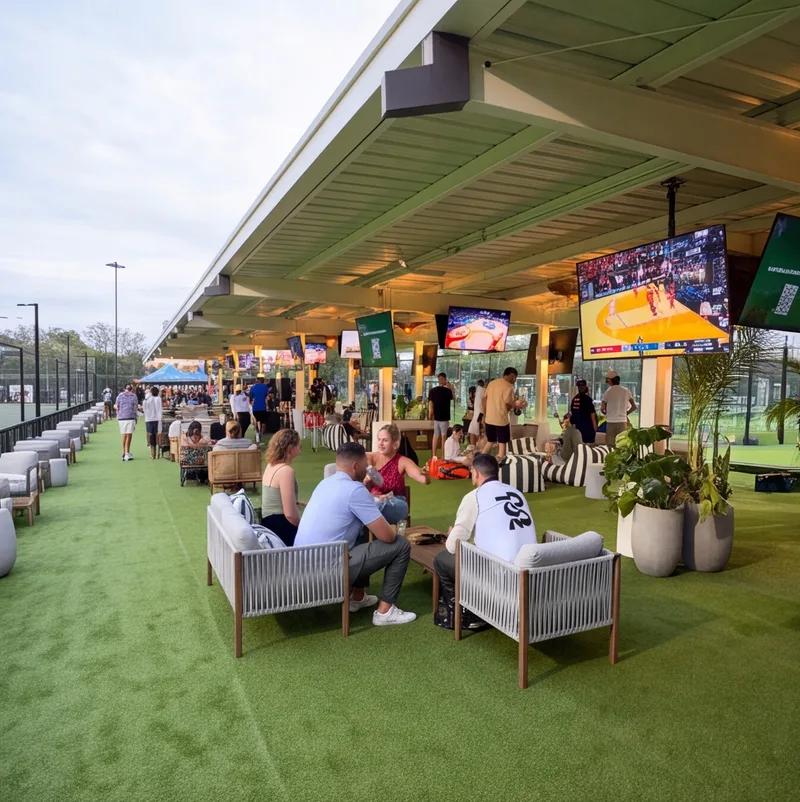
We design for those dates first and let the quiet weeks follow. Sightlines get mapped for peak-crowd geometry, standing overflow included, because at capacity most of your floor is on its feet. Audio gets the coverage and the headroom to stay intelligible with the room packed, which is not the same problem as being louder. Control runs on presets, so a pregame surge, a full house, and a fast turnover as the stadium empties are single taps. Outdoor gear gets specified for real New England winter, since a late-season night game happens in the cold whether the patio is ready or not.

Sports Bar AV Across Foxborough
From Patriot Place out through Norfolk and Bristol County, we build sports bar AV sized for the days a town of twenty thousand hosts sixty-five thousand.
Late-season night games happen in genuine cold, so outdoor screens, speakers, and mounts get rated for freezing operation rather than a nominal outdoor label.
Accumulated snow and ice put real weight on outdoor mounting, so brackets, enclosures, and structural backing get sized for it before anything goes up.
Repeated freezing and thawing works on seals and fasteners, so outdoor hardware gets specified for thermal cycling and checked ahead of the late-season dates.
The outdoor season is brief and has to be captured hard, so patio screens run high brightness with an ambient light sensor and are ready the week the doors open.
How we work
Designed for the day the town triples
We do not start with a screen count. We start with what your room looks like when sixty-five thousand people are moving through a town of twenty thousand.
Start with a consult, walk it on an event date
Rooms that disappoint on a stadium date were usually quoted from a floor plan by somebody who never stood in the back of one. So the first conversation is a consult rather than a quote: what you want the room to be, how big it is, what it has to do, and the budget range in play. The walk is part of that consult, and in Foxborough we will wait for a game or concert date to do it, because a February Tuesday here tells you nothing about the days that pay. Sightlines get taken from four positions: the bar-top, the high-tops, the booths with the worst angles, and the standing overflow that only exists at capacity. With a crowd this large relative to the room, that overflow is the primary zone we design around.
See the design, then one crew builds it
The other common failure is that the owner never sees the outcome until it is finished and there is no budget left to change anything. So the design gets reviewed before equipment is committed, including the view from whichever seats you are unsure about. Control is programmed around the shifts you actually work: a pregame surge, a full house through the game, a turnover as the stadium empties, and a slow midweek evening. One crew does the install, the calibration, the staff training, and the documentation, and coordinates with your electrician and low-voltage trades. Because your staffing swells for event dates, we train the seasonal crew rather than only the managers, then lock the admin settings so nobody rewrites the configuration on a Sunday.
What we build
The stack a stadium-date room runs on
A game-day room is several systems working as one. Here is what we design, program, and install, all of it driven by the sightline map and by peak capacity.
Audio with headroom for a tripled room
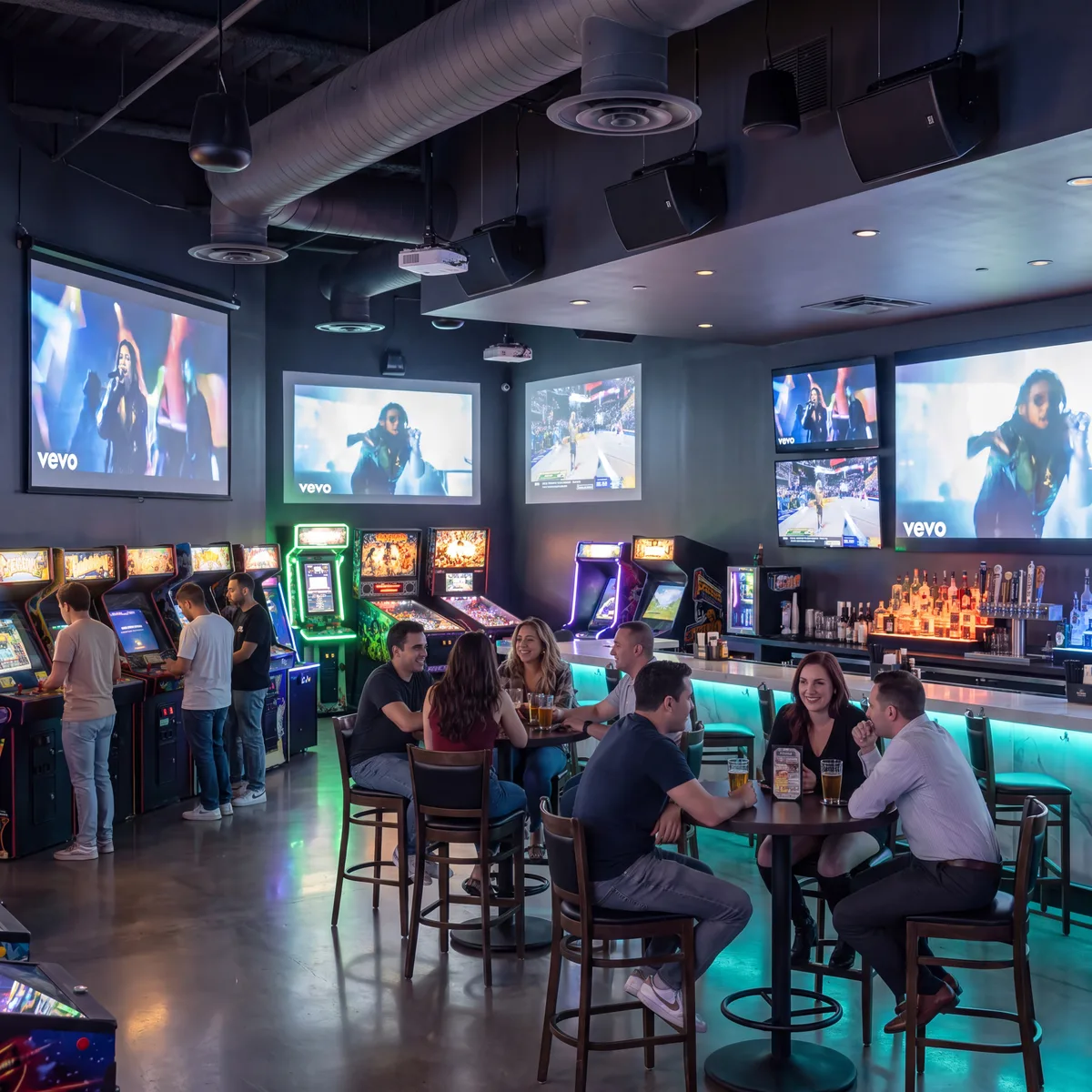
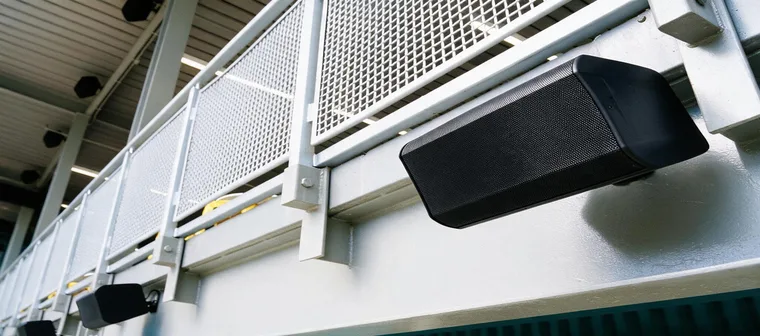
Most systems in this town were sized for the room, not for the room with three times its usual crowd inside it. Bodies absorb sound and a crowd builds its own noise floor, so a system that measures well empty can lose the broadcast entirely at capacity, and turning it up makes it worse rather than better. Perimeter-only speaker layouts leave the middle of the floor with nothing while hammering anyone sitting at the edge. So sources get spread evenly at a height and angle worked out for the space, which is a coverage fix rather than a volume one. Zones then run on a digital signal processor with headroom held in reserve, letting the main viewing area carry a full house while the bar stays workable for taking orders. Anything outdoors is weather-rated and lives on its own zone.
Displays, video walls, and a short patio season
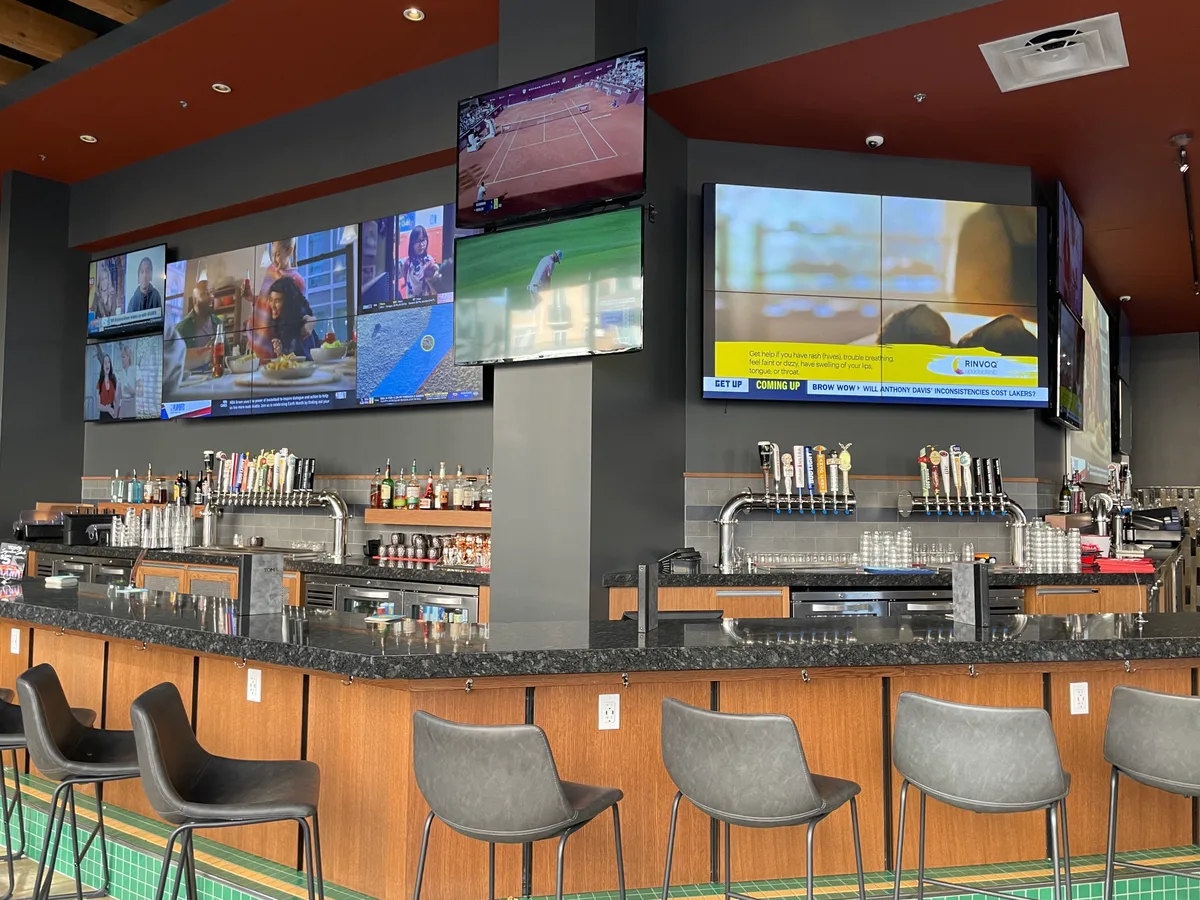
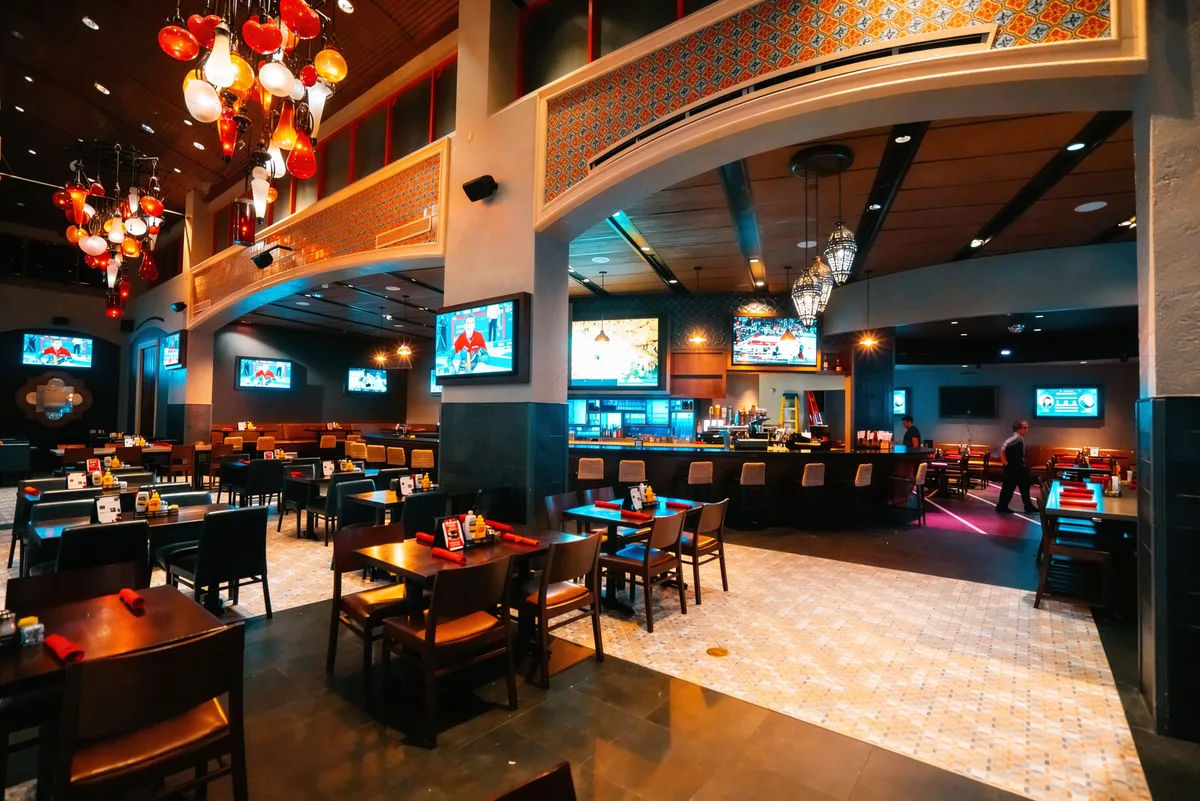
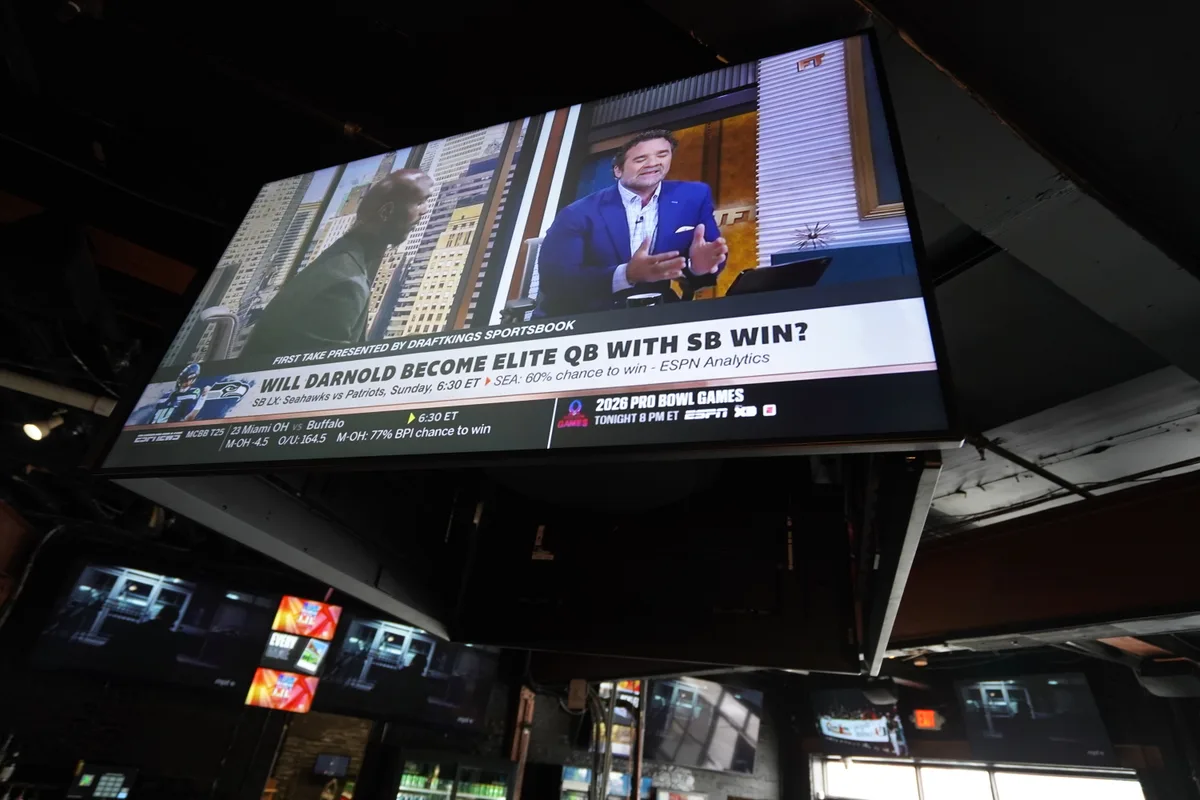
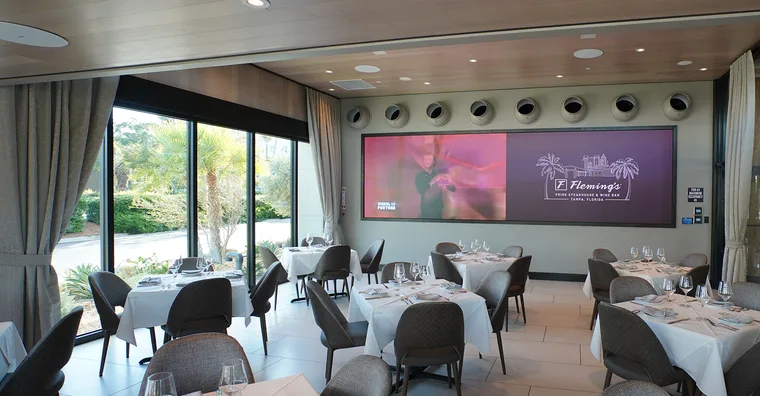
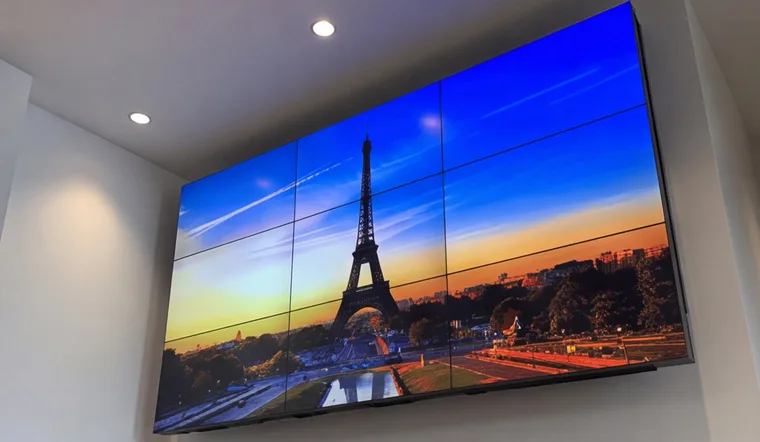
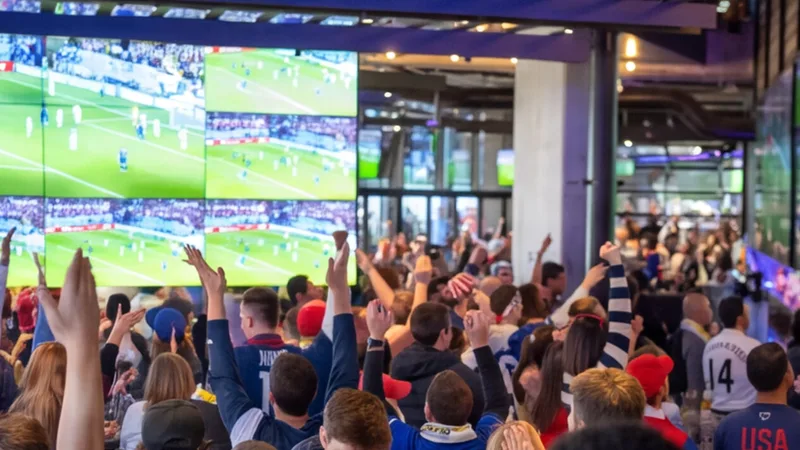
A television on a wall is not a sports bar. A screen should be a content source placed where people can actually watch it. Indoor displays are commercial grade, and the sizing comes out of the sightline map rather than off a wall measurement, with resolution decided by the nearest seat instead of the furthest. Placement assumes a floor that is mostly standing on event dates, so nobody is trying to watch through the back of a head. Where one screen cannot carry a room this full, a video wall does the work, either as one large image for a home game or split into a grid when football, a soccer match, and a baseball broadcast overlap. Outside, the patio season is short and has to be captured hard, so screens get high brightness with an ambient light sensor, sealed enclosures, and mounting rated for snow and ice load.
Distribution, signage, and control that survives a surge
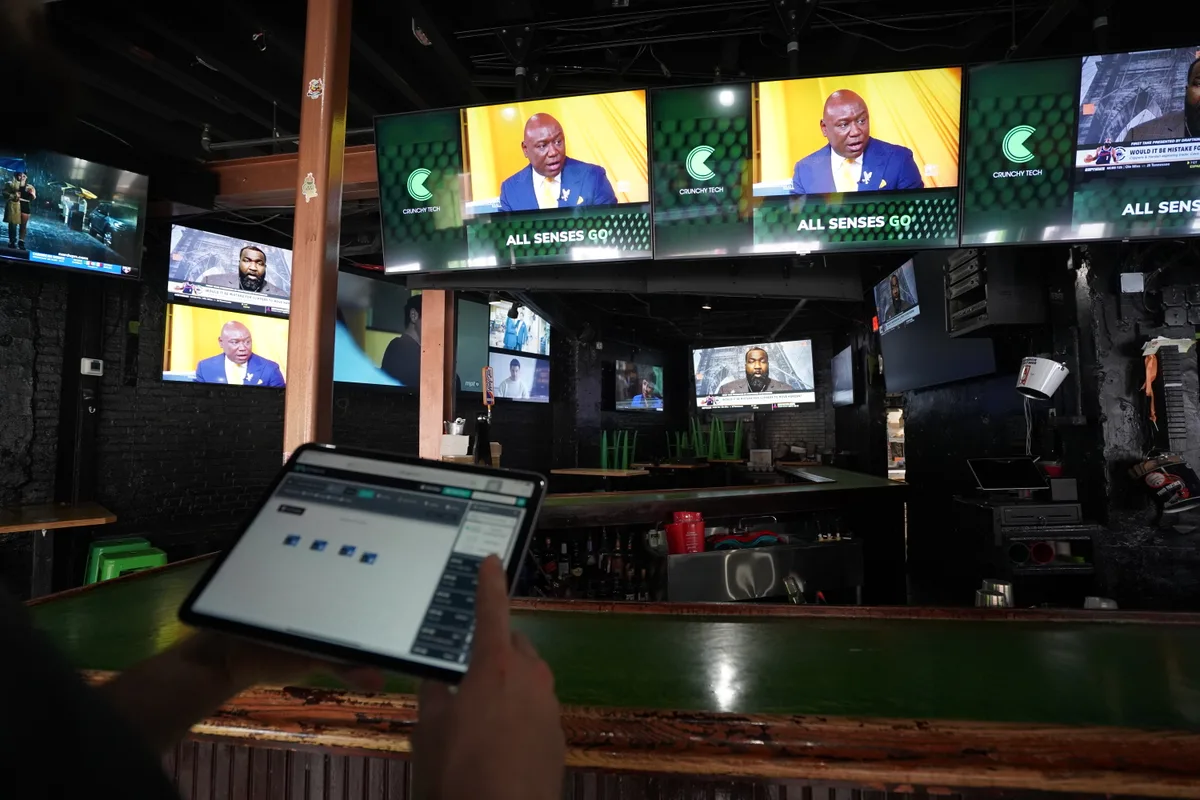
Everything that decides whether the game shows up lives in a rack nobody looks at. Content moves over an audiovisual network so any source lands on any screen at 4K without lag or signal drop, with matrix switching to route any game to any zone and carve out a viewing area on short notice. Satellite, cable, and streaming sources live in one serviceable rack instead of a pile of boxes behind the bar, scheduled so nobody misses a kickoff. On event dates the signage does real work, flipping menu boards to a limited event menu in one tap and carrying scores and what is on next. Everything sits on a dedicated AV network rather than sharing bandwidth with point of sale or guest Wi-Fi, which is the single most common reason a wall freezes during a rush.
Why Foxborough sports bars trust us with it
Built for a town that triples
Foxborough has the most extreme population multiplier of any stadium town in America, and a New England winter decides what can survive outside. Here is where our depth shows, and where our scope ends.
No average week to fall back on
In a city market a weak system costs you a percentage of a busy Friday. Here it costs you one of roughly twenty dates that carry the year, because there is not enough steady local traffic to absorb the loss. So peak capacity becomes the design case, and everything follows from that. Standing overflow turns into the primary sightline zone, screen placement follows how a packed floor actually moves, and the audio is sized for a crowd rather than for a floor plan. The booths still get modeled individually, since partitions and the backs of adjacent booths make them the worst seats in the building. If you see people twisting around to find a screen instead of talking to their table, the room was designed for the wrong day.
Support when twenty dates carry the year
Downtime here does not cost you an evening, it costs a meaningful share of the annual number, which is why we care so much about how a system is built to be serviced. Crunchy Tech started in 2008 as an AV support operation, and learning to fix other people's installs is how we learned to build ours: fully enclosed racks, every cable labeled at both ends, power kept away from audio and data, so anyone opening it years later can trace a run without guessing. Most of the cost of a bad AV install is not the install, it is everything that has to happen afterward because nobody can find anything. Roughly 47 percent of tickets close inside an hour and about 72 percent within a day, usually without a site visit.
New England winter decides the outdoor spec
Understand the environment and you understand the equipment. Late-season night games happen in genuine cold and the schedule does not move for it, so outdoor screens and speakers get rated for freezing temperatures, snow and ice load, and repeated freeze-thaw rather than carrying a nominal outdoor label. The patio season is short, which means the gear that captures it has to be working the week it opens instead of needing a spring service call. Worth being plain about the tradeoff: outdoor work carries a higher budget and a shorter lifecycle than anything indoors. Inside, the biggest single factor in how long the system lasts is whether the AV room is cooled, because a rack of amplifiers in a sealed closet cooks itself and collects dust. Hold it at or below 75 degrees.
What it earns back
How twenty dates pay for the year
The math in Foxborough is unusually concentrated. A small number of dates produce most of the revenue, so the system either captures them or quietly gives them away.
You are competing with the stadium's own district
You are not really competing with the bar down the road. You are competing with a purpose-built retail and dining district attached to the stadium, which means adequate is not a strategy. Guests will walk past a curated on-site option to get to you, but only if the room is clearly better at the one thing they came for. That is where the return sits: a main viewing area good enough to be the reason somebody chooses you, audio that carries the broadcast instead of televisions on mute with music over the top, and a patio that earns every week the weather allows. A room that reads as the cheaper option loses that decision before anyone looks at a menu. Between event dates the same screens run signage that moves menu items rather than sitting dark.
Good, Better, Best against one design
Most owners benchmark AV against retail, weighing a stack of televisions against a system that happens to include televisions. Say the gap plainly: the rack, the distribution, and the control absorb a serious share of the budget before a screen or a speaker is bought. We price Good, Better, and Best against a single design, broken out per zone, so the dining side can be Good while the main viewing area is Best. Good is an honest recommendation rather than a strawman: one room watchable from every seat, zoned audio, tablet control. Better usually adds the audio headroom a tripled room needs, and in this market that is the line worth crossing. If the budget will not reach the room you are describing, we will value engineer it and say so instead of selling you something you will be nursing along.
How do you design a Foxborough room for a crowd three times the size of the town?
By making peak capacity the design case instead of an exception, because there is no average week here to absorb a bad event date. That changes four things. First, standing overflow becomes the primary sightline zone rather than an afterthought, since at capacity most of your floor is on its feet with other people in front of them, so screens get sized and positioned for peak-crowd geometry and traffic flow rather than the seated layout you see midweek. Second, the audio gets genuine headroom and even coverage, because the familiar failure is a system that sounds fine at half capacity and turns to noise when the room is full, which is a coverage problem and not a volume one. Third, control runs on presets for a pregame surge, a full house, and the turnover when the stadium empties, so nobody is navigating menus during the busiest ninety minutes of the month. Fourth, we train the seasonal crew and not just the managers, since your headcount swells for event dates. We also insist on walking the room on an actual event date.
How much does a sports bar AV system cost in Foxborough?
It depends on the indoor and outdoor scope, how many audio zones you need, the size and resolution of any video wall, and the size of the venue. The part most owners are not expecting is that the back-end rack, the distribution, and the control take a serious share of the budget before you have bought a single screen or speaker. From there we quote three tiers against the same design. Good covers one room that works from every seat, with zoned audio, source distribution, and tablet control. Better usually adds the audio headroom a packed house needs and extends the system to the patio, and in a market this concentrated that is where the return tends to tip. Best brings in video walls across more than one room, signage, and integrated control. We break it out per zone, so the dining side can be Good while the main viewing area is Best. If the budget is short of the room you are describing, we will say so and value engineer it rather than sell you something you will regret.
Is an outdoor patio system worth it when the season here is so short?
Usually yes, but only if it is specified honestly, and we will tell you if it is not. The case for it is that the patio adds event-day capacity without a buildout and without new indoor square footage, and in this market capacity on the dates that matter is the whole game. The case against it is that outdoor work carries a higher budget and a shorter lifecycle than anything indoors, and here it has to survive freezing temperatures, snow and ice load, and repeated freeze-thaw, which means rated screens, sealed enclosures, and mounting engineered for real weight rather than a nominal outdoor label. There is also a scheduling reality: late-season night games happen in the cold, so if you want the patio to work in November it has to be built for November, not for July. What we will not do is put consumer-grade gear outside so the number looks better, because it does not last a season and a dead screen on an event date costs you a full table.
Do you handle livestreaming, cameras, or video production?
No. We are a design-build AV integrator. We do not install or operate cameras, we do not shoot or edit video, and we do not run streaming as a service. What we do is build the infrastructure that supports whatever streaming or recording you choose: clean audio feeds to your partner's encoder, documented signal paths so a videographer knows exactly where to plug in, and a dedicated network engineered for the uplink. We design the system around how the bar actually runs, procure the hardware, install it, calibrate it, train your staff, document all of it, and support it for the life of the system. The content and streaming side belongs to specialists, and our job is to make their job easy.
What We Do Here
Services available in Foxborough
Every system is designed, installed, and supported by our own team in Foxborough — never subcontracted.
AV Consulting
AV consulting from an audio visual consultant who joins at the architectural phase, designs the technology into the plan and steers the project around your business outcome.
AV Consulting in Foxborougharrow_forwardCommercial Sound Systems
Commercial sound system design and installation: multi-zone audio engineered around how your space is used, wired and tuned on site, and supported as a partner.
Commercial Sound Systems in Foxborougharrow_forwardVideo Wall Solutions
Commercial video walls across LED, LCD and Direct View. Designed, integrated, installed and supported by a national design-build AV integrator.
Video Wall Solutions in Foxborougharrow_forwardDigital Signage Services
Design-build digital signage for hospitality and enterprise: commercial displays, content management, and installation that keeps your screens selling and current.
Digital Signage Services in Foxborougharrow_forwardLearn more about our Sports Bars AV solutions
Operators who run on our systems
Client successes drive Crunchy Tech to become better. Below is how our customers feel about us.
Working with Crunchy Tech was a fantastic experience from start to finish. They handled the sale and installation of all our sound and TV equipment at The County Bar in Aviston, IL, and absolutely nailed it. We were on a very tight deadline, and they not only met it—they delivered top-notch quality and service the entire way. Highly professional, responsive, and easy to work with. We couldn't be happier with the results.
Crunchy has done an amazing job on our A/V install. The sound is perfectly balanced throughout our many zones and the entire system is super simple to use.
Just do it. Spend the money. It’s well worth it. It’s not worth your time, hassle, energy, and stress of trying to make it look right and do it right when there’s somebody who has been doing it for years and has perfected the craft.
Working with Crunchy Tech was a fantastic experience from start to finish. They handled the sale and installation of all our sound and TV equipment at The County Bar in Aviston, IL, and absolutely nailed it. We were on a very tight deadline, and they not only met it—they delivered top-notch quality and service the entire way. Highly professional, responsive, and easy to work with. We couldn't be happier with the results.
Crunchy has done an amazing job on our A/V install. The sound is perfectly balanced throughout our many zones and the entire system is super simple to use.
Insights
Immersive Dining & Bar Experiences: LED Video Walls, Spatial Audio & Synchronized Lighting
How LED walls, spatial audio, and lighting automation are transforming restaurants and bars into destination experiences.
Read article arrow_forwardWhy Plug-and-Play Sports Bar AV Packages Will Cost You the 2026 World Cup
Consumer-grade AV cannot handle the demands of World Cup game day. Here is what your sports bar actually needs.
Read article arrow_forwardLet's design for the twenty dates that pay
Tell us about the venue: how close you sit to the stadium, the square footage, the indoor and patio split, how your headcount changes on an event date, and what breaks when the room goes past capacity. We will start with a consult to understand what you are trying to accomplish, walk the room on a game or concert date, and come back with one engineered recommendation instead of a parts list.
- Peak capacity as the design case, with standing overflow treated as the primary zone.
- Audio coverage and headroom for a room holding three times the town's usual footfall.
- Patio screens rated for freezing operation, snow and ice load, and freeze-thaw.
- Presets and training built for the seasonal crew you hire for event dates.