
A hybrid meeting has two audiences. People at the table can lean in and read each other's faces. People on the call get only what the microphones and cameras pick up.
Video conferencing equipment is easy to buy off a shelf. Getting it to serve both audiences takes planning around the space it goes into.
Below are the four features we build into every modern conference room, starting with the decisions that come before any hardware.
Start Your Conference Room Setup With How the Room Gets Used
Before we spec any gear, we ask how the room will be used. The answers shape the design more than any single product choice.
Which Platforms Your Teams Use
Departments inside one company often split across Zoom, Microsoft Teams and Google Meet. Only a limited set of conference room technology supports all of them well. If your organization runs on more than one platform, the hardware has to be chosen with that in mind from day one.
Room Size and Acoustics
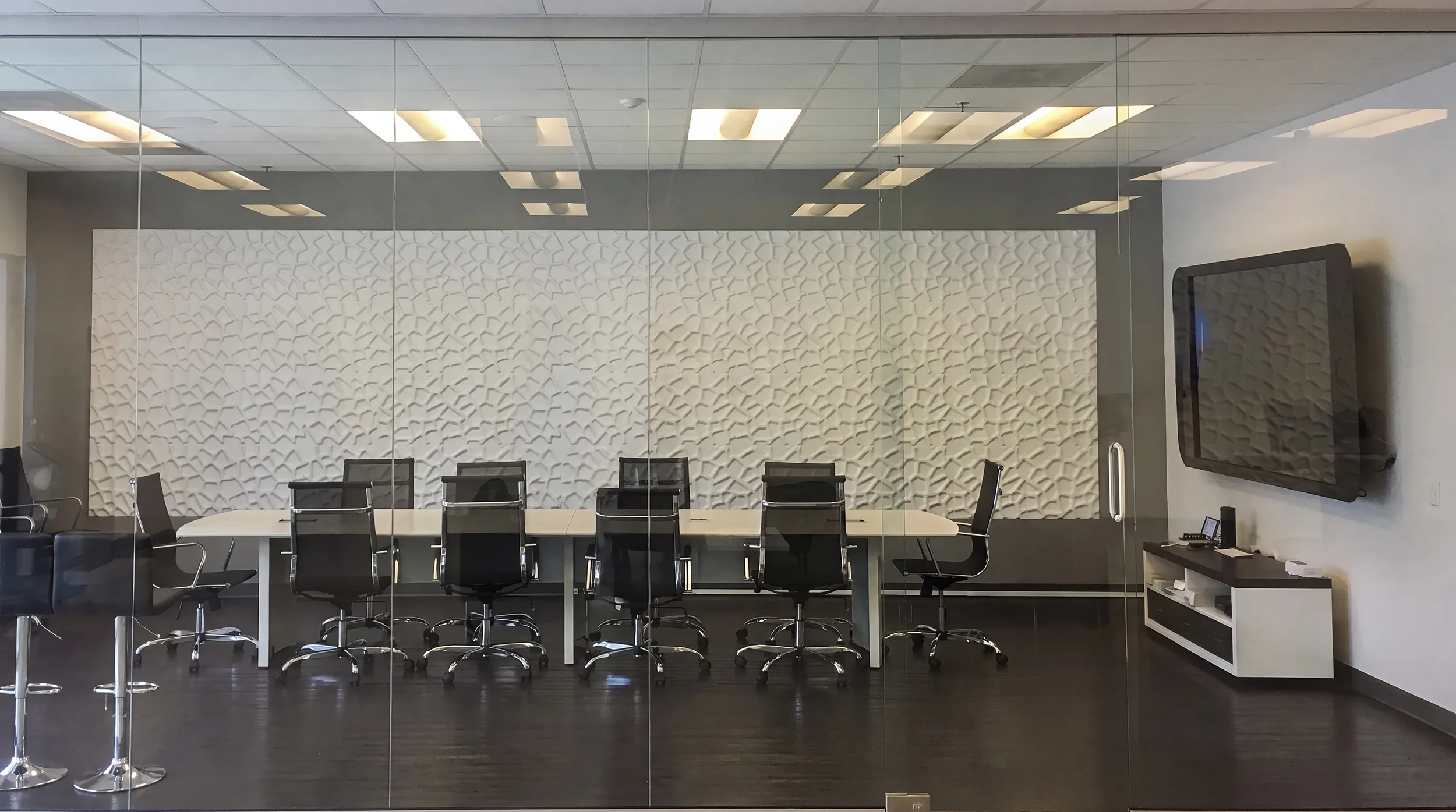
Glass walls and concrete floors reflect sound. Those reflections reach the microphone a fraction of a second after the direct voice, and the far end hears a hollow, echoing space. Acoustic panels or ceiling treatment often improve call quality more than a pricier microphone would.
Match the System to the Headcount
A huddle room is a small space for two to six people, usually with one display and an all-in-one video bar that houses the camera and microphones above the screen. Those systems work well in the space they're designed for. Stretch one into a 20-person conference room and the far end struggles to hear anyone past the second row of chairs.
Feature 1: Audio Everyone Can Hear
Remote participants forgive a soft image long before they forgive bad audio. If they can't follow the conversation, the meeting is over for them.
Microphone Options
Conference room microphones come in two main styles. Table microphones sit in front of each group of seats and pick up whoever is closest. Ceiling microphone arrays hang overhead and use many small microphone elements to steer pickup toward each talker, which keeps the table clear of cables.
We plan coverage seat by seat. Every chair should fall inside a pickup zone, including the ones at the far end where people tend to lean back.
Processing That Cleans Up the Call
Behind the microphones sits a digital signal processor (DSP), the unit that shapes audio before it reaches the call. Its biggest job here is echo cancellation. Without it, remote participants hear their own voices come back a moment later through the room's microphones.
The DSP also evens out levels. A quiet talker at the end of the table comes through as clearly as the person sitting next to a microphone.
Speaker Coverage
Conference room speakers carry remote voices into the room. Ceiling speakers spread sound more evenly than a single bar under the display, especially in longer rooms. AVIXA's audio coverage uniformity standard (ANSI/AVIXA A102.01) sets a testable limit on how much volume can vary between seats.
Feature 2: Cameras and Displays Sized to the Room
Camera Placement and Type
A conference room camera should sit at or near eye level, usually just above or below the main display. Mounted too high, it looks down at the table and remote participants see the tops of heads.
Fixed cameras suit small rooms where everyone fits in one frame. Larger rooms benefit from auto-framing cameras, which zoom to fit whoever is present, or speaker-tracking cameras that follow the active talker. Speaker tracking uses the microphone system to locate who is talking and points the camera at them.
Display Size and Placement
We size displays from the farthest seat. AVIXA's display image size standard (ANSI/AVIXA V202.01) calculates screen size from that viewer's distance and the finest content on screen, like text in a spreadsheet.
Dual displays help in rooms that host frequent hybrid meetings. One conference room display shows the shared content while the other shows remote faces, which keeps people on the call from shrinking into a corner tile.
Video walls make sense in large boardrooms and training spaces. A typical meeting space gets the same result from one or two well-sized displays for far less.
Feature 3: A Wireless Presentation System for Every Device
Hunting for the right adapter wastes the first five minutes of too many meetings. A wireless presentation system lets anyone send a laptop or phone screen to the display with a click or an on-screen code.
Wireless screen sharing also clears cables off the table, which means fewer frayed connectors and fewer support calls.
Bring Your Own Meeting
A BYOD conference room takes the idea further. A presenter connects one USB-C cable, or links up wirelessly, and runs the meeting from their own laptop while borrowing the room's camera and audio. That helps when a client sends an invite on a platform your room system doesn't run natively.
Whiteboarding Today
Built-in whiteboards in Zoom and Microsoft Teams let people at the table and on the call sketch on the same canvas, and the boards save with the meeting. Google retired its Jamboard app and device at the end of 2024 and now points Workspace users to third-party whiteboard tools.
Some teams still prefer a marker. A content camera aimed at a physical whiteboard shares it to the call, and a digital whiteboard display gives the room a touchscreen surface remote participants can follow.
Feature 4: One Conference Room Control System
Every part above works better when one interface runs it. A conference room control system ties the cameras and displays to a single touch panel at the table. Lighting and shades can join the same controls in rooms that have them.
One Touch Join
One Touch Join reads the room's calendar and puts a single Join button on the panel when a meeting is scheduled. Nobody types a meeting ID or hunts for a link.
Standardize Across Rooms
Using the same conference room equipment and panel layout everywhere means anyone who can run one room can run them all. It also simplifies support for IT, who troubleshoot one design rather than a dozen.
Plan the Network Early
Room systems live on your network. We work out network access and security requirements with your IT team before devices arrive on site.
Keeping Rooms Running After Install
Meeting room technology gets used every day by people who aren't AV specialists. Every system we design and install includes hands-on training at handoff and one year of remote support. Many issues get resolved by our help desk over a remote connection, with no technician on site.
Firmware updates and periodic checkups keep rooms from drifting out of tune as platforms change.
Plan Your Next Conference Room With Our Engineers
Crunchy Tech has designed commercial AV systems since 2008, and our design-build process starts with a walk-through of the space. If you're planning a new room or reworking an existing one, talk with our engineers about modern conference room design that fits how your teams meet.