By Jonathan Alonso | Marketing Manager, Crunchy Tech
Enter a busy bar during a big NFL game or a hotel lounge at night and you can tell, within minutes, whether the space was designed with intent: everything just feels in sync.
Case in point: the screens aren’t fighting the lighting, the music fits the room, transitions happen without anyone touching a control panel, etc. That comes from building the system as one piece from the start.
At Crunchy Tech, most of our work in sports bars and hospitality spaces across Florida and Texas comes down to fixing environments that were built in fragments. Strong display, weak audio. Good lighting, no coordination. Expensive installs that never quite feel right during service.
Our comprehensive guide breaks down how immersive dining and bar environments work in practice, starting with the foundation: integration.
Why Immersive Dining Requires a Fully Integrated AV System
Immersive F&B environments perform best when video, audio, and low-voltage lighting are engineered as one coordinated system with a shared control layer.
Most underperforming venues fail due to each system being designed in isolation. A high-end LED wall paired with poorly zoned audio and static lighting still feels disjointed. Guests notice the inconsistency even if they can’t name it.
Fragmented AV design fails in hospitality environments
Fragmented systems create visible and operational problems the moment service begins.
Out-of-sync experiences. Video content changes while lighting remains static, or audio cues lag behind visual transitions.
Inconsistent atmosphere across zones. The bar feels energetic while the dining area feels flat even during the same service window.
Staff friction during live operations. Multiple remotes, apps, or control panels slow down adjustments when conditions change.
Higher failure points. Independent systems mean more opportunities for misconfiguration, downtime, and maintenance gaps.
Crunchy Tech has taken over several retrofit projects where the original install included premium components but no integration layer. In every case, the fix was not replacing hardware but rebuilding the system architecture so everything could communicate.
Integrated AV systems drive longer dwell time and higher spend
Integrated AV systems shape behavior through subtle environmental control. When lighting, audio, and visuals align, the space feels cohesive. Guests are more comfortable staying longer.
Apart from that, transitions from daytime dining to evening service happen smoothly without abrupt shifts. In sports bar environments, synchronized audio spikes and lighting cues during key moments keep guests engaged and ordering.
In our Florida sports bar installs, synchronized game moments, crowd audio, and lighting accents consistently correlate with higher bar activity during peak plays. The system reinforces excitement at the exact moment guests are most receptive.
The core components of a modern immersive stack
A fully integrated system includes four primary layers, each designed to work in coordination.
- LED video walls – The visual anchor of the space, responsible for both entertainment and ambient content.
- Distributed audio zones – Precisely controlled speaker groups that adapt volume and tone based on location and time of day.
- RGBW architectural lighting – Dynamic lighting that supports mood changes and synchronizes with visual content.
- Centralized control systems – The automation layer that connects all components, enabling scheduling, scene changes, and real-time adjustments.
As such, Crunchy Tech recommends starting every project with the control layer in mind. Hardware decisions should support how the system will be operated during live service, not the other way around.
Why LED Video Walls Outperform Projectors in High-Light, High-Activity F&B Spaces
LED video walls maintain visibility, contrast, and reliability in hospitality environments where projectors lose clarity and require constant maintenance.
Restaurants and sports bars are not controlled viewing environments. Sunlight shifts throughout the day and guests move constantly. Not to mention staff cannot dim lights on demand just to improve screen visibility.
Display technology has to perform under those conditions without compromise.
Why ambient light kills projector performance
Projectors depend on controlled lighting conditions that rarely exist in F&B spaces.
- Washed-out images during daytime service: Even moderate daylight reduces contrast significantly, especially in venues with large windows or open layouts.
- Limited usability in rooftop and patio settings: Outdoor or semi-outdoor spaces make projection impractical during most operating hours.
- Dependency on darkened environments: Lowering ambient light to compensate affects the overall dining experience and limits design flexibility.
AVIXA and multiple manufacturer studies consistently point to ambient light as the primary limiting factor for projection in commercial environments. Hospitality spaces rarely meet the conditions needed for consistent projector performance.
Brightness, contrast, and viewing angles explained
LED technology is built for visibility under real-world conditions. Brightness, measured in nits, typically ranges from 800 to 5,000+ depending on whether the application is indoors or outdoors, allowing for clear visibility even in direct or indirect sunlight.
This level of brightness works hand in hand with consistent contrast in dynamic environments. Unlike projection, LED displays maintain contrast irrespective of ambient light changes, so the image doesn’t wash out as conditions shift throughout the day.
Viewing angles are equally important in hospitality settings. LED walls offer wide viewing angles, meaning guests seated at different positions still see accurate color and brightness. This is critical in bars and large dining areas where not every seat is directly in front of the screen.
Manufacturers like Samsung emphasize that direct-view LED maintains image integrity across wider angles compared to projection systems, which tend to degrade more quickly off-axis.
Durability and maintenance in real-world restaurant conditions
Hospitality environments introduce stress factors that many display technologies simply aren’t designed to handle, which is where LED systems stand apart. Heat from kitchens and enclosed spaces, for example, is accounted for through built-in thermal management to reduce performance degradation over time.
At the same time, exposure to grease and airborne particles is a constant in restaurants and bars. Sealed LED modules are better equipped to handle these conditions, whereas projector optics often require frequent cleaning to maintain image quality.
Downtime risk is another key difference. Modular LED panels allow for targeted repairs; individual sections can be serviced without taking the entire display offline. Projectors, by contrast, rely on lamps or laser systems that eventually degrade and require periodic replacement, with alignment issues and filter maintenance adding to ongoing labor costs.
Pixel pitch and optimal viewing distances for F&B layouts
Pixel pitch plays a direct role in how an LED wall looks at different distances. It determines how close guests can sit without noticing individual pixels. In sports bars, a slightly larger pixel pitch works well since guests are positioned farther from the screens and prioritize overall visibility over fine detail.
In fine dining environments, the expectation shifts. Guests are often closer to displays, so a smaller pixel pitch helps maintain a refined, high-end visual appearance. Hotel lobbies and mixed-use spaces fall somewhere in between, where a mid-range pixel pitch balances cost with visual clarity across varying viewing distances.
At Crunchy Tech, we recommend aligning pixel pitch with actual seating layouts rather than defaulting to the highest resolution option. Over-specifying can increase cost without delivering a noticeable improvement in the guest experience.
The hidden cost difference between LED and projection
Upfront cost comparisons make projectors look like the more economical choice, but that perspective changes when long-term costs are factored in. Projectors require ongoing lamp and component replacements, which accumulate and add to the total cost of ownership.
Maintaining image quality also involves regular calibration and alignment, requiring technician visits that introduce additional labor costs. On top of that, operational interruptions during maintenance can impact both service flow and the overall guest experience.
LED systems come with higher initial costs, but appreciably lower ongoing maintenance requirements. In high-traffic hospitality environments, that tradeoff tends to favor LED within just a few years.
Why Your Content Strategy Determines Whether Your Video Wall Feels Premium or Distracting
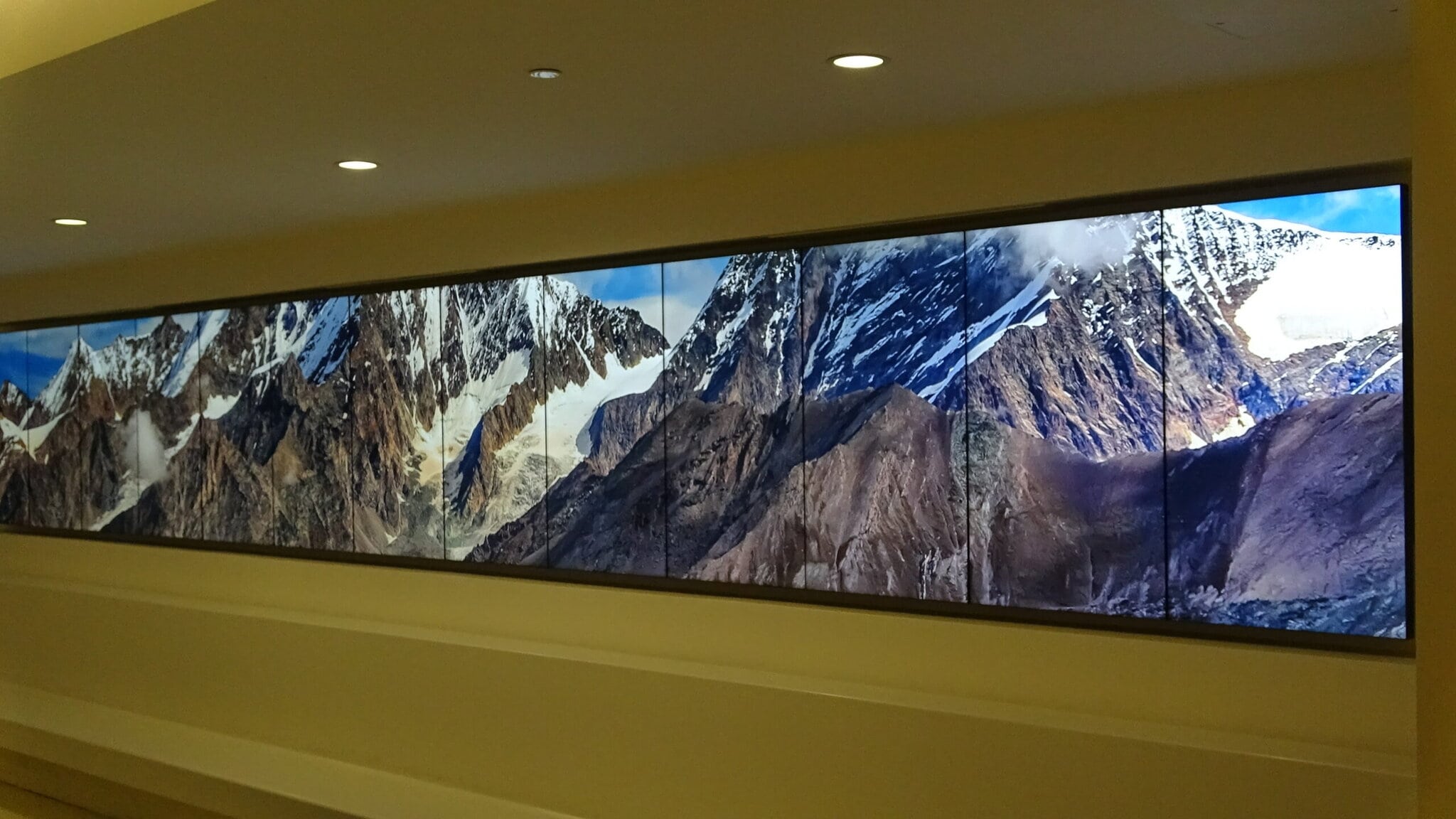
Content determines whether a video wall enhances the dining experience or competes with it. The same hardware can feel refined or chaotic depending on how it is programmed throughout the day.
Operators invest heavily in display technology, then default to looping generic visuals or leaving screens on live TV all day. That approach leaves value on the table. Content should be intentional, scheduled, and aligned with how guests use the space at different hours.
Ambient content vs branded content (and when to use each)
Ambient content supports the atmosphere without demanding attention. It works best during standard dining periods when guests are focused on conversation, food, and service. Subtle motion graphics, slow-moving textures, and environment-based visuals create depth without distraction.
Branded content becomes effective when the goal shifts toward engagement or promotion. This includes signature cocktails, upcoming events, partnerships, or property branding. Timing matters. Branded visuals placed during low-attention moments are ignored. Placed during peak engagement windows, they perform as intended.
Programming by daypart to match guest intent
Guest expectations shift throughout the day and the video wall should follow that rhythm.
During brunch or early service, visuals should feel light and unobtrusive. Bright but soft content helps the space feel open without overwhelming guests. As traffic increases into afternoon and happy hour, content can become more dynamic, with quicker transitions and more energy.
Dinner service calls for restraint. Guests are seated longer, conversations matter more, and visual fatigue becomes a real risk. Slower pacing, darker palettes, and reduced motion help maintain a comfortable environment.
Late-night programming can reintroduce intensity. Faster visuals, higher contrast, and more expressive content align with the shift in guest behavior.
In our Texas installs, daypart programming consistently reduces the need for manual adjustments. Staff are not scrambling to change inputs or visuals mid-service. The system adapts automatically.
Sports bar content strategies that maximize engagement
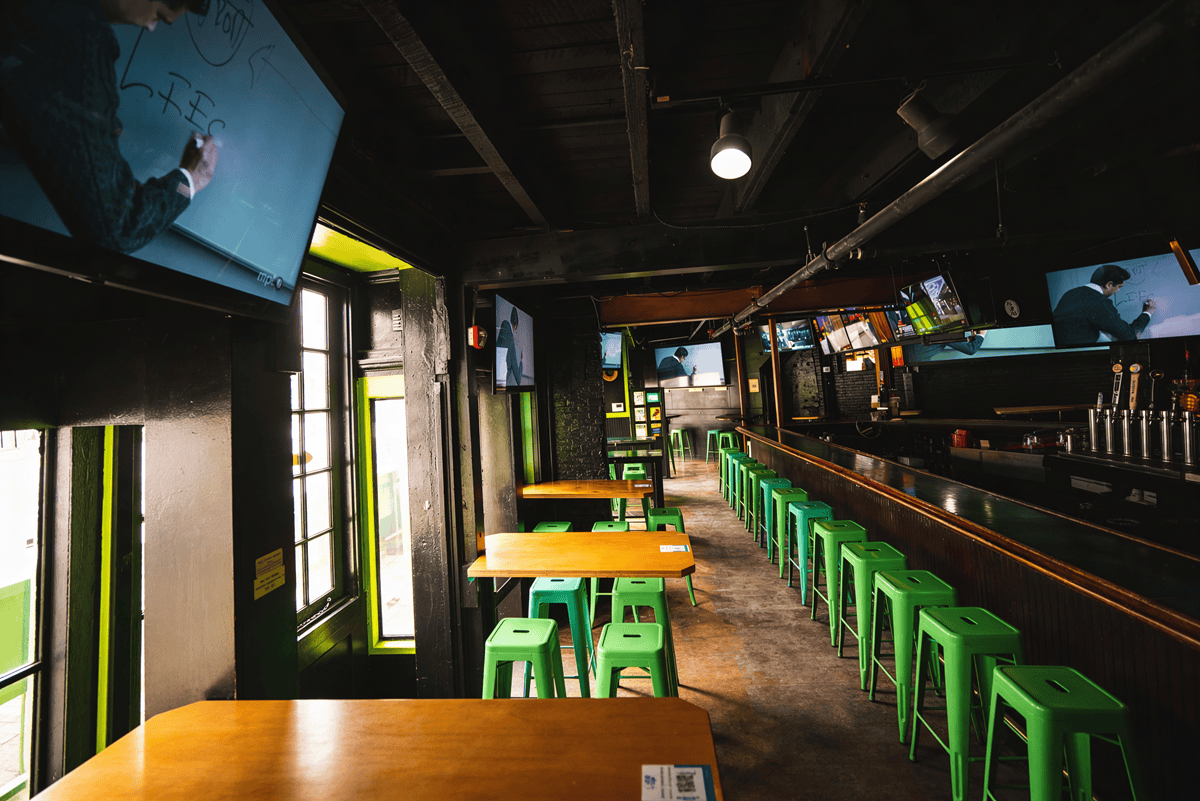
Multi-game layouts allow guests to follow different events simultaneously without confusion. The key is scale and hierarchy. Primary games need prominence, while secondary feeds remain visible but not competing.
Real-time responsiveness matters. Switching audio and visual focus during key moments keeps energy concentrated where it should be. When a major play happens, the system should already be aligned to amplify it.
Sponsor integrations also perform well in this setting when they are placed between plays or during natural breaks. Poorly timed overlays during active gameplay frustrate guests and reduce perceived quality.
Crunchy Tech’s sports bar work prioritizes control systems that allow quick scene switching without technical friction. Staff should be able to respond in seconds and not navigate multiple menus.
Fine dining and hotel strategies that avoid visual fatigue
Fine dining requires a different level of restraint. The goal is to enhance the environment without pulling attention away from the table.
Visuals should behave more like architectural elements than media displays. Texture-driven content, slow gradients, nature-inspired motion perform well. Sharp cuts, rapid transitions, and high-contrast visuals feel out of place in these settings.
Placement is also a key player. Screens positioned within direct sightlines of seated guests need especially careful programming. Even well-designed content becomes distracting if it sits in the wrong place.
In hotel environments, notably lobbies and lounges, content serves as a bridge between spaces. It should feel continuous as opposed to segmented, supporting movement through the property.
Content management systems and automation workflows
Content strategy only works if it is easy to manage in real operations.
A centralized content management system allows operators to schedule visuals in advance, adjust programming remotely, and maintain consistency across locations. This becomes critical for restaurant groups and hotel brands managing multiple properties.
Automation reduces reliance on manual input. Daypart schedules, event triggers, and pre-built scenes allow the system to shift without staff intervention. When a private event begins or a major game starts, the system can transition automatically based on predefined rules.
How Spatial Audio Zoning Shapes Guest Experience in Restaurants and Bars
Audio zoning determines how guests experience different parts of a venue even when they are in the same room. Properly designed zones guide movement, influence energy levels, and support transitions throughout service.
A lot of venues treat audio as a single system with uniform coverage. Such an approach leads to uneven experiences. Some areas feel too loud, others a tad too quiet, and conversations become strained.
What spatial audio zoning means in a restaurant
Spatial audio zoning is the practice of dividing a venue into distinct listening areas, each with its own volume, tone, and content profile.
This goes beyond turning speakers up or down. It comprises designing coverage so that sound reaches intended areas without bleeding excessively into others. Guests at the bar should not feel like they are sitting inside the dining room’s audio environment, and vice versa.
Digital signal processing plays a key role here. It allows fine control over frequencies, delays, and distribution, making certain that each zone sounds intentional.
Designing zones for bar, dining, patio, and private areas
Each zone serves a different purpose and should sound like it. The bar area typically carries more energy. Music is louder, more present, and often tied to live content such as sports or DJ sets. The dining area requires clarity and balance. Guests should hear music, but conversations should never compete with it.
Patios and outdoor sections introduce additional variables such as ambient noise and open air. These spaces often need higher volume and different speaker placement to maintain consistency.
Private dining rooms or event spaces benefit from independent control. Operators can adjust these areas without affecting the rest of the venue, which becomes essential during bookings and special events.
Transitioning sound profiles from happy hour to dinner service
Audio should evolve with the room, not reset abruptly.
Happy hour carries higher energy. Music is more prominent and the bar area drives activity. As service shifts into dinner, the system should gradually reduce intensity. Volume tapers, track selection changes, and frequency balance adjusts to favor conversation.
These transitions work best when they are automated. Sudden manual changes are noticeable and can disrupt the atmosphere. Gradual adjustments over a defined period feel natural to guests.
In our installs, scheduled transitions have proven more reliable than manual control. Staff remain focused on service while the system handles environmental changes.
Avoiding common audio mistakes that frustrate guests
Overlapping speaker coverage leads to echo and phase issues, making music sound unclear. Dead zones leave parts of the venue feeling disconnected. Excessive volume forces guests to raise their voices, which escalates noise levels across the room.
Another common issue is uneven tonal balance. Music that sounds acceptable near the bar may feel harsh or muddy in the dining area if the system is not tuned correctly.
These problems are rarely caused by equipment quality. Oftentimes they come from layout and calibration decisions made during installation.
Hardware and processing considerations for clean audio distribution
Clean audio distribution depends on both hardware selection and system tuning.
Speaker type and placement determine coverage patterns. Ceiling-mounted, wall-mounted, and directional speakers each serve different purposes. Amplification must match the load and distribution requirements of each zone.
Digital signal processors allow precise control over how sound behaves across the system. They manage delays, equalization, and routing, making sure that each zone performs as intended.
Crunchy Tech recommends designing the audio system alongside the physical layout early in the project. Retrofitting audio into a finished space limits what can be achieved and often leads to compromises that affect the guest experience.
How RGBW Lighting Synchronization Enhances Immersive Dining Environments
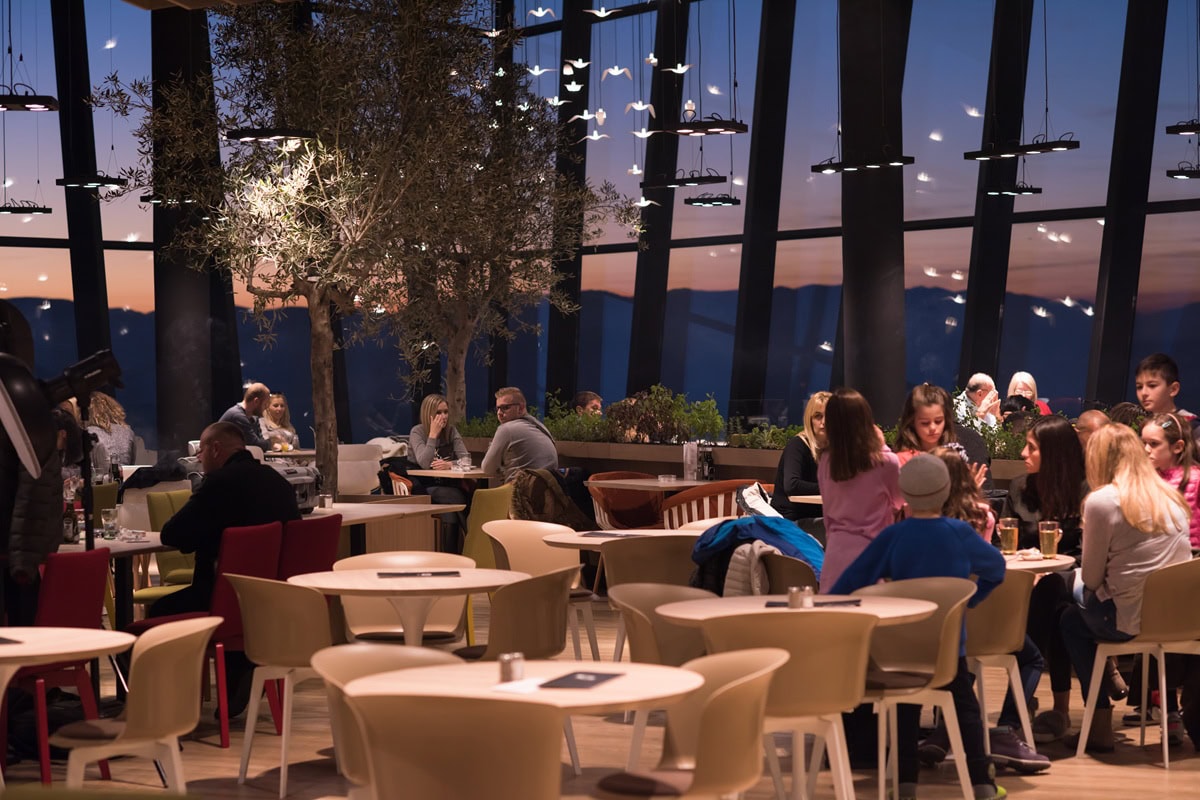
Lighting can decide how guests perceive everything else in the room. When synchronized correctly, it connects video and audio into a single, cohesive experience that feels intentional from entry to exit.
If your venue treats lighting as a static layer set once and left unchanged throughout service, that approach limits the impact of both video and audio systems. Without lighting coordination, even high-end AV installations feel incomplete.
Why RGBW lighting is different from standard RGB systems
RGBW lighting includes a dedicated white channel that allows for accurate, natural illumination alongside color effects.
Standard RGB systems struggle to produce clean whites. The result looks artificial or overly saturated, which works in nightlife settings but not in most dining environments. RGBW systems solve this by separating white light from color mixing to give operators more control over tone and balance.
In hospitality settings, this matters during transitions. Dinner service usually requires warmer, more natural lighting, while late-night service can support more expressive color. RGBW systems handle both without compromise.
Synchronizing lighting cues with video wall content
Lighting synchronization aligns color, intensity, and timing with what appears on the video wall.
When a video wall shifts to cooler tones, lighting can follow subtly to reinforce the visual environment. During high-energy moments, lighting intensity can increase in coordination with motion and audio cues. The goal is alignment, not distraction.
In sports bar environments, this synchronization becomes more pronounced. Key plays, scoring moments, and transitions between games can trigger coordinated lighting responses. These cues amplify energy without requiring manual intervention.
The control system is what makes this possible. Video processors, lighting controllers, and automation platforms must communicate in real time. Without that integration, synchronization becomes inconsistent and unreliable.
Creating mood shifts throughout the night without manual control
Pre-programmed lighting scenes allow venues to transition naturally as service evolves.
Morning and early service typically rely on brighter, neutral tones. As the day progresses, lighting can gradually warm and dim, supporting a more relaxed dining atmosphere. Late-night service can introduce stronger color accents and higher contrast.
These changes should happen gradually. Abrupt shifts are noticeable and can disrupt the guest experience. Automation allows transitions to occur over defined time intervals, maintaining continuity.
In our installs, operators rarely adjust lighting manually once scenes are properly configured. The system handles transitions based on time of day, scheduled events, or triggers from other systems such as video or audio.
Where lighting integration fails without proper planning
Lighting systems often fall short when they are designed independently from video and audio.
Over-saturation is a common issue. Excessive color use can overpower the space and reduce visual comfort. Inconsistent color rendering creates mismatches between lighting and on-screen content, breaking the sense of cohesion.
Poor zoning also limits effectiveness. If lighting cannot be controlled in distinct areas, the entire venue is forced into a single mood, regardless of how different zones are being used.
CrunchyTech addresses these issues by mapping lighting zones to both physical layout and operational use. Bar areas, dining sections, and transitional spaces each receive tailored lighting behavior that aligns with the overall system.
Key Environmental Factors to Consider for AV Systems in Florida and Texas
Environmental conditions in Florida and Texas directly affect AV system performance. Heat, humidity, and high ambient light levels require equipment and design strategies that go beyond standard indoor specifications.
Ignoring these factors leads to premature wear, reduced performance, and increased maintenance costs.
Outdoor and semi-outdoor LED requirements
Outdoor and semi-outdoor installations must meet higher durability and brightness standards.
LED displays in these environments require sufficient brightness to remain visible under direct sunlight. They also need protective ratings that guard against moisture, dust, and temperature fluctuations.
Ingress Protection ratings define how well equipment resists environmental exposure. For hospitality settings with open-air elements, these ratings are not optional. They determine whether the system performs consistently over time.
CrunchyTech specifies outdoor-rated LED solutions for any installation exposed to the elements, even partially. Covered patios and rooftop bars still experience humidity and airborne moisture that can affect standard indoor equipment.
Managing heat buildup in enclosed bar and restaurant spaces
Heat management is critical for both performance and longevity.
LED walls, amplifiers, and control systems generate heat during operation. In enclosed spaces, especially those near kitchens or with limited airflow, this heat can accumulate quickly. Without proper ventilation, system components operate under stress, which shortens lifespan and increases failure risk.
Thermal planning includes airflow design, equipment spacing, and in some cases, active cooling solutions. These considerations should be addressed during the design phase rather than after installation.
In our Florida projects, we often coordinate with HVAC teams to ensure that AV equipment operates within safe temperature ranges. This reduces long-term maintenance issues and protects the initial investment.
Moisture and corrosion risks in coastal environments
Coastal regions introduce additional challenges due to salt air and high humidity.
Corrosion can affect connectors, mounting hardware, and internal components over time. Even indoor installations are not fully protected if the building is near the coast and exposed to humid air.
Material selection becomes important. Corrosion-resistant finishes, sealed enclosures, and proper cable management all contribute to system durability.
CrunchyTech accounts for these factors during specification, particularly in projects near the Gulf Coast. Preventative measures taken early reduce service calls and extend equipment life.
Why brightness requirements are higher in rooftop and patio venues
Rooftop and patio venues face constantly changing light conditions throughout the day.
Morning and afternoon sunlight can be intense, while evening conditions shift rapidly as natural light fades. Displays need enough brightness to remain visible across this entire range without constant adjustment.
Higher brightness also ensures that content remains legible from different angles and distances, especially in open layouts where guests are not fixed in one position.
CrunchyTech recommends calibrating brightness levels based on actual site conditions rather than relying solely on manufacturer specifications. On-site testing provides a more accurate baseline for performance.
Case Study Comparison Shows How Immersive Design Changes by Venue Type
The same AV technologies produce different results depending on how they are applied. Venue type determines priorities, which in turn shapes how video, audio, and lighting are configured.
Understanding these differences helps operators make decisions that align with their concept rather than copying another venue’s setup.
Sports bar installations prioritize visibility and energy
Sports bars require systems that support constant activity and rapid shifts in attention.
Displays need to be visible from multiple angles and distances. Brightness and scale take priority over fine detail. Audio systems emphasize clarity for commentary and impact during key moments.
Lighting supports energy without overpowering the screens. Coordinated cues during major plays enhance engagement and keep guests focused on the action.
In our sports bar projects, flexibility is critical. Staff need to switch between games, adjust audio zones, and respond to live events quickly. The system must support that pace without adding complexity.
Fine dining environments prioritize subtlety and cohesion
Fine dining spaces require restraint and precision.
Displays serve as background elements rather than focal points. Brightness levels are lower, and content is designed to blend into the environment. Audio is balanced to support conversation, with careful attention to tonal quality.
Lighting plays a larger role in defining the atmosphere. Transitions are gradual, and color use is controlled to maintain a refined feel.
CrunchyTech approaches these projects with a focus on consistency. Every element should feel aligned, with no single component drawing unnecessary attention.
Rooftop bars blend spectacle with atmosphere
Rooftop venues sit between high-energy and relaxed environments.
They require enough visual impact to stand out, especially at night, while still supporting social interaction. Displays often compete with city views or natural surroundings, which influences brightness and placement decisions.
Audio zoning becomes more complex due to open-air conditions. Sound dissipates more quickly, requiring careful planning to maintain coverage without excessive volume.
Lighting plays a key role in defining the space after sunset. Coordinated color and intensity shifts help maintain energy as natural light fades.
What stays consistent across all successful installs
Despite differences in execution, successful immersive environments share common principles.
They are designed as integrated systems from the start. Control is centralized and intuitive for staff. Content, audio, and lighting strategies are aligned with how the space operates throughout the day.
CrunchyTech applies these principles across all projects, adjusting only the execution details based on venue type. This approach ensures that each system performs reliably while supporting the specific goals of the operator.
How Much Do Immersive AV Systems Cost and What Drives ROI in Hospitality
Integrated AV systems should be evaluated based on operational impact and revenue contribution over time, not just upfront cost.
Budget conversations often start and end with hardware pricing. That view misses how immersive systems influence guest behavior, staff efficiency, and long-term maintenance. A lower initial cost can lead to higher operational expenses and lost revenue if the system underperforms.
What a hospitality LED wall system typically costs
LED video wall pricing varies based on size, resolution, and installation complexity.
Smaller feature walls in bars or lounges may fall into lower six-figure ranges when fully installed, while large-format installations in hotel lobbies or flagship venues can scale significantly higher. Pixel pitch, structural requirements, and integration with control systems all influence cost.
CrunchyTech recommends budgeting the video wall as part of the full system rather than isolating it. The value comes from how it works with audio and lighting, not as a standalone display.
Additional costs operators often overlook
Many projects exceed budget because secondary components are not accounted for early.
Content creation is one of the most common omissions. High-quality visuals require either in-house resources or external production, both of which carry ongoing costs. Control systems, including processors and automation platforms, also add to the total investment but are essential for integration.
Installation complexity can introduce additional expenses. Structural reinforcement, electrical work, and coordination with other trades all affect final cost. Maintenance planning is another factor. Service agreements and periodic system checks help prevent larger issues but need to be included in the budget.
CrunchyTech addresses these elements during the design phase to avoid mid-project surprises.
ROI drivers for restaurants and bars
Immersive AV systems influence several measurable aspects of venue performance.
Longer dwell time is one of the most consistent outcomes. When the environment feels engaging and comfortable, guests stay longer. This directly increases opportunities for additional orders.
Higher per-table spend often follows. Coordinated audio and visual cues during key moments, such as live sports or scheduled programming, can drive incremental purchases. Event hosting becomes more viable as well. Venues with integrated systems can support private events, watch parties, and branded experiences more effectively.
In our sports bar installs, synchronized game-day environments consistently correlate with increased bar activity during peak moments. The system reinforces demand when it naturally occurs.
Why integrated systems reduce long-term operational costs
Integrated systems simplify operations and reduce maintenance complexity.
A single control platform replaces multiple independent systems. Staff training becomes easier, and day-to-day adjustments take less time. Fewer points of failure reduce downtime, which is critical during service hours.
Maintenance also becomes more predictable. Instead of managing separate vendors for video, audio, and lighting, operators can rely on a unified support structure. This reduces coordination issues and speeds up problem resolution.
CrunchyTech recommends evaluating total cost of ownership over a multi-year period. In most hospitality environments, integrated systems provide stronger long-term value despite higher initial investment.
LED Video Walls vs Projectors vs TVs: Which Is Best for Hospitality Spaces
Display technology directly affects visibility, maintenance, and overall guest perception. The table below reflects how each option performs under typical F&B conditions.
| Feature | LED Video Walls | Projectors | TVs |
| Brightness | High (measured in nits, suitable for bright spaces) | Low to moderate (dependent on ambient light) | Moderate |
| Performance in daylight | Consistent visibility | Image washout common | Acceptable but limited at scale |
| Viewing angles | Wide, consistent across seating areas | Degrades off-axis | Moderate |
| Maintenance | Modular, targeted servicing | Frequent upkeep, alignment, and component replacement | Moderate |
| Scalability | Flexible sizing and configurations | Limited by projection constraints | Fixed sizes |
| Visual impact | High, architectural presence | Low in bright environments | Standard |
LED video walls consistently perform better in high-light, high-traffic hospitality settings. Projectors remain viable only in controlled environments, while TVs work for smaller-scale applications but lack the impact and flexibility of LED.
Crunchy Tech’s Recommended Approach to Designing Immersive Hospitality Spaces
Successful immersive environments start with operational intent and are executed through coordinated system design.
Projects that begin with equipment lists often struggle to deliver cohesive results. The system should be built around how the space functions during real service, not around individual components.
Start with guest experience goals, not equipment lists
Define how the space should feel at different times of day before selecting hardware.
Guest expectations during brunch, dinner, and late-night service differ significantly. These differences should guide decisions around brightness, audio levels, and lighting behavior. Equipment choices should support those goals rather than dictate them.
Design the system as a single ecosystem from day one
Integration should be planned at the earliest stages of the project.
Video, audio, and lighting systems need to communicate seamlessly. This requires coordination between designers, integrators, and other trades. Retrofitting integration after installation limits what the system can achieve.
CrunchyTech approaches every project with a system-first mindset, ensuring that all components operate within a unified framework.
Prioritize control simplicity for staff usability
Staff interaction with the system determines how well it performs during service.
Control interfaces should be intuitive and require minimal training. Complex systems that look impressive on paper often fail in practice because staff avoid using them or make errors under pressure.
Automation reduces reliance on manual control, but when adjustments are needed, they should be straightforward.
Align content, lighting, and audio strategies early in the process
Content, audio, and lighting should be developed together rather than in isolation.
Content pacing influences lighting transitions. Audio profiles affect how visuals are perceived. Aligning these elements early ensures consistency across the experience.
CrunchyTech integrates these strategies during design, reducing the need for adjustments after installation.
Build for durability based on local environmental conditions
Environmental factors should shape system specifications from the start.
Heat, humidity, and light exposure affect equipment performance and lifespan. Selecting components that match local conditions reduces maintenance issues and protects the investment.
In Florida and Texas projects, this approach has consistently improved long-term system reliability.
Frequently Asked Questions (FAQs)
How much does a hotel LED video wall cost?
Costs vary widely based on size, resolution, and installation complexity. Smaller installations may start in the lower six-figure range, while large custom builds can exceed that significantly. Integration, control systems, and content should be included in the total budget.
What pixel pitch is best for a restaurant or bar?
The ideal pixel pitch depends on viewing distance. Larger spaces with distant viewing can use higher pixel pitch, while closer seating areas benefit from finer resolution. Matching pixel pitch to layout prevents unnecessary overspending.
Are LED video walls better than projectors for restaurants?
LED walls perform more consistently in environments with ambient light, variable conditions, and high traffic. Projectors are limited by lighting conditions and require more maintenance, making them less suitable for most hospitality settings.
How do you control audio zones in a restaurant?
Audio zones are managed through digital signal processors and centralized control systems. These tools allow operators to adjust volume, tone, and content across different areas of the venue independently.
Can lighting sync with video content automatically?
Yes. Integrated control systems allow lighting to respond to video cues, scheduled scenes, or real-time triggers. Proper integration ensures that synchronization is consistent and reliable.
What maintenance is required for LED walls in hospitality?
LED systems require periodic inspection and occasional module servicing. Compared to projectors, maintenance is less frequent and more targeted, reducing downtime.
How bright should an outdoor LED wall be?
Outdoor installations typically require higher brightness levels to remain visible in sunlight. Exact requirements depend on location and exposure, but specifications should be validated through site conditions rather than estimates alone.