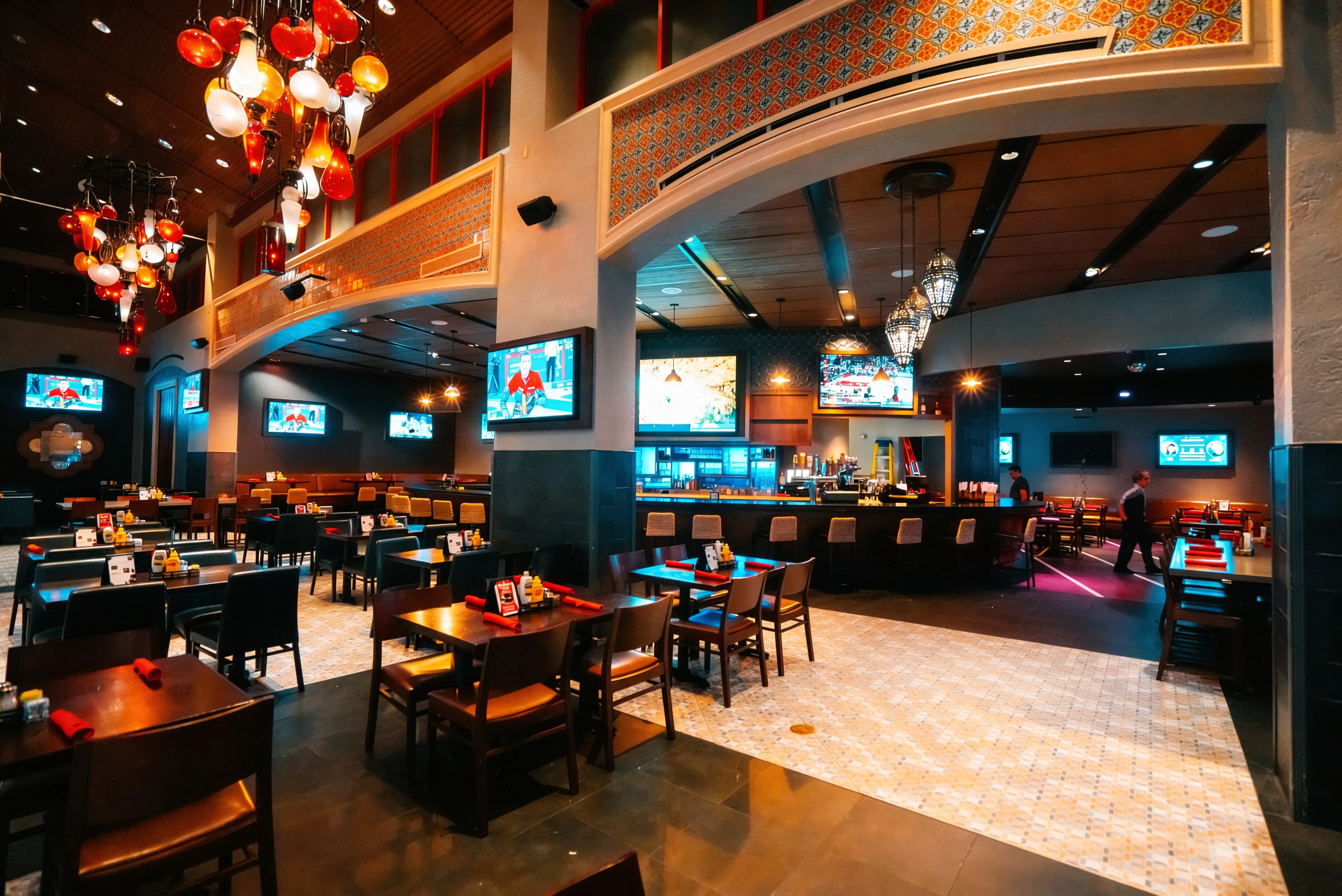
The TVs in your venue already hold a crowd's attention for hours at a time. What they show while people watch is up to you.
Brands spend billions a year to put messages on screens in public places. Digital signage advertising on your own displays reaches those same eyes without buying a single ad slot.
The digital signage industry keeps growing, and the money flowing into it shows where attention is heading. This guide covers what that growth means for your business and how to put your screens to work selling.
Check it Out > What Is Digital Signage?
What the Growth Means for a Business With Screens
Market researchers don't agree on the size of the digital signage market, but they agree on its direction. MarketsandMarkets estimates the global market at $21.45 billion in 2025, reaching $28.88 billion by 2030. Global Market Insights puts 2024 at $22 billion, with about 8.5% annual growth through 2034.
Ad spending tells the same story. The Out of Home Advertising Association of America (OAAA) reported a record $9.46 billion in U.S. out-of-home ad revenue for 2025. Digital out-of-home (DOOH) advertising made up 36.3% of that total and grew 10.5% in a year, nearly three times the pace of out-of-home as a whole.
National brands pay to reach people standing in public spaces. Your screens reach people who already walked through your door, and that audience costs you nothing to buy.
The Ad Channel Already Hanging on Your Wall
Digital signage marketing on your own screens starts with one shift. A commercial display can split into panes, with live TV in one and your own promotion in another.
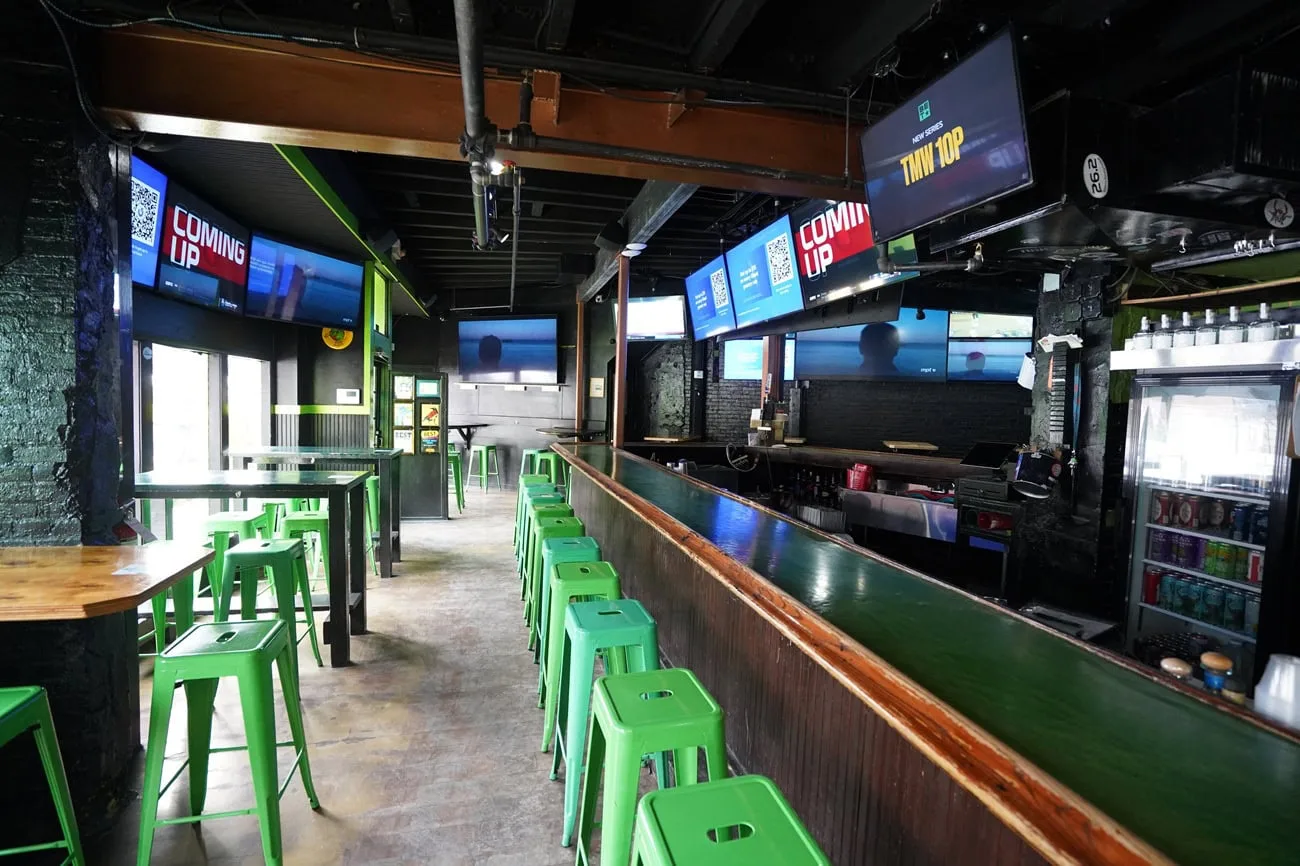
Picture a game-day crowd at a sports bar. The game fills most of the screen, and a drink special sits right beside it. Guests see the offer at the moment they're deciding on the next round.
Placement decides whether it lands. An offer in a guest's eye line that leaves the game clear gets noticed. One that covers the score gets resented.
Control belongs with your team. Layout tools let marketing staff upload their own images and pick the dates each feature runs. Capone's Hideout, a Crunchy Tech client, told us that being able to manage their own in-house ads across different TV layouts was one of the biggest wins of the project.
Check it Out > Digital Signage
Interactive Digital Signage Brings Customers Into the Conversation
A bright screen stops impressing people once they've seen a hundred of them. People respond to signage that gives them something to do.
Interactive digital signage turns a glance into an action. A QR code beside an offer can open a loyalty sign-up or a review page. Touchscreen directories help visitors find their way around hotels and large stores. Social walls display guest photos tagged with your venue's handle, which gives people a reason to post.
Judge each interactive feature by what it gets a customer to do. A scan or a return visit can be counted. A screen people tap once and forget is decoration.
Digital Signage Content Ideas That Earn a Second Look
Content works best when it fits the moment and the spot where the screen hangs. Change it on a schedule, and keep each message short enough to read in a few seconds.
Digital Signage Examples by Venue Type
-
Sports bars: Time specials to kickoff and halftime, and rotate them by matchup so regulars see something new.
-
Restaurants: Shift promotions by daypart, with a lunch combo at noon and a dessert feature after dinner service.
-
Hotels: Loop tonight's events and amenity hours in the lobby, and feature the on-site restaurant before the dinner rush.
-
Retail: Place in-store digital signage near the product it advertises. A screen at the end of an aisle tends to move what's on that aisle better than one at the entrance.
Digital Signage Trends
A few shifts are changing how businesses use their screens this year.
Digital Keeps Taking Share From Static
OAAA's figures show digital formats growing faster than the rest of out-of-home. Advertisers move budget toward screens because a message can change by the hour without a reprint.
Programmatic Screen Buying Reaches Venues
Programmatic DOOH lets advertisers buy screen time automatically through software, the way they buy online ads. Some venues join these networks and earn revenue from outside brands on their own displays. If you go that route, keep control over which ad categories can run and how much screen time they take.
Content That Changes by Daypart
Scheduling tools make it routine to run breakfast offers in the morning and event announcements at night. Each screen stays relevant to whoever is standing in front of it.
Commercial Displays Over Consumer TVs
Consumer TVs are designed for home viewing. Commercial displays handle long operating days and give you pixel-level control over what appears on each part of the screen. Fewer devices between your content and the display also means fewer points where it can fail.
Check it Out > Sports Bar TV Distribution Systems: Matrix, AV-over-IP and Coax Compared
How to Measure Digital Signage ROI
A screen that sells should be able to prove it. Start with methods your staff can track without new software.
-
Screen-only codes: Run an offer or discount code that appears nowhere else. Every redemption traces back to the display.
-
QR scan counts: A QR generator with analytics shows scans by day and hour. Compare those against what was playing.
-
Before-and-after sales: Track a featured item for a few weeks before it goes on screen and a few weeks after.
-
One owner: Assign one person to review the numbers each month and pull any content that isn't earning its spot.
Five Questions to Answer Before You Invest
-
What is each screen for? Name the one job it does, such as selling a special or guiding visitors.
-
Who creates and updates the content? Content that never changes stops getting noticed. Put a name next to the task.
-
What sits in each screen's sightline? Walk the space and stand where customers stand. A display behind a pillar goes unseen.
-
How will you measure results? Pick your tracking method before launch.
-
Commercial display or consumer TV? Decide based on your hours of operation and how much layout control you need.
Check it Out > How We Work
Planning Screens Around Your Business Goals
Crunchy Tech has designed and supported commercial AV systems since 2008. Tell us what you want your screens to sell, and we'll help you plan the displays and layouts to match.