By Adi Khanna | CEO, Crunchy Tech
Walk with me for a second. Pick any sports bar on your street. Go in. Sit at the bar. Look around. And tell me what you see.
Cables everywhere, indoor TVs mounted out on a patio, displays hung wherever there was wall space, with no thought about who’s actually trying to watch them. Music blasting at the wrong volume in the wrong zone, a control system nobody behind the bar knows how to operate, and so on.
Now walk down the street and do it again. Same story.
I’ve been doing commercial audio visual work for 20 years. I’ve spent the last seven running Crunchy Tech, an AV integration company based in Central Florida. And I’ll tell you, without hesitation: 85% of the commercial AV work you see in the world is a waste of money.
Not because the equipment is bad or that the installers are bad people. It’s that the entire approach is wrong: the industry starts with equipment instead of outcomes. And when you start with equipment, the business never gets what it actually paid for.
This piece pulls the curtain on if your AV is in that 85% (and what the 15% that works actually looks like).
What “Waste of Money” Means in Commercial AV
I want to be specific about the claim, because I’m going to say it a lot.
When I say 85% of commercial AV is wasted, I don’t mean the installer got paid and then vanished. What I mean by that is the money left the business and never came back as a result. Revenue doesn’t move, operations don’t improve, the guest experience stays flat, productivity doesn’t budge. What you’re left with is just equipment on a wall.
According to AVIXA’s most recent Industry Outlook and Trends Analysis, the global pro AV industry is projected to grow from $332 billion in 2025 to $402 billion by 2030. A significant portion of that spend is commercial: hospitality venues, restaurants, corporate offices, retail, hotels, banks.
A staggering amount of it is being spent on systems that will never deliver a single business outcome they were supposedly installed to deliver.
Why the 85% Exists
Three forces built this status quo:
1. The wrong person designs the AV. I see it constantly – the architect puts “TV goes here” on the plan because there’s wall space and that’s that. Nothing about sightlines from the bar or about how sound travels in a full room. There’s nothing about what staff needs to operate during a game-day rush either.
The knowledge to design commercial audio visual systems for a business outcome isn’t architectural knowledge. But the industry treats it like it is.
2. Most AV vendors sell what they have. Ask a typical AV integration company for a proposal and you’ll get a bill of materials. What you won’t get is a unified communications strategy or an AV lifecycle management plan.
You won’t get someone asking what your biggest revenue day looks like or what your staff can execute. No queries about how your marketing team wants to use the displays or whether the room is flexible enough for a quiet Tuesday dinner and a packed Sunday watch party. The industry is optimized to sell the box. Almost nobody is optimized to deliver the outcome.
3. Buyers don’t know what to ask for. And honestly, why would they? They’re operators. They run restaurants, hotels, corporate campuses. They’re not supposed to be AV experts. The industry has trained them to compare line items on a BOM, not to ask “will this room make my business work better on its hardest day?” So they sign the low bid. Five years later, they’re either ignoring the system or replacing it.
That’s the machine. Architect picks walls. Vendor sells boxes. Owner signs the low bid. Nobody designs for an outcome.
Welcome to the 85%.
Five Signs Your Commercial AV Is in the 85%
This is the diagnostic. Walk your own venue. If more than two of these are true, your AV is working against your business.
1. You can see cables.
Exposed HDMI runs, speaker wire zip-tied to the underside of a soffit, power bricks dangling off a TV – this tells you nobody thought about where the rack lives, where conduit got pulled, or what the room is supposed to look like to a guest. If the infrastructure is visible, the design work wasn’t done. NSCA’s integration best practices outline cable management standards that should prevent exactly this.
2. You have residential equipment doing a commercial job.
This is the most common one. Consumer TVs installed in a bar or hotel lobby that runs 12 to 18 hours a day. Industry data on commercial vs. consumer displays is unambiguous: consumer TVs are engineered for four to six hours of home use, their warranties are typically voided the moment they’re installed commercially, and they usually fail within one to three years of heavy use.
A properly specified commercial display runs reliably for five to seven years or more. If your AV partner put residential equipment in a commercial space, they were buying the contract and not really designing the system.
3. Your TVs are mounted to walls, not to seats.
Sightlines are the single most important design factor in a hospitality space. If a guest sits at the bar and has to turn their whole body to see the game, or the booth against the back wall can’t see a screen at all, your display layout was driven by where the walls were rather than where the guests were.
4. Your audio doesn’t know what zone it’s in.
If the same music plays at the same volume in the dining room, the bar, the patio, and the hallway, and if there’s no dayparting, event mode, or way to shift the room from “lunch” to “game day,” the audio was not engineered for a business. We specialize in multi-zone audio distribution that gives operators real control over every zone independently.
5. The control system depends on one specific person being on-site.
This is personally the tell that kills me. The owner can change channels. Nobody else can. Or the system works as long as nothing unexpected happens… but the minute you need to push the Tuesday night game to the patio screens, the whole thing collapses. Control that only works when the smartest person in the building is present isn’t control.
None of these are the equipment’s fault. They’re all design decisions made by the wrong person, for the wrong reason, at the wrong stage of the project.
ALSO READ: Why Plug-and-Play Sports Bar AV Packages Will Cost You the World Cup
What the 15% Actually Looks Like
I’ll give you an example.
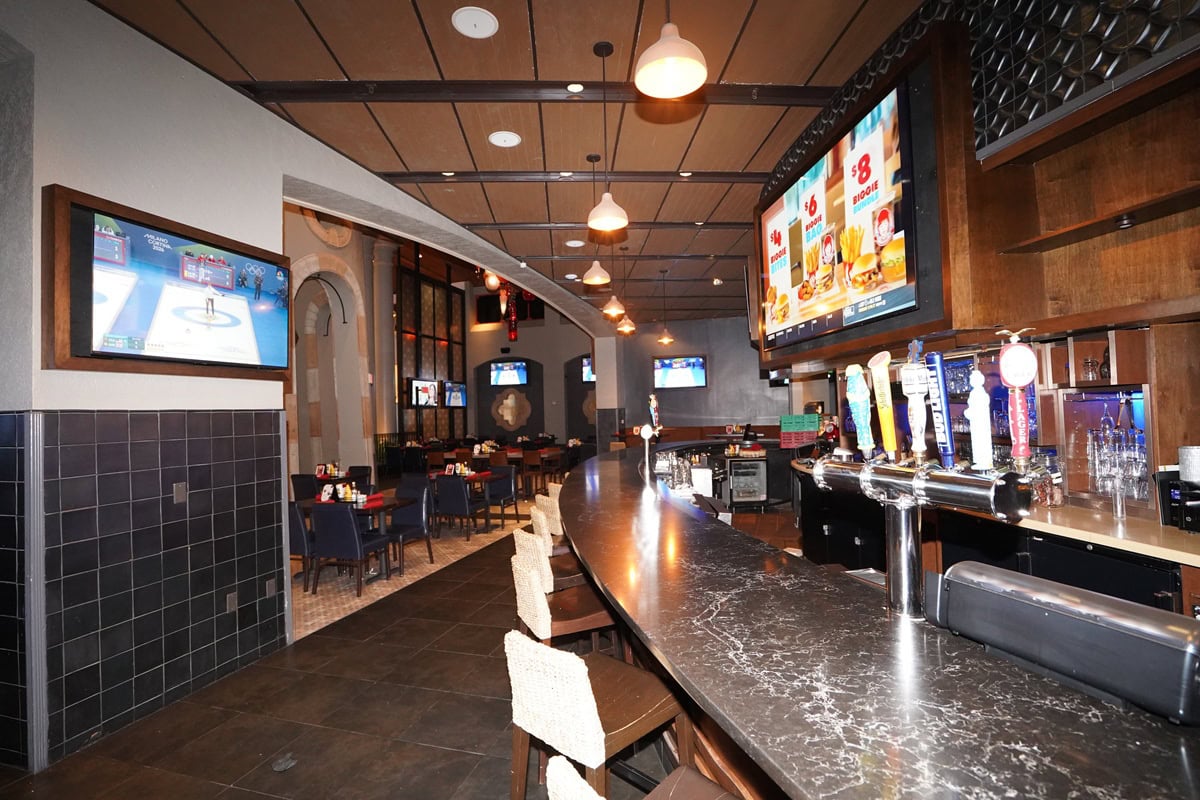
Tom’s Watch Bar is a multi-location concept built around immersive sports viewing. The entire thesis of the brand is that you don’t want to go to the game; you want to come here. That’s only possible if the AV system is genuinely designed for it.
Every seat has a sightline and every zone carries the right audio for what’s happening in that zone. The control layer lets staff push any game to any screen and handle Sunday 1pm kickoff without anyone from IT standing in the back room. That is what commercial audio visual integration looks like when it’s designed for an outcome.
In our experience across 32 cities, we’ve found that the 15% share three traits:
1. The design starts with a business question.
“What is this room supposed to do for the business on its biggest day?” Every downstream decision then follows. Sightlines. Audio zones. Control design. Content strategy. Conduit and power. Even the lighting around the displays.
When the business question gets asked first, every downstream decision gets smarter. We recommend operators start with a needs assessment framework before engaging any AV integration company.
2. The integrator is accountable for the outcome.
The 15% come from teams that stay engaged after the ribbon-cutting. They measure whether the room does what it was designed to do. They come back for tune-ups. They’re still reachable at 9pm on a Saturday when a feed drops. Managed AV services – where the integrator stays on for ongoing support – are how the best operators guarantee this accountability.
Installation is just the beginning.
3. The system was right-sized.
This is counterintuitive. The 15% aren’t the most expensive systems, they’re simply the most appropriate. The right number of displays chosen for the right viewing distance, the right audio zoning, a control layer designed around what the staff can operate, etc. Nothing is overbuilt for the demo. Everything is designed for the Tuesday after go-live.
The Business Cost of Being in the 85%
This is where the conversation shifts. Operators start asking: “so, what is this actually costing me?”
More than most of them realize.
Revenue that walked out. Guest experience is the single biggest driver of repeat visits in hospitality. If a guest sat down, couldn’t see the game, tuned out the music in their head, and ordered one drink instead of three, they didn’t tell you. They told their friends.
Peer-reviewed research on restaurant environments, published in Scientific Reports, has shown that ambient noise and environmental discomfort measurably reduce willingness to spend time and money in a venue. Now multiply that across a season. You paid for AV that’s pushing guests out the door.
Revenue that was never captured. Digital signage studies report sales lifts of 15% to 30% on featured menu items when content is designed and placed correctly. In a venue where displays exist but aren’t programmed to drive behavior, that lift doesn’t happen. The screens run. They just don’t work.
We specialize in digital signage content strategy that turns passive displays into active revenue drivers.
Operational drag. Staff time lost troubleshooting. Managers pulled off the floor to reboot a system. IT tickets no one is empowered to resolve. Revenue events postponed because the video wall isn’t ready. None of this shows up as an AV cost on the P&L. All of it is.
Brand decay. This one is the most expensive and the hardest to see. You’re spending money to build a brand experience and the room isn’t delivering it. The dissonance compounds. Over time, the brand weakens; guests stop believing the promise.
You can watch this happen in real time with concepts that overinvested in technology-centric AV a decade ago: the tech didn’t enable the business, and the business lost ground while the tech sat there.
Sunk-cost paralysis. The final kick: once the 85% system is in place, nobody wants to talk about replacing it. The money’s been spent. The wiring’s in the walls. The system gets ignored, then worked around, then eventually ripped out during a full renovation.
That’s the cycle that built the industry’s reputation as a cost center in the first place.
The Design-Build AV Alternative
The fix for the 85% is simple: a different process.
In 20 years of commercial AV, the projects that landed in the 15% all had one thing in common: someone treated the design phase as a discipline in its own right.
That’s what Design-Build AV means at Crunchy Tech. One team owns the entire process, including discovery, design, engineering, programming, installation, and AV lifecycle management. No handoffs, no finger-pointing, and no seam between the firm that designed it and the firm that installed it.
And crucially, we start with the outcome.
What does this space need to do for the business on its busiest day? What does it need to do on an average day? What does the staff need to execute without calling IT? What does marketing want to put on the screens, and how do those goals shift by daypart? We engineer backwards from the answers.
When we do that, equipment becomes the last decision. The right commercial displays, multi-zone audio distribution, AV over IP systems, intuitive control interfaces, and low voltage lighting all fall out of the brief, because the brief was written correctly.
How to Run the Diagnostic on Your Own Space
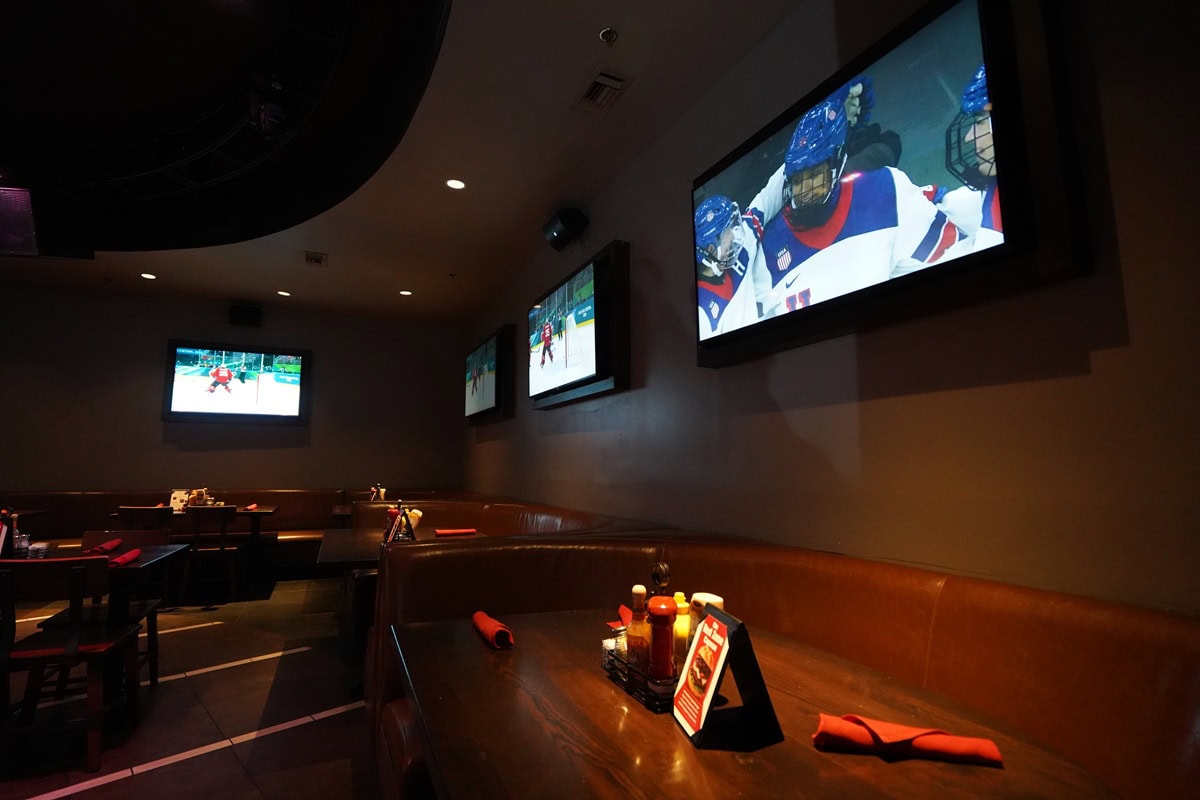
You don’t need a consultant to start. You can walk your own venue tomorrow and honestly answer four questions.
- Does every seat see what it’s supposed to see without guest effort?
- Does the audio in each zone match what that zone is trying to be at this time of day?
- Can the least technical person on your staff run the system during the busiest hour of the week?
- If your AV failed tonight, would you lose meaningful revenue?
If you can’t answer yes to the first three, or you have to answer yes to the fourth, you’re in the 85%. It’s not so much a failure of character as the outcome of a process that was never designed to produce that outcome in the first place.
The good news: every one of those issues is fixable without starting from scratch. The first step is an honest walkthrough with someone who designs commercial audio visual systems for outcomes.
If you want that walkthrough, let’s schedule one. We’ll be candid about what’s working and what the actual cost-benefit of fixing it looks like for your business.
Let’s talk about what your space could do!
Frequently Asked Questions (FAQs)
What does bad commercial AV look like?
Bad commercial AV is defined less by the equipment than by the result. Visible cables, consumer-grade TVs in commercial environments, displays mounted without a sightline strategy, audio that can’t zone or daypart, and control systems that only work when a specific person is present. These are the five most common diagnostic signs.
Why is so much commercial AV poorly designed?
Three reasons. (1) The wrong person often designs it, typically the architect or general contractor, who lacks specialized AV expertise. (2) Vendors sell what they have in stock as opposed to what the space needs. (3) Buyers compare line items rather than outcomes, because the industry hasn’t trained them to ask the right questions. The result is systems engineered around walls and price points instead of business performance.
How do I know if my AV system is a waste of money?
Walk your venue and answer four questions honestly. Can every seat see what it’s supposed to see? Does the audio match each zone’s purpose at the right time of day? Can your least technical staff member run the system during peak hours? Would you lose real revenue if it failed tonight? If you can’t answer yes to the first three, or have to answer yes to the fourth, your AV isn’t earning what you paid for it.
What’s the difference between commercial-grade and consumer-grade AV?
Commercial displays are engineered for continuous operation, i.e., 16 to 24 hours per day, with enhanced heat management, longer warranties (typically three years vs. one), and on-site service coverage. Consumer TVs are designed for four to six hours of home use, their warranties are often voided by commercial use, and they frequently fail within one to three years in high-use environments. Installing consumer gear in a commercial space is a false economy that always surfaces later as a replacement cost.
How do I avoid spending money on AV that won’t work for my business?
Start with the outcome. Engage an AV integration company that asks about your business operations, peak-day scenarios, staff workflows, and guest experience goals before showing you a product spec. Require a Design-Build AV approach where one team owns the outcome from design through long-term support. And compare proposals on outcomes and accountability, not just line-item price. The low bid is almost always the most expensive path over a five-year window.