Sports Bar AV in Kansas City
location_on Kansas City, MO

Sports Bar AV in KansasCity

Game-day AV for Kansas City sports bars. Sightline-mapped displays, zoned audio, patio screens engineered for hail and hard freezes, and control a new bartender can run on the Sunday the whole city watches one game.

A Kansas City Sunday is onegameineveryseat

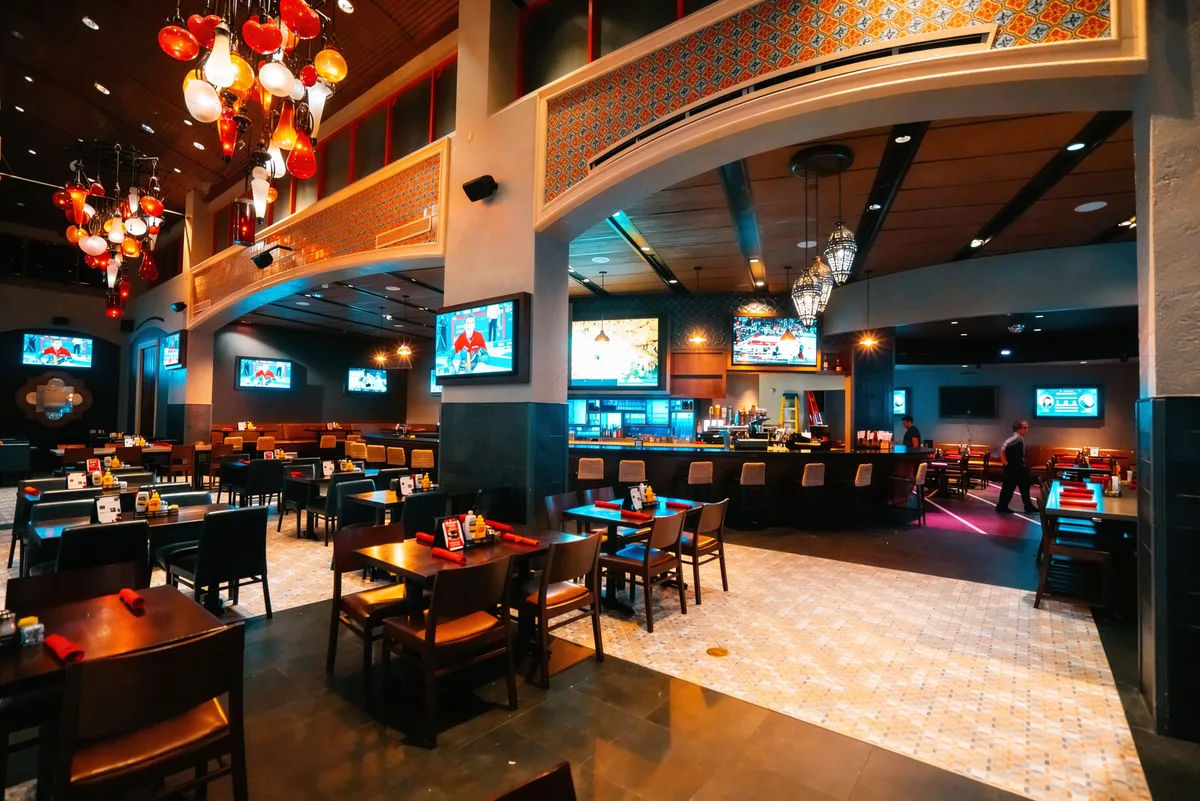
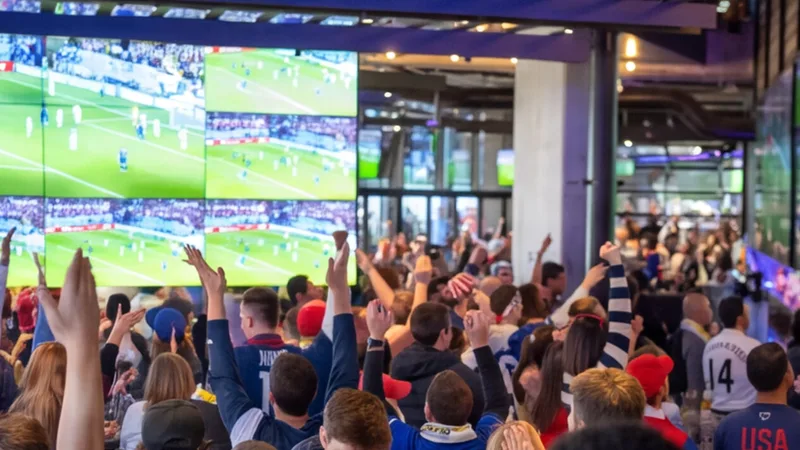
A room in the Power and Light District runs a normal multi-game Saturday, then Sunday arrives and the whole city is watching the same kickoff. Those are two different rooms. Most systems here get designed for the Saturday, so on Sunday half the wall runs a beat behind the rest, the back booths cannot see the screen everyone else is reacting to, and one master volume leaves the bar too loud while the middle of the room hears nothing.

We design Kansas City rooms for both days. Sightlines get mapped before a single panel is ordered, so one game lands cleanly in every seat on Sunday and five games split across zones on Saturday. Audio runs in zones on a digital signal processor, so the main floor can carry a full house while the bar stays workable for ordering. And if you operate on both sides of the state line, the permitting path gets confirmed per municipality instead of copied from the last job.

Reel A Kansas City Sunday is one game in every seat Kansas City, MO

Sports Bar AV AcrossKansasCity

From the district downtown to the neighborhood rooms in Waldo and the suburban footprints in Kansas, we build sports bar AV that carries a one-game Sunday and a five-game Saturday on the same system.

2008
Serving Kansas City since
8
Neighborhoods
Power and Light District
Sports bars · Large-format rooms

These rooms take the heaviest crowd load in the city, so they get walls sized for standing overflow, synchronized feeds so nobody sees a play late, and one-tap presets staff can run mid-rush.

Peak-crowd · synced feeds
Crossroads Arts District
Breweries · Taprooms

Crossroads buildings are usually brick, concrete, and open ceilings that scatter sound, so speaker type and placement get solved around the acoustics before any screen goes on a wall.

Open ceiling · acoustics
Westport
Neighborhood bars · Sports bars

Westport footprints are small and loud, so the sightline map drives a leaner screen count placed where every seat benefits instead of filling every wall.

Small footprint · sightline-led
Country Club Plaza
Restaurants · Hotel bars

Plaza work usually means an existing building and a design review, so speakers and screens get concealed into the architecture without giving up coverage or angles.

Renovation · concealed install
River Market
Sports bars · Restaurants

River Market rooms live on their patios for a narrow stretch of the year, so outdoor zones get commissioned before the season opens and specified for hail and hard freezes.

Patio-ready · weather-rated
Waldo and Brookside
Neighborhood bars · Family restaurants

These rooms depend on regulars rather than events, so the control layer is built for staff who turn over more often than the crowd does.

Year-round · staff-simple
Overland Park
Sports bars · Family restaurants

Bigger suburban rooms need coverage rather than volume, and because this is a different state, permitting and inspection get confirmed locally rather than carried over from a Missouri job.

Large room · Kansas permitting
North Kansas City
Sports bars · Taverns

North Kansas City is its own municipality with its own approval path, so we confirm the requirements there instead of assuming the city process applies.

Separate jurisdiction · local
NFL · Arrowhead Stadium
Chiefs

A home game here runs closer to a civic event than a normal service, so the feeds get synchronized across every zone and the audio gets the headroom to stay intelligible over a full house.

MLB · Kauffman Stadium
Royals

Baseball brings dozens of ordinary game days instead of a handful of big ones, which makes it the best use of a patio and of schedule automation across a long summer.

MLS · Children's Mercy Park
Sporting Kansas City

Soccer pulls a different crowd with its own energy, so the match usually lives in one zone with audio that can hold a singing section without swallowing the rest of the room.

NWSL · CPKC Stadium
Kansas City Current

This crowd is growing fast and often overlaps other games, so routing has to carry the match independently rather than taking over the main wall.

NCAA · Regional college football
College Football

Saturday loyalties here split between Kansas, Kansas State, and Missouri, so each zone carries its own matchup and staff flip feeds between windows in seconds.

How we work

Sightlines mapped for asingle-gameSunday

We do not start with a screen count. We start with whether every seat in the room can see the one game the entire city came to watch.

The consult and the site walk

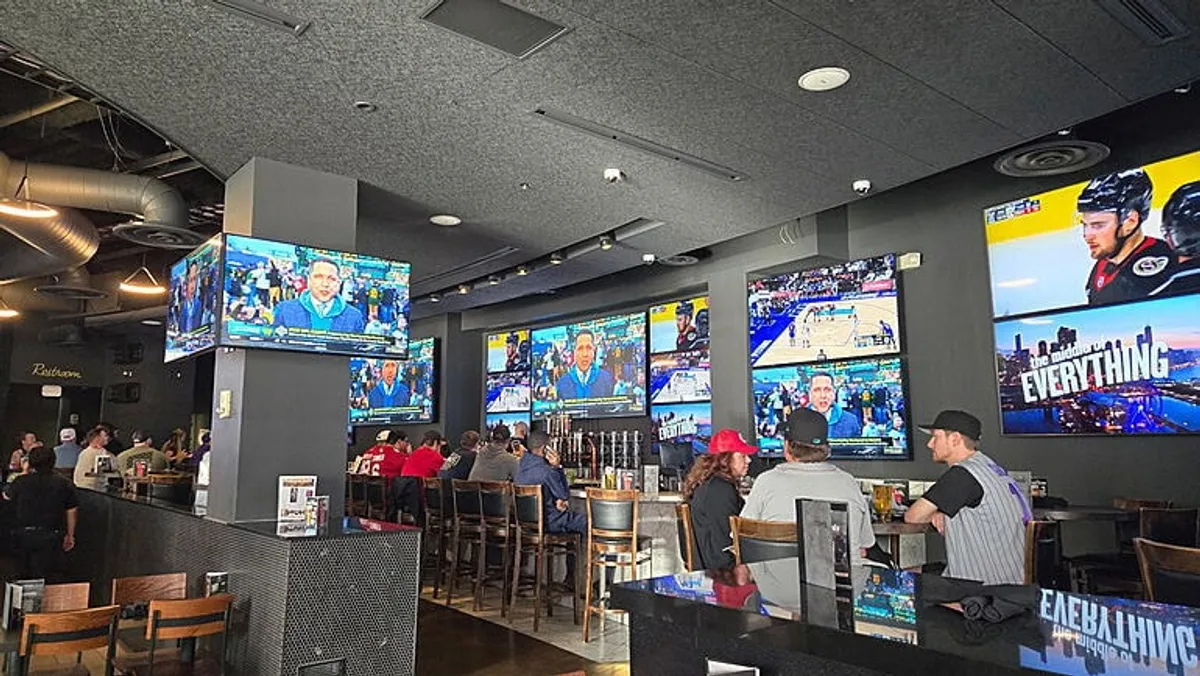
Most disappointing game-day rooms were quoted off a floor plan by someone who never sat in the back booth. So we start with a consult rather than a quote: what you want the room to feel like, how big it is, what it needs to do, and the budget you are working with. Then we walk it, and in Kansas City we push to do that on a football Sunday, because a Saturday walk shows you a room split across five games and tells you very little about the day everyone watches one. We measure sightlines from four places guests actually sit: the bar-top, the high-tops, the booths with the worst angles, and the standing overflow that only exists when the room is full.

Sightlines mapped for a single-game Sunday
InstallSightlines mapped for a single-game Sunday
Sightlines mapped for a single-game Sunday
InstallSightlines mapped for a single-game Sunday

Design you can see, then one team on site

The other way these go wrong is that nobody sees the outcome until it is built, then wants it changed a season later. So you see the design before you commit to equipment, including the view from the seats you were worried about. Control gets programmed around the modes you actually run, so a single-game Sunday, a five-game Saturday, and a quiet weeknight are presets rather than arguments. One team handles the install, calibration, staff training, and documentation, and coordinates with your electrician and low-voltage trades. Kansas City is a bi-state metro, so if this room sits in Missouri and the next one sits in Kansas, we confirm the permitting and inspection path with that municipality rather than assuming an approval carries a few miles.

What we build

The AV stack a Kansas City sports bar runson

A game-day room is a handful of systems working as one. Here is what we design, program, and install, all of it built off your sightline map.

The AV stack a Kansas City sports bar runs on
InstallThe AV stack a Kansas City sports bar runs on

Sound that holds up when the room roars

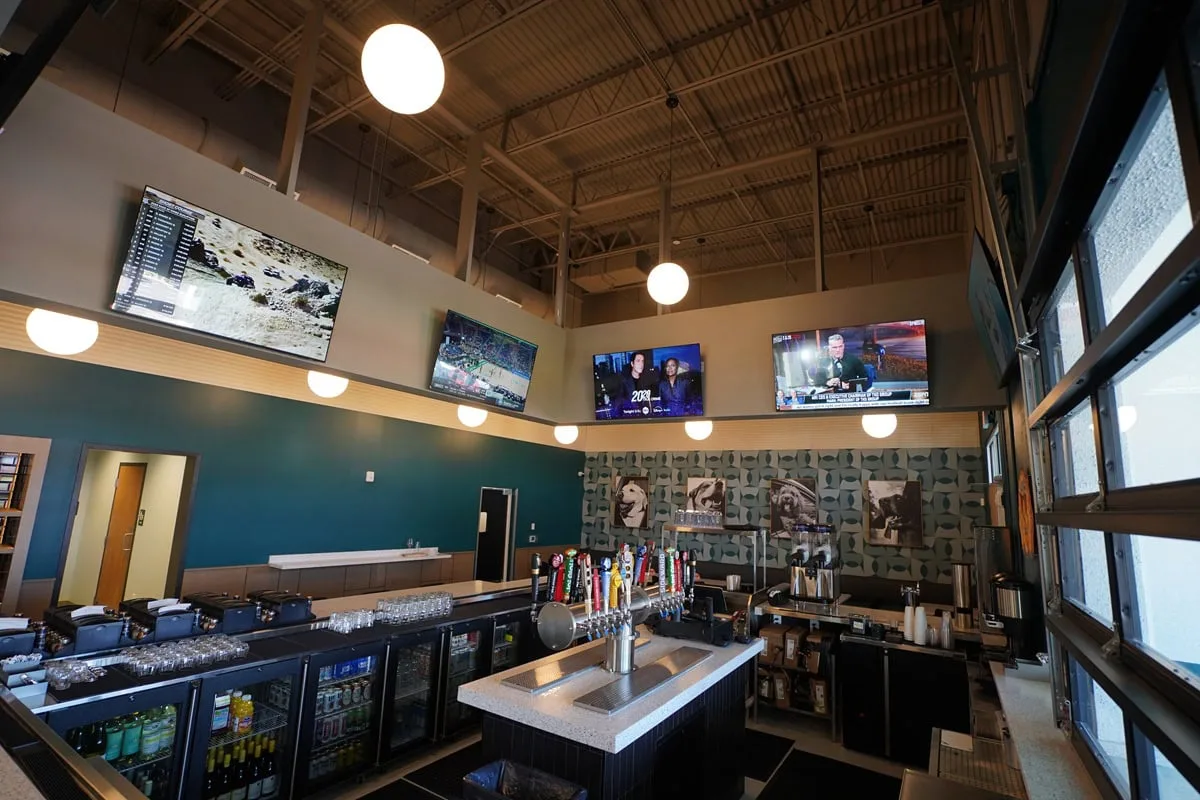
The failure owners describe here is specific. When the whole room is on one game, the crowd makes its own noise and the call disappears into it. That is coverage and headroom, not volume. Bad sports bar audio usually comes from speakers mounted without accounting for direction, height, and room surfaces, often run around the perimeter so the middle of the room gets nothing while the edges are punishing. So the system runs in zones on a digital signal processor with the headroom to stay intelligible at capacity: the main viewing area carrying a full house, the bar side still workable for ordering, the patio holding its own. On a Saturday those same zones split apart so each area carries its own matchup. Anything outdoors is weather-rated and on its own zone.

Displays, video walls, and the patio

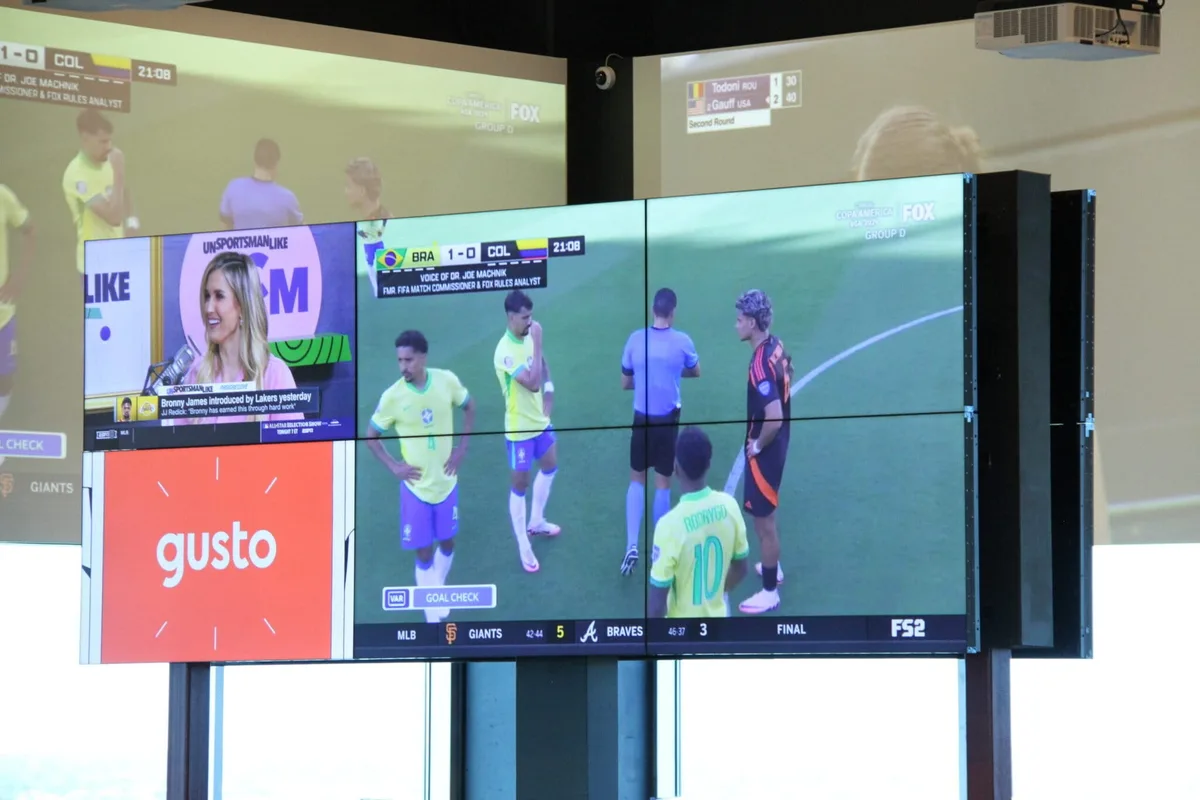
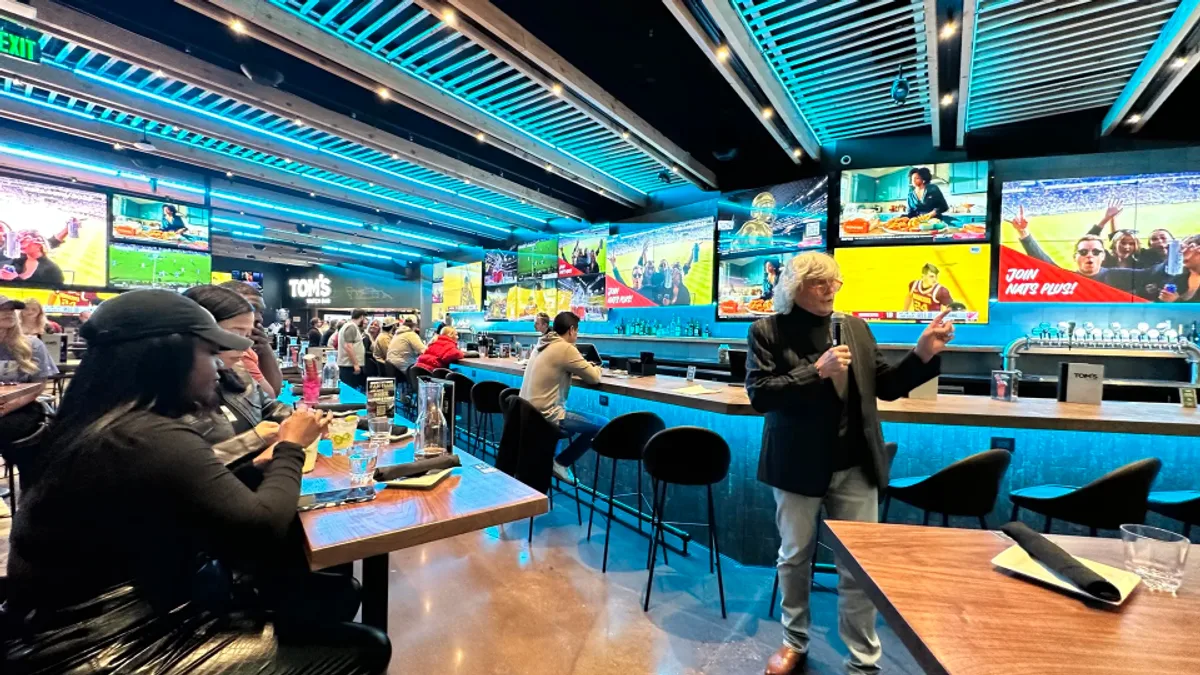
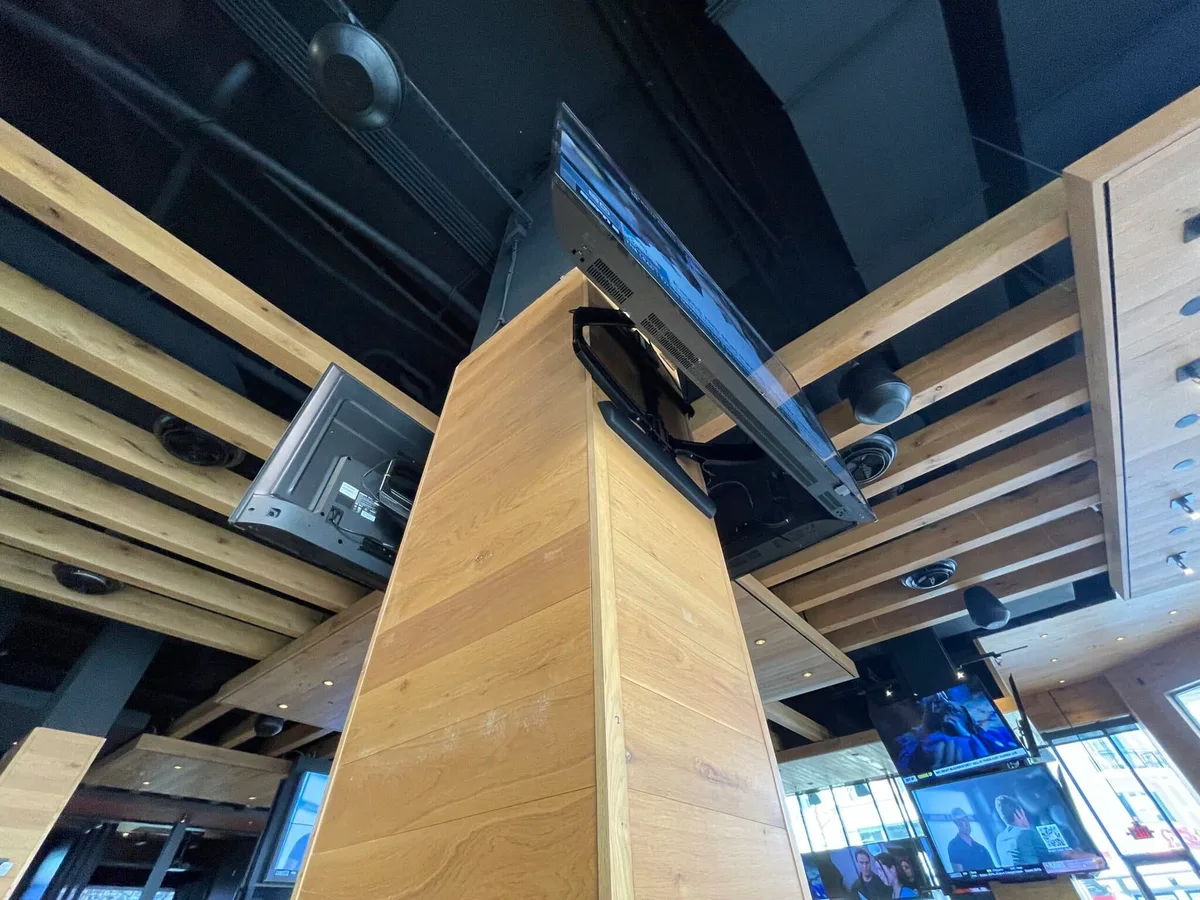
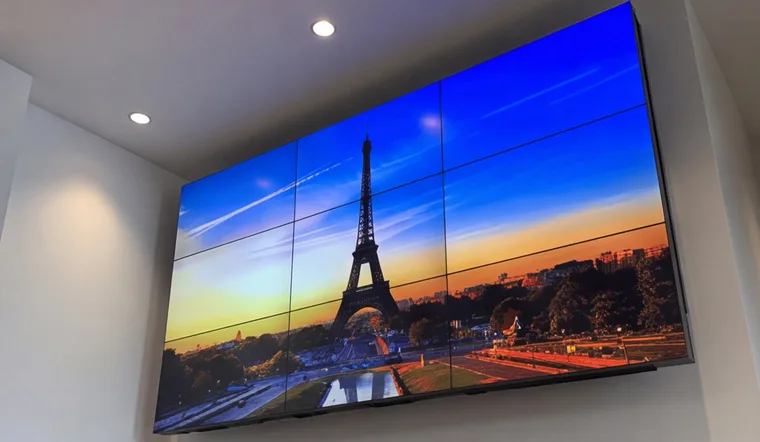
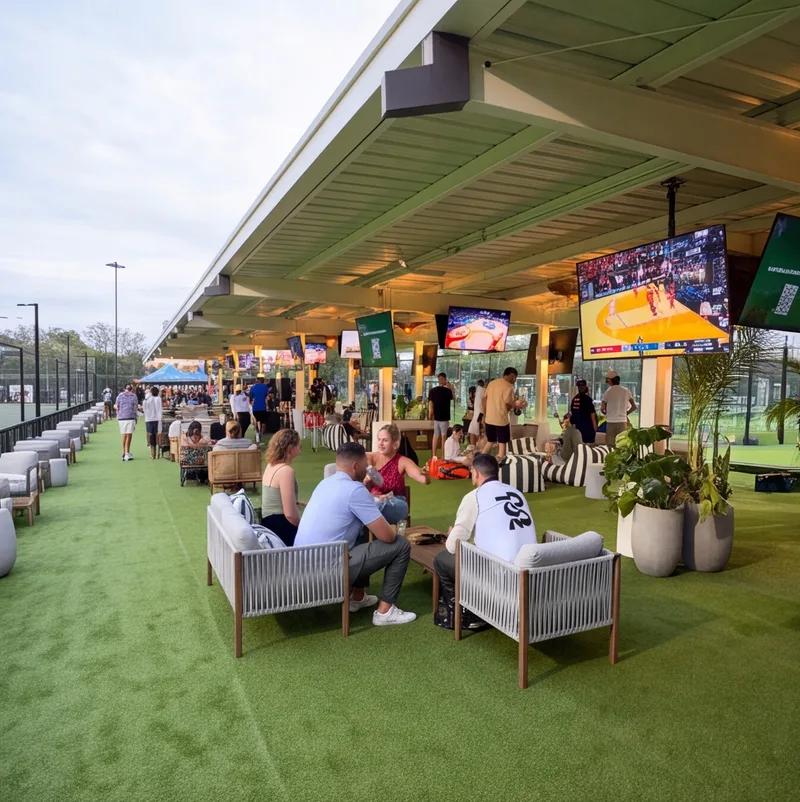
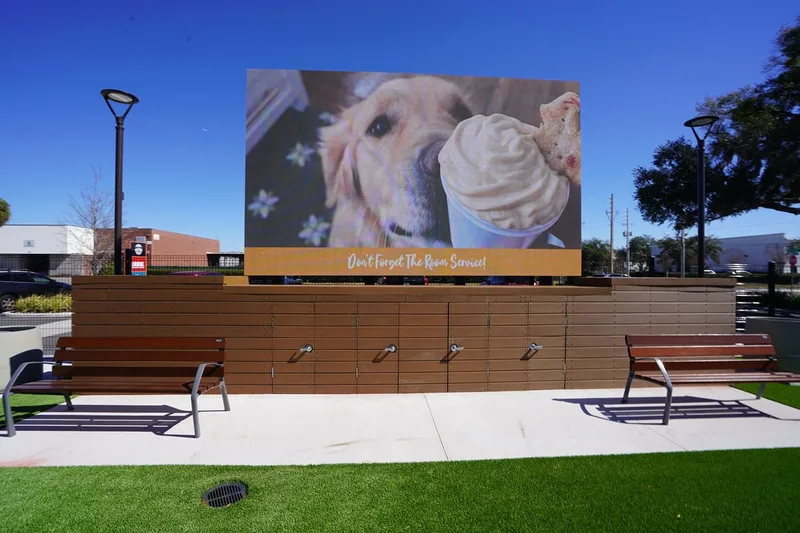
A television on a wall is not a sports bar. A screen should be a content source placed where people can actually watch it. Indoor displays are commercial grade, sized off the four sightline zones, with resolution driven by how close the nearest seats really sit, and placed so afternoon glare does not take out a whole section. A single-game Sunday is the strongest case for a video wall in this market: one large image the entire room reacts to at once, then split into a grid when Saturday brings five kickoffs. Outside, patio screens get high brightness with an ambient light sensor so they lift at midday and dim at night, sealed enclosures, and mounting engineered for hail and straight-line wind rather than an average week.

Distribution, signage, and control

The part nobody sees is the part that fails at the worst moment. Content moves over an audiovisual network so any source reaches any screen without lag or signal drop, with matrix switching so you can route any game to any zone and build custom viewing areas, all at 4K. Satellite, cable, and streaming sources get consolidated into one clean rack instead of a pile of boxes behind the bar, with scheduling so nobody misses a kickoff. Digital signage earns its keep between whistles: menu boards you can flip to a game-day limited menu instantly, and screens carrying scores and what is on next. All of it runs on a dedicated AV network rather than sharing bandwidth with your point of sale or guest Wi-Fi, the most common reason a wall freezes during a rush.

Why Kansas City sports bars trust us with it

Built for the room that movestogether

Kansas City concentrates its year into a handful of Sundays and spreads a divided college crowd across Saturday. Here is where our depth shows, and where our scope ends.

One game in every seat

On a football Sunday this market behaves differently than most. Instead of five games running in five corners, the entire venue is locked onto one, and a screen a second behind the one next to it ruins the moment for half the room. So the routing gets built to land the same feed everywhere at the same time, and the sightline map has to cover every seat rather than most of them. The booths are the test, because walls, partitions, and the backs of adjacent booths make them the worst seats in the building, so we model them individually. Watch for people craning their necks instead of talking to their table and you are watching a design failure. On Saturday the same system splits apart and carries a divided college crowd across independent zones.

Built for the room that moves together
InstallBuilt for the room that moves together

Support after opening night

Crunchy Tech started in 2008 as an AV support operation, an unusual origin for an integrator and the reason our systems are built the way they are. Years of fixing other people's work teaches you exactly where installations cut corners. That shows up in a rack you can service: fully enclosed, every cable labeled at both ends, power separated from audio and data, so someone opening it three years from now can follow every run without guessing. Most of the cost of a bad AV install is not the install, it is everything that has to happen later because nobody can find anything. That matters more in a market where the year concentrates onto a few Sundays. Around 47 percent of support tickets close inside an hour and roughly 72 percent within a day, usually without a site visit.

Midwest swings decide the equipment

If you understand the environment, you understand the equipment. Consumer displays put outside here fail, and a dead or washed-out screen means a table with a bad experience, which on a Sunday is a full table. The swing is the problem: humid ninety-degree afternoons in July, hard freezes in January, and spring storms that bring hail and straight-line wind. So outdoor components get thermal headroom at both ends, real ventilation, sealed enclosures, and mounting selected for impact and gust exposure. Indoors, the biggest single factor in how long your system lasts is whether the AV room has cooling, because a rack of amplifiers in a sealed closet cooks itself and collects dust. We have seen racks look a decade old after a few months. Keep that room at or below 75 degrees.

What it earns back

How a game-day room paysforitself

A sports bar AV system is not a cost line. It decides what your busiest Sunday is worth. That shows up in the seats you can finally sell and in how you scope the spend.

How a game-day room pays for itself
InstallHow a game-day room pays for itself

The seats you can finally sell

A seat nobody can watch the game from sits empty on the day you most need it full, which is the whole reason the sightline map comes first. In a single-game market that gets sharper, because when the entire room is on one kickoff there is no second screen to send anyone to. Fix the angles, the glare, and the booth nobody could see from, and the back of the room turns over with the front. The patio is the second lever, and the math here is narrower than in the South. Your outdoor season is shorter, so those screens earn across late-season football afternoons and a full summer of baseball. Between games the same displays run signage that moves menu items instead of sitting dark.

Good, Better, Best against one design

Most owners price AV like retail: twenty televisions cost a certain amount, so twenty screens on a system should not cost much more. Worth being plain about the gap, because the rack, the distribution, and the control take a serious share of the budget before you buy a single screen or speaker. So we quote Good, Better, and Best against one design, per zone, which means your dining floor can be Good while your main viewing area is Best. Good is a real recommendation, not a strawman: one room watchable from every seat, zoned audio, tablet control. Better usually adds the patio and the audio headroom a full house needs. If you are opening a second room across the state line, the same standard repeats with approvals confirmed locally. A short budget gets value engineered honestly rather than oversold.

How a game-day room pays for itself
InstallHow a game-day room pays for itself

How do you design a Kansas City sports bar for a football Sunday when the whole room watches one game?

By treating the single-game room as its own design case, which changes three things. First, synchronization matters more than it does anywhere else. When five hundred people react to the same play, a screen running a second behind the one next to it ruins the moment, so the distribution and the display settings get set up to land the same feed everywhere at the same time. Second, the sightline map has to cover every seat rather than most of them, because there is no second screen to send anyone to. That means the booths get modeled individually instead of averaged into the room, and standing overflow is treated as a real zone rather than an afterthought. Third, the audio needs headroom rather than volume, because a full house generates its own noise floor and a system that sounds fine at half capacity turns to mush at capacity. The same system then has to split apart on Saturday for a divided college crowd, so the zones are built to work both ways from day one.

How much does a sports bar AV system cost in Kansas City?

It depends on the indoor and outdoor scope, how many audio zones you need, the size and resolution of any video wall, and the size of the venue. The honest starting point most owners are not expecting: the back-end rack, distribution, and control take a serious share of the budget before you have bought a single screen or speaker. From there we quote three tiers against the same design. Good gets a single room watchable from every seat with zoned audio, source distribution, and tablet control. Better usually adds the patio and the audio headroom a full house needs, and in this market that is where the return tends to tip. Best layers in video walls, signage, and integrated control for a flagship room. We quote it per zone, so your dining floor can be Good while your main viewing area is Best. If the budget is short of the room you are describing, we will say so and value engineer it rather than sell you something you will be babysitting.

We have one room in Missouri and one in Kansas. Does anything change between them?

The design standard does not change. The paperwork does. Kansas City is a bi-state metro, and two rooms fifteen minutes apart can sit in different states with different permitting and inspection paths, different electrical and low-voltage requirements, and different inspectors. On top of that, several of the places operators expand into are their own municipalities with their own processes. So we confirm the requirements with the authority that actually has jurisdiction over that address instead of assuming the last approval carries over, and we coordinate with your electrician and low-voltage trades on each side separately. What stays identical is the system: the same sightline method, the same rack build standard, the same control layout, and the same documentation, so a manager who learns one room can run the other. That repeatability is the point for anyone growing across the line.

Do you handle livestreaming, cameras, or video production?

No. We are a design-build AV integrator. We do not install or operate cameras, we do not shoot or edit video, and we do not run streaming as a service. What we do is build the infrastructure that supports whatever streaming or recording you choose: clean audio feeds to your partner's encoder, documented signal paths so a videographer knows exactly where to plug in, and a dedicated network engineered for the uplink. We design the system around how the bar actually runs, procure the hardware, install it, calibrate it, train your staff, document all of it, and support it for the life of the system. The content and streaming side belongs to specialists, and our job is to make their job easy.

Related Solution

Learn more about our Sports Bars AV solutions

View Sports Bars AV
What clients say

Operators who run on our systems

Client successes drive Crunchy Tech to become better. Below is how our customers feel about us.

Just do it. Spend the money. It’s well worth it. It’s not worth your time, hassle, energy, and stress of trying to make it look right and do it right when there’s somebody who has been doing it for years and has perfected the craft.

Matt Moore logo
Matt Moore
IT Systems Administrator · Capone's Hideout

Working with Crunchy Tech was a fantastic experience from start to finish. They handled the sale and installation of all our sound and TV equipment at The County Bar in Aviston, IL, and absolutely nailed it. We were on a very tight deadline, and they not only met it—they delivered top-notch quality and service the entire way. Highly professional, responsive, and easy to work with. We couldn't be happier with the results.

Clint Flowers logo
Clint Flowers
Owner · The County Bar

Crunchy has done an amazing job on our A/V install. The sound is perfectly balanced throughout our many zones and the entire system is super simple to use.
Steve Glum logo
Steve Glum
Chief Marketing Officer · Ace Cafe
Talk to a Kansas City sports bar AV designer

Let's design for theSundaythecitystops

Tell us about the venue: the neighborhood, which side of the state line you sit on, the square footage, the indoor and patio split, and what breaks when the room fills for a football Sunday. We will start with a consult to understand what you are trying to accomplish, then walk the room on a game day if we can, and come back with one engineered recommendation instead of a parts list.

  • Four sightline zones modeled before any screen: bar-top, high-tops, booths, standing overflow.
  • Synchronized feeds so nobody in the room sees the play a second late.
  • Zoned audio that carries one game on Sunday and five on Saturday.
  • Patio screens rated for hail, straight-line wind, humidity, and hard freezes.