AV Company Myrtle Beach | Commercial AV Integration
location_on Myrtle Beach, SC

Commercial AV on the GrandStrand

Design-build audiovisual for Myrtle Beach restaurants, hotels, attractions, and offices, built to one standard your seasonal staff can run.

On the Grand Strand the AV has to survivetheturnover

Myrtle Beach runs on a workforce that changes with the tide. The Grand Strand is a tourism economy of many small rooms, franchise restaurants, beach bars, arcades and attraction counters, hotel outlets, and most of them are staffed by people who won't be here next season. That flips the usual AV problem. The hard part isn't building one impressive room, it's building a lot of ordinary ones that stay identical and keep working when the person running them started three days ago. An operator here isn't really buying a sound system. They're buying a standard, a room a nineteen-year-old on a first shift can run without breaking it, repeated across every location so the brand feels the same in June as it did last August.

So we design for the turnover, not around it. That means one control layer across every site, presets a new hire runs by name instead of by knowledge, and a startup that's the same at location one and location six. We document each room so a manager who inherits it isn't guessing, and we lean on remote support, because when a rookie hits a wall on a Saturday night, the fix should come from our desk, not a truck two days later. Build it that way and a portfolio stays consistent no matter who's on shift. From there the ordinary craft holds: real drawings, a rack tested before it ships, a clean install, tuning, and training that sticks. Since 2008.

On the Grand Strand the AV has to survive the turnover
Install On the Grand Strand the AV has to survive the turnover Myrtle Beach, SC

Commercial AV AcrosstheGrandStrand

The Boardwalk and Broadway at the Beach, the Market Common and Restaurant Row, North Myrtle Beach and Murrells Inlet, Conway and Carolina Forest.

2008
Serving Myrtle Beach since
10
Neighborhoods
The Boardwalk and Ocean Boulevard
Bars · Restaurants · Venues

The oceanfront Boardwalk and Ocean Boulevard pack bars, arcades, and attraction counters that run all summer, where rugged, simple systems survive the crowds.

Oceanfront strip
Broadway at the Beach
Restaurants · Venues · Retail

Broadway at the Beach concentrates restaurants, clubs, and attractions in one complex, where many small rooms answer to a shared operating standard.

Multi-tenant
The Market Common
Restaurants · Retail · Corporate

The Market Common's mixed-use village runs upscale dining and retail, where a polished, quiet standard sets the tone.

Upscale mixed-use
Barefoot Landing
Restaurants · Venues · Retail

Barefoot Landing anchors North Myrtle Beach entertainment and dining, a multi-tenant waterfront where consistency across rooms matters.

Waterfront complex
Restaurant Row
Restaurants · Bars

Restaurant Row along Kings Highway lines up high-volume dining rooms that fill in season and lean on zoned, staff-proof audio.

High-volume dining
Coastal Grand corridor
Retail · Restaurants

The Coastal Grand and Bypass retail corridor runs malls and big-box commercial where signage and background audio carry the work.

Retail corridor
North Myrtle Beach
Restaurants · Bars · Hotels

North Myrtle Beach runs its own Main Street and Cherry Grove hospitality on a separate permitting track from the city.

Separate city
Murrells Inlet
Restaurants · Bars

Murrells Inlet's MarshWalk packs waterfront seafood rooms where outdoor audio meets constant salt and humidity.

Waterfront dining
Conway
Institutional · Corporate · Restaurants

Conway holds the Horry County seat and Coastal Carolina University, so civic rooms and campus spaces sit inland from the beach.

County seat · campus
Carolina Forest
Retail · Restaurants

Carolina Forest's fast-growing commercial strips serve a year-round residential base with dependable, everyday systems.

Growth corridor

What we do here

Myrtle Beach AV Built to OneStandard

Four kinds of buyers drive our Myrtle Beach work, and the biggest of them run many rooms with a workforce that changes every season.

Restaurants, bars, and multi-unit tourism

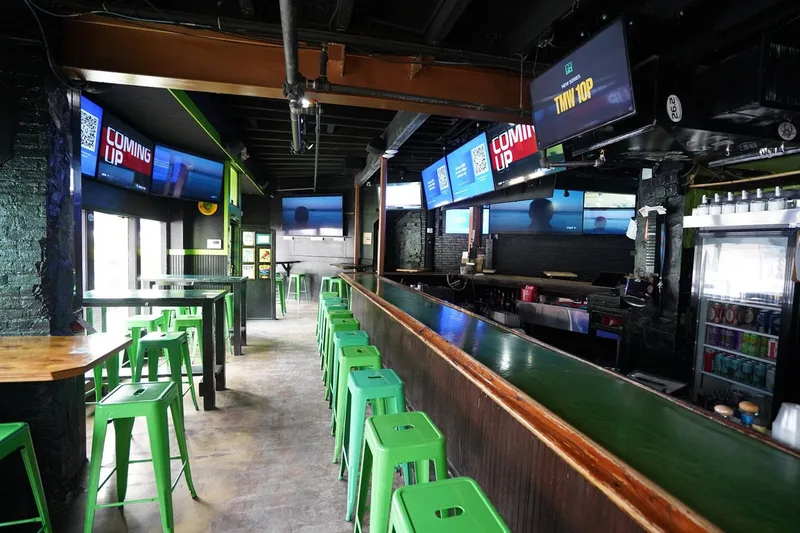
This is the buyer that defines the Strand. Franchise restaurants, beach bars, and the small rooms that fill Broadway at the Beach and Ocean Boulevard all share one reality: a lot of sites, thin margins, and staff who turn over every season. So we build for consistency and simplicity. One control layer across every location, presets a first-week hire can run by name, and a startup that never changes from store to store. Zones keep a loud bar off the tables that came to eat, and screens go where a tourist crowd will actually watch them. We document each room and back it with remote support, so a manager who started last week has answers without a service call. It isn't flashy work, but it's the kind that keeps a brand feeling the same across a dozen doors.

Hotels, resorts, and oceanfront rooms

The Strand's hotels and resorts run rooms that never really close: lobby and pool audio, event and meeting space, restaurant and bar outlets, and the outdoor areas that face the ocean head-on. Those spaces need audio that stays even through a crowd and gear that survives salt and sun without a yearly replacement. We zone the property so the pool deck, the lobby, and the ballroom each behave on their own, and we set up the controls so front-desk and banquet staff can run an event without a technician. Meeting and event rooms get designed for the groups that book them, simple to operate and quick to reset. On the oceanfront, every exposed component is chosen for the marine environment, because the beach is patient and it wins every argument with cheap hardware.

Attractions, golf, and entertainment venues

The Grand Strand sells fun, and the venues that deliver it need AV that works in public all day. Amusement and family-entertainment centers need background audio, paging, and attraction sound that hold up over noise and crowds. The region's many golf clubs run pro shops, event rooms, and clubhouses that want clean, simple systems their staff can run. Entertainment rooms and theaters need reinforcement and control built for a rotating lineup of acts and workers. Across all of it the theme is the same as everywhere here: build it rugged, keep it simple, and make it runnable by whoever is on shift today. We design the systems and the infrastructure, and where a venue runs live shows, we build the connections and leave the production to their crew.

Offices, healthcare, and civic rooms

Behind the beach is a year-round economy that doesn't take a season off. Professional offices, the regional hospital and its clinics, county and municipal rooms, and the Coastal Carolina campus in Conway all need rooms that just work every day. We confirm the platforms a team really uses, run the same controls in every room, and leave documentation a facilities lead can follow alone. Public rooms buy on bids and live on whether the person at the back can follow the meeting, so microphones and gain structure come first and assistive listening goes in as standard. Healthcare and campus spaces get built for uptime, since a class or a clinic can't wait on a service call. It's steady work that keeps a building running for years.

We run several locations and our staff turns over every season. How do we keep the AV consistent?

You buy the room for the least experienced person who will ever run it, which sounds pessimistic but is just honest about a seasonal workforce. In Myrtle Beach the manager who opened the system in spring may be gone by fall, and the new hire learns it on a busy Saturday, so the design has to assume that from the start. We build one control layer that's identical at every location, with presets a first-week employee runs by name instead of by training, and a startup routine that never changes site to site. We label and document each room so an incoming manager inherits answers, not a puzzle, and we back it with remote support, so when someone hits a wall mid-shift the fix comes from our desk in minutes rather than a truck in days. Done right, the system doesn't care who's on the clock. Crunchy Tech has been doing this since 2008, and a lot of that experience is exactly this, building rooms that survive the people who run them.

We're opening our next location. Can you match the ones we already have?

Yes, and matching your other locations is usually the whole point. When you open the next store, the goal isn't a new design, it's a copy of the one that already works, so a manager who transfers between sites finds the same rooms and the same controls. We take your existing standard, whether it's a corporate spec or just the setup you like best, and replicate it: the same gear where it makes sense, the same layout logic, the same presets and labels, the same startup. Where a new space is a different size or shape, we adapt the design without changing how it's operated, so the experience stays identical even when the room isn't. Then we document the standard itself, so the fifth location and the tenth are as consistent as the second. A portfolio only feels like one brand if the rooms behave like one system, and keeping them that way is the job.

We have locations in Myrtle Beach, North Myrtle Beach, and Conway. Different rules?

Different rules at each one, since the Grand Strand is a string of separate governments rather than one town. Myrtle Beach, North Myrtle Beach, Surfside Beach, and Conway each run their own building departments, and unincorporated Horry County covers the gaps between them, so a location a few miles up the coast can mean a fresh approval track regardless of what cleared before. Anything near the water adds coastal-construction rules that inland sites skip. Handling all of it falls to us, not you: the correct permits city by city, and an honest timeline when a department is slow, so the one thing you get back is a date you can build a season on. What stays constant across every line is how your people run each room, identical controls and one startup coast to coast, so a transfer between locations changes nothing about how the day works. You run one operation up and down the coast, and absorbing that permitting patchwork is part of what an integrator is for.

We've got oceanfront patios and outdoor screens. What actually survives here?

Only gear chosen for the coast, because the Atlantic and the summer sun retire anything that wasn't. On the oceanfront the problem is corrosion and heat: salt works into connectors and cheap housings, and direct sun fades and cooks a display that wasn't rated for it, so exposed equipment gets marine-grade hardware, sealed entries, and real thermal headroom. Hurricane season makes wind rating a requirement rather than a nicety, so permanent outdoor installs are engineered to the state code and placed with surge in mind. The afternoon thunderstorms bring lightning, so grounding and surge protection are part of the design instead of an afterthought. Even indoors, a hot equipment room with no cooling ages gear early, so we plan airflow for the rack. None of it is complicated once you build for this coast on purpose, and every bit of it costs less to build in now than to swap out after one rough summer.

What clients say

Operators who run on our systems

Client successes drive Crunchy Tech to become better. Below is how our customers feel about us.

Just do it. Spend the money. It’s well worth it. It’s not worth your time, hassle, energy, and stress of trying to make it look right and do it right when there’s somebody who has been doing it for years and has perfected the craft.

Matt Moore logo
Matt Moore
IT Systems Administrator · Capone's Hideout

You're a great partner with Florida Hospital and this project will make a difference in Children's Health.

Des Cummings logo
Des Cummings
Vice President of Florida Hospital · Florida Hospital

Working with Crunchy Tech was a fantastic experience from start to finish. They handled the sale and installation of all our sound and TV equipment at The County Bar in Aviston, IL, and absolutely nailed it. We were on a very tight deadline, and they not only met it—they delivered top-notch quality and service the entire way. Highly professional, responsive, and easy to work with. We couldn't be happier with the results.

Clint Flowers logo
Clint Flowers
Owner · The County Bar

Crunchy's AV Services are outstanding. Staff members are experts, who really extend themselves to find the right technology for helping us reach our marketing goals in creative ways. The best thing about working with Crunchy is collaborating with the staff – they are patient, responsive, knowledgeable, and available.

Shannon McHale logo
Shannon McHale
Marketing Specialist · IGT

Crunchy has been great to work with. They communicate well and deliver as promised.

Brian Dornbush logo
Brian Dornbush
Facilities & Operations Manager · Orange County Library System

The work Crunchy has been doing is a game changer for this industry.

Steven Fandozzi logo
Steven Fandozzi
VP of Information Technology · Foundation Partners

Being able to reuse the existing structure created a much lower cost for the client and they were ecstatic.

Seminole State College logo
Seminole State College
Facilities · Seminole State College

Crunchy has done an amazing job on our A/V install. The sound is perfectly balanced throughout our many zones and the entire system is super simple to use.
Steve Glum logo
Steve Glum
Chief Marketing Officer · Ace Cafe
Talk to a Myrtle Beach AV designer

Let's build it to runitself

Tell us how many rooms, how many locations, and who'll be running them next season, because on the Strand the AV has to survive the turnover. We start on the outcome, walk each site to size the rooms and the exposure, and hand you an engineered scope built to stay identical across locations and simple enough for a first-week hire.

  • One standard across every location, identical room to room.
  • Presets and startup a first-week hire can run without training.
  • Remote support so a rookie manager isn't stuck mid-shift.
  • Oceanfront gear built for salt, sun, storms, and lightning.