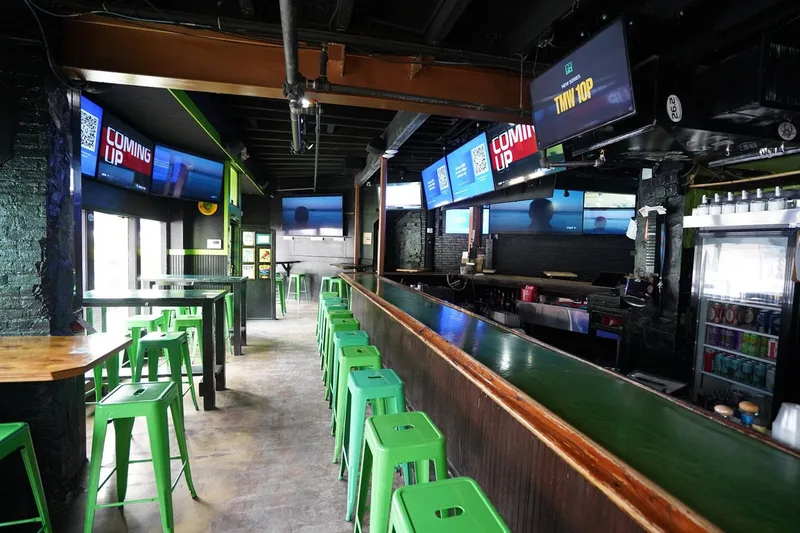
Just do it. Spend the money. It’s well worth it. It’s not worth your time, hassle, energy, and stress of trying to make it look right and do it right when there’s somebody who has been doing it for years and has perfected the craft.
Commercial AV Company in Philadelphia
Design-build audiovisual for Philadelphia hospitals, universities, offices, restaurants, and civic buildings, planned around fiscal years, board votes, and buildings older than the republic's habits.
In Philadelphia the money moves on a fiscal year, not your schedule
Hospitals and universities anchor this city's economy, and their capital doesn't spend like private money. A conference center refresh at a health system gets scoped in the fall, voted by a board in the spring, and funded July 1st, and if the project isn't ready to execute when the fiscal year opens, it waits for the next one. Twelve months, gone, over paperwork timing. We've watched it happen to good projects with good champions. The private side of town runs on its own clocks too, since a Center City law firm budgets around partner distributions and a restaurant group around its opening calendar. Either way, the design being ready when the money arrives is half the job.
Crunchy Tech builds to those calendars on purpose. The needs assessment and engineering happen early and cheap, so a finished, priced, buildable scope is sitting in the file when the vote passes or the fiscal year turns, and execution starts inside weeks instead of quarters. The rest is our standard discipline. Requirements your architect and general contractor can price and build. A rack that leaves our shop already proven. Installation, tuning, staff training, documentation, and support that runs for years. One company carries it end to end, which boards happen to like, because accountability with one throat to choke survives an audit. Since 2008.
What We Do Here
Services available in Philadelphia
Every system is designed, installed, and supported by our own team in Philadelphia — never subcontracted.
AV Consulting
AV consulting from an audio visual consultant who joins at the architectural phase, designs the technology into the plan and steers the project around your business outcome.
AV Consulting in Philadelphiaarrow_forwardVideo Wall Solutions
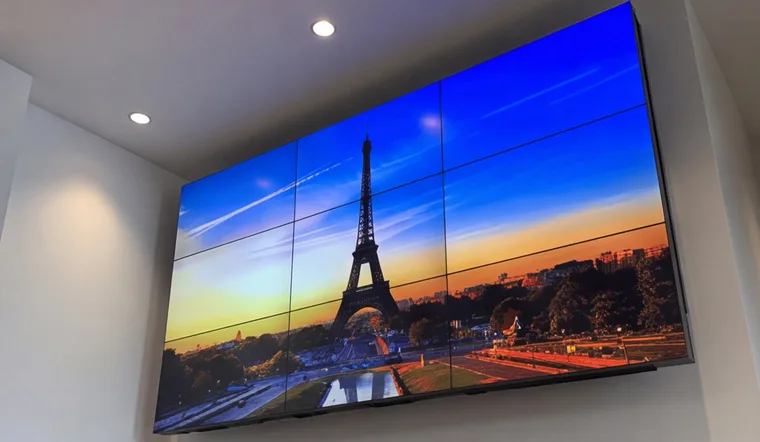
Commercial video walls across LED, LCD and Direct View. Designed, integrated, installed and supported by a national design-build AV integrator.
Video Wall Solutions in Philadelphiaarrow_forwardDigital Signage Services
Design-build digital signage for hospitality and enterprise: commercial displays, content management, and installation that keeps your screens selling and current.
Digital Signage Services in Philadelphiaarrow_forwardWho We Serve
Industries we serve in Philadelphia
Spaces we've wired across Philadelphia — each built and supported by the same local crew.
Commercial AV Across Greater Philadelphia
Center City and University City, the neighborhoods from Fishtown to East Passyunk, the Navy Yard, and the suburban office belt from King of Prussia to Conshohocken.
July here is thick, and outdoor equipment needs thermal headroom while the equipment room needs dedicated cooling rather than whatever the basement offers.
Freeze-thaw cycles work on outdoor seals and enclosures every year, so patio hardware gets chosen for the cycling, not the catalog photo.
Wind-driven rain tests every outdoor enclosure a few times a year, and surge protection earns its keep in August.
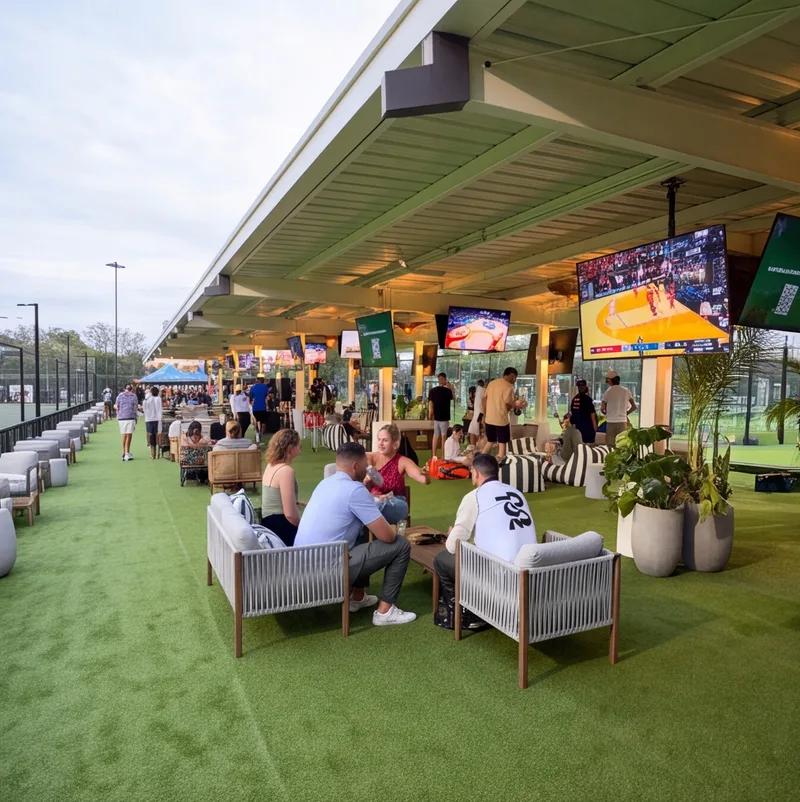
Roughly half the year is patio weather, which argues for outdoor audio built permanently and shut down cleanly at curfew, not dragged out each April.
What we do here
Philadelphia AV Design for Eds, Meds, and Everyone Else
Four kinds of buyers fill our Philadelphia work, and two of them vote on their money. Design readiness is worth more here than anywhere we operate.
Hospitals and health systems
Health system work is administrative and educational space, meaning boardrooms, training centers, auditoriums, town halls, and telehealth-capable conference rooms, and it buys on committee time. The rooms themselves are unforgiving in a specific way: a clinical education session where the back rows can't hear isn't an inconvenience, it's a compliance and quality problem, so speech intelligibility leads every design decision. Standardization matters at health system scale too, since a clinician teaching in three buildings shouldn't need three sets of habits. What we've learned serving this vertical is mostly about patience and paperwork. Have the engineering finished before the capital committee meets, price it in the format their process wants, and be ready to execute the day the fiscal year opens. The systems are the easy part.
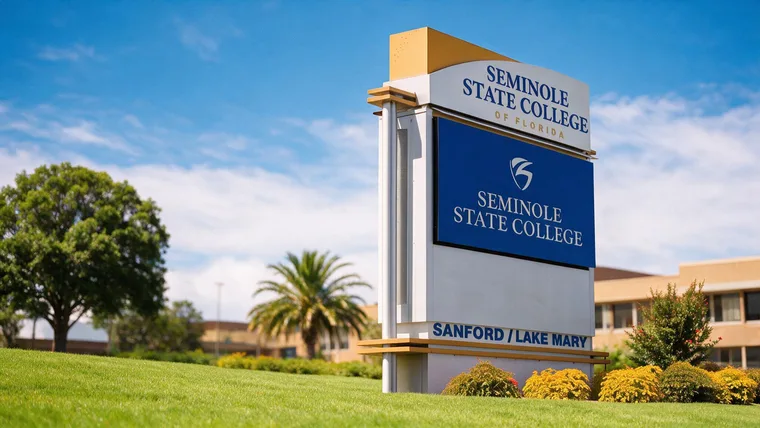
Universities and instructional space
The region's campuses run every room type there is, and the ones that fail share a cause: somebody specified for the purchase order instead of the professor. A lecture hall where the instructor needs five minutes and a phone call to start class is a lecture hall that gets abandoned for a laptop and a loud voice, permanently. So our first rule in instructional space is that whoever walks in can start teaching without help, every time, and the second is that a building of rooms behaves as one system rather than a museum of past procurement decisions. Display duty cycles matter more than campuses expect, since consumer panels rated for an evening of home use die fast in rooms that run all day. The bones of these buildings are often historic, which moves half the design into what the structure will allow.
Offices and professional firms
Center City's towers and the Navy Yard's newer campuses hold law firms, financial services, and headquarters operations that buy AV the private-sector way, quickly and with opinions. Their recurring problem is rooms that embarrass them, the conference room that fumbles a client pitch or the far end of a long table that can't be heard on calls, and the cause is usually hardware sized for a brochure photo rather than the actual room. We measure, we ask what really happens in each space and on which platforms, and we make every room on the floor behave identically so nobody has to think before a meeting. King of Prussia and Conshohocken belong in this conversation too, since so much of the region's office market lives out there now, under different reviewers than the city's.
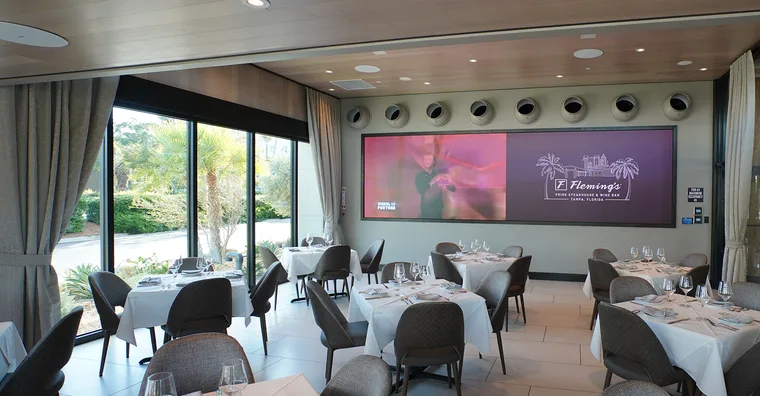
Restaurants, bars, and neighborhood rooms
Philadelphia eats in rowhouses, converted banks, old firehouses, and corner taprooms, and those bones decide the sound before any equipment does. Plaster and brick reflect everything, footprints run narrow and deep, and the neighbors share your walls on both sides, so coverage comes from many small sources run gently, zones keep the bar from bullying the dining room, and containment keeps your Friday night out of the pizza place next door. East Passyunk, Fishtown, and Manayunk each pack independent rooms shoulder to shoulder, which raises the stakes on all three. The reward for getting it right in this city is real, because Philadelphia diners are loyal in a way marketing can't buy, and a room where people can actually talk becomes a neighborhood institution.
Our board approves capital in the spring and the money lands July 1st. How do we not waste a year?
Split the project in two and run the halves on different clocks. The design half is cheap, and it's the half that causes the delays, so buy it early. A needs assessment, a site walk, and a full engineering package can be finished months before your committee ever meets, and that package does double duty, since a priced, buildable, documented scope is exactly what capital committees approve fastest and question least. The build half then executes the moment the fiscal year opens, because every long-lead decision already happened. Equipment ordering is the step nobody can compress, commonly thirty to forty-five days for a full system, so having the order specified and ready on day one of the fiscal year is frequently the difference between opening a room in September and explaining a delay in December. We've built our whole intake around this rhythm for institutional clients. Crunchy Tech has been doing this since 2008, and a large share of those years has been spent learning how eds-and-meds money actually moves.
Our building is a hundred and fifty years old. What does that do to an AV project?
It moves half the design into the building itself, and honestly, we like these projects. Old Philadelphia stock has no plenum to hide cable in, plaster over brick that resists penetration, joists that run wherever the 1870s put them, and sometimes protections on what may be touched at all. None of that prevents good AV. All of it punishes assumptions. So the sequence inverts: the building gets investigated first, with a real walk and sometimes an exploratory opening, and the design gets drawn from what's actually there rather than from a standard detail. Surface raceway done thoughtfully can look intentional in a historic room. Wireless where it's reliable, wired where it matters, and pathways that follow the building's own logic instead of fighting it. What may be penetrated or altered gets settled with your architect and whatever review applies before anything is specified, and our own boundary holds as always, since we don't make structural determinations or rule on code compliance. The result, done right, is a room where the technology looks like it grew there.
Some of our sites are in Jersey and Delaware. Can you handle the whole footprint?
Yes, and the tri-state reality is mostly an administrative one, so let's be concrete about what actually changes at the river. Licensing changes, since electrical and low-voltage rules differ among Pennsylvania, New Jersey, and Delaware, and the licensed trades on each site have to be right for that state. Permitting changes, because Cherry Hill, Wilmington, and King of Prussia answer to entirely different reviewers with different appetites for detail. Taxes and prevailing-wage rules shift on some project types too. What doesn't change is the system your people use, and that's the point of doing a regional footprint with one integrator: identical interface, identical presets, identical training from Center City to Cherry Hill, with documentation good enough that support doesn't care which state the ticket came from. We coordinate the state-by-state trades and paperwork as part of the job, your staff get one standard everywhere, and about 47% of support tickets close remotely in under an hour regardless of which side of the river the room is on.
What does a project actually cost here, and why do quotes vary so much?
Quotes vary because scopes vary, and in this market the variance hides in what's left out. A number that looks like a bargain often omits the engineering drawings, the programming, the commissioning, the training, and the documentation, which means it's a price for hanging equipment, not for delivering a working room. Real projects here start around the point where a proper back-end makes sense, since the processing, control, and distribution that make a system commercial-grade carry a floor cost before the first display or speaker appears. From there, honest pricing tracks three things: room count, acoustic difficulty, and how much the building fights the install, and a Center City rowhouse conversion can out-cost a suburban shell on labor alone. Our quotes itemize all of it, drawings through year-four support, so you can compare like against like. Put ours next to anyone's and ask the other bidder to itemize the same lines. Where their number is genuinely better for a genuinely equal scope, we'll tell you so, and where it's cheaper because it quietly ends on install day, you'll see that too.
Operators who run on our systems
Client successes drive Crunchy Tech to become better. Below is how our customers feel about us.
You're a great partner with Florida Hospital and this project will make a difference in Children's Health.
Working with Crunchy Tech was a fantastic experience from start to finish. They handled the sale and installation of all our sound and TV equipment at The County Bar in Aviston, IL, and absolutely nailed it. We were on a very tight deadline, and they not only met it—they delivered top-notch quality and service the entire way. Highly professional, responsive, and easy to work with. We couldn't be happier with the results.
Crunchy's AV Services are outstanding. Staff members are experts, who really extend themselves to find the right technology for helping us reach our marketing goals in creative ways. The best thing about working with Crunchy is collaborating with the staff – they are patient, responsive, knowledgeable, and available.
Crunchy has been great to work with. They communicate well and deliver as promised.
The work Crunchy has been doing is a game changer for this industry.
Being able to reuse the existing structure created a much lower cost for the client and they were ecstatic.
Crunchy has done an amazing job on our A/V install. The sound is perfectly balanced throughout our many zones and the entire system is super simple to use.
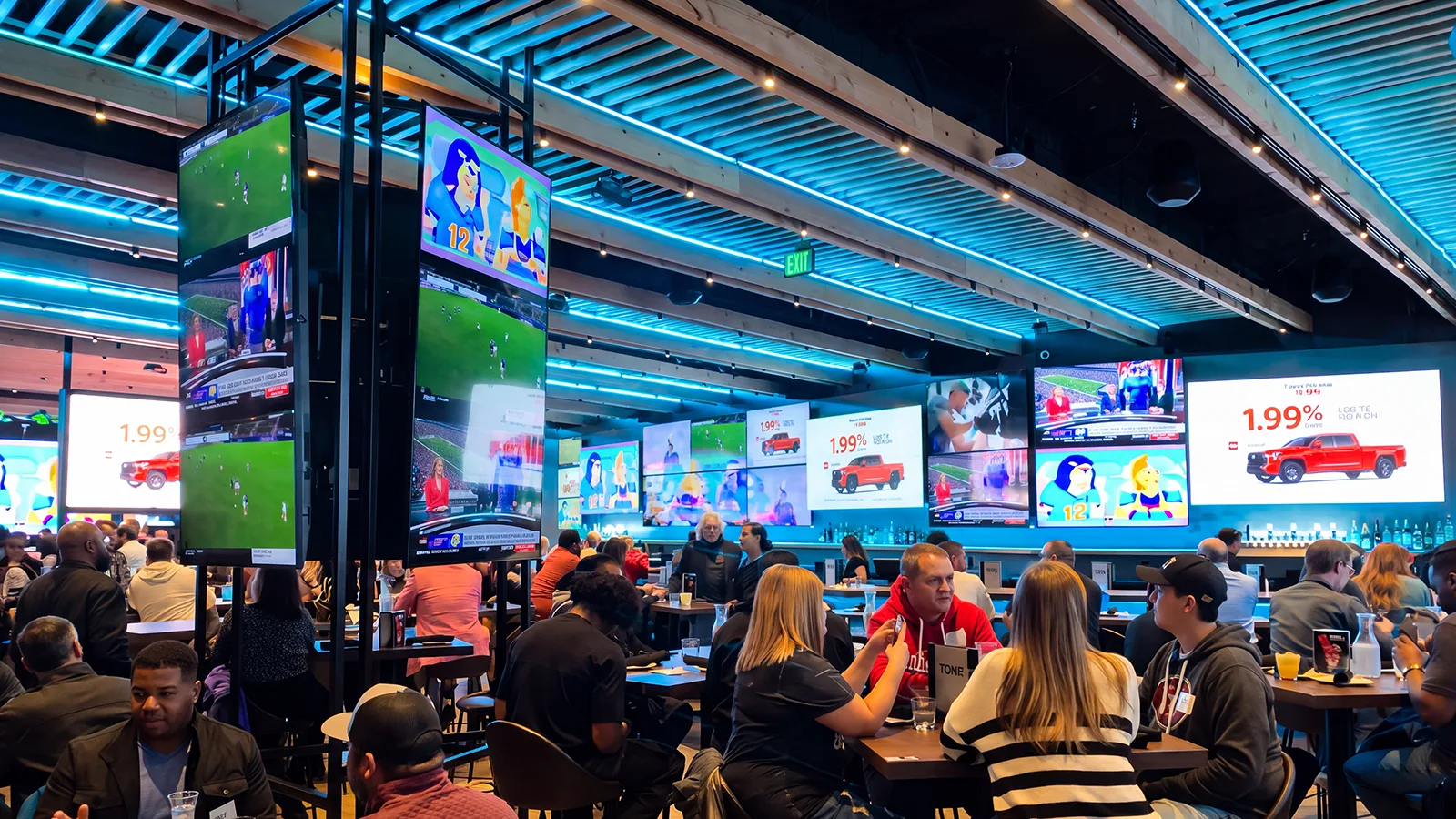
Just do it. Spend the money. It’s well worth it. It’s not worth your time, hassle, energy, and stress of trying to make it look right and do it right when there’s somebody who has been doing it for years and has perfected the craft.
You're a great partner with Florida Hospital and this project will make a difference in Children's Health.
Working with Crunchy Tech was a fantastic experience from start to finish. They handled the sale and installation of all our sound and TV equipment at The County Bar in Aviston, IL, and absolutely nailed it. We were on a very tight deadline, and they not only met it—they delivered top-notch quality and service the entire way. Highly professional, responsive, and easy to work with. We couldn't be happier with the results.
Crunchy's AV Services are outstanding. Staff members are experts, who really extend themselves to find the right technology for helping us reach our marketing goals in creative ways. The best thing about working with Crunchy is collaborating with the staff – they are patient, responsive, knowledgeable, and available.
Crunchy has been great to work with. They communicate well and deliver as promised.
The work Crunchy has been doing is a game changer for this industry.
Being able to reuse the existing structure created a much lower cost for the client and they were ecstatic.
Crunchy has done an amazing job on our A/V install. The sound is perfectly balanced throughout our many zones and the entire system is super simple to use.
Insights
Design-Build AV Philosophy: How it Separates the Top 3% From the Rest of the Industry
We don’t sell you what we have. We design what you need. That line is the operating principle I’ve built Crunchy Tech around for the last 20 years. And it’s the single sentence that separates us - and the small handful of firms like us - from the other 97% of the commercial AV industry.
Read article arrow_forwardThe Spectacle Trap: Why Technology-Centric Hospitality AV Kills Brands
There’s a pattern I’ve watched play out for 20 years in hospitality AV, and it always ends the same way...
Read article arrow_forwardWhy AV Quotes Take Time (And Why That's a Good Thing)
"Where's my quote?"
Read article arrow_forwardLet's have the design ready before the money lands
Tell us the address, the building's age if you know it, and when your money actually becomes available, whether that's a fiscal year, a board vote, or an opening date. The consult establishes what each room needs to do, the walk establishes what the building will allow, and the deliverable is a priced, buildable scope ready to execute the day the funding turns on.
- Engineering finished before the committee meets, so approval starts the build.
- Old buildings investigated before they're designed for, never assumed about.
- One standard across PA, NJ, and DE, with the paperwork native to each state.
- Quotes itemized from drawings through support, so comparisons are honest.