Just do it. Spend the money. It’s well worth it. It’s not worth your time, hassle, energy, and stress of trying to make it look right and do it right when there’s somebody who has been doing it for years and has perfected the craft.
Nightclub AV in Los Angeles
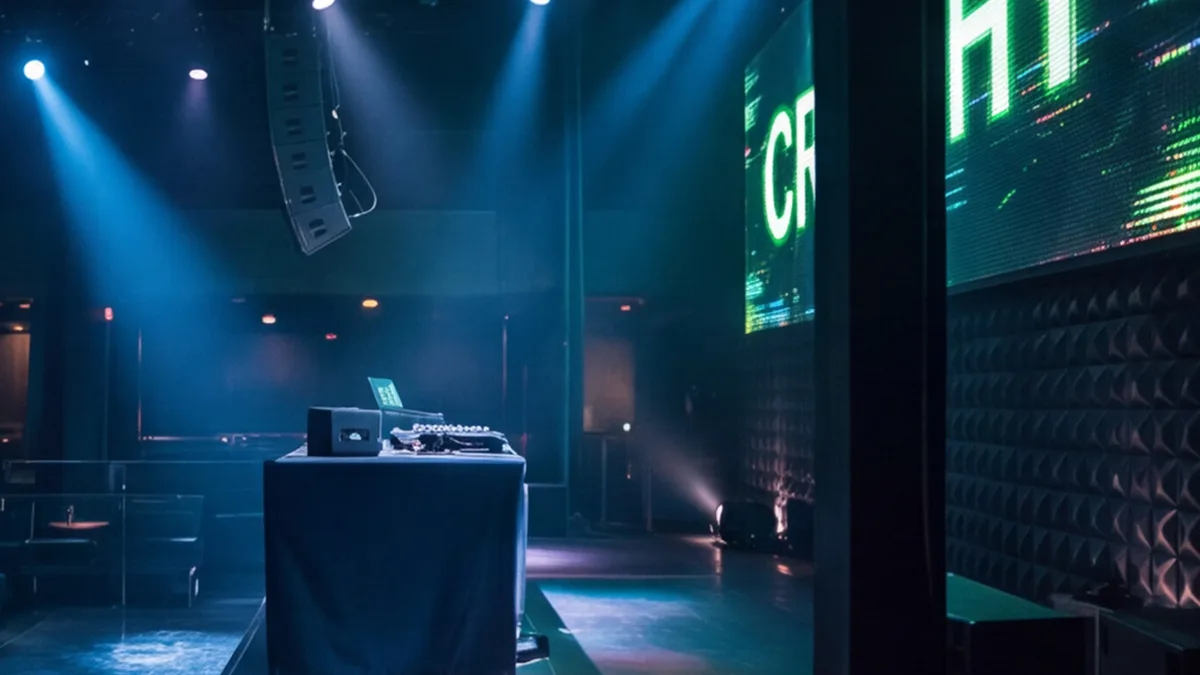
Nightclub lighting and sound systems specified for the eye and the camera, so the room looks right in person and on the phone footage guests post afterward.
Every guest in the room is recording
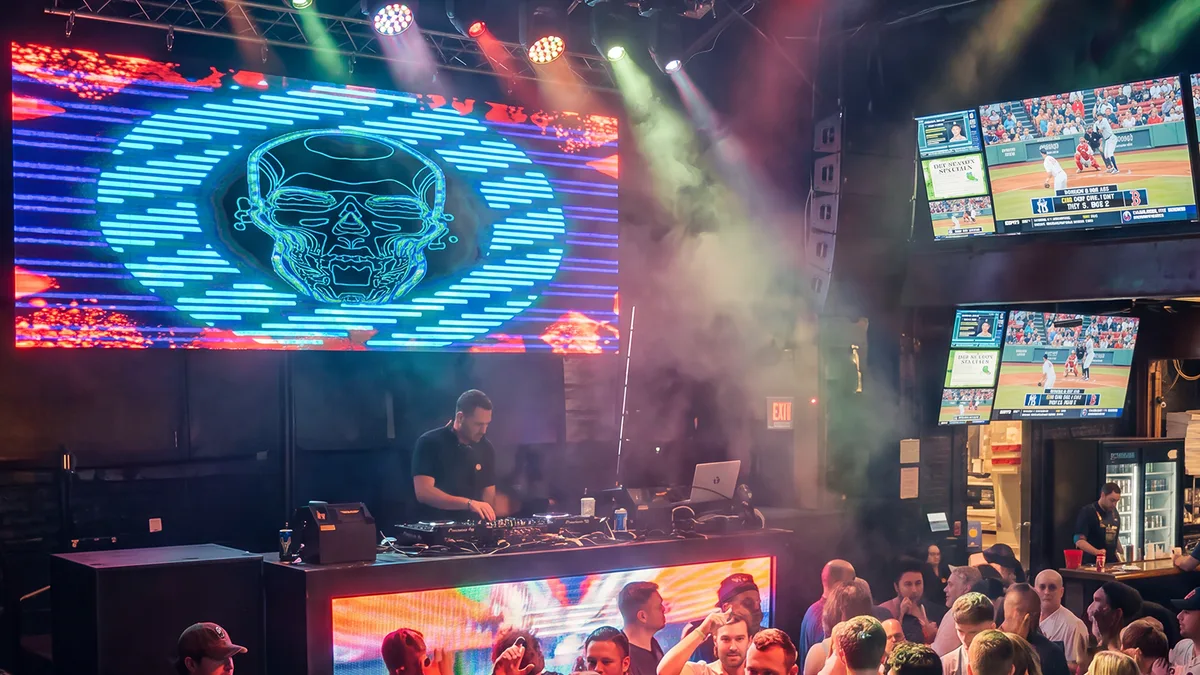
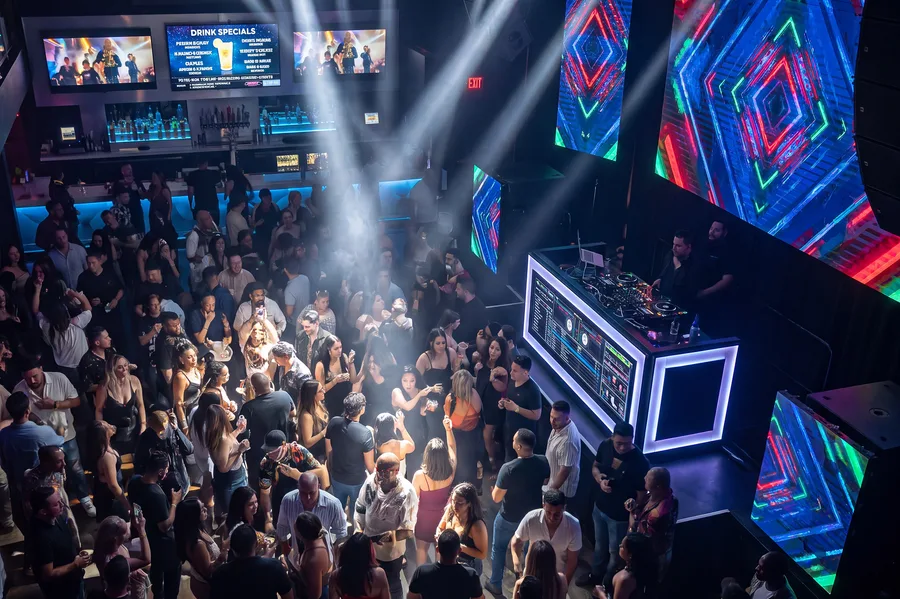
An LA room gets judged twice. Once by the people standing in it, and again the next morning by everyone watching the clips they posted. Those are different tests and most systems are only designed for the first. A room can feel excellent and photograph badly: faces lit from the wrong angle, colors that render muddy on a sensor, and the problem almost nobody anticipates, fixtures that pulse visibly on camera. Cheap LED dimming flickers faster than the eye registers and slower than a phone does, so footage comes back with bands rolling through it in every clip.
Fixing that is a specification decision, made once, at design time. Fixtures get selected for how they behave on a sensor as well as how they look in the room, which means dimming that does not band on camera and color rendering that holds up on skin. Key positions get planned so faces are lit rather than backlit into silhouette, because the shot people actually post is a person, not a truss. LED surfaces work as backdrops rather than decoration. Then the whole thing runs on one control layer with the audio, so a look is one state instead of three vendors.
Nightclub AV Across Greater Los Angeles
From Hollywood and the Arts District to Koreatown, the Westside, and the Valley, we design and install nightclub lighting, sound systems, and booth infrastructure.
Anything suspended carries bracing and anchorage requirements determined by your engineer and the jurisdiction, and the design follows what they confirm.
Patios and rooftops take strong UV, so exposed materials get selected for it and outdoor displays run real brightness with ambient sensing.
Airborne dust and smoke settle on heat sinks and inside enclosures where they insulate, so the equipment room gets filtered and cleaned on a schedule.
A club runs its amplification harder than any other hospitality room, so the equipment room gets real cooling and stays at or below 75 degrees.
How we work
Designed for the eye and for the camera
We do not start with a fixture count. We start by looking at what the room already produces on a phone, because that is the version most people will see.
The consult and the site walk
Most disappointing club systems were quoted off a floor plan by someone who never stood in the room at one in the morning. So we start with a consult rather than a quote: what you want the room to feel like, how big it is, what it needs to do, and the budget you are working with. Then we walk it during a real night, listening on the floor, at the bar, in the lounge, and standing in the booth. In Los Angeles we also record on a phone while we are there, in the spots guests actually shoot from, because that shows problems no walkthrough will.
Design you can see, then one team on site
The other way these go wrong is that nobody experiences the outcome until it is built, then wants it changed a season later. So you see the design before you commit to equipment, including where key positions land and how fixtures behave on a sensor. Control gets programmed around the nights you actually run, so a peak Saturday, a slower midweek, and a private buyout are states rather than an argument. One team handles the install, calibration, staff training, and documentation, and coordinates with your general contractor, electrician, low-voltage trades, the licensed fire alarm contractor, and your engineer where anchorage is a question.
What we build
The nightclub AV stack an LA room runs on
A club is a handful of systems that have to behave like one instrument, and here one of them has an audience that was not in the building. Here is what we design, program, and install.
Nightclub lighting that survives a phone
Fixture selection is where this is won. Dimming behavior decides whether footage comes back clean or banded, and it is a property of the fixture rather than something programming can correct afterward, so it gets specified rather than discovered. Color rendering decides whether skin looks like skin on a sensor or turns waxy and strange. Position decides whether a face is lit or reduced to a silhouette against a bright truss, which is the single most common reason a great-looking room produces clips nobody wants to post. All of it gets wired and addressed properly and brought into one control layer.
LED surfaces and the visual layer
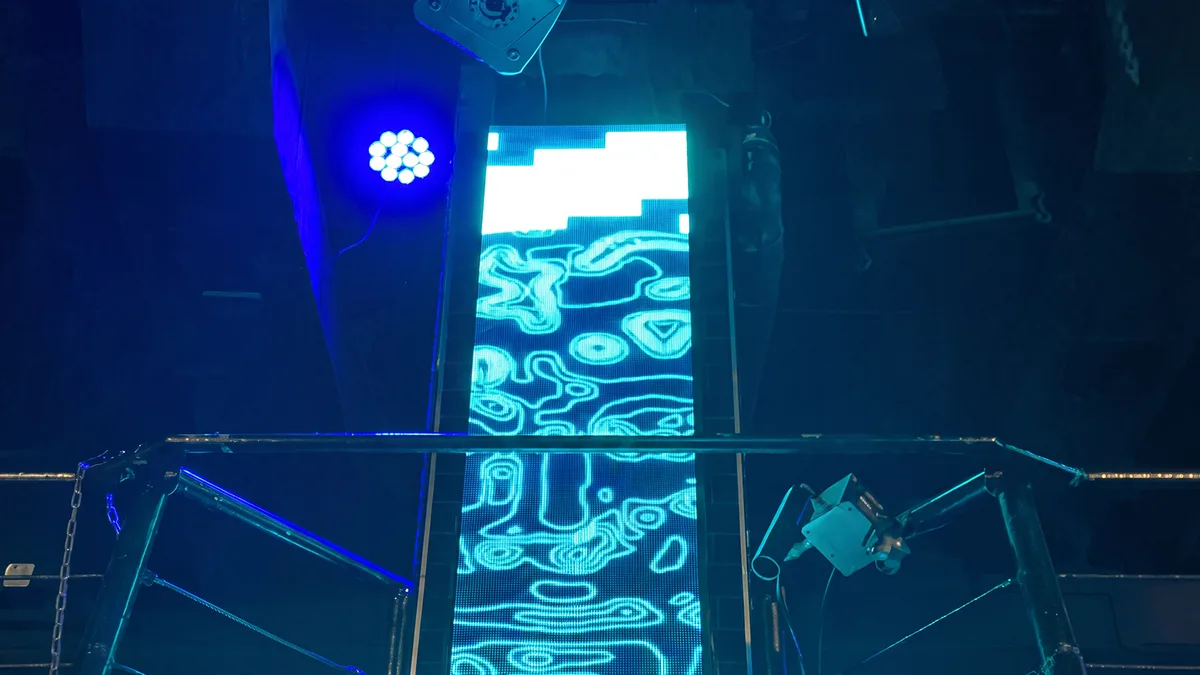
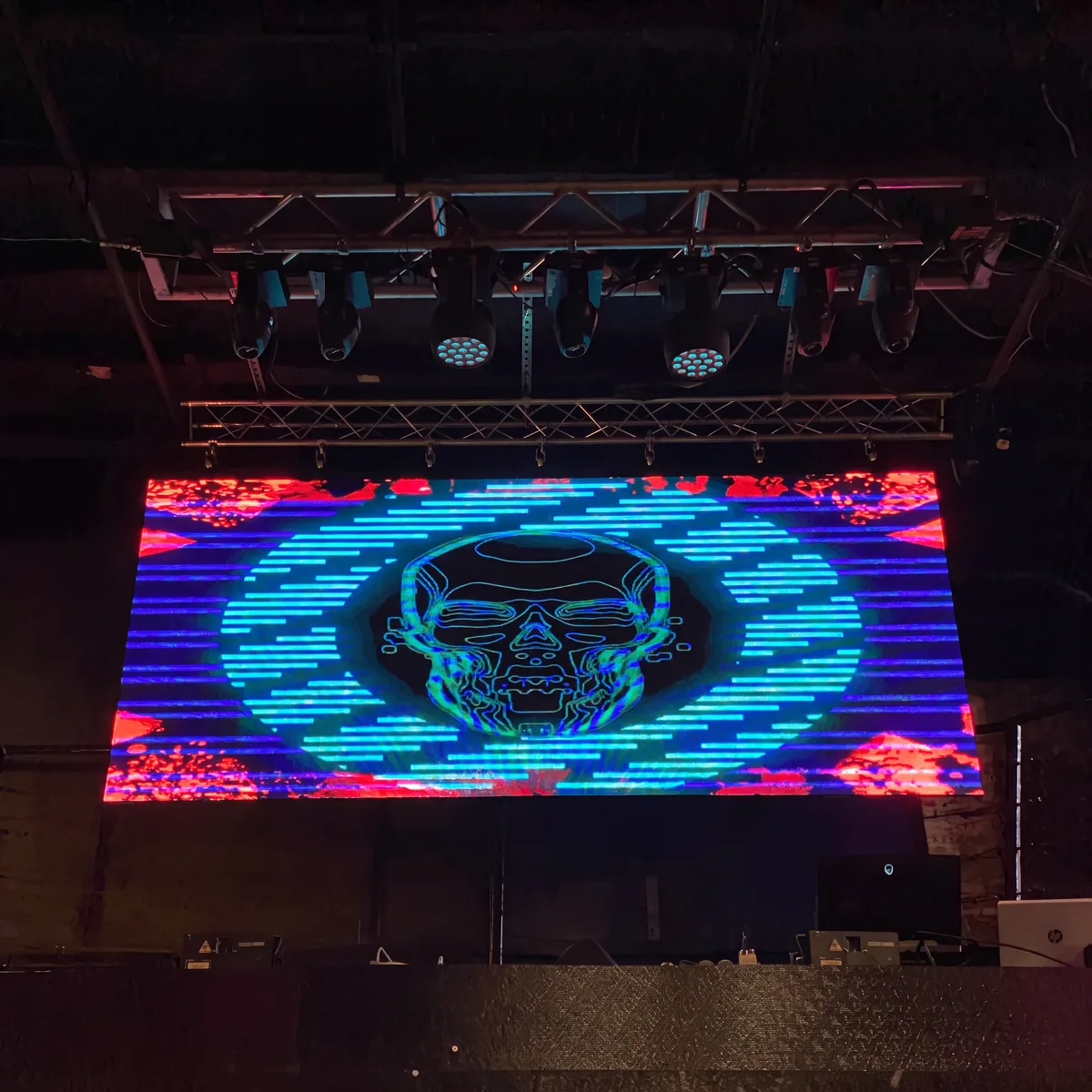
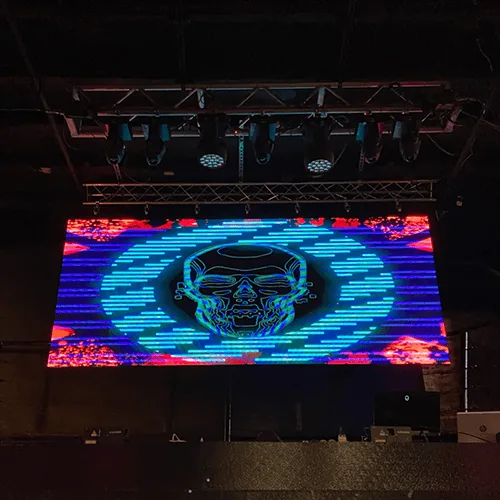
LED walls in these rooms function as backdrops, which changes how they should be sized and driven. Content gets built for the distance people actually stand and shoot from, brightness gets set so a phone exposes for faces rather than blowing out to a wall of light, and the surface gets mounted to structure that can carry it with anchorage confirmed by your engineer. Driven from one place and tied into the same control layer as lighting and audio, a look becomes a single state rather than three people pressing three things at slightly different moments.
Sound, booth, and zoning
The system gets sized for the loudest hour and then held below it, because a rig running at its limit sounds harsh, distorts on peaks, and cooks drivers. Coverage on the floor comes from enough sources that nobody stands in a hole or directly under a horn, with the bar, lounge, and any patio on their own zones and hard limits. The booth gets a documented tie-in panel with labeled, tested inputs, its own monitor path, and limits that protect the room regardless of who is behind the decks. Everything lives in one enclosed, labeled rack on a dedicated AV network.
Why LA venues trust us with it
Built for rooms that get posted
This market treats the footage as part of the product, and California adds requirements most markets do not have. Here is where our depth shows, and where our scope ends.
Flicker is a fixture problem, not a settings problem
The complaint arrives as a video question and gets sent to a marketing person, who cannot fix it. Inexpensive LED fixtures dim by switching on and off very rapidly, and where that switching is coarse it is invisible to the eye and plainly visible to a camera sensor, which samples in a way that turns it into rolling bands. Slow motion makes it worse, and slow motion is what people shoot. No amount of programming corrects it after the fact, which is why fixture selection has to account for it up front. It costs little at specification and cannot be solved cheaply afterward.
Seismic, sun, and dust
Three local realities shape the build. Anything suspended in California carries bracing and anchorage requirements, determined by your engineer and the authority having jurisdiction, so loudspeakers, trusses, and LED surfaces get designed to what they confirm rather than hung and hoped over. Sun is intense on patios and rooftops, so exposed materials get selected for UV and outdoor displays run real brightness. Santa Ana conditions drive dust and smoke into buildings, which settles on heat sinks and inside enclosures where it insulates, so the equipment room gets filtered and stays at or below 75 degrees.
Support after opening night
Crunchy Tech started in 2008 as an AV support operation, which is an unusual origin for an integrator and the reason the systems get built the way they do. When you spend years fixing other people's work, you learn exactly where installations cut corners. That shows up in a rack you can actually service: fully enclosed, every cable labeled at both ends, power separated from audio and data. We have opened racks that looked fifteen years old after three months in an uncooled closet, with dust caked on every surface. Around 47 percent of support tickets close inside an hour and roughly 72 percent within a day.
Where we draw the line
We do not shoot, edit, or post your content, and we do not run streaming as a service or install cameras. We build the room that content gets made in. Bracing and anchorage determinations belong to your engineer and the authority having jurisdiction, and we design to what they confirm. We coordinate with your licensed fire alarm contractor on the emergency interface rather than providing the alarm system. We do not book or program talent, staff your booth, or run shows, and we generally do not take install-only work.
What it earns back
How the footage does the marketing
In this market the clips guests post reach more people than anything the venue buys, and the room either makes them look good or does not.
The clip somebody actually posted
People film the night either way. The only question is whether what comes out is worth posting, and that is decided by fixture choice and position rather than by anything that happens afterward. A room that renders faces well and does not band on camera generates a stream of content that reaches audiences no advertising budget buys, night after night, at no marginal cost. A room that photographs badly generates the same volume of footage and none of it gets used. The difference between those two outcomes is a specification decision made once.
Good, Better, Best against one design
Most owners price AV like retail: a fixture costs a certain amount, so a room of them should not cost much more. Worth being plain about the gap, because the control, the distribution, the power, and the amplification take a serious share of the budget before you buy a single fixture or box, and camera-safe dimming and good color rendering sit in the fixture selection rather than in the count. So we quote Good, Better, and Best against one design, per zone. Good is a real recommendation, not a strawman: fixtures that behave on camera, key positions that light faces, even floor coverage, a documented booth. If your budget is short of the room, we would rather value engineer it honestly.
Our lighting looks great in person but video comes back with bands rolling through it. What is that?
Flicker, and it is a property of the fixtures rather than a camera setting or a programming mistake. Inexpensive LED fixtures dim by switching on and off very rapidly, and where that switching is coarse the eye averages it into steady light while a camera sensor, which samples the scene line by line, turns it into bands rolling through the frame. Slow motion makes it far worse, and slow motion is what people shoot in clubs. Nothing in the control system corrects it afterward, and no amount of editing saves the footage, which is why this has to be handled at specification. Fixtures with fine dimming behave properly on camera and cost more than the ones that do not, which is the whole trade. Since the footage guests post is doing more marketing than anything the venue buys, it is usually an easy case to make.
What makes a room actually look good on a phone?
Three things, in this order. Key position, meaning light on faces from an angle a camera can use, because the most common failure is a beautiful room where everyone photographs as a silhouette against a bright truss or LED wall. Color rendering, meaning fixtures that reproduce skin tones properly on a sensor, since some inexpensive sources make skin look waxy or oddly tinted in a way that is more obvious in footage than in the room. Then dimming behavior, so there is no flicker banding. Beyond the fixtures, brightness balance matters: an LED wall run too hot makes a phone expose for the wall and turn every person in front of it into a shadow, which is why we set surfaces relative to the lighting rather than at maximum. All of it is decided at design and is difficult to retrofit.
Do we need an engineer involved to hang loudspeakers and LED?
In California, anything suspended has bracing and anchorage requirements, and that determination belongs to your engineer and the authority having jurisdiction rather than to us. What we do is design the AV around what they confirm, provide the weights, loads, and mounting points they need in order to make that determination, and coordinate so the process happens before equipment is ordered rather than after it arrives. That sequencing is the practical point. A hanging plan that has to change after the fixtures are on site is expensive and slow, and in a converted warehouse the structure is often not where the design would prefer. We are AV designers and installers. We do not perform structural or seismic determination and we will not represent that we do.
Do you handle the sound as well, or only the lighting?
Both, and they belong together. The system gets sized for the loudest hour and then held below it, because a rig at its limit sounds harsh, distorts on peaks, and cooks drivers, which is why so many club loudspeakers fail early. Coverage on the floor comes from enough sources that nobody stands in a hole, with the bar, lounge, and patio on their own zones and hard limits, and the booth gets a documented tie-in panel with its own monitor path. Running lighting, video, and audio on one control layer is what makes a look a single state instead of three vendors pressing three things at slightly different moments. What we build is the permanent installed system and its programming. We do not run shows, book or program talent, or staff your booth.
What We Do Here
Services available in Los Angeles
Every system is designed, installed, and supported by our own team in Los Angeles — never subcontracted.
AV Consulting
AV consulting from an audio visual consultant who joins at the architectural phase, designs the technology into the plan and steers the project around your business outcome.
AV Consulting in Los Angelesarrow_forwardVideo Wall Solutions
Commercial video walls across LED, LCD and Direct View. Designed, integrated, installed and supported by a national design-build AV integrator.
Video Wall Solutions in Los Angelesarrow_forwardDigital Signage Services
Design-build digital signage for hospitality and enterprise: commercial displays, content management, and installation that keeps your screens selling and current.
Digital Signage Services in Los Angelesarrow_forwardLearn more about our Nightclub AV solutions
Operators who run on our systems
Client successes drive Crunchy Tech to become better. Below is how our customers feel about us.
You're a great partner with Florida Hospital and this project will make a difference in Children's Health.
Working with Crunchy Tech was a fantastic experience from start to finish. They handled the sale and installation of all our sound and TV equipment at The County Bar in Aviston, IL, and absolutely nailed it. We were on a very tight deadline, and they not only met it—they delivered top-notch quality and service the entire way. Highly professional, responsive, and easy to work with. We couldn't be happier with the results.
Crunchy's AV Services are outstanding. Staff members are experts, who really extend themselves to find the right technology for helping us reach our marketing goals in creative ways. The best thing about working with Crunchy is collaborating with the staff – they are patient, responsive, knowledgeable, and available.
Crunchy has been great to work with. They communicate well and deliver as promised.
The work Crunchy has been doing is a game changer for this industry.
Being able to reuse the existing structure created a much lower cost for the client and they were ecstatic.
Crunchy has done an amazing job on our A/V install. The sound is perfectly balanced throughout our many zones and the entire system is super simple to use.
Just do it. Spend the money. It’s well worth it. It’s not worth your time, hassle, energy, and stress of trying to make it look right and do it right when there’s somebody who has been doing it for years and has perfected the craft.
You're a great partner with Florida Hospital and this project will make a difference in Children's Health.
Working with Crunchy Tech was a fantastic experience from start to finish. They handled the sale and installation of all our sound and TV equipment at The County Bar in Aviston, IL, and absolutely nailed it. We were on a very tight deadline, and they not only met it—they delivered top-notch quality and service the entire way. Highly professional, responsive, and easy to work with. We couldn't be happier with the results.
Crunchy's AV Services are outstanding. Staff members are experts, who really extend themselves to find the right technology for helping us reach our marketing goals in creative ways. The best thing about working with Crunchy is collaborating with the staff – they are patient, responsive, knowledgeable, and available.
Crunchy has been great to work with. They communicate well and deliver as promised.
The work Crunchy has been doing is a game changer for this industry.
Being able to reuse the existing structure created a much lower cost for the client and they were ecstatic.
Crunchy has done an amazing job on our A/V install. The sound is perfectly balanced throughout our many zones and the entire system is super simple to use.
Insights
Design-Build AV Philosophy: How it Separates the Top 3% From the Rest of the Industry
We don’t sell you what we have. We design what you need. That line is the operating principle I’ve built Crunchy Tech around for the last 20 years. And it’s the single sentence that separates us - and the small handful of firms like us - from the other 97% of the commercial AV industry.
Read article arrow_forwardThe Spectacle Trap: Why Technology-Centric Hospitality AV Kills Brands
There’s a pattern I’ve watched play out for 20 years in hospitality AV, and it always ends the same way...
Read article arrow_forwardWhy AV Quotes Take Time (And Why That's a Good Thing)
"Where's my quote?"
Read article arrow_forwardLet's make the room look right on the footage
Tell us about the venue: the neighborhood and which city reviews it, the capacity, whether your current lighting bands on video, where guests actually shoot from, whether anything is suspended, and what fails on you most often. We will start with a consult to understand what you are trying to accomplish, then walk the room during a real night and record on a phone while we are there, and come back with one engineered recommendation instead of a parts list.
- Fixtures selected for dimming behavior, so footage comes back clean rather than banded.
- Key positions that light faces instead of silhouetting them against a bright wall.
- LED brightness set relative to the lighting, so a phone exposes for people.
- Anchorage designed to what your engineer and the jurisdiction confirm, before anything is ordered.