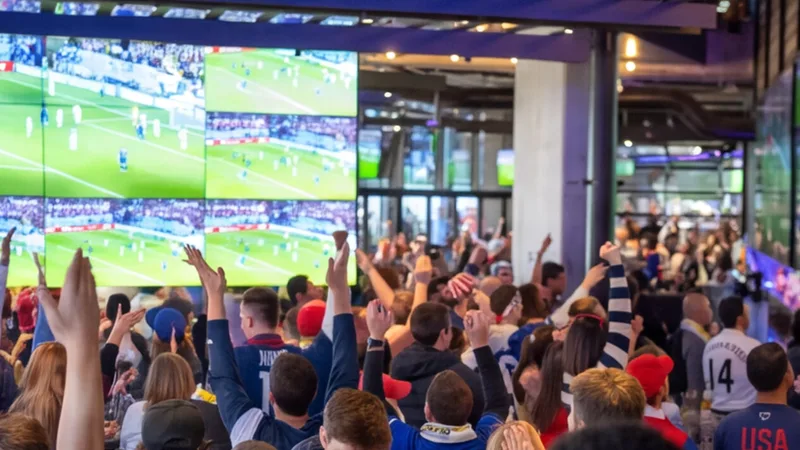
Sports Bar AV in Pittsburgh
location_on Pittsburgh, PA

Sports Bar AV in Pittsburgh

Game-day AV for Pittsburgh sports bars. Sightlines mapped across split levels, zoned audio, outdoor screens engineered for hard winters and river damp, and one-feed control for a Sunday when the whole building watches together.

Pittsburgh rooms have threefloorsofsightlines

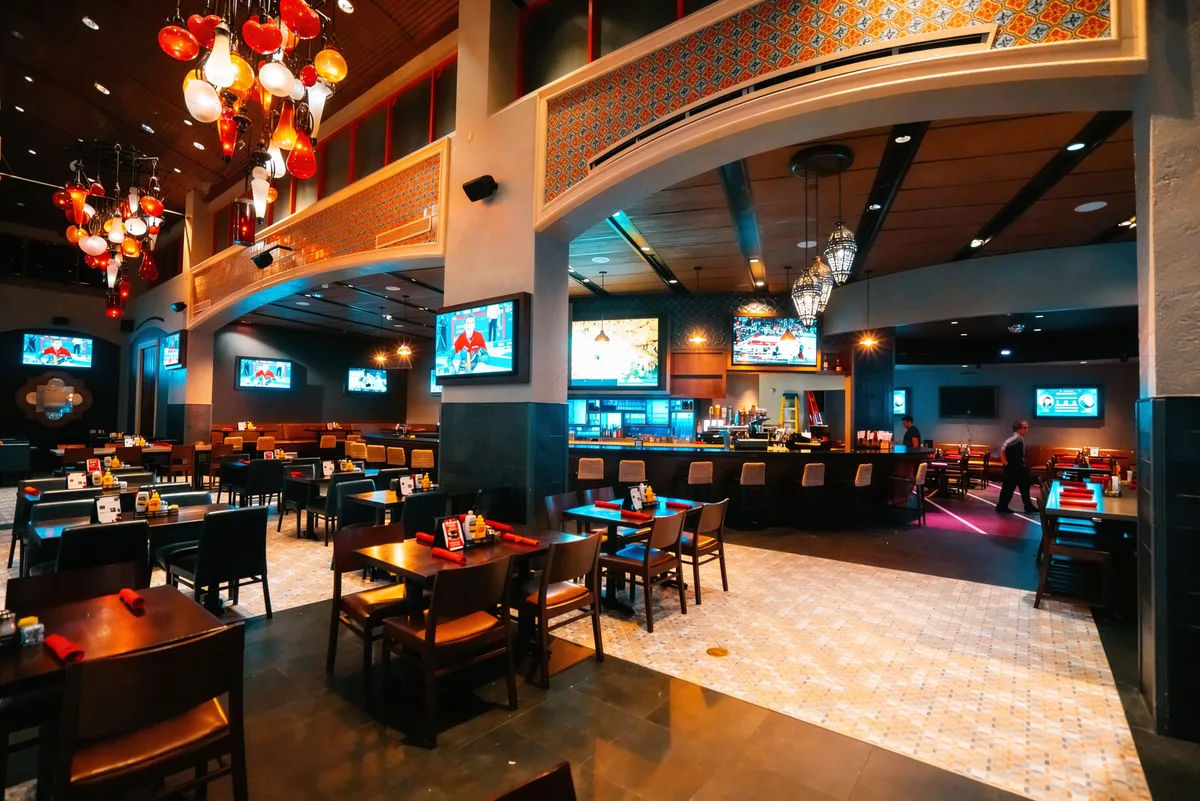
The building went up on a hillside, so the room came with three floor levels and nobody was thinking about televisions. The audiovisual system got quoted off one floor plan. Now the upstairs bar sees the main wall fine, the mid-level booths see half of it, the lower room looks at a stairwell, and the rack sits in a basement that takes water every spring. Then Sunday arrives, the whole venue wants one game on one feed, and a manager is running between levels because every floor is on its own remote.

We design Pittsburgh rooms vertically. Sightlines get mapped from four zones on every level before any panel is ordered, so a screen hung for the upper bar is not wasted on the room below it. Distribution puts one feed on every screen in the building for a Steelers Sunday, then splits back out for a Saturday slate. Audio runs in zones on a digital signal processor so levels do not bleed into each other. Rack and equipment placement accounts for water exposure at the lowest floor, and anything outdoors is specified for freeze-thaw and river damp.

Reel Pittsburgh rooms have three floors of sightlines Pittsburgh, PA

Sports Bar AV AcrossPittsburgh

From stadium crowds on the North Shore to hillside rooms above the rivers, we build sports bar AV that handles every Pittsburgh matchup, with every screen on the right feed and every level at the right energy.

2008
Serving Pittsburgh since
8
Neighborhoods
North Shore
Sports bars · Stadium overflow

These rooms absorb the biggest crowds in the city on a home date, so they get multi-zone walls sized for standing overflow and presets staff can run mid-surge.

Peak-crowd · multi-zone
Strip District
Sports bars · Taprooms

Masonry, columns, and open ceilings are the norm here, so pathways and acoustics get settled before any screen position is locked in.

Masonry · pathway-first
South Side
Sports bars · Neighborhood bars

Carson Street rooms run long and narrow, so the routing has to carry several games down the length of the room and the audio has to move from broadcast to music on a preset.

Long room · day-to-night
Lawrenceville
Neighborhood bars · Restaurants

Footprints here are tight with residents next door, so speakers get placed for even coverage at a conversational level instead of pushing sound into the street.

Small footprint · coverage-led
Oakland
Bars · Casual dining

Rooms near campus run a college slate alongside the pro one, so the routing has to carry several games at once across independent zones.

Multi-game · independent zones
Downtown and the Cultural District
Restaurants · Sports bars

These rooms often flip between a pre-theater dinner and a full game crowd on the same night, so daypart presets move the room without anyone reconfiguring it by hand.

Dual-mode · presets
Shadyside
Restaurants · Neighborhood bars

Owners here want the game present without the room reading as a sports bar, so screens and speakers get concealed into the architecture and zoned low.

Concealed · zoned low
Mount Washington
Restaurants · Bars

Up here the view is the product, so screens get placed and specified to beat window glare without competing with what guests came to look at.

View-first · glare-spec
NFL · Acrisure Stadium
Steelers

Football here functions as civic identity, so Sunday is a single-game room and the system has to put one feed on every screen in the building while the audio carries a packed house.

NHL · PPG Paints Arena
Penguins

Hockey fills weeknights across a long winter, so presets bring the room up for a puck drop and back down afterward without anyone touching a settings menu.

MLB · PNC Park
Pirates

Baseball runs almost daily for months, which makes it ideal for schedule automation and patio dayparting in the stretch when outdoor seating actually works.

NCAA · Pitt
Panthers

The university adds a separate schedule and audience, so rooms in Oakland and downtown need routing that carries college content independently of the pro slate.

NCAA · Penn State
Nittany Lions

Penn State pulls a serious Saturday crowd across this market, so each zone carries its own matchup and staff flip feeds between windows in seconds.

How we work

Sightlines mapped oneverylevel

We do not start with a screen count. We start with whether every seat on every floor can see the game it came for on the busiest day of the year.

The consult, and the walk that comes with it

Most disappointing game-day rooms were quoted off a floor plan, and a Pittsburgh room rarely has just one. So we start with a consult instead of a quote: what you want the room to feel like, how big it is, what you need it to do, and the budget range you are working with. The site walk is part of that consult, ideally during a busy game. We measure sightlines from four places guests actually sit, on each level: the bar-top, the high-tops, the booths with the worst angles, and the standing overflow that only exists when the room is full. On a hillside building we also note where water shows up at the lowest floor, because that decides where equipment can live.

Sightlines mapped on every level
InstallSightlines mapped on every level
Sightlines mapped on every level
InstallSightlines mapped on every level

Design you can see, then one team on site

The other way these go wrong is that the owner never sees the outcome until it is built, then wants it changed a season later. So you see the design first, including the view from the seats and the floors you were worried about. Control gets programmed around the modes you actually run, so a whole-building single game, a split Saturday, and a quiet weeknight are one tap each. One team handles the install, calibration, staff training, and documentation, and coordinates with your electrician and low-voltage trades. Before the season we build a game-day runbook with your GM and lock the admin settings so nobody breaks it during a rush.

What we build

The AV stack a Pittsburgh sports bar runson

A game-day room is a handful of systems working as one. Here is what we design, program, and install, all of it built off your sightline map.

The AV stack a Pittsburgh sports bar runs on
InstallThe AV stack a Pittsburgh sports bar runs on

Sound that holds up across levels

Bad sports bar audio comes from speakers mounted without accounting for direction, height, and room surfaces, and a multi-level room punishes that fast. Perimeter speakers leave the middle of a floor with no coverage while the edges are punishing, and open stairwells carry sound between levels so the upstairs bar hears the downstairs game. Fans do not want background noise, they want to hear the call. So the system runs in zones on a digital signal processor, one per level and per area: the main viewing floor loud enough to carry a full crowd, the bar side still workable for ordering, the outdoor area holding its own against street noise. Each zone gets tuned for its job instead of fighting one master volume, and anything outside is weather-rated on its own zone.

Displays, video walls, and the patio

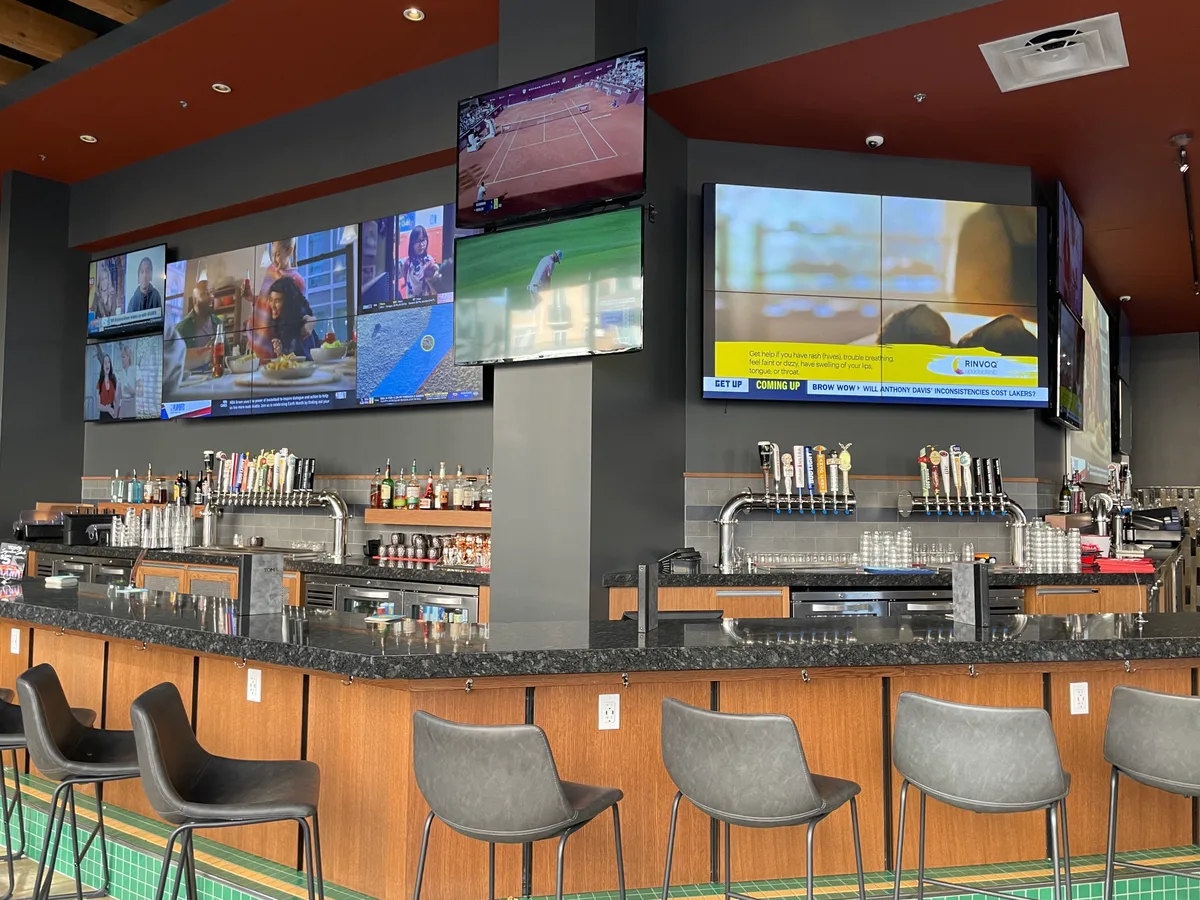
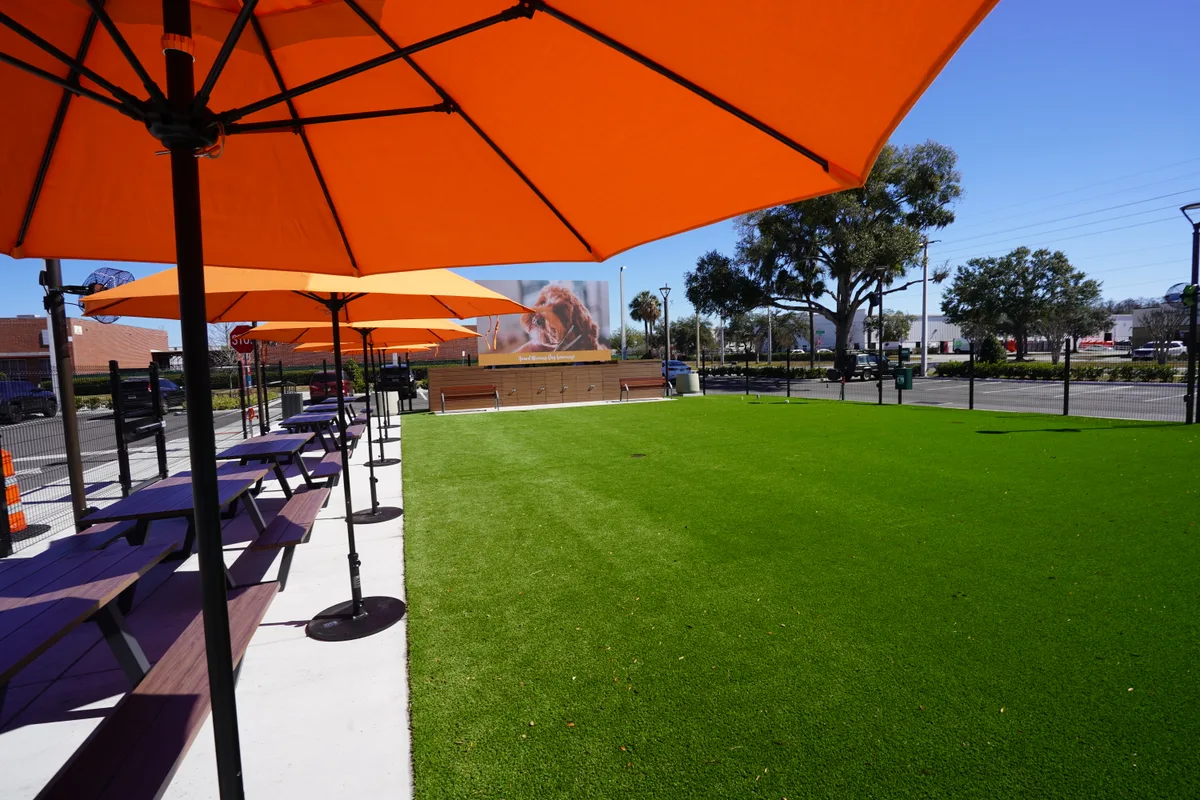
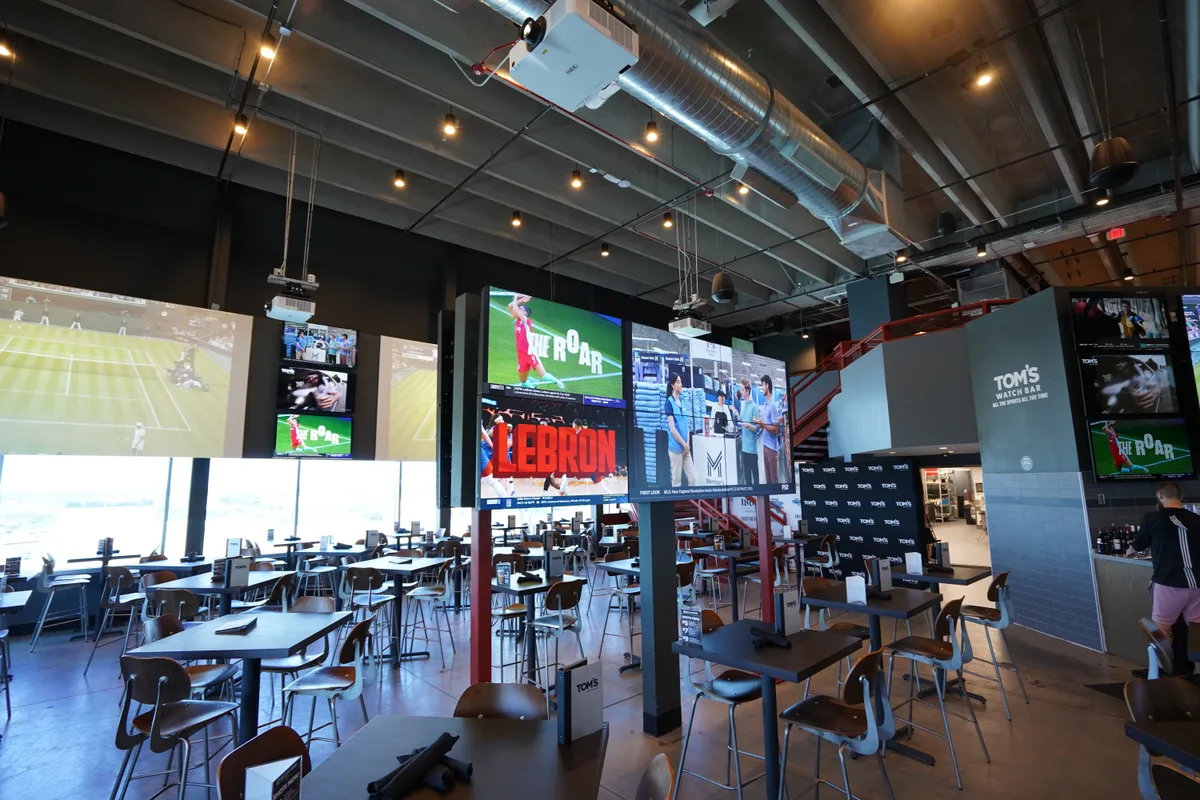
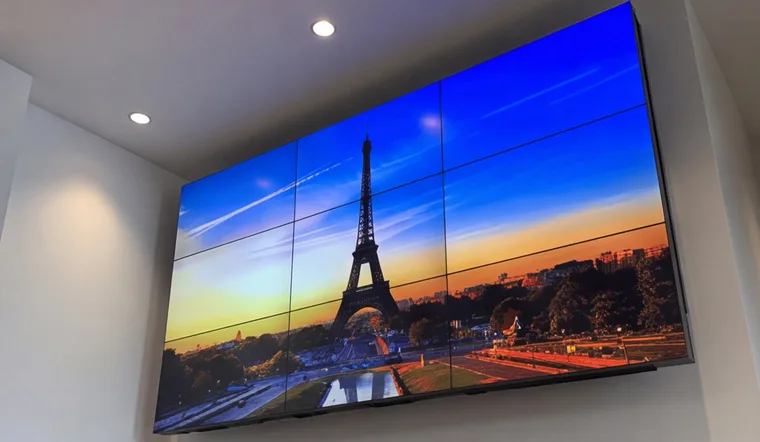
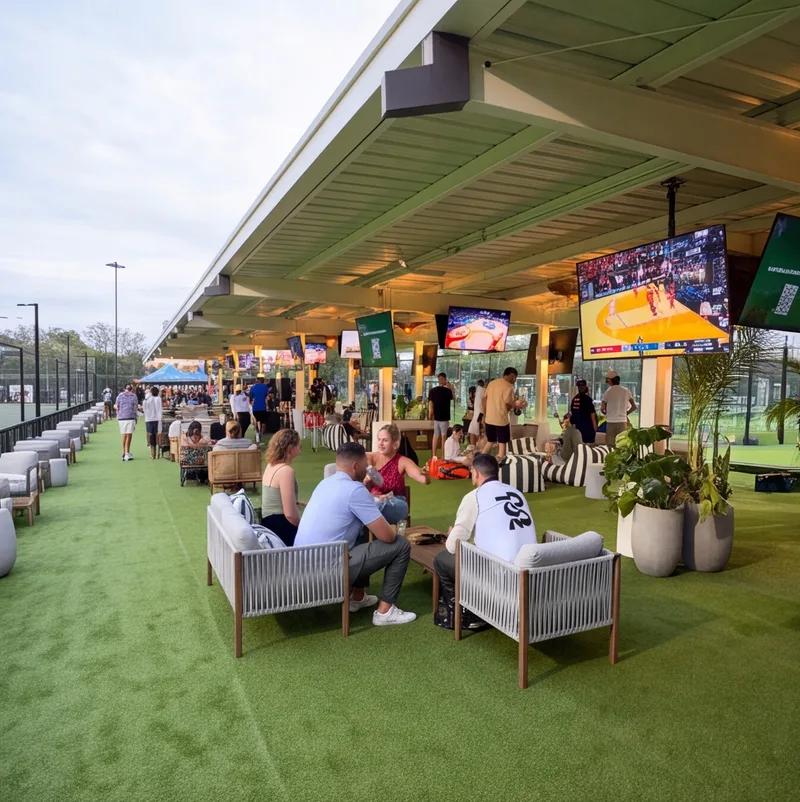
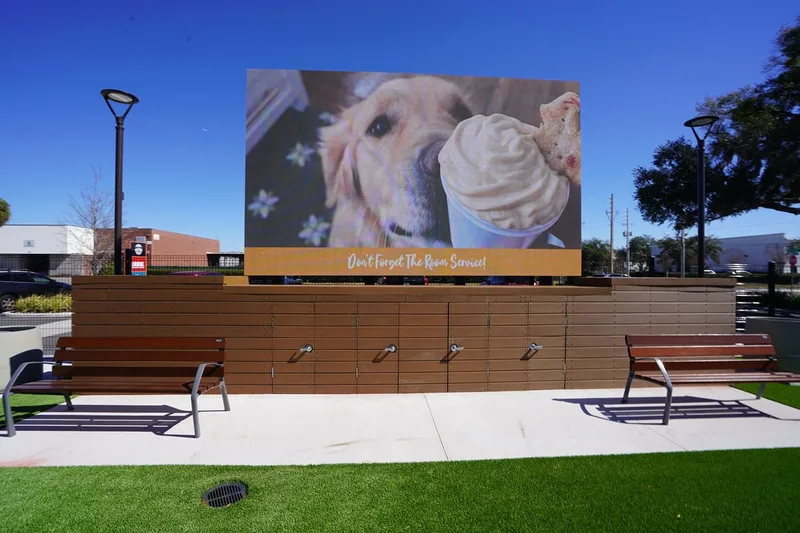
A television on a wall is not a sports bar. A screen should be a content source placed where people can actually watch it. Indoor displays are commercial grade and sized off the four sightline zones on each floor, with resolution driven by how close the nearest seats really sit, and placed so a split level does not cut half the room out of the picture. Where one screen cannot carry a floor, a video wall does the work: one large image for a Steelers Sunday, or a grid so the bar reads several games at once. Outside, screens get high brightness with an ambient light sensor so they lift at midday and dim at night, plus sealed enclosures and mounting engineered for winter exposure.

Distribution, signage, and control

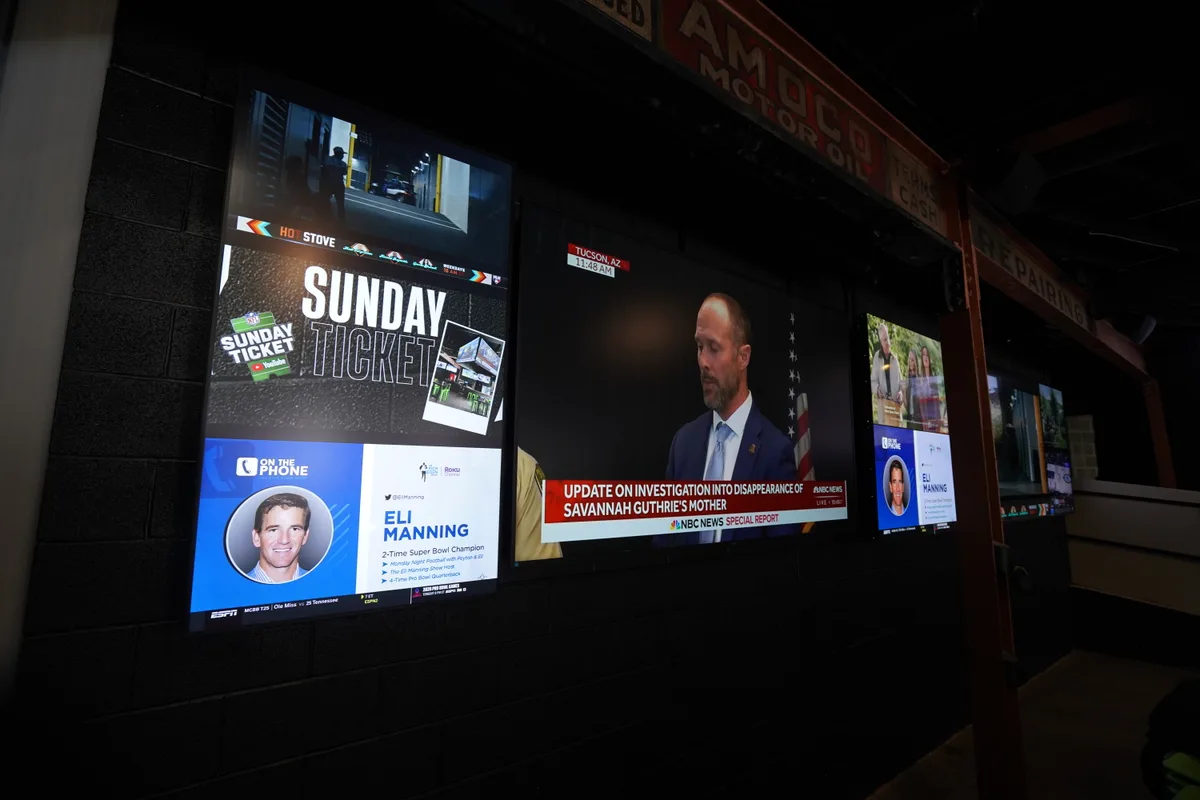
The part nobody sees is the part that fails at the worst moment. Content moves over an audiovisual network so any source reaches any screen on any floor without lag or quality loss, with matrix switching to put one game on the whole building or route a different game to every zone, all at 4K. Satellite, cable, and streaming sources get consolidated into one clean rack instead of a pile of boxes behind the bar, with scheduling so nobody misses a kickoff. Digital signage earns its keep between whistles, with menu boards you can change for game-day specials and displays carrying scores and what is on next. All of it runs on a dedicated AV network rather than sharing bandwidth with your point of sale or guest Wi-Fi, which is the most common reason a wall freezes during a rush.

Why Pittsburgh sports bars trust us with it

Built for hillsides andone-feedSundays

Pittsburgh gives you a harder building than almost any market we work in, and a football Sunday that behaves like a single event across the whole room. Here is where our depth shows, and where our scope ends.

The sightline map has to work vertically

In most cities a sightline map is a floor plan problem. Here it is a section drawing, because a room built on a slope often has three floor levels where another market would have one. A screen hung for the upper bar can be invisible from the mid level and useless from the lower room, and a railing or a stair opening removes seats from a wall you already paid for. So we model each level separately and check the angles between them, then place screens where a floor genuinely gains something. The booths still get modeled individually, since they are usually the worst seats in the building. Watch for people craning their necks to see a screen instead of talking to their table, and you are watching a design failure.

Built for hillsides and one-feed Sundays
InstallBuilt for hillsides and one-feed Sundays

Support after opening night

Crunchy Tech started in 2008 as an AV support operation, which is a strange origin for an integrator and the reason our systems are built the way they are. When you spend years fixing other people's work, you learn exactly where installations cut corners. That shows up in a rack you can service: fully enclosed, every cable labeled at both ends, power separated from audio and data, so someone opening it three years from now can follow every run without guessing. In a three-level building that matters more, because a mystery cable can cross two floors before it ends. Most of the cost of a bad AV install is not the install, it is everything that has to happen later because nobody can find anything. Around 47 percent of support tickets close inside an hour and roughly 72 percent within a day.

The rivers and the winter decide the equipment

If you understand the environment, you understand the equipment. Down in the river valley the lowest floor of a converted industrial building takes damp year-round and water when the rivers come up, so racks, amplifiers, and cable terminations get placed and mounted with that in mind rather than dropped in the coolest available closet. Winter is the other constraint, since hard freezes and repeated freeze-thaw work into seals and fasteners, and snow load is a mounting problem, so outdoor gear gets sealed enclosures and hardware rated for the cycling. Indoors, the biggest single factor in system lifespan is whether the AV room is cooled, because a rack of amplifiers in a sealed closet cooks itself and collects dust. Keep it at or below 75 degrees, and expect outdoor work to carry a higher budget and a shorter lifecycle.

What it earns back

How a game-day room paysforitself

A sports bar AV system is not a cost line. It decides what your busiest Sunday is worth. In Pittsburgh that shows up in the floor you currently cannot sell, and in how you scope the spend.

How a game-day room pays for itself
InstallHow a game-day room pays for itself

The floor you cannot sell right now

In a multi-level room there is almost always one level that dies on game day, usually the lower one or whichever floor got the leftover screen. Guests walk up, look around, and leave rather than sit somewhere they cannot follow the game, so you are paying rent and staffing a floor that turns over once while the rest turns over four times. Fix the vertical sightlines and the audio zoning and that floor starts selling on the day you most need the capacity, without a buildout and without new square footage. The same applies to a patio in the months it works. Between games the screens on the quiet floor run signage that moves menu items instead of sitting dark.

Good, Better, Best against one design

Most owners price AV like retail: twenty televisions cost a certain amount, so twenty screens on a system should not cost much more. Worth being plain about the gap, because the rack, the distribution, and the control take a serious share of the budget before you buy a single screen or speaker. So we quote Good, Better, and Best against one design, per zone, which in a multi-level room usually means per floor. Good is a real recommendation rather than a strawman: one floor watchable from every seat, zoned audio, tablet control. Better usually brings the second level fully into the system, which is where the math tips here. If your budget is short of the room you are describing, we would rather value engineer it honestly than sell you something you will be babysitting.

How a game-day room pays for itself
InstallHow a game-day room pays for itself

Our Pittsburgh bar has three floor levels. How do you design AV for that?

We treat it as a vertical problem rather than a floor plan problem, which is the single biggest difference between this market and anywhere else we work. A room built on a slope often has three levels where another city would have one, so a screen hung for the upper bar can be invisible from the mid level and useless from the lower room, and a railing or a stair opening quietly removes seats from a wall you already paid for. So we map the four sightline zones on each level separately, then check the angles between levels, then place screens where a floor genuinely gains something instead of filling walls. Audio gets zoned per level on a digital signal processor, because open stairwells carry sound and the upstairs bar should not hear the downstairs game. Control is programmed so one game can take the whole building or every level can run its own, in one tap. We also look at water exposure at the lowest floor before deciding where the rack lives.

How much does a sports bar AV system cost in Pittsburgh?

It depends on the number of levels, the indoor and outdoor scope, how many audio zones you need, the size and resolution of any video wall, and the size of the venue. The honest starting point most owners are not expecting: the back-end rack, distribution, and control take a serious share of the budget before you have bought a single screen or speaker. From there we quote three tiers against the same design. Good gets one floor watchable from every seat, with zoned audio, source distribution, and tablet control. Better usually brings the second level fully into the system, and in a multi-level room that is where the return tips, because you are turning dead capacity into sellable seats. Best layers in video walls, signage, and integrated control across the building. We quote per zone, which here usually means per floor, so your dining level can be Good while the main viewing floor is Best. Older industrial buildings add labor for pathways and mounting, and outdoor work carries a higher budget and a shorter lifecycle. If the budget is short of the room you are describing, we will tell you and value engineer it.

On a Steelers Sunday we want the whole building on one game. Can the system do that?

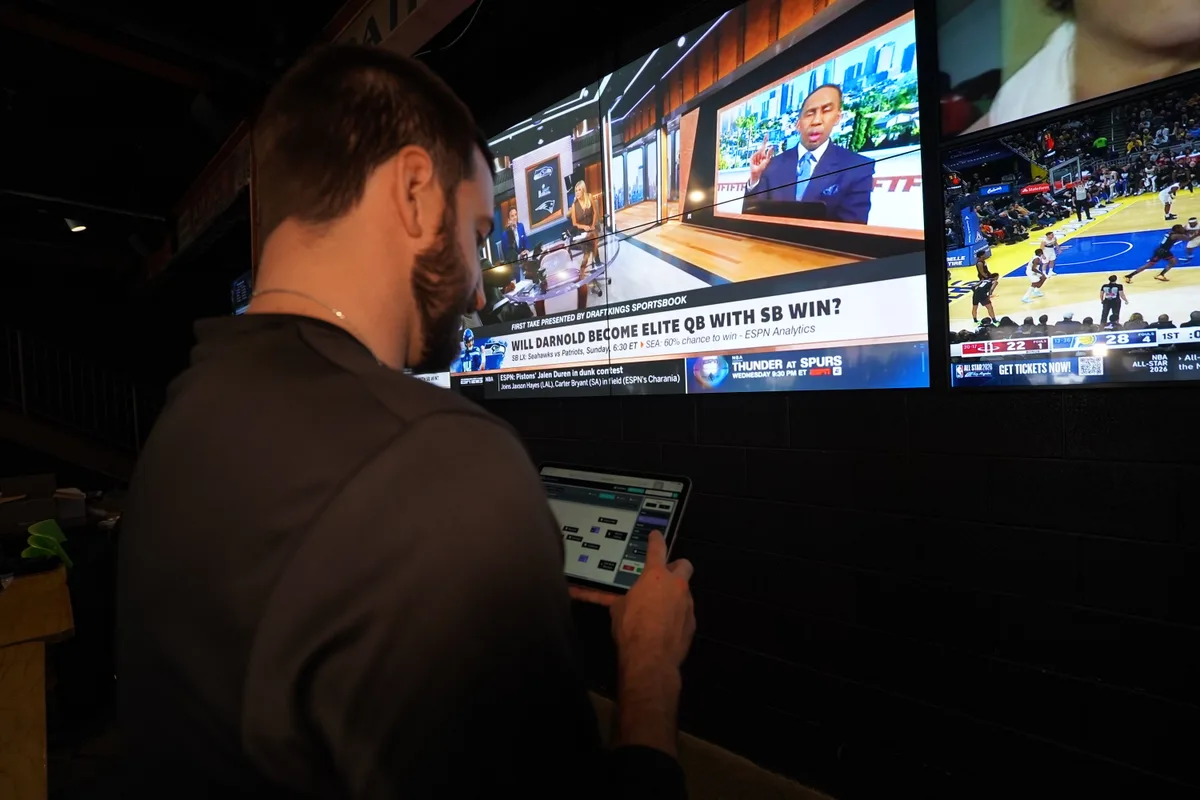
Yes, and it should be one tap rather than a walk around the building. Right now your levels are probably each fed by their own box, which is why a manager ends up chasing remotes on three floors. We consolidate satellite, cable, and streaming sources into one rack, put matrix switching behind them, and move everything over a dedicated AV network, so any source reaches any screen at 4K anywhere in the building. From there we program the modes you actually live: a whole-building single game where every screen and every audio zone lands on the same feed at the same moment, a split Saturday where each level carries its own matchup, a quiet weeknight, and close. Audio still stays zoned, so the main floor can carry a full crowd while the bar side stays workable for ordering. We build the runbook with your GM before the season, train the staff, and lock the admin settings so nobody breaks it during a rush.

Do you handle livestreaming, cameras, or video production?

No. We are a design-build AV integrator. We do not install or operate cameras, we do not shoot or edit video, and we do not run streaming as a service. What we do is build the infrastructure that supports whatever streaming or recording you choose: clean audio feeds to your partner's encoder, documented signal paths so a videographer knows exactly where to plug in, and a dedicated network engineered for the uplink. We design the system around how the bar actually runs, procure the hardware, install it, calibrate it, train your staff, document all of it, and support it for the life of the system. We also generally do not take install-only work, and we will not put our name on consumer-grade gear or wireless audio in a business that depends on game day.

Related Solution

Learn more about our Sports Bars AV solutions

View Sports Bars AV
What clients say

Operators who run on our systems

Client successes drive Crunchy Tech to become better. Below is how our customers feel about us.

Just do it. Spend the money. It’s well worth it. It’s not worth your time, hassle, energy, and stress of trying to make it look right and do it right when there’s somebody who has been doing it for years and has perfected the craft.

Matt Moore logo
Matt Moore
IT Systems Administrator · Capone's Hideout

Working with Crunchy Tech was a fantastic experience from start to finish. They handled the sale and installation of all our sound and TV equipment at The County Bar in Aviston, IL, and absolutely nailed it. We were on a very tight deadline, and they not only met it—they delivered top-notch quality and service the entire way. Highly professional, responsive, and easy to work with. We couldn't be happier with the results.

Clint Flowers logo
Clint Flowers
Owner · The County Bar

Crunchy has done an amazing job on our A/V install. The sound is perfectly balanced throughout our many zones and the entire system is super simple to use.
Steve Glum logo
Steve Glum
Chief Marketing Officer · Ace Cafe
Talk to a Pittsburgh sports bar AV designer

Let's design for theSundaythatpaysthebill

Tell us about the venue: the neighborhood, how many floor levels you have, the square footage, the indoor and outdoor split, and what breaks on a peak game day. We will start with a consult to understand what you are trying to accomplish, walk the building during a busy game if we can, and come back with one engineered recommendation instead of a parts list.

  • Four sightline zones modeled per level: bar-top, high-tops, booths, standing overflow.
  • Screens placed so a split level does not cut half the room out of the picture.
  • One tap to put a single game on every screen in the building, or a different game on every zone.
  • Equipment placement that accounts for damp and water exposure on the lowest floor.