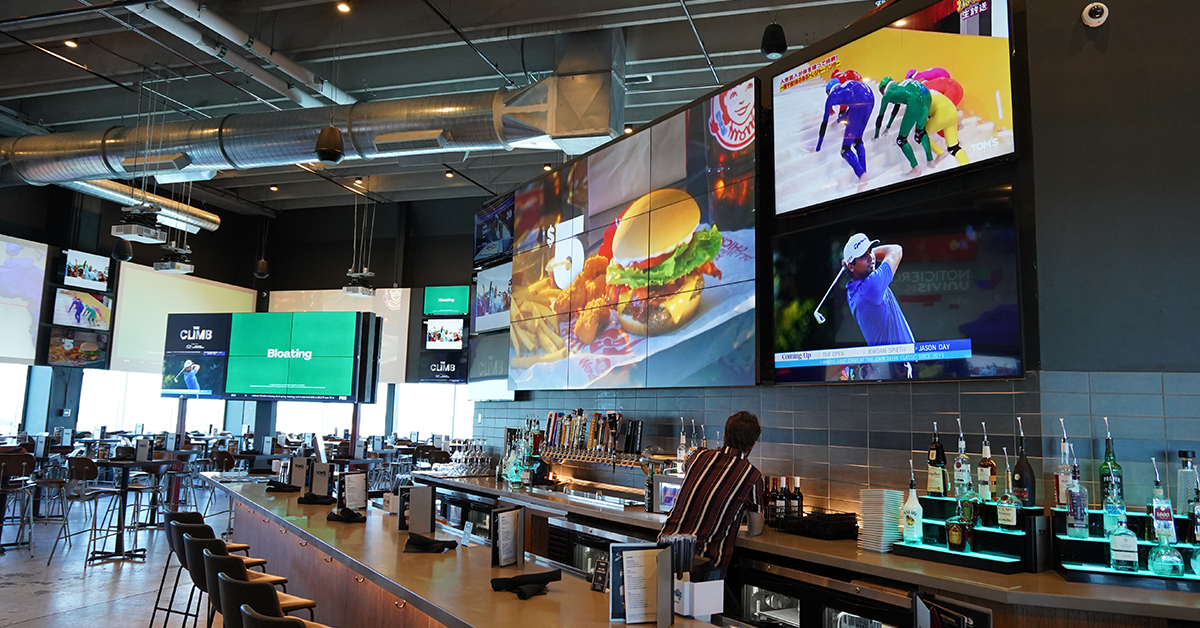
Sports Bar Sound System
Sound System Consulting & Installations
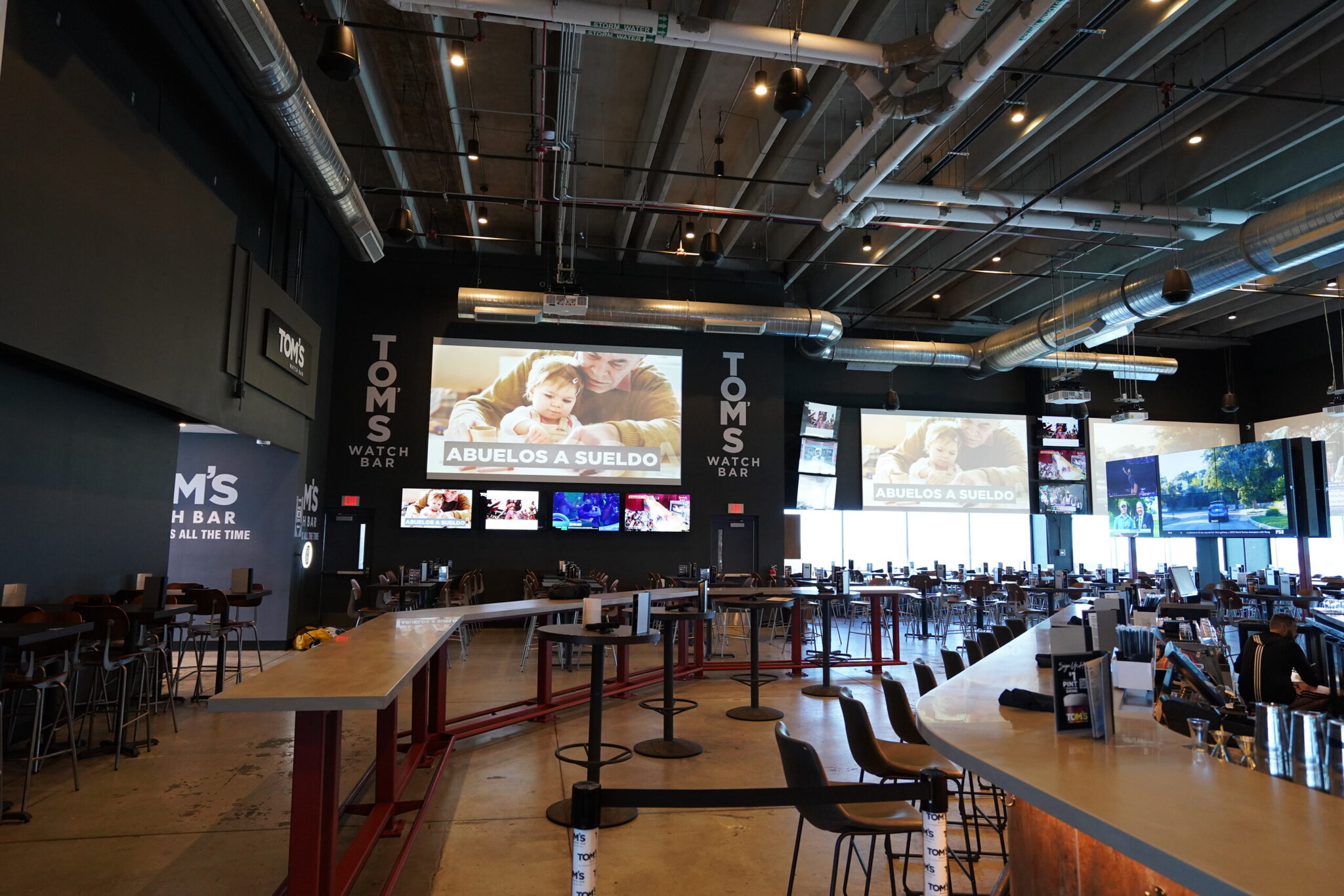
Make Every Sports Game Feel Bigger Without Making Your Bar Too Loud
In a sports bar setting, a perfectly integrated sound system is what makes the whole room feel more alive and immersive with crystal-clear commentary. That also means music sits where it should be and the enthusiastic energy builds without turning into noise.
When the audio system integration is wrong? You can feel it immediately – one area is blasting while another is strangely quiet, with people leaning in and repeating themselves. You can also see staff keep adjusting levels. Eventually, the room either feels chaotic or flat.
A professionally designed sports bar audio system gives you a foolproof way to control the atmosphere (even when the crowd changes by the minute). By extension, it helps you deliver a consistent experience across every seat, not just the ones near the loudspeakers.
- Sports Bar Audio
- Common Sound Problems
- Audio for Every Space
- Building Blocks
- Game Audio, Music and Zones
- Our Process
- Sports Bar Sound Systems FAQs
What a Sports Bar Sound System Has to Do That Restaurant Audio Doesn’t
Restaurants and sports bars both need good sound, but there’s no denying that sports bars have extra pressure points that change the entire approach.
That’s because you are not designing for a calm background layer, but rather for moments – be it a last-minute goal, a close fourth quarter or a big fight night. Audio has to keep up and it has to do it without your team babysitting controls the entire night.
Keep commentary intelligible when the room is roaring
The problem in sports bars is that speech disappears first when a room gets loud. Crowd noise and general chatter sit in the same range as vocals. If your system isn’t tuned for clarity, the only way to “hear the game” becomes turning it up to an uncomfortable (if not obnoxious) extent. And even then it can stay muddy.
A proper sports bar system is built around speech intelligibility through the right speaker strategy, enough headroom so the audio stays clean at peak times, and tuning that keeps commentary readable.
Balance music and game audio without constant tending
Most bars live in a push-pull between music and game sound.
During pregame, music carries the energy. Once the game is on, guests expect commentary or crowd sound to take priority. After a big moment, the room needs to settle back into a comfy level. If your system can’t handle those transitions smoothly, someone is always chasing the mix.
A commercial sports bar setup solves this with predictable control. You should be able to shift between “music forward” and “game forward” and make scrambling through devices needless. You shouldn’t be guessing which source is live or overcorrecting volume.
Cover the whole bar evenly
A table near a speaker gets blasted and complains. A booth in a corner can’t hear anything. The bar rail feels fine, but the back wall is dead… Owners often respond by, again, turning everything up, which only makes the loud areas worse.
Even coverage is what allows a room to feel zestful without being exhausting. All too often, that translates to more points of sound at lower volume, placed based on the room’s layout and seating patterns, instead of on what looks symmetrical on a ceiling plan.
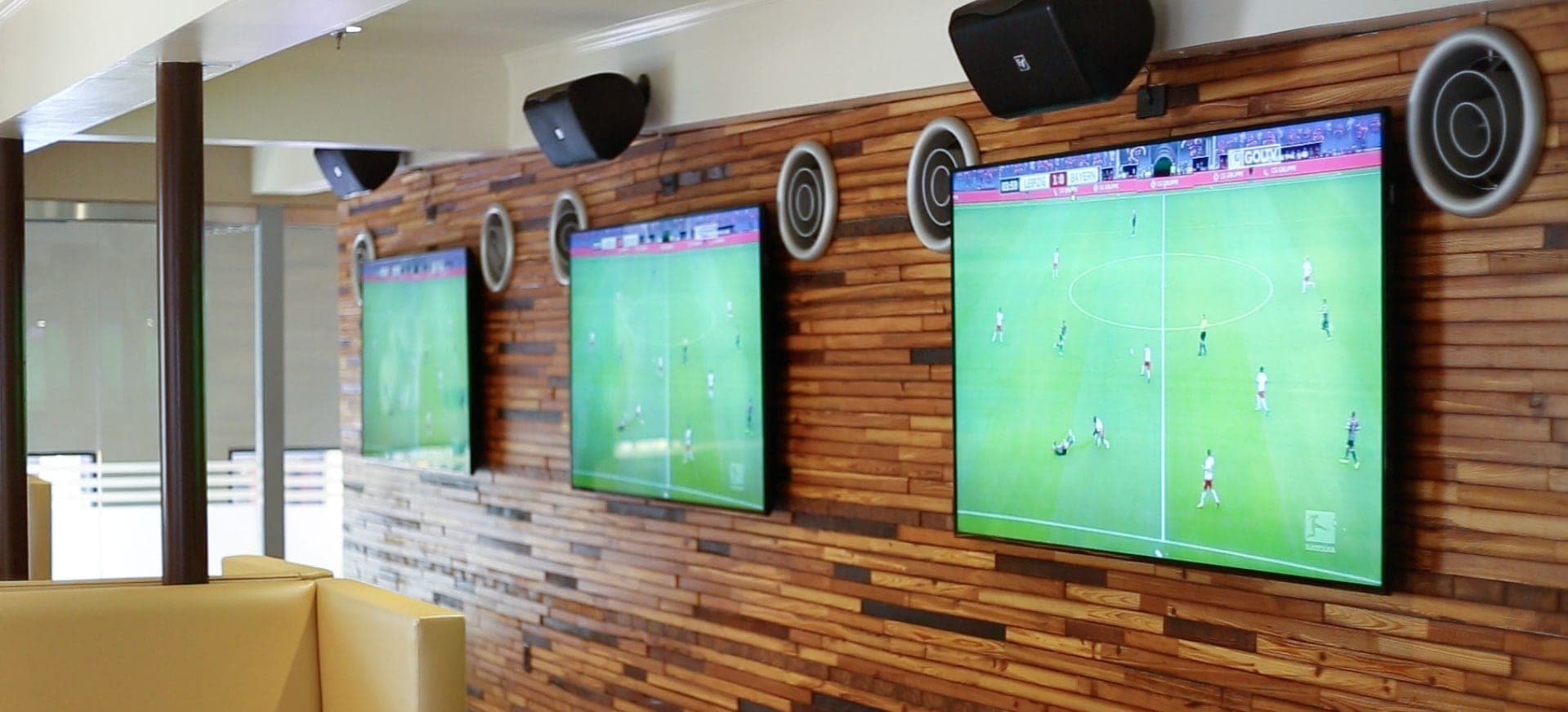
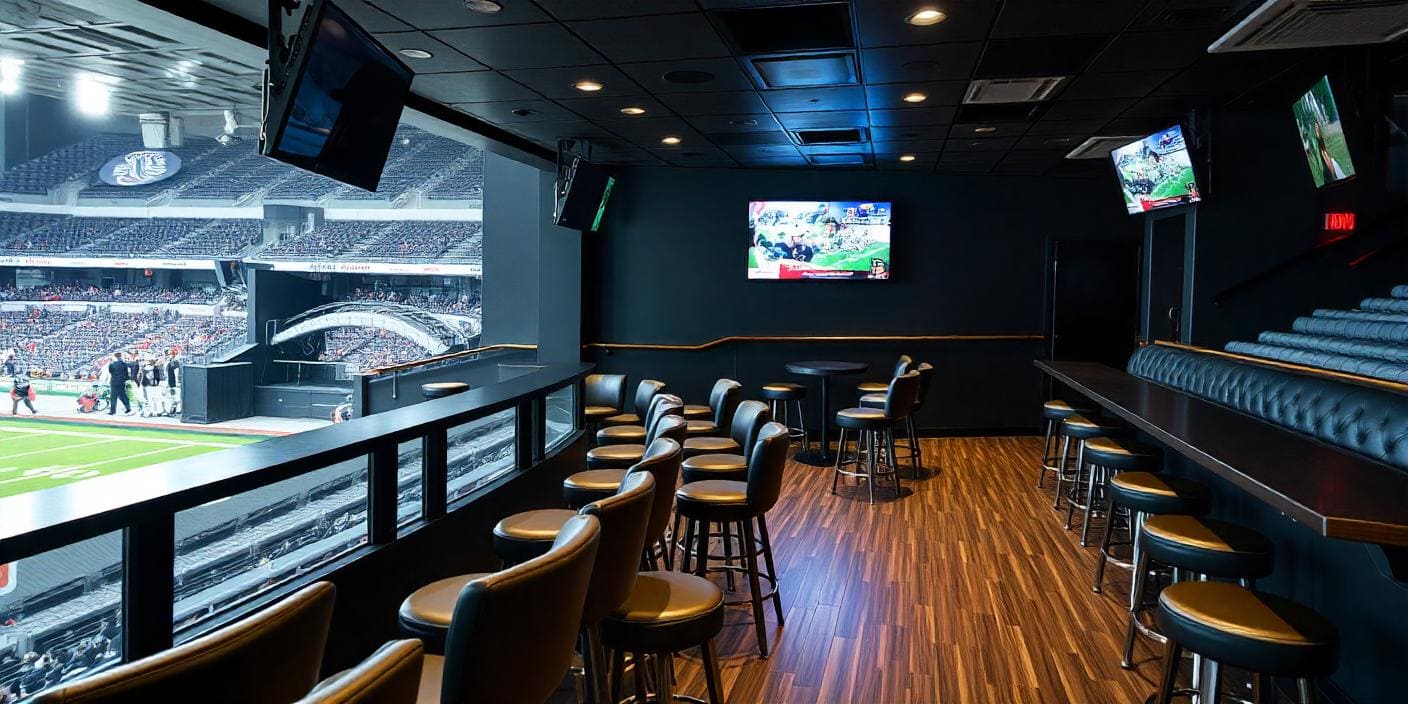
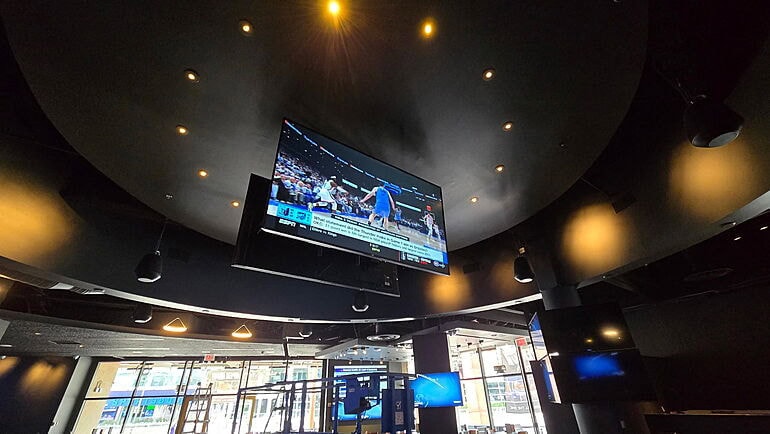
Common Sound Problems in Sports Bars (And Their Causes)
Most of the issues sports bars grapple with are pretty predictable. They come from the same handful of AV design mistakes and equipment limitations. If you recognize any of these, consider it a sign your system may necessitate more than a quick fix.
“It’s loud but I still can’t understand the game”
This is arguably the most common complaint and it’s the most frustrating one; because it makes people doubt the whole idea of playing game audio.
It comes from a combination of three things: poor speaker placement, underpowered amplification and lack of tuning. When the system is pushed, it distorts. Distortion then makes vocals harder to understand even as volume rises. Add a noisy room and the outcome is loud, tiring and still unclear.
A well-designed system puts a premium on clarity first so you do not have to choose between “audible” and “comfortable,” when both can be achieved and are not mutually exclusive.
Volume wars between zones
Sports bars are not one environment. For starters, the main bar is different from booths. A patio behaves differently from the inside. A private room will likely need its own vibe during a party.
When everything is tied together, one area dictates the experience for everyone. If the bar crowd gets loud and you raise volume, the dining side suffers. If you lower volume for booths, the bar feels tedious.
Zoning prevents that tug-of-war. It lets you manage the room like separate experiences under one roof while still keeping the whole place seem coordinated.
Audio lag, dropouts and source confusion
This is where many sports bars get stuck with a system that “mostly works” until a big moment.
Switching between sources causes delays. Devices drop, apps freeze, staff is anxiously unsure what is playing where, etc. Then you lose time during the exact window when your bar is busiest and your guests are most locked in.
A sports bar or restaurant sound system needs stable source routing and a control setup that makes switching fast and foreseeable. Guests should never notice the handoff between pregame, game time and postgame energy.
One bad night because the system couldn’t handle peak hours
A system that holds up at 4 p.m. can fall apart at 9 p.m.
Your busiest periods test everything. The room is loud. You need more output. You need clean audio without harshness. You need reliability, because downtime during a big game is NOT an inconsequential inconvenience.
Commercial-grade design is about surviving those moments. The system should stay clear, controllable and steady when the room is at its most demanding.
Sports Bar Audio for Every Space
A sports bar is a collection of mini rooms that happen to share the same roof.
If the audio system treats the whole place as one zone, it will always be wrong for someone. The fix is not louder speakers but designing for each space, then tying it together so the entire venue still feels unified.
Main bar and high-top areas
This is the heartbeat of the room; where energy is supposed to build, guests are standing, ordering quickly, reacting to big plays and feeding off the crowd.
Audio here needs to be present and punchy, but still controlled. If you push volume without control, it becomes harsh fast and the bar starts feeling draining. Aim to keep commentary readable and music exciting without forcing people to shout directly into each other’s ears.
This zone also needs stability. It’s the area most likely to demand quick switching between games. It’s also the area where failure gets noticed first.
Booths and dining sections
Booths and seated dining behave differently than a standing bar area. People are talking across a table, staying longer and more sensitive to hot spots and sharpness.
In these areas, even coverage matters better than impact. Guests should feel the atmosphere without feeling attacked by it. The dining side can still feel like it belongs to the sports bar, but it won’t be the part of the room that generates the most complaints. That’s what you get (and deserve) when the system is designed correctly.
This is also where you feel “cheap audio” immediately. Harsh highs, vague vocals and uneven volume become obvious during conversation. Proper placement and tuning in this zone reduces fatigue and allows guests to stay homely through an entire game.
Private rooms and event areas
Private rooms can be huge revenue drivers, but only if they feel controllable.
A good setup lets a private room run its own audio goals whilst keeping the main bar undisrupted. That can mean one game in the private room, a different game out front or even music for a party while the rest of the venue stays absorbed in sports.
The key is independent control that still feels simple. Staff should not have to become licensed audiovisual technicians to run a watch party. It should be easy to select the room, choose the source and adjust volume safely within a controlled range.
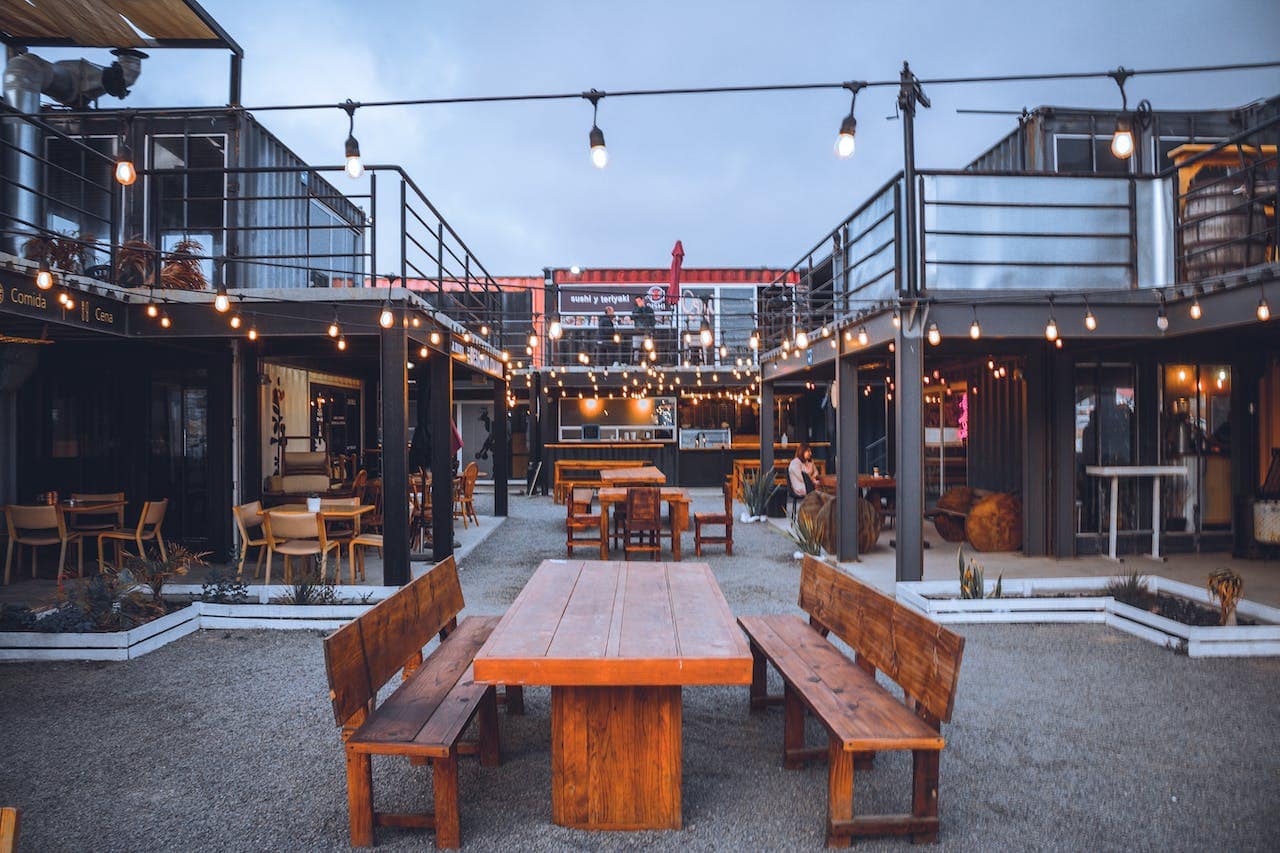
Patios and outdoor seating
Outdoor areas are where sports bars lose consistency.
Sound escapes into open air and wind changes perception. Meanwhile, a few hastily placed speakers can create a weird mix of “too quiet at the back” and “too loud at the front.” That’s when owners crank volume and that’s when neighbors start noticing.
A smart patio design uses weather-rated equipment and placement that keeps sound on the seating area rather than throwing it outward. Patio audio should also be its own controlled zone so as to adjust it independently based on conditions and crowd level.
Done right, the patio still feels like part of the commercial venue, because it is. It just does not force the entire building to chase the same volume needs.
Entry, hallways and restrooms
These spaces are less about making a statement and more about continuity.
When audio vanishes completely in transition areas, the venue experience feels chopped up. Guests feel like they left the atmosphere you built. A light, controlled fill in these areas keeps the vibe uniform without turning every hallway into a speaker tunnel.
This is also a practical move. If you have a wait area near the entry, subtle audio helps that space feel less awkward and less tense during prime times.
The Building Blocks of a Great Sound System for Sports Bar
Once zones and spaces are mapped, the system has to be built to deliver clarity and control under real conditions. Sports bars can’t rely on domestic-grade gear or good-enough placement. The room changes too much night to night.
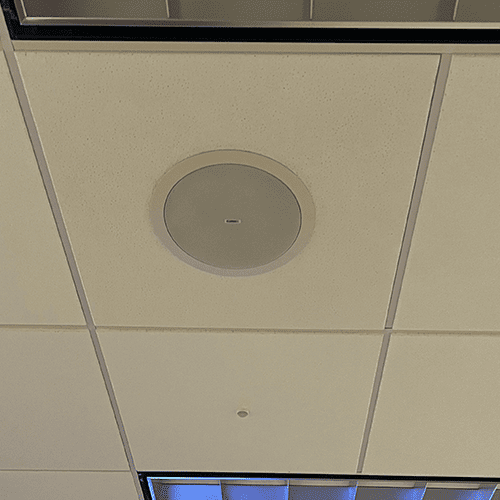
Commercial speakers chosen for clarity and coverage
Sports bars need speakers that can handle protracted hours, higher demand and consistent output.
Speaker choice is also about the room’s physical realities. Ceiling height, open structure, seating layout and noise sources, among others, all influence what works. The right solution might involve a mix of speaker types across different areas in order for coverage to stay even and the sound to stay at agreeable levels.
Amplification with headroom
Headroom is what keeps audio clean when the room is thunderously loud.
The system, if underpowered, distorts the moment you push it. That distortion is what makes guests feel like the bar is blasting even if the volume level isn’t outrageous at all. Clean sound at a controlled level feels better than loud sound that breaks up.
Amplifiers sized correctly for a sports bar means the system can handle peak moments, yet without becoming harsh or brittle.
Tuning that makes speech readable
This is the part many systems skip and it’s why so many sports bars end up with “loud but unclear” audio.
Tuning shapes the sound for the room. It controls harsh frequencies, reduces muddiness and helps speech cut through crowd noise. It also helps maintain levels so the experience doesn’t swing wildly as the bar fills and/or empties.
When tuning is done accurately, game commentary becomes easier to follow and the room becomes less fatiguing to sit in.
Simple control your staff can actually use
Your team needs a system that works quickly in live conditions. That means no stacks of remotes, apprehensively guessing which app is connected and confusing switching process during a packed game.
A solid sports bar control system gives you presets and clear zone selection, plus protection versus accidental spikes. The system should be easy for staff to run while still giving managers the flexibility to fine-tune when needed.
Game Audio, Music and Zones (How It Works in Real Life)
Sports bars don’t lose patrons because the audio is slightly off. The audio creating friction at the worst possible time is how they lose guests.
Just picture it: a big play happens and the room can’t hear the call… Staff tries to fix it – now three different zones are fighting each other. The patio starts complaining because it’s quiet outside. Inside tables start complaining because it’s suddenly too ear-piercing. That’s how a deceptively simple sound issue turns into a night-long annoyance.
A well-designed sports bar AV system prevents that by giving you zone control that matches how the venue actually runs, plus predictable ways to shift between background music and game audio without chaos.
Zones that match how your bar operates
Sports bars naturally have areas that behave in varied ways during service. The bar rail needs energy, whereas booths need comfort. Private rooms need independence, whereas patios need their own balance as outdoor conditions change constantly.
When zones follow that reality, staff stops guessing and doesn’t need to know anything about audio. They only need to know which area they’re controlling and what the goal is for that moment.
Presets for dayparts and events
Presets are one of the easiest ways to keep audio consistent across shifts, even when different managers are working various nights.
A preset can be as simple as “pregame,” “game time,” “postgame,” etc., with levels and sources already set. You’re not reinventing the mix every time the room changes. Just making small adjustments within a reliable baseline.
That consistency matters, since customers notice when one night feels great and another in shambles. Presets reduce that randomness and make the venue feel professionally run.
Handling multiple games at once
This is where sports bars are truly different from most hospitality venues.
If you have multiple TVs showing different sporting events, you need a plan for what audio follows what screen, as well as when. If your audio system can’t manage multiple sources cleanly, you end up stuck with one of two bad options.
Option one is game audio everywhere, all the time, which quickly becomes noisy and distracting if screens aren’t synchronized. Option two is game audio nowhere, which disappoints customers who came specifically for a highly anticipated matchup.
A proper sports bar sound setup gives you flexibility. You can prioritize the main game in key zones, keep other zones on background music and route a different game to a private room when a group requests it.
When you want game sound everywhere vs game sound in select areas
There are nights where game sound everywhere makes sense, e.g., a championship game, a local rivalry, a packed house that’s fully locked in.
There are also nights where it’s a mistake: when different groups are watching different teams or when the vibe is more social than intense, piping game sound everywhere can make the room feel noisy and restless.
The best systems let you make that choice quickly, wherein you can run game audio in the bar zone, keep booths comfortable with music and still let guests feel like they’re in a sports environment. That blend is often what keeps both types of customers happy on the same night.
Our Process (Built for Busy Operators)
A sports bar sound solution should feel effortless to run once it’s installed. The only way to get there is to do the work upfront.
We build around real operational needs: coverage planning, zone mapping, speech clarity tuning and controls that your staff can use without a learning curve.
Walkthrough and pain-point mapping
We start with how the room acts today.
Where do guests complain? Which seats are always too loud or too quiet? Where does commentary disappear once the bar fills up? What happens during a busy switch between games? Where does the patio fall apart?
This walkthrough shapes the design. It tells us which zones are critical, where coverage needs to be tightened, what control approach will actually fit your workflow, etc.
Design and proposal you can understand
A good proposal should not read like a spec sheet.
You should be able to see the zone plan clearly and understand what each part of the system is doing. You should also know how staff will control it and what the experience will feel like in each area. We focus on clarity, reliability and simplicity.
Install, tune and test under real conditions
Installation is only part of the job. Tuning is what makes the system work in a real sports bar.
We tune for speech lucidity, balanced coverage and clean output at higher demand levels. We also test zone behavior so that shifting between dayparts or events doesn’t create sudden spikes or weird transitions.
A system that sounds “fine” while empty can fail once the room is full. Testing is designed to prevent that.
Training and handoff
Your staff shouldn’t be scared to touch the system.
We keep control simple and practical. Presets are labeled in plain language. Zone selection is straightforward. We also lock down settings that shouldn’t change during service, so the system stays consistent even when different people are running it.
The goal is confidence. If your team can’t run it quickly, it’s not a good design.
Support and future expansion
Sports bars evolve. You add TVs. You reconfigure seating. You expand a patio. You create a new private room.
A solid system should be able to grow without turning into patchwork. Support also matters because downtime during a big event is just not acceptable. The point is to keep your audio and controls reliable as the venue changes.
Sports Bar Sound Systems FAQs
Can we control different areas separately?
Yes. Zoning is one of the most important parts of a sports bar control system. It lets you keep the bar energetic while booths stay comfortable and it lets patios and private rooms operate as their own experiences. You don’t need to force the whole venue into one volume level.
Can we prioritize the main game and keep other zones on music?
Yes. This is a common goal. A well-designed system can route the main game to the zones where guests expect it, while keeping other areas on music. It gives you flexibility without having to turn the whole building into a single noisy mix.
Will it still sound clear when it’s full?
That’s the standard we design for. Clear sound in a bar for sports enthusiasts depends on coverage, clean amplification with headroom and tuning focused on speech comprehensibility. If those pieces are right, commentary stays readable even when the crowd volume rises.
Can you include patio audio without pushing volume inside?
Patio audio should be its own zone with weather-rated equipment and controlled coverage. That way you can adjust outdoor sound in accordance with conditions without affecting the indoor experience.
Do we need to replace everything or can we upgrade parts?
It depends on what you already have and what’s currently causing the issues. Some venues need a full redesign because coverage and control were never planned correctly. Others can keep certain components and upgrade the pieces that affect clarity, zoning and reliability the most. All of this to say that a walkthrough is the quickest way to determine what makes sense.
Audio Services
Request a Quote for Your Professional Sports Bar Sound System in Orlando.
If your venue is dealing with volume complaints, indistinct commentary, dead zones or a system that’s just tough for staff to run, it’s usually not a playlist problem. It’s a design problem.
Crunchy Tech builds Orlando sports bar sound systems that keep commentary clear, music balanced and coverage consistent across the whole space, even on your busiest nights.
Reach out for a walkthrough and a zone plan. You’ll get a clear, expert recommendation borne out of decades of AV experience, based on how your bar runs, what your guests expect and what your space needs to sound like when it’s packed.