Just do it. Spend the money. It’s well worth it. It’s not worth your time, hassle, energy, and stress of trying to make it look right and do it right when there’s somebody who has been doing it for years and has perfected the craft.
Sports Bar AV in Daytona Beach
Game-day AV for Daytona Beach sports bars. Sightline-mapped displays, audio with headroom for an event week, oceanfront patio screens built for salt air and hurricane season, and presets that scale a room back down in June.
Daytona has almost no normal weeks
There is no average night here to design around. In February the beach fills for Speedweeks and a room runs past capacity for days, then Bike Week and spring break follow, and by May a Tuesday is quiet. A system specified for the average night falls apart during the surge, when the audio disappears into the crowd and the back of the room cannot see. One specified only for the surge feels absurd in June.
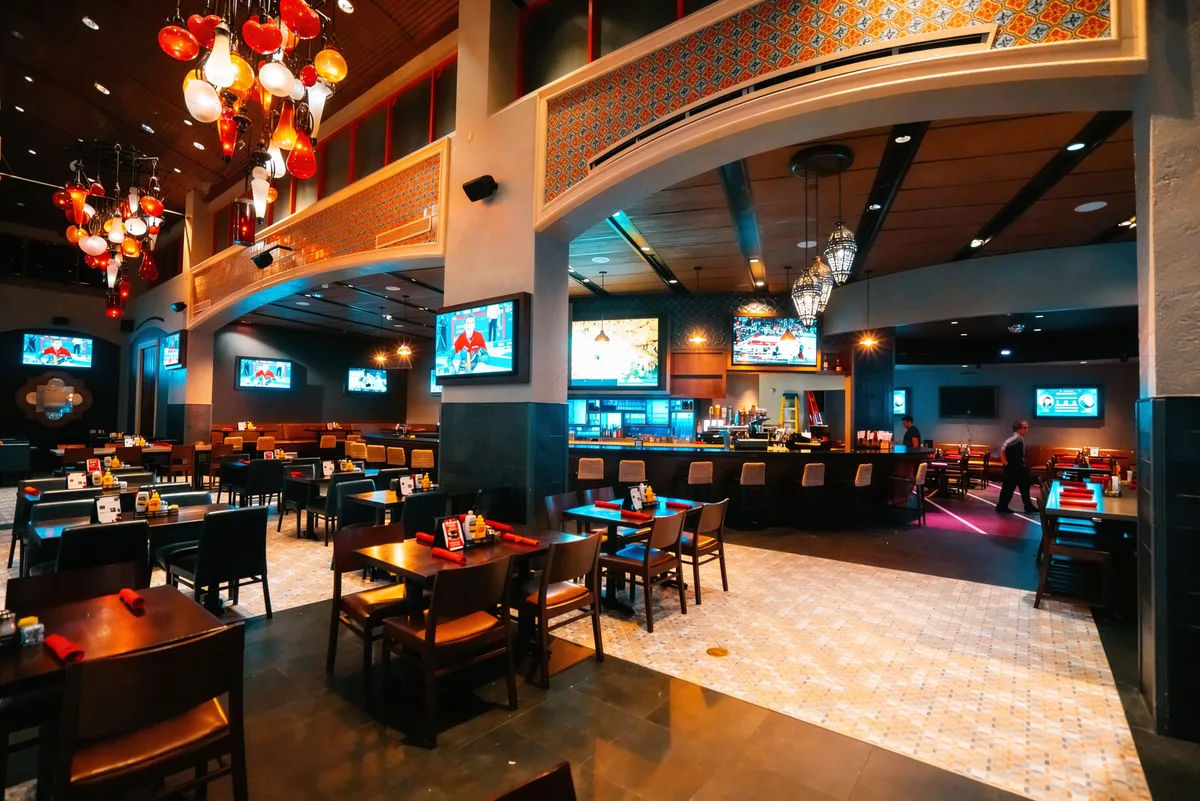
We design Daytona rooms to scale in both directions. Sightlines get mapped from four seating zones before anything is ordered, including the standing overflow that only exists when the beach is full. Control runs on presets, so staff move the room from a quiet weekday to total saturation and back. Outside, displays and mounting get engineered for oceanfront salt air and hurricane season, because on this beach that is routine engineering, not an upgrade.

Sports Bar AV Across the Daytona Area
From the boardwalk and the Speedway corridor to Port Orange, Ormond Beach, and New Smyrna, we build sports bar AV sized for an event week and comfortable on a quiet Tuesday.
Salt air on this beach is more aggressive than it is inland, so outdoor gear gets sealed enclosures, corrosion-resistant hardware, and a scheduled rinse and inspection.
Hurricane season governs outdoor mounting, so structural backing and hardware get rated for the project's real wind exposure.
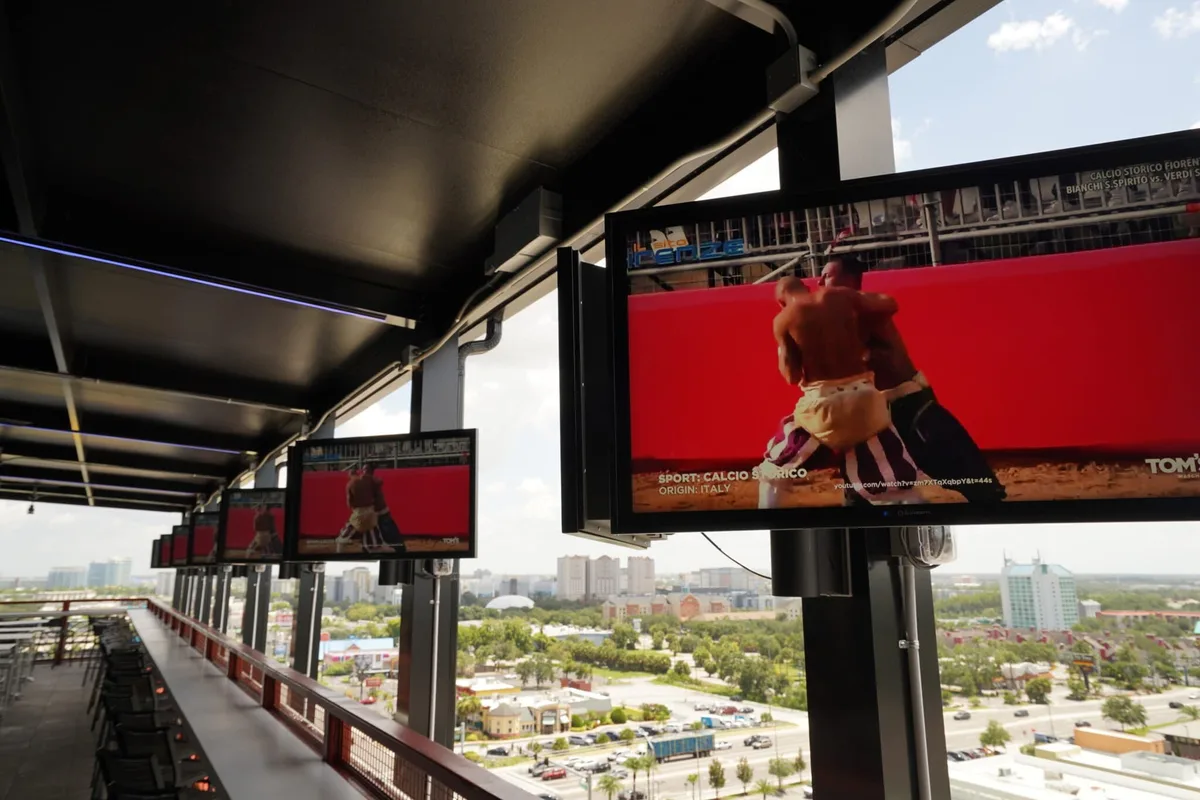
Outdoor screens run high brightness with an ambient light sensor, so they stay readable at midday and dim down when a storm rolls the light.
Humidity stays high year round, so patio components get condensation-rated parts and the indoor AV room needs cooling to hold at or below 75 degrees.
How we work
Sightlines mapped for a full beach
We do not start with a screen count. We start with what the room looks like during Speedweeks and whether the same system still makes sense on a quiet Tuesday in June.
The consult and the site walk
Most disappointing game-day rooms were quoted off a floor plan by someone who never stood in the back of a packed house. So the first conversation is a consult, not a quote: what you want the room to feel like, how big it is, what you need it to do, and the budget range you are working with. The site walk is part of that consult, and in Daytona we push hard to do it during an event week, because a walk on a quiet Tuesday tells you almost nothing about this market. We measure sightlines from four places guests actually sit: the bar-top, the high-tops, the booths with the worst angles, and the standing overflow that only exists when the beach is full.
Design you can see, then one team on site
The other failure is that an owner does not see the outcome until it is built, then wants it changed after one season. So you see the design before you commit to equipment, including the view from the seats you were worried about. Control gets programmed around the modes you actually run, so a quiet weekday, a full event day, and a late-night turnover are presets instead of a scramble behind the bar. One team handles the install, calibration, staff training, and documentation, and coordinates with your electrician and low-voltage trades. Ahead of the event calendar we build a runbook with your GM and lock the admin settings, because February is not the month to learn the system.
What we build
The AV stack a Daytona sports bar runs on
A game-day room is a handful of systems working as one. Here is what we design, program, and install, all of it built off your sightline map.
Sound with headroom for a full house
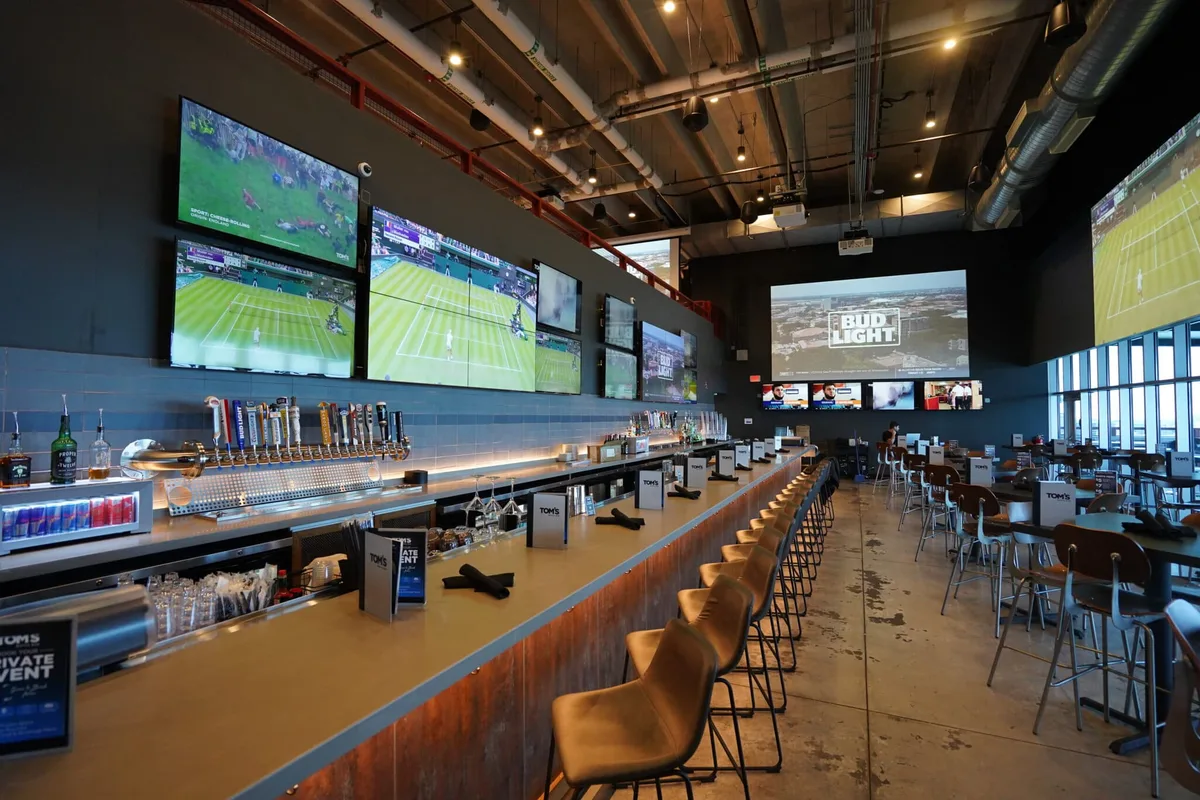
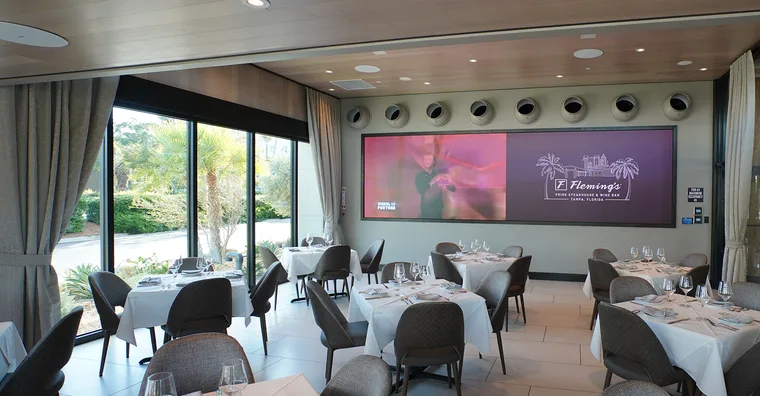
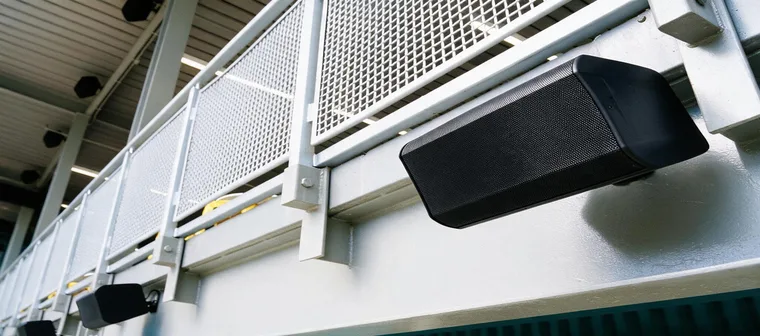
The failure mode in an event market is specific. The system sounds fine in June and turns to noise the week the beach fills. That is a headroom and coverage problem, not a volume problem. Bad audio usually comes from speakers mounted without accounting for direction, height, and room surfaces, often run around the perimeter so the middle has no coverage while the edges are punishing. So the system runs in zones on a digital signal processor with enough headroom to stay intelligible at saturation: the main viewing area carrying a packed crowd, the bar side workable for ordering, the patio holding its own against surf, traffic, and motorcycles. Anything outside is weather-rated and on its own zone.
Displays, video walls, and the oceanfront patio
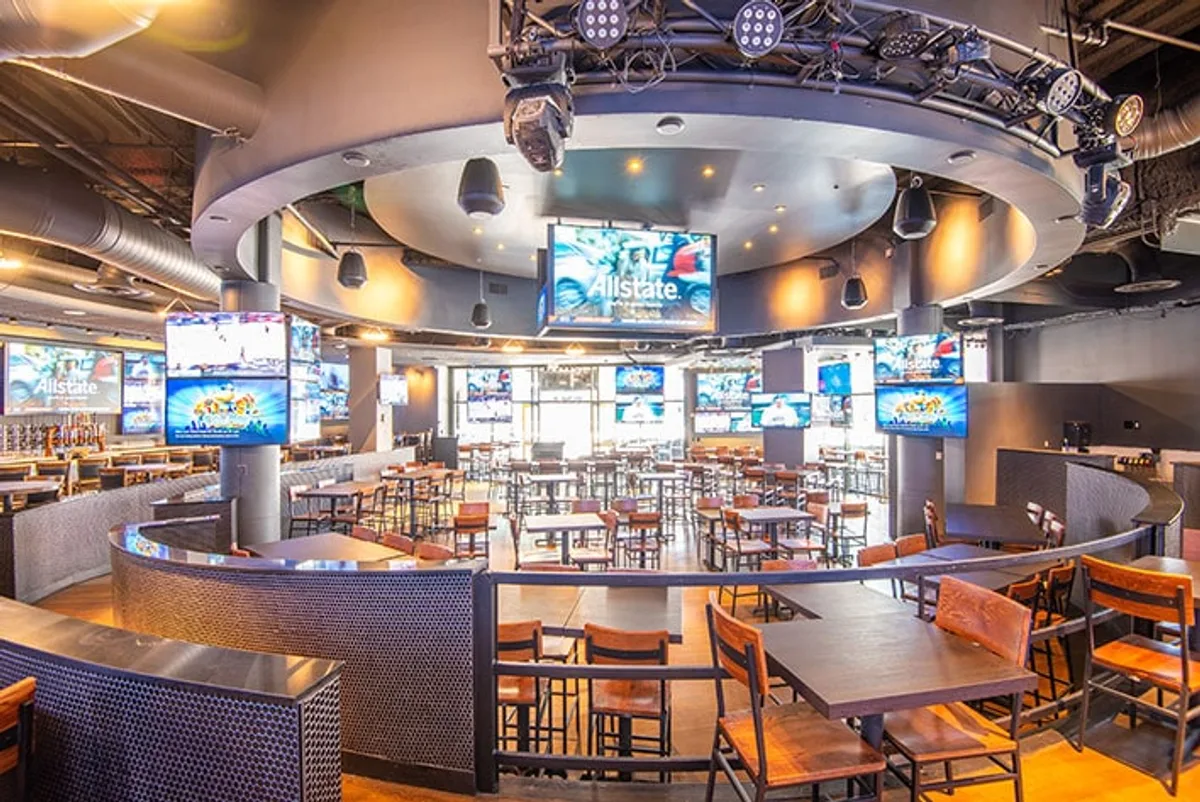
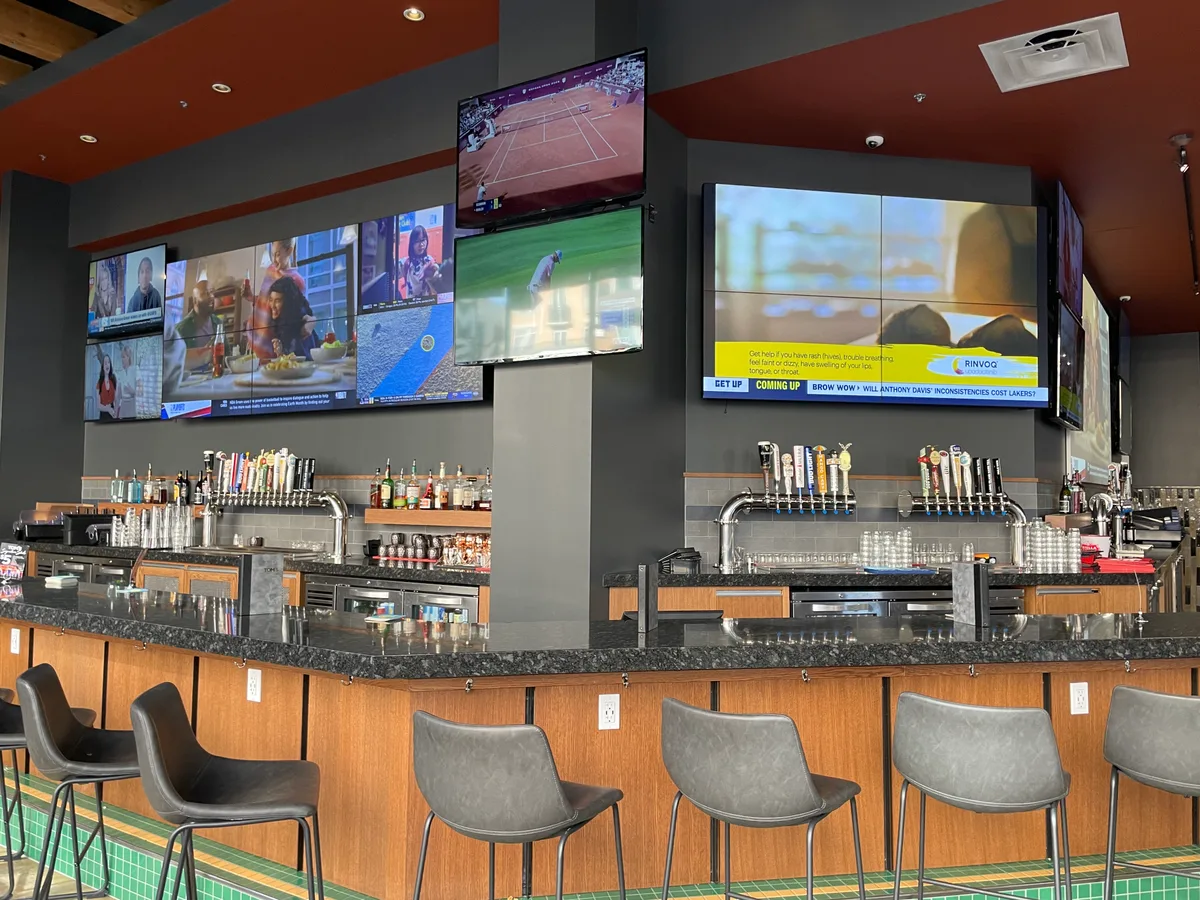
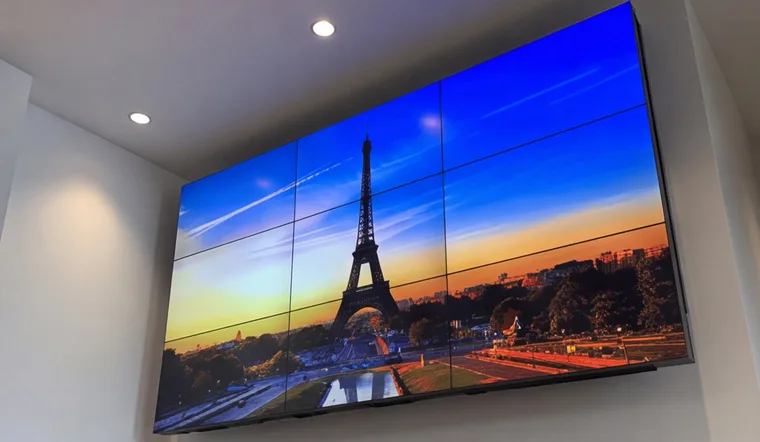
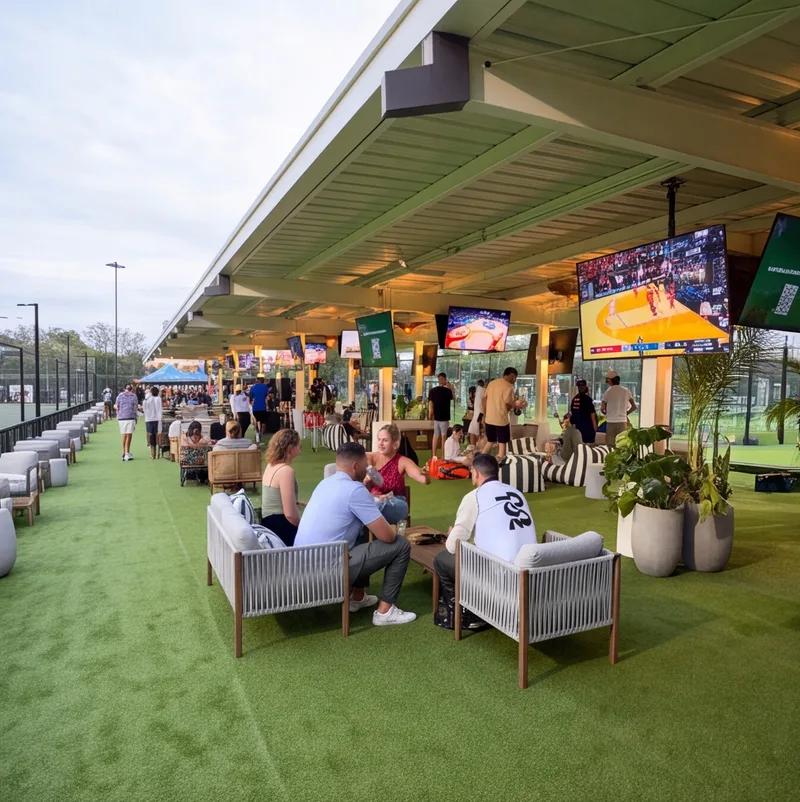
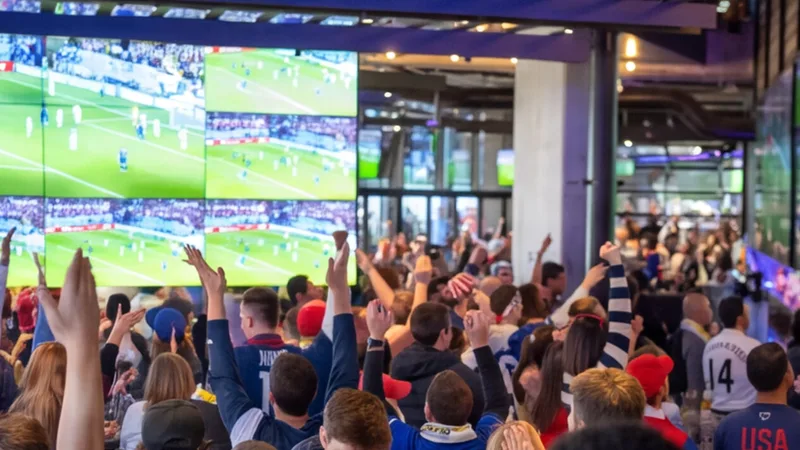
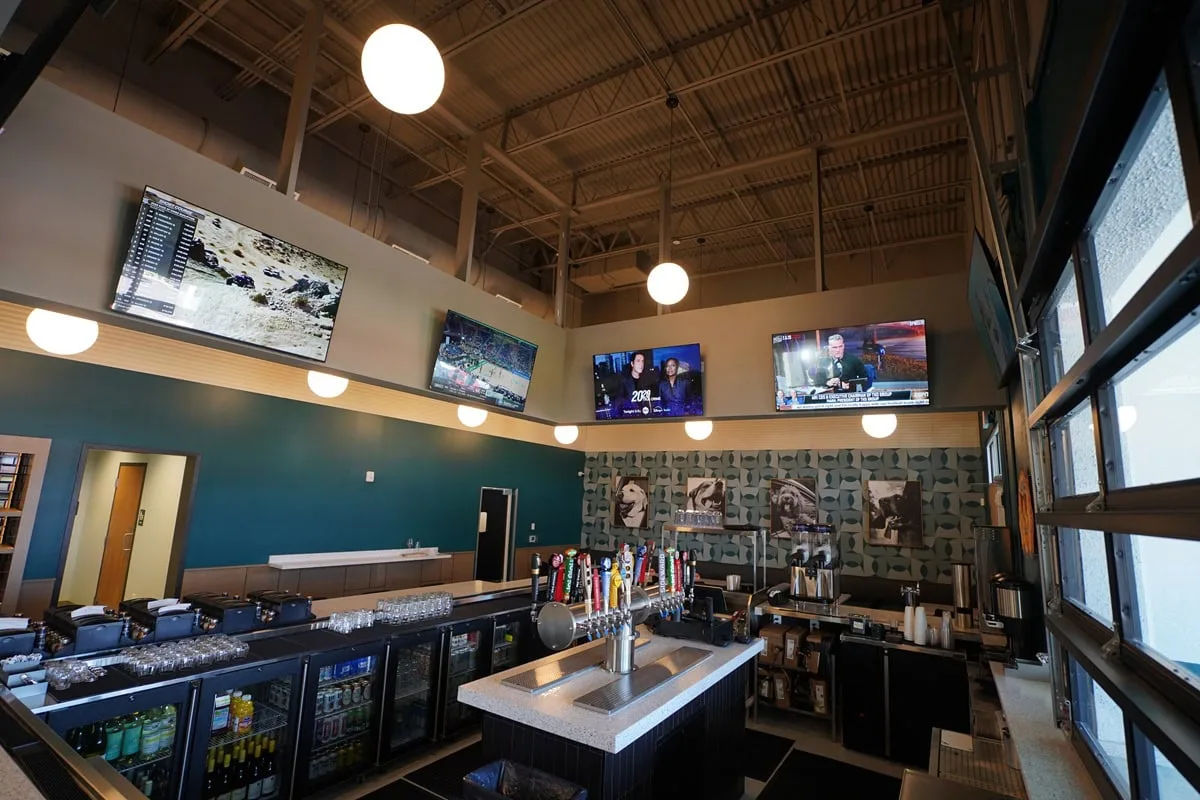
A television on a wall is not a sports bar. A screen should be a content source placed where people can actually watch it. Indoor displays are commercial grade, sized off the four sightline zones, with resolution driven by how close the nearest seats sit, and placed so a standing crowd is not looking at the back of someone's head. Where one screen cannot carry the room, a video wall does the work: one large image for a race or a Sunday game, or split into a grid so the bar reads several events at once. Outside is where this market separates. Patio screens get high brightness with an ambient light sensor so they lift at midday and dim at night, sealed enclosures, corrosion-resistant hardware, and mounting engineered for hurricane season.
Distribution, signage, and control
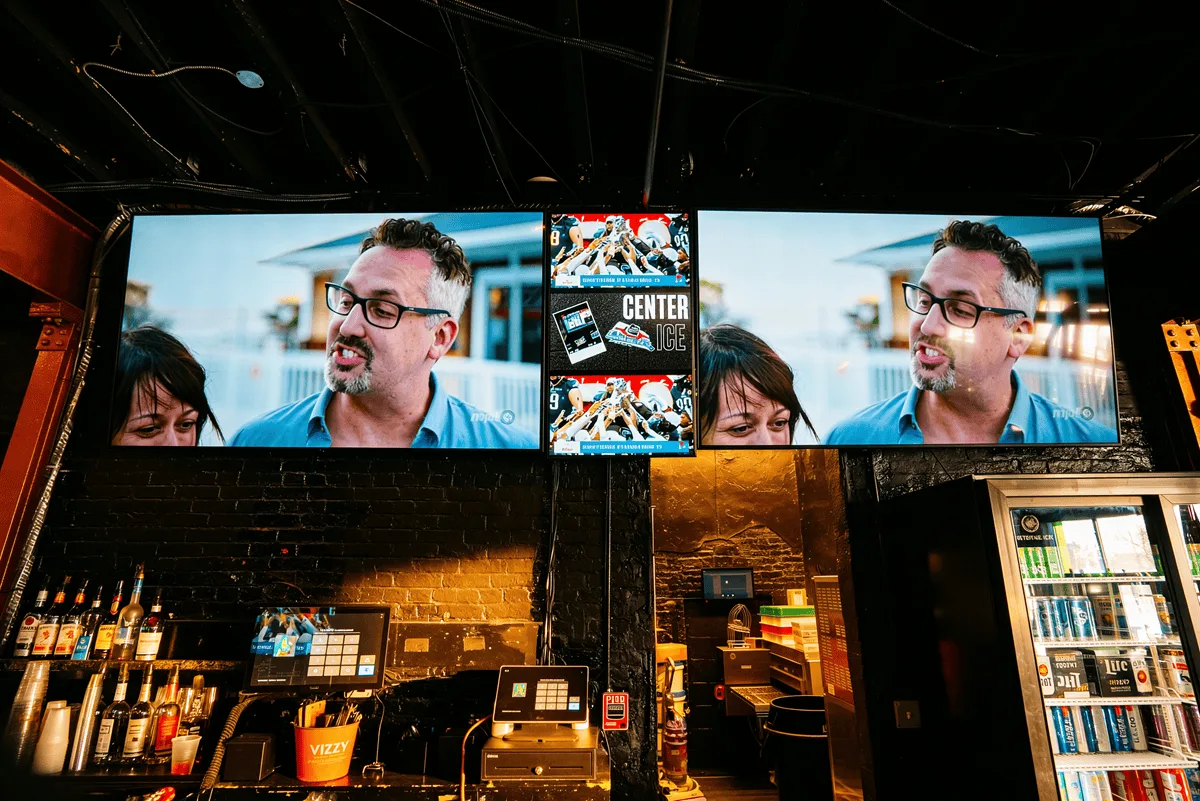
The part nobody sees is the part that fails at the worst moment. Content moves over an audiovisual network so any source reaches any screen without lag or signal drop, with matrix switching so you can route any event to any zone at 4K. Satellite, cable, and streaming sources get consolidated into one clean rack instead of a pile of boxes behind the bar, with scheduling so nobody misses a green flag or a kickoff. Digital signage earns its keep during an event week: menu boards you can switch to a limited event menu instantly, and displays carrying what is on next. All of it runs on a dedicated AV network rather than sharing bandwidth with your point of sale or guest Wi-Fi, which is the most common reason a wall freezes during a rush.
Why Daytona sports bars trust us with it
Built for the event weeks, not the average night
Daytona concentrates its year into a handful of enormous weeks and sits directly on the ocean. Here is where our depth shows, and where our scope ends.
Peak weeks are the design case
In most markets you size a room for its busy nights. Here you size it for the weeks that carry the year, which changes the math. Standing overflow stops being an edge case and becomes a primary sightline zone, so screen size and placement follow peak-crowd geometry and traffic flow rather than the seated layout you see in June. The booths still get modeled individually, because they are usually the worst seats in the building thanks to walls, partitions, and adjacent booth backs. Watch for guests craning their necks instead of talking to their table and you are watching a design failure. The other half of the job is scaling back down, so the room does not feel like an empty arena on a quiet weeknight.
Support when your year is a few weeks
When a large share of your revenue lands inside a handful of weeks, downtime is not an inconvenience, it is the year. Crunchy Tech started in 2008 as an AV support operation, and years of fixing other people's work is why our racks are built to be worked in: fully enclosed, every cable labeled at both ends, power separated from audio and data, so someone opening it three years from now can follow every run without guessing. Most of the cost of a bad install is not the install, it is everything that happens later because nobody can find anything. The AV room also has to stay cooled to at or below 75 degrees. Around 47 percent of tickets close inside an hour and roughly 72 percent within a day.
Oceanfront salt air and hurricane season
If you understand the environment, you understand the equipment. This is true oceanfront, so salt air is more aggressive here than it is inland, and consumer displays put outside on this beach do not last a year. A washed-out or dead screen means a table having a bad time, which during an event week is a full table. So anything outdoors gets sealed enclosures, corrosion-resistant mounting hardware, and a service interval that includes rinsing and inspection rather than waiting for a failure. Hurricane season governs how outdoor screens are mounted, with structural backing and hardware rated for the project's real wind exposure and a documented takedown plan where the exposure is extreme. Outdoor work here carries a higher budget and a shorter lifecycle, and we would rather say that plainly.
What it earns back
How a game-day room pays for itself
In Daytona the return is concentrated. A handful of weeks carry a serious share of the year, so the system either captures them or it does not. That shows up in the seats you can sell and how you scope the spend.
Capturing the crowd the beach already brings
During an event week you are not trying to attract a crowd, the beach does that. You are trying to hold it, and a room where the back third cannot see or hear loses people to the place next door inside twenty minutes. So the return is mostly about capture: fix the sightlines, the glare, and the coverage, and a packed house stays through the event instead of leaving after one round. The patio is the biggest lever, because outdoor capacity absorbs a surge without a buildout, without new indoor square footage, and without touching the dining room. It is space you already pay rent on, finally earning during the weeks that pay the year. Between events the same screens run signage that moves menu items instead of sitting dark.
Good, Better, Best against one design
Most owners price AV like retail: twenty televisions cost a certain amount, so twenty screens on a system should not cost much more. Worth being plain about the gap, because the rack, the distribution, and the control take a serious share of the budget before you buy a single screen or speaker. So we quote Good, Better, and Best against one design, per zone, which means your dining floor can be Good while your main viewing area is Best. Good is a real recommendation, not a strawman: one room watchable from every seat, zoned audio, tablet control. Better usually adds the patio and the audio headroom a saturated room needs, and in this market that is where the math tips. Oceanfront outdoor scope costs more and lasts less, and we will show you that honestly.
How do you design one system for Speedweeks and for a quiet Tuesday in June?
By making the peak week the design case and then building the way back down into the control layer. Three things carry it. First, the sightline map treats standing overflow as a primary zone rather than an afterthought, because during an event week a large share of your room is people standing with other people in front of them, so screen size and placement follow peak-crowd geometry and traffic flow instead of the seated layout. Second, the audio gets real headroom, since the common failure here is a system that sounds fine in June and turns to noise when the beach fills, which is a coverage and headroom problem rather than a volume one. Third, the presets do the scaling, so a manager brings the whole room up for an event day in one tap and back down to a quiet weeknight just as easily, with zones dropping out instead of playing to empty tables. We also try to walk your room during an event week, because a quiet-day walk tells you very little here.
How much does a sports bar AV system cost in Daytona Beach?
It depends on the indoor and outdoor scope, how many audio zones you need, the size and resolution of any video wall, and the size of the venue. The honest starting point most owners are not expecting: the back-end rack, distribution, and control take a serious share of the budget before you have bought a single screen or speaker. Oceanfront outdoor scope is the other line worth understanding, because corrosion-rated equipment and hurricane-rated mounting cost more and last less than anything indoors. From there we quote three tiers against the same design. Good gets one room watchable from every seat with zoned audio, source distribution, and tablet control. Better usually adds the patio and the audio headroom a saturated room needs, and in this market that is where the return tips, because the patio is what absorbs an event week. Best layers in video walls, signage, and integrated control. We quote per zone, and if the budget is short we will value engineer it rather than oversell you.
How long does outdoor AV last on the oceanfront here, and what shortens it?
Shorter than inland Florida, and it is worth planning around rather than being surprised by. Direct salt spray and salt-laden wind attack fasteners, vents, gaskets, and any exposed metal, so the first thing that shortens a patio system is generic hardware chosen because it carried an outdoor label. What extends it is specific: sealed enclosures, corrosion-resistant mounting and fasteners, cable terminations protected at every connection point, and a service interval that includes rinsing and inspecting rather than waiting for something to fail. Sun matters too, which is why every outdoor screen gets high brightness with an ambient light sensor so it lifts at midday and dims at night instead of running flat out and cooking itself. Hurricane season decides the mounting, with structural backing rated for real wind exposure. Plan for a higher budget and a shorter lifecycle outside than in, and the patio still pays for itself during the weeks that carry your year.
Do you handle livestreaming, cameras, or video production?
No. We are a design-build AV integrator. We do not install or operate cameras, we do not shoot or edit video, and we do not run streaming as a service. What we do is build the infrastructure that supports whatever streaming or recording you choose: clean audio feeds to your partner's encoder, documented signal paths so a videographer knows exactly where to plug in, and a dedicated network engineered for the uplink. We design the system around how the bar actually runs, procure the hardware, install it, calibrate it, train your staff, document all of it, and support it for the life of the system. The content and streaming side belongs to specialists, and our job is to make their job easy.
What We Do Here
Services available in Daytona Beach
Every system is designed, installed, and supported by our own team in Daytona Beach — never subcontracted.
AV Consulting
AV consulting from an audio visual consultant who joins at the architectural phase, designs the technology into the plan and steers the project around your business outcome.
AV Consulting in Daytona Beacharrow_forwardCommercial Sound Systems
Commercial sound system design and installation: multi-zone audio engineered around how your space is used, wired and tuned on site, and supported as a partner.
Commercial Sound Systems in Daytona Beacharrow_forwardVideo Wall Solutions
Commercial video walls across LED, LCD and Direct View. Designed, integrated, installed and supported by a national design-build AV integrator.
Video Wall Solutions in Daytona Beacharrow_forwardDigital Signage Services
Design-build digital signage for hospitality and enterprise: commercial displays, content management, and installation that keeps your screens selling and current.
Digital Signage Services in Daytona Beacharrow_forwardLearn more about our Sports Bars AV solutions
Operators who run on our systems
Client successes drive Crunchy Tech to become better. Below is how our customers feel about us.
Working with Crunchy Tech was a fantastic experience from start to finish. They handled the sale and installation of all our sound and TV equipment at The County Bar in Aviston, IL, and absolutely nailed it. We were on a very tight deadline, and they not only met it—they delivered top-notch quality and service the entire way. Highly professional, responsive, and easy to work with. We couldn't be happier with the results.
Crunchy has done an amazing job on our A/V install. The sound is perfectly balanced throughout our many zones and the entire system is super simple to use.
Just do it. Spend the money. It’s well worth it. It’s not worth your time, hassle, energy, and stress of trying to make it look right and do it right when there’s somebody who has been doing it for years and has perfected the craft.
Working with Crunchy Tech was a fantastic experience from start to finish. They handled the sale and installation of all our sound and TV equipment at The County Bar in Aviston, IL, and absolutely nailed it. We were on a very tight deadline, and they not only met it—they delivered top-notch quality and service the entire way. Highly professional, responsive, and easy to work with. We couldn't be happier with the results.
Crunchy has done an amazing job on our A/V install. The sound is perfectly balanced throughout our many zones and the entire system is super simple to use.
Insights
Immersive Dining & Bar Experiences: LED Video Walls, Spatial Audio & Synchronized Lighting
How LED walls, spatial audio, and lighting automation are transforming restaurants and bars into destination experiences.
Read article arrow_forwardWhy Plug-and-Play Sports Bar AV Packages Will Cost You the 2026 World Cup
Consumer-grade AV cannot handle the demands of World Cup game day. Here is what your sports bar actually needs.
Read article arrow_forwardLet's design for the weeks that carry your year
Tell us about the venue: how close you are to the water, the square footage, the indoor and patio split, which event weeks matter most to you, and what breaks when the room goes past capacity. We will start with a consult to understand what you are trying to accomplish, walk the room as part of it, ideally during an event week, and come back with one engineered recommendation instead of a parts list.
- Sightlines sized for peak crowd and standing overflow, not the seated layout.
- Audio with the headroom to stay intelligible at full saturation.
- Presets that scale the room up for an event day and back down for a quiet Tuesday.
- Oceanfront patio screens engineered for salt air, sun, and hurricane season.