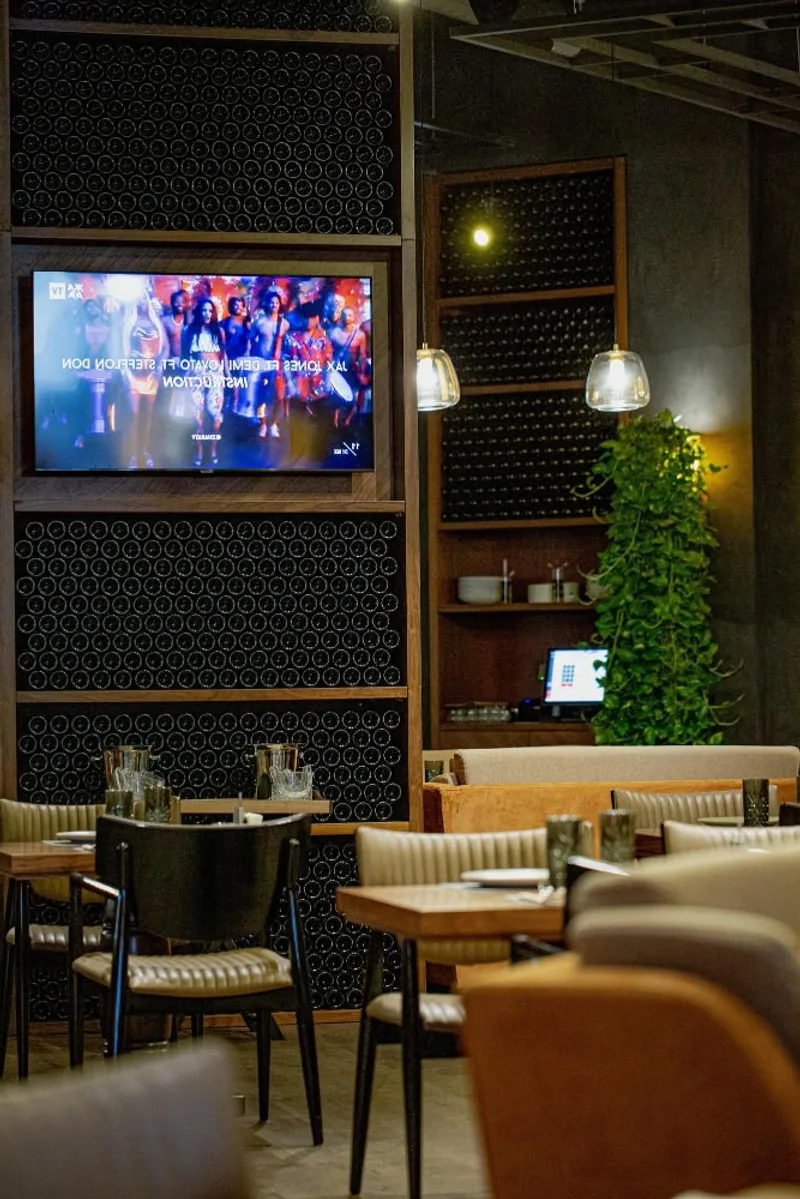
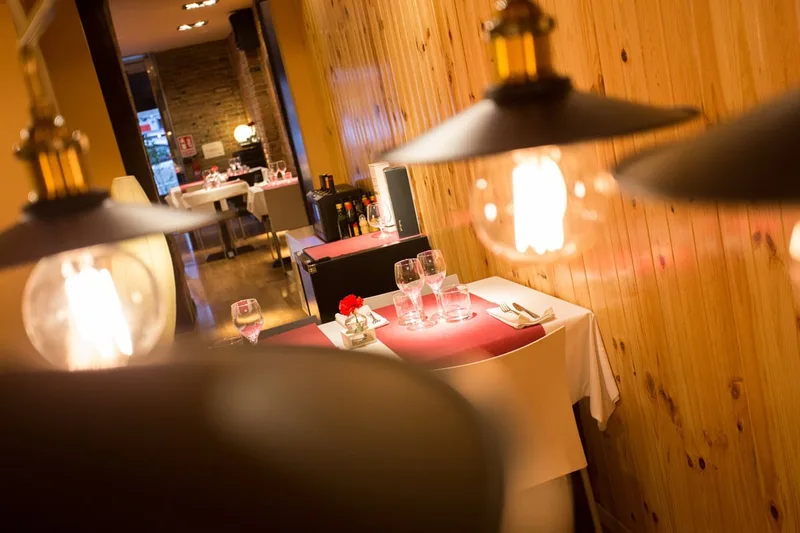
Video Wall Installation in Detroit
location_on Detroit, MI

Video Wall Installation in Detroit

Permanent LED and LCD video walls designed and installed across metro Detroit. Built for conversions, where nobody knows what is behind the wall until it is opened.

In a conversion, nobodyknowswhatisbehindthewallyet

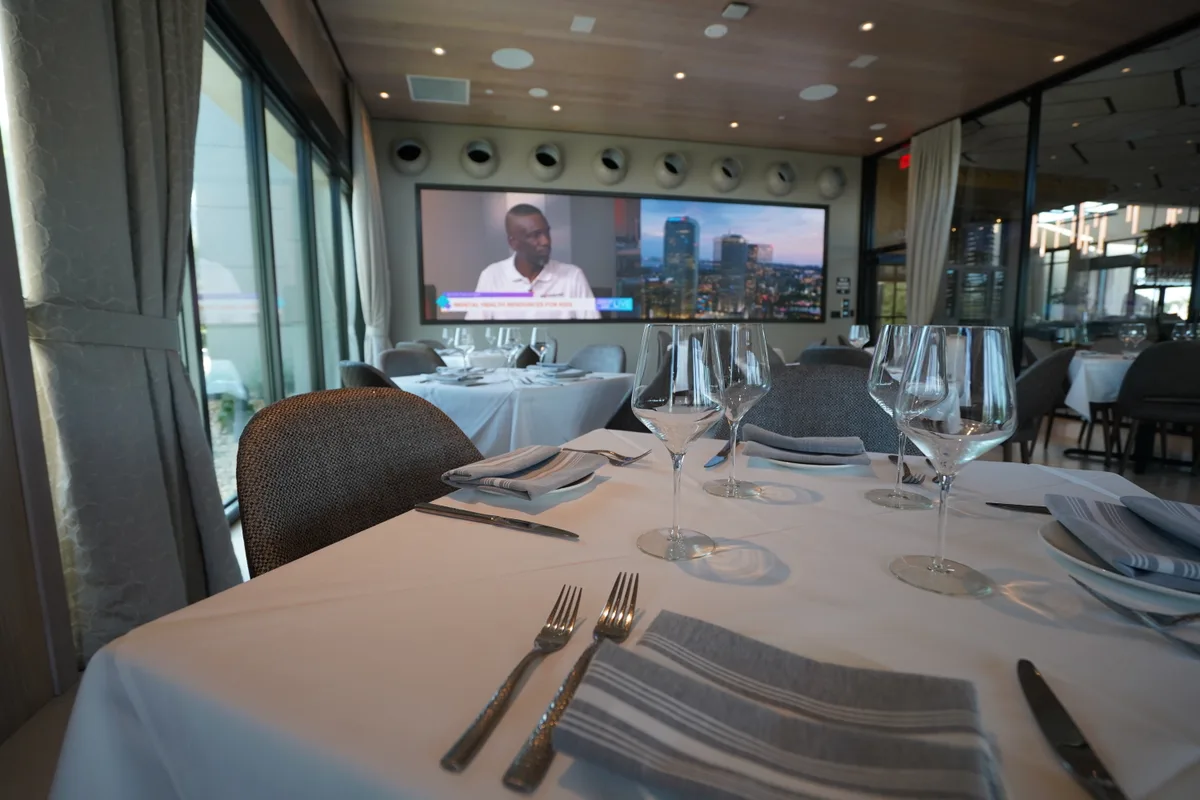
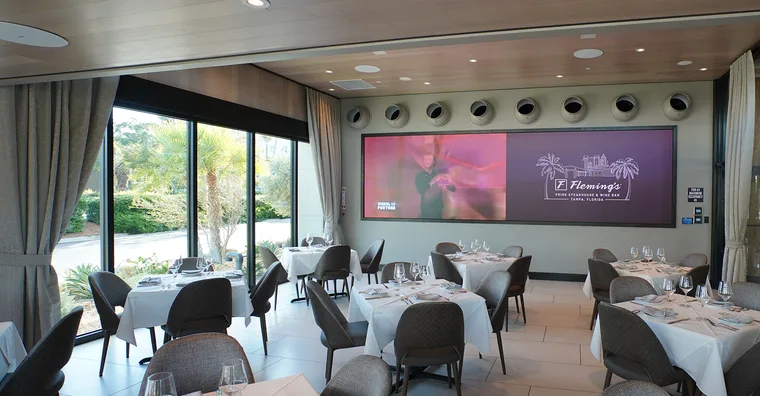
A video wall is the largest display purchase most operators make, and it lands in the wrong place more often than it fails technically. The request comes in as a wall behind the bar, and that bar seats fourteen while the rest of the venue seats a hundred and eighty. Put the best technology where you are driving the most experience. Downtown Detroit adds a second unknown, since most of this work happens inside a conversion of a century-old building, where structure, backing, and pathways are unknown at design time.

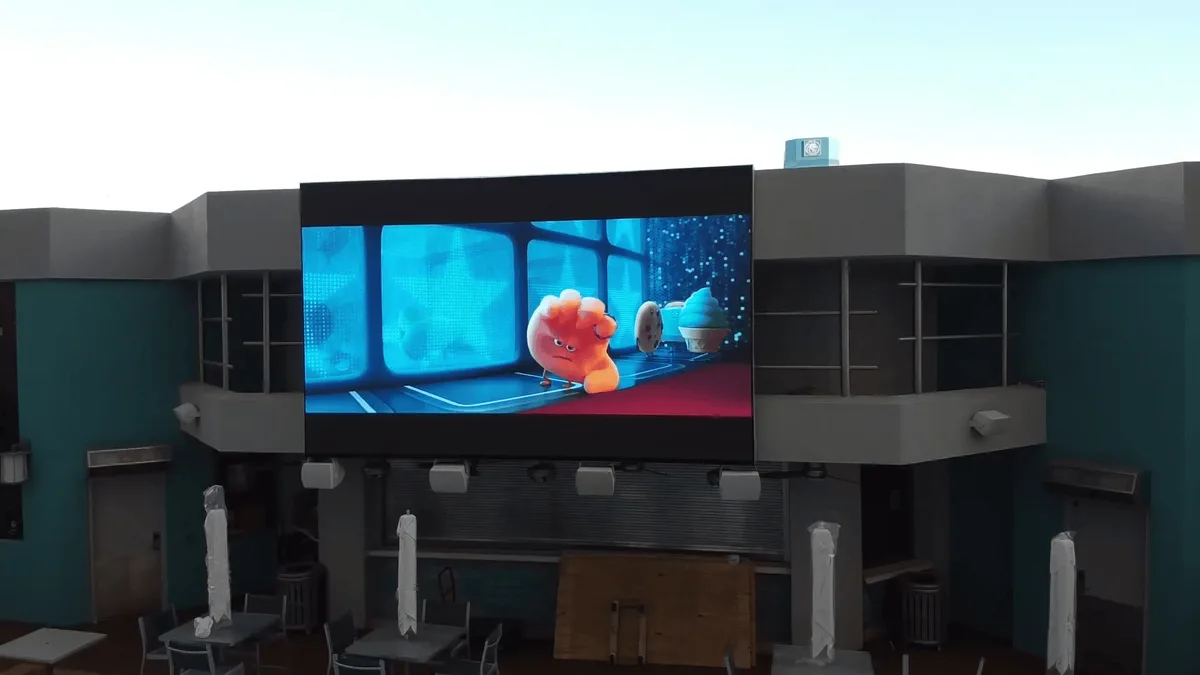
So we confirm mounting points before a size gets quoted, and we pick the location from where the experience is actually created. Sometimes the answer is not a wall at all: a cluster of commercial displays, a ribbon, or one large display driven as four panes does the same job for far less. Where a wall is right, a building already being renovated is the cheapest possible moment to add the steel it needs. Outdoors the answer is always LED, specified for a Michigan winter rather than a mild climate. We install permanent systems only, and we do not rent.

Reel In a conversion, nobody knows what is behind the wall yet Detroit, MI

Video Wall Installation AcrossMetroDetroit

From District Detroit venues and Corktown conversions to Midtown restaurants, Dearborn corporate floors, and suburban retail, we design, install, calibrate, and support permanent video walls across metro Detroit.

2008
Serving Detroit since
10
Neighborhoods
District Detroit
Sports bars · Restaurants · Entertainment venues

Walls here work nearly year round on event nights, so the warranty tier and the spare-parts kit get decided alongside the specification.

High hours · spare parts
Downtown
Hotels · Corporate · Restaurants

Restored lobbies with tall glass are a brightness and placement problem first, so output and position get settled before resolution.

High-daylight · brightness-led
Greektown
Restaurants · Bars

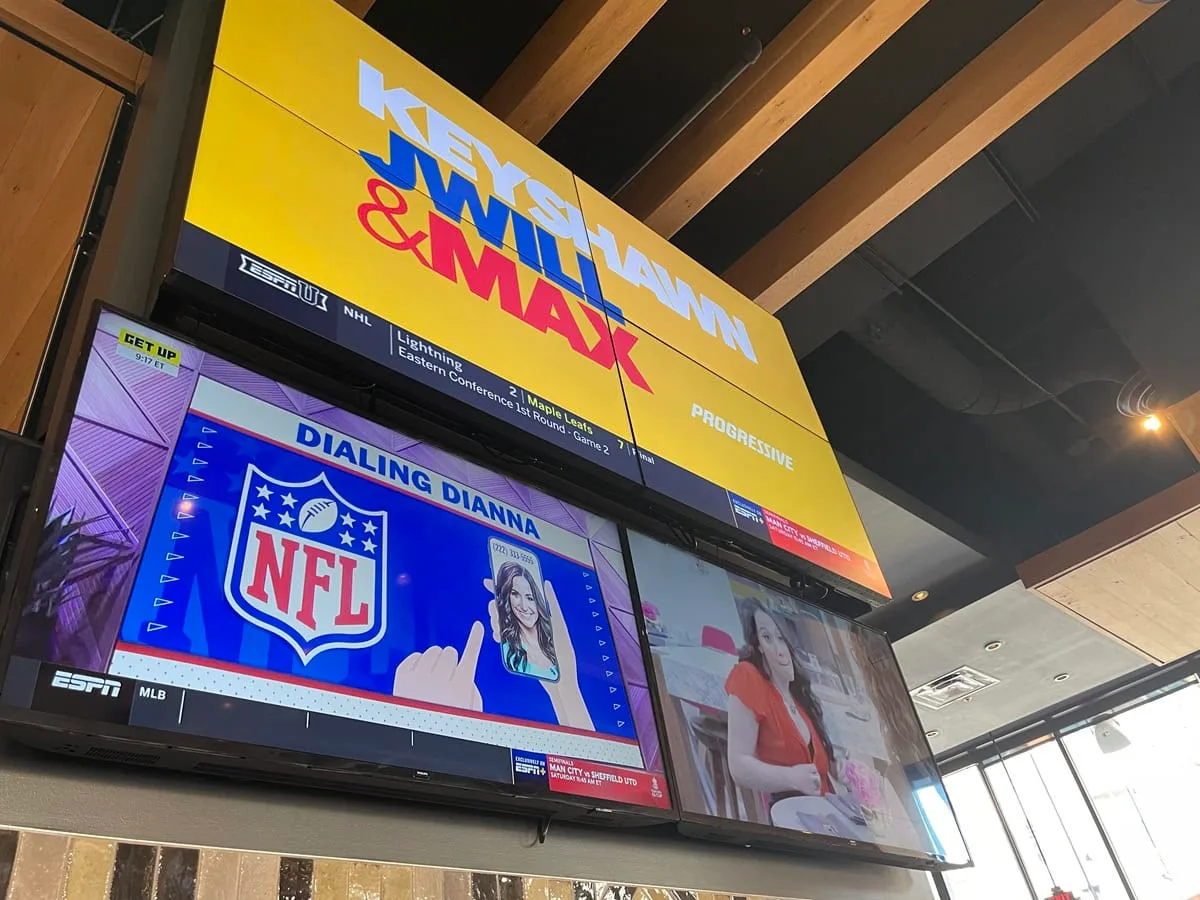
These rooms follow several things at once on a busy night, which favors a grid split or a driven cluster over one large canvas.

Grid split · multi-source
Corktown
Restaurants · Bars · Corporate

Structure and backing stay unknown until something is opened here, so mounting points get confirmed before a size is quoted.

Conversion · confirmed mounting
Midtown
Restaurants · Education

Rooms here get specified off the furthest seat, so reach and output outrank fine pixel pitch.

Furthest seat sets spec
Eastern Market
Bars · Restaurants · Retail

Open industrial ceilings need unistrut and structural steel from the contractor, which often makes a driven cluster the better value.

Open ceiling · cluster
Royal Oak
Bars · Restaurants

The patio season here is short and heavily used, so outdoor LED gets a light sensor and hardware sealed for freeze-thaw.

Outdoor LED · freeze-thaw
Ferndale
Bars · Restaurants

Most of these rooms are small enough that one large display run as four panes reads better than a wall would.

Four panes
Dearborn
Corporate · Government

Briefing and operations rooms here get designed around a canvas that keeps eight to twelve feeds readable at once.

Multi-input canvas
Birmingham
Retail · Restaurants

Clients here want the hardware detailed into the architecture, so the wall gets recessed and trimmed rather than surface-mounted.

Recessed · design-led

How we work

We confirm what is there beforequotingasize

Put the best technology where you are driving the most experience, then find out what the building actually has. In a conversion that answer is not on the drawings.

The consult, then what is behind the wall

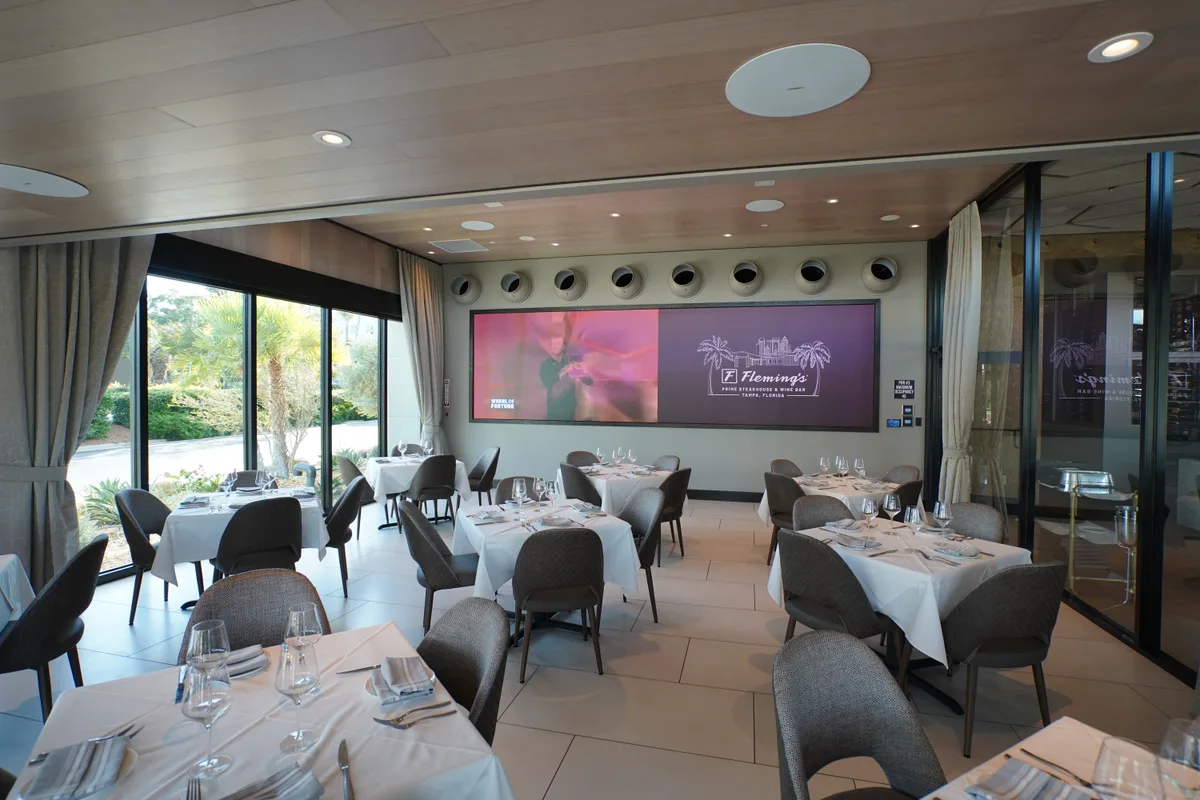
In a hundred-year-old building the drawings and the building rarely agree. Our first conversation is a consult rather than a quote: what the space is, where guests look, what the room has to do, and the budget in play. Then we find out what is really there, since structure, backing, and pathways stay unknown until something is opened. A ceiling-hung wall needs a ceiling plate and a structural pole, and on an open ceiling that means unistrut with backing built by the general contractor. Masonry has no cavity and rarely any record of anchorage. So mounting points get confirmed before a size is quoted, which is the opposite order from the way most of these projects get sold.

We confirm what is there before quoting a size — video wall installation in Detroit, MI
InstallWe confirm what is there before quoting a size
We confirm what is there before quoting a size — video wall installation in Detroit, MI
InstallWe confirm what is there before quoting a size

The gut phase, then one team on site

Timing is the biggest lever on a conversion. A building already stripped back is the cheapest possible moment to add the steel a wall needs, along with the conduit, the pathways, the power at the mount, and a cooled equipment room. Bring us in during that phase and the wall gets its structure for very little. Wait until the ceiling and the finishes are back and the same work becomes demolition and schedule. Projects engaged at the architectural phase see roughly 95% fewer change orders, and a conversion is where that number shows up most plainly. Once the scope is set, one team handles the install, the calibration, the staff training, and the documentation, coordinated with your electrician, your low-voltage trades, and the general contractor.

Where Detroit walls earn

Where a wall earnsitscostinDetroit

Event nights, restored offices, and a short patio season each ask a large display for something different.

Where a wall earns its cost in Detroit
InstallWhere a wall earns its cost in Detroit

Event-night venues downtown

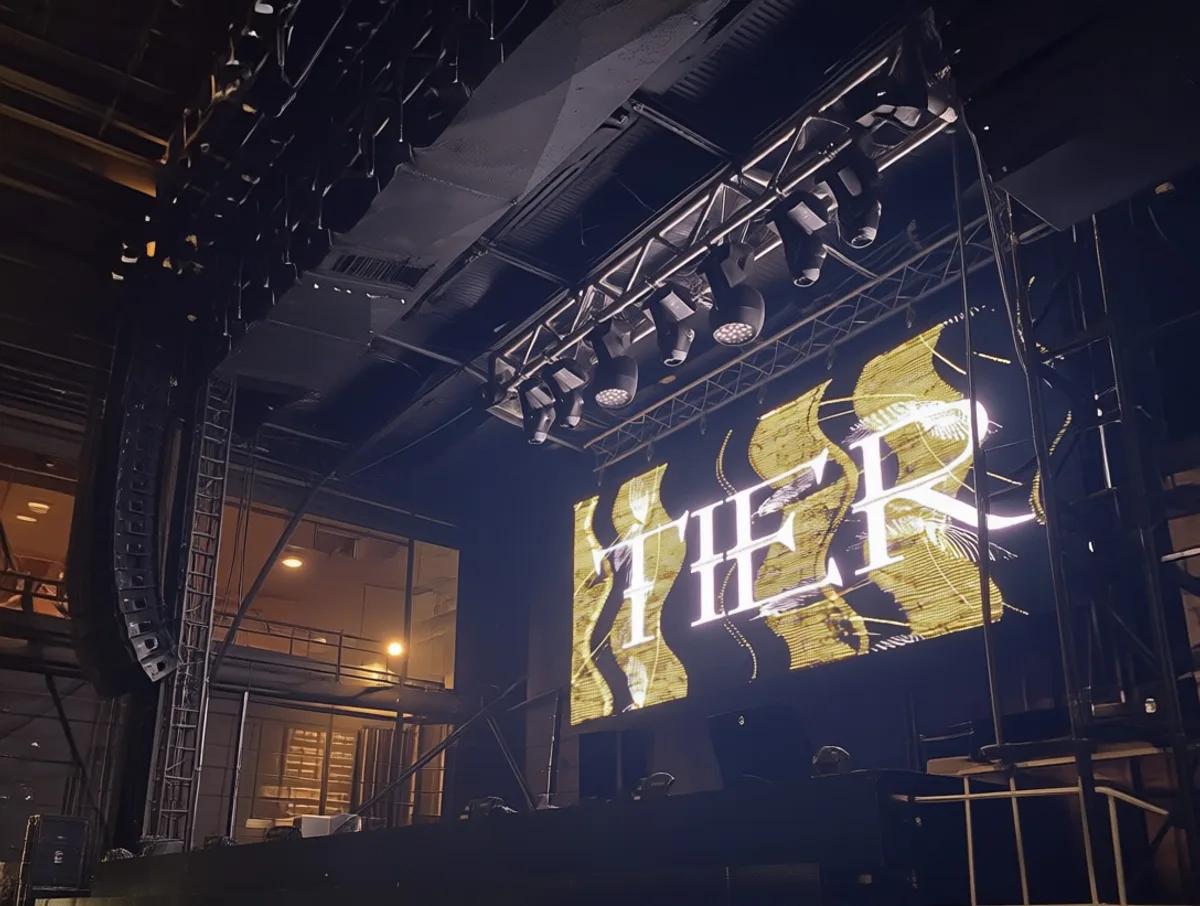
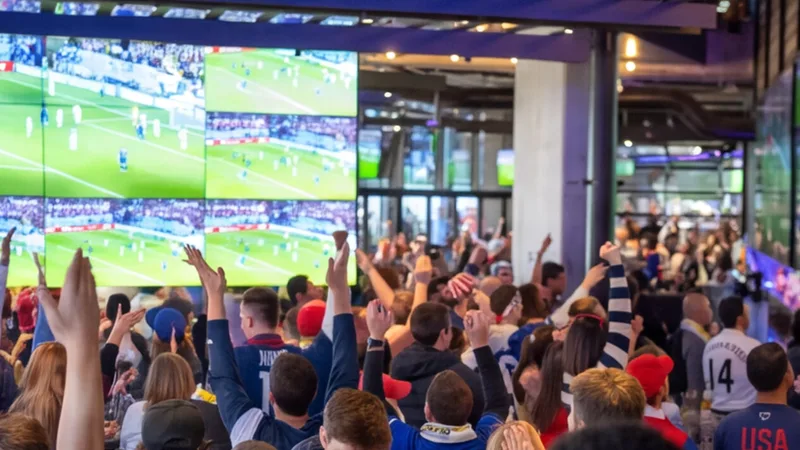
Four major teams play within walking distance downtown, so venues here run event nights close to year round and a wall works hard. Hours are what age a panel, which pushes the conversation from spec sheet to service life: the warranty tier, the spare parts on the shelf, and how fast a failed module gets swapped on a night with a full room. Rooms that watch one thing together justify a single large canvas, while rooms following several games want a grid split, and sports viewing pulls the pixel pitch tighter than operators expect, since fans sit closer than most people assume. We count the seats that will see it before sizing anything.

Corporate floors, retail, and campus rooms

Office and retail rooms measure a wall by whether people can read it. A restored lobby with tall glass is a brightness and placement problem before it is a resolution problem, so output and position get settled first and the content gets designed to stay legible. Briefing and operations rooms need eight to twelve feeds visible at once with one scaled up, which is a processing problem before it is a panel problem, and it is where direct-view LED earns its cost. Boardroom and training rooms get sized off the furthest seat and the platforms in use. Retail walls run your own brand and product material, scaled for the distance shoppers actually stand at.

Patios and Michigan winters

The patio season here is short and valuable, which makes it tempting to under-specify the hardware that serves it. Outdoors the answer is always LED, since nothing else survives outside, and a Michigan winter does its damage through cycling rather than cold. Repeated crossings of freezing drive condensation inside a cabinet, so construction gets sealed with real moisture management and cable entries get protected properly. Mounting gets engineered for snow and ice load at that height and exposure. Every outdoor wall gets an ambient light sensor so it lifts at midday and dims at night, which matters through the months it sits mostly idle. Outdoor work costs more and lasts less, and we say so up front.

Plain answers

Panels, pitch, and parts inplainterms

Most of a video wall budget is settled by three choices. Here is what each one means for a room that runs hard.

LED, LCD, and pixel pitch

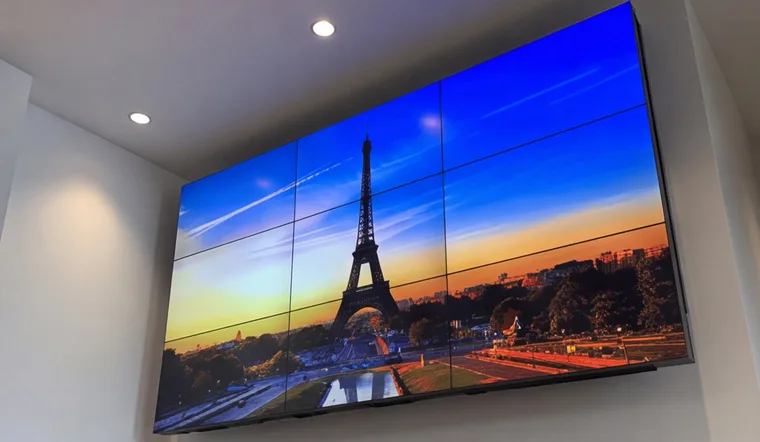
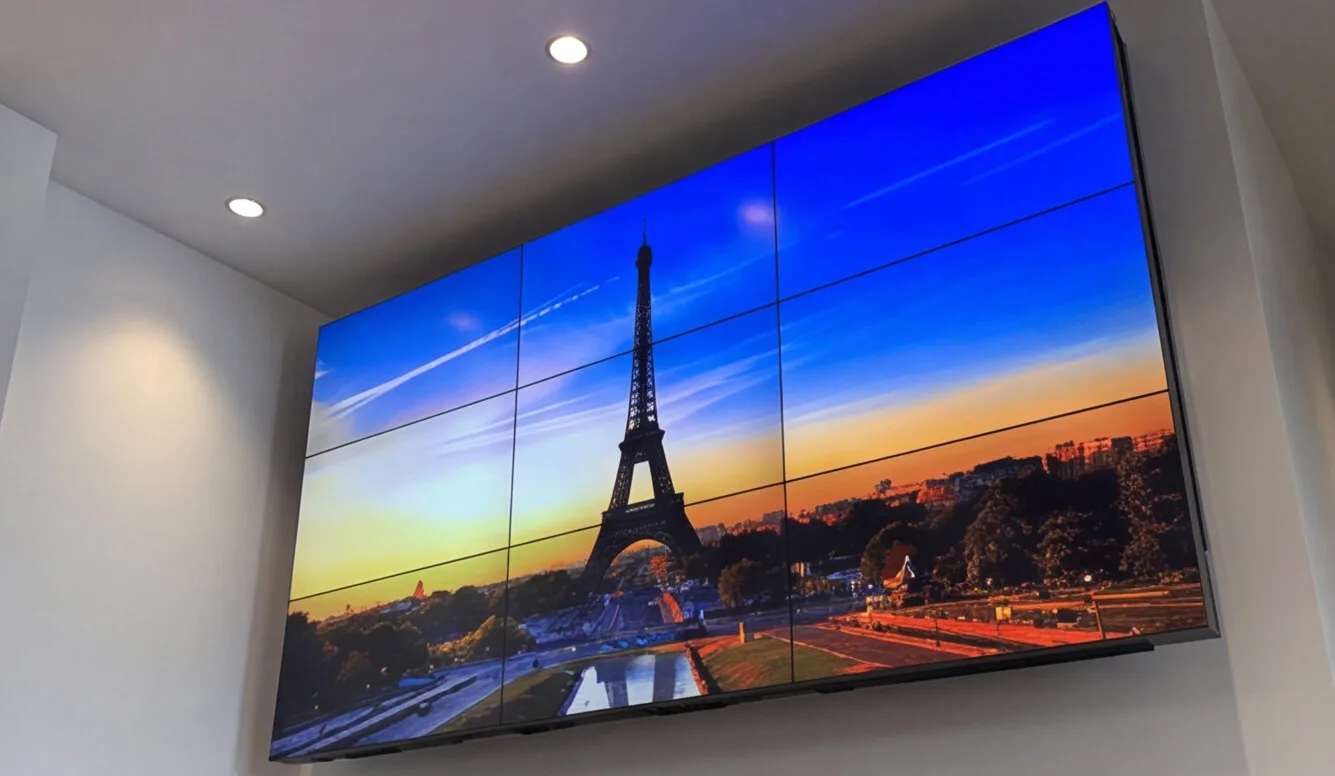
Indoor or outdoor answers most of it, and outdoor is LED. Indoors an LCD wall is a grid of thin-bezel panels with processing built in: lower cost, higher resolution, indoor only, tiles in 55 and 65 inch, and a practical ceiling around a ten by ten grid, so the wall is the size the tiles make it. Indoor large format generally lands between 110 and 165 inches, since LCD cost past that stops working at hospitality budgets today. LED uses cabinets in many sizes driven by an external processor, reads as one screen, and runs brighter. Pixel pitch is the distance between pixels in millimetres, roughly 0.9 to 3.9, and viewing distance sets it rather than the price list.

Panels, pitch, and parts in plain terms — video wall installation in Detroit, MI
InstallPanels, pitch, and parts in plain terms
Panels, pitch, and parts in plain terms — video wall installation in Detroit, MI
InstallPanels, pitch, and parts in plain terms

Calibration, and why the wall stays up

Calibration on an LCD wall is a matching exercise: color, brightness, and contrast lined up panel to panel so the seams disappear. Done badly, every panel shows a slightly different white and an expensive wall looks cheap regardless of resolution, and a bad display cannot be calibrated into a good one, so selection beats tuning. LED panels arrive pre-calibrated to a baseline and get tuned on site through the wall's processor, and a panel with damaged pixels goes back to the vendor under warranty while we install a replacement. Parts are the real longevity story. A spare-parts kit from day one plus revolving inventory means a module gets swapped on the same visit, so a room with an event tonight is not sitting dark.

Our building is mid-renovation. Why can you not simply quote a wall size?

The building is the reason. Most downtown work here happens inside a conversion, and a conversion is the one situation where nobody knows what is behind the wall until it is opened. These are century-old buildings being brought back, so structure, backing, and pathways are genuinely unknown at design time, and the original drawings, where they exist, rarely match what is standing. A ceiling-hung wall needs a ceiling plate and a structural pole, and on an open ceiling it needs unistrut and steel that the general contractor has to build. Masonry has no cavity and often no record of anchorage. So we confirm mounting points before a size gets quoted rather than after, which is the opposite of how these projects usually get sold. The upside is real: a building already being renovated is the cheapest possible moment to add the structure a wall needs, and a project that brings us in during the gut phase gets it for very little.

Do we actually need a video wall, or is there a cheaper way to get the same effect?

Ask that before anything else, since it is where the most money gets saved. A wall is a purposeful decision about where experience is actually created rather than a default showpiece, and the test is to count the seats that will see it. If the bar seats fourteen and the rest of the venue seats a hundred and eighty, an LED wall behind the bar is probably a waste of money. Put the best technology where you are driving the most experience. Several alternatives get close for far less. A ribbon or a cluster of commercial displays reads as one feature when placed and driven properly. A video processor in the control system turns a group of screens into a single canvas. One large display can be driven as four panes, so a 98-inch panel behaves like four 49-inch quadrants. In a conversion that option also avoids the structural work a true wall would need, which is frequently the deciding number.

Our venue runs event nights most of the year. What does that change?

It moves the conversation from the spec sheet to the service plan. Four major teams play within walking distance downtown, so a venue here can run event nights nearly year round, and hours are what age a panel. Two things follow. First, the warranty tier matters, and warranty scales with the tier of wall you buy, so we lay that trade-off out plainly instead of quoting the best case. Second, and more useful day to day, we plan for parts. We supply a spare-parts kit from day one and run revolving inventory, which means a failed module gets swapped immediately, the dead one goes back to the vendor under warranty, and the repaired unit returns to the pool. Your wall is not dark on a night with a full room while a replacement ships. Most support issues resolve remotely, with around 47 percent of tickets closing inside an hour and roughly 72 percent inside a day.

What does a Michigan winter do to an outdoor video wall?

Cycling does the damage, not the cold. Crossing freezing repeatedly drives condensation inside a cabinet, and moisture is what takes out electronics, so outdoor construction gets sealed with genuine moisture management rather than a generic outdoor label, and cable entries and connections get protected properly. Mounting gets engineered for snow and ice load at that specific height and exposure. Brightness is the other half: an ambient light sensor lifts the wall at midday and dims it at night, which keeps the panels from running at full output and aging early, and it lowers power consumption at the same time. That matters here through the months the patio sits mostly unused. Manufacturers quote diode life in the tens of thousands of hours, but real life is environment-dependent and an outdoor wall never reaches a lab number, so we specify for the actual swing and plan the parts. Done properly the wall stays up year round instead of coming down each fall.

Related Solution

Learn more about our Video Wall Solutions solutions

View Video Wall Solutions
What clients say

Operators who run on our systems

Client successes drive Crunchy Tech to become better. Below is how our customers feel about us.

The Design Build process was the best thing that could have happened. They showed our ownership three different options on each feature wall — from the bar to the rest of the venue. That’s when it really sold them. They felt involved. They knew what they were putting in, they were making the decisions, and they could see it was going to look right.

Matt Moore logo
Matt Moore
IT Systems Administrator · Capone's Hideout

Working with Crunchy Tech was a fantastic experience from start to finish. They handled the sale and installation of all our sound and TV equipment at The County Bar in Aviston, IL, and absolutely nailed it. We were on a very tight deadline, and they not only met it—they delivered top-notch quality and service the entire way. Highly professional, responsive, and easy to work with. We couldn't be happier with the results.

Clint Flowers logo
Clint Flowers
Owner · The County Bar

Crunchy has done an amazing job on our A/V install. The sound is perfectly balanced throughout our many zones and the entire system is super simple to use.
Steve Glum logo
Steve Glum
Chief Marketing Officer · Ace Cafe
Talk to a Detroit video wall designer

Let's find out whatisbehindthewall

Tell us about the space: the neighborhood, the age of the building, whether it is mid-renovation, whether the ceiling is open or finished, whether the wall is indoors or out, and how far back people will be sitting. The consult starts with whether a wall is the right answer, then we confirm what the building has and come back with one engineered recommendation instead of a panel count.

  • We confirm mounting points before quoting a size.
  • We test whether a wall is worth it, or whether a driven cluster does the job.
  • Best value comes from engaging during the gut phase, before finishes go back.
  • Outdoor LED sealed for freeze-thaw and mounted for snow and ice load.
  • Permanent installations only. We do not rent.