Distributed AV
Engagement

Distributed AV

Any source to any zone, wiredforpredictability

Distributed AV is what lets one source reach any screen or speaker in the building and change on the fly. We build it wired, because a venue you can't control is a venue you can't fix fast.

Engagement

Distributed AV is the backbone

Distributed AV is how content moves around a venue over the network, so any source can reach any display or audio zone and the system adapts on the fly: day-parting, event modes, multi-pane layouts, whole-venue audio on game night. It sits on the structured-cabling foundation and is driven by the control system, which is why it behaves like a backbone for the whole space rather than a single piece of gear.

We build it wired, on purpose. You want predictability in your venue, because if you can't control something, you can't resolve it quickly. Wireless belongs to the things that aren't operationally dependent, like guest Wi-Fi. The video on the wall, the audio in each zone and the control that ties them together get a wired, direct connection. The busiest hour of service isn't the moment something drops.

Build a backbone you can actuallycontrol

Tell us about the space and how you run it. We'll design the distribution backbone and the cabling under it so the system stays predictable on the busiest night.

Let's Talk
Industries We Serve

Where distributed AV earnsitskeep

Anywhere one source has to reach many zones, reliably.

What we deliver

Four capabilities behind the backbone

Each one is what makes distributed AV predictable instead of fragile.

Capability 01

Dynamic Source Routing

The Challenge

Fixed source-to-display wiring can't adapt to game day, events, or dayparts.

What We Deliver

The control system routes content dynamically, so layouts change by scene and not by re-cabling.

  • Any-source-to-any-zone routing
  • Multi-pane and full-wall layouts
  • Whole-venue audio routing on demand
  • Day-parting and event modes

Same layer behind video walls and zoned audio

Driven by the control system

What it does

Any source to any zone,ondemand

A distributed AV backbone routes content dynamically, so the room can change with the moment.

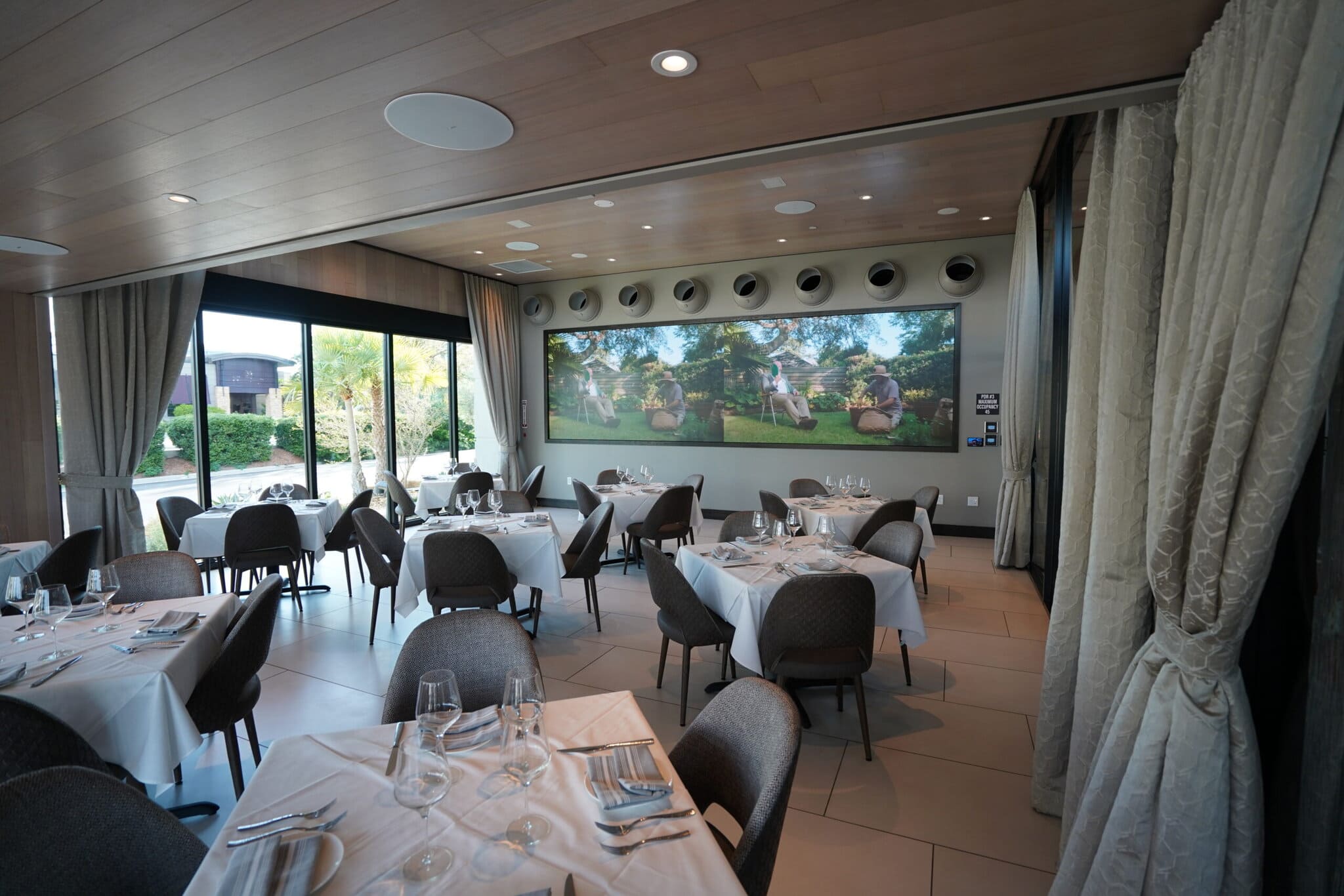
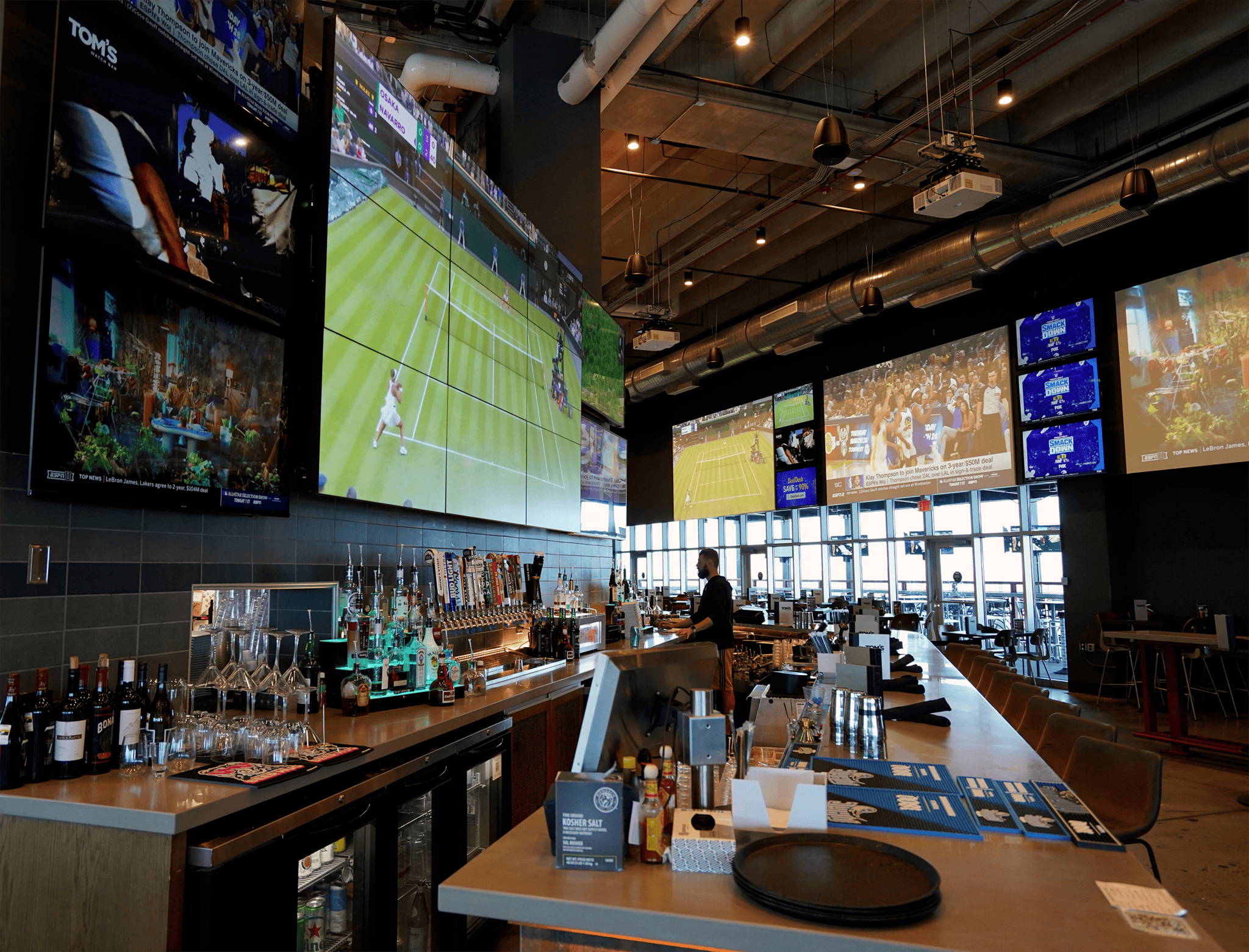
On a networked AV backbone, the control system routes any source to any display or zone in real time. One game goes full-wall for the marquee matchup, then splits into a multi-pane grid for the early window. Audio routes to every zone for a unified room on a big night, then back to independent zones the next morning. A single source can drive a ribbon of displays or a cluster, and the layout changes by scene.

This is the same capability behind video-wall layouts, whole-venue audio routing and day-parted content. It's not a feature bolted onto one screen. It's the AV distribution layer that makes the whole space programmable.

Any source to any zone, on demand
InstallAny source to any zone, on demand

Wired vs wireless

Why we wire mission-critical AV

Predictability is the whole point. Wireless adds variables you can't define or fix fast.

Why we wire mission-critical AV
InstallWhy we wire mission-critical AV

When you move operational AV onto Wi-Fi, you add a level of unpredictability you can't define: a conflicting signal coming into the building from a source you can't identify, which takes a level of troubleshooting know-how that usually isn't on site. Dropouts always seem to happen during the busiest hour of service, and by then it's too late to diagnose calmly.

So we draw a clear line. Wireless is fine for things that aren't operationally dependent, because guests don't need their connection for you to keep the game on the wall or the POS running. Mission-critical control, video and audio get a wired, direct connection. That's what predictability actually requires, and predictability is what lets us resolve issues fast when something does need attention.

Before the next build-out

Build a backbone you can actuallycontrol

The foundation

It only works on the right cablingandnetwork

Your distributed AV system is only as reliable as the structured cabling and dedicated network beneath it.

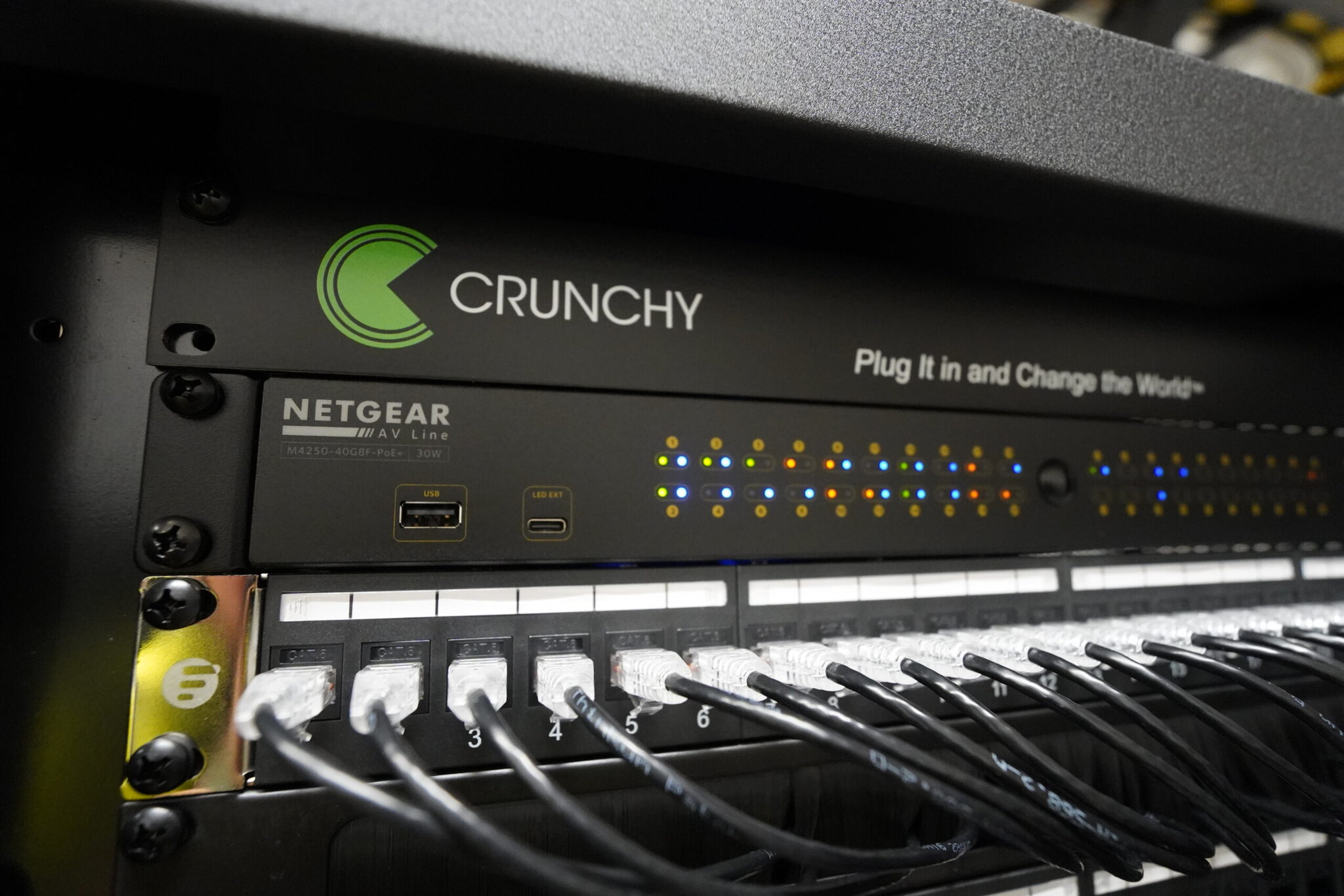
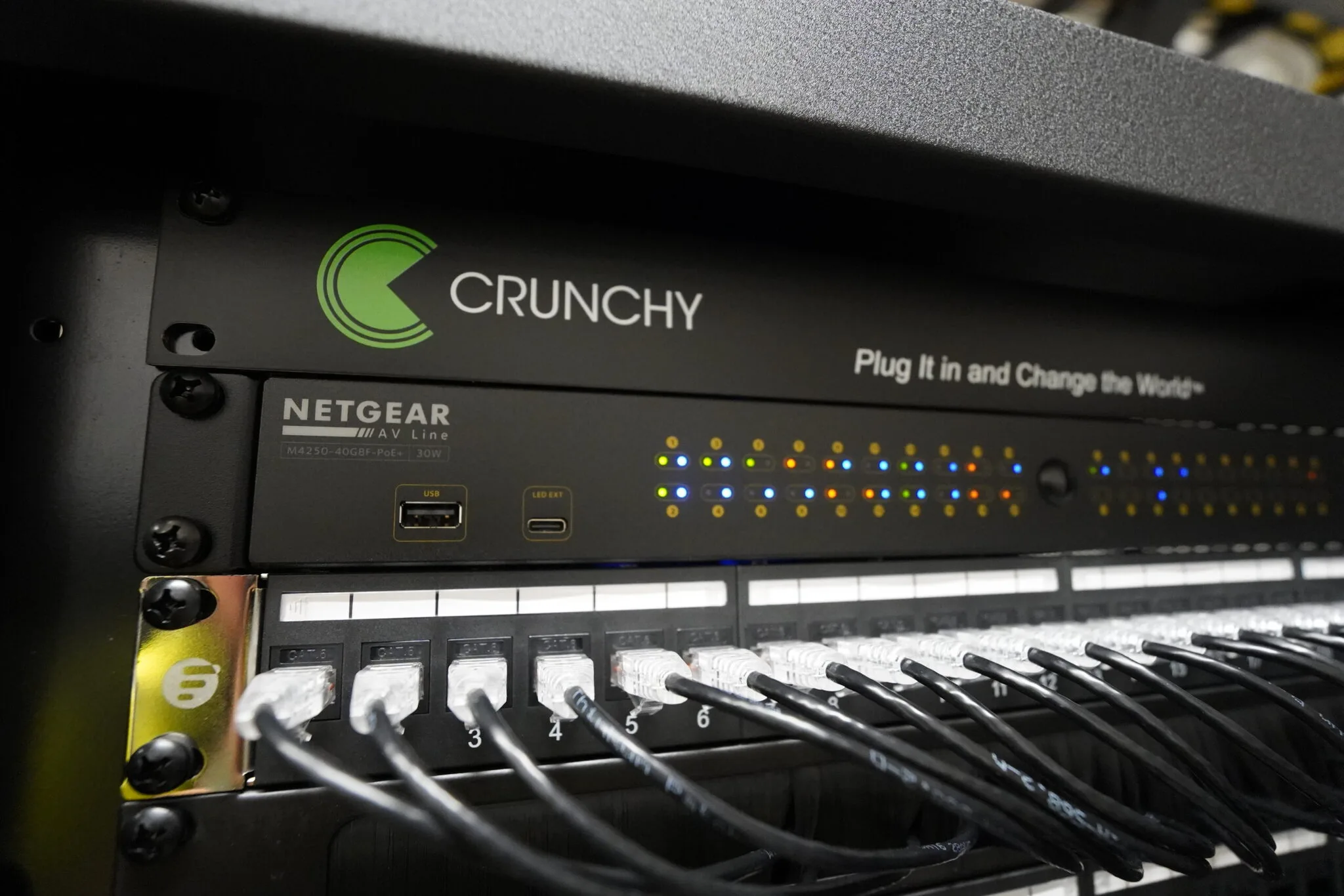
A distribution backbone rides not on whatever switch happened to be in the closet, but on structured cabling and a dedicated AV network. We design the cabling foundation, segment AV onto its own VLAN so a firmware push or a guest-network spike never blacks out a display, and let the control system own the routing on top. That separation is what keeps the AV layer stable while the rest of the building's IT changes around it.

Because it's networked and wired to a plan, the system scales. New zones, new displays and new sources join the backbone instead of forcing a rebuild, and the control system simply learns the new routes.

It only works on the right cabling and network
InstallIt only works on the right cabling and network

What is distributed AV, and how does it work?

Distributed AV is how audio, video and control move around a venue over a network, so any source can reach any display or audio zone and the layout can change on the fly. Instead of wiring each source to one screen, the content rides a networked backbone and the control system routes it: full-wall for one game, a multi-pane grid for several, whole-venue audio on a big night, then back to independent zones afterward. It sits on structured cabling and a dedicated AV network, which is what makes it reliable.

What is AV over IP (AVoIP)?

AV over IP, or AVoIP, is distributed AV that uses standard network infrastructure to carry audio and video as data, rather than running dedicated point-to-point cables for every signal. The advantage is flexibility: any source can reach any endpoint on the network, and adding a zone or a display means adding it to the backbone instead of pulling new home-run cable. We design AVoIP on a dedicated, wired AV network with its own VLAN, so the flexibility doesn't come at the cost of the predictability a venue depends on.

Is wired or wireless AV better for a commercial space?

For anything operationally dependent, wired wins, and it isn't close. You want predictability in your venue, and wireless adds variables you can't define, like a conflicting signal entering the building from a source nobody can quickly identify. Those dropouts tend to hit during the busiest hour of service. We reserve wireless for things that aren't critical to your operations and put mission-critical control, video and audio on a wired, direct connection. A path you can define is a path you can fix fast.

Can we add zones or displays later without rebuilding?

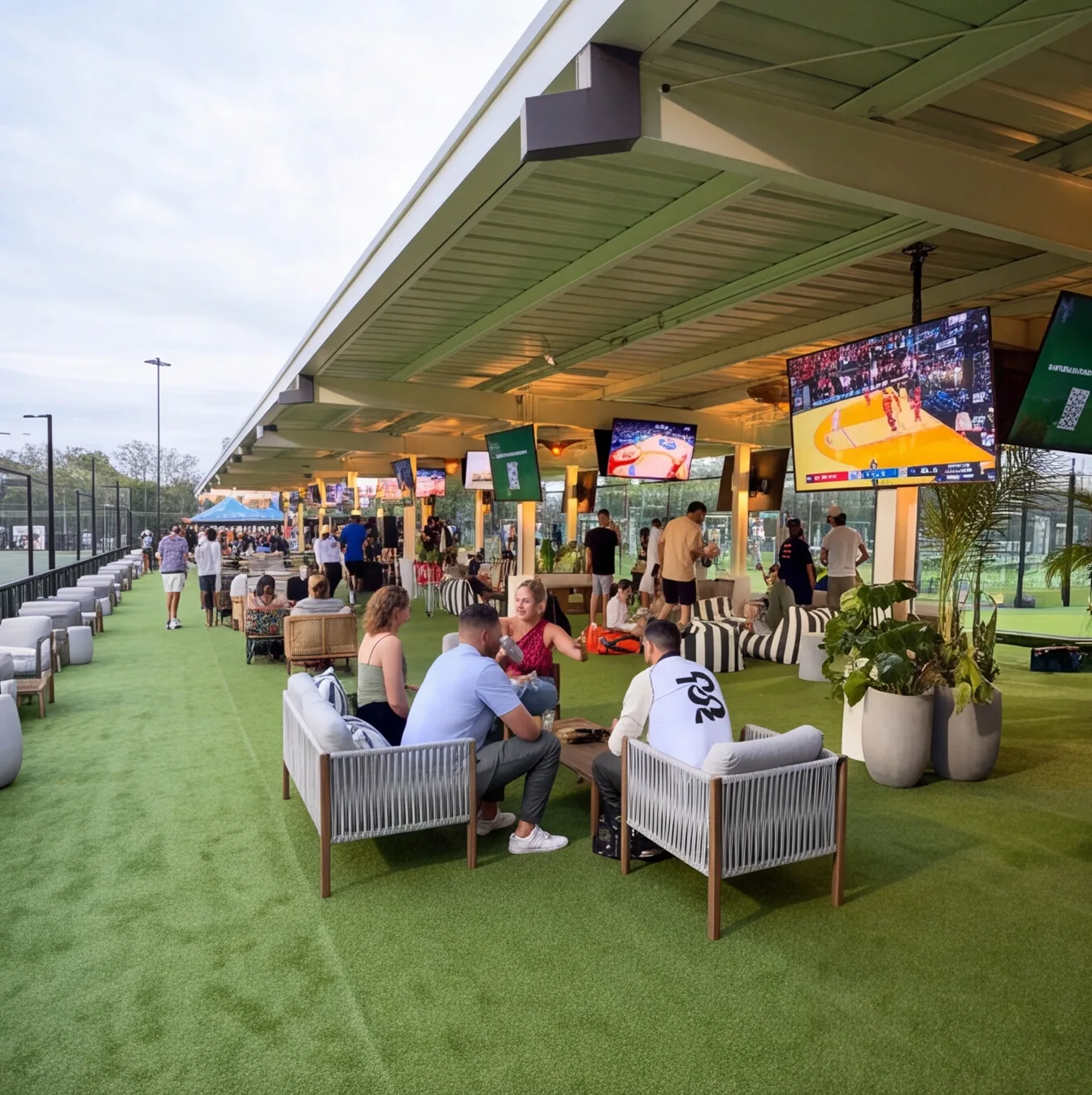
Yes, that's one of the main reasons to build it networked. On a distributed AV solution, new displays, zones and sources join the existing network, and the control system simply learns the new routes. We design the structured cabling and the dedicated AV VLAN up front so there's headroom to grow, which means the space can evolve. In essence, you can add a patio zone, a private room or another display wall without re-cabling the whole system.

What clients say

Operators who run on our systems

Client successes drive Crunchy Tech to become better. Below is how our customers feel about us.

The way you can do different layouts on different TVs, so the marketing team can do their own in-house advertisements — that was really a big thing. Just for them to be able to upload their photos on their own and choose what dates to do it on is really helpful.

Humberto De La Cruz logo
Humberto De La Cruz
IT Field Technician · Capone's Hideout

You're a great partner with Florida Hospital and this project will make a difference in Children's Health.

Des Cummings logo
Des Cummings
Vice President of Florida Hospital · Florida Hospital

Crunchy has been great to work with. They communicate well and deliver as promised.
Brian Dornbush logo
Brian Dornbush
Facilities & Operations Manager · Orange County Library System
Get Started

Ready to Transform Your Space?

Tell us about your vision and we'll put together a custom proposal.

  • Free 1-on-1 phone consultation
  • Professional installation with minimal downtime