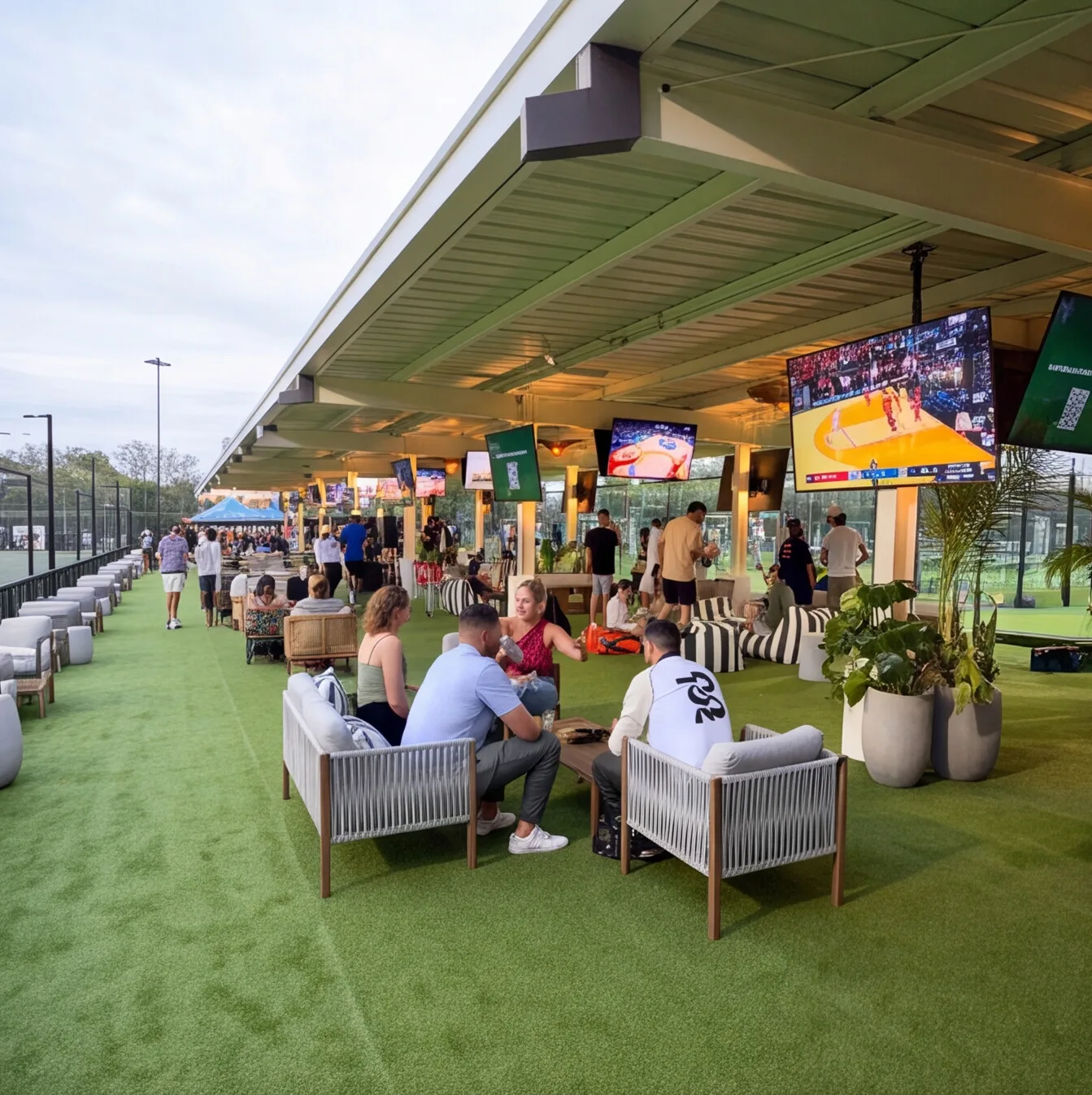

A bar owner gets a rendering from a vendor. A glowing LED wall stretches behind the bar, and it looks incredible. The bar seats 14. The rest of the venue seats 180, and those guests will spend the night facing another direction.
Who is that wall for?
An LED video wall can be the best investment in a venue or an expensive piece of decoration. The difference comes down to where guests sit and what else could deliver the same impact for less. This guide covers how to decide whether an LED wall earns its cost and which alternatives deserve a look first.
Indoor or Outdoor Comes First
The first scope call has nothing to do with resolution or brand. It’s location.
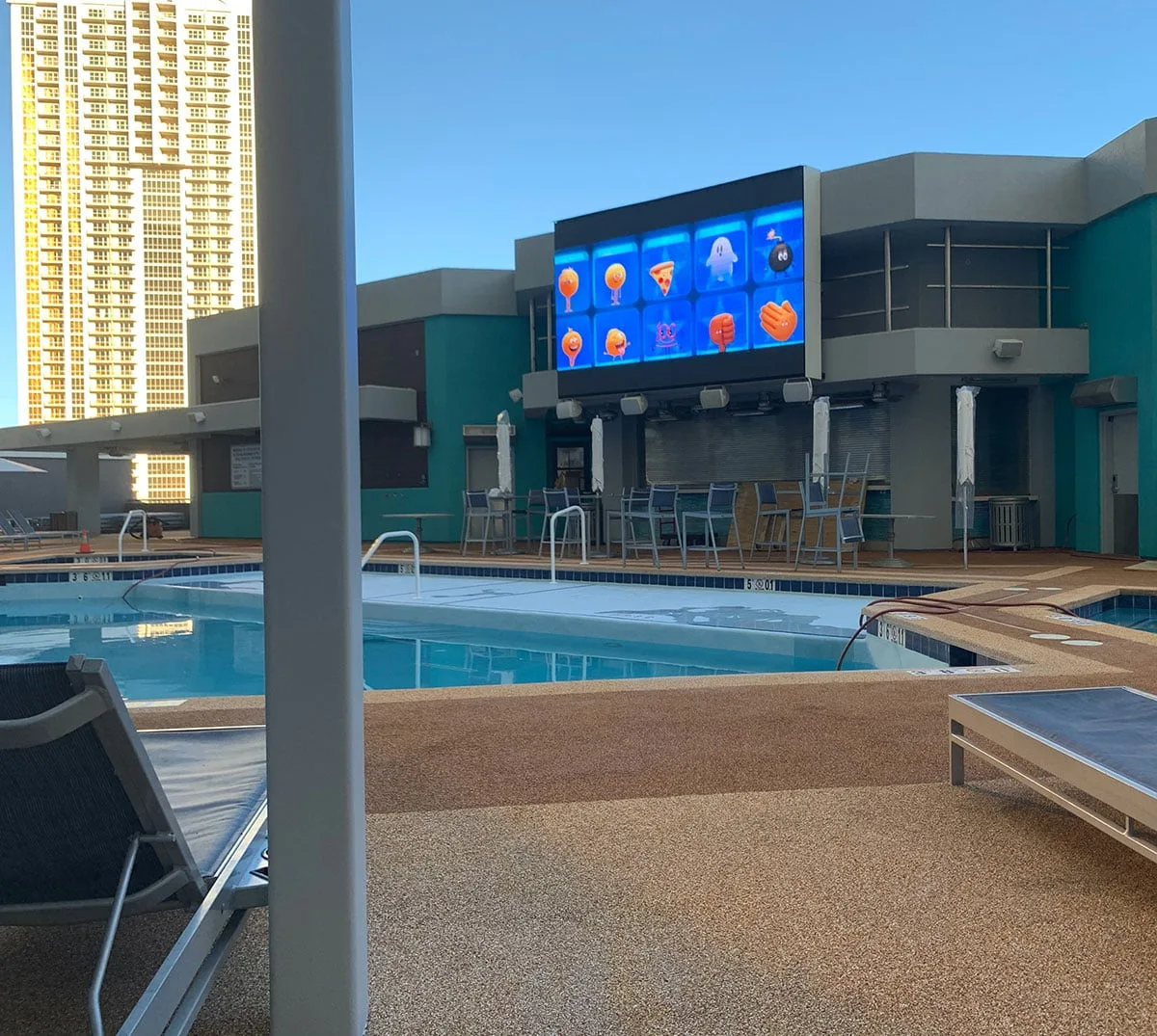
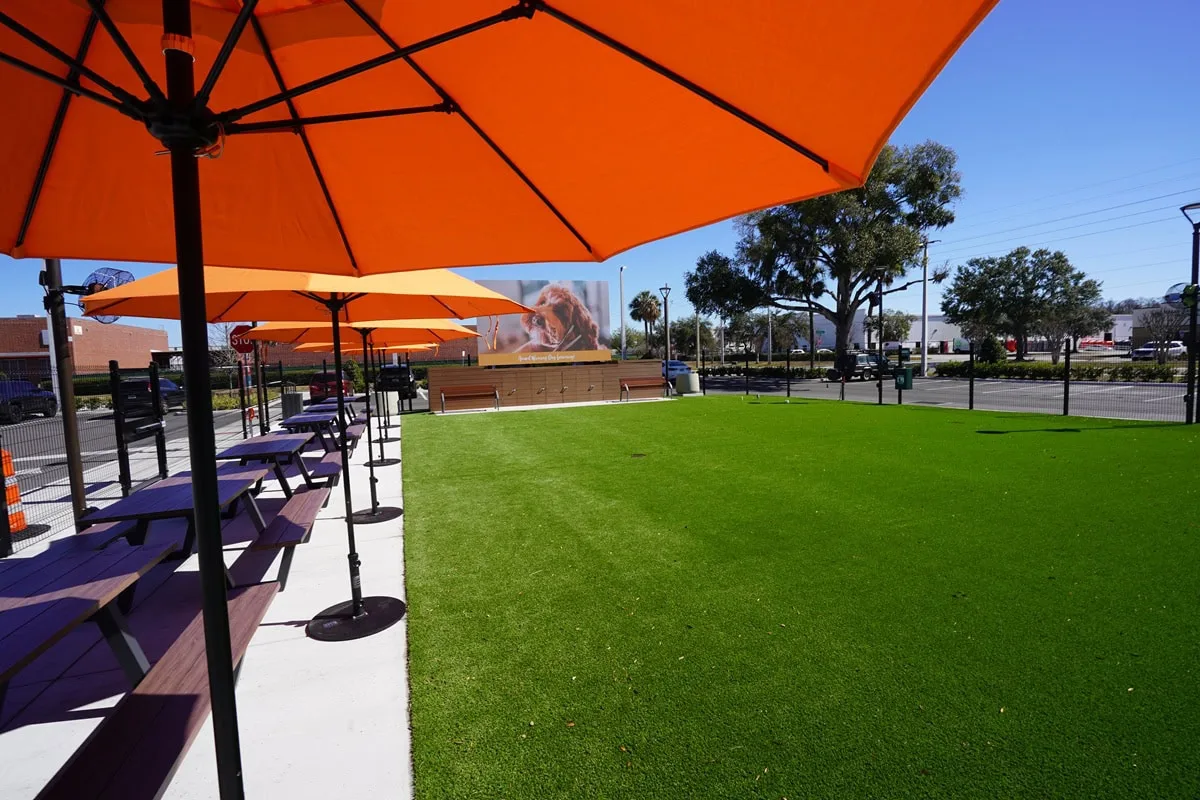
Outdoors, LED is the answer every time. LED panels can be built to handle weather and direct sun, which no standard TV can match. A light sensor mounted near the wall adjusts brightness through the day, dimming at night and brightening at midday. Without one, the panels get overdriven and age faster.
Indoors, the math changes. At hospitality budgets, large-format screens generally go LCD (the same panel technology inside a commercial TV) somewhere between 110 and 165 inches. Past that range, LED starts to make sense, and LED prices keep dropping. That line will keep moving, but today a large commercial LCD covers a lot of ground at a lower price.
Count the Seats That Face the Wall
Back to the 14-seat bar. An LED wall behind it serves 14 people well and gives the other 180 a view of the side of the bar. A 2x2 LED wall flanked by a couple of TVs costs far less and serves the bar just as well. It also leaves budget for screens where the bigger crowd sits.
The test for any showpiece is simple: how many guests can see it, and for how long? In a sports bar, the answer lives in the sightlines from the dining area and the high-tops as much as the bar stools.
“Put the best technology where you’re driving the most experience.”
Adi Khanna, CEO, Crunchy Tech
That principle reaches beyond video walls. Technology chosen for spectacle tends to age poorly in a hospitality brand, while technology placed where guests spend their time keeps paying back.
Pixel Pitch and Viewing Distance
An LED wall is a grid of tiny lights. Pixel pitch is the distance from one pixel to the next, measured in millimeters. Common pitches include 0.9, 1.9, 2.9 and 3.9. The wider the spacing, the lower the resolution.
Viewing distance decides how tight the pitch needs to be. Up close, a wide pitch shows visible dots, a look sometimes called the screen-door effect. Far enough back, the eye blends those dots into a smooth image, and paying for a tighter pitch buys detail nobody can perceive.
Content shapes the choice too. Sports viewing wants a tighter pitch, because a puck or a ball crossing the screen is a small detail moving fast. A menu or a looping brand video holds up at a wider pitch.
What Drives LED Video Wall Cost
LED video wall cost comes from more than the panels:
-
Pixel pitch. A tighter pitch packs more pixels into every square foot, and price climbs with it.
-
Size. More square footage means more panels and more power to run them.
-
Structure and mounting. A large wall or jumbotron needs a ceiling plate, a structural pole and, on open ceilings, backing from the general contractor. Ductwork and fire sprinklers shape where it can hang.
-
Processing and control. A video processor feeds content to the wall and ties it into the control system.
-
Calibration. Panels arrive pre-calibrated to a baseline, and brightness and color still get tuned on site.
The trend runs in the buyer’s favor. Crunchy Tech started manufacturing its own LED walls in 2016 and installed them for Marriott Vacations Worldwide. Once every business seemed to be building and selling LED, staying in manufacturing stopped making sense, and competition was bound to drive the price down. LED costs are still falling, which is why the indoor line between LCD and LED keeps shifting.
Ask for a quote that separates panels from structure and processing. Mounting and engineering costs can surprise owners who only priced the display.
Alternatives That Deliver the Same Feel
Plenty of venues want the impact of a video wall without the LED price. Crunchy Tech’s designs often reach that feel with screens the venue would need anyway.
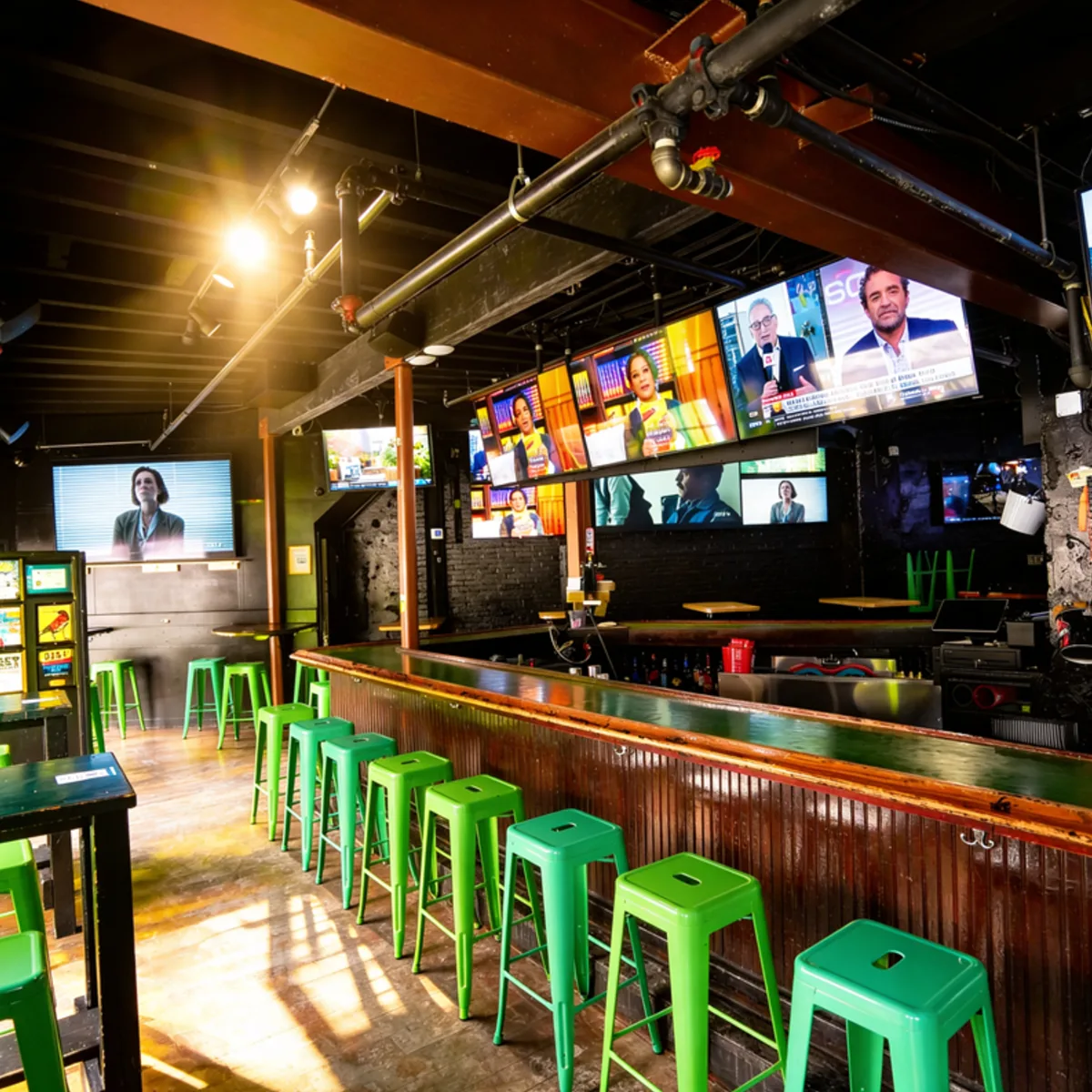
Ribbons and clusters of TVs. A row or block of commercial TVs above a bar or along a wall reads as one feature, especially when content spans them.
Video processing through the control system. A video processor tied to the control system can treat a group of screens as one canvas, stretching a single game or graphic across all of them.
Multi-pane on one display. A 98-inch TV can run as four 49-inch screens in a quadrant. It shows four games at once and gives the space a video-wall look from a single display.
A smaller LED wall paired with TVs. The 2x2 wall from the bar example keeps the LED look where it counts and lets standard displays cover everything else.
Sending a different game to each of those screens runs through a TV distribution system behind the scenes.
Where an LED Wall Belongs
LED still has spots where nothing else competes. Outdoor patios and exterior signage are the clearest case, since daylight washes out any standard display.
Inside, an LED wall makes sense when the layout points nearly every guest toward one surface, like an entertainment venue built around a main screen. In a space like that, a single LED video wall can stand in for dozens of TVs and become the feature guests remember.
Plan the Screen Around the Seats
An LED wall works best as a deliberate choice made after the floor plan is on the table. Crunchy Tech starts every video wall conversation with the space itself, then designs whichever mix of LED and displays serves the most guests. Send over your floor plan to see where a wall fits, if it fits at all.