Sports Bar AV in Scottsdale
location_on Scottsdale, AZ

Sports Bar AV in Scottsdale

Game-day AV for Scottsdale bars and restaurants. Sightline-mapped displays, concealed audio, and patio systems built for a room that has to look designed and still carry the game.

In Scottsdale the AV has to disappearintotheroom

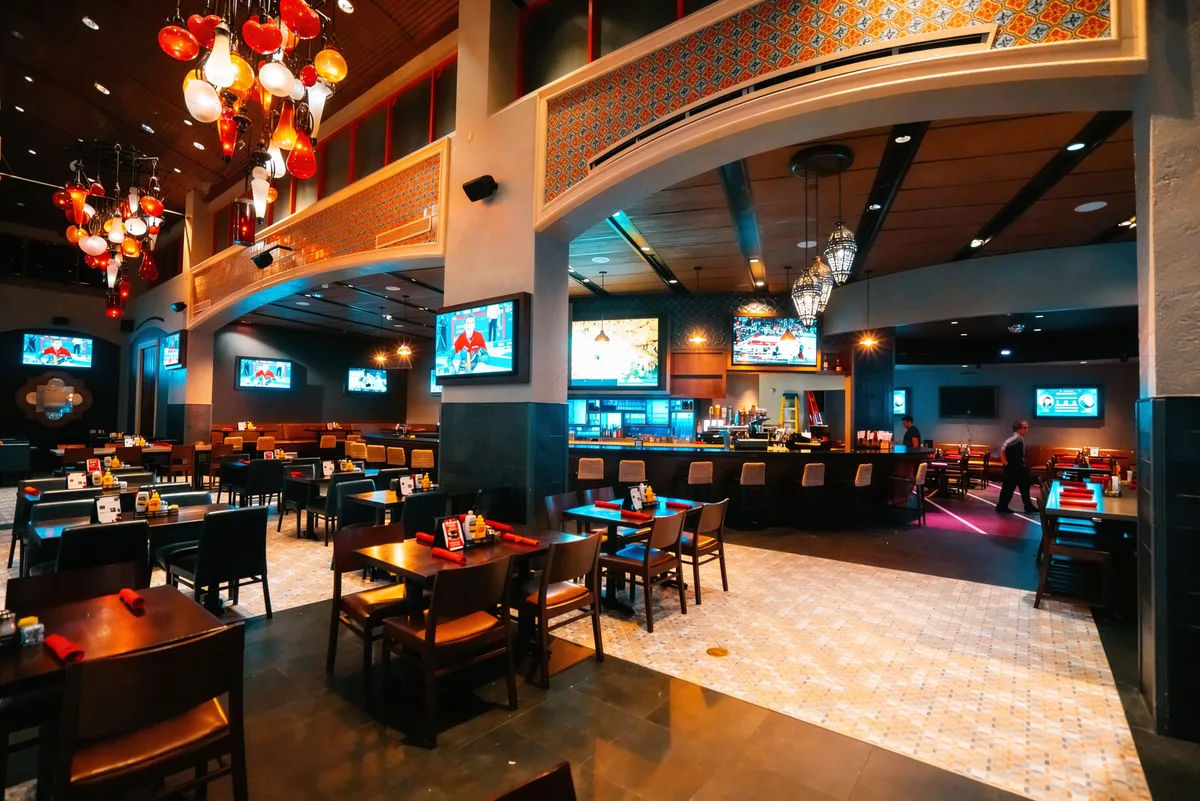
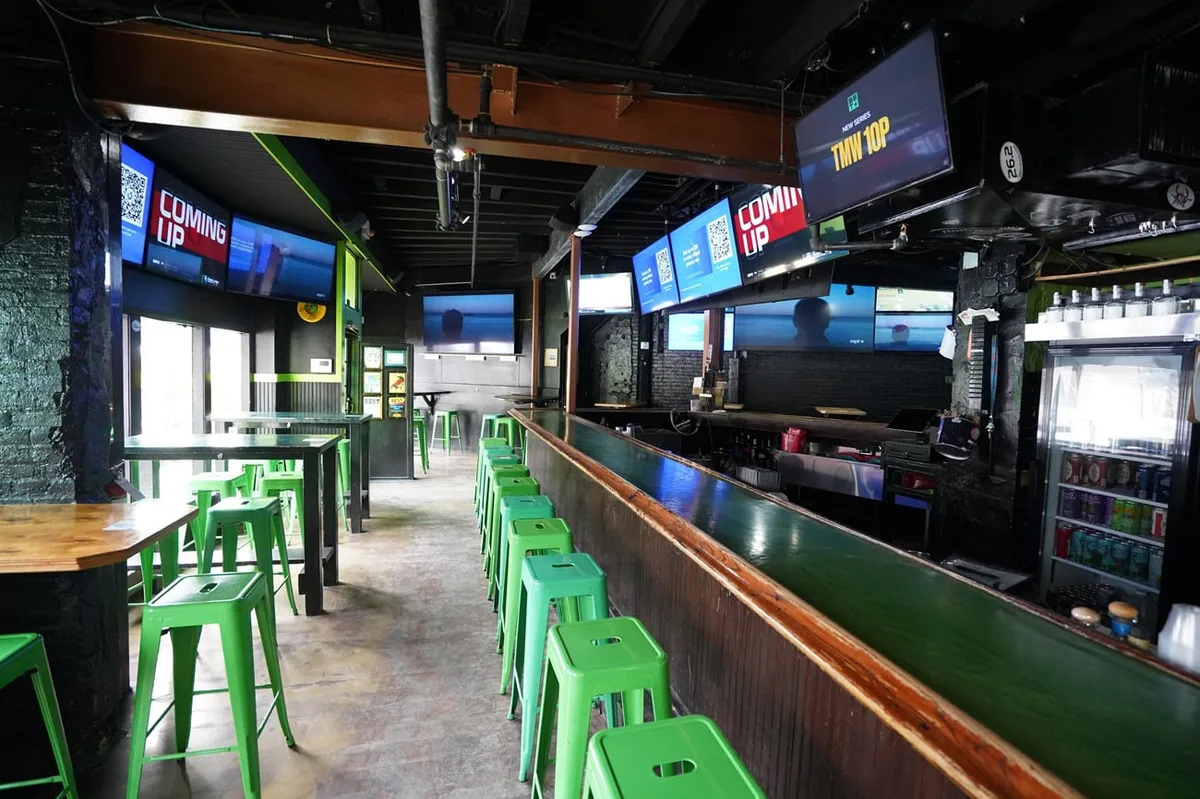
Most sports bars are allowed to look like sports bars. Here they usually are not. Owners spend real money on millwork, lighting, and finishes, and then someone hands them a plan with a wall of black rectangles and a pair of boxes bolted above the bar. So the televisions get pushed into corners nobody sits in, the speakers get sized down until the room cannot hear the game, and the venue ends up with an expensive interior that fails on the one afternoon a guest chose it specifically to watch something.

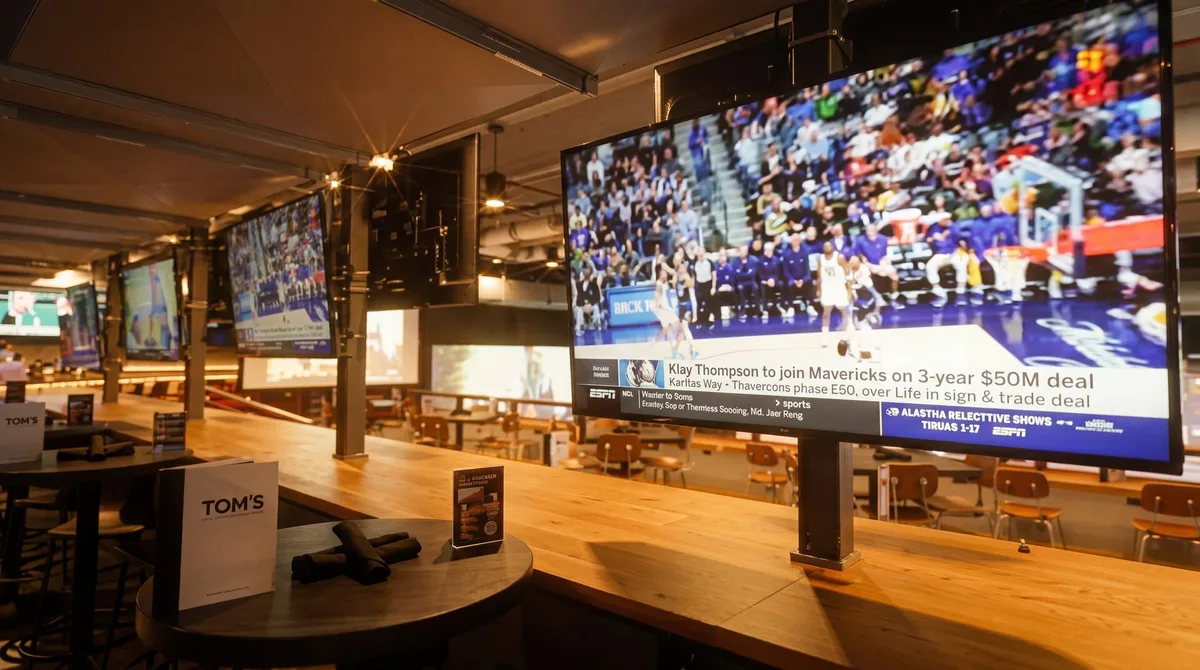
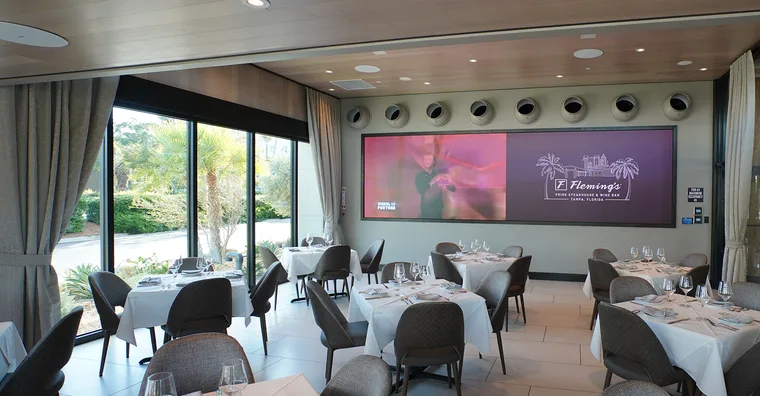
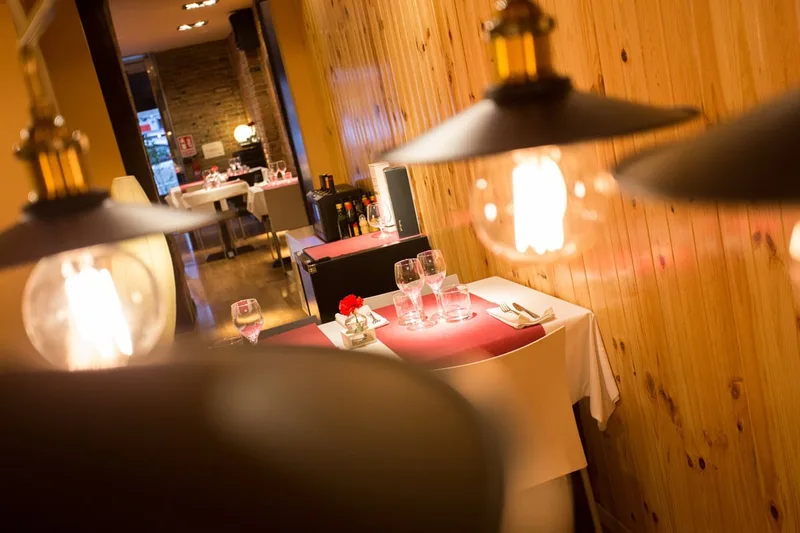
It is a solvable conflict, but only at design time. Displays get integrated into millwork and framed as part of the room rather than hung on it, which means the joinery has to know where they go before it gets built. Speakers get concealed or chosen to read as fixtures, and coverage comes from more of them at lower level rather than a few loud ones people can see. The patio gets the same treatment, since in this climate it carries the venue for most of the year. Done in the right order, none of it looks like AV and all of it works.

Reel In Scottsdale the AV has to disappear into the room Scottsdale, AZ

Sports Bar AV AcrossScottsdale

From Old Town and the waterfront to Kierland, north Scottsdale, and the Airpark, we build game-day AV for rooms that have to look designed and still carry the game.

2008
Serving Scottsdale since
10
Neighborhoods
Old Town Scottsdale
Bars · Restaurants

Guests here can walk to a dozen alternatives, so a room that cannot hold a game from every seat loses the table to the next door down.

Competitive · sightline-led
Entertainment District
Bars · Venues

These rooms move between games and music in the same night, so the control layer switches modes without a reconfiguration.

Mixed programming
Scottsdale Waterfront
Restaurants · Bars

Patios here are part of the architecture, so outdoor displays and speakers get selected to sit with the finishes rather than stand out from them.

Concealed · design-led
Kierland and Scottsdale Quarter
Restaurants · Bars

These venues want game-day capability without visible hardware, so displays get integrated into millwork and speakers concealed.

Integrated · millwork
North Scottsdale
Restaurants · Hotel bars

Bigger rooms need coverage rather than volume, so more sources get spread evenly instead of a few loud ones at the perimeter.

Large room · coverage
Scottsdale Airpark
Restaurants · Sports bars

These rooms serve a business crowd by day and a game crowd at night, so automation moves the space between the two without manual reconfiguration.

Dual-mode · automation
McDowell corridor
Bars · Restaurants

Smaller independent rooms cannot waste a wall, so the sightline map drives a leaner screen count placed where every seat benefits.

Small footprint
Paradise Valley
Hotel bars · Restaurants

Venues here hold visible hardware to a very high bar, so concealment gets planned during construction rather than solved afterward.

Concealed · design-first
Tempe and Mesa edge
Sports bars · Restaurants

Rooms near campus swing hard on game days, so preset levels carry the change instead of a manager riding a fader.

Event-night · presets
Fountain Hills and the northeast valley
Restaurants · Bars

These sit under their own municipal review, so the approval path gets confirmed locally rather than carried over from a Scottsdale address.

Separate jurisdiction
NFL · West Valley
Arizona Cardinals

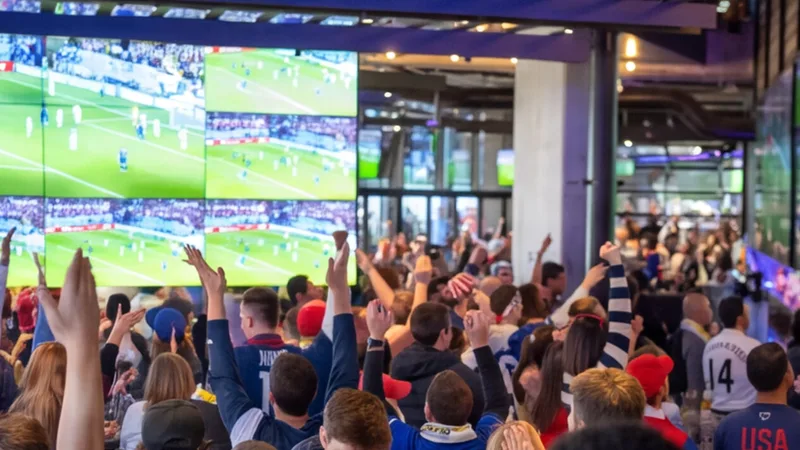
Football Sunday puts one game in every seat, so the design collapses the zones into a single shared build and every sightline has to hold.

NBA · downtown Phoenix
Phoenix Suns

Basketball runs on weeknights when rooms are lighter, which is exactly the shift where preset levels earn their keep.

MLB · downtown Phoenix
Arizona Diamondbacks

Baseball runs nearly every day for half the year, which makes it ideal for patio dayparting, with the game present without dominating the room.

NCAA · Tempe
Arizona State Sun Devils

College games overlap heavily on Saturdays, so a second zone lets the room carry more than one without a compromise.

MLB Spring Training · Scottsdale and Salt River
Cactus League

Spring brings crowds who want their own out-of-market games on, so routing has to reach specific sections rather than the whole room.

How we work

Sightlines mapped alongsidethemillwork

We do not start with a screen count. We start with where the room can hold a screen without the room stopping being the room.

The consult and the site walk

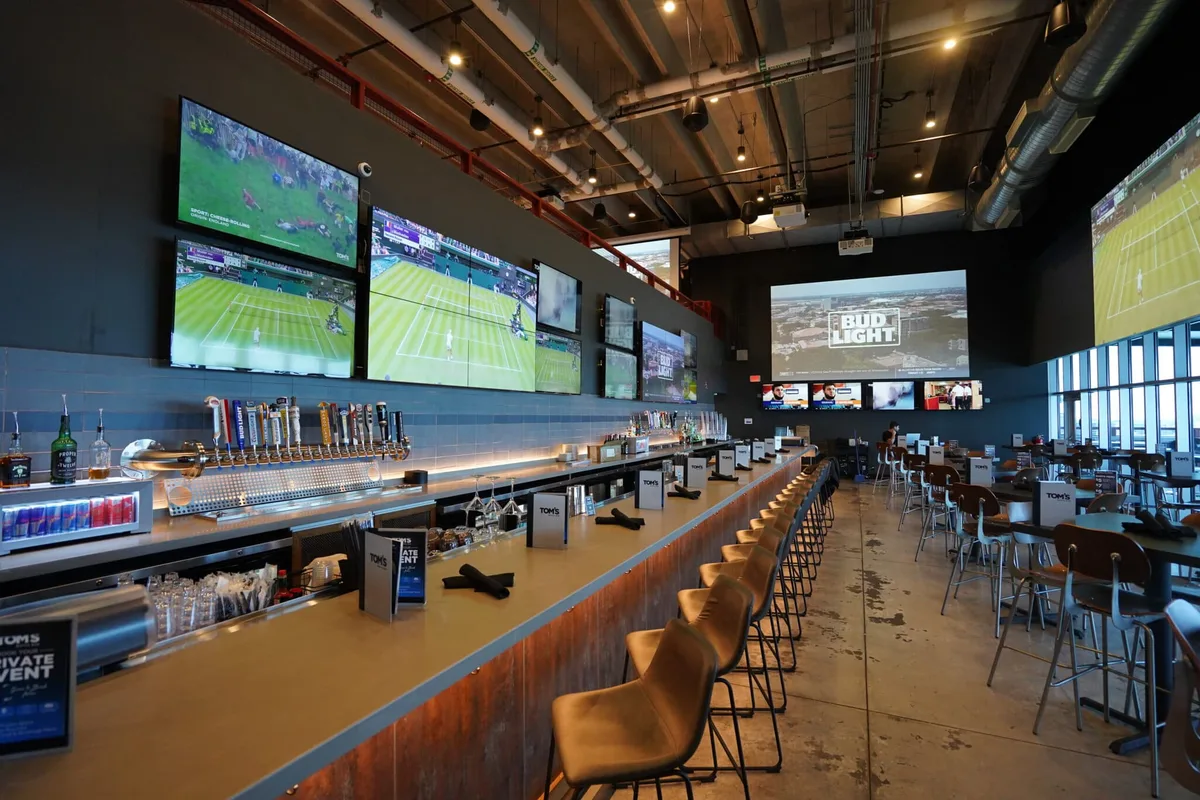
Most disappointing game-day rooms were quoted off a floor plan by someone who never stood in the back booth. So we start with a consult rather than a quote: what you want the room to feel like, how big it is, what it needs to do, and the budget you are working with. Then we walk it, ideally on a busy night, and measure sightlines from the four places people actually sit: the bar-top, the high-tops, the booths with the worst angles, and the standing overflow that only exists when the room is full. In Scottsdale we walk the patio in daylight too, because it carries the venue for most of the year and the sun moves across it all afternoon.

Sightlines mapped alongside the millwork
InstallSightlines mapped alongside the millwork
Sightlines mapped alongside the millwork
InstallSightlines mapped alongside the millwork

Design you can see, then one team on site

On a design-led room we would rather be in the conversation with your architect and millworker early, when a display recess or a speaker location still costs almost nothing to accommodate. You see the design before you commit to equipment, including the view from the seats you were worried about. Control gets programmed around the modes you actually run, so a game-day afternoon, a dinner service, and a late patio evening are presets rather than arguments. One team handles the install, calibration, staff training, and documentation, and coordinates with your general contractor, electrician, and low-voltage trades.

What we build

The AV stack a Scottsdale room runson

A game-day room is a handful of systems working as one, and here every one of them has to earn its place visually as well as technically.

The AV stack a Scottsdale room runs on
InstallThe AV stack a Scottsdale room runs on

Audio you hear and do not see

Concealed audio only works if the coverage is right, which is the part most design-led rooms get wrong. Hiding two loud speakers behind a grille gives you a room that is punishing at one table and inaudible at the next. Even coverage from more sources at lower level is both the better-sounding answer and the easier one to conceal, since smaller enclosures disappear into millwork, soffits, and architectural details far more readily than large ones. Zoning on a digital signal processor then lets the bar carry a game while the dining room stays conversational, which is usually the entire reason a room like this called us.

Displays, video walls, and integration

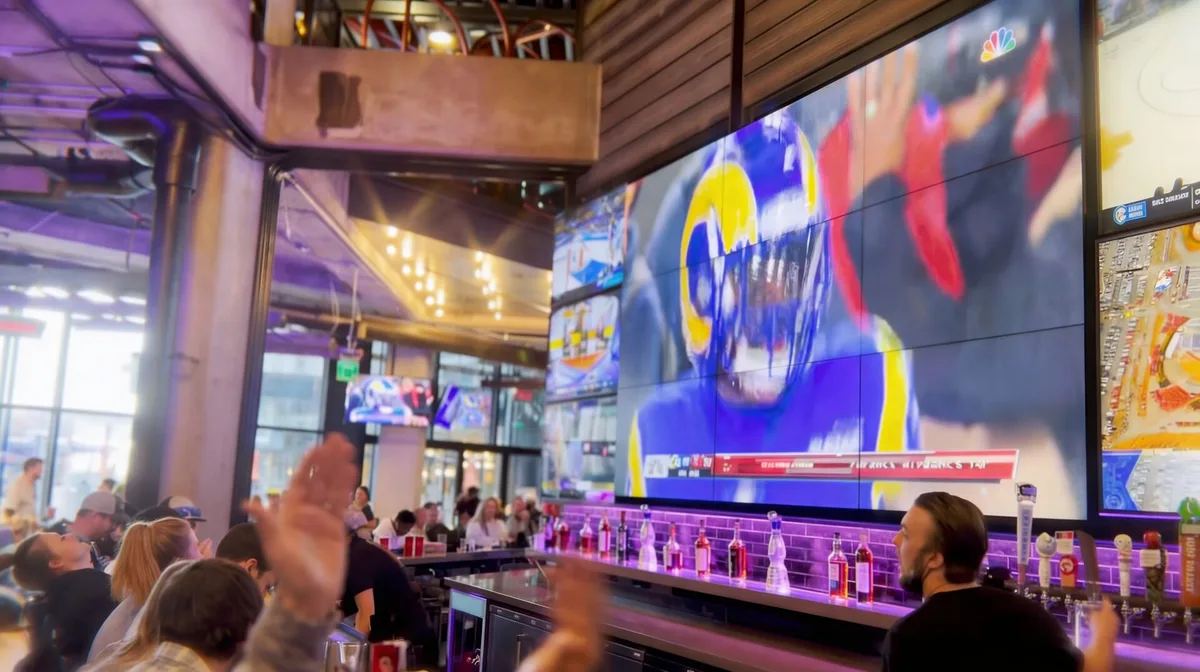
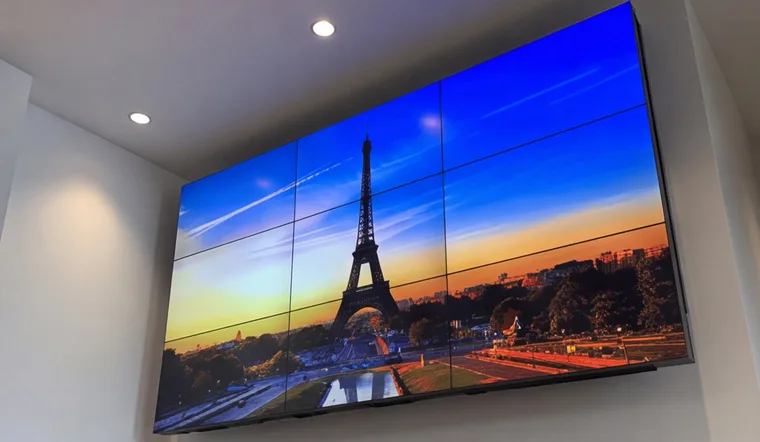
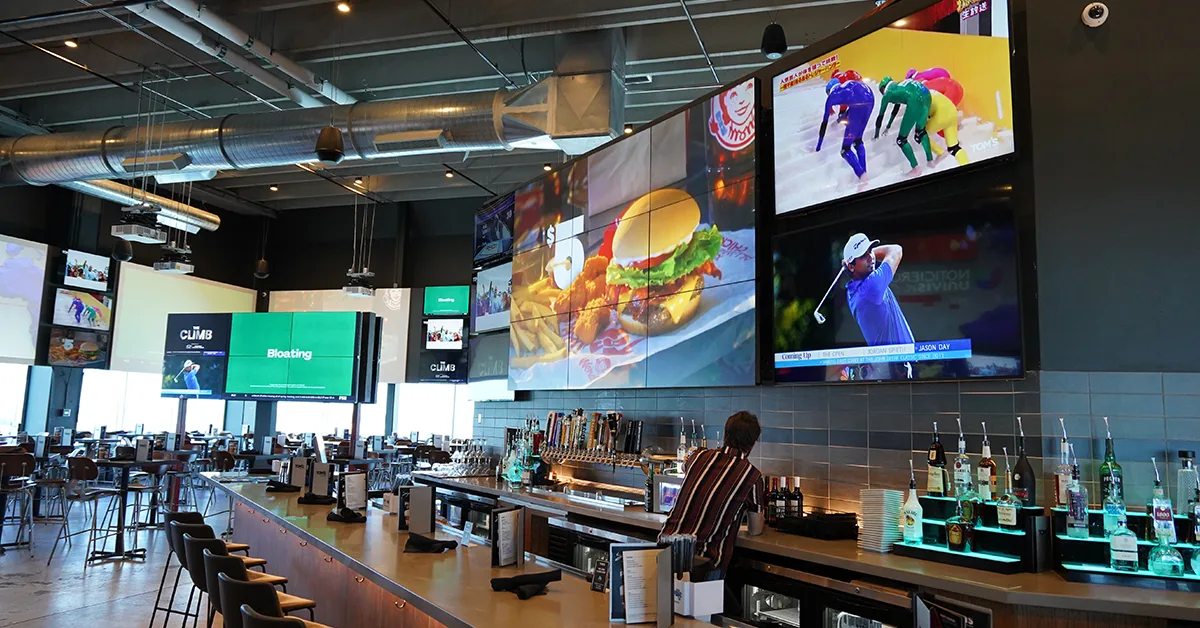
A television on a wall is not a sports bar. A screen should be a content source placed where people can actually watch it, and in a design-led room it should also be part of the architecture rather than an object stuck to it. That means recesses and backing planned during construction, bezels and finishes chosen to sit with the materials around them, and sizing driven by viewing distance rather than by what looks impressive on a plan. A video wall often solves this better than a scatter of televisions, since one considered surface reads as a design element and can still split into a grid to hold several games at once.

Patio, distribution, and control

The patio is a venue in its own right here for most of the year, so it gets outdoor-rated displays with the brightness to beat afternoon sun and speakers built for heat, dust, and the moisture that misting systems put into the air. Content moves over an audiovisual network so any source reaches any screen without lag or signal drop, with matrix switching so you can route any game to any zone, all at 4K. Sources get consolidated into one clean rack instead of a pile of boxes behind the bar, and everything runs on a dedicated AV network rather than sharing bandwidth with your point of sale.

Why Scottsdale venues trust us with it

Built for design-led rooms inapunishingclimate

This market expects the room to look considered and still perform on the biggest afternoons of the year. Here is where our depth shows, and where our scope ends.

Concealment is a design decision, not a cover-up

The failure we walk into most often in upscale rooms is equipment chosen for how small it is rather than for what the space needs, then hidden somewhere that makes it worse. Sightline mapping is what prevents that. The booths are usually the worst seats in the building because of walls, partitions, and the backs of adjacent booths, and in a design-led room they are also where the finishes matter most. So we model them individually and place displays where the architecture can genuinely hold one. Watch for people craning their necks to see a screen instead of talking to their table, and you are watching a design failure, however good the room looks.

Built for design-led rooms in a punishing climate
InstallBuilt for design-led rooms in a punishing climate

Support after opening night

Crunchy Tech started in 2008 as an AV support operation, which is an unusual origin for an integrator and the reason the systems get built the way they do. When you spend years fixing other people's work, you learn exactly where installations cut corners. That shows up in a rack you can actually service: fully enclosed, every cable labeled at both ends, power separated from audio and data. We have opened racks that looked fifteen years old after three months in an uncooled closet, with dust caked on every surface. Most of the cost of a bad install is not the install, it is everything that happens later because nobody can find anything. Around 47 percent of support tickets close inside an hour and roughly 72 percent within a day.

Heat, dust, and misting systems

Three local realities shape the build. Summer heat is the single most expensive variable in how long a system lasts, so the equipment room gets real cooling and gets kept at or below 75 degrees rather than treated as a closet. Monsoon season brings dust that coats everything and surges that reach the rack, so enclosures get sealed and power gets conditioned. And patio misters put fine moisture into the air right where the speakers and screens are, which quietly shortens the life of anything not rated for it, so outdoor hardware gets specified with that in mind rather than as an indoor product moved outside.

What it earns back

How a game-day room paysforitself

In a market with this much competition per block, the room that both looks right and works right keeps the table for the whole afternoon.

How a game-day room pays for itself
InstallHow a game-day room pays for itself

The afternoon you almost lost

A seat nobody can watch the game from sits empty on the day you most need it full, which is the whole reason we map sightlines first. In a design-led venue the loss is subtler and larger, because guests who cannot see the game do not complain about the AV. They have one round, decide the room is lovely but not for this, and go somewhere else next time. Getting it right means the same interior that draws people in for dinner also holds them through a three-hour afternoon, and the patio extends that through most of the year.

Good, Better, Best against one design

Most owners price AV like retail: twenty televisions cost a certain amount, so twenty screens on a system should not cost much more. Worth being plain about the gap, because the rack, the distribution, and the control take a serious share of the budget before you buy a single screen or speaker, and concealment and integration add cost that a surface-mounted install does not carry. So we quote Good, Better, and Best against one design, per zone. Good is a real recommendation, not a strawman: one room watchable from every seat, zoned audio, tablet control. Better usually adds the patio properly. If your budget is short of the room, we would rather value engineer it honestly.

How a game-day room pays for itself
InstallHow a game-day room pays for itself

We do not want the room to look like a sports bar. Can we still carry games properly?

Yes, and the honest answer is that it depends almost entirely on when we get involved. Integration is cheap during design and expensive afterward. If the millwork drawings already know where a display sits, the recess, the backing, the cable path, and the service access all come for free, and the screen reads as part of the room rather than an object stuck to the wall. Same with audio: smaller speakers at lower level spread across the space disappear into soffits and architectural details far more readily than a few large ones, and they sound better, because even coverage is what makes a room comfortable rather than raw output. What does not work is choosing equipment for how small it is and then hiding it somewhere that makes the coverage worse, which is the most common failure we walk into in upscale rooms. We work directly with architects and millworkers on this.

Can we actually watch a game on the patio in the afternoon?

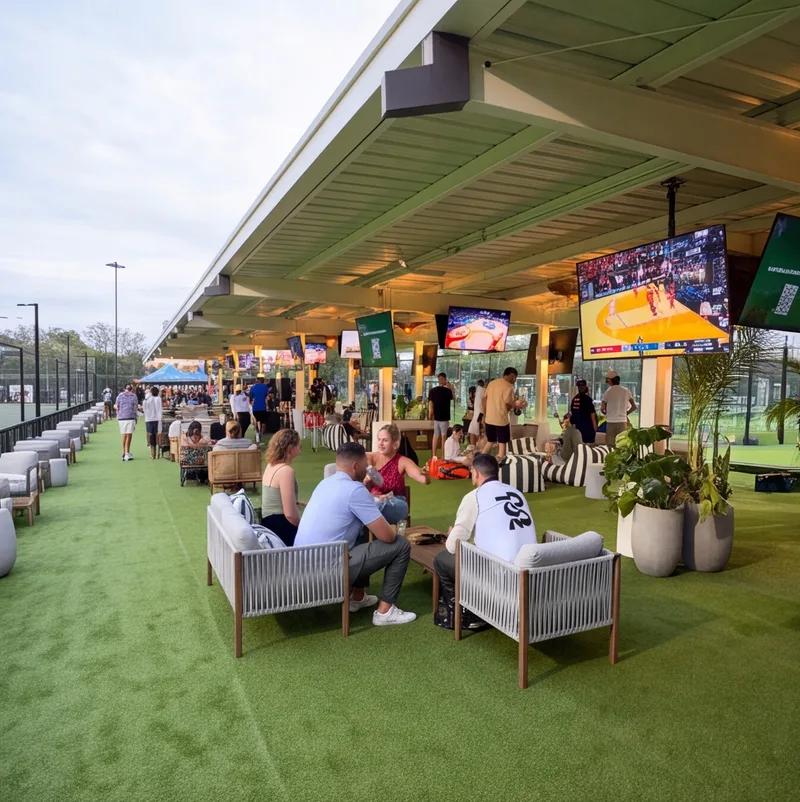
Yes, but not with an indoor television under a shade sail. Two things make it work. First, an outdoor-rated display with enough brightness to compete with daylight, mounted where the sun does not sit directly behind or in front of the viewer at the hours you care about, which comes from walking the patio in daylight rather than guessing from a plan. Second, audio built for open air, since outside there are no walls to reflect sound and it dissipates instead of filling the space, so the answer is more speakers spread across the patio at a moderate level. In Scottsdale there is a third consideration most people miss: misting systems put fine moisture into the air right where the speakers and screens are, and hardware not rated for that fails early. So outdoor components get specified for heat, dust, and mist together rather than one at a time.

Our equipment keeps failing early. Is that the heat?

Almost always, and specifically the room the equipment lives in rather than the equipment itself. Amplifiers and processors generate heat, and in this climate the closet they sit in is frequently sharing a wall with the outside or getting no conditioned air at all. Temperature is the single most expensive variable in how long a system lasts, and the difference between a sealed, cooled, clean equipment room and an unconditioned closet is measured in years. Keep that space at or below 75 degrees. Dust makes it worse, since monsoon season coats every surface and dust is an insulator, so components run hotter still. We have opened racks that looked fifteen years old after three months in an uncooled closet, and replacing cooked components runs into the tens of thousands. It is the cheapest problem to solve at design time and one of the most expensive to solve later.

Do you handle livestreaming, cameras, or video production?

No. We are a design-build AV integrator. We do not install or operate cameras, we do not shoot or edit video, and we do not run streaming as a service. What we do is build the infrastructure that supports whatever streaming or recording you choose: clean audio feeds to your partner's encoder, documented signal paths so a videographer knows exactly where to plug in, and a dedicated network engineered for the uplink. We design the system around how the bar actually runs, procure the hardware, install it, calibrate it, train your staff, document all of it, and support it for the life of the system. The content and streaming side belongs to specialists, and our job is to make their job easy.

Related Solution

Learn more about our Sports Bars AV solutions

View Sports Bars AV
What clients say

Operators who run on our systems

Client successes drive Crunchy Tech to become better. Below is how our customers feel about us.

Just do it. Spend the money. It’s well worth it. It’s not worth your time, hassle, energy, and stress of trying to make it look right and do it right when there’s somebody who has been doing it for years and has perfected the craft.

Matt Moore logo
Matt Moore
IT Systems Administrator · Capone's Hideout

Working with Crunchy Tech was a fantastic experience from start to finish. They handled the sale and installation of all our sound and TV equipment at The County Bar in Aviston, IL, and absolutely nailed it. We were on a very tight deadline, and they not only met it—they delivered top-notch quality and service the entire way. Highly professional, responsive, and easy to work with. We couldn't be happier with the results.

Clint Flowers logo
Clint Flowers
Owner · The County Bar

Crunchy has done an amazing job on our A/V install. The sound is perfectly balanced throughout our many zones and the entire system is super simple to use.
Steve Glum logo
Steve Glum
Chief Marketing Officer · Ace Cafe
Talk to a Scottsdale AV designer

Let's make the game work withoutchangingtheroom

Tell us about the venue: the neighborhood, the square footage, how much of your seating is on the patio, whether you are in design with an architect or working with what is built, and what the room has to look like when it is not a game day. We will start with a consult to understand what you are trying to accomplish, then walk the property in daylight and again on a busy night, and come back with one engineered recommendation instead of a parts list.

  • Displays planned with the millwork so they read as architecture rather than hardware.
  • Concealed audio that still covers the room evenly instead of two hidden speakers doing all the work.
  • Patio displays specified to stay readable through an afternoon of direct sun.
  • Outdoor hardware rated for heat, monsoon dust, and the moisture misters put in the air.