Video Wall Installation in Sunnyvale
location_on Sunnyvale, CA

Video Wall Installation in Sunnyvale

Permanent LED and LCD video walls designed and installed across Sunnyvale and the Peninsula. Written as one specification a facilities team can repeat in the next building instead of a different system in every lobby.

The wall most campuses need is theonetheycanrepeat

A video wall is the most expensive thing most organizations hang on a wall, and it lands in the wrong place more often than it breaks. We get asked for a wall in a lobby people cross in nine seconds, or behind a bar seating fourteen in a room seating a hundred and eighty. That spends the budget on the smallest audience in the building. On a Sunnyvale campus the second mistake is a different bespoke wall in every building, which no facilities team can support.

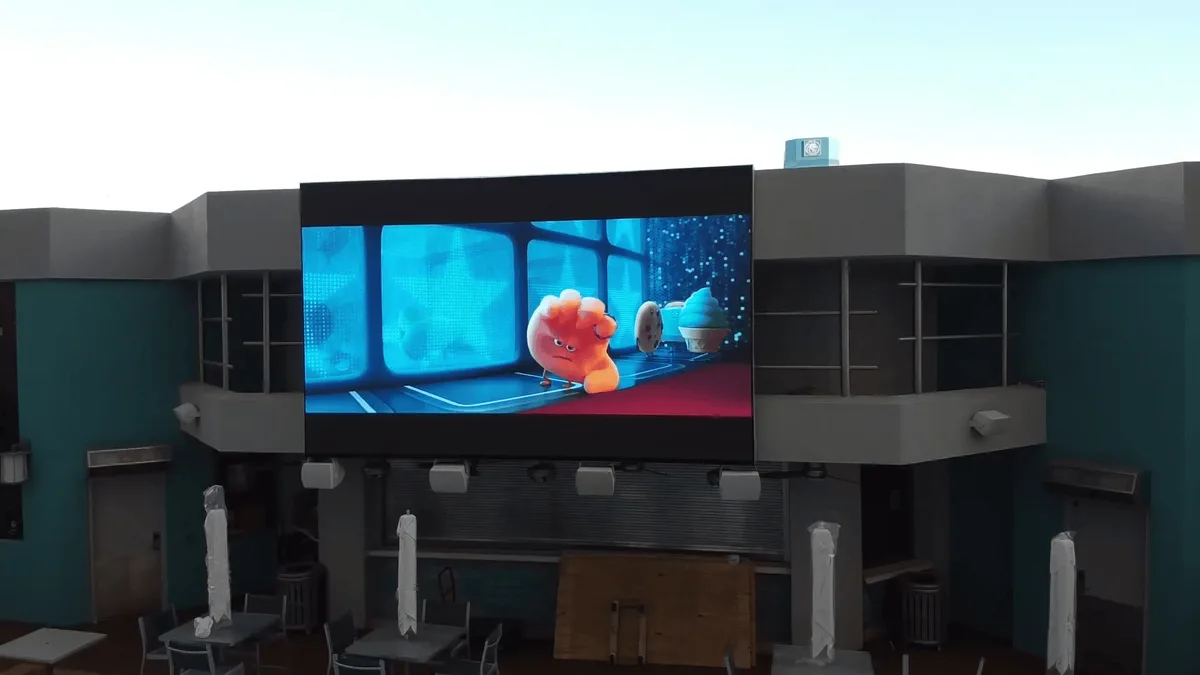
So we start with where the experience is actually created, then decide what belongs there. Sometimes that is a wall. Often it is a cluster of commercial displays, a ribbon, or one large display driven as four panes, which reads like a wall for far less money. Where a wall is right, we write it as a standard other buildings can repeat, with pixel pitch matched to real viewing distance. Anything outdoors is LED specified for this valley, with an ambient light sensor driving its brightness. We install permanent systems, and we do not rent.

Reel The wall most campuses need is the one they can repeat Sunnyvale, CA

Video Wall Installation AcrossthePeninsula

From Moffett Park lobbies and Peery Park offices to training floors in Santa Clara and North San Jose, we design, install, calibrate, and support permanent video walls across Sunnyvale and the surrounding Peninsula.

2008
Serving Sunnyvale since
10
Neighborhoods
Downtown Sunnyvale
Corporate · Restaurants · Retail

Ground-floor rooms here sit behind a lot of street glass, so brightness and placement get solved before resolution.

High-daylight · brightness-led
Moffett Park
Corporate

Campus work here is about one specification repeated across buildings rather than a different wall in every lobby.

Repeatable standard
Lawrence Station
Corporate

Flex buildings often have open ceilings with nothing overhead to hang from, so unistrut and structural backing get coordinated with the contractor first.

Open ceiling · structural
Peery Park
Corporate

Renovations here usually want the hardware detailed into the architecture, so the wall gets recessed and trimmed rather than surface-mounted.

Recessed · design-led
Cupertino
Corporate · Restaurants

Smaller rooms here rarely justify a full wall, so a cluster or one large display driven as four panes usually does the same job.

Cluster alternative
Mountain View
Corporate

All-hands rooms here need a canvas carrying several sources at once rather than one large picture.

Multi-input canvas
Santa Clara
Corporate · Hotels

Meeting-space walls here read across long distances, which relaxes pixel pitch and raises the brightness requirement.

Long-distance viewing
North San Jose
Corporate

Multi-building estates get one shared spare-parts inventory, so a failed module is swapped the same day in any building.

Shared spares
Palo Alto
Corporate · Restaurants · Retail

Older buildings here carry real structural limits, so mounting and concealment get settled before a wall size is chosen.

Structural · concealed
Los Altos
Restaurants · Corporate

Rooms this size usually get more from a ribbon of commercial displays than from a full wall.

Ribbon alternative

How we work

One specification, repeatedacrossbuildings

Put the best technology where you are driving the most experience. On a campus, the next question is whether it can be repeated in the building next door.

The consult, then the standard

Our first conversation is a consult rather than a quote: what the space does, where people actually look, what the room has to accomplish, and the budget in play. On a campus we also ask how many buildings will eventually want the same thing, because that answer changes the design. A one-off wall built around a single lobby leaves a facilities team supporting different hardware in every building, with different spares and different training. So we write a specification instead: the same canvas approach, the same processor, the same control behavior, the same content workflow. An employee walking into any building sees the same thing working the same way, and one shared spare-parts inventory covers the whole estate.

One specification, repeated across buildings — video wall installation in Sunnyvale, CA
InstallOne specification, repeated across buildings
One specification, repeated across buildings — video wall installation in Sunnyvale, CA
InstallOne specification, repeated across buildings

Mounting, bracing, and one team on site

How a wall gets hung decides whether it can be hung at all. A ceiling-hung display needs a ceiling plate and a structural pole, and on the open ceilings common in campus buildings that means unistrut and real structural backing from the general contractor. What sits above the ceiling constrains the rest, since ductwork, lighting runs, and fire sprinkler locations all limit where a mount can land. This region carries seismic mounting and bracing requirements, so overhead hardware gets braced accordingly and we confirm the path for each site rather than assuming the last building applies. Campus buildings vary more than their exteriors suggest. One team then handles the install, the calibration, the staff training, and the documentation.

Where Sunnyvale walls earn

Where a video wall earnsitscosthere

Different rooms want different things from a large display. Here is where we see walls pay off across Peninsula campuses, and where something lighter does the same job.

Where a video wall earns its cost here — video wall installation in Sunnyvale, CA
InstallWhere a video wall earns its cost here

Lobbies and building entries

A lobby wall is the one most often bought for the wrong reason, since people cross a lobby in seconds and rarely stop to read anything. It works when it carries something a visitor or an employee needs at a glance, sized so it reads while walking rather than only up close. Sunnyvale lobbies also sit behind a lot of glass, so brightness and placement get solved before resolution. Where a full wall is hard to justify, a cluster of commercial displays driven as one canvas gives the same presence for far less. Whatever we land on then gets repeated in the next building, which on a campus is usually the whole point.

All-hands and training rooms

All-hands and training spaces ask for something a single big picture cannot give: several sources on screen at once. A canvas carrying eight to twelve inputs is a different design problem from one large display, and the processing and control behind it matter more than the panel count. We size the wall off the furthest seat, since paying for resolution nobody at the back can perceive is wasted money and the people at the back are the ones already struggling. Training rooms usually want a fixed layout staff can call up without help, so the control system does that work rather than an operator. The same layout then travels to every other training room in the estate.

Courtyards and campus plazas

Outdoor is always LED, and even LED has to be specified for this valley rather than a mild-climate assumption. Summer sun here is direct and unbroken, so a wall facing a courtyard runs into a brightness problem long before a resolution one. Every outdoor wall gets an ambient light sensor driving automatic brightness, which keeps it readable at midday, dims it at night, and lowers power draw instead of running at full output and aging early. Wildfire smoke season loads filters and cooling paths, so the equipment room and any cabinet cooling get specified with that in mind. The wall carries your own content. Outdoor work costs more and lasts less time than the same wall inside, and we say so up front.

Plain answers

LED, LCD, and pixel pitch inplainterms

Three terms drive most of the cost on a video wall project. Here is what each one means for your buildings.

LED versus LCD, and what direct view means

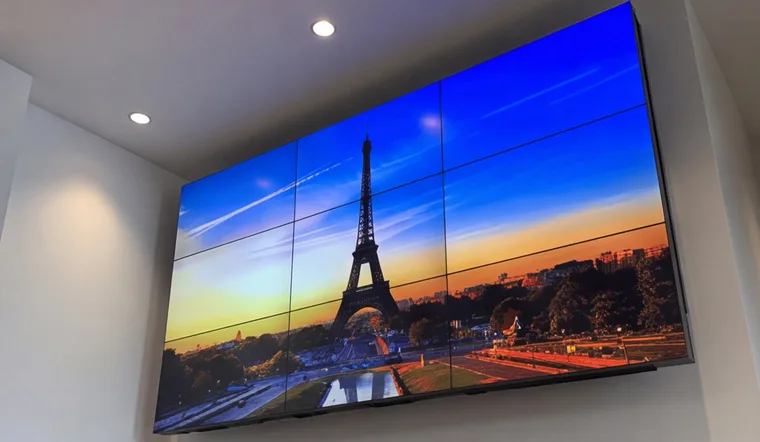
An LCD wall is a grid of thin-bezel panels with the processing built in. It costs less, resolves well, and is indoor only, and the tiles come in 55 and 65 inch sizes, so the wall is the size the tiles make it and it caps out around a ten by ten grid. LED uses cabinets in many sizes driven by an external processor, so the shape is yours and the surface reads as one screen rather than a set of panels, and it is brighter. Direct view is LED at a very fine pitch, roughly 0.7 to 0.9mm, tight enough to stand close to, which is why interior LED walls are essentially direct view. We are an integrator of LED rather than a manufacturer, so the selection gets made on your requirements.

LED, LCD, and pixel pitch in plain terms — video wall installation in Sunnyvale, CA
InstallLED, LCD, and pixel pitch in plain terms
LED, LCD, and pixel pitch in plain terms — video wall installation in Sunnyvale, CA
InstallLED, LCD, and pixel pitch in plain terms

Calibration, spares, and the second year

On an LCD wall, calibration is a matching exercise: color, brightness, and contrast matched panel to panel until the seams disappear and the surface reads as one. Done poorly, every panel shows a slightly different white and an expensive wall looks cheap regardless of its resolution. What calibration cannot do is rescue a bad panel, so selection matters more than tuning. LED panels arrive pre-calibrated and get tuned on site through the wall's processor, and a panel with damaged pixels goes back under warranty while we install a replacement. The longer story is spare parts. We supply a kit from day one and keep revolving inventory, and across a campus that single inventory covers every building.

We run several buildings. Should each one get its own video wall design?

Almost never, and this is the single biggest difference between Sunnyvale work and the rest of what we do. Major technology employers here run many buildings, and a bespoke wall in each lobby produces an estate nobody can support: different panels, different processors, different control behavior, different spares, different training for every facilities technician. The design brief we work to instead is the standard we can repeat and maintain. That means the same canvas approach, the same processor family, the same control behavior, and the same content workflow, so an employee walking into any building sees the same thing working the same way and a facilities team learns the system once. It also makes the service plan simpler and cheaper, since one shared spare-parts inventory covers every building rather than a separate kit per site. Where a building genuinely differs, we adapt the mounting and the sizing rather than the standard underneath it.

Do we actually need a video wall, or is there a cheaper way to get the same effect?

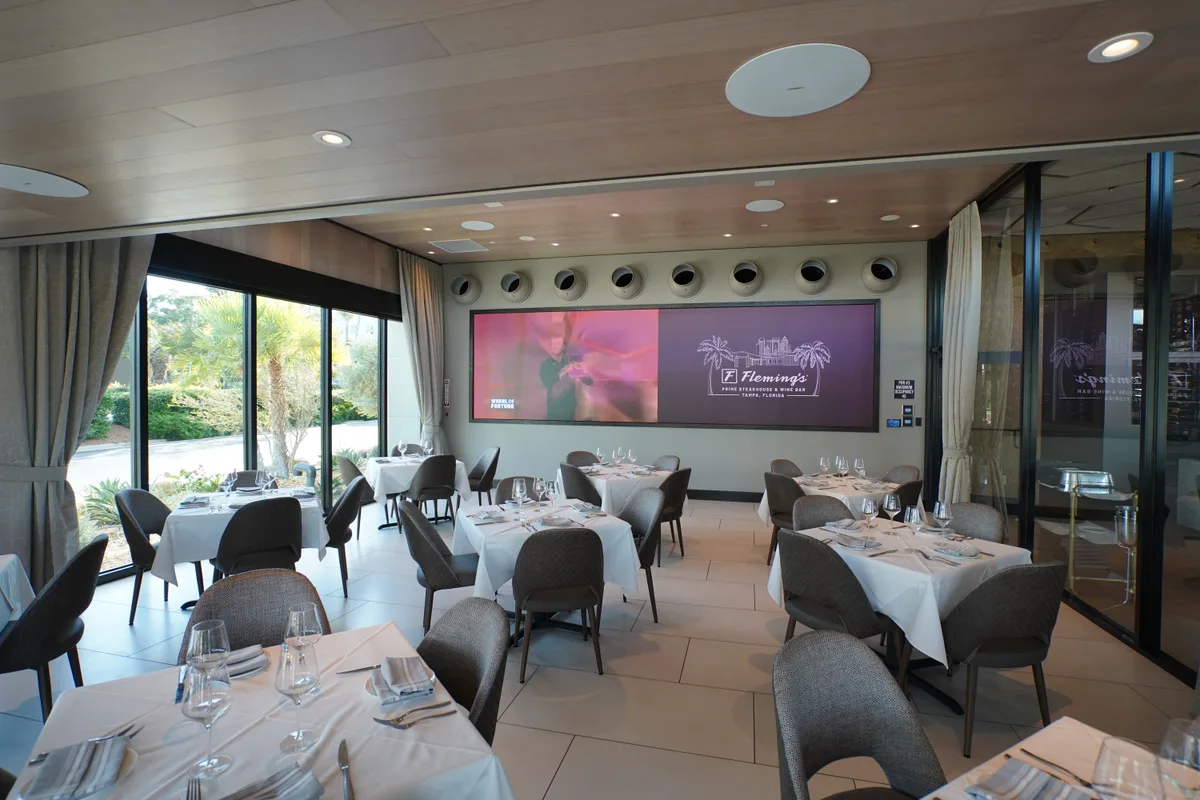
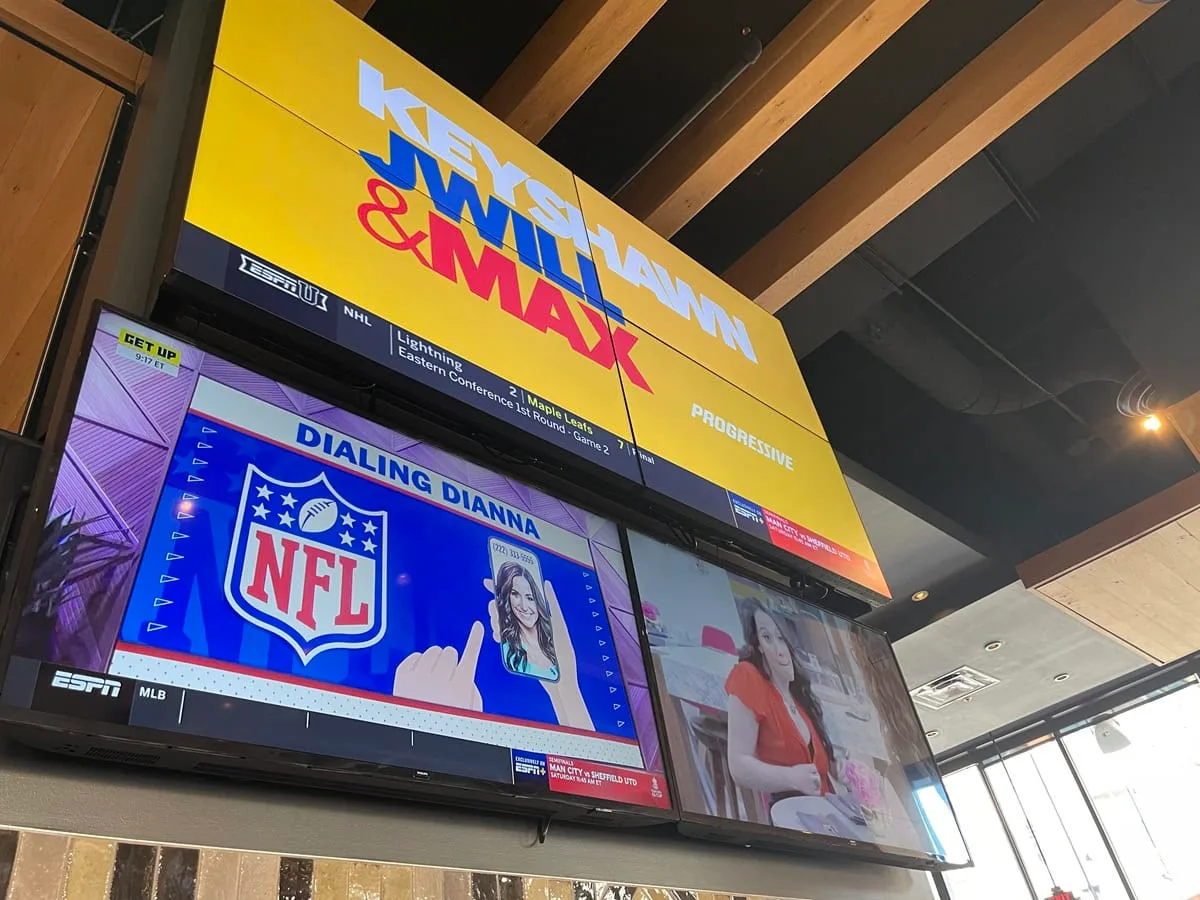
Worth asking first, because it saves the most money of any question on this page. A wall is a purposeful decision, not a default showpiece, and it earns its cost only where the experience is actually being created. The test is to count who will really see it. If the bar seats fourteen and the room seats a hundred and eighty, a wall behind the bar spends the budget on the smallest audience in the building. A lobby people cross in seconds is the corporate version of the same mistake. Several alternatives get most of the way there for much less. A cluster or ribbon of commercial displays reads as one feature when it is placed and driven properly. One large display can be driven as four panes so it behaves like a small wall. A video processor in the control system turns any group of screens into a single canvas. Put the best technology where you are driving the most experience, and we will tell you plainly when that is a wall and when it is not.

LED or LCD, and what does pixel pitch mean for us?

Indoor or outdoor answers most of it, since outdoor is always LED. Indoors, an LCD wall is a grid of thin-bezel panels with the processing built in: lower cost, high resolution, indoor only, and tiles available in 55 and 65 inch sizes, which means the wall is the size the tiles make it and it caps out around a ten by ten grid. LED uses cabinets in many sizes driven by an external processor, so the shape is yours, the surface reads as one screen, and it runs brighter. Direct view simply means LED at a very fine pitch, tight enough that you can stand close and still see a clean image. Pixel pitch itself is the distance between pixels in millimetres, running roughly from under one up to about four, and a wider number means less resolution. The right number comes from viewing distance rather than from a spec sheet, so a wall people stand five feet from needs a tighter pitch than one read across a lobby, and paying for resolution nobody can perceive is wasted money.

What happens when a panel fails, and do you rent walls?

We do not rent. We design and install permanent video walls, and the service plan is part of the design rather than something bolted on afterward. On failures, the honest picture is that manufacturers quote diode life in the tens of thousands of hours and real service life depends on the environment, so we plan for parts instead of hoping. LED panels arrive pre-calibrated and get tuned on site through the wall's processor, and a panel with damaged pixels goes back under warranty while we install a replacement from stock. That is what the spare-parts kit is for: a kit from day one plus revolving inventory, so a failed module gets swapped immediately, the dead one goes back, and the repaired unit returns to the pool. The wall is never down. Across a campus the same inventory serves every building, which is one of the strongest arguments for a repeatable standard. Warranty terms scale with the tier you buy, and around 47 percent of support tickets close inside an hour without anyone coming to site.

Related Solution

Learn more about our Video Wall Solutions solutions

View Video Wall Solutions
What clients say

Operators who run on our systems

Client successes drive Crunchy Tech to become better. Below is how our customers feel about us.

The Design Build process was the best thing that could have happened. They showed our ownership three different options on each feature wall — from the bar to the rest of the venue. That’s when it really sold them. They felt involved. They knew what they were putting in, they were making the decisions, and they could see it was going to look right.

Matt Moore logo
Matt Moore
IT Systems Administrator · Capone's Hideout

Working with Crunchy Tech was a fantastic experience from start to finish. They handled the sale and installation of all our sound and TV equipment at The County Bar in Aviston, IL, and absolutely nailed it. We were on a very tight deadline, and they not only met it—they delivered top-notch quality and service the entire way. Highly professional, responsive, and easy to work with. We couldn't be happier with the results.

Clint Flowers logo
Clint Flowers
Owner · The County Bar

Crunchy has done an amazing job on our A/V install. The sound is perfectly balanced throughout our many zones and the entire system is super simple to use.
Steve Glum logo
Steve Glum
Chief Marketing Officer · Ace Cafe
Talk to a Sunnyvale video wall designer

Let's find out whatthestandardshouldbe

Tell us about the space: which building, whether the wall is indoors or out, how far away people will be sitting, how much daylight the area gets, and how many other buildings will eventually want the same thing. The consult starts with whether a wall is the right answer at all, then we look at the room and come back with one engineered recommendation instead of a panel count.

  • We start by testing whether a wall is worth it, or whether a cluster does the job.
  • One specification written to repeat across buildings, not a bespoke wall per lobby.
  • Pixel pitch matched to real viewing distance rather than sold on spec.
  • Overhead mounting braced for seismic requirements and confirmed per site.
  • Permanent installations only. We do not rent.