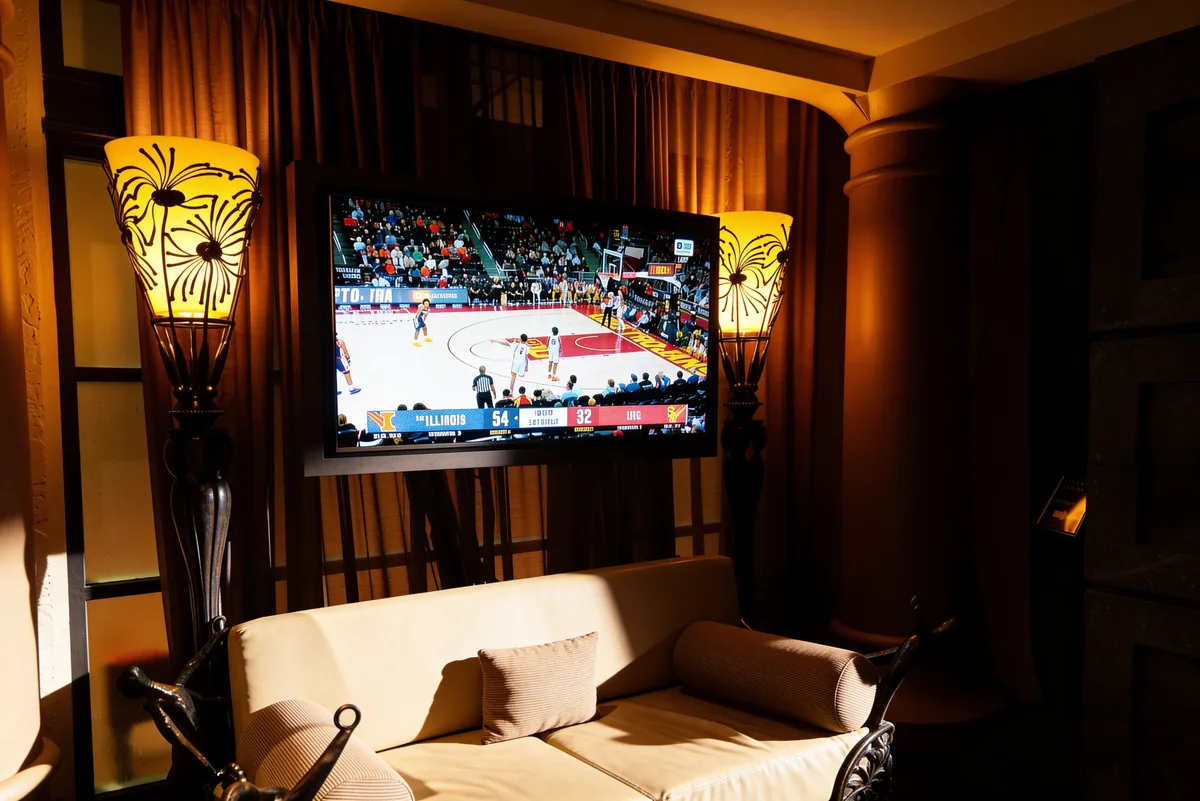
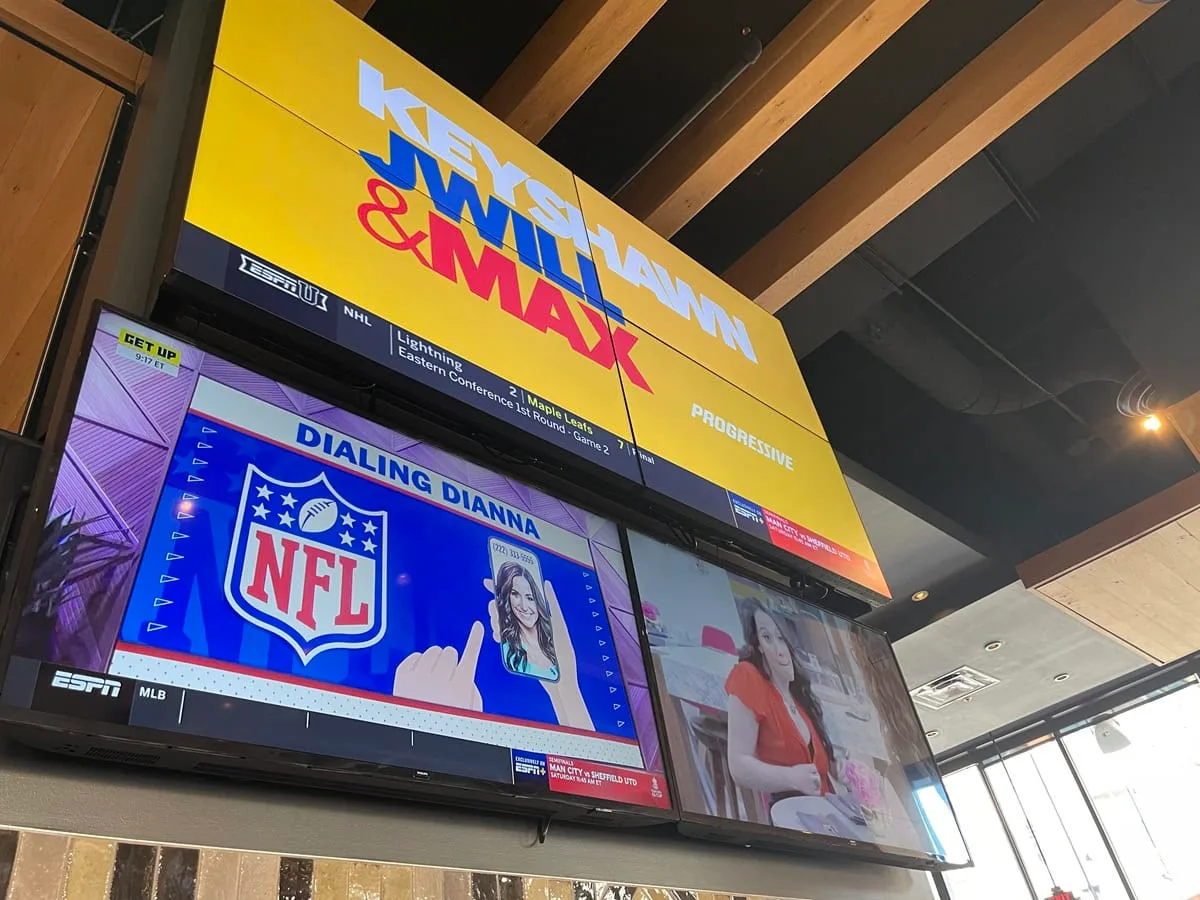
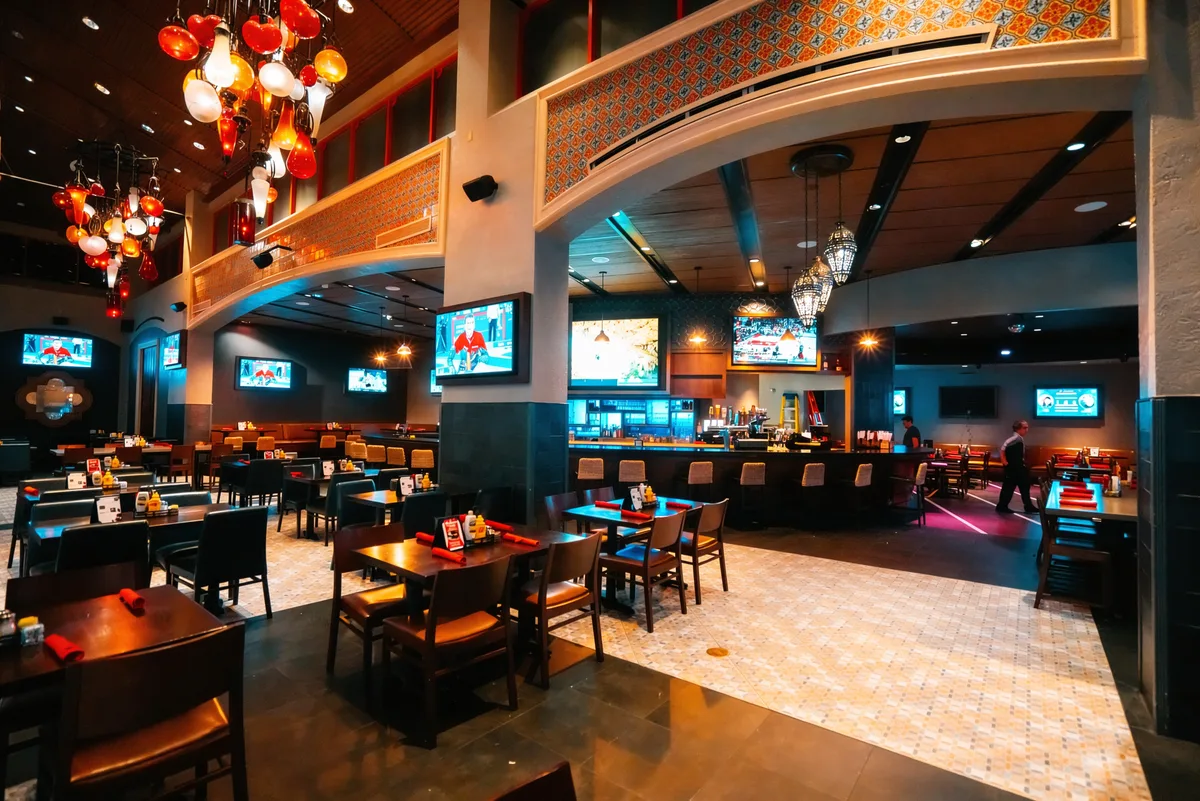
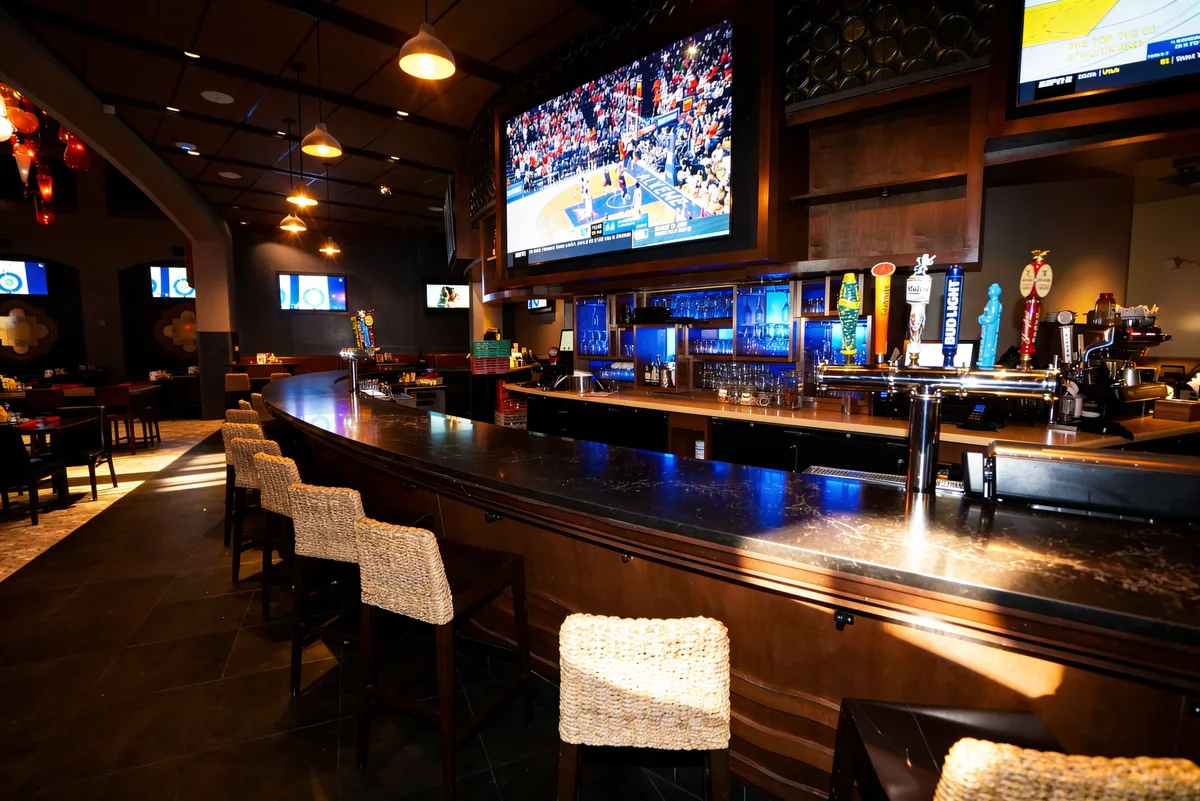
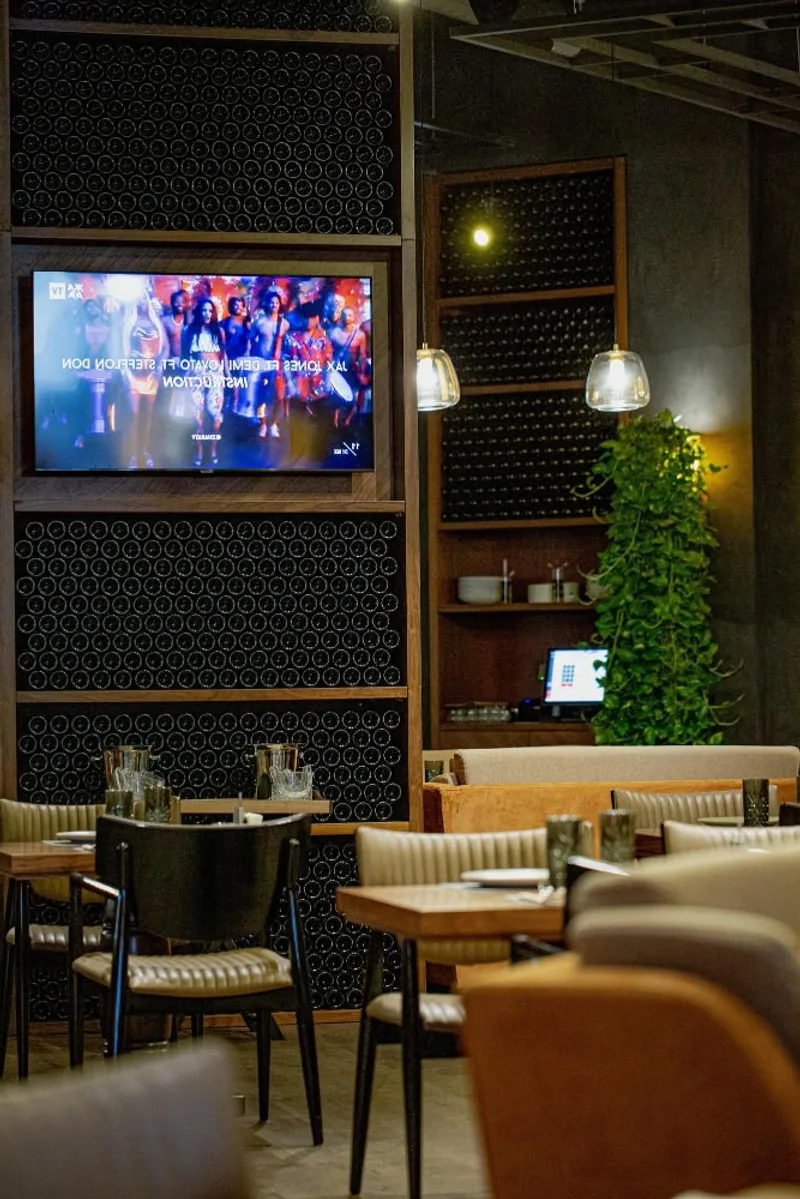
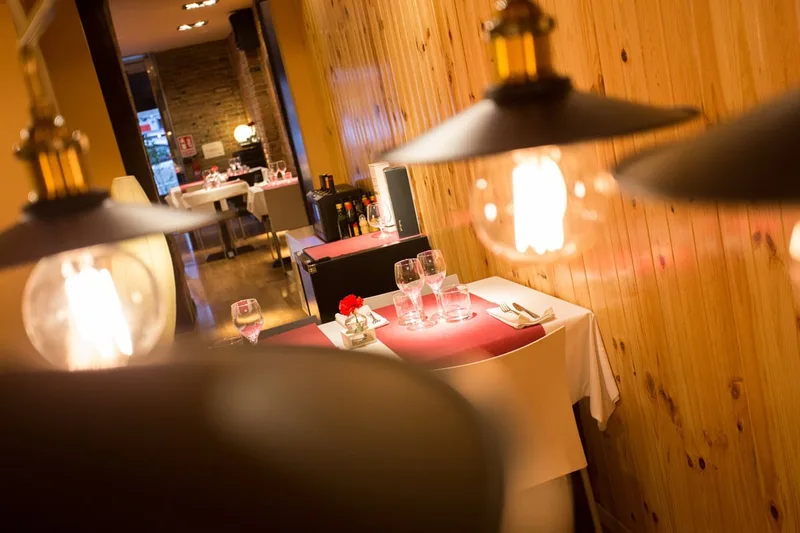
The Design Build process was the best thing that could have happened. They showed our ownership three different options on each feature wall — from the bar to the rest of the venue. That’s when it really sold them. They felt involved. They knew what they were putting in, they were making the decisions, and they could see it was going to look right.
Video Wall Installation in Anaheim
Permanent LED and LCD video walls designed and installed across Orange County. Specified for long viewing distances, seismic mounting, and rooms that run long hours every day of the year.
Start with whether the room needs a wall at all
A video wall is the largest line item most operators put on a wall, and it lands in the wrong place more often than it fails technically. The call is usually about a wall behind the bar, and the bar seats fourteen while the rest of the venue seats a hundred and eighty. That spends the budget on the smallest audience in the building. Put the best technology where you are driving the most experience. The second Anaheim miss is resolution, since rooms here are large and the nearest seat is often thirty feet out.
So we work from where the experience is created, then from how far people sit. Often a ribbon, a cluster of commercial displays, or one large display driven as four panes reads like a wall for a fraction of the cost. Where a wall is right, pitch and size follow viewing distance, and in a seismic region anything hung overhead gets mounted and braced for seismic load. Outdoors the answer is always LED, specified for this sun rather than a mild climate. We install permanent systems only, and we do not rent.

Video Wall Installation Across Orange County
From Platinum Triangle venues and resort-corridor hotels to Anaheim Hills offices, Santa Ana civic floors, and Costa Mesa retail, we design, install, calibrate, and support permanent video walls across Orange County.
A video wall is heavy, so anything hung overhead gets designed and braced for seismic load, which changes the plate, the pole, and the structural backing behind it.
Direct Southern California sun runs an outdoor wall hard, so every outdoor install gets an ambient light sensor driving automatic brightness instead of a fixed setting.
Coastal air reaches further inland than most operators expect, so outdoor cabinets, fasteners, and connections get corrosion-resistant specification, and gold-plated leads hold up far better than standard solder.
Processors and controllers need a room held at or below 75 degrees, because a hot rack shortens the life of everything in it.
How we work
We measure the nearest seat first
Put the best technology where you are driving the most experience. In a large Anaheim room the next question is distance, and distance sets the budget.
The consult, then the distance
Most quotes for a large room get written off a wall size and a resolution number, which is backwards. Our first conversation is a consult rather than a quote: what the space is, where guests actually look, what the room has to do, and the budget in play. Then we measure viewing distance, since that one number sets the pixel pitch and most of the cost. A room where the nearest seat is thirty feet out does not need the pitch a lobby wall people stand two feet from needs, and the coarser pitch is both the correct engineering answer and the cheaper one. What that saves goes into scale, brightness, and a mount that will actually hold.
Seismic mounting, then one team on site
A video wall is heavy, and in this region that weight changes the whole mounting conversation. Anything hung overhead gets designed and braced for seismic load, which works back through the ceiling plate, the structural pole, and the backing behind it, and sometimes it moves the location. Open ceilings need unistrut and real structural backing from the general contractor, so the requirement has to exist in the plan set rather than appear on install day. Ductwork, lighting fixtures, and fire sprinkler positions all constrain where a mount can land, and sightlines have to survive what is left. We design to the mounting requirements that apply and confirm the approval path for that specific address. One team then handles install, calibration, staff training, and documentation.
Where Anaheim walls earn
Where a wall earns its cost in Anaheim
Large rooms, long hours, and a steady visitor crowd change what a display has to do here. Some of these rooms want a wall and some want something lighter.
Large venues and long viewing distances
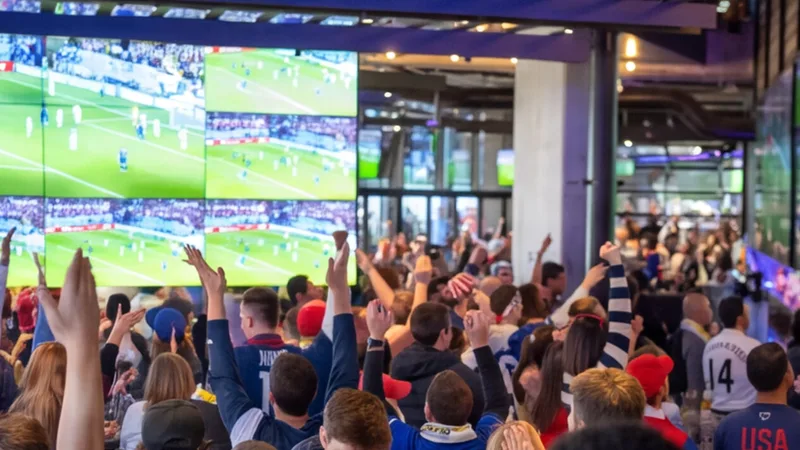
Big rooms are where operators overspend most reliably. When the closest viewer is thirty feet away, resolution past what the eye can resolve at that distance buys nothing, while the same money spent on physical size and brightness reads far better from the seats. So we size the canvas to the room, then pick the widest pitch that still looks clean from the nearest seat. Sports viewing pulls that number back, since fans sit closer than operators assume and a wide pitch looks soft on fast motion. Rooms that watch one thing together want a single large canvas, while rooms following several games at once want a wall that splits into a grid.
Hotels, dining, and the resort corridor
The hotel and dining corridor here serves a visitor crowd that arrives every day of the year, so a wall runs long hours and the service plan matters more than the spec sheet. Panels working sixteen hours a day age faster than panels in a quiet corporate lobby, which changes the warranty tier we recommend and the spare parts we put on the shelf at handover. Property and event information travels a long way across a lobby, which relaxes pixel pitch and raises the brightness requirement. Walls in these rooms carry the property's own content. Where a full wall is hard to justify, a ribbon above the bar or a driven cluster of displays does the same job.
Corporate offices, retail, and education
Corporate, retail, and campus rooms want a display that informs rather than one that sets a mood. An office lobby with west-facing glass is a brightness problem before it is a resolution problem, so placement and output get solved first and the content gets designed to stay legible. Briefing rooms get sized off the furthest seat and the platforms in use, and a canvas carrying eight to twelve inputs at once, with one source large while the rest stay visible, is a different design from a single-source display. Retail walls here run the property's own brand and product material at a size that carries across the floor. Lecture and training rooms usually want reach and output rather than a fine pitch.
Plain answers
Pixel pitch, LED, and LCD in plain terms
Three decisions carry most of the cost on a video wall. Here is what each one means in a large room.
Pixel pitch and what viewing distance decides
Pixel pitch is the distance between pixels in millimetres, running roughly 0.9, 1.9, 2.9, and 3.9, and wider means less resolution. The number that matters is not the smallest one available, it is the one that looks clean from the nearest seat. Paying for detail nobody in the room can perceive is the most common way this budget disappears. Direct view simply means LED fine enough to stand close to, around 0.7 to 0.9mm, which is why any interior LED wall is essentially direct view. An outdoor wall does not need to be, since people stand much further back. In a large Anaheim venue that difference is worth real money.
LED or LCD, calibration, and staying up
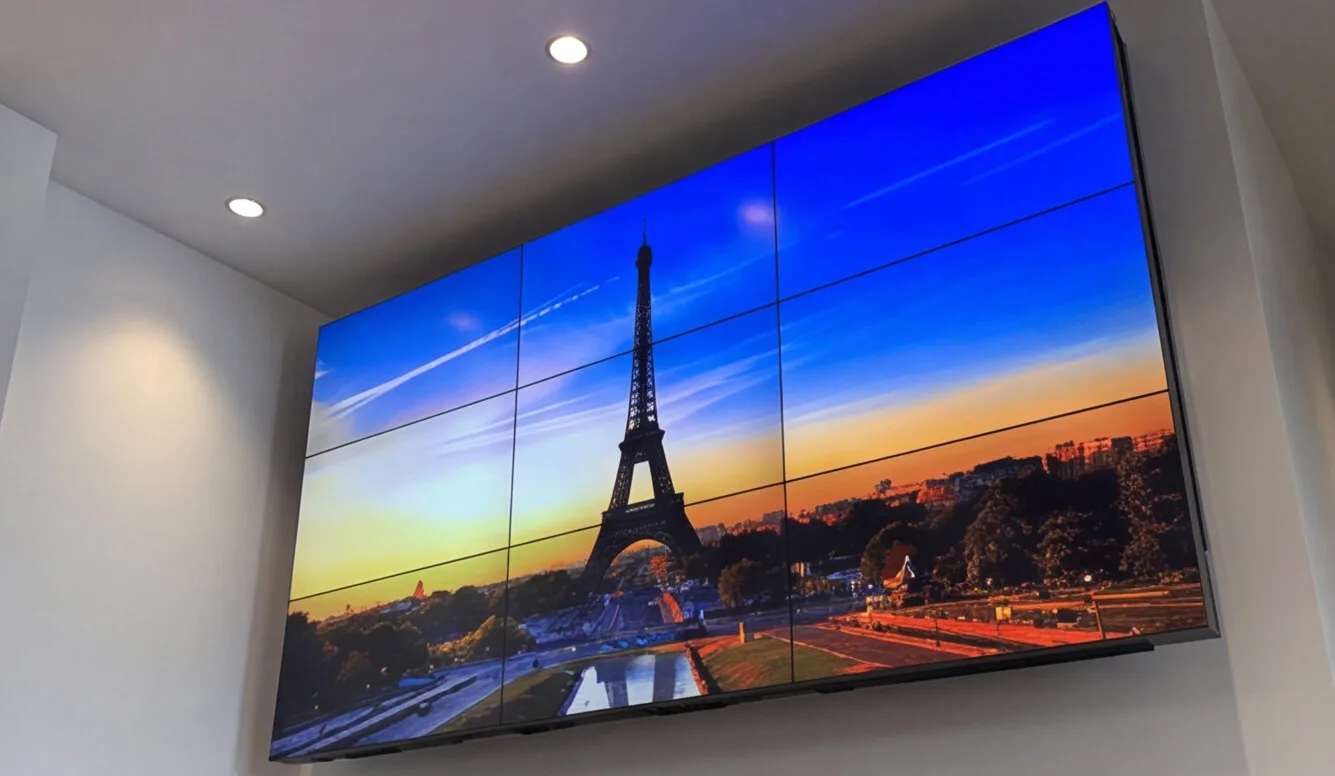
Indoor or outdoor answers most of this. Outdoor is LED, since nothing else survives out there. Indoors an LCD wall is a grid of thin-bezel panels with the processing built in: lower cost, higher resolution, tiles only in 55 and 65 inch, and a practical ceiling around a ten by ten grid, so the size is the size. LED uses cabinets in many sizes driven by an external processor, reads as one screen, and runs brighter. On LCD, calibration is a matching exercise across panels so the seams disappear, and a bad display cannot be calibrated into a good one, so selection beats tuning. LED panels arrive pre-calibrated to a baseline and get tuned on site through the wall's processor.
Our room is big and the closest seat is a long way back. Does that change the wall we should buy?
It changes almost everything about the specification, usually in the cheaper direction. Pixel pitch is the distance between pixels in millimetres, and the range runs roughly from 0.9 up to about 3.9. The right number is not the tightest one on the price list, it is the one that still looks clean from the nearest seat. In a room where that seat is thirty feet out, a wider pitch is both the correct engineering answer and the cheaper one, and the difference is not small. What we do with the money instead is buy physical size, buy brightness, and pay for a mount engineered properly, all of which read from the seats in a way extra resolution does not. Sports viewing is the exception that pulls the number back, since fans sit closer than operators assume and a wide pitch looks soft on fast motion. So we measure the room before quoting a pitch, and we would rather tell you the cheaper panel is right than sell you detail nobody in the building can perceive.
Do we actually need a video wall, or is there a cheaper way to get the same effect?
Ask that before anything else, since it is where the most money gets saved. A wall is a purposeful decision about where experience is actually created, not a default showpiece, and the test is to count the seats that will see it. If the bar seats fourteen and the rest of the venue seats a hundred and eighty, an LED wall behind the bar is probably a waste of money. Put the best technology where you are driving the most experience. Several alternatives get most of the way there for far less. A ribbon or a cluster of commercial displays reads as one feature when it is placed and driven properly. A video processor in the control system turns a group of screens into a single canvas. One large display can be run as four panes, so a 98-inch panel behaves like four 49-inch quadrants. In a large Anaheim room those options often serve more seats than a single wall would. We will say plainly when a wall is right and when it is not.
Why does mounting come up before we have even picked a size?
Weight is the reason. A video wall is heavy, and in this region anything hung overhead gets mounted and braced for seismic load, which is a different design from bolting a display to a wall. That works back through the ceiling plate, the structural pole, and the backing behind it, and on an open ceiling it means unistrut and real structural steel added by the general contractor before a panel arrives. Sometimes it moves the wall, because the position you picked has ductwork, a lighting run, or a sprinkler head exactly where the mount needs structure. We resolve that during design, when the fix is a drawing revision rather than a bad compromise on install day. We design to the mounting requirements that apply to the building and confirm the approval path for the specific address rather than assuming it. That is also why we ask what is above the ceiling before quoting a size.
What happens when a panel fails, and do you rent walls?
We do not rent. We design and install permanent video walls, and the service plan is part of the design rather than something added later. On failures, every manufacturer quotes diode life in the tens of thousands of hours, and no outdoor wall reaches a lab number, so we plan for parts instead of hoping. We supply a spare-parts kit from day one and run revolving inventory, which means a failed module gets swapped immediately, the dead one goes back to the vendor under warranty, and the repaired unit returns to the pool. The wall keeps working instead of sitting with a dark patch while a replacement ships. That matters more here than in most markets, since resort-corridor rooms run their walls long hours every day of the year. Warranty terms scale with the tier of wall you buy and we will be straight about the trade-off. Most support issues resolve remotely, with around 47 percent of tickets closing inside an hour.
What We Do Here
Services available in Anaheim
Every system is designed, installed, and supported by our own team in Anaheim — never subcontracted.
AV Consulting
AV consulting from an audio visual consultant who joins at the architectural phase, designs the technology into the plan and steers the project around your business outcome.
AV Consulting in Anaheimarrow_forwardCommercial Sound Systems
Commercial sound system design and installation: multi-zone audio engineered around how your space is used, wired and tuned on site, and supported as a partner.
Commercial Sound Systems in Anaheimarrow_forwardVideo Wall Solutions
Commercial video walls across LED, LCD and Direct View. Designed, integrated, installed and supported by a national design-build AV integrator.
Video Wall Solutions in Anaheimarrow_forwardDigital Signage Services
Design-build digital signage for hospitality and enterprise: commercial displays, content management, and installation that keeps your screens selling and current.
Digital Signage Services in Anaheimarrow_forwardLearn more about our Video Wall Solutions solutions
Operators who run on our systems
Client successes drive Crunchy Tech to become better. Below is how our customers feel about us.
Working with Crunchy Tech was a fantastic experience from start to finish. They handled the sale and installation of all our sound and TV equipment at The County Bar in Aviston, IL, and absolutely nailed it. We were on a very tight deadline, and they not only met it—they delivered top-notch quality and service the entire way. Highly professional, responsive, and easy to work with. We couldn't be happier with the results.
Crunchy has done an amazing job on our A/V install. The sound is perfectly balanced throughout our many zones and the entire system is super simple to use.
The Design Build process was the best thing that could have happened. They showed our ownership three different options on each feature wall — from the bar to the rest of the venue. That’s when it really sold them. They felt involved. They knew what they were putting in, they were making the decisions, and they could see it was going to look right.
Working with Crunchy Tech was a fantastic experience from start to finish. They handled the sale and installation of all our sound and TV equipment at The County Bar in Aviston, IL, and absolutely nailed it. We were on a very tight deadline, and they not only met it—they delivered top-notch quality and service the entire way. Highly professional, responsive, and easy to work with. We couldn't be happier with the results.
Crunchy has done an amazing job on our A/V install. The sound is perfectly balanced throughout our many zones and the entire system is super simple to use.
Insights
What is Commercial AV Installation?
A comprehensive guide to commercial audiovisual installation — what it includes, how it differs from consumer setups, and what to expect.
Read article arrow_forwardImmersive Dining & Bar Experiences: LED Video Walls, Spatial Audio & Synchronized Lighting
How LED walls, spatial audio, and lighting automation are transforming restaurants and bars into destination experiences.
Read article arrow_forwardWhy Plug-and-Play Sports Bar AV Packages Will Cost You the 2026 World Cup
Consumer-grade AV cannot handle the demands of World Cup game day. Here is what your sports bar actually needs.
Read article arrow_forwardLet's find out how far the nearest seat is
Tell us about the space: the city, whether the wall is indoors or out, how far back the closest and furthest seats sit, how much daylight the area takes, and what you want the wall to do. The consult starts with whether a wall is the right answer at all, then we look at the room and come back with one engineered recommendation instead of a panel count.
- We test whether a wall is worth it before quoting one.
- Pixel pitch matched to the nearest seat rather than sold on spec.
- Overhead mounting designed and braced for seismic load.
- Outdoor LED with an ambient light sensor and corrosion-resistant hardware.
- Permanent installations only. We do not rent.