Just do it. Spend the money. It’s well worth it. It’s not worth your time, hassle, energy, and stress of trying to make it look right and do it right when there’s somebody who has been doing it for years and has perfected the craft.
Sports Bar AV in Atlanta
Game-day AV for Atlanta sports bars. Sightline-mapped displays, zoned audio, patio screens built for Georgia heat and pollen season, and control your staff can run through a college Saturday and an NFL Sunday back to back.
In Atlanta, Saturday and Sunday are two different rooms
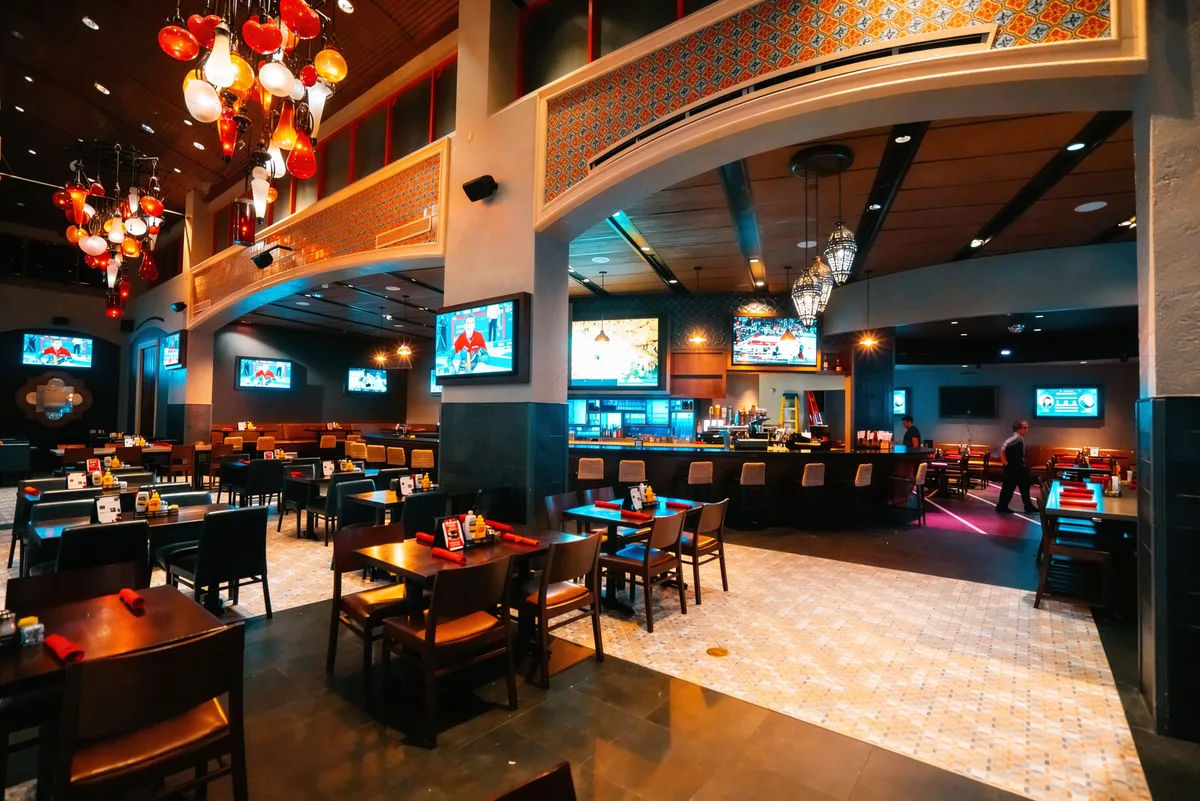
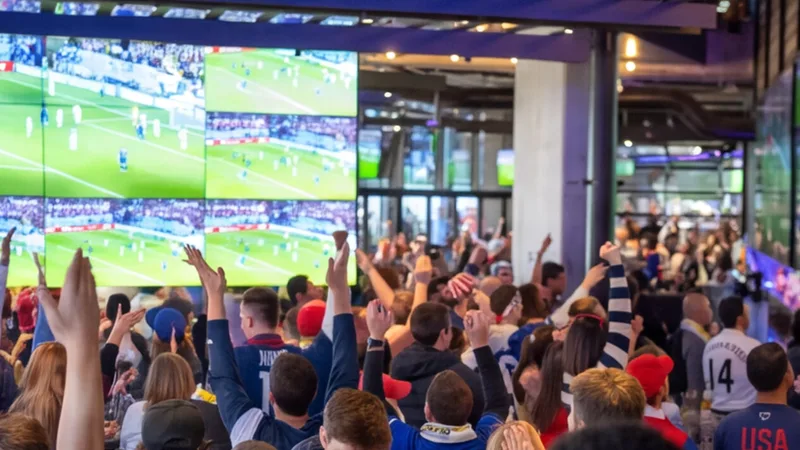
Most cities have one big sports day. Atlanta has two, and they do not want the same thing. Saturday is college football, which means several games running at once and a crowd that wants all of them. Sunday is the Falcons, which means one game everywhere and a room that moves together. Most systems here can do one or the other. So on the day they cannot, half the screens show the wrong feed, the audio is fighting itself across the room, and a manager is clicking through a menu while the crowd loses interest.
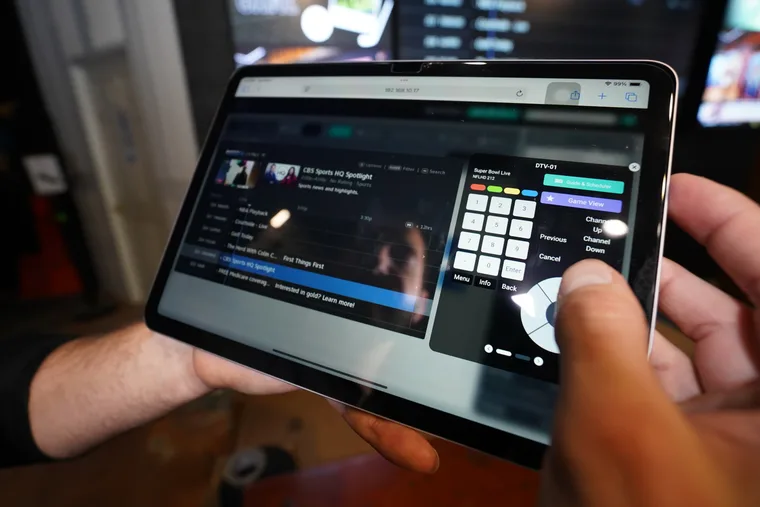
We design Atlanta sports bars for both days. Sightlines get mapped before anything is ordered, so every seat can see the game it came for. Distribution puts any feed on any screen from a tablet, and the whole room flips between a multi-game Saturday and a single-game Sunday with one tap. Audio runs in zones so the main floor can carry a fourth-quarter drive while the bar side stays talkable. Outside, the gear is specified for Georgia humidity, afternoon storms, and the pollen that quietly kills equipment here.

Sports Bar AV Across Metro Atlanta
From arena-adjacent rooms downtown to neighborhood spots inside the Perimeter and the suburbs beyond it, we build sports bar AV that handles an SEC Saturday and a Falcons Sunday without being rewired in between.
Georgia summers mean condensation-rated outdoor components and real ventilation, plus cooling on the indoor AV room to hold it at or below 75 degrees.
Summer thunderstorms roll through fast, so surge protection and backup power get sized for it and the game does not drop mid-quarter.
Spring pollen packs into fans, filters, and heat sinks, so outdoor enclosures get sealed and filtered and the rack goes on a service schedule that accounts for it.
Patio screens run high brightness with an ambient light sensor so they stay readable at midday and dim down at night instead of running flat out.
How we work
Sightlines mapped before any equipment
We do not start with a screen count. We start with whether every seat can see the game it came for, on a multi-game Saturday and a single-game Sunday.
The consult and the site walk
Most disappointing game-day rooms were quoted off a floor plan by someone who never stood in the back booth. So we start with a consult rather than a quote: what you want the room to feel like, how big it is, what it needs to do, and the budget you are working with. Then we walk it, ideally on a busy Saturday, and measure sightlines from the four places people actually sit: the bar-top, the high-tops, the booths with the worst angles, and the standing overflow that only exists when the room is full. In Atlanta we also ask which day is your bigger day, because a Buckhead room built for SEC Saturdays gets zoned differently than a room that lives on Falcons Sundays.
Design you can see, then one team on site
The other way these go wrong is that nobody sees the outcome until it is built, then wants it changed a season later. So you see the design before you commit to equipment, including the view from the seats you were worried about. Control gets programmed around the modes you actually run, so a six-game Saturday, a single-game Sunday, and a fight night are three presets rather than three arguments. One team handles the install, calibration, staff training, and documentation, and coordinates with your electrician and low-voltage trades. Before the season we build a game-day runbook with your GM and lock the admin settings so nobody breaks it during a rush.
What we build
The AV stack an Atlanta sports bar runs on
A game-day room is a handful of systems working as one. Here is what we design, program, and install, all of it built off your sightline map.
Sound that holds up in a full room
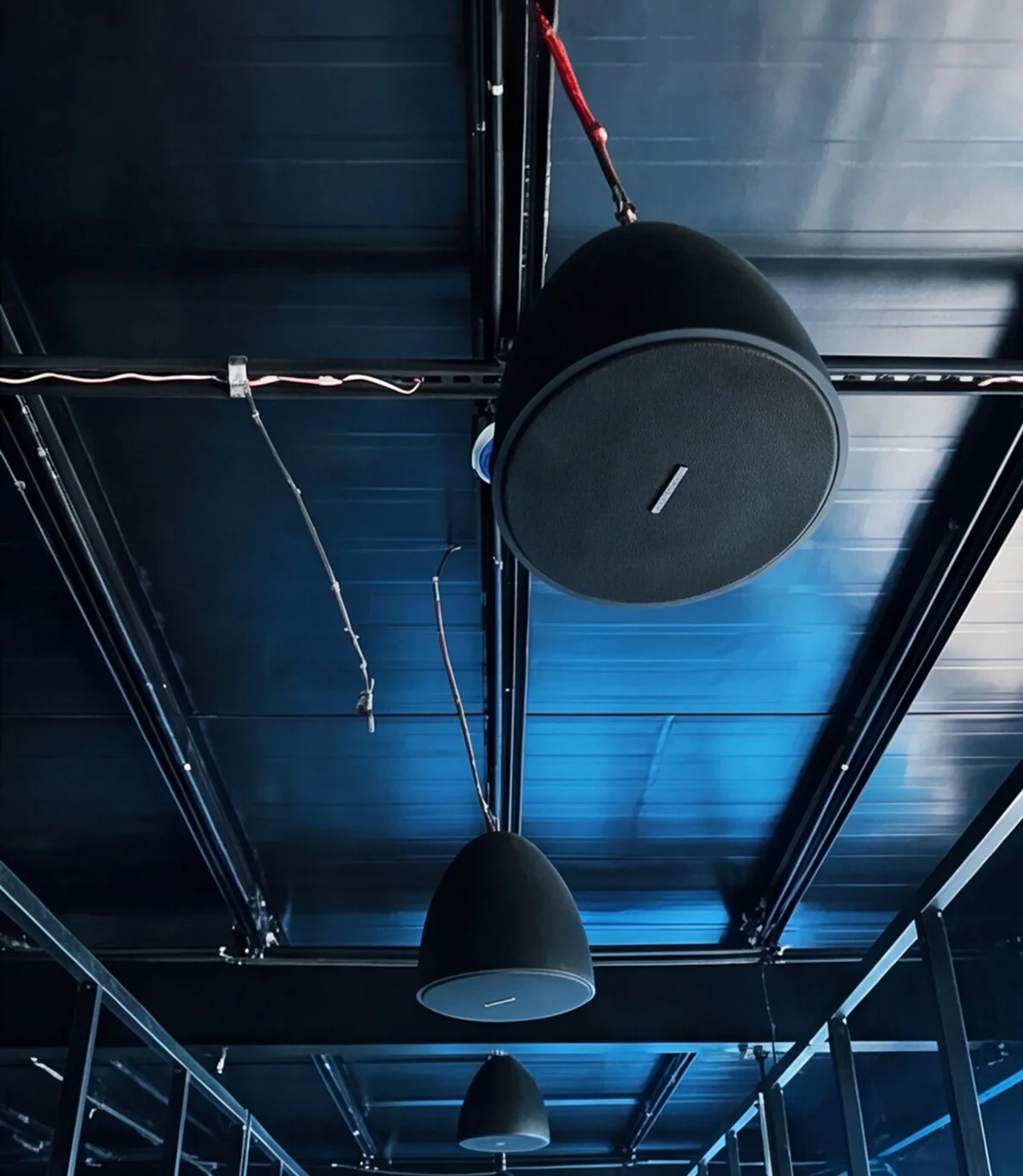
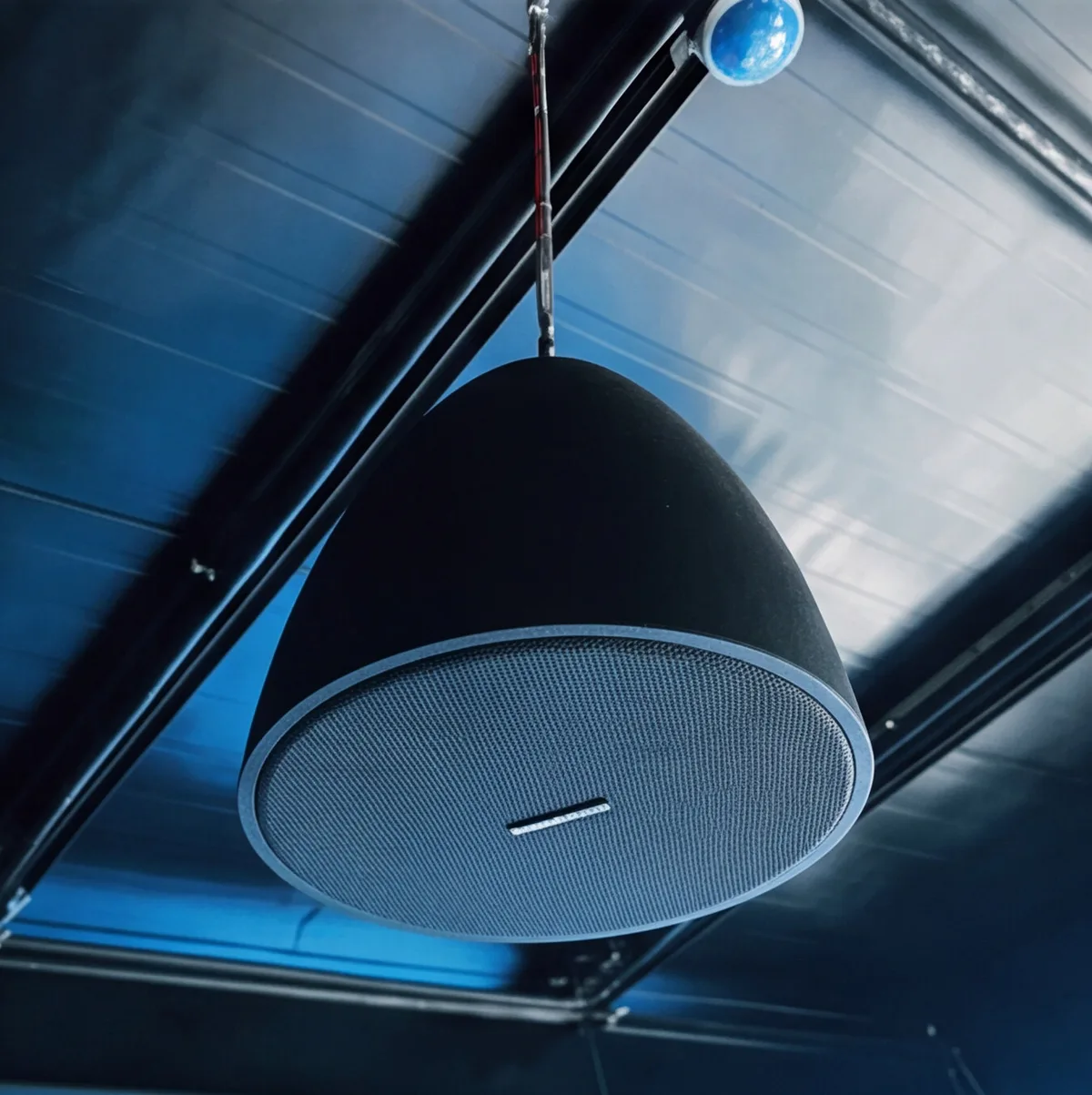
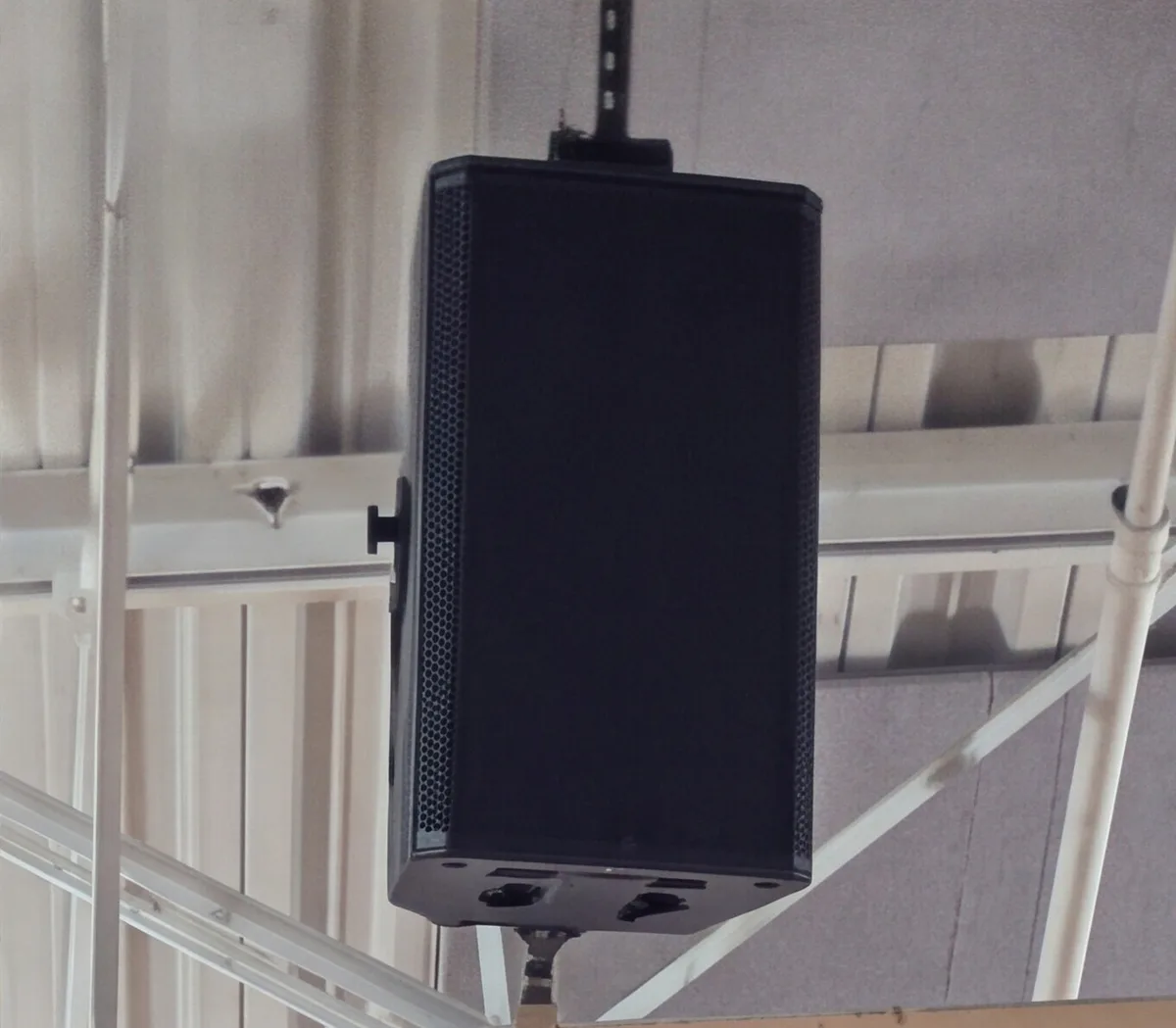
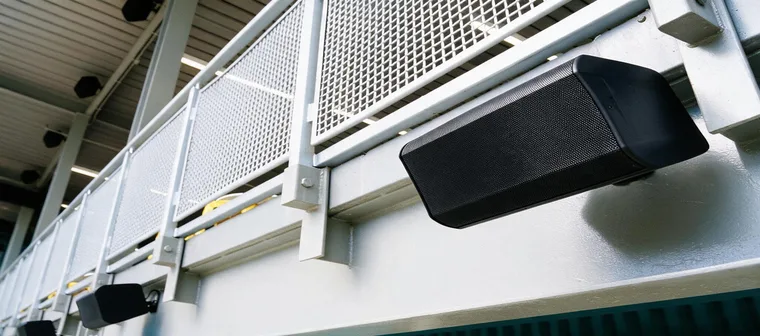
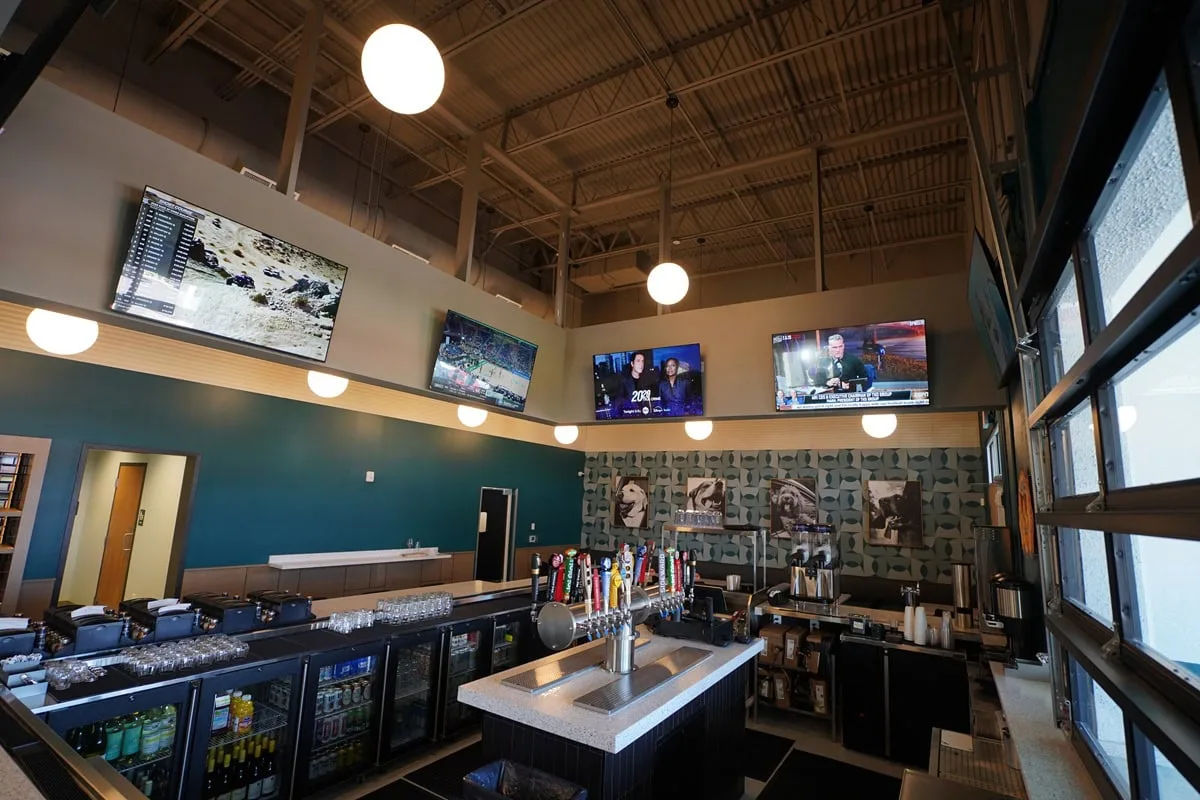
Bad sports bar audio usually comes from speakers mounted without accounting for direction, height, or what the room is made of, and Atlanta has a lot of brick and glass rooms that bounce sound everywhere. Fans do not want background noise, they want to hear the call. So the system runs in zones on a digital signal processor: the main viewing area loud enough to carry a fourth quarter, the bar side still comfortable for conversation, the patio holding its own game against street noise. Each zone gets tuned for its job instead of fighting one master volume, and the processing tracks the room as the crowd builds so your staff are not chasing the volume knob all night. Anything outdoors is weather-rated and on its own zone, because indoor and outdoor speakers are not interchangeable in this climate.
Displays, video walls, and the patio
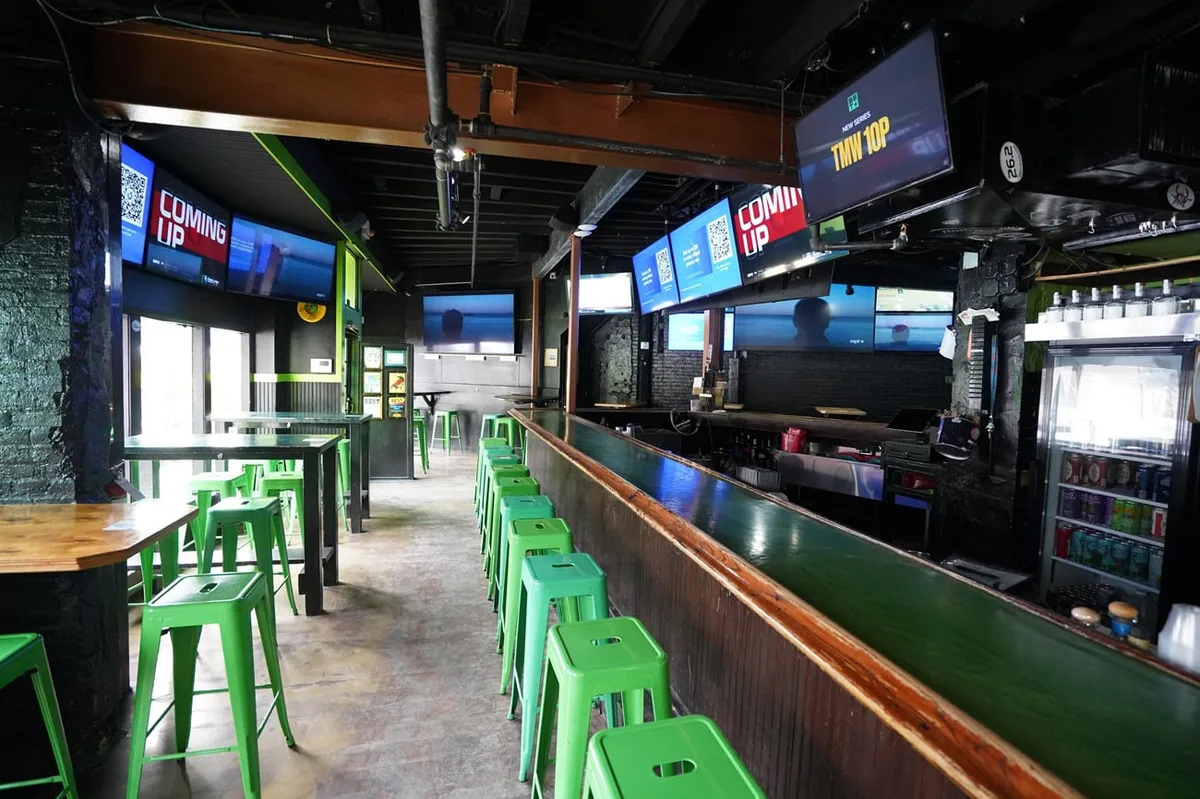
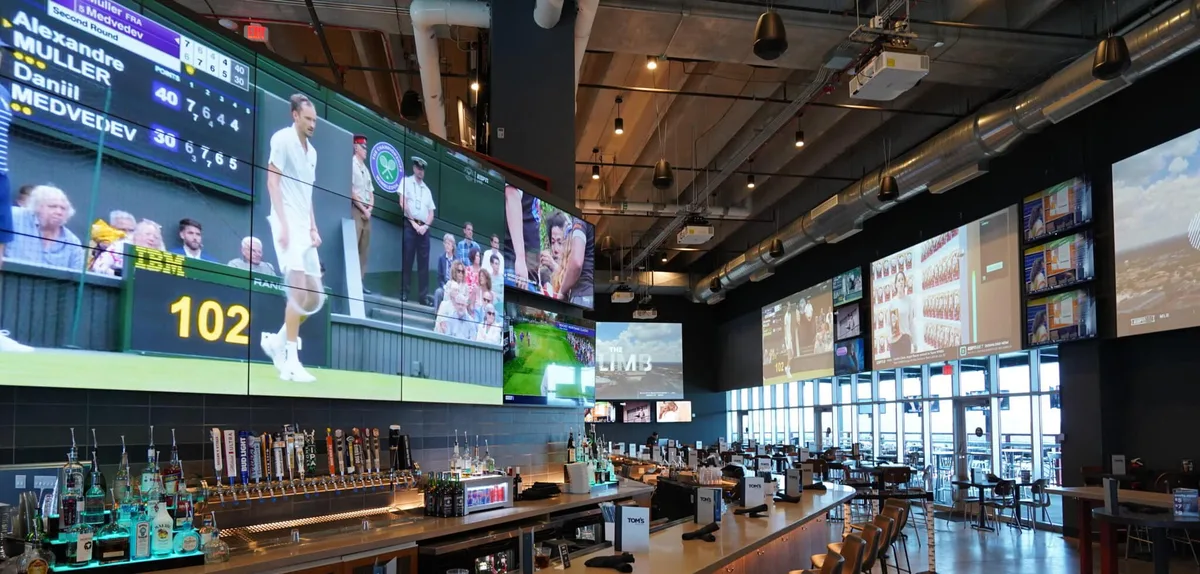
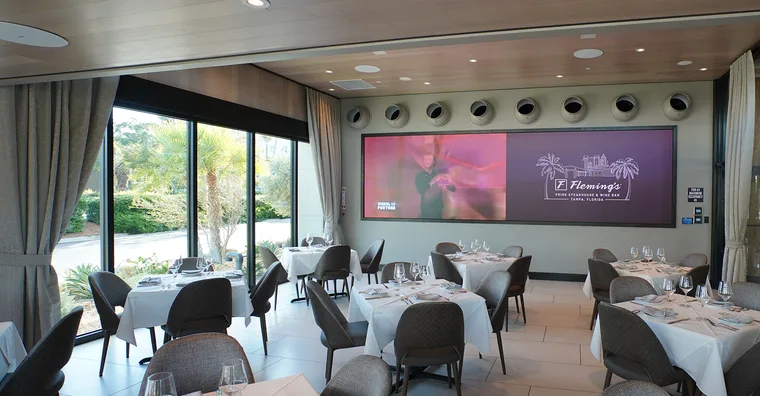
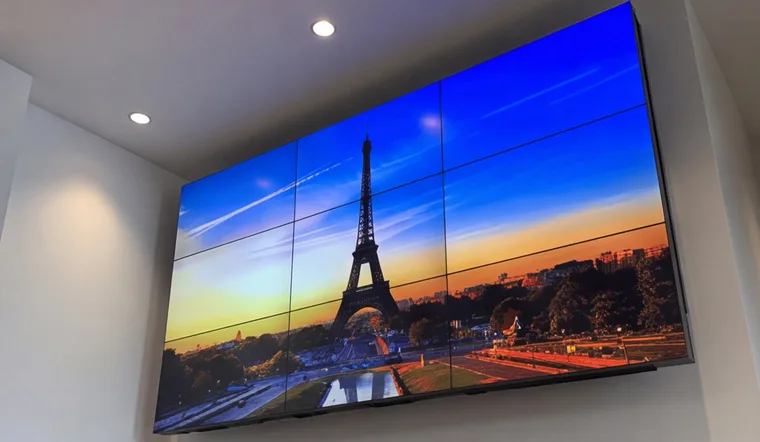
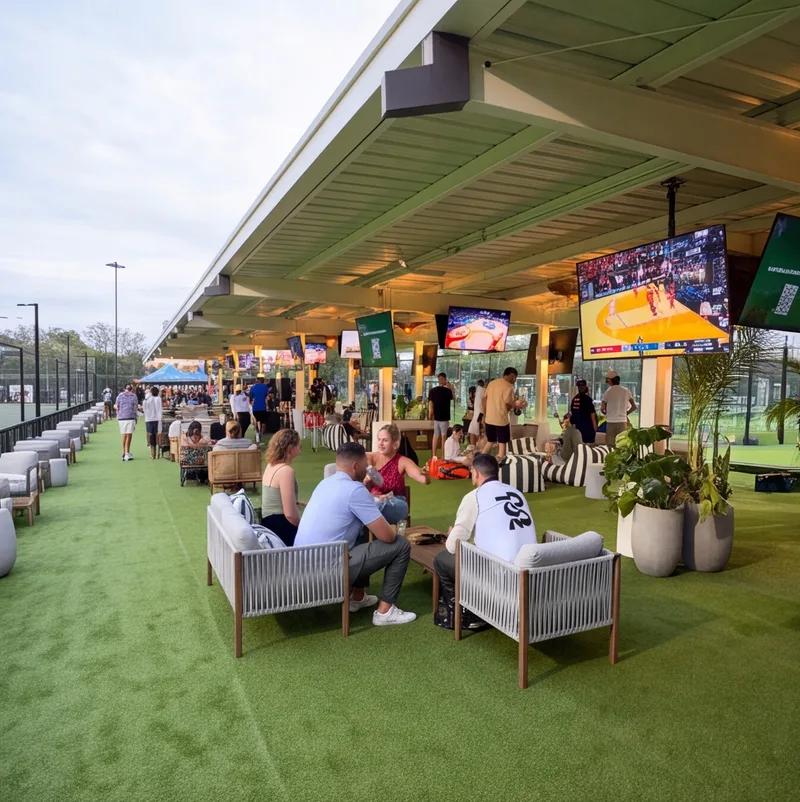
A television on a wall is not a sports bar. A screen should be a content source placed where people can actually watch it. Indoor displays are commercial grade, sized off the four sightline zones, with resolution driven by how close the nearest seats sit, and placed to beat Atlanta's mixed daylight without glare. Where one screen cannot carry the room, a video wall does the work: one large image for a Falcons game, or split into a grid so the bar reads several SEC matchups at once. Outside, patio screens get high brightness with an ambient light sensor so they lift at midday and dim at night rather than running flat out, plus sealed enclosures that keep humidity and pollen out of the electronics.
Distribution, signage, and control
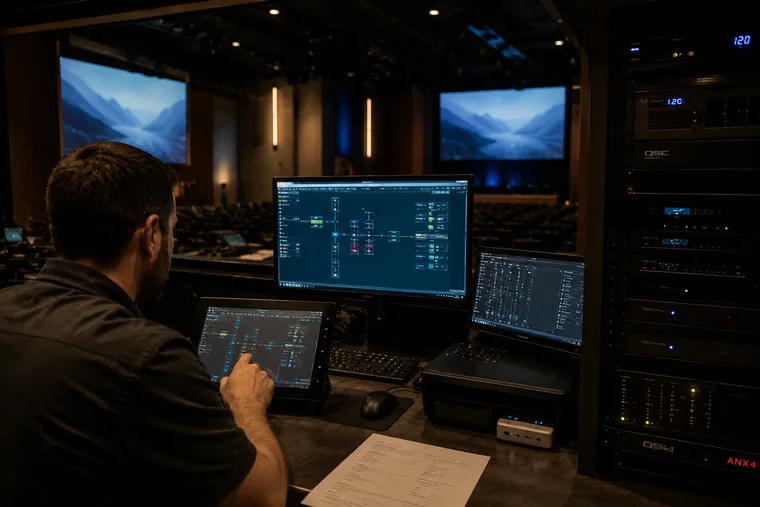
The part nobody sees is the part that fails at the worst moment. Content moves over an audiovisual network so any source reaches any screen without lag or signal drop, with matrix switching so you can route any game to any zone and build custom viewing areas, all at 4K. Satellite, cable, and streaming sources get consolidated into one clean rack instead of a pile of boxes behind the bar, with scheduling so nobody misses a noon kickoff. Digital signage earns its keep between games: menu boards you can update live for game-day specials, and displays carrying scores, stats, and what is on next. All of it runs on a dedicated AV network rather than sharing bandwidth with your point of sale or guest Wi-Fi, which is the most common reason a wall freezes during a rush.
Why Atlanta sports bars trust us with it
Built for game day, not the spec sheet
Atlanta runs one of the densest sports calendars in the country and a climate that is harder on equipment than most people expect. Here is where our depth shows, and where our scope ends.
The booths are the test
Sightline mapping is what separates a real sports bar from a restaurant with televisions. The booths are usually the worst seats in the building because of walls, partitions, and the backs of adjacent booths, so we model them individually instead of treating the room as one uniform space. Watch for people craning their necks to see a screen instead of talking to their table, and you are watching a design failure. When someone has to work that hard to follow a game, they do not come back. Get the angles right and the room fills its own seats on the day that matters.
Support after opening night
Crunchy Tech started in 2008 as an AV support operation, which is an unusual origin for an integrator and the reason the systems get built the way they do. When you spend years fixing other people's work, you learn exactly where installations cut corners. That shows up in a rack you can actually service: fully enclosed, every cable labeled at both ends, power separated from audio and data, so someone opening it three years from now can follow every run without guessing. Most of the cost of a bad AV install is not the install, it is everything that has to happen later because nobody can find anything. Around 47 percent of support tickets close inside an hour and roughly 72 percent within a day, usually without sending anyone to the venue.
The environment decides the equipment
If you understand the environment, you understand the equipment. Consumer displays put outside in Georgia fail, and a washed-out or dead screen means a table with a bad experience, which on a busy day is a full table. Humidity, summer heat, and afternoon thunderstorms are constants here, so outdoor gear gets weather-rated components, sealed enclosures, and mounting engineered for real exposure. Spring pollen is the Atlanta problem nobody plans for: it packs into fans, filters, and heat sinks, and it will shorten the life of anything breathing outside air. Indoors, the biggest single factor in system lifespan is whether the AV room has air conditioning, because a rack of amplifiers and processors in a sealed closet cooks itself and collects dust. Keep that room at or below 75 degrees, and expect outdoor work to carry a higher budget and a shorter lifecycle.
What it earns back
How a game-day room pays for itself
A sports bar AV system is not a cost line. It decides what your biggest weekend is worth. That shows up in two places: the seats you can finally sell, and how you scope the spend.
Two big days instead of one
A seat nobody can watch the right game from sits empty on the day you most need it full, which is the whole reason we map sightlines first. Fix the angles, the glare, and the booth nobody could see from, and the back of the room turns over with the rest of it. Atlanta's advantage is that the calendar gives you two anchor days rather than one, so a room that genuinely handles a multi-game Saturday and a single-game Sunday is earning twice a weekend instead of once. The patio extends both, since outdoor dining runs most of the year here and an outdoor area that can actually carry a game in direct sun adds capacity without a buildout or new indoor square footage. Between games, the same screens run signage that moves menu items instead of sitting dark.
Good, Better, Best against one design
Most owners price AV like retail: twenty televisions cost a certain amount, so twenty screens on a system should not cost much more. Worth being plain about the gap, because the rack, the distribution, and the control take a serious share of the budget before you buy a single screen or speaker. So we quote Good, Better, and Best against one design, per zone, which means your dining floor can be Good while your main viewing area is Best. Good is a real recommendation, not a strawman: one room watchable from every seat, zoned audio, tablet control. Better usually adds the patio and the multi-game routing that makes Saturdays work, which is where the math tips. If your budget is short of the room you are describing, we would rather value engineer it honestly than sell you something you will be babysitting in three seasons.
How do you design an Atlanta sports bar for multi-game college Saturdays and single-game Falcons Sundays?
They are genuinely different rooms, and the design has to do both without being rewired in between. On a college Saturday you need independent feeds per zone, so the bar can run one matchup while the dining room runs another and the patio runs a third, which means the routing and the audio zoning have to be built for simultaneous content from the start. On a Falcons Sunday the room works the other way: one feed everywhere, audio zones collapsing into a shared build so the whole crowd reacts to the same play at the same time. We handle that with presets rather than manual switching, so Saturday and Sunday are each one tap on the tablet, along with fight nights and any other mode you actually run. The part that makes it work is the sightline map, because a room that can only show one game well is wasting half its weekend.
How much does a sports bar AV system cost in Atlanta?
It depends on the indoor and outdoor scope, how many audio zones you need, the size and resolution of any video wall, and the size of the venue. The honest starting point most owners are not expecting: the back-end rack, distribution, and control take a serious share of the budget before you have bought a single screen or speaker. From there we quote three tiers against the same design. Good gets a single room watchable from every seat with zoned audio, source distribution, and tablet control. Better usually adds the patio and the multi-game routing that makes Saturdays work, and that is where the return tends to tip. Best layers in multi-room video walls, signage, and integrated control for a flagship or a multi-location standard. We will quote it per zone, so your dining floor can be Good while your main viewing area is Best. If the budget is short of the room you are describing, we will tell you and value engineer it rather than sell you something you will regret.
Does Atlanta pollen actually damage AV equipment?
Yes, and it is the thing local operators underestimate most. Pollen behaves like a fine abrasive dust: it gets pulled into cooling fans, packs into filters and heat sinks, and coats the inside of anything that breathes outside air. Equipment that should last years starts running hot, and heat is what actually kills electronics. So outdoor enclosures get sealed and filtered rather than simply vented, patio components get specified with that exposure in mind, and the rack goes on a service schedule that includes cleaning rather than waiting for a failure. Indoors the same principle applies to the AV room, which needs to be sealed, clean, and cooled. We have opened racks that looked a decade old after a few months because the room had no air conditioning and nothing kept the dust out. It is a preventable expense, and it is cheaper to design for than to replace components over.
Do you handle livestreaming, cameras, or video production?
No. We are a design-build AV integrator. We do not install or operate cameras, we do not shoot or edit video, and we do not run streaming as a service. What we do is build the infrastructure that supports whatever streaming or recording you choose: clean audio feeds to your partner's encoder, documented signal paths so a videographer knows exactly where to plug in, and a dedicated network engineered for the uplink. We design the system around how the bar actually runs, procure the hardware, install it, calibrate it, train your staff, document all of it, and support it for the life of the system. The content and streaming side belongs to specialists, and our job is to make their job easy.
What We Do Here
Services available in Atlanta
Every system is designed, installed, and supported by our own team in Atlanta — never subcontracted.
AV Consulting
AV consulting from an audio visual consultant who joins at the architectural phase, designs the technology into the plan and steers the project around your business outcome.
AV Consulting in Atlantaarrow_forwardVideo Wall Solutions
Commercial video walls across LED, LCD and Direct View. Designed, integrated, installed and supported by a national design-build AV integrator.
Video Wall Solutions in Atlantaarrow_forwardCommercial Sound Systems
Commercial sound system design and installation: multi-zone audio engineered around how your space is used, wired and tuned on site, and supported as a partner.
Commercial Sound Systems in Atlantaarrow_forwardDigital Signage Services
Design-build digital signage for hospitality and enterprise: commercial displays, content management, and installation that keeps your screens selling and current.
Digital Signage Services in Atlantaarrow_forwardAV Control Systems
Design-build AV control systems: one iPad, wall panel, or browser runs every display, audio zone, lighting scene, and source in the room. Programmed and supported in-house.
AV Control Systems in Atlantaarrow_forwardAV Programming
AV programming that starts with the right design: a vetted, interconnectable stack unified into one control system, so the whole room runs from one simple interface.
AV Programming in Atlantaarrow_forwardLearn more about our Sports Bars AV solutions
Operators who run on our systems
Client successes drive Crunchy Tech to become better. Below is how our customers feel about us.
Working with Crunchy Tech was a fantastic experience from start to finish. They handled the sale and installation of all our sound and TV equipment at The County Bar in Aviston, IL, and absolutely nailed it. We were on a very tight deadline, and they not only met it—they delivered top-notch quality and service the entire way. Highly professional, responsive, and easy to work with. We couldn't be happier with the results.
Crunchy has done an amazing job on our A/V install. The sound is perfectly balanced throughout our many zones and the entire system is super simple to use.
Just do it. Spend the money. It’s well worth it. It’s not worth your time, hassle, energy, and stress of trying to make it look right and do it right when there’s somebody who has been doing it for years and has perfected the craft.
Working with Crunchy Tech was a fantastic experience from start to finish. They handled the sale and installation of all our sound and TV equipment at The County Bar in Aviston, IL, and absolutely nailed it. We were on a very tight deadline, and they not only met it—they delivered top-notch quality and service the entire way. Highly professional, responsive, and easy to work with. We couldn't be happier with the results.
Crunchy has done an amazing job on our A/V install. The sound is perfectly balanced throughout our many zones and the entire system is super simple to use.
Insights
Immersive Dining & Bar Experiences: LED Video Walls, Spatial Audio & Synchronized Lighting
How LED walls, spatial audio, and lighting automation are transforming restaurants and bars into destination experiences.
Read article arrow_forwardWhy Plug-and-Play Sports Bar AV Packages Will Cost You the 2026 World Cup
Consumer-grade AV cannot handle the demands of World Cup game day. Here is what your sports bar actually needs.
Read article arrow_forwardLet's design for both of your big days
Tell us about the venue: the neighborhood, the square footage, the indoor and patio split, whether Saturday or Sunday is your bigger day, and what breaks when the room is full. We will start with a consult to understand what you are trying to accomplish, then walk the room, ideally on a busy game day, and come back with one engineered recommendation instead of a parts list.
- Four sightline zones modeled before any screen: bar-top, high-tops, booths, standing overflow.
- Multi-game Saturday and single-game Sunday as presets, not a manual rewire.
- Patio screens engineered for Georgia humidity, storms, and pollen season.
- Source distribution and tablet control the bartender hired last week can run.