Outdoor Digital Signage

Outdoor Digital Signage

Rated for the weather that endsotherscreens

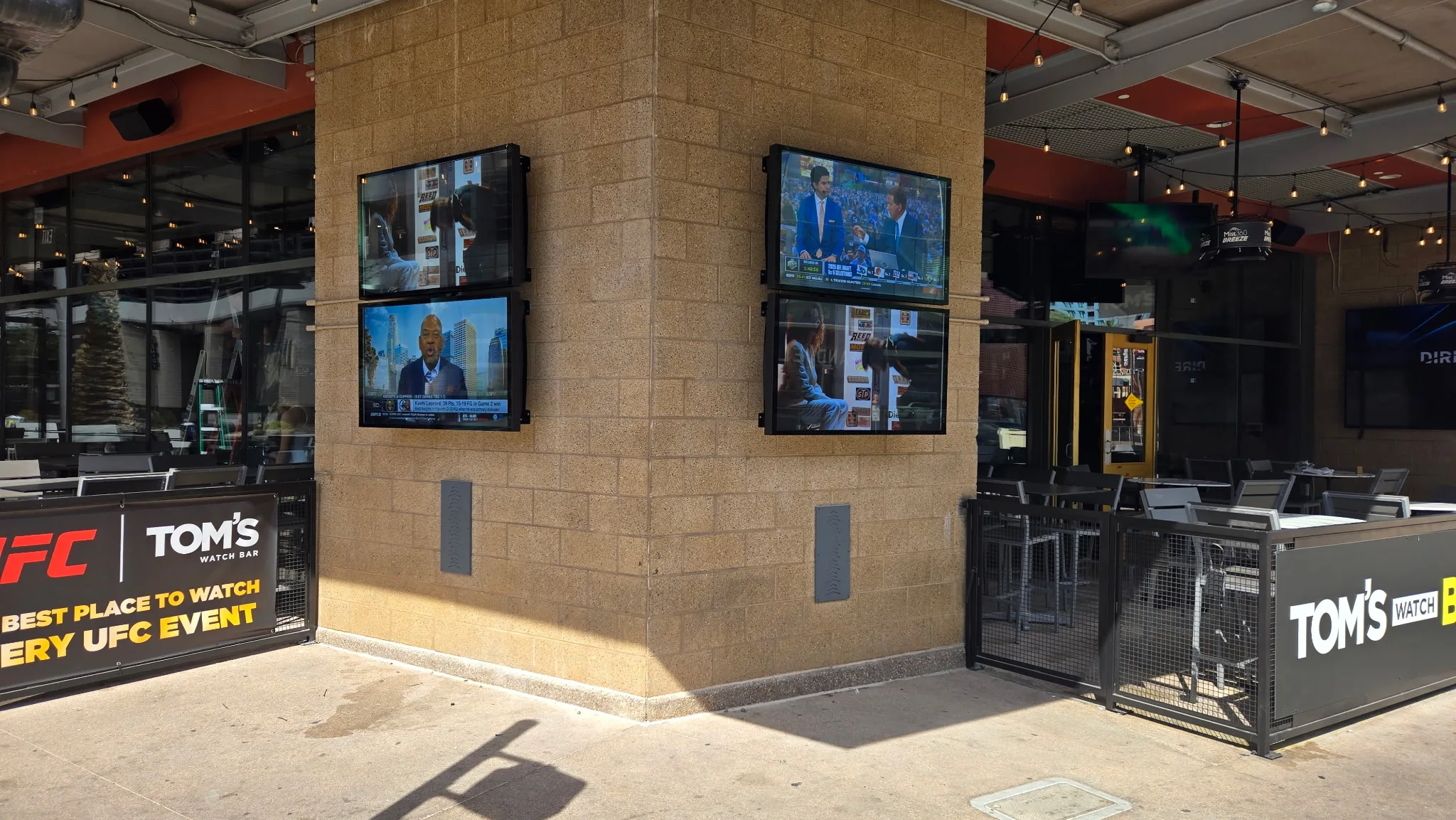
Patio displays, storefront window screens and outdoor menu boards engineered for direct sun, driving rain and Florida summers. Designed and installed by one accountable team.

Digital Signage Services

Outside is where consumer hardware goestodie

Every operator with a patio has seen it: a TV in a plastic bag of an enclosure, washed out by 2pm sun, dead by the second summer. One client came to us after losing their third consumer TV in two years to the same covered-but-not-sealed patio. The replacement cycle had cost more than a properly rated display would have on day one. Outdoor space is some of the highest-value square footage a venue owns, and most of the screens pointed at it were never engineered to be there.

Commercial outdoor digital signage displays are a different engineering problem from indoor. The displays have to beat direct sunlight, which means several times the brightness of an indoor panel. It has to shed heat in summer and keep itself warm in winter. It has to seal against rain, dust, grease and the cleaning crew's pressure washer. Every one of those is a specification decision we make before anything gets mounted.

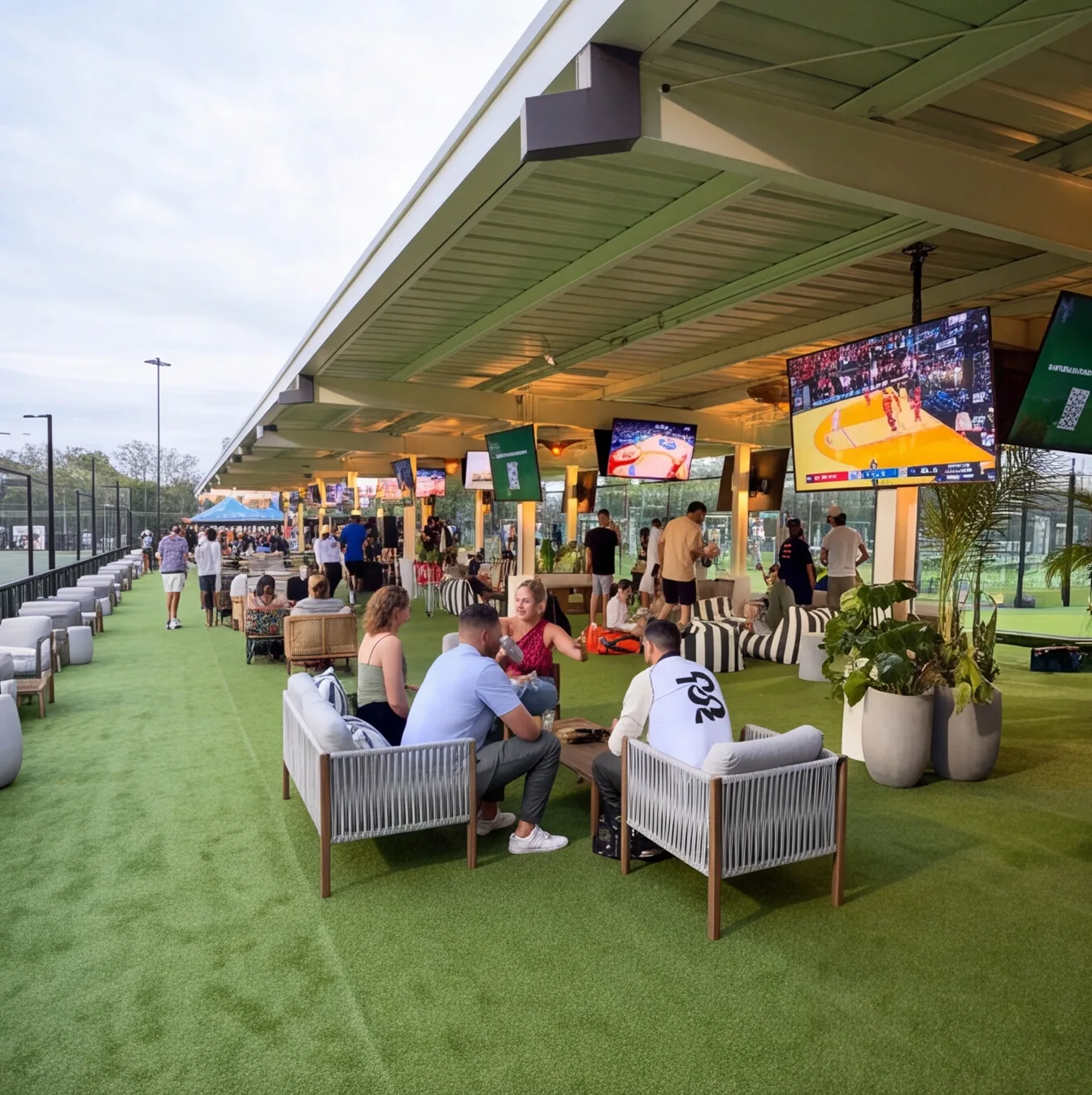
The payoff is capacity you already own. Picture a Saturday in October: every indoor seat taken and a 150-seat patio with crisp outdoor viewing effectively doubling your game-day footprint without adding a square foot of building. The screens run on the same cloud platform as your indoor digital signage - one dashboard, inside and out. In our 18 years and 3,000+ installations, our designers and engineers have specified digital outdoor signage from Florida humidity to building-mounted LED.

Capabilities

Four jobs digital signage outdoorscreens do

Different positions, different engineering — one platform running all of it.

Capability 01

Patio & Open-Air Displays

The Challenge

Patios empty out when there's nothing to watch, and consumer TVs in outdoor enclosures die young and look it.

What We Deliver

IP-rated, high-brightness displays with engineered thermal management keep outdoor viewing crisp year-round — and keep guests on the patio through the late game.
  • IP65/IP66-rated displays and enclosures
  • Brightness specified against measured sun exposure
  • Paired audio zones for full patio environments
  • Heating and ventilation for year-round operation

A 150-seat patio with compelling viewing doubles game-day capacity

Properly specified commercial AV runs 7–10 years (Panasonic)

Engineering

What outdoor-rated actually means

IP ratings, brightness, and thermal management aren't spec-sheet trivia. They're the difference between a ten-year display and a two-summer disposable.

Ingress protection. IP65 is the floor for rain-exposed equipment. IP66 is what we recommend where driving rain, storms, or pressure washing are realities — which, for a working patio, is everywhere. Equipment near ground level or flood-prone zones moves to IP67/IP68, and bar or kitchen-adjacent gear gets NEMA 4 enclosures rated for hose-down environments.

Brightness. An indoor panel is invisible in direct sun. Outdoor displays are specified in nits against measured ambient light at the actual mounting position — a shaded patio, a west-facing wall, and a storefront window each call for different panels. Sunlight readability is engineered, never assumed.

Thermal management. Commercial outdoor displays carry ventilation, fans, and heaters to operate through summer heat and winter cold. Consumer electronics overheat, throttle, and shut down — usually on the hottest game day of the year, which is exactly when the patio is full.

Permitting and lead times. Permanent outdoor installations typically run six to eight weeks of permitting, and commercial-grade outdoor displays carry four-to-six-week equipment lead times. We sequence both into the project schedule up front, so your opening date is built on real numbers.

Pro tip: if you want the patio ready for football season, the permitting clock means design decisions need to happen in late spring. Work backward from the first kickoff, not forward from the first meeting.

Use this as your planning checklist — three questions to ask before you sign with any outdoor signage vendor: 1. What IP rating is specified, and is it matched to my actual exposure — rain, pressure washing, ground level? 2. Was the brightness specified from measured ambient light at my mounting positions, or from a catalog default? 3. Who owns the permitting timeline, and what happens to the schedule if it slips?

Outdoor-rated digital signage
InstallWhat outdoor-rated actually means

Window displays

Storefront windows that stopfoottraffic

Digital window displays turn glass into media space — if the panel can out-shine the sun behind the shopper.

Storefront windows that stop foot traffic
InstallStorefront windows that stop foot traffic

A storefront window is the one screen position where your content competes directly with daylight. Standard panels read as black rectangles from the sidewalk. High-brightness window displays are engineered for exactly this position — panels bright enough to punch through afternoon glare, with thermal designs that tolerate the greenhouse heat between glass and screen.

Content strategy matters double here. A window display runs for an audience walking past at three miles an hour, which means bold, legible, motion-aware content scheduled to the daypart — morning commuters, lunch walkers, evening reservations. The same cloud platform that runs your interior screens schedules the window, so the sidewalk message and the in-store message stay in step.

Scale escalation

When the answer is an outdoorLEDwall

Past a certain size and sun exposure, LCD runs out. That's where direct-view LED takes over — and where our video wall practice picks up.

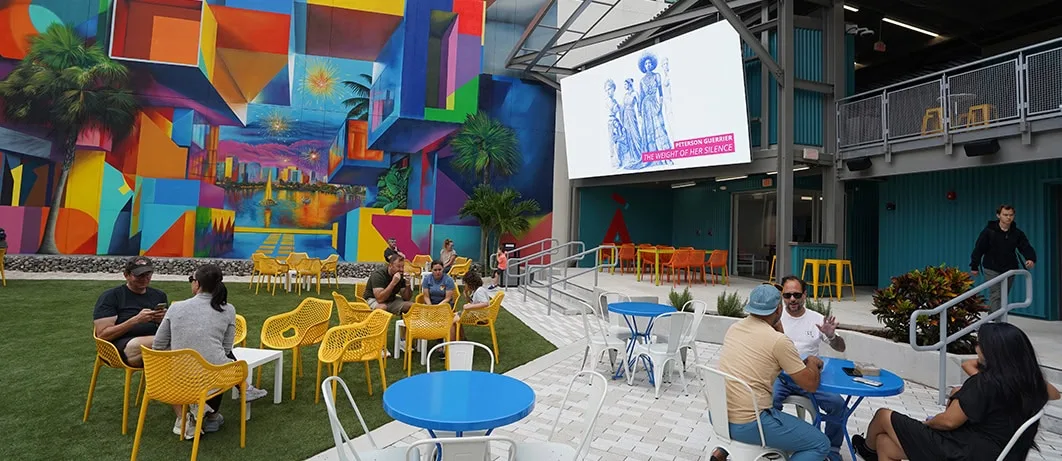
Outdoor LCD displays top out in size and in brightness. When the application calls for a wall-scale canvas — a patio centerpiece for game day, building-mounted brand signage, a courtyard screen readable from a hundred feet — direct-view LED is the right tool. LED panels are modular, sunlight-dominant, and built for exactly this scale.

That work lives in our LED video wall practice, where pixel pitch, viewing distance, and outdoor structural engineering get their own page. The two systems aren't competitors; plenty of our outdoor projects pair an LED centerpiece with weather-rated LCD signage and menu boards around it, all running on one content platform.

If you're not sure which side of that line your project sits on, that's a fifteen-minute conversation — bring the space, we'll bring the math.

Pro tip: use viewing distance as your first filter. If the farthest guest sits more than forty or fifty feet away, you're in LED territory no matter what an LCD vendor tells you — and AVIXA's design research shows getting the specification right up front cuts total ownership cost by 15%.

Outdoor LED digital signage
InstallWhen the answer is an outdoor LED wall

Platform

Plays well with everythinginside

Outdoor signage isn't a separate system. It's the same platform, weatherproofed.

Outdoor digital display
InstallPlays well with everything inside

One platform, inside and out. The outdoor displays we install run on the same cloud content management and control fabric as your indoor signage, menu boards, audio zones, and video walls. One login schedules the patio, the window, and the dining room — including outdoor menu boards. The platform works with the major commercial outdoor display lines and AV-over-IP distribution, and bridges to the gear you already own where it meets outdoor duty requirements.

Network segmentation that keeps POS safe. Outdoor endpoints live on dedicated network segments so signage traffic never touches your point of sale. Real-time proof-of-play confirms every exposed display — patio, window, walk-up — is showing the current content. Audio, lighting, and display control unify for full patio environments where the screens are one element of a designed scene.

Good/Better/Best, sized to the space. Good covers a weather-rated display package that works. Better adds zoned audio and daypart-scheduled content for the full patio environment. Best turns the outdoor space into a destination — LED centerpiece, layered audio, lighting scenes, and event-ready promotional content. Every tier is a real recommendation.

Cheapest expansion you'll build

Your patio is the cheapestexpansion you'll ever build

More Digital Signage Services

More About DigitalSignageServices

Your patio is the cheapestexpansion you'll ever build

Tell us about the outdoor space you're not using after dark or in the heat. We'll spec what it takes to make it work year-round — and tell you straight if LED, LCD, or a mix is the honest answer.

Let's Talk
What clients say

Operators who run on our systems

Client successes drive Crunchy Tech to become better. Below is how our customers feel about us.

Just do it. Spend the money. It’s well worth it. It’s not worth your time, hassle, energy, and stress of trying to make it look right and do it right when there’s somebody who has been doing it for years and has perfected the craft.

Matt Moore logo
Matt Moore
IT Systems Administrator · Capone's Hideout

You're a great partner with Florida Hospital and this project will make a difference in Children's Health.

Des Cummings logo
Des Cummings
Vice President of Florida Hospital · Florida Hospital

Working with Crunchy Tech was a fantastic experience from start to finish. They handled the sale and installation of all our sound and TV equipment at The County Bar in Aviston, IL, and absolutely nailed it. We were on a very tight deadline, and they not only met it—they delivered top-notch quality and service the entire way. Highly professional, responsive, and easy to work with. We couldn't be happier with the results.

Clint Flowers logo
Clint Flowers
Owner · The County Bar

Crunchy's AV Services are outstanding. Staff members are experts, who really extend themselves to find the right technology for helping us reach our marketing goals in creative ways. The best thing about working with Crunchy is collaborating with the staff – they are patient, responsive, knowledgeable, and available.

Shannon McHale logo
Shannon McHale
Marketing Specialist · IGT

Crunchy has been great to work with. They communicate well and deliver as promised.

Brian Dornbush logo
Brian Dornbush
Facilities & Operations Manager · Orange County Library System

The work Crunchy has been doing is a game changer for this industry.

Steven Fandozzi logo
Steven Fandozzi
VP of Information Technology · Foundation Partners

Being able to reuse the existing structure created a much lower cost for the client and they were ecstatic.

Seminole State College logo
Seminole State College
Facilities · Seminole State College

Crunchy has done an amazing job on our A/V install. The sound is perfectly balanced throughout our many zones and the entire system is super simple to use.
Steve Glum logo
Steve Glum
Chief Marketing Officer · Ace Cafe

What does outdoor-rated digital signage mean and what should I require in the spec?

Three engineering disciplines distinguish a true outdoor-rated display from an indoor display sitting in the weather. Require all three in your spec, and reject anything that doesn't carry them:

  • IP-rated sealed enclosure. IP65 minimum, IP66+ for direct rain exposure. Indoor panels and consumer TVs aren't sealed against moisture and won't survive their first summer outside.
  • High-brightness panel. Several times brighter than indoor panels to beat sunlight. Shaded patio: 1,500–2,500 nits. Direct sun: 2,500–5,000+ nits. Sunlit storefront window fighting afternoon glare: 5,000+ nits. Outdoor LED for wall-scale applications runs 5,000–8,000+ nits.
  • Thermal management. Ventilation fans for summer heat, sub-freezing heaters for winter, ambient-light sensors that auto-dim. Without it, panels overheat in direct sun and freeze-fail in winter.

A consumer TV in a plastic enclosure has none of that and typically lasts 1–3 summers with a voided warranty. Purpose-built outdoor displays cost more upfront and far less per year of service over their 7–10 year service life (industry research on commercial-grade displays).

How bright does the display need to be and how do you spec it?

Brightness depends entirely on the mounting position. A fully shaded patio needs far less than a west-facing wall or a storefront window fighting afternoon sun. We measure ambient light at the actual mounting position and specify the panel in nits against it, rather than guessing from a catalog. A shaded patio might call for 1,500–2,500 nits; direct sun calls for 2,500–5,000+ nits; a sunlit storefront window can need 5,000+ nits to punch through afternoon glare. Over-specifying wastes budget; under-specifying buys an unreadable screen. Outdoor LED for wall-scale applications runs 5,000–8,000+ nits — the gold standard for direct sun.

When do I need an outdoor LED wall instead of an outdoor display?

Scale and viewing distance decide it. Outdoor LCD digital signage displays work for patios, windows and walk-up ordering points. Once you want a wall-sized canvas, a patio centerpiece for game day or a courtyard screen readable from a hundred feet for example, direct-view LED is the right technology. Use viewing distance as your first filter. That is, if the farthest guest sits more than 40–50 feet away, you're in LED territory no matter what an LCD vendor tells you. That work lives in our LED video wall practice, and many projects combine both - an LED centerpiece with weather-rated LCD signage and menu boards around it - all running on one content platform.

Do outdoor signage installations need permits?

Permanent outdoor installations usually require permitting, and that typically runs 6–8 weeks depending on jurisdiction. Commercial-grade outdoor display equipment carries 4–6-week lead times. We build both into the project schedule from day one and handle the coordination, so the timeline you approve is the timeline you get. Pro tip: if you want the patio ready for football season, the permitting clock means design decisions need to happen in late spring. Work backward from the first kickoff, not forward from the first meeting.

How much does digital signage for outdoor installation cost?

Price tracks four things: screen size, brightness rating for your sun exposure, the enclosure and mounting hardware built to survive that exposure, and the content management platform running behind it. A single-panel sign outside a restaurant entrance and a multi-panel display wall running a retail campus aren't in the same conversation. So rather than quoting a number off a spec sheet, we walk the site, measure the actual sun and weather load the display has to survive, and build a budget around what that location demands. You get a clear breakdown of what drives the number before you commit to anything.

What maintenance does outdoor displays need, and how to keep It from overheating?

Spec it right at the start and the maintenance load drops fast. Sealed enclosures keep weather out, filters and ventilation paths get checked on a schedule and remote monitoring flags a problem before a guest notices the screen glitching. Heat is the bigger long-term threat, more than rain. We manage it through enclosure ventilation and fan cooling, heat sinks sized to the display's thermal output, and mounting angles that keep direct afternoon sun off the panel. Brightness also gets tuned to the display's rated operating temperature, since running a panel at full brightness in 100-degree heat shortens its life fast. Indoor signage, outdoor displays, window screens and menu boards all run on one cloud platform with a single login. We offer tiered support plans, and every outdoor install gets engineered for real heat and real weather, with enough clearance built into the mount for a crew that occasionally power-washes past the drip line.

What should I look for in an outdoor digital signage company?

Weather rating is the first filter to check. A lot of outdoor digital signage companies spec an indoor-rated display, drop it in a weatherproof enclosure and call the whole thing outdoor-ready. It fails the first summer it sits in direct sun. Look for a company that specs the display panel itself for outdoor use and designs brightness, viewing angle and ventilation around your actual sun exposure and mounting height. Ask how they handle glare at the hours your audience actually walks by, and ask what happens when a panel fails. A one-off outdoor sign often means a multi-week repair unless the company stocks parts for what they installed. We design and install outdoor digital signage rated for the exposure it's actually getting on your site.
Get Started

Ready to Transform Your Space?

Tell us about your vision and we'll put together a custom proposal.

  • Free 1-on-1 phone consultation
  • Professional installation with minimal downtime