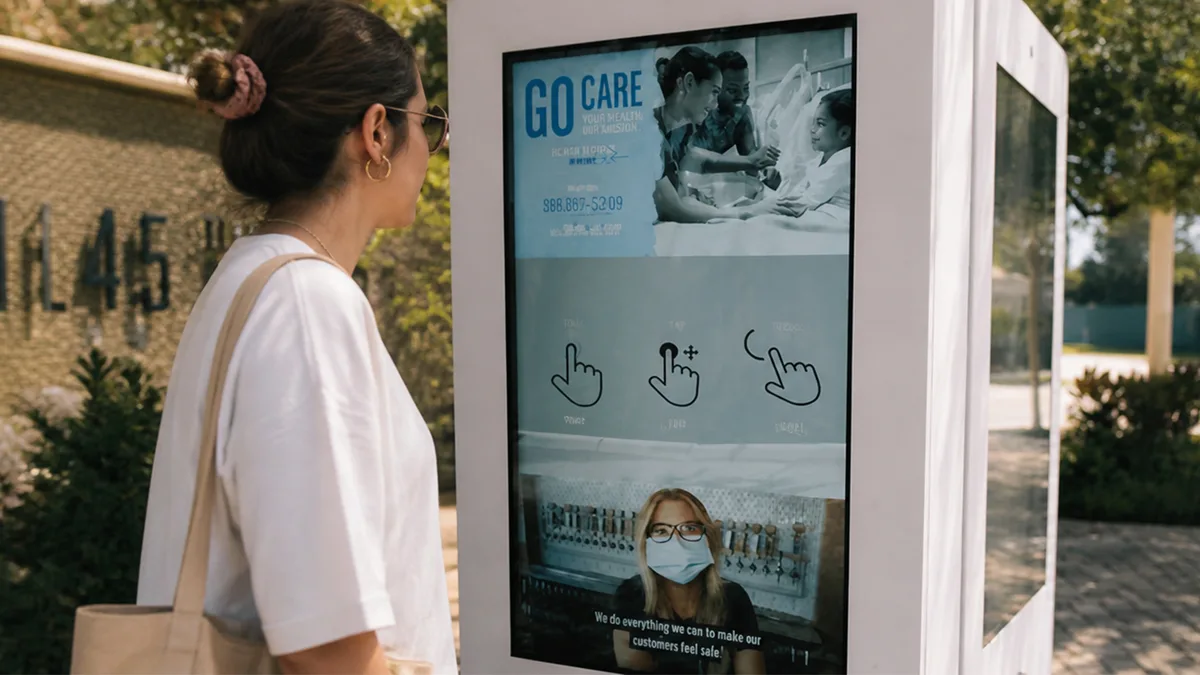
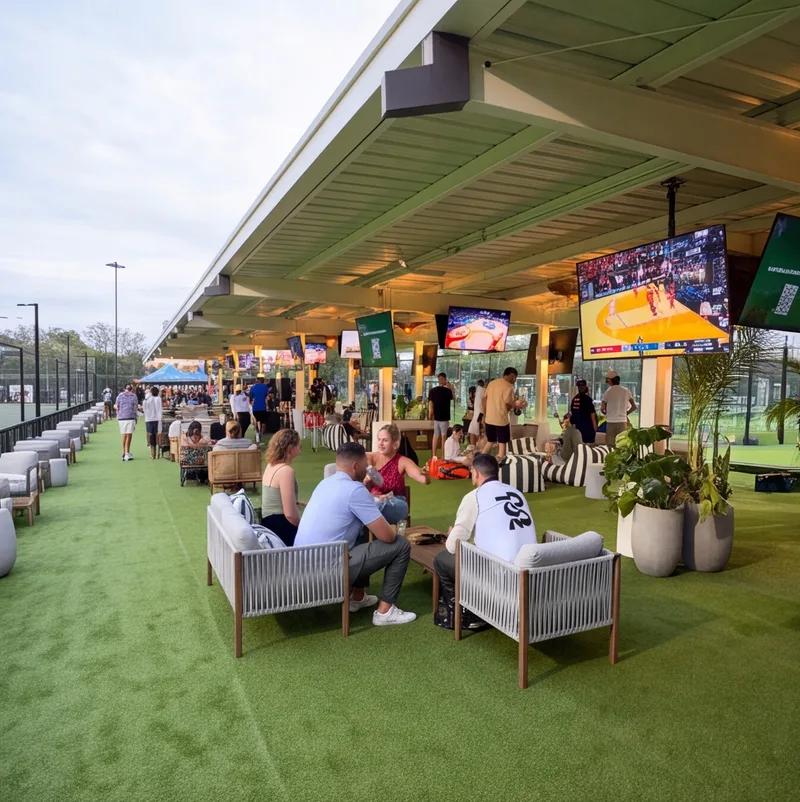
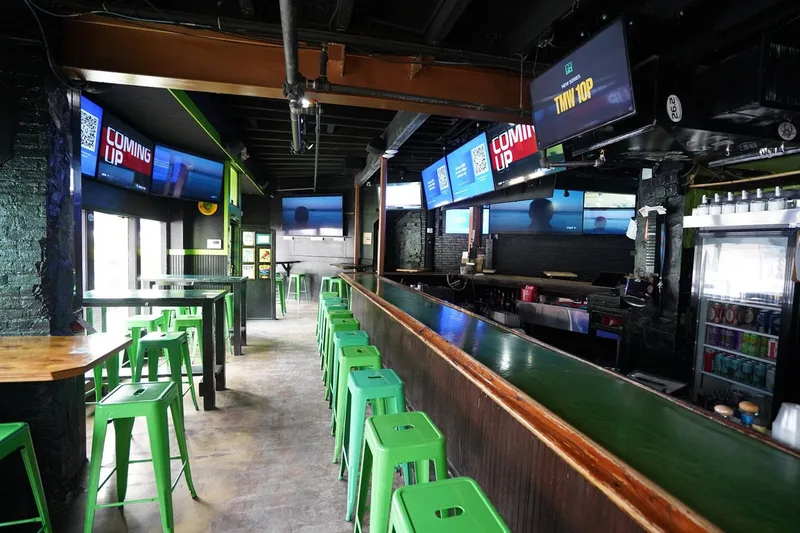
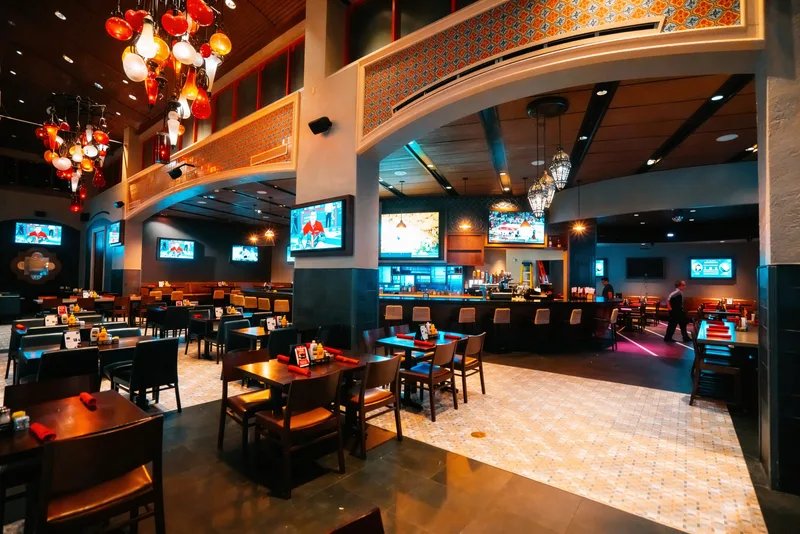
The way you can do different layouts on different TVs, so the marketing team can do their own in-house advertisements — that was really a big thing. Just for them to be able to upload their photos on their own and choose what dates to do it on is really helpful.
Digital Signage in Las Vegas
Commercial digital signage and menu boards for Las Vegas venues, specified after walking the wall because this environment punishes anything guessed from a drawing.
Nobody walked the wall before quoting the screen
Most signage quotes in this market are produced from a floor plan and an email. That works until it meets a Las Vegas wall. The mount goes into a substrate nobody checked. The panel faces a west-facing window and washes out from three in the afternoon. The player ends up in a sealed cabinet in a room that hits well past anything the manufacturer had in mind. Then the screen dims early, or fails early, or simply cannot be read at the hour it most needs to be, and it gets blamed on the hardware rather than on a specification made without seeing the room.
We do not quote a display until we have stood at the wall, because four things there decide everything and none of them appear on a drawing. What the wall is made of and what backing sits behind it. Sightlines, meaning where people genuinely stand and look. The light landing on that spot at the brightest part of the day. Safety is the fourth, particularly anywhere the public passes underneath. In a desert market running long hours, that walk is not diligence theater. It is the difference between a panel that lasts and one you replace.
Digital Signage Across the Las Vegas Valley
From the resort corridor and downtown to Summerlin, Henderson, and the southwest, we design and install commercial digital signage, menu boards, and outdoor displays.
Heat is the single most expensive variable in how long anything lasts, so enclosed cabinets get ventilation and equipment spaces get cooling.
Dust settles on heat sinks and inside unsealed enclosures where it insulates, so enclosures get sealed and equipment spaces get filtered.
Exposed displays take severe sun, so outdoor-rated enclosures, real brightness with ambient sensing, and UV-rated materials are the baseline.
Storm season brings surges and brief outages, so the equipment behind your screens gets real surge protection and conditioning.
How we work
Four things checked at the wall
Wall and backing, sightlines, light, and safety. Those four settle the specification, and none of them can be assessed remotely.
The site walk, in order
Wall type and backing come first, since they decide what can safely hang and how, and in this market that ranges from stud and drywall to block to metal framing to something a previous installer improvised. Sightlines next: where people actually stand or sit and what they are looking at, which is rarely where a plan suggests. Then light, measured at the brightest hour rather than whenever we happen to visit. Safety last, particularly overhead locations and anywhere the public passes beneath a mount.
Good, Better, Best per location
You see the design before you commit to equipment, and you see it as Good, Better, and Best per location rather than one number for the building. That matters because screen positions are not equally valuable: the wall people look at while they wait deserves more than the one nobody faces, and spreading budget evenly across both is how venues end up with everything mediocre. Where a layout carries multiple panes, we supply the dimension documentation so your content is built for the real canvas.
How it will run, and who drives it
Then the operational questions. How many hours a day is this screen on, since a venue running open to close is asking for a different product than a panel built for a couple of hours an evening. What has to change on it, how often, and who is doing the changing. Whether it needs to carry your content beside live programming. Those answers sort the specification into tiers faster than budget does, and they get written down before anything is priced.
What we build
What goes into Las Vegas digital signage
Digital signage is a display, a source, a network path, and a content plan. Here is what we design, program, and install, all of it permanent installed infrastructure.
Displays specified for heat and light
Two environmental numbers drive panel selection here. Brightness, because a display facing desert light through glass needs real output plus ambient sensing so it lifts at midday and pulls back at night rather than glaring. Thermal headroom is the second, because heat is the single most expensive variable in how long anything lasts and this market supplies more of it than almost anywhere. Panels also get chosen by rated runtime, since consumer sets are built for roughly two to three hours a day while commercial tiers run to sixteen, eighteen, or continuous.
Menu boards and the content source
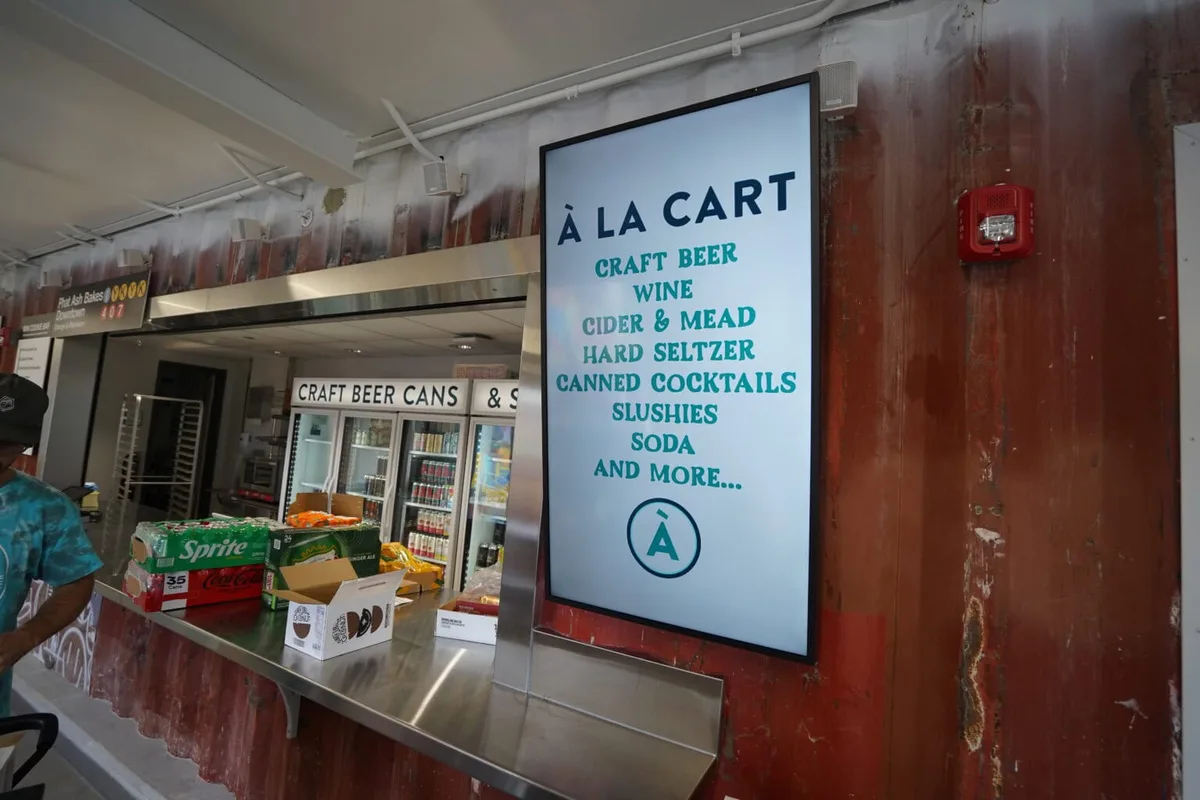
Digital menu boards get sized off real reading distance from where people queue, mounted at a height a standing guest reads without stepping back, and driven from one place so a price change or a sold-out item reaches every screen at once. The source is the part nobody shops for and the part that decides whether the system gets used: a commercial content-management and scheduling engine, reachable from a phone or laptop anywhere, that schedules by daypart and pushes to one site or all of them. A screen without that is a monitor.
One screen, more than one job
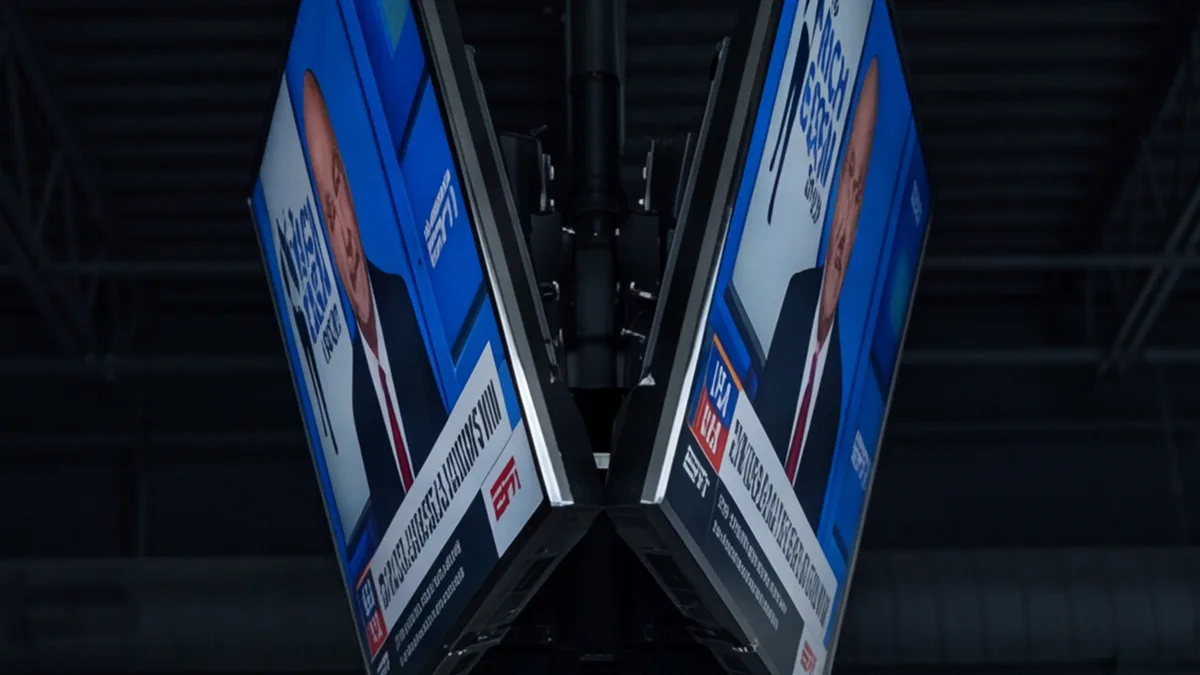
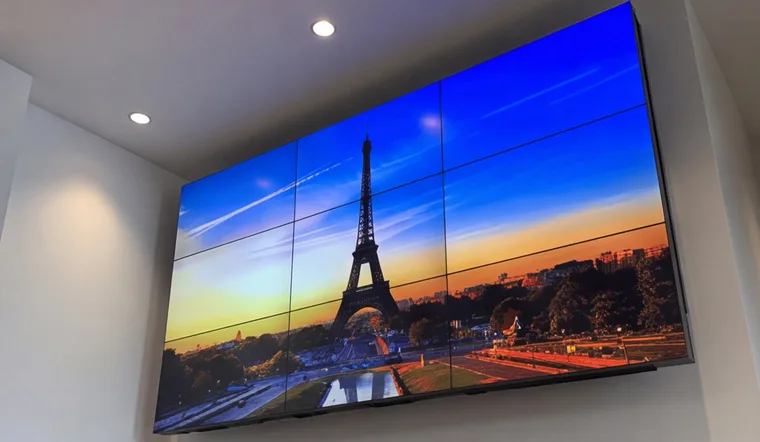
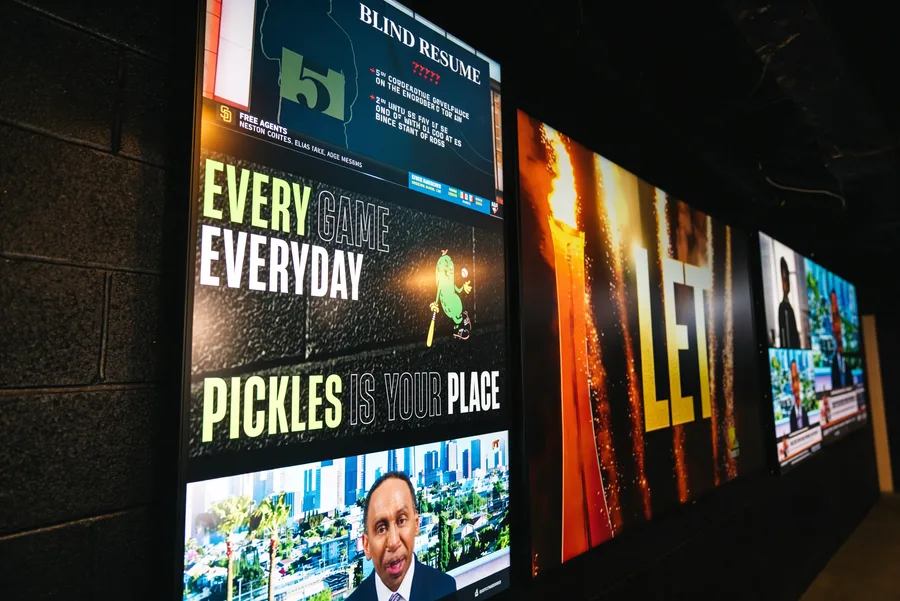
A commercial panel gives you pixel-by-pixel control, so live programming and your own content can share a display through a custom layout rather than needing two. A large portrait panel can carry three panes, with the middle one commonly holding whatever you are promoting. In a venue running long hours to a rotating audience, that means the same screens keep working on your behalf all day rather than showing one fixed thing, and it usually reduces how many displays you need.
The technical part
Desert heat, dust, and the equipment behind the screen
This is the harshest environment in the project for installed displays. Three realities decide how long anything lasts.
Heat, and where the player lives
The screen is rarely the first thing to fail. The player and the equipment behind it usually are, because they get put in a sealed cabinet or a back room nobody conditions, in a climate that is already working against them. Heat is the single most expensive variable in how long a system lasts, so enclosed millwork gets genuine ventilation rather than a closed door, and equipment spaces get cooling and stay at or below 75 degrees. Specified at design time this costs very little. Retrofitted after a second failure it costs a great deal.
Control, runtime, and two warranties
Commercial displays accept wired control over RS-232 or IP, so screens come up on the right source at open and shut down at close, where a consumer set relies on an infrared emitter glued near its sensor that eventually fails and strands the panel. On warranties, keep two numbers separate. Panel warranty is typically three years commercial against one year consumer, and consumer terms generally do not cover business use at all. System lifecycle is a different figure, closer to seven years, describing when the design rather than the glass starts limiting you.
Dust, solar load, and outdoor ratings
Airborne dust settles on heat sinks and inside anything unsealed, where it insulates and pushes components to run hotter, so enclosures get sealed and equipment spaces get filtered with cleaning built into the service schedule rather than triggered by a failure. Outdoors, solar load is severe: anything exposed gets an outdoor-rated enclosure with its own thermal management, materials selected for constant UV, and brightness with ambient sensing. A consumer panel under cover is the version that fails inside a season and fails where guests can see it.
Why can you not simply quote from our floor plan?
We can produce a number from a plan, and in this market it would be a guess dressed as a quote. Four things at the wall decide the specification and none of them are on a drawing. What the wall is made of and what backing sits behind it, which determines what can safely hang and how, and which varies wildly between buildings here. Sightlines, meaning where people genuinely stand and look, which is rarely where the plan implies. The light landing on that spot at the brightest part of the day, since a panel that reads beautifully at night can be unreadable at three in the afternoon. Safety is the fourth, particularly overhead mounts and anywhere the public passes beneath. Getting any of those wrong produces a screen that dims early, fails early, or cannot be read when it matters, and it gets blamed on the hardware rather than the specification.
Our players keep failing, not the screens. Why?
Almost always because of where they were put. The panel is on a wall with air moving around it, while the player and the equipment driving it get tucked into a sealed cabinet or a back room nobody conditions, in a climate that is already hostile. Heat is the single most expensive variable in how long any of this lasts, and an enclosed cabinet in a Las Vegas venue can run far past what a manufacturer assumed. Dust compounds it, settling on heat sinks and inside anything unsealed where it acts as an insulator and pushes temperatures higher still. The fixes are unglamorous and cheap at design time: genuine ventilation in enclosed millwork rather than a closed door, cooling in shared equipment spaces kept at or below 75 degrees, sealed enclosures, filtration, and cleaning built into the service schedule rather than triggered by a failure.
Can screens survive outdoors here?
Yes, when they are specified for the environment rather than adapted to it. An outdoor-rated display has a sealed enclosure and its own thermal management, which is what allows it to handle solar load and ambient heat that would shut a normal panel down, and it needs real brightness with ambient sensing to stay readable in direct sun and pull back after dark. Exposed materials get selected for constant UV, since finishes and gaskets degrade here faster than most markets. The version that fails is a consumer panel placed under cover on the assumption that shade is sufficient; it typically lasts less than a season and it fails visibly. Mounting matters too, since anything exposed is also carrying wind and thermal cycling.
Who updates the content once it is installed?
You do, from wherever you are, and this is the part worth buying properly. The screen is not the product. The source behind it is: a commercial content-management and scheduling engine that lets you log in from a phone or a laptop, see your locations, and either schedule content by daypart or push a change immediately. Content changes on a schedule without anyone remembering, and a new promotion reaches every site at once. If you run several venues, that single point of control is the reason the system pays for itself, since the alternative is somebody driving between sites with a laptop. We set it up, train your team on it, and leave documentation on site so the next person does not have to work it out.
What We Do Here
Services available in Las Vegas
Every system is designed, installed, and supported by our own team in Las Vegas — never subcontracted.
AV Consulting
AV consulting from an audio visual consultant who joins at the architectural phase, designs the technology into the plan and steers the project around your business outcome.
AV Consulting in Las Vegasarrow_forwardVideo Wall Solutions
Commercial video walls across LED, LCD and Direct View. Designed, integrated, installed and supported by a national design-build AV integrator.
Video Wall Solutions in Las Vegasarrow_forwardDigital Signage Services
Design-build digital signage for hospitality and enterprise: commercial displays, content management, and installation that keeps your screens selling and current.
Digital Signage Services in Las Vegasarrow_forwardConference Room AV
Conference room AV designed around the people using the room: video conferencing, Zoom and Teams Rooms, displays, and audio, installed and supported as a partner.
Conference Room AV in Las Vegasarrow_forwardLearn more about our Digital Signage Services solutions
Operators who run on our systems
Client successes drive Crunchy Tech to become better. Below is how our customers feel about us.
You're a great partner with Florida Hospital and this project will make a difference in Children's Health.
Crunchy has been great to work with. They communicate well and deliver as promised.
The way you can do different layouts on different TVs, so the marketing team can do their own in-house advertisements — that was really a big thing. Just for them to be able to upload their photos on their own and choose what dates to do it on is really helpful.
You're a great partner with Florida Hospital and this project will make a difference in Children's Health.
Crunchy has been great to work with. They communicate well and deliver as promised.
Insights
Design-Build AV Philosophy: How it Separates the Top 3% From the Rest of the Industry
We don’t sell you what we have. We design what you need. That line is the operating principle I’ve built Crunchy Tech around for the last 20 years. And it’s the single sentence that separates us - and the small handful of firms like us - from the other 97% of the commercial AV industry.
Read article arrow_forwardThe Spectacle Trap: Why Technology-Centric Hospitality AV Kills Brands
There’s a pattern I’ve watched play out for 20 years in hospitality AV, and it always ends the same way...
Read article arrow_forwardWhy 85% of Commercial AV Installations Are a Waste of Money (& How to Know If Yours Is One of Them)
Walk with me for a second. Pick any sports bar on your street. Go in. Sit at the bar. Look around. And tell me what you see.
Read article arrow_forwardLet's see the wall before we price it
Tell us about the venue: what kind of space it is, how many screens you have or want, how many hours a day they run, which ones face daylight or sit outdoors, where the players and equipment currently live and whether that space is conditioned, and what has failed on you before. We will walk the walls before quoting anything, then come back with Good, Better, and Best per location rather than one number.
- Wall and backing, sightlines, light at the brightest hour, and safety checked before anything is priced.
- Panels specified for real brightness and thermal headroom, rather than resolution alone.
- Player and equipment locations given ventilation, cooling, and filtration by design.
- Outdoor installations rated for solar load and UV rather than sheltered and hoped over.