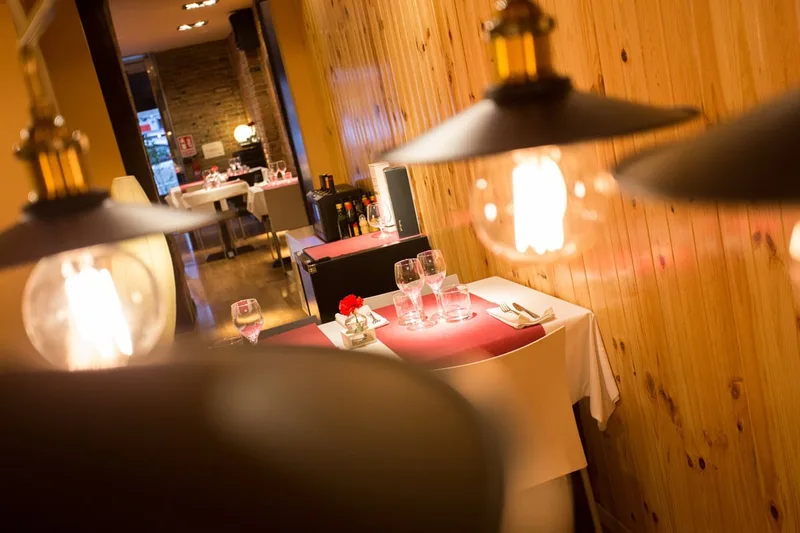
Restaurant AV in Fort Lauderdale
location_on Fort Lauderdale, FL

Restaurant AV in FortLauderdale

Restaurant sound systems and menu board systems built to one standard across every location, so the fourth room does not become a different support problem.

One owner, several concepts, onestandard

Broward runs on operators with more than one room. A steakhouse on Las Olas, a casual concept at the beach, something newer in Flagler Village, and each one was wired by whoever was cheapest and available that quarter. Three years in, nobody can answer a simple question about the second location without driving there. The remote works at one, the tablet works at another, the third has a laptop under the bar that somebody's cousin set up. Every service call starts from scratch because no two rooms are built the same way.

The fix is a standard, applied once and then repeated. Same control layer, same naming, same rack discipline, same documentation in every room, so a manager who transfers between locations already knows the system and a support call can be diagnosed without a truck. The design still adapts to each space, because a beach patio and a Las Olas dining room are not the same acoustic problem. What does not change is how it is built, labeled, and supported. That is what makes a group of restaurants cheaper to run than the same restaurants owned separately.

Reel One owner, several concepts, one standard Fort Lauderdale, FL

Restaurant AV AcrossBrowardCounty

From Las Olas and Flagler Village to the beach, Wilton Manors, and the western suburbs, we design restaurant sound systems to one standard so a group of rooms behaves like a group.

2008
Serving Fort Lauderdale since
10
Neighborhoods
Las Olas Boulevard
Restaurants · Bars

Sidewalk tables sit outside the building envelope, so they get their own zone and hardware specified for weather rather than an indoor speaker moved outdoors.

Sidewalk · own zone
Downtown and Flagler Village
Restaurants · Bars

New buildings mean conduit, backing, and rack location can be designed in during framing rather than retrofitted afterward.

New build · design-in
Himmarshee and the Riverwalk
Restaurants · Bars

Rooms here run well past dinner, so the system gets sized for the loudest hour and held below it for the rest of the night.

Late program · headroom
Fort Lauderdale Beach
Restaurants · Beach bars

Rooms that open directly to the ocean sit in constant salt and moisture, so exposed hardware gets marine-grade specification as a baseline.

Beachfront · marine-grade
Wilton Manors
Restaurants · Bars

These rooms move between dining and later programming in the same night, so the control layer switches states without a reconfiguration.

Mixed programming
Victoria Park
Restaurants · Cafés

Homes sit close on every side, so hard limits per zone and a scheduled step down keep the outdoor areas from becoming a complaint.

Residential edge · limits
Pompano Beach
Restaurants · Bars

Waterfront patios take direct spray, so mounting hardware and cable get selected to survive it rather than replaced every other season.

Waterfront · corrosion
Hollywood and the Broadwalk
Restaurants · Beach bars

These rooms serve from open to close with no quiet stretch, so automation carries the level changes instead of a manager tracking the clock.

All-day · automation
Plantation and Sunrise
Restaurants · Family dining

Operators out here often run several rooms, and one repeatable standard is cheaper to support than four different systems.

Multi-location · standard
Dania Beach and Hallandale
Restaurants · Hotel dining

These sit under their own municipal review, so the approval path gets confirmed locally rather than carried over from a Fort Lauderdale address.

Separate jurisdiction

How we work

One design standard, adaptedperroom

We do not start with a speaker count. We start with how many rooms you run, because that decides whether we are designing a system or a standard.

The consult and the site walk

Most disappointing dining rooms were quoted off a floor plan by someone who never sat in them during service. So we start with a consult rather than a quote: what you want each room to feel like, how big it is, what it needs to do, and the budget you are working with. Then we walk it, ideally during a real seating, and listen from the places guests actually sit. For a group we walk the strongest room and the weakest one, because the gap between them tells us what the standard has to fix. If you are opening a fourth location, that conversation happens before the space is framed.

One design standard, adapted per room — restaurant AV in Fort Lauderdale, FL
InstallOne design standard, adapted per room
One design standard, adapted per room — restaurant AV in Fort Lauderdale, FL
InstallOne design standard, adapted per room

Design you can see, then one team on site

The other way these go wrong is that nobody experiences the outcome until it is built, then wants it changed a season later. So you see the design before you commit to equipment, including where every speaker lands and why. Control gets programmed the same way in every room, with the same preset names, so training transfers between locations instead of starting over. One team handles the install, calibration, staff training, and documentation, and coordinates with your general contractor, electrician, and low-voltage trades. Every room leaves with the same documentation package.

What we build

The restaurant AV stack aBrowardgrouprunson

A dining room is a handful of systems working as one, and across a group they should all work the same way.

The restaurant AV stack a Broward group runs on — restaurant AV in Fort Lauderdale, FL
InstallThe restaurant AV stack a Broward group runs on

Multi-zone restaurant sound systems

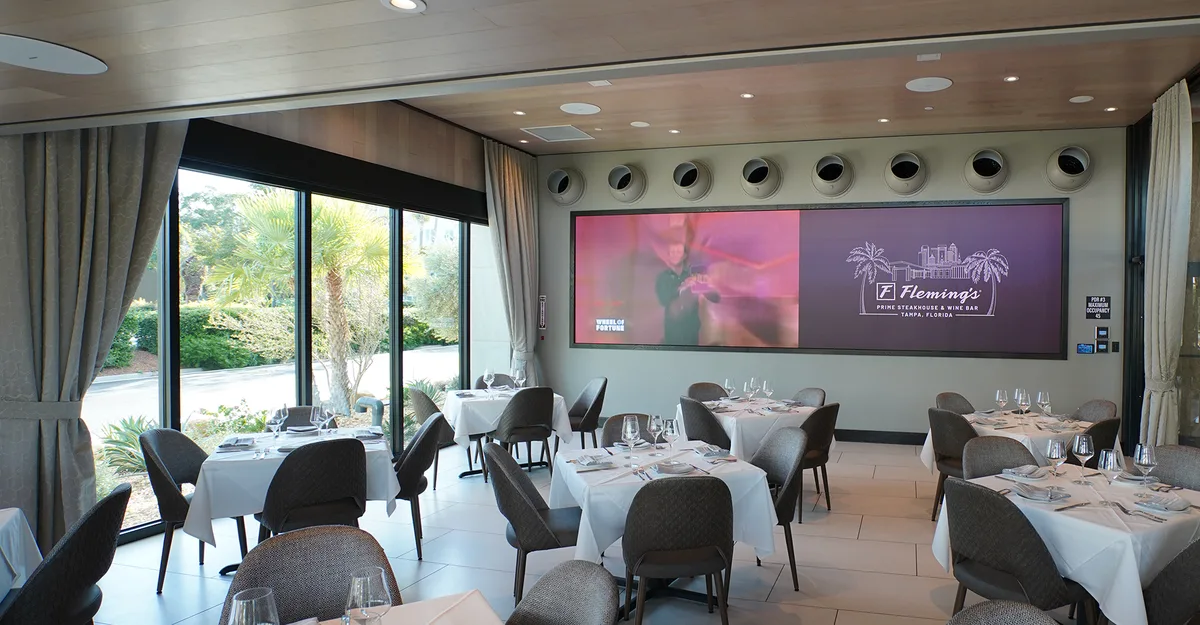
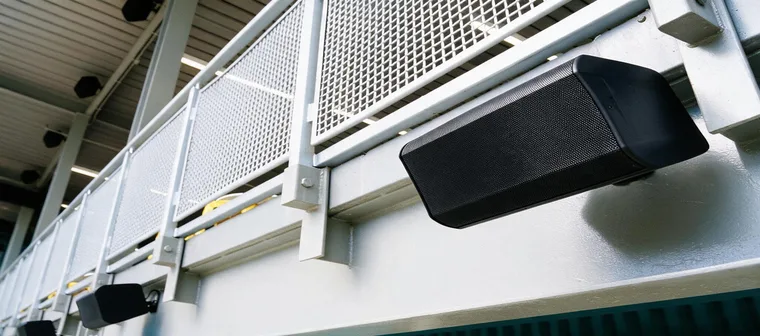
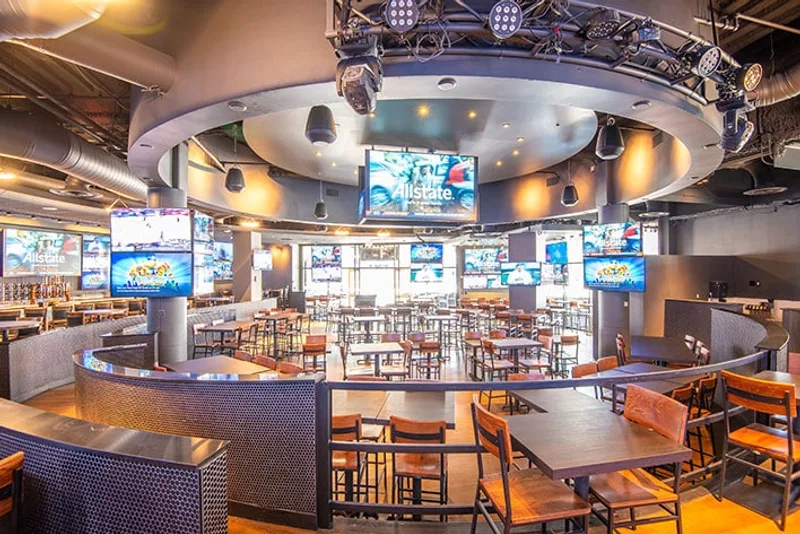
Coverage comes first in every room. More sources at lower level, placed so every table sits inside a pattern rather than under one or between two, is what makes a room comfortable to eat in. The failure we walk into most often is speakers run around the perimeter, which leaves the middle with nothing while punishing anyone against a wall. A digital signal processor then splits each property into zones, so the bar can carry a livelier level while the dining room stays conversational and the patio runs its own program. The zone logic is the same across locations even when the room shapes are not.

Menu boards and displays across locations

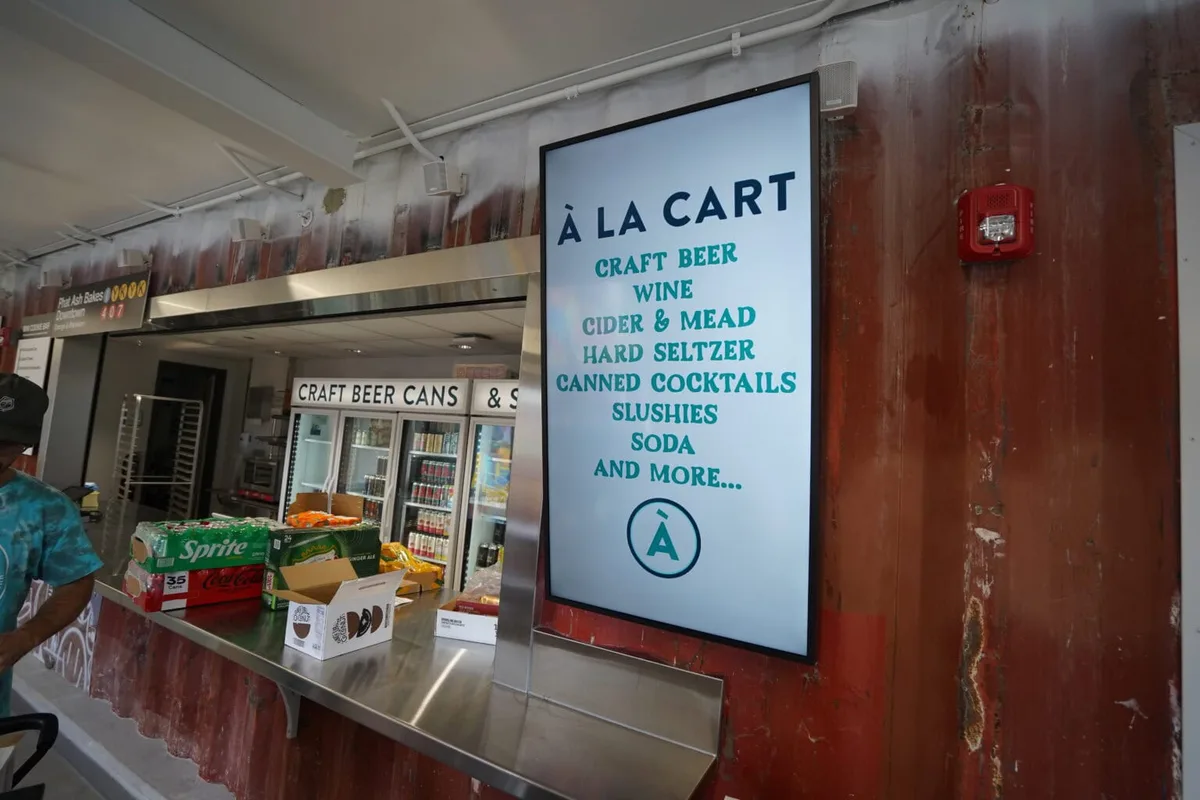
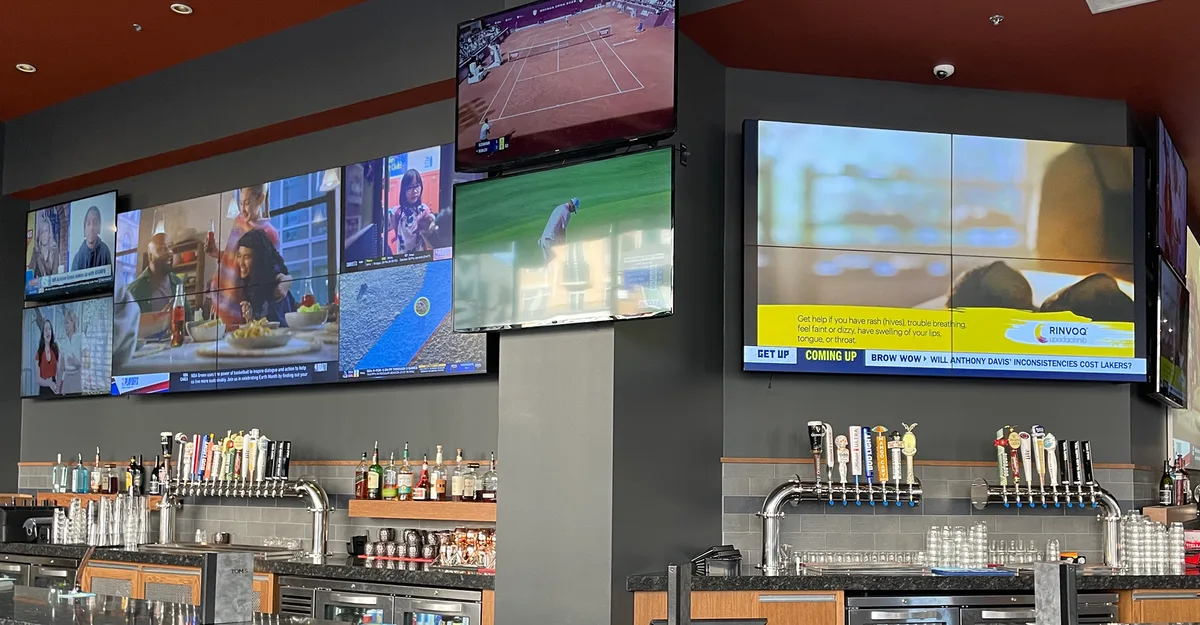
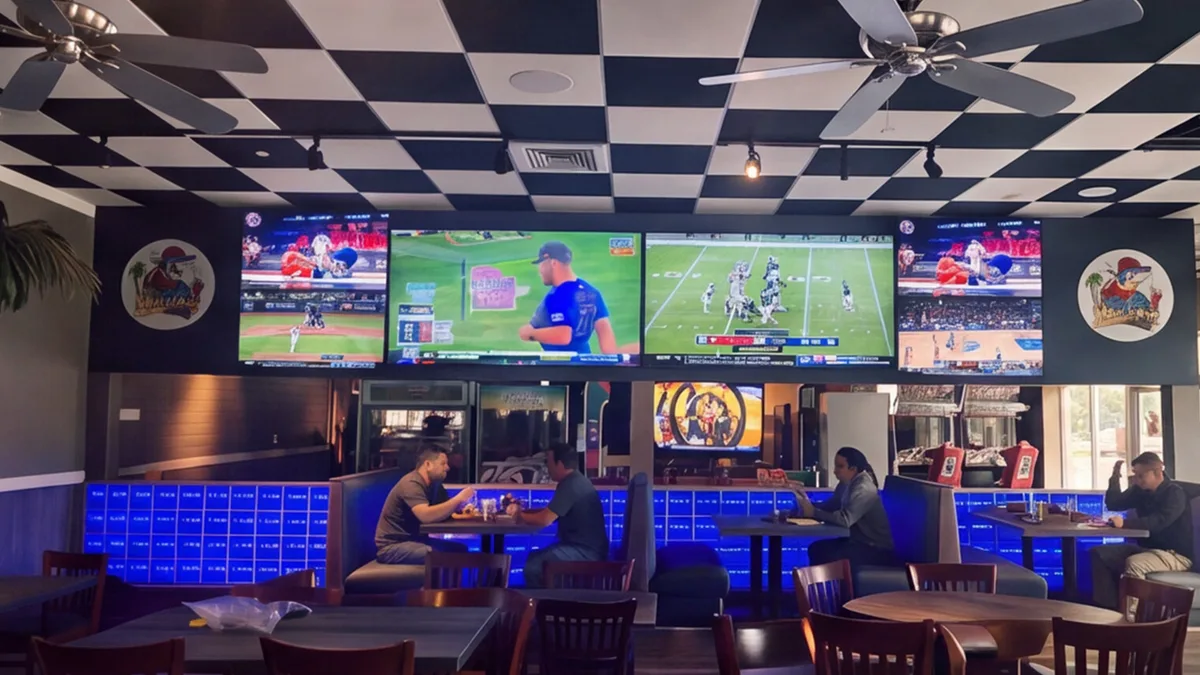
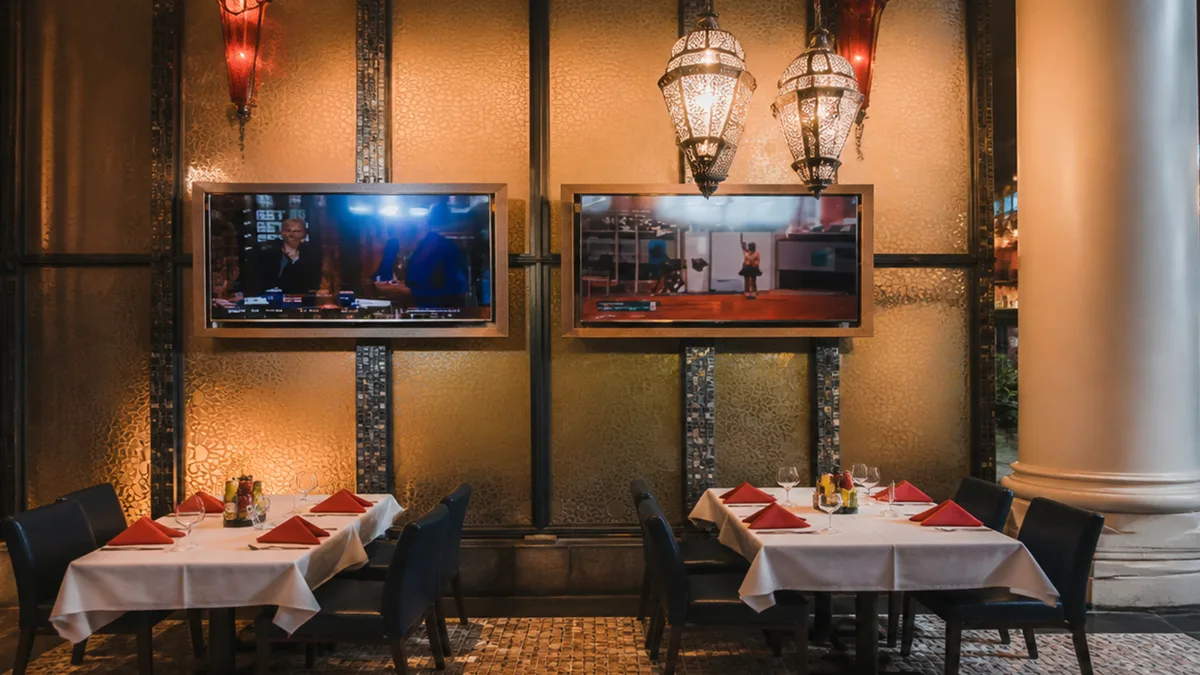
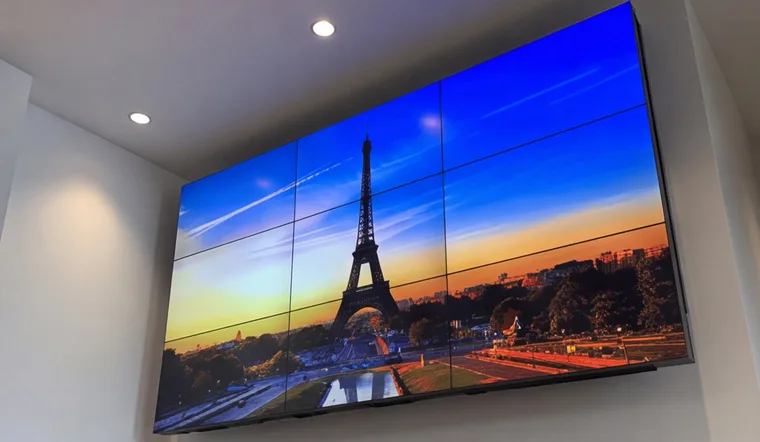
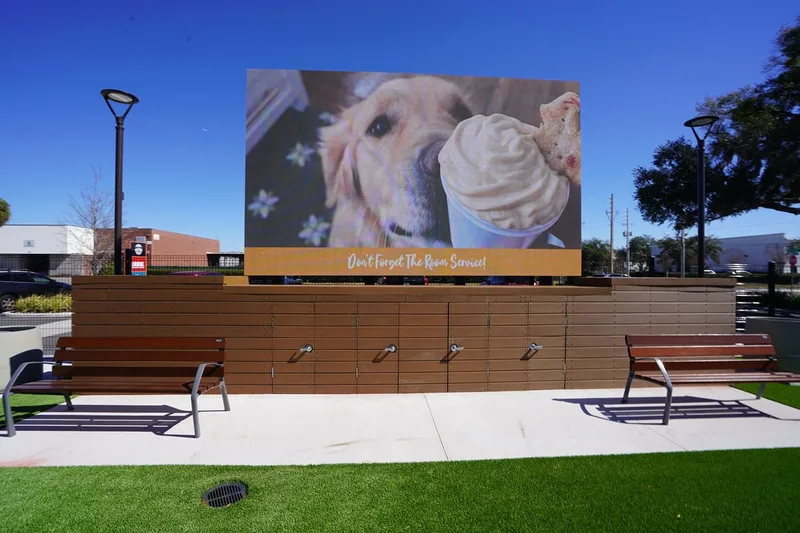
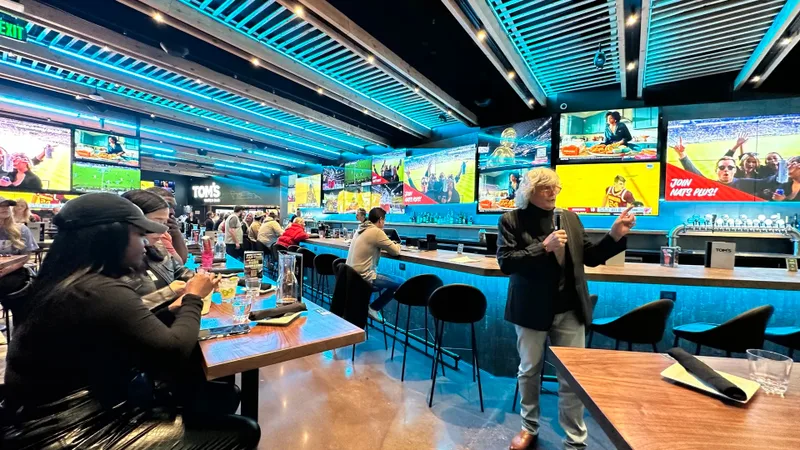
Digital menu boards make more sense for a group than for a single room, because one change can reach every location at once instead of somebody driving between them with a laptop. Boards get sized off reading distance from where the queue actually stands and mounted at a height a standing guest reads without backing up. Where a concept wants displays in the dining room or at the bar, they get placed as part of the architecture with their own audio zone, so they never take over the room, and the content management works identically whichever location you are standing in.

Control, documentation, and remote support

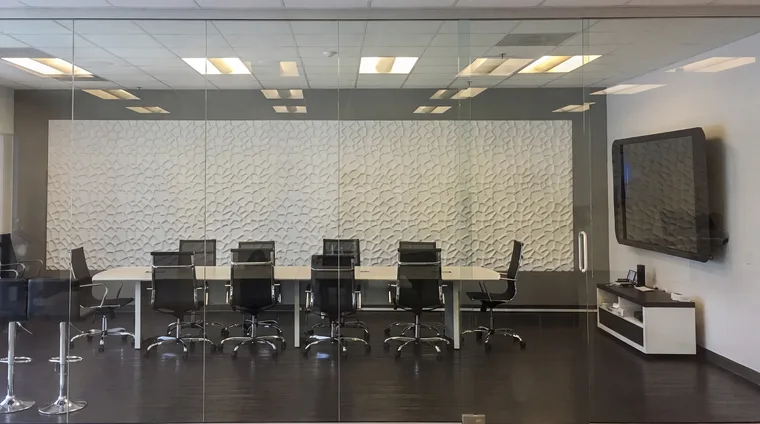
The part that makes a group manageable is the part nobody sees. Every rack is enclosed, labeled at both ends, and built to the same layout, so anyone who has opened one has effectively opened all of them. Control uses the same preset names everywhere, and the settings that took a designer to establish sit behind credentials so a new hire cannot undo them. Levels and sources move on a schedule rather than on somebody remembering. Each system sits on a dedicated AV network rather than sharing bandwidth with your point of sale, which is also what makes a problem diagnosable without a site visit.

Why Broward operators trust us with it

Built for groups inacoastalclimate

Running several rooms in salt air compounds every weakness in how they were built. Here is where our depth shows, and where our scope ends.

The second location is where cost hides

Most of what a multi-room operator spends on AV after the install is not equipment, it is time. A manager who cannot find the right preset, a support call that starts with somebody describing what they see, a technician who has to work out how a room was wired before touching anything. None of that is visible in a quote and all of it repeats every month across every location. Building every room the same way, with the same names and the same documentation, is what turns that into a phone call. It is also why a group can add a fifth room without adding a fifth way of doing things.

Salt, storms, and the equipment room

Three coastal realities shape the build. Salt air corrodes anything unprotected, so patios, terraces, and open frontages get marine-grade specification down to the fasteners and the cable. Storm season puts surges and brief outages on the grid all summer, and across several locations that is several exposures rather than one, so every rack gets real surge protection and conditioning. And the equipment room decides how long everything lasts: raised where flooding is a risk, inside the conditioned envelope, kept at or below 75 degrees. Temperature is the single most expensive variable in how long a system lasts.

Support after opening night

Crunchy Tech started in 2008 as an AV support operation, which is an unusual origin for an integrator and the reason the systems get built the way they do. When you spend years fixing other people's work, you learn exactly where installations cut corners. That shows up in a rack you can actually service: fully enclosed, every cable labeled at both ends, power separated from audio and data. We have opened racks that looked fifteen years old after three months in an uncooled closet, with dust caked on every surface. Around 47 percent of support tickets close inside an hour and roughly 72 percent within a day.

Where we draw the line

We do not install or operate cameras, we do not produce or edit video, and we do not run streaming as a service. What we build is the infrastructure that supports whatever your venue chooses, including clean audio feeds and documented signal paths. We also generally do not take install-only work. If you already bought equipment we will look at it, but we need to understand the design first, and we will not put our name on consumer-grade speakers on an open patio in a salt-air climate.

What it earns back

How a standard paysforitselfacrossrooms

A single room can absorb a bad install. A group multiplies it by the number of locations.

How a standard pays for itself across rooms — restaurant AV in Fort Lauderdale, FL
InstallHow a standard pays for itself across rooms

The cost you never see on a quote

Guests who cannot hear each other do not complain about the audio. They eat, decline dessert, and go, and the check closes early, in every room where the coverage is wrong. On the operations side the loss is quieter still: hours of management time spent on a system nobody understands, repeated per location per month. Standardizing removes both. Every room sounds the way it should for the hour it is in, and every problem gets diagnosed the same way regardless of which address it happened at.

Good, Better, Best against one design

Most owners price AV like retail: a speaker costs a certain amount, so a room of speakers should not cost much more. Worth being plain about the gap, because the processor, the amplification, the cabling, and the control take a serious share of the budget before you buy a single speaker, and they are what make zoning, scheduling, and remote diagnosis possible. So we quote Good, Better, and Best against one design, per zone, and for a group we phase it, usually starting with the room that is hurting most. If your budget is short of the plan, we would rather value engineer it honestly than build one good room and four compromises.

How a standard pays for itself across rooms — restaurant AV in Fort Lauderdale, FL
InstallHow a standard pays for itself across rooms

We have four rooms and four different systems. Do we have to redo all of them?

Rarely all at once, and rarely all the way. The first step is understanding what is actually in each room, which usually takes a walk-through and an hour with the racks, because the fastest win is often not new equipment. It is bringing the control layer, the preset names, the labeling, and the documentation into line so every room reads the same way to a manager and to a technician. That alone removes most of the recurring time cost. After that we phase the hardware, normally starting with the room that is hurting most, and each new build or refresh comes onto the standard as it happens rather than requiring a single expensive weekend. What matters is that once a room is on the standard it stays there, so the fifth location is a repeat rather than a new project.

Can the same design work in a beach room and a Las Olas dining room?

The standard travels, the specification adapts. What stays identical across locations is the way the system is structured: how zones are drawn, what the presets are called, how the rack is laid out and labeled, how content is managed, and what documentation exists at the end. That is what makes training transfer and support fast. What changes is the hardware and the placement, because a beach room with open frontage and salt spray needs marine-grade selection and a completely different coverage layout from a conditioned dining room with soft finishes and low ceilings. Treating those two rooms identically at the equipment level is exactly how groups end up with one location that sounds fine and another that fails every season. So the answer is one standard, several specifications, and one team that knows why each choice was made.

How much can you actually fix without sending someone to the restaurant?

More than most operators expect, provided the system was built for it. A dedicated AV network, an enclosed and labeled rack, consistent naming, and current documentation mean a large share of calls get resolved by looking rather than driving. The common ones are settings somebody changed, a source that lost its schedule, or a device that needs a restart, and none of those require a technician on site if the system is legible. Around 47 percent of our support tickets close inside an hour and roughly 72 percent within a day, and that number is a function of how the systems were built as much as how fast we answer. What genuinely needs a visit is physical: a failed speaker, storm damage, a corroded outdoor run. Those we would rather find on a scheduled check than during a Saturday service.

Do you handle cameras, livestreaming, or video production?

No. We are a design-build AV integrator. We do not install or operate cameras, we do not shoot or edit video, and we do not run streaming as a service. What we do is design the system around how the restaurant actually runs, procure the hardware, install it, calibrate it, train your staff, document all of it, and support it for the life of the system. Where a venue works with a production partner, we build the infrastructure that makes their job easy: clean audio feeds, documented signal paths, and a network engineered for the uplink. The content side belongs to specialists.

Related Solution

Learn more about our Restaurant AV Systems solutions

View Restaurant AV Systems
What clients say

Operators who run on our systems

Client successes drive Crunchy Tech to become better. Below is how our customers feel about us.

Just do it. Spend the money. It’s well worth it. It’s not worth your time, hassle, energy, and stress of trying to make it look right and do it right when there’s somebody who has been doing it for years and has perfected the craft.

Matt Moore logo
Matt Moore
IT Systems Administrator · Capone's Hideout

Working with Crunchy Tech was a fantastic experience from start to finish. They handled the sale and installation of all our sound and TV equipment at The County Bar in Aviston, IL, and absolutely nailed it. We were on a very tight deadline, and they not only met it—they delivered top-notch quality and service the entire way. Highly professional, responsive, and easy to work with. We couldn't be happier with the results.

Clint Flowers logo
Clint Flowers
Owner · The County Bar

Crunchy has done an amazing job on our A/V install. The sound is perfectly balanced throughout our many zones and the entire system is super simple to use.
Steve Glum logo
Steve Glum
Chief Marketing Officer · Ace Cafe
Talk to a Fort Lauderdale restaurant AV designer

Let's get every room onthesamestandard

Tell us about the group: how many rooms you run, where they are, which one causes the most trouble, how much of the seating is outside, and whether anything new is opening. We will start with a consult to understand what you are trying to accomplish, then walk your strongest room and your weakest one, and come back with one engineered standard instead of four separate parts lists.

  • The same control layer and preset names in every room, so training transfers between locations.
  • Racks built to one layout and labeled at both ends, so any technician can work in any room.
  • Coverage designed per room, because a beach patio and a dining room are different problems.
  • Marine-grade hardware wherever a room opens to the outside, down to the fasteners.