Just do it. Spend the money. It’s well worth it. It’s not worth your time, hassle, energy, and stress of trying to make it look right and do it right when there’s somebody who has been doing it for years and has perfected the craft.
AV Consulting in Miami
Audiovisual consulting and design-build for Miami hotels, resorts, restaurants, bars, offices, and retail. We design the system, specify it, install it, and support it, working with your architect and general contractor from the first set of drawings forward.
In Miami, the AV scope usually belongs to nobody
Walk onto most Miami projects and the audiovisual scope has no owner. The architect draws screens onto an elevation without knowing where speakers have to go or how loud the room needs to get. The IT group wants whatever system stays off their desk. Nobody asks the operator what the space is supposed to do until the walls are closed, the conduit is in the wrong place, and the fix carries a change order. The system gets installed on schedule anyway, and then the staff cannot run it.
That is the job an AV consultant is supposed to prevent. We come onto the project as the technology partner: we ask what has to happen in each space, design the system around that answer, and hand your architect and GC requirements they can build to. Then we install and support what we designed, so one company answers for the room on opening night instead of a designer pointing at an installer. We have worked this way since 2008 across hospitality, corporate, and retail projects in South Florida.
What We Do Here
Services available in Miami
Every system is designed, installed, and supported by our own team in Miami — never subcontracted.
AV Consulting
AV consulting from an audio visual consultant who joins at the architectural phase, designs the technology into the plan and steers the project around your business outcome.
AV Consulting in Miamiarrow_forwardCommercial Sound Systems
Commercial sound system design and installation: multi-zone audio engineered around how your space is used, wired and tuned on site, and supported as a partner.
Commercial Sound Systems in Miamiarrow_forwardVideo Wall Solutions
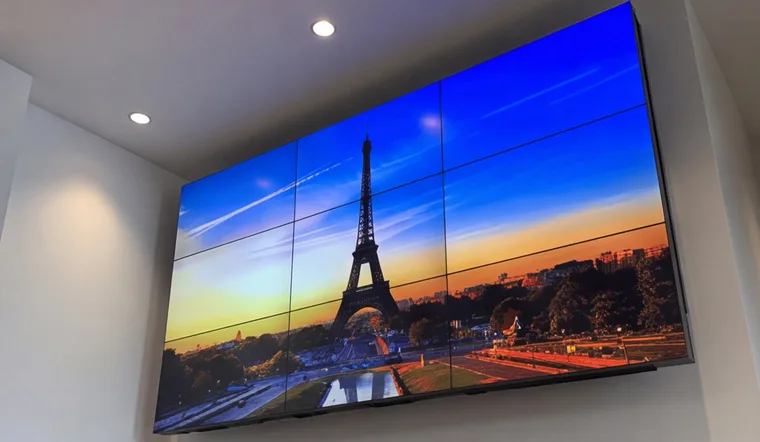
Commercial video walls across LED, LCD and Direct View. Designed, integrated, installed and supported by a national design-build AV integrator.
Video Wall Solutions in Miamiarrow_forwardWho We Serve
Industries we serve in Miami
Spaces we've wired across Miami — each built and supported by the same local crew.
AV Consulting Across Greater Miami
From Brickell towers to South Beach hospitality, we consult on audiovisual design for Miami hotels, resorts, restaurants, offices, and retail, and we plan the install around what the building and the coast will actually allow.
Anything mounted outdoors or facing the water gets specified for wind and salt exposure, and we confirm the rating path per site with the local jurisdiction rather than assuming it.
Year-round humidity and heavy afternoon rain shorten the life of anything not built for it, so outdoor zones use sealed, weather-rated hardware on dedicated circuits.
Direct sun washes out a display chosen off a spec sheet, so outdoor and window-adjacent screens get specified against the ambient light they will actually sit in.
Rack rooms in this climate run hot, and heat plus dust is what really shortens equipment life, so cooling to hold the room at or below 75 degrees gets designed in from the start.
How we work
Getting AV into the plan set before the walls close
There is no reason your technology partner is not at the architectural phase. By the time the venue is being built, the mark has already been missed.
Early involvement costs less than the fix
Most owners assume an AV consultant is an expense you take on once construction money is flowing. A project a year out does not need a large upfront spend. It needs the technology requirements sitting in the architectural plan, because you cannot submit a clean permit set or get an honest GC bid without them. Leave them out and the general contractor plays catch-up, and catch-up is where change orders and badly built infrastructure come from. So the moment to call is when your architect produces a first floor plan. We model what each space has to do, then send requirements back for the plan set so the GC is bidding against something complete. Projects engaged at that phase see roughly 95% fewer change orders than projects where we show up mid-construction.
What the GC needs from us, and when
Most of what goes wrong on an install was decided in a short window months earlier. The GC needs conduit sizing, pathway plans for open ceilings, blocking and backing behind every display so nothing gets mounted into drywall, power for the rack, and cooling for the AV room. Handing that over early is the highest-leverage thing on the job, and handing it over late is the most expensive. In Miami we also confirm the approval path with the local jurisdiction per site rather than assuming it, and anything facing the water or the sky gets specified for wind and salt exposure while it is still a drawing. On timing, engineering and design run two to three weeks after contract, equipment lands in thirty to forty-five days, and a new build is usually nine to twelve months from groundbreak to opening.
What we consult on
AV design for Miami hospitality, offices, and retail
Most of our Miami consulting work lands in four kinds of space. The design question is different in each one, and the equipment list is the last thing we get to.
Hotels and resorts
A Miami hotel or resort is really several venues sharing one building, and the common mistake is designing it as one system. The lobby needs sound that carries a mood without fighting the front desk. The pool deck, the restaurant, and the bar each need their own zone and their own volume. Meeting floors need conferencing that works for whatever platform a group arrives with, which in practice means Microsoft Teams Rooms, Zoom Rooms, and Google Meet all have to be easy to start. So we design zone by zone, with distributed audio under local control, displays specified for the light they actually sit in, signage for wayfinding and event boards, and outdoor equipment rated for sun, salt, and wind rather than borrowed from indoors. Bilingual signage gets planned into the content layout instead of retrofitted later.
Restaurants and bars
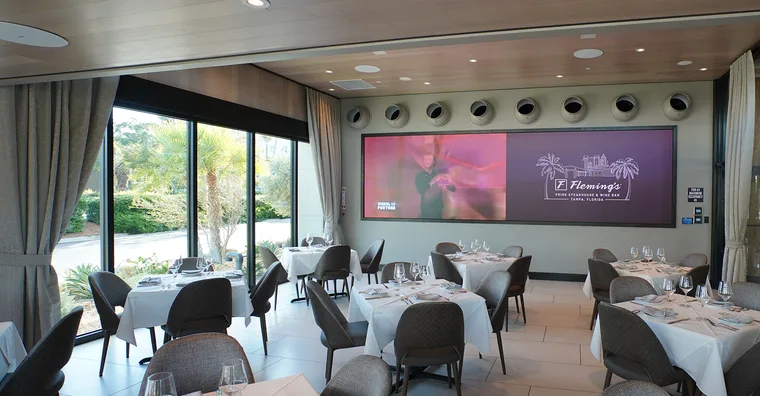
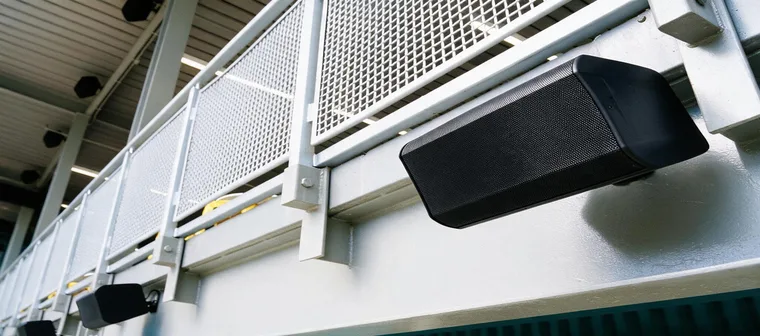
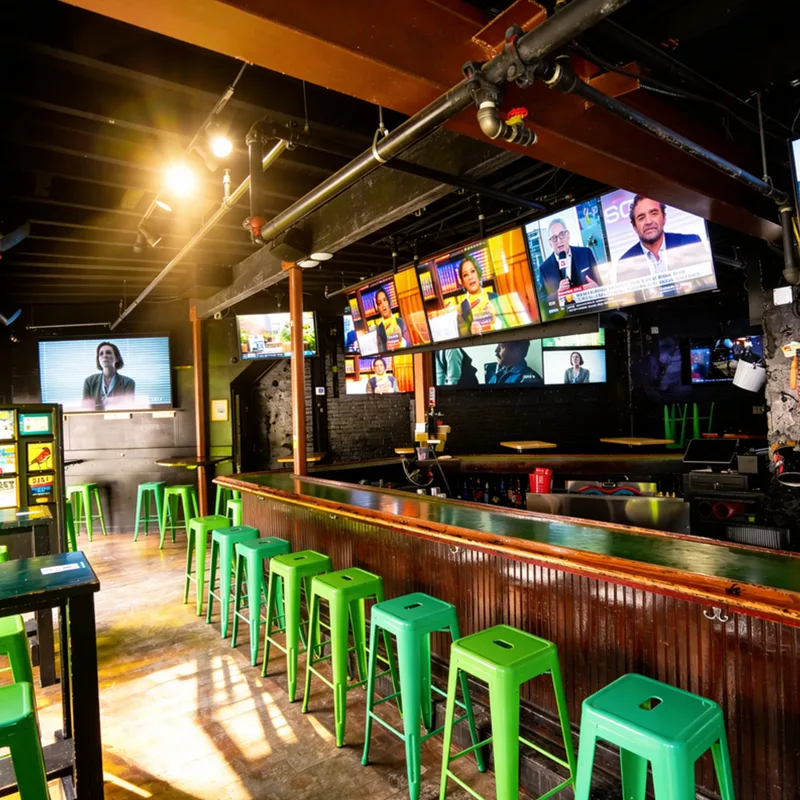
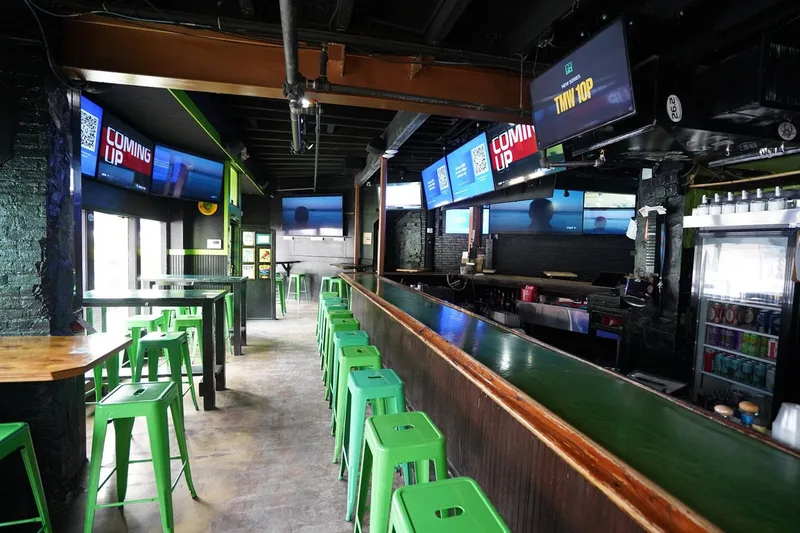
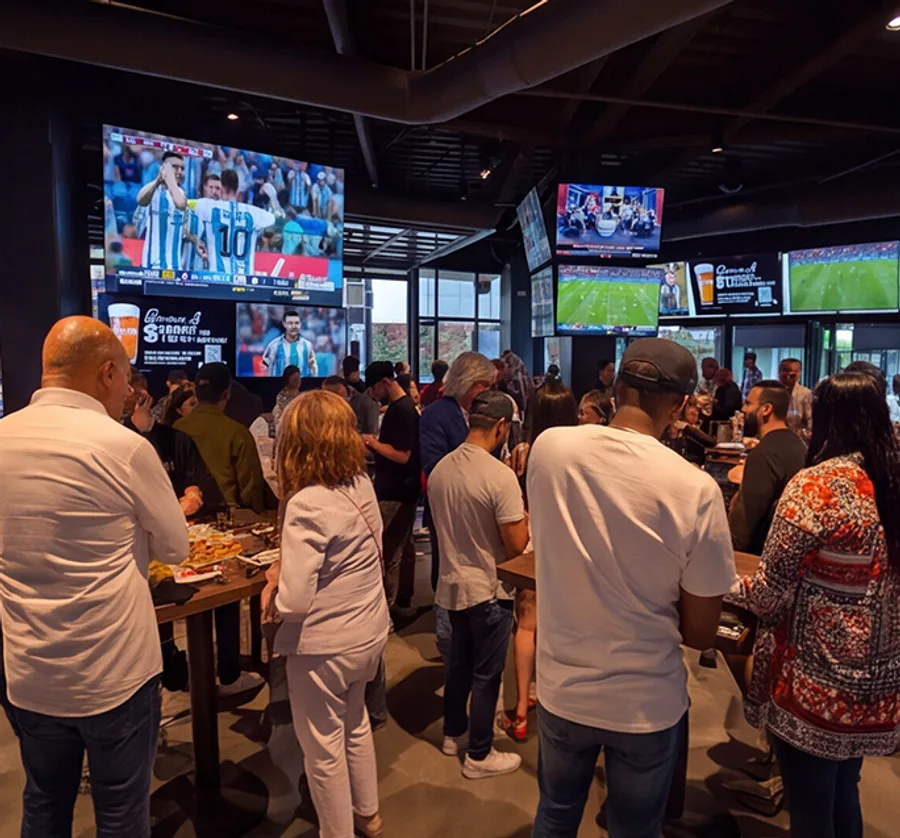
Two complaints tell you a restaurant's audio was never designed: nobody can hold a conversation, or nobody can hear what the operator wants playing. Both come from speakers placed without regard for direction, height, and a room full of hard surfaces, usually run around the perimeter so the center has no coverage and the edges are punishing. So audio gets zoned, and the dining room, the bar, and the sidewalk each get tuned to the concept instead of sharing one master volume. Displays go off the main sightlines so a screen reads as a content source rather than an intrusion, and control stays simple enough that a manager changes the room without calling anyone. Miami runs its patios year round, so anything outside is weather-rated, on its own zone, and specified for humidity and driving rain.
Offices and conference rooms
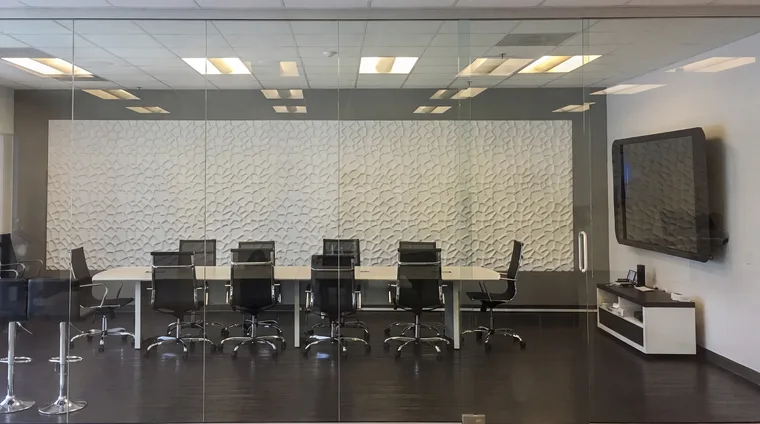
Corporate teams in Brickell and Downtown usually arrive with the platform already chosen, which is fine, and with a room size assumption that is usually wrong. Manufacturer marketing sells a system built for five people into a boardroom that seats twenty, and everyone at the far end of the table spends the next year being unintelligible on calls. So the design starts with the space: dimensions, acoustics, whether the walls are glass or concrete, what actually happens in the room, and which platforms your people and your clients use. That determines the microphone and camera coverage the room genuinely needs, displays sized for the furthest seat, and control that behaves identically floor to floor so nobody needs training to start a meeting. Where an internal IT team owns the network, we work with them on it rather than around them.
Retail and public spaces
Retail and large public spaces have the opposite problem from a dining room. The space is big, busy, and full of hard surfaces, and the message still has to land. So distributed audio gets designed for intelligibility across zones rather than raw volume, and paging and public address get specified so an announcement is understood in a crowded concourse instead of merely heard. Where the acoustics are difficult we analyze the layout before selecting a single speaker, because the room decides the type and the placement. In design-led spaces, including flagship stores and gallery districts, the brief is usually that the audio is present and the hardware is not, so equipment gets concealed and coverage gets solved with placement rather than more boxes.
Plain answers
What you actually get from an AV consulting engagement
Consulting means different things at different firms, so here is what our engagement produces and how it differs from a design-only spec.
The design package
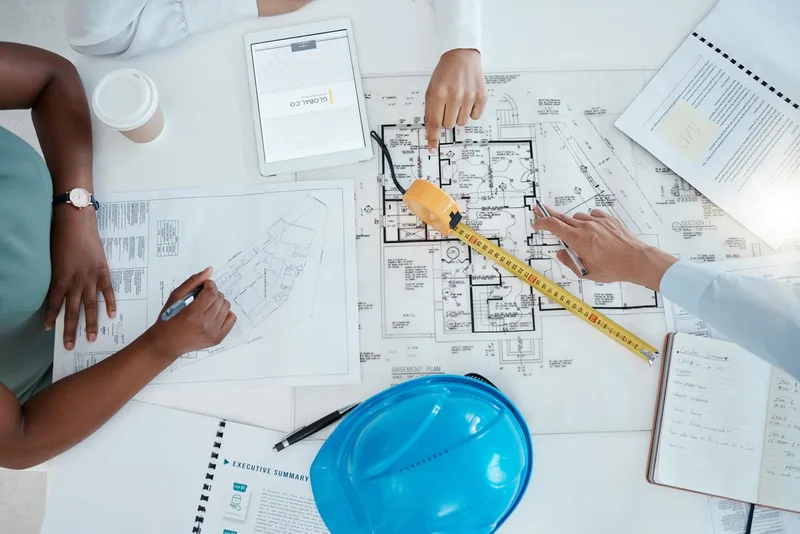
Owners often expect a consultant's deliverable to be a recommendation memo. What you get from us is a set of documents your trades can build from. That means system elevations and equipment locations, signal flow and single-line drawings, an equipment schedule, conduit and pathway requirements for the GC, power and cooling requirements for the rack and the AV room, mounting and structural backing details, and network requirements. Where it helps you decide, we show the room visually before anything is ordered, which is what prevents the change of mind six months into the build. Your architect folds the package into the plan set and your GC bids against it, and on new construction our drawings go into the permitting set alongside the building's.
Design-build, not design-only
Most consultants hand over a specification and walk, and they are not accountable for whether the room works on opening night. A bid-spec document is only as good as whoever wrote it, and it usually originates with someone unqualified: an architect who put screens on an elevation without knowing where the speakers go, or an IT group that wants the simplest system to keep it off their desk. We do the whole arc instead: design, specification, procurement, rack build in our own shop, installation, commissioning, training, documentation, and support. One company, one point of accountability. Crunchy Tech started in 2008 as an AV support company before it was an integrator, which is why our designs are serviceable on purpose, labeled and documented so a technician can work in the rack three years later.
When should we bring an AV consultant onto a Miami hotel or restaurant project?
When your architect produces a first floor plan, which is earlier than most owners expect. The technology requirements have to be in the plan set before you can submit a clean permit application or get a GC bid you can trust, and in Miami there is an extra reason to be early. So much of the work here has outdoor space attached, a pool deck, a terrace, a sidewalk, a rooftop bar, and the equipment for those areas has to be specified for wind, sun, and salt exposure before anyone is buying it. Bring us in early and we model what each space needs to accomplish, then hand your architect requirements to fold into the drawings: conduit sizing, pathways, blocking behind displays, power and cooling for the rack. Projects that start with us at the architectural phase see far fewer change orders than the ones where we arrive after construction is underway. A year out, that engagement is a design fee rather than a construction cost.
Do you only consult, or do you install what you design?
Both, and the accountability is the point. A design-only consultant hands over a specification and is not on the hook for whether the room works on opening night, which is how you end up with a designer and an installer blaming each other while you are trying to open. We design, specify, procure, build the rack in our shop, install, commission, train your staff, document the system, and support it afterward. One company, one point of accountability. If you would rather use us for design only, we will do that and be straight with you about the risk of handing our drawings to a low bidder. We can also review a specification or a quote you already have and tell you honestly what it is missing.
How do you handle outdoor spaces, wind ratings, and Miami-Dade approvals?
We design to them and confirm the path per site rather than assuming what applies. Coastal Florida has wind-rating requirements for what gets mounted outdoors, and approvals in Miami-Dade get verified project by project, so we work that into the design phase instead of discovering it during inspection. Practically, that means outdoor displays and speakers get selected for their exposure rather than their price, mounting and structural backing get detailed so nothing is hung off a surface that cannot carry it, and enclosures and cabling are chosen for humidity and salt air. We are not the ones interpreting code for you. We design the system to meet the requirements the project is held to, coordinate with your architect and GC on the submittal path, and keep the documentation clean so nothing stalls at review.
Can you work with the AV equipment or the vendor we already have?
Often, once we have looked at it. If you already own equipment or inherited a system, we review the design documents and run our engineering process before agreeing to anything, and the answer ranges from it is broadly right with a few changes to it needs to be reworked. Commercial displays you already own are usually fine once we confirm the make and model can be controlled the way the system needs. What we will not do is put consumer-grade gear into a business that depends on the room working on a Saturday night, because that equipment was built for a living room. We generally do not take install-only work either, since we need to understand the design to stand behind it. If you have an incumbent AV vendor, we are happy to come in as a second opinion rather than a replacement.
Operators who run on our systems
Client successes drive Crunchy Tech to become better. Below is how our customers feel about us.
You're a great partner with Florida Hospital and this project will make a difference in Children's Health.
Working with Crunchy Tech was a fantastic experience from start to finish. They handled the sale and installation of all our sound and TV equipment at The County Bar in Aviston, IL, and absolutely nailed it. We were on a very tight deadline, and they not only met it—they delivered top-notch quality and service the entire way. Highly professional, responsive, and easy to work with. We couldn't be happier with the results.
Crunchy's AV Services are outstanding. Staff members are experts, who really extend themselves to find the right technology for helping us reach our marketing goals in creative ways. The best thing about working with Crunchy is collaborating with the staff – they are patient, responsive, knowledgeable, and available.
Crunchy has been great to work with. They communicate well and deliver as promised.
The work Crunchy has been doing is a game changer for this industry.
Being able to reuse the existing structure created a much lower cost for the client and they were ecstatic.
Crunchy has done an amazing job on our A/V install. The sound is perfectly balanced throughout our many zones and the entire system is super simple to use.
Just do it. Spend the money. It’s well worth it. It’s not worth your time, hassle, energy, and stress of trying to make it look right and do it right when there’s somebody who has been doing it for years and has perfected the craft.
You're a great partner with Florida Hospital and this project will make a difference in Children's Health.
Working with Crunchy Tech was a fantastic experience from start to finish. They handled the sale and installation of all our sound and TV equipment at The County Bar in Aviston, IL, and absolutely nailed it. We were on a very tight deadline, and they not only met it—they delivered top-notch quality and service the entire way. Highly professional, responsive, and easy to work with. We couldn't be happier with the results.
Crunchy's AV Services are outstanding. Staff members are experts, who really extend themselves to find the right technology for helping us reach our marketing goals in creative ways. The best thing about working with Crunchy is collaborating with the staff – they are patient, responsive, knowledgeable, and available.
Crunchy has been great to work with. They communicate well and deliver as promised.
The work Crunchy has been doing is a game changer for this industry.
Being able to reuse the existing structure created a much lower cost for the client and they were ecstatic.
Crunchy has done an amazing job on our A/V install. The sound is perfectly balanced throughout our many zones and the entire system is super simple to use.
Insights
Design-Build AV Philosophy: How it Separates the Top 3% From the Rest of the Industry
We don’t sell you what we have. We design what you need. That line is the operating principle I’ve built Crunchy Tech around for the last 20 years. And it’s the single sentence that separates us - and the small handful of firms like us - from the other 97% of the commercial AV industry.
Read article arrow_forwardThe Spectacle Trap: Why Technology-Centric Hospitality AV Kills Brands
There’s a pattern I’ve watched play out for 20 years in hospitality AV, and it always ends the same way...
Read article arrow_forwardWhy AV Quotes Take Time (And Why That's a Good Thing)
"Where's my quote?"
Read article arrow_forwardLet's get the AV into the plan set
Tell us about the project: the address, the phase it is in, who the architect and GC are, what is decided and what is still open. If construction has not started we will work from the drawings. If it has, we will get to the site, confirm what the building and the jurisdiction will allow, and come back with one engineered consulting scope instead of a parts list.
- Engagement from the first floor plan, so requirements land in the permit set.
- Drawings your GC can bid and build from, not a recommendation memo.
- Hotel, resort, restaurant, office, and retail design across Greater Miami.
- Outdoor and coastal exposure designed in, then confirmed per site.