Restaurant AV in Orlando
location_on Orlando, FL

Restaurant AV in Orlando

Restaurant sound systems, digital menu boards, and daypart control for Orlando dining rooms that seat three different crowds in one night.

The room turns over threetimesanight

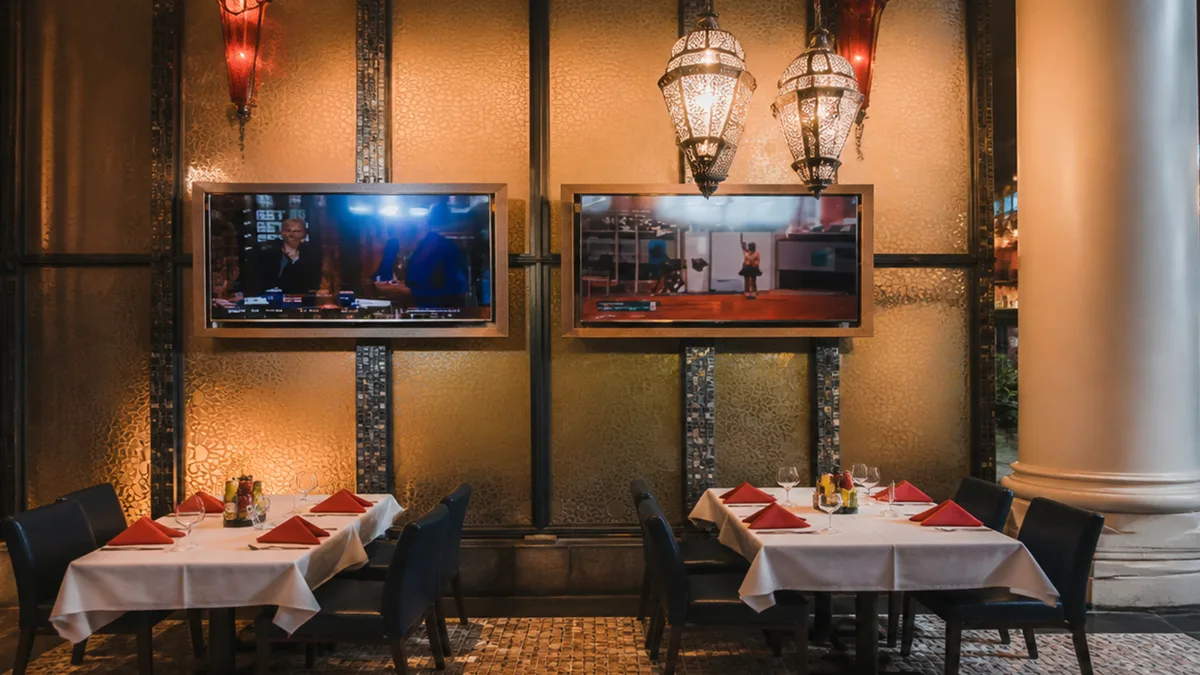
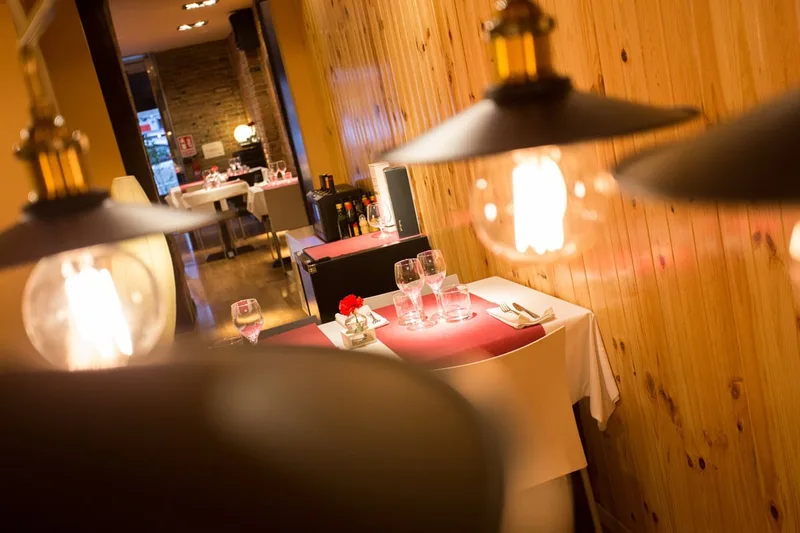
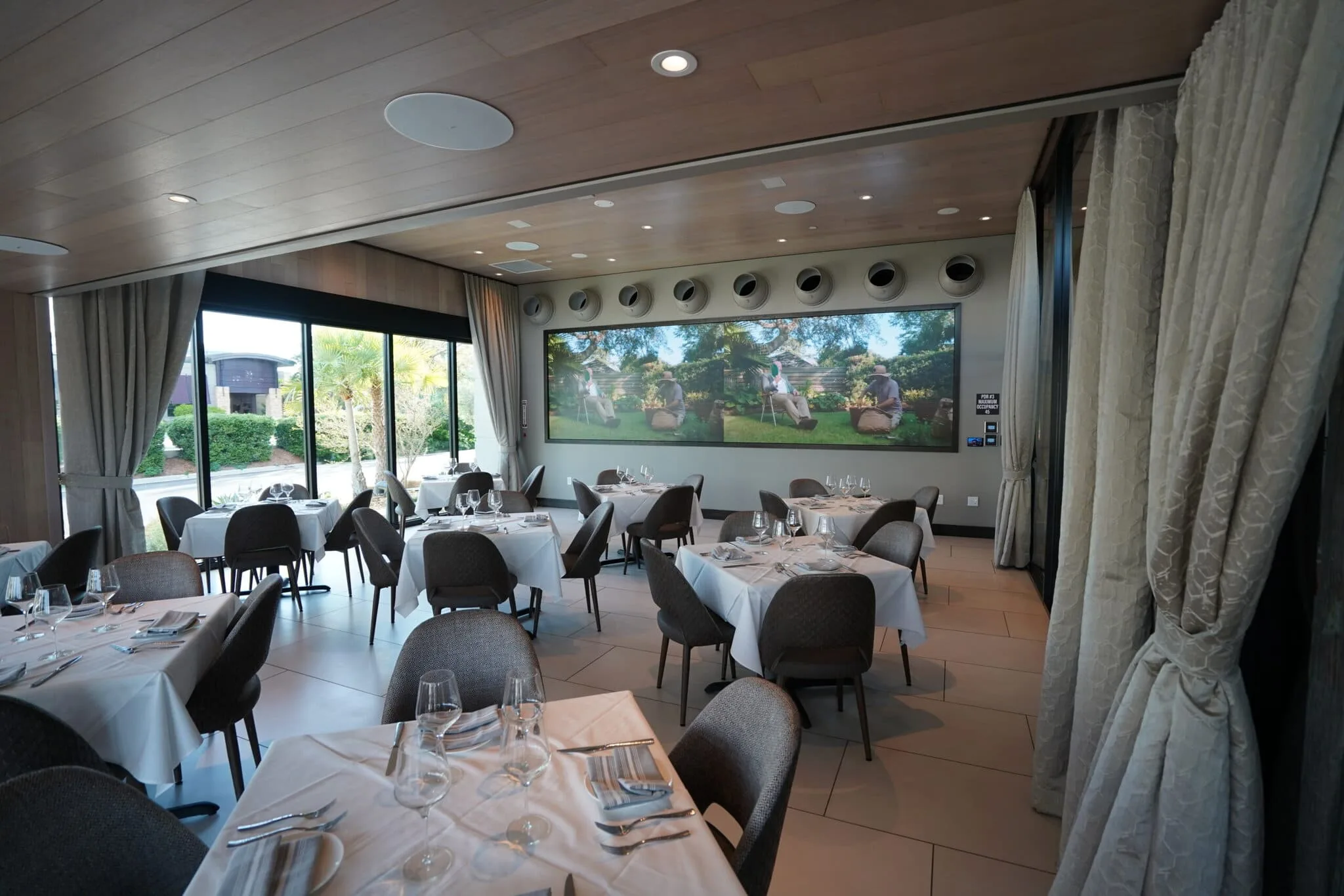
An Orlando dining room rarely serves one crowd. A five o'clock seating of families off a long day, a seven-thirty seating of couples who booked a week ago, and a nine-thirty seating of people who just got out of something. Three groups, three moods, three tolerances for noise, in the same four walls. Most rooms are set once by whoever opened that morning and then left alone, which means the early seating gets a level built for the late one and the late seating gets a room that feels like it already closed.

What fixes it is not a bigger restaurant sound system. It is a room split into zones on a processor, with levels and sources that change on a schedule instead of on somebody remembering. The bar can lift while the dining room holds steady. The patio can run its own program. Menu boards and displays can change with the daypart on their own. And underneath all of it, the speakers have to be placed for even coverage, because a room that is loud at two tables and inaudible at the next cannot be rescued by any amount of scheduling.

Reel The room turns over three times a night Orlando, FL

Restaurant AV AcrossMetroOrlando

From Restaurant Row and downtown to Winter Park, Mills 50, and Lake Nona, we design restaurant sound systems and menu board systems for rooms that seat several different crowds in one night.

2008
Serving Orlando since
10
Neighborhoods
Dr. Phillips and Restaurant Row
Restaurants · Bars

These rooms run several distinct seatings a night, so the zoning and the daypart schedule matter more than the speaker count.

High turn · scheduled
Downtown and Church Street
Restaurants · Bars

Brick, tile, and exposed ceilings reflect sound instead of absorbing it, so speaker type and placement get solved around the surfaces first.

Hard surfaces · placement
Winter Park
Restaurants · Cafés

Venues here hold visible hardware to a high bar, so speakers get concealed or chosen to read as fixtures rather than surface-mounted wherever there was room.

Concealed · design-led
Mills 50
Restaurants · Bars

Small rooms cannot hide a bad speaker position, so coverage gets modeled table by table rather than assumed from a ceiling grid.

Small footprint · coverage
Thornton Park
Restaurants · Cafés

Sidewalk tables sit outside the building envelope, so they get their own zone and hardware specified for weather rather than an indoor speaker moved outdoors.

Sidewalk · own zone
International Drive
Restaurants · Bars

These rooms serve from open to close with no quiet stretch, so automation carries the level changes instead of a manager tracking the clock.

All-day · automation
Lake Nona
Restaurants · Cafés

New buildings mean conduit, backing, and rack location can be designed in during framing rather than retrofitted afterward.

New build · design-in
College Park
Restaurants · Bars

Regulars notice a room that changed, so calibration gets documented and locked instead of drifting a little every month.

Locked settings
Winter Garden
Restaurants · Cafés

Older storefronts limit where things can be mounted, so cable paths and speaker locations get planned rather than improvised on site.

Historic · planning
Kissimmee and Celebration
Restaurants · Hotel dining

These sit under their own municipal review, so the approval path gets confirmed locally rather than carried over from an Orlando address.

Separate jurisdiction

How we work

Zones drawn around howtheroomactuallyruns

We do not start with a speaker count. We start with your service schedule, because the number of seatings you run is what decides the zone count.

The consult and the site walk

Most disappointing dining rooms were quoted off a floor plan by someone who never sat in them during service. So we start with a consult rather than a quote: what you want the room to feel like, how big it is, what it needs to do, and the budget you are working with. Then we walk it, ideally during a real seating, and listen from the places guests actually sit. The banquette against the hard wall, the four-top under the speaker, the table by the kitchen door. In Orlando we also ask how many turns you run and how different they are, because that answer sets the zoning and the automation.

Zones drawn around how the room actually runs — restaurant AV in Orlando, FL
InstallZones drawn around how the room actually runs
Zones drawn around how the room actually runs — restaurant AV in Orlando, FL
InstallZones drawn around how the room actually runs

Design you can see, then one team on site

The other way these go wrong is that nobody experiences the outcome until it is built, then wants it changed a season later. So you see the design before you commit to equipment, including where every speaker lands and why. Control gets programmed around the services you actually run, so lunch, an early seating, a late one, and a private buyout are scheduled states rather than a manager at a knob. One team handles the install, calibration, staff training, and documentation, and coordinates with your general contractor, electrician, and low-voltage trades.

What we build

The restaurant AV stack anOrlandoroomrunson

A dining room is a handful of systems working as one. Here is what we design, program, and install.

The restaurant AV stack an Orlando room runs on
InstallThe restaurant AV stack an Orlando room runs on

Multi-zone restaurant sound systems

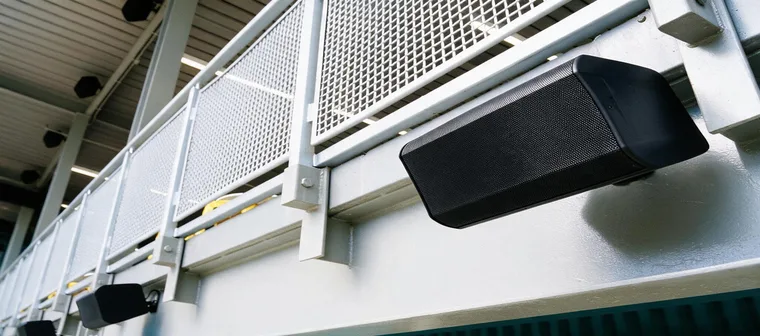
Coverage comes first. More sources at lower level, placed so every table sits inside a pattern rather than under one or between two, is what makes a room comfortable to eat in. The failure we walk into most often is speakers run around the perimeter, which leaves the middle of the room with nothing while punishing anyone against a wall. On top of that, a digital signal processor splits the room into zones, so the bar can carry a livelier level while the dining room stays conversational and the patio runs its own thing. Each zone gets its own program and its own limits, set once and then held.

Digital menu boards and displays

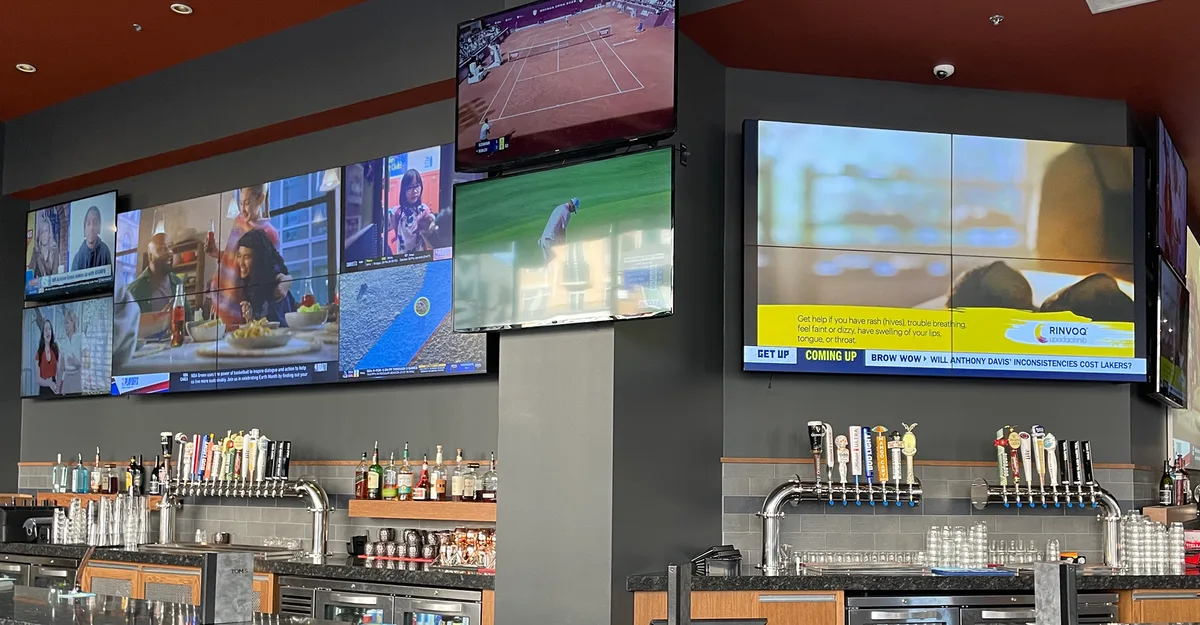
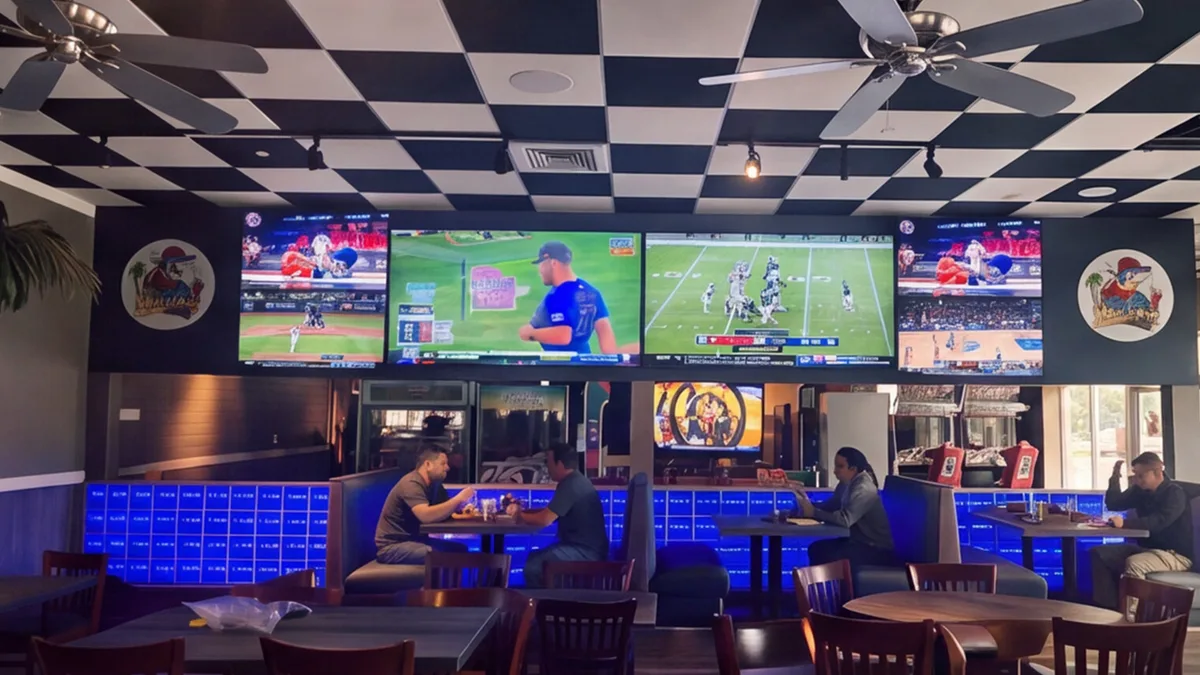
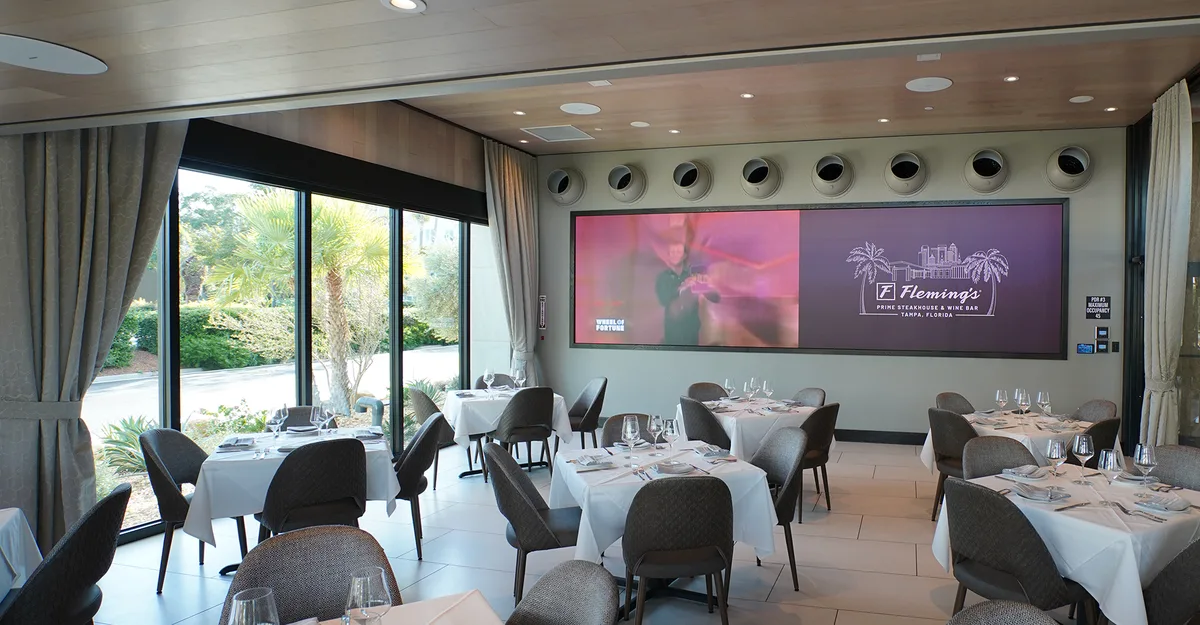
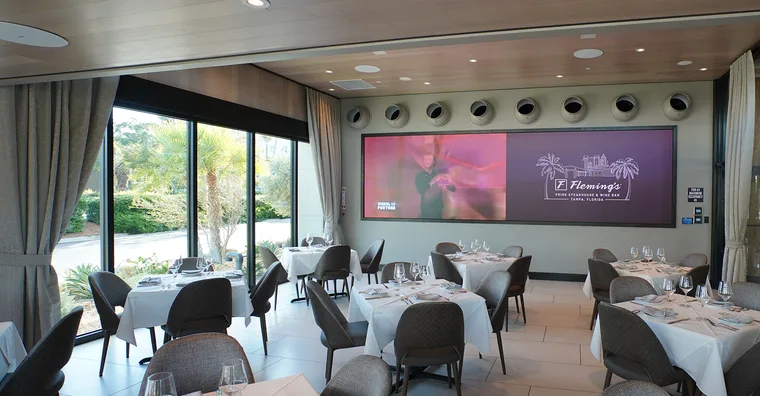
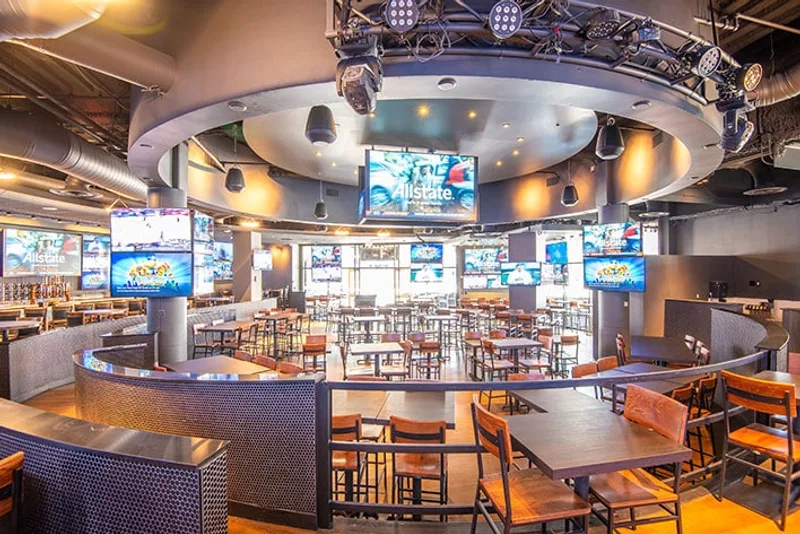
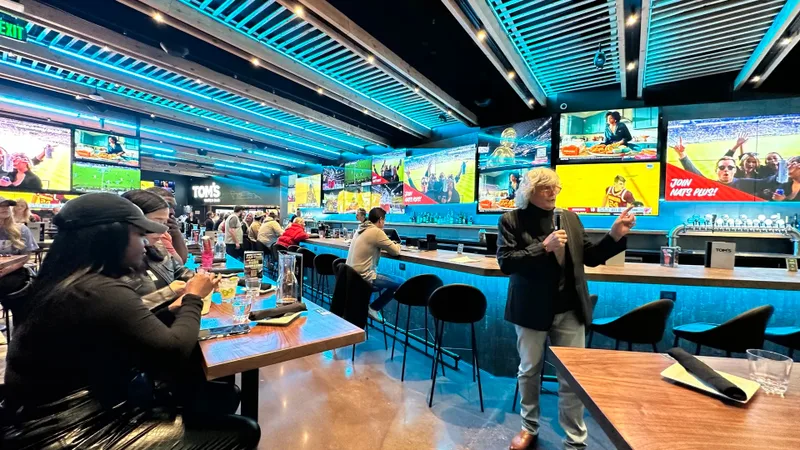
Digital menu boards earn their keep in this market because the menu changes and the printing does not keep up. Boards get sized off reading distance from the actual queue position, mounted at a height a standing guest reads without stepping back, and driven from one place so a price change happens across every location at once rather than one screen at a time. Elsewhere in the room, displays carry what the concept needs rather than what a catalog suggests. Where a room wants televisions at the bar, they get placed off sightlines and given their own audio zone so they never take over the dining room.

Daypart automation and control

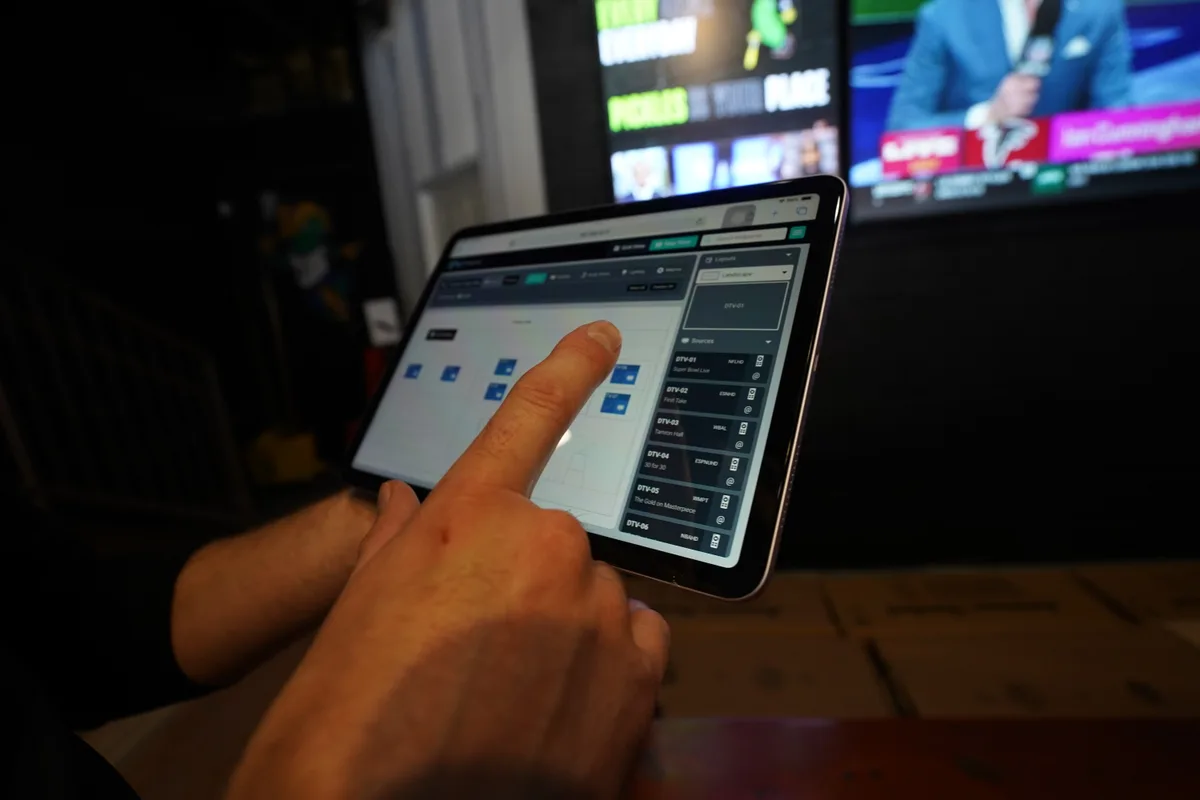
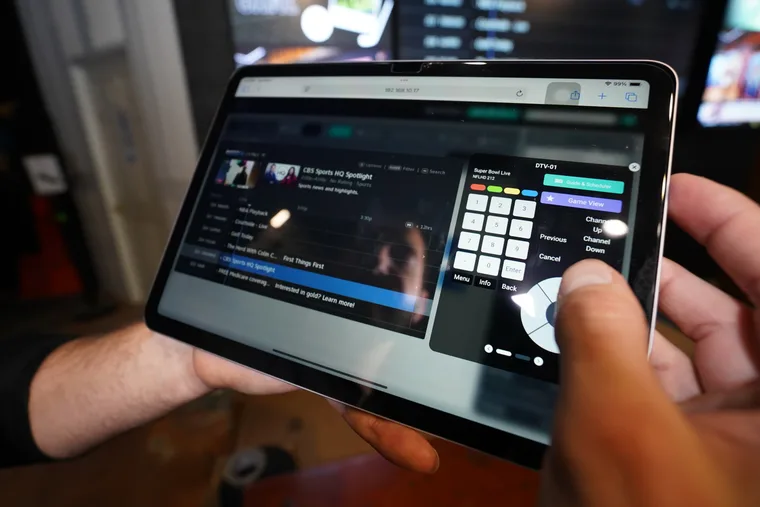
The part that saves the most labor is the part nobody sees. Sources, levels, and content move on a schedule, so the room brightens through the evening and settles at close without anyone touching anything. Staff get a small set of clearly labeled presets on a tablet for the exceptions, and the settings that took a designer to establish sit behind credentials so a new hire cannot undo them. All of it runs on a dedicated AV network rather than sharing bandwidth with your point of sale, and the sources live in one enclosed, labeled rack instead of a shelf behind the host stand.

Why Orlando restaurants trust us with it

Built for high-turn rooms inastorm-pronemarket

Central Florida runs its dining rooms hard and its weather harder. Here is where our depth shows, and where our scope ends.

The early seating is the one people forget

A system tuned once, at night, in a full room will be wrong at five o'clock, because a room absorbs sound in proportion to how many people are in it. An empty dining room at a level set for a busy one is harsh, and a busy one at a level set for an empty room is inaudible. So we build and verify presets for the states you actually live in, at real occupancy, rather than handing over one setting and a remote. Watch for guests leaning in to hear each other and then leaving before dessert, and you are watching a room that was set for a different hour.

Lightning, humidity, and the rack

Three local realities shape the build. Central Florida takes more lightning than anywhere else in the country, and the damage rarely arrives as a dramatic strike. It arrives as surges that shorten the life of amplifiers and network gear, so the rack gets real surge protection and conditioning rather than a power strip. Humidity is constant, so anything outdoors gets sealed and drained properly rather than coated and hoped over. And the equipment room gets cooling and stays at or below 75 degrees, because temperature is the single most expensive variable in how long a system lasts.

Support after opening night

Crunchy Tech started in 2008 as an AV support operation, which is an unusual origin for an integrator and the reason the systems get built the way they do. When you spend years fixing other people's work, you learn exactly where installations cut corners. That shows up in a rack you can actually service: fully enclosed, every cable labeled at both ends, power separated from audio and data. We have opened racks that looked fifteen years old after three months in an uncooled closet, with dust caked on every surface. Around 47 percent of support tickets close inside an hour and roughly 72 percent within a day.

Where we draw the line

We do not install or operate cameras, we do not produce or edit video, and we do not run streaming as a service. What we build is the infrastructure that supports whatever your venue chooses, including clean audio feeds and documented signal paths. We also generally do not take install-only work. If you already bought equipment we will look at it, but we need to understand the design first, and we will not put our name on consumer speakers in a room that runs twelve hours a day.

What it earns back

How a dining room paysforthesystem

Three turns a night is three chances to lose a table early, and the ones you lose leave quietly.

How a dining room pays for the system — restaurant AV in Orlando, FL
InstallHow a dining room pays for the system

Table time and the second round

Guests who cannot hear each other do not complain about the audio. They eat, decline dessert, and go, and the check closes twenty minutes early. Across three seatings that compounds into real money, and it never shows up on a comment card, only in average check and in reviews that mention noise without knowing why. A room set correctly for the hour it is in keeps tables through a second round, and the same system pushes menu boards and specials in front of people while they are still deciding.

Good, Better, Best against one design

Most owners price AV like retail: a speaker costs a certain amount, so a room of speakers should not cost much more. Worth being plain about the gap, because the processor, the amplification, the cabling, and the control take a serious share of the budget before you buy a single speaker, and they are exactly what makes zoning and automation possible. So we quote Good, Better, and Best against one design, per zone. Good is a real recommendation, not a strawman: even coverage, two or three zones, scheduled dayparts. If your budget is short of the room, we would rather value engineer it honestly.

How a dining room pays for the system — restaurant AV in Orlando, FL
InstallHow a dining room pays for the system

Our room feels wrong at five and wrong again at nine. What is actually going on?

Two things, and they compound. The first is occupancy. People absorb sound, so a level that works with a full dining room is harsh in an empty one and a level set for an empty room disappears once it fills. If the system was tuned once, at night, in a busy room, then five o'clock will always be too much. The second is that different seatings want different things. An early family seating and a late couples seating are not the same room, and asking one setting to serve both means neither is right. The fix is zoning plus scheduling. The processor splits the room so the bar and the dining room hold different levels, and the levels themselves move on a schedule verified at real occupancy rather than set once and left. Staff get a few clearly labeled presets for exceptions.

How many speakers does a dining room actually need?

More than most rooms have, running quieter than most rooms run them. The instinct is to buy a few good speakers and turn them up, and it produces exactly the room guests complain about: painful at the two tables nearest a speaker, inaudible at the table between them. Even coverage means more sources at lower level, placed so every seat sits inside a pattern rather than under one or in a gap. The most common failure we walk into is speakers run around the perimeter, which leaves the middle of the room with nothing and punishes anyone against a wall. Ceiling height and surfaces change the answer, so an open-ceiling room with concrete gets a different approach from a low acoustic-tile room. We model it from the seats rather than from a grid, which usually produces a higher count of smaller speakers and a room that finally sounds like a conversation.

Are digital menu boards worth it for a single location?

Often yes, and the case is rarely about looking modern. It is about how fast your menu changes and what it costs you when the printed version is behind. Boards let you move a price, pull an item that just sold out, or push the higher-margin dish to the top of the panel while people are still in line deciding. For a single location the practical requirements are modest: commercial displays sized off real reading distance from where the queue actually stands, mounted at a height a standing guest reads without backing up, and one place to make a change from. For a group it gets more compelling, since one update can hit every location at once instead of somebody walking around with a laptop. We would rather talk you out of screens you do not need than sell you a wall of them.

Do you handle cameras, livestreaming, or video production?

No. We are a design-build AV integrator. We do not install or operate cameras, we do not shoot or edit video, and we do not run streaming as a service. What we do is design the system around how the restaurant actually runs, procure the hardware, install it, calibrate it, train your staff, document all of it, and support it for the life of the system. Where a venue works with a production partner, we build the infrastructure that makes their job easy: clean audio feeds, documented signal paths, and a network engineered for the uplink. The content side belongs to specialists.

What We Do Here

Services available in Orlando

Every system is designed, installed, and supported by our own team in Orlando — never subcontracted.

Get a Orlando Quote arrow_forward
AV Consulting01 / ORLANDO

AV Consulting

AV consulting from an audio visual consultant who joins at the architectural phase, designs the technology into the plan and steers the project around your business outcome.

AV Consulting in Orlandoarrow_forward
tv02 / ORLANDO

Video Wall Solutions

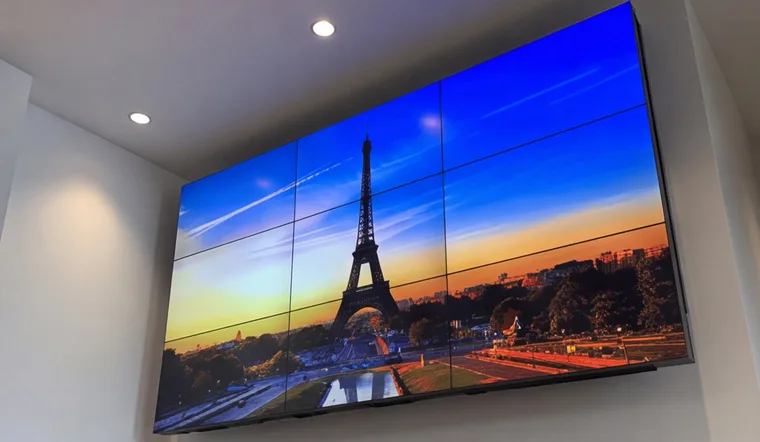
Commercial video walls across LED, LCD and Direct View. Designed, integrated, installed and supported by a national design-build AV integrator.

Video Wall Solutions in Orlandoarrow_forward
Commercial Sound Systems03 / ORLANDO

Commercial Sound Systems

Commercial sound system design and installation: multi-zone audio engineered around how your space is used, wired and tuned on site, and supported as a partner.

Commercial Sound Systems in Orlandoarrow_forward
add_ad04 / ORLANDO

Digital Signage Services

Design-build digital signage for hospitality and enterprise: commercial displays, content management, and installation that keeps your screens selling and current.

Digital Signage Services in Orlandoarrow_forward
settings_remote05 / ORLANDO

AV Control Systems

Design-build AV control systems: one iPad, wall panel, or browser runs every display, audio zone, lighting scene, and source in the room. Programmed and supported in-house.

AV Control Systems in Orlandoarrow_forward
bolt06 / ORLANDO

AV Programming

AV programming that starts with the right design: a vetted, interconnectable stack unified into one control system, so the whole room runs from one simple interface.

AV Programming in Orlandoarrow_forward
hangout_video07 / ORLANDO

Conference Room AV

Conference room AV designed around the people using the room: video conferencing, Zoom and Teams Rooms, displays, and audio, installed and supported as a partner.

Conference Room AV in Orlandoarrow_forward
Related Solution

Learn more about our Restaurant AV Systems solutions

View Restaurant AV Systems
What clients say

Operators who run on our systems

Client successes drive Crunchy Tech to become better. Below is how our customers feel about us.

Just do it. Spend the money. It’s well worth it. It’s not worth your time, hassle, energy, and stress of trying to make it look right and do it right when there’s somebody who has been doing it for years and has perfected the craft.

Matt Moore logo
Matt Moore
IT Systems Administrator · Capone's Hideout

Working with Crunchy Tech was a fantastic experience from start to finish. They handled the sale and installation of all our sound and TV equipment at The County Bar in Aviston, IL, and absolutely nailed it. We were on a very tight deadline, and they not only met it—they delivered top-notch quality and service the entire way. Highly professional, responsive, and easy to work with. We couldn't be happier with the results.

Clint Flowers logo
Clint Flowers
Owner · The County Bar

Crunchy has done an amazing job on our A/V install. The sound is perfectly balanced throughout our many zones and the entire system is super simple to use.
Steve Glum logo
Steve Glum
Chief Marketing Officer · Ace Cafe
Talk to an Orlando restaurant AV designer

Let's set the room foreveryseating

Tell us about the restaurant: the neighborhood, the square footage, how many seatings you run and how different they are, whether you have a patio or sidewalk tables, and what guests say about the noise. We will start with a consult to understand what you are trying to accomplish, then walk the room during a real service, and come back with one engineered recommendation instead of a parts list.

  • Coverage modeled from the seats, so no table is under a speaker or in a gap.
  • Zones that let the bar run livelier while the dining room stays conversational.
  • Levels and sources that change on a schedule rather than on somebody remembering.
  • Surge protection and conditioning specified at the rack, not assumed.