Just do it. Spend the money. It’s well worth it. It’s not worth your time, hassle, energy, and stress of trying to make it look right and do it right when there’s somebody who has been doing it for years and has perfected the craft.
Hotel AV Systems in Tampa
Hotel and resort AV that brings the lobby, the outlets, the deck, and the signage onto one control surface instead of four vendors and a drawer of remotes.
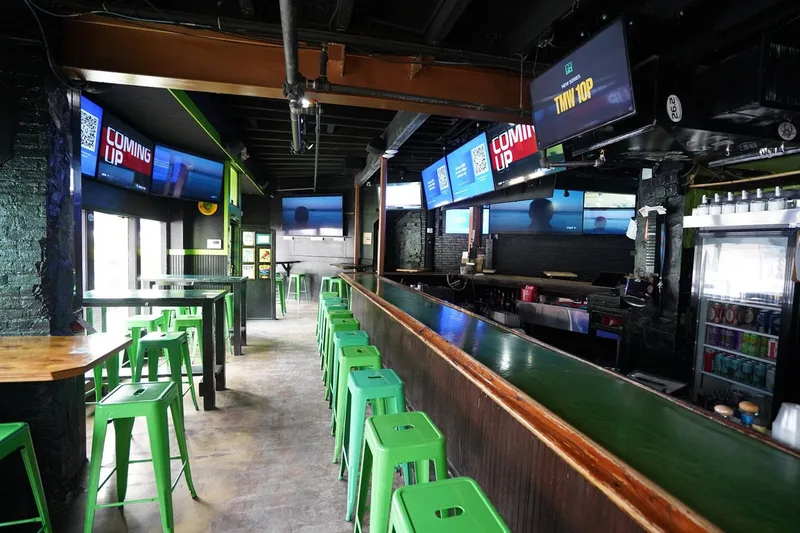
Your lobby, your restaurant, and your bar are on three different systems
Walk a Tampa property and count the remotes. The lobby was done at renovation. The restaurant came with a third-party operator who brought their own installer. The rooftop bar was added two years later by whoever was available, and the meeting floor has not been touched since it opened. Four systems, four control interfaces, four ways of doing things, and nobody on staff who understands all of them. So the level in one space gets fixed by turning something up in another, and every question about the property takes three phone calls to answer.
Most hotels already own plenty of AV. What they rarely own is AV that is interconnected and easy to manage, which is a different thing entirely. Bringing the property onto one processor and one control surface means zones named after real spaces, background audio managed by zone rather than by whoever is nearest a knob, and signage driven from one place. Where a third-party operator runs an outlet, the boundary gets defined deliberately so they control their room without being able to affect yours. Then a manager sees one interface, and the property is being run rather than merely equipped.

Hotel and Resort AV Across Tampa Bay
From Water Street and Westshore to Ybor, the beaches, and across the bay to St. Pete, we design and install hotel AV systems for lobbies, outlets, decks, meeting space, and signage.
Salt corrodes anything unprotected, so deck and waterfront hardware gets marine-grade specification down to the fasteners and the cable.
Storm season puts surges and brief outages on the grid weekly, so every rack gets real surge protection and conditioning.
Moisture forms inside enclosures, so outdoor gear gets sealed and drained properly and every equipment room stays conditioned.
Wind and water drive equipment room placement and outdoor mounting, so racks sit raised and protected inside the conditioned envelope.
How we work
One control surface across the whole property
We do not start with a speaker count. We start by finding out how many systems you actually have, which on most properties is more than anyone expects.
The consult and the site walk
Most disappointing hotel systems were quoted off a floor plan by someone who never stood in the lobby at check-in. So we start with a consult rather than a quote: what each space needs to do, how big the property is, what it needs to accomplish, and the budget you are working with. Then we walk it during real occupancy and open every equipment room, because on a property that has been added to over a decade the documentation rarely survived the vendors. In Tampa we also map who controls what, since third-party outlet operators change the answer.
Design you can see, then one team on site
The other way these go wrong is that nobody experiences the outcome until it is built, then wants it changed a season later. So you see the design before you commit to equipment, including what we recommend keeping, what comes onto the shared platform, and where the boundaries between you and an outlet operator sit. Control gets programmed around how the property really runs, so dayparts and events are scheduled states rather than a manager at a knob. One team handles the install, calibration, staff training, and documentation, and coordinates with your general contractor, electrician, low-voltage trades, licensed fire alarm contractor, and brand or ownership standards where they apply.
What we build
The hotel AV stack a Tampa property runs on
A hotel is a set of very different rooms that should behave like one system. Here is what we design, program, and install.
Zoned audio on one platform
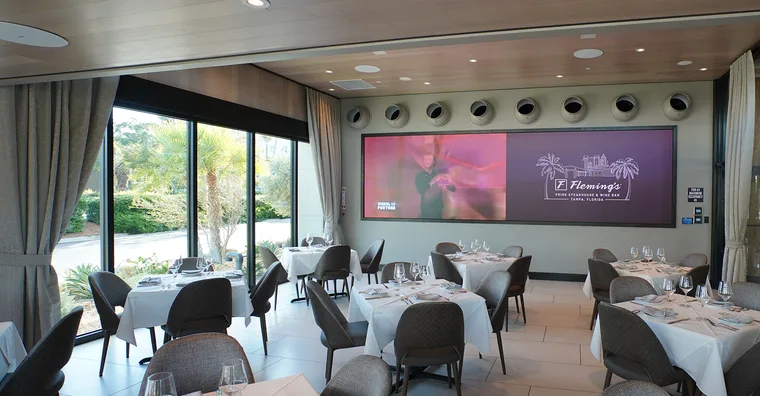
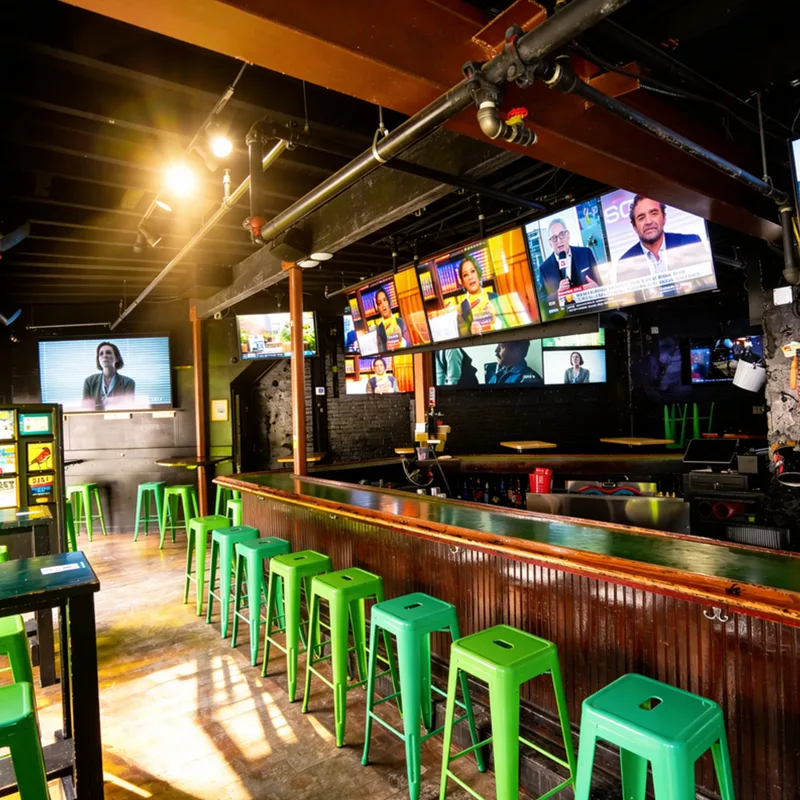
Every guest-facing space becomes its own zone on a shared processor, with its own source, level, and hard limits. The lobby gets even coverage and a scheduled profile rather than one level held all day. Restaurants and bars each hold their own character, so an outlet can be livelier without the lobby inheriting it and a dining room can stay conversational while the bar lifts. Coverage everywhere comes from more sources at lower level, which is what makes a space comfortable rather than loud. Zones get named after the rooms staff actually call them.
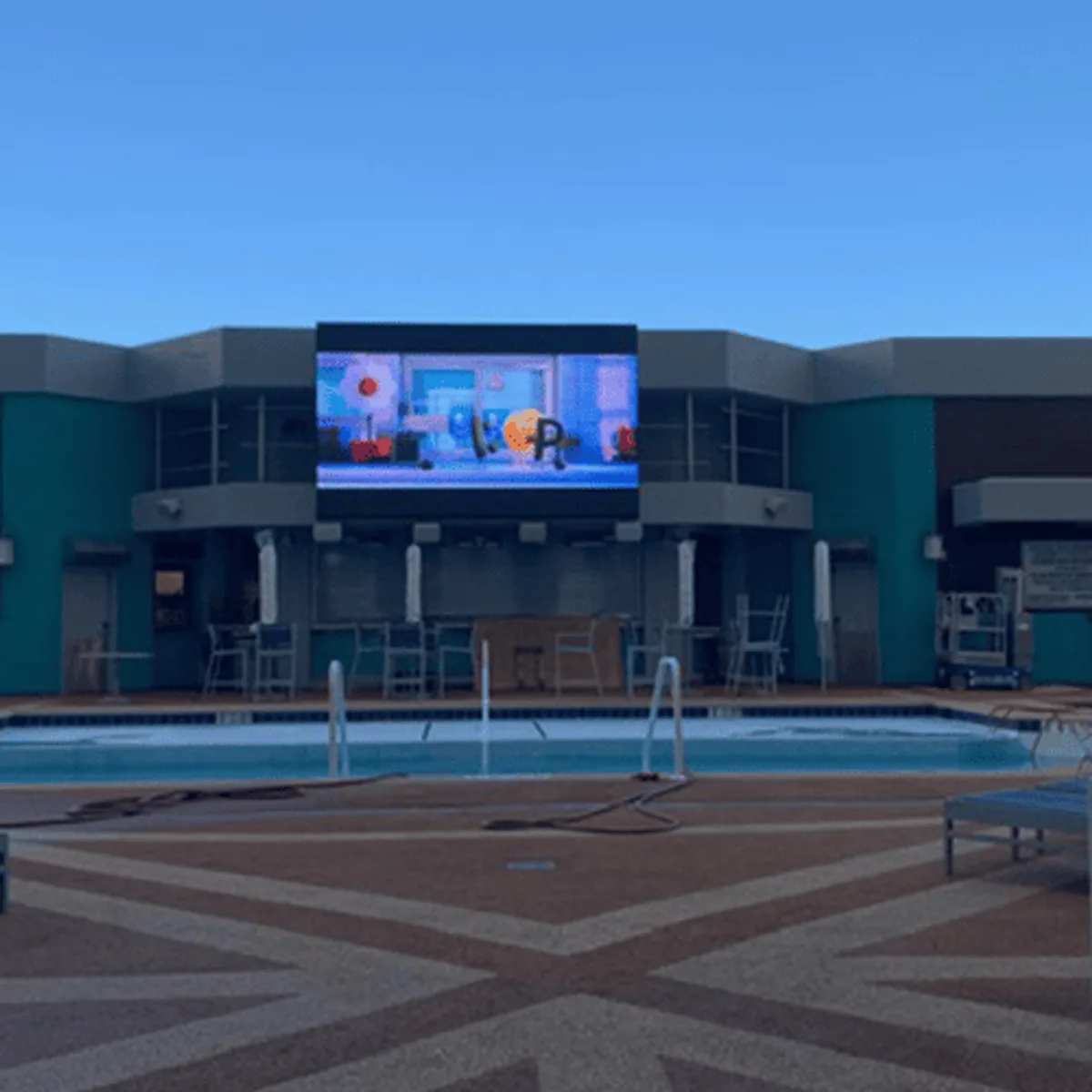
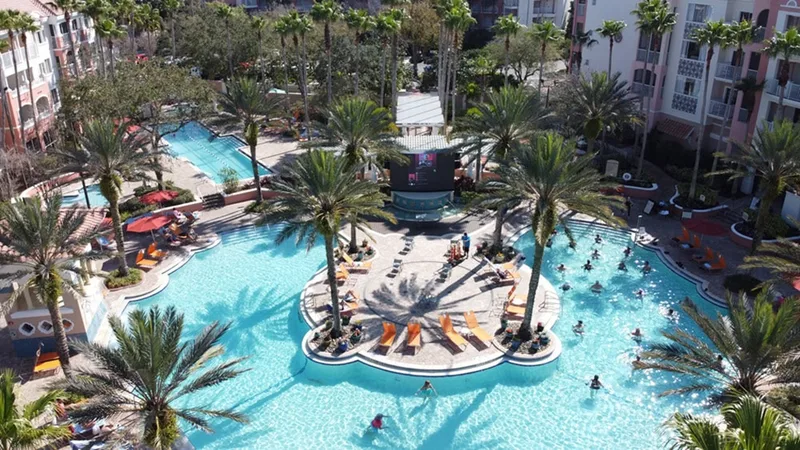
Deck, outdoor space, and the waterfront
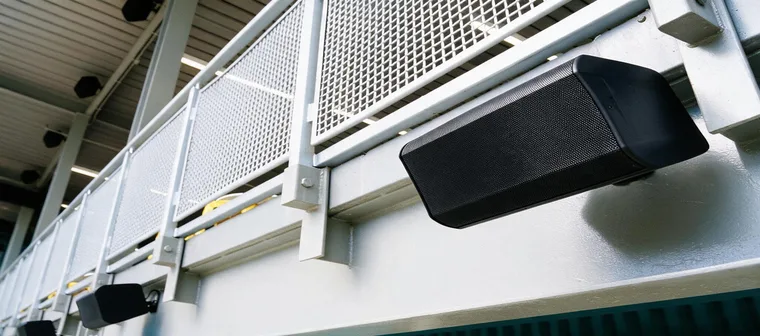
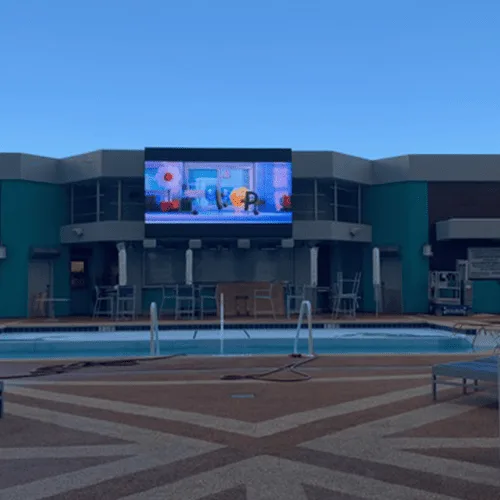
Outdoor areas are a different acoustic problem rather than a smaller one, since open air returns nothing and sound dissipates instead of filling the space. Decks and terraces get a higher count of smaller loudspeakers spread across the area at a moderate level, aimed down and inward, which reaches the far seats and keeps energy off the guest rooms above. Everything exposed gets specified for salt off the bay, sun, and driving rain, including mounting hardware and cable. Any outdoor display runs real brightness with ambient sensing.
Signage, meeting space, and control
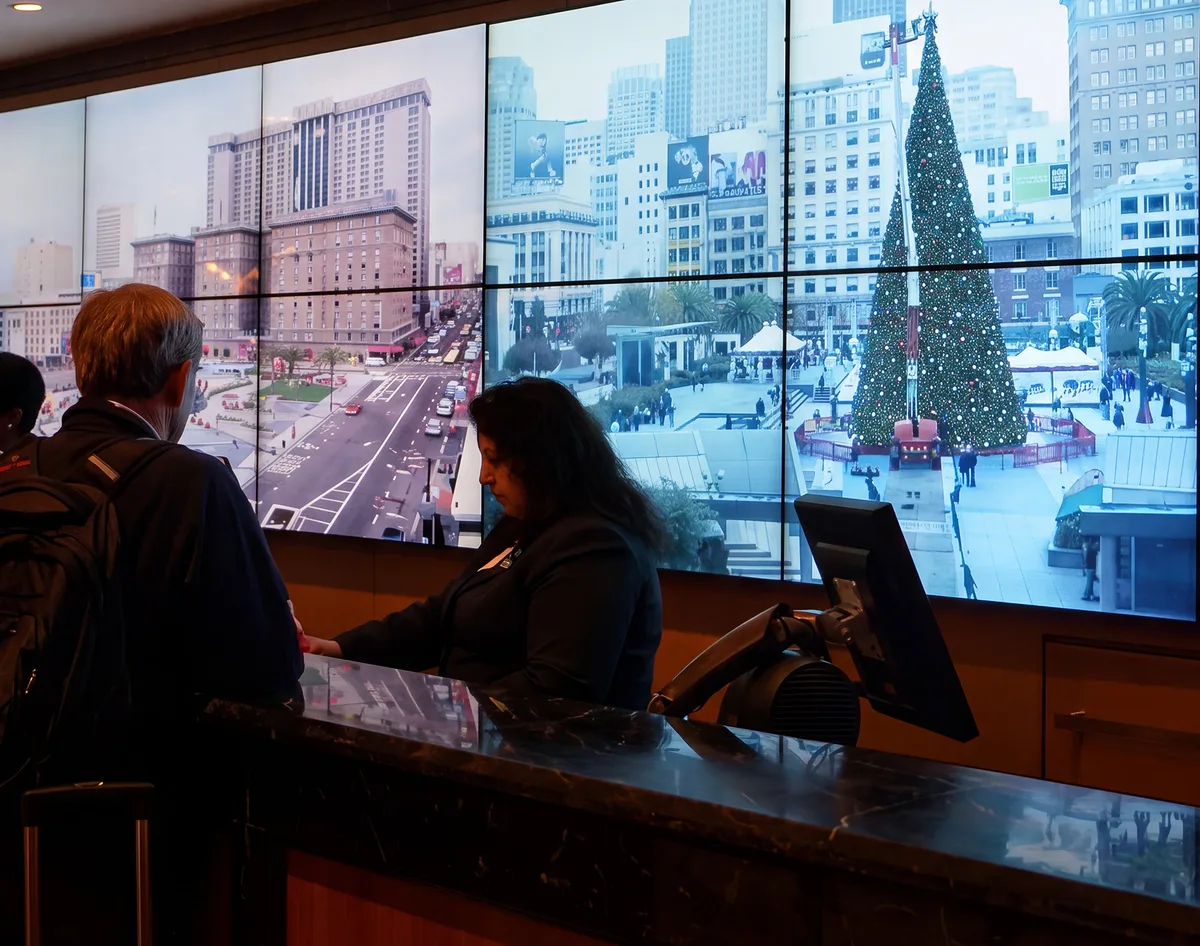
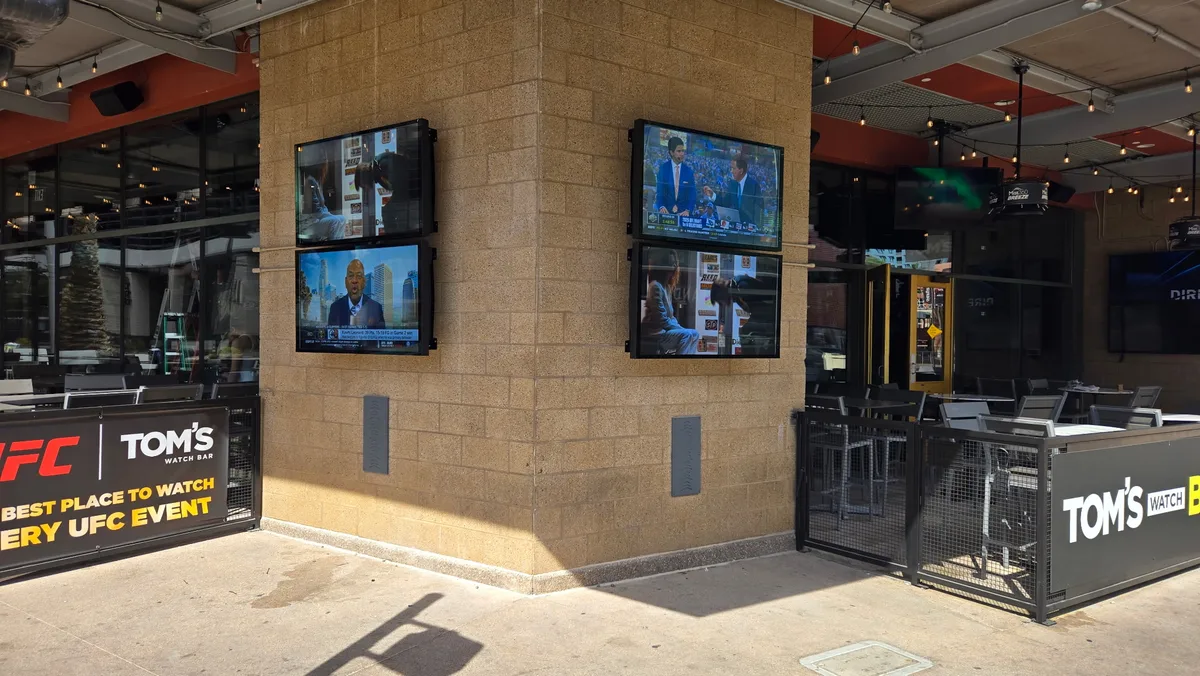
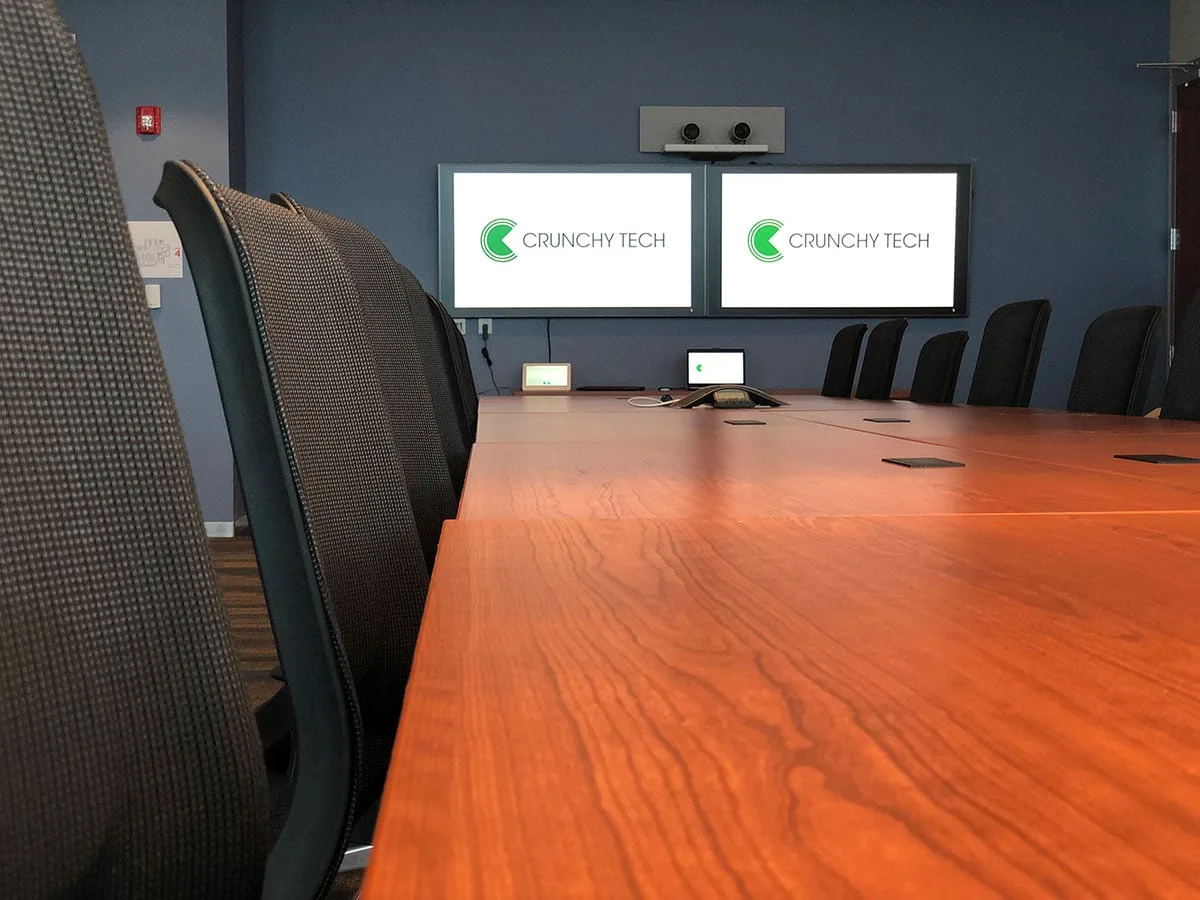
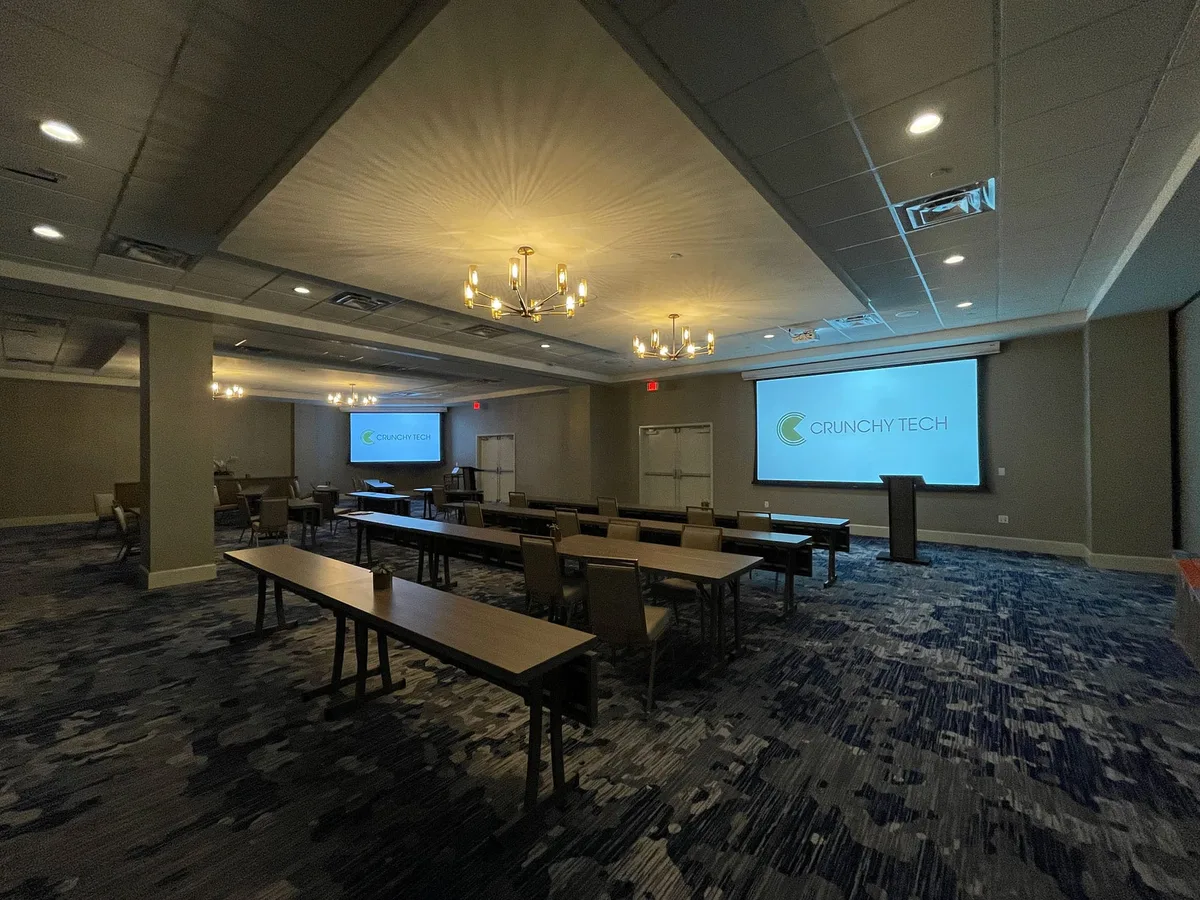
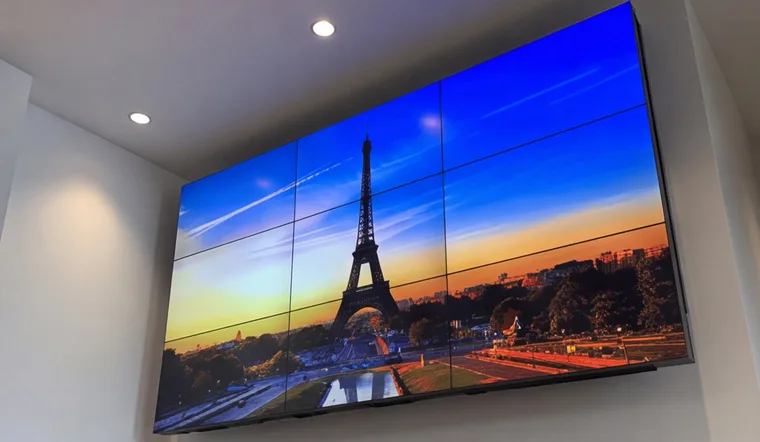
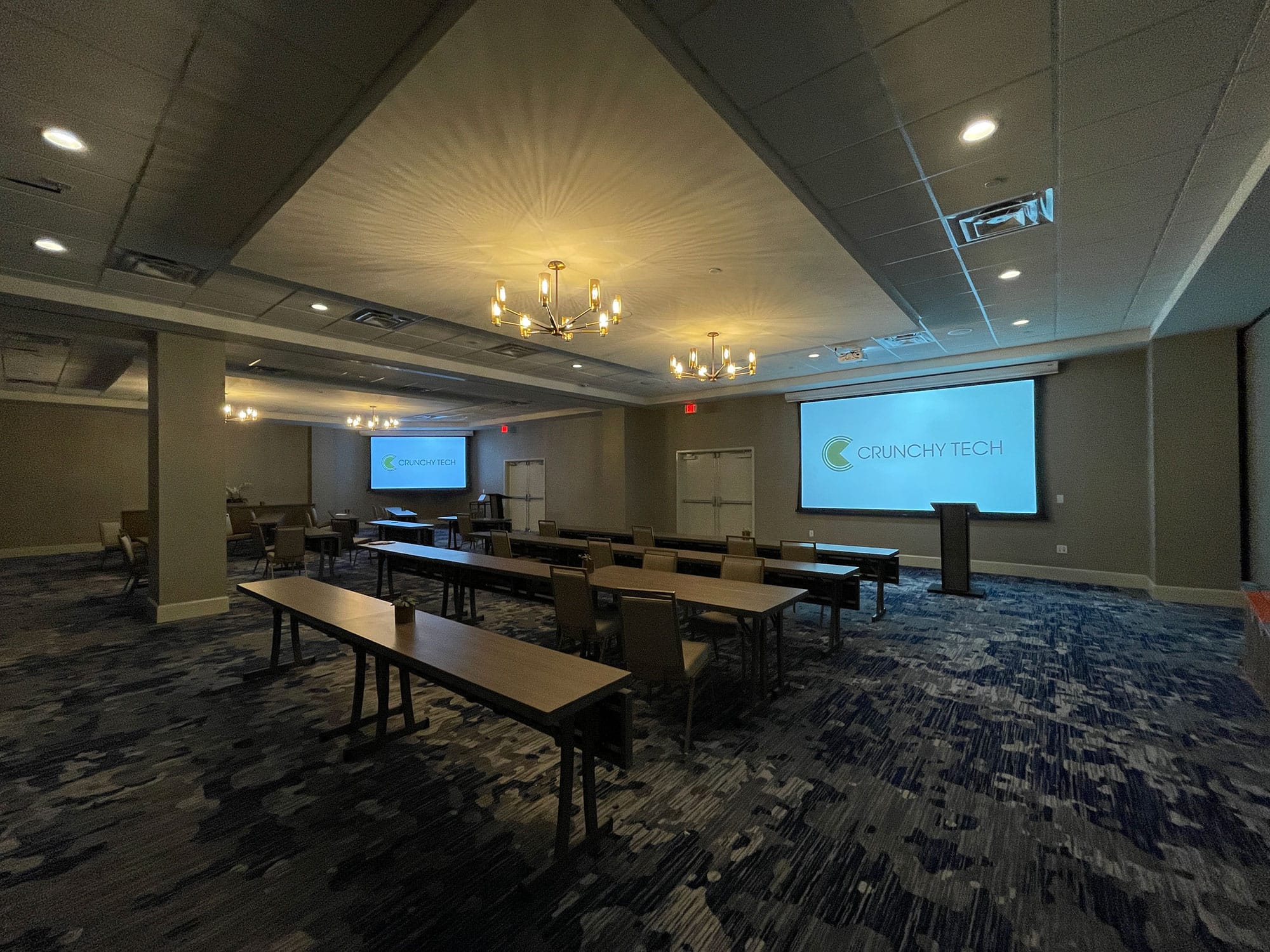
Hotel digital signage runs from one place, with event and meeting boards pulling from the schedule, F&B content moving by daypart, and property messaging pushed to every screen without a manager editing a file. Meeting and conference rooms get systems a banquet team can reset, with named presets per configuration. Above all of it sits one control surface, with the settings that took a designer to establish held behind credentials so a busy weekend cannot undo them. All of this is guest-facing space. In-room AV is not something we do.
Why Tampa Bay hotels and resorts trust us with it
Built for fragmented properties on the coast
Properties here accumulate systems, and the Gulf works on everything installed outdoors. Here is where our depth shows, and where our scope ends.
Where the boundary with an operator belongs
Third-party F&B is the most common reason a hotel ends up with four systems, and the usual outcomes are both bad: either the operator is fully independent and their level bleeds into your lobby with nobody able to address it, or they are locked out and call your engineering team every evening. The workable answer is a defined boundary. The outlet gets genuine control of its own zone, including source and level within limits you set, and no ability to affect anything outside it. That gets designed rather than negotiated later, and it is worth writing into the arrangement before the install.
Salt, storms, and several equipment rooms
Three local realities shape the build. Salt air off the bay corrodes anything unprotected, so decks, terraces, and waterfront frontages get marine-grade selection down to the fasteners and the cable. Storm season puts surges and brief outages on the grid weekly in summer, so every rack gets real surge protection and conditioning. A property also has several equipment rooms rather than one, each needing cooling and to stay at or below 75 degrees, since temperature is the single most expensive variable in how long a system lasts.
Support after opening night
Crunchy Tech started in 2008 as an AV support operation, which is an unusual origin for an integrator and the reason the systems get built the way they do. When you spend years fixing other people's work, you learn exactly where installations cut corners, and a hotel with four vendors is that lesson concentrated. That shows up in racks you can actually service: fully enclosed, every cable labeled at both ends, power separated from audio and data. Around 47 percent of support tickets close inside an hour and roughly 72 percent within a day, and that number is largely a function of how the system was built.
Where we draw the line
In-room AV is not a focus for us, so we work the guest environment outside the room: lobbies, restaurants and bars, pool decks, meeting space, and signage. We do not install or operate cameras, produce video, or run streaming as a service. We do not staff or operate events. We coordinate with your licensed fire alarm contractor on the emergency interface rather than providing the alarm system, and we work to brand or ownership standards rather than interpreting them for you. We generally do not take install-only work.
What it earns back
How one system costs less to run
Fragmentation is not a line item, which is exactly why it never gets fixed. It shows up as hours and as a guest experience nobody quite controls.
The hours you stop spending
Four systems cost more than one in ways that never appear on a budget. Engineering time spent on a platform nobody fully understands. Managers adjusting the wrong space because the right control is behind a door they do not have. A guest experience that drifts, because the lobby is loud on Tuesday and dead on Thursday depending on who was last there. Consolidating removes all of it, and the guest-facing payoff is what the founder points at: a property that is interconnected and easy to manage is the one guests choose again, which is the cheapest occupancy you will ever buy.
Good, Better, Best against one design
Most owners price AV like retail: a loudspeaker costs a certain amount, so a property of them should not cost much more. Worth being plain about the gap, because the processing, the amplification, the cabling, and the control take a serious share of the budget before you buy a single box, and consolidation lives almost entirely in those components. So we quote Good, Better, and Best against one design, per zone, and we phase it, usually starting with the spaces guests judge you on first and the ones your engineering team gets called about most. If your budget is short of the property, we would rather value engineer it honestly.
We have four systems from four vendors. Do we have to replace all of it?
Rarely all of it, and the first step is not buying anything. It is finding out what you actually have, which on a property that has been renovated and added to over a decade means walking every equipment room, because the documentation almost never survived the vendors who installed it. From there the useful split is what can come onto a shared processor and control surface, which is often more than people expect, and what genuinely has to be replaced, which is normally equipment that was specified to just barely do its job and is now at its limit. Loudspeakers and cabling frequently stay. Control and processing frequently consolidate. Then we phase it, usually starting with the spaces guests judge you on first and the ones your engineering team gets called about most. The goal is a manager seeing one interface with zones named after real rooms rather than four remotes.
Our restaurant is run by a third-party operator. How does that work?
With a boundary designed on purpose rather than discovered later. The two common outcomes are both bad. Either the operator has a fully independent system and their level bleeds into your lobby with nobody able to address it, or they are locked out entirely and call your engineering team every evening to change a source. What works is giving the outlet genuine control of its own zone, including its source and its level within limits you set, and no ability to affect anything outside it. That way they run their room the way their concept needs and your lobby stays yours. It is worth settling before the install, and ideally worth reflecting in the arrangement with them, since the technical design and the commercial relationship should agree with each other.
Do you handle in-room entertainment?
No. In-room AV has not been a focus for us, and we would rather be direct about that than pretend otherwise. What we do is the guest environment outside the room: lobbies, restaurants and bars, pool decks, meeting and conference space, and signage. Our founder's view is that the biggest thing missing in almost every hotel is not equipment but a system that is used properly, interconnected and easy to manage, with background audio controlled by zone and signage that adapts rather than sitting static. Most properties already have AV. Far fewer have AV anyone can run. That gap is what we work on, and on a fragmented property it is usually where the fastest return sits. If in-room is your priority, you want a specialist in that.
Our lobby is loud some days and dead others. Why?
The level is being set by people rather than by design, and different people have different opinions. A lobby that depends on whoever last walked past a control will drift, and it drifts in both directions: too loud after a busy evening, too quiet after a complaint, never quite right. Two things fix it. Coverage first, since a lobby covered by a few loudspeakers has hot spots near them and dead zones between, which makes any single setting wrong somewhere. More sources at lower level gives you a space that is even, and an even space can be set once. Then scheduling, so the profile moves through the day on its own, brighter at check-in, calmer late, without anyone deciding. The settings that took a designer to establish sit behind credentials so they hold.
What We Do Here
Services available in Tampa
Every system is designed, installed, and supported by our own team in Tampa — never subcontracted.
AV Consulting
AV consulting from an audio visual consultant who joins at the architectural phase, designs the technology into the plan and steers the project around your business outcome.
AV Consulting in Tampaarrow_forwardVideo Wall Solutions
Commercial video walls across LED, LCD and Direct View. Designed, integrated, installed and supported by a national design-build AV integrator.
Video Wall Solutions in Tampaarrow_forwardCommercial Sound Systems
Commercial sound system design and installation: multi-zone audio engineered around how your space is used, wired and tuned on site, and supported as a partner.
Commercial Sound Systems in Tampaarrow_forwardDigital Signage Services
Design-build digital signage for hospitality and enterprise: commercial displays, content management, and installation that keeps your screens selling and current.
Digital Signage Services in Tampaarrow_forwardAV Control Systems
Design-build AV control systems: one iPad, wall panel, or browser runs every display, audio zone, lighting scene, and source in the room. Programmed and supported in-house.
AV Control Systems in Tampaarrow_forwardAV Programming
AV programming that starts with the right design: a vetted, interconnectable stack unified into one control system, so the whole room runs from one simple interface.
AV Programming in Tampaarrow_forwardConference Room AV
Conference room AV designed around the people using the room: video conferencing, Zoom and Teams Rooms, displays, and audio, installed and supported as a partner.
Conference Room AV in Tampaarrow_forwardLearn more about our AV for Hotels solutions
Operators who run on our systems
Client successes drive Crunchy Tech to become better. Below is how our customers feel about us.
You're a great partner with Florida Hospital and this project will make a difference in Children's Health.
Working with Crunchy Tech was a fantastic experience from start to finish. They handled the sale and installation of all our sound and TV equipment at The County Bar in Aviston, IL, and absolutely nailed it. We were on a very tight deadline, and they not only met it—they delivered top-notch quality and service the entire way. Highly professional, responsive, and easy to work with. We couldn't be happier with the results.
Crunchy's AV Services are outstanding. Staff members are experts, who really extend themselves to find the right technology for helping us reach our marketing goals in creative ways. The best thing about working with Crunchy is collaborating with the staff – they are patient, responsive, knowledgeable, and available.
Crunchy has been great to work with. They communicate well and deliver as promised.
The work Crunchy has been doing is a game changer for this industry.
Being able to reuse the existing structure created a much lower cost for the client and they were ecstatic.
Crunchy has done an amazing job on our A/V install. The sound is perfectly balanced throughout our many zones and the entire system is super simple to use.
Just do it. Spend the money. It’s well worth it. It’s not worth your time, hassle, energy, and stress of trying to make it look right and do it right when there’s somebody who has been doing it for years and has perfected the craft.
You're a great partner with Florida Hospital and this project will make a difference in Children's Health.
Working with Crunchy Tech was a fantastic experience from start to finish. They handled the sale and installation of all our sound and TV equipment at The County Bar in Aviston, IL, and absolutely nailed it. We were on a very tight deadline, and they not only met it—they delivered top-notch quality and service the entire way. Highly professional, responsive, and easy to work with. We couldn't be happier with the results.
Crunchy's AV Services are outstanding. Staff members are experts, who really extend themselves to find the right technology for helping us reach our marketing goals in creative ways. The best thing about working with Crunchy is collaborating with the staff – they are patient, responsive, knowledgeable, and available.
Crunchy has been great to work with. They communicate well and deliver as promised.
The work Crunchy has been doing is a game changer for this industry.
Being able to reuse the existing structure created a much lower cost for the client and they were ecstatic.
Crunchy has done an amazing job on our A/V install. The sound is perfectly balanced throughout our many zones and the entire system is super simple to use.
Insights
Design-Build AV Philosophy: How it Separates the Top 3% From the Rest of the Industry
We don’t sell you what we have. We design what you need. That line is the operating principle I’ve built Crunchy Tech around for the last 20 years. And it’s the single sentence that separates us - and the small handful of firms like us - from the other 97% of the commercial AV industry.
Read article arrow_forwardThe Spectacle Trap: Why Technology-Centric Hospitality AV Kills Brands
There’s a pattern I’ve watched play out for 20 years in hospitality AV, and it always ends the same way...
Read article arrow_forwardWhy AV Quotes Take Time (And Why That's a Good Thing)
"Where's my quote?"
Read article arrow_forwardLet's get the property on one system
Tell us about the property: where it is, how many guest-facing spaces you run, how many separate systems and vendors you are living with, whether any outlets are run by third-party operators, what your engineering team gets called about most, and whether brand standards apply. We will start with a consult to understand what you are trying to accomplish, then walk the property during real occupancy and open every equipment room, and come back with one engineered recommendation instead of a parts list.
- Every guest-facing space on one processor and one control surface, with zones named after real rooms.
- A defined boundary with third-party operators, so they run their room without affecting yours.
- Scheduled profiles, so the lobby stops depending on who last walked past a control.
- Marine-grade hardware on decks and waterfront frontages, down to the fasteners.