Restaurant AV in Atlanta
location_on Atlanta, GA

Restaurant AV in Atlanta

Restaurant sound systems and private dining AV for Atlanta rooms that sell events, with audio, display, and control a host can run without calling anyone.

The private dining room has to work ashardasthemainone

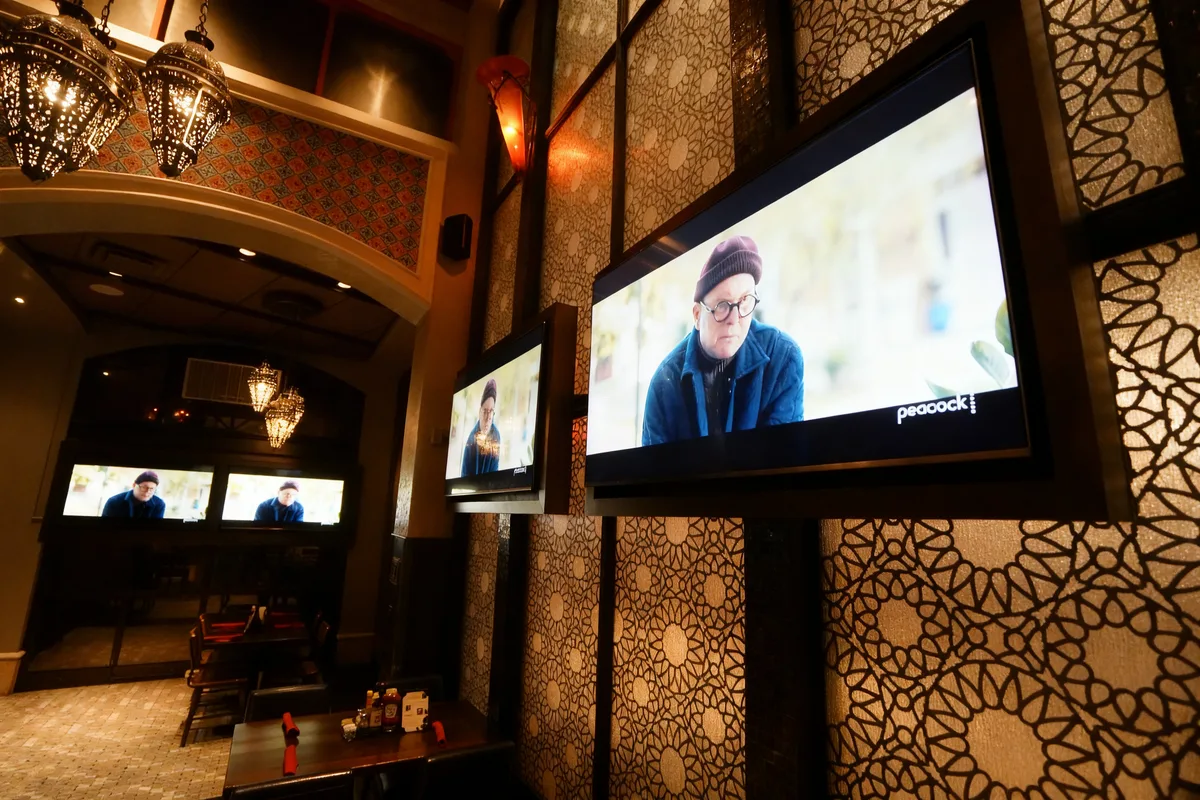
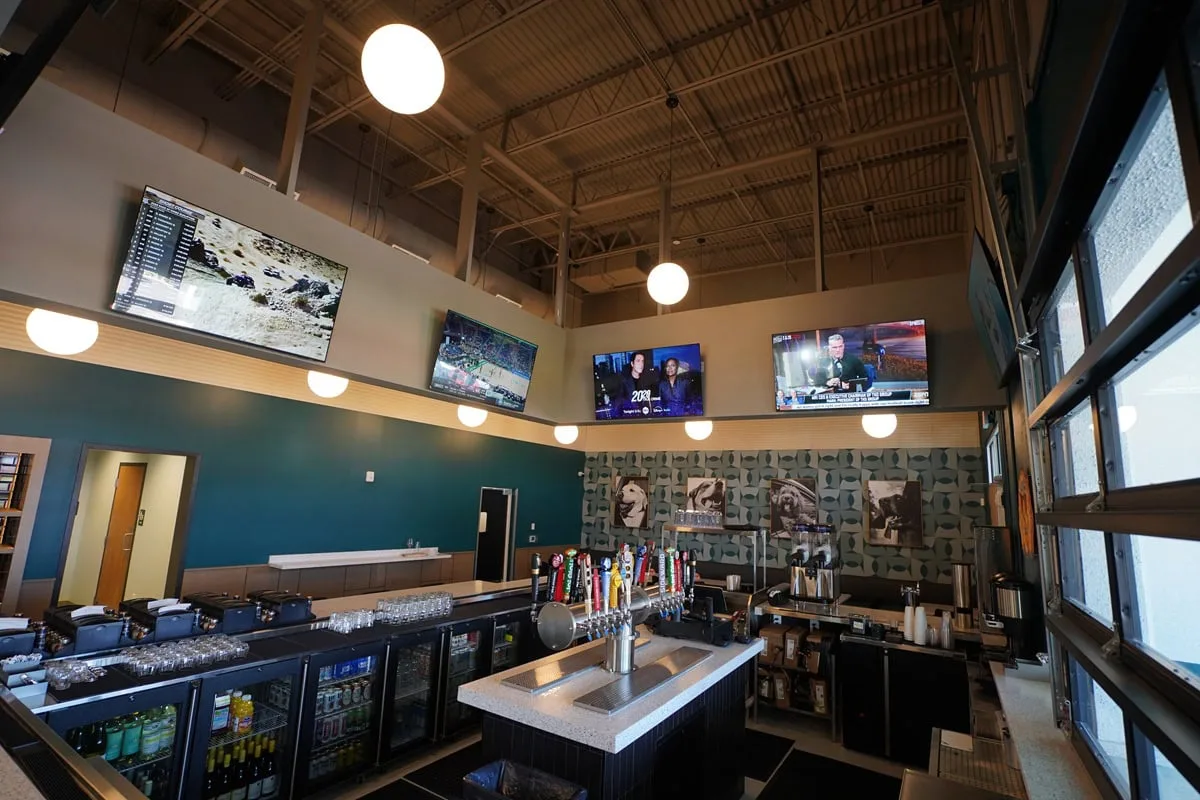
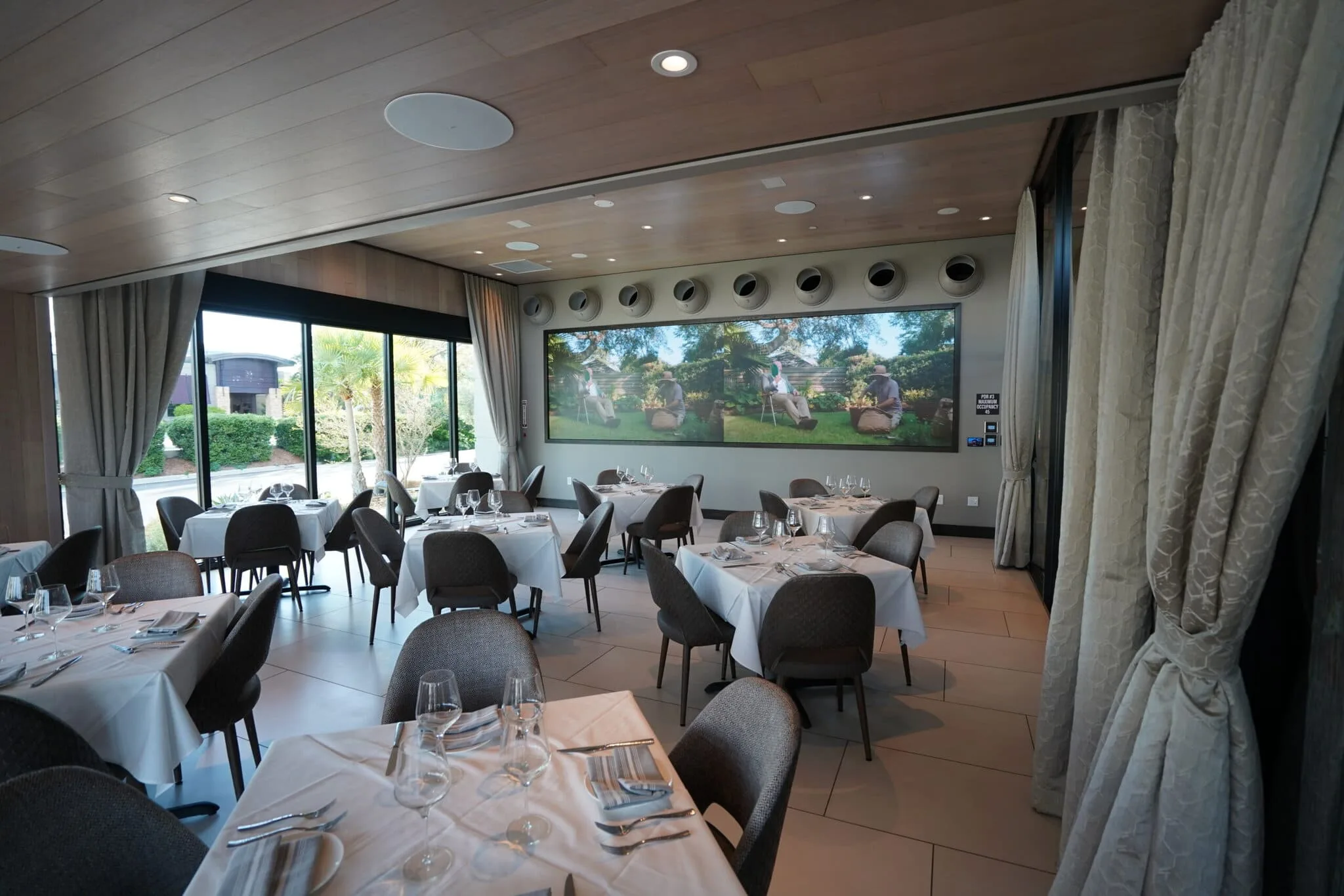
Atlanta restaurants sell events. A corporate dinner in the back room, a rehearsal on the terrace, a company holiday buyout that pays for a slow December week. It is some of the best margin in the building, and it usually runs on the least considered AV in the building. A speaker pair shared with the main dining room, so the buyout cannot control its own volume. No way to put a slide on a screen without somebody's laptop and an adapter hunt. A host who has to find a manager to change the music, in the middle of the one service where nothing is supposed to go wrong.

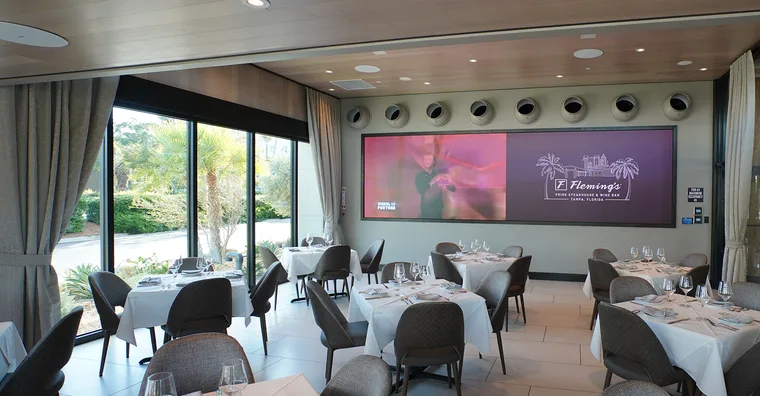
A private room needs to be its own zone with its own source, its own level, and its own simple control, so it can run a presentation at ten in the morning and a loud party at nine without either affecting the dining room. It needs one clean way to get a laptop onto a screen that works the first time, because the client is standing there. And it needs the whole thing to be operable by whoever is on the floor, which means a small number of clearly labeled presets rather than a rack of equipment and an explanation.

Reel The private dining room has to work as hard as the main one Atlanta, GA

Restaurant AV AcrossMetroAtlanta

From Buckhead and Midtown to the Westside, Inman Park, Decatur, and the northern suburbs, we design restaurant sound systems and private dining AV for rooms that sell events.

2008
Serving Atlanta since
10
Neighborhoods
Buckhead
Restaurants · Hotel dining

Private dining carries real revenue in these rooms, so the event space gets its own zone, source, and control rather than a share of the main system.

Private dining · separated
Midtown
Restaurants · Bars

Weekday lunch needs a room quiet enough to hold a conversation across a table, which is a different state from the same room at eight.

Lunch · dayparted
West Midtown
Restaurants · Bars

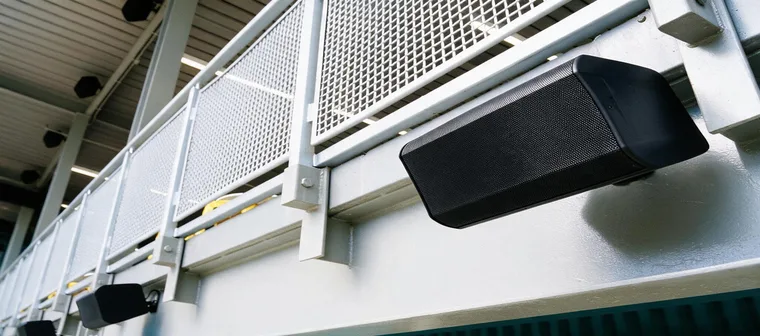
Concrete and open ceilings rule out in-ceiling speakers, so pendant or surface-mount hardware gets specified instead.

Open ceiling · surface-mount
Old Fourth Ward
Restaurants · Bars

Outdoor seating here faces a constant stream of foot traffic, so patio zones get their own levels and hardware rated for weather.

Patio · own zone
Inman Park
Restaurants · Cafés

Homes sit close on every side, so hard limits per zone and a scheduled step down keep the outdoor areas from becoming a complaint.

Residential edge · limits
Poncey-Highland
Restaurants · Bars

These rooms fill and empty quickly through the evening, so levels move on a schedule rather than on whoever is behind the bar.

Fast turns · scheduled
Decatur
Restaurants · Cafés

Small rooms leave nowhere for a badly placed speaker to hide, so coverage gets modeled table by table.

Small footprint · modeled
Sandy Springs and Dunwoody
Restaurants · Family dining

Corporate bookings here expect a presentation to work on the first try, so the private room gets one clean connection path and a display sized for the far end of the table.

Presentation-ready
Alpharetta and Avalon
Restaurants · Bars

New buildings mean conduit, backing, and rack location can be designed in during framing rather than retrofitted afterward.

New build · design-in
Marietta and Cobb
Restaurants · Family dining

These sit under their own municipal review, so the approval path gets confirmed locally rather than carried over from an Atlanta address.

Separate jurisdiction

How we work

Zones drawn around howtheroomgetssold

We do not start with a speaker count. We start with what you rent out, because a room you sell separately has to work separately.

The consult and the site walk

Most disappointing dining rooms were quoted off a floor plan by someone who never sat in them during service. So we start with a consult rather than a quote: what you want the room to feel like, how big it is, what it needs to do, and the budget you are working with. Then we walk it, ideally during a real service, and listen from the places guests actually sit. In Atlanta we also sit in the private room and ask your events manager what goes wrong most often, because that answer is usually specific, repeatable, and cheap to design out.

Zones drawn around how the room gets sold — restaurant AV in Atlanta, GA
InstallZones drawn around how the room gets sold
Zones drawn around how the room gets sold — restaurant AV in Atlanta, GA
InstallZones drawn around how the room gets sold

Design you can see, then one team on site

The other way these go wrong is that nobody experiences the outcome until it is built, then wants it changed a season later. So you see the design before you commit to equipment, including where every speaker lands and how a guest gets a laptop onto the screen. Control gets programmed around the states you actually sell, so a presentation, a dinner, and a party are presets rather than a training problem. One team handles the install, calibration, staff training, and documentation, and coordinates with your general contractor, electrician, and low-voltage trades.

What we build

The restaurant AV stack anAtlantaroomrunson

A dining room and the spaces you rent out are a handful of systems working as one. Here is what we design, program, and install.

The restaurant AV stack an Atlanta room runs on
InstallThe restaurant AV stack an Atlanta room runs on

Multi-zone sound and separated private rooms

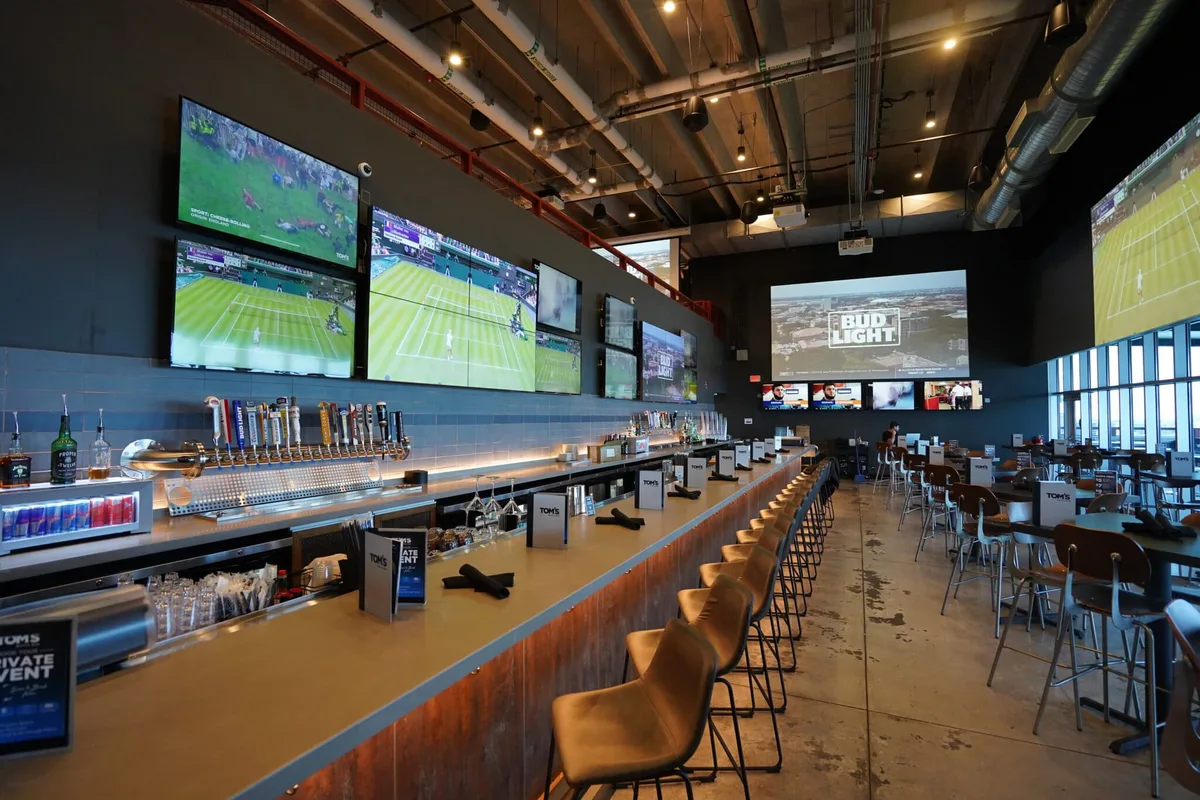
Coverage comes first everywhere. More sources at lower level, placed so every table sits inside a pattern rather than under one or between two, is what makes a room comfortable to eat in. The failure we walk into most often is speakers run around the perimeter, which leaves the middle with nothing while punishing anyone against a wall. The private room then gets its own zone rather than a share of the main one, with its own source, level, and limit, so a party at nine does not decide what the dining room sounds like and a presentation at ten is not fighting the lunch playlist.

Presentation and display in private dining

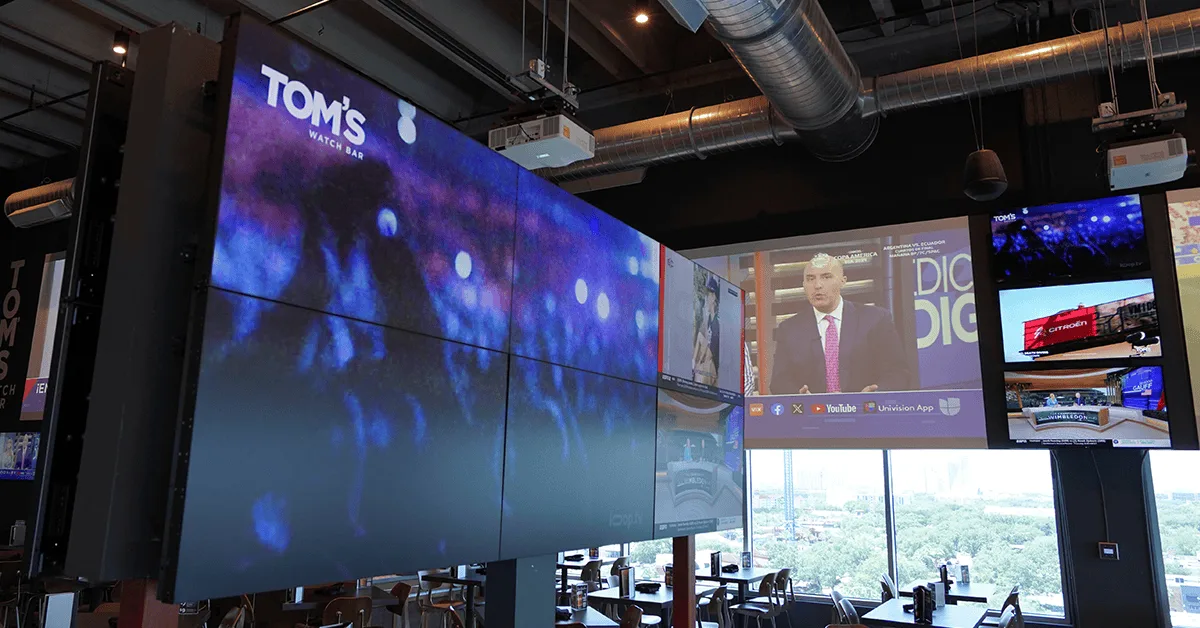
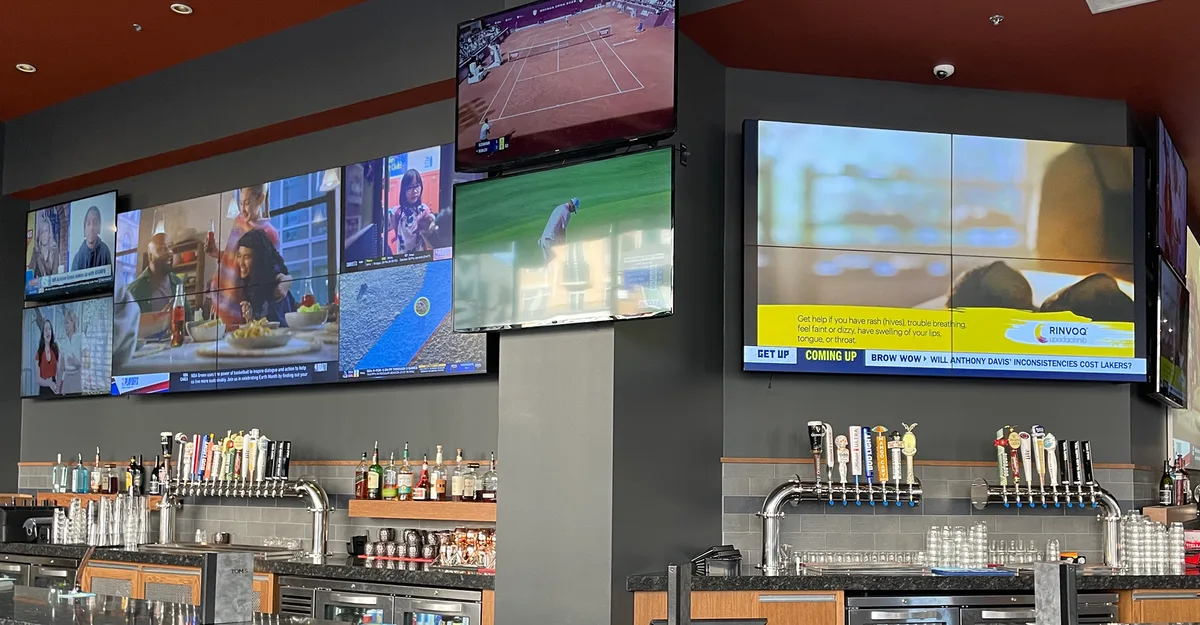
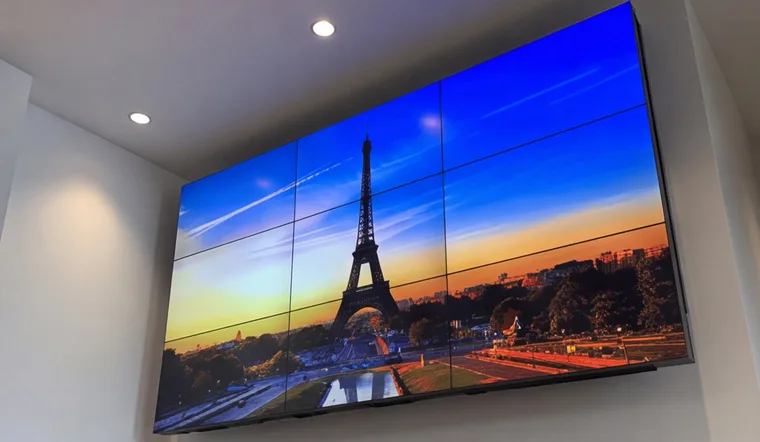
The moment that ruins events is a guest standing with a laptop and no way to get on the screen. So a private room gets one clean connection path that works the first time, with the right adapters already there, and a display sized off real viewing distance from the far end of the table rather than the near end. Audio from the presentation runs through the room's own zone so speech is intelligible rather than thin, and where a room hosts speeches, a microphone gets built into the design instead of borrowed. In the main dining room, displays and digital menu boards get placed as part of the architecture with their own audio zone.

Control, automation, and the network

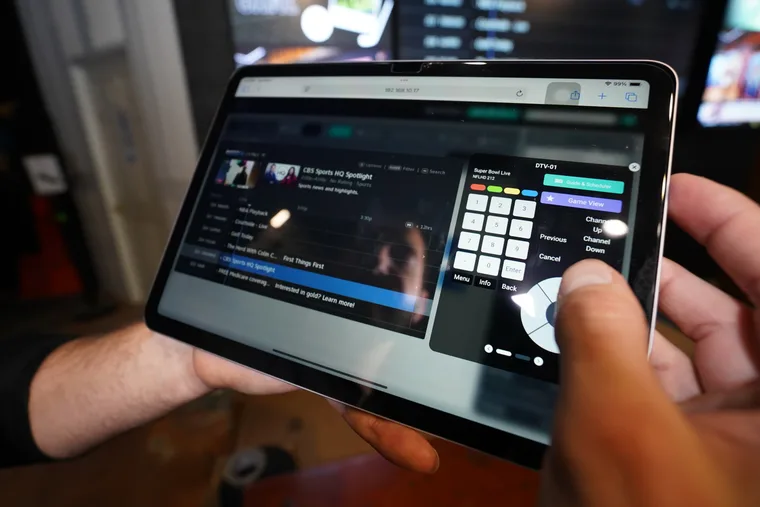
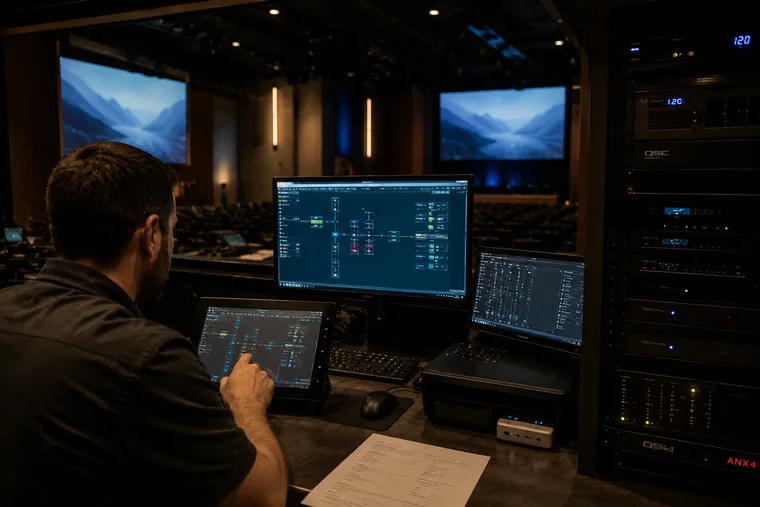
The events team has to be able to run the room without calling anyone. That means a small number of clearly labeled presets on a wall panel or tablet in the private room, not a rack of equipment and a walkthrough, and it means the settings that took a designer to establish sit behind credentials so a busy Saturday cannot undo them. Elsewhere, levels and sources move on a schedule so the restaurant lifts through the evening and settles at close on its own. Everything lives in one enclosed, labeled rack on a dedicated AV network rather than sharing bandwidth with your point of sale.

Why Atlanta restaurants trust us with it

Built for event revenue andSouthernseasons

This market runs on private dining and outdoor seating, in a climate that is harder on equipment than it looks. Here is where our depth shows, and where our scope ends.

The events team is the real user

Most private dining AV is designed for the person who bought it and operated by someone who was not in the room. The events manager, the host, and whoever is closing are the ones who actually touch it, usually while a client watches. So the control layer gets built for them: three or four states with names that match what they sell, one connection path for a laptop, and nothing exposed that can put the room in a condition they cannot get out of. Documentation stays on site so a new hire starts from something written down. That is what turns a private room from a liability into a product.

Built for event revenue and Southern seasons
InstallBuilt for event revenue and Southern seasons

Support after opening night

Crunchy Tech started in 2008 as an AV support operation, which is an unusual origin for an integrator and the reason the systems get built the way they do. When you spend years fixing other people's work, you learn exactly where installations cut corners. That shows up in a rack you can actually service: fully enclosed, every cable labeled at both ends, power separated from audio and data. We have opened racks that looked fifteen years old after three months in an uncooled closet, with dust caked on every surface. Around 47 percent of support tickets close inside an hour and roughly 72 percent within a day, which matters when the call comes during an event.

Pollen, humidity, and ice

Three local realities shape the build. Pine pollen coats everything for weeks each spring, and it gets into enclosures and onto heat sinks where it insulates components, so outdoor gear gets sealed and the equipment room gets filtered and cleaned on a schedule rather than when something fails. Humidity is constant through the summer, so anything outdoors gets drained properly rather than coated and hoped over. And winter ice storms bring outages and surges, so the rack gets real conditioning and protection. Keep the equipment room at or below 75 degrees, because temperature is the single most expensive variable in how long a system lasts.

What it earns back

How private dining paysforthesystem

A buyout is the highest-margin cover in the building and the one most likely to be lost on a walkthrough.

How private dining pays for the system — restaurant AV in Atlanta, GA
InstallHow private dining pays for the system

The booking you did not lose

Event clients decide during the site visit, and they ask the same questions every time. Can we play our own music in here. Can we put something on a screen. Will the restaurant hear us. A room that answers all three cleanly closes bookings that a shared speaker pair loses, and it does it at margins the main dining room cannot match. On the other side, one event where the laptop would not connect costs you the client and everyone at the table who was watching. The infrastructure that prevents that is a small share of the build.

Good, Better, Best against one design

Most owners price AV like retail: a speaker costs a certain amount, so a room of speakers should not cost much more. Worth being plain about the gap, because the processor, the amplification, the cabling, and the control take a serious share of the budget before you buy a single speaker, and they are exactly what makes a private room independent. So we quote Good, Better, and Best against one design, per zone. Good is a real recommendation, not a strawman: even coverage, a separated private zone, scheduled states. Better usually adds the presentation path and the terrace. If your budget is short of the room, we would rather value engineer it honestly.

How private dining pays for the system — restaurant AV in Atlanta, GA
InstallHow private dining pays for the system

Our private room shares speakers with the dining room. What does it take to separate it?

Less than most people expect if the cabling can be reworked, and it is usually the highest-return change in the building. What you want is the private room on its own zone in the processor, with its own source, its own level, and its own limit. That single change means a party at nine cannot decide what the dining room sounds like, a presentation at ten is not fighting the lunch playlist, and a client who wants their own music can have it without a conversation. The work involved depends on how the room was wired: if there are separate speaker runs already back to the rack it is largely a processor and amplification question, and if everything was daisy-chained it means new cable. Either way we would rather do it properly than fit a volume control on the wall, because a local volume knob on a shared circuit still leaves both rooms sharing a source.

Clients always want to show slides and it never works. How do we fix that permanently?

By making one path the only path and making sure it works cold. The failures are predictable: the wrong adapter, a cable that only carries video, a display on the wrong input, a laptop that needs someone to change a setting. So the room gets a single connection point with the common adapters captive at that point, a display already on the right input when the room preset is selected, and audio from the presentation routed through the room's own zone so speech is intelligible rather than thin and distant. The display gets sized off viewing distance from the far end of the table, since that is the seat that determines whether text is readable. Then we train the events team on it and leave documentation on site. Where a room hosts speeches often, a microphone belongs in the design rather than borrowed from somewhere else the morning of.

Does pollen really affect AV equipment, or is that overstated?

It is real, and it is one of the few genuinely regional maintenance issues we deal with. Pine pollen is fine enough to get through most vents and heavy enough to accumulate, and once it settles on heat sinks and inside enclosures it behaves as an insulator. Components that were running comfortably start running warmer, and heat is the single most expensive variable in how long a system lasts. Outdoors it also gets into speaker grilles and any unsealed connection. None of this is dramatic on any given day, which is exactly why it goes unnoticed until something fails in July. The fix is undramatic too: sealed outdoor enclosures, a filtered and conditioned equipment room kept at or below 75 degrees, and a cleaning pass built into the service schedule after the spring peak rather than a reaction to a failure.

Do you handle cameras, livestreaming, or video production?

No. We are a design-build AV integrator. We do not install or operate cameras, we do not shoot or edit video, we do not run streaming as a service, and we do not staff events. What we do is design the system around how the restaurant actually runs, procure the hardware, install it, calibrate it, train your staff, document all of it, and support it for the life of the system. Where a client brings in a production partner for an event, we build the infrastructure that makes their job easy: clean audio feeds, documented signal paths, and a network engineered for the uplink.

What We Do Here

Services available in Atlanta

Every system is designed, installed, and supported by our own team in Atlanta — never subcontracted.

Get a Atlanta Quote arrow_forward
Related Solution

Learn more about our Restaurant AV Systems solutions

View Restaurant AV Systems
What clients say

Operators who run on our systems

Client successes drive Crunchy Tech to become better. Below is how our customers feel about us.

Just do it. Spend the money. It’s well worth it. It’s not worth your time, hassle, energy, and stress of trying to make it look right and do it right when there’s somebody who has been doing it for years and has perfected the craft.

Matt Moore logo
Matt Moore
IT Systems Administrator · Capone's Hideout

Working with Crunchy Tech was a fantastic experience from start to finish. They handled the sale and installation of all our sound and TV equipment at The County Bar in Aviston, IL, and absolutely nailed it. We were on a very tight deadline, and they not only met it—they delivered top-notch quality and service the entire way. Highly professional, responsive, and easy to work with. We couldn't be happier with the results.

Clint Flowers logo
Clint Flowers
Owner · The County Bar

Crunchy has done an amazing job on our A/V install. The sound is perfectly balanced throughout our many zones and the entire system is super simple to use.
Steve Glum logo
Steve Glum
Chief Marketing Officer · Ace Cafe
Talk to an Atlanta restaurant AV designer

Let's make the private room somethingyoucansell

Tell us about the restaurant: the neighborhood, the square footage, what you rent out and how often, what your events manager says goes wrong, whether you have a patio, and what guests say about the noise. We will start with a consult to understand what you are trying to accomplish, then walk the room during a real service, and come back with one engineered recommendation instead of a parts list.

  • The private room on its own zone, source, and level, independent of the dining room.
  • One connection path for a laptop that works the first time, with the adapters already there.
  • Three or four presets named for what you actually sell, operable by whoever is on the floor.
  • Sealed enclosures and a filtered equipment room, because pollen season is a maintenance event here.