Just do it. Spend the money. It’s well worth it. It’s not worth your time, hassle, energy, and stress of trying to make it look right and do it right when there’s somebody who has been doing it for years and has perfected the craft.
Restaurant AV in Chicago
Restaurant sound systems designed for a room that grows a third of its seats every spring, with permanent infrastructure for seasonal outdoor dining.
The dining room that appears on the sidewalk every May
Chicago restaurants run two floor plans a year. From November the room is what is inside the walls. Then spring arrives, the café permit comes through, and a third of your seats appear on the sidewalk or in the street for five months. Almost nobody wires for that. Every year an extension cord runs out a propped door, a speaker gets clamped to a planter, and the outdoor level is whatever the manager set the first warm Friday. In October it all comes back inside, sometimes in worse shape than it went out.
The seasonal part is the furniture. The infrastructure should be permanent. Weatherproof power and signal terminations get installed once, sitting sealed through the winter and ready in May, so the outdoor build is a matter of hanging hardware on connections that already exist. The outdoor area runs as its own zone with its own level and limit, and the system holds a state for it, so the room knows the difference between a February Tuesday and a July Saturday with forty extra covers on the sidewalk. Then the equipment that has to come inside is a short list rather than everything.

Restaurant AV Across Chicagoland
From the West Loop and River North to Logan Square, Pilsen, Lincoln Park, and the suburbs, we design restaurant sound systems for rooms that double in size every summer.
Outdoor terminations sit sealed through months of freezing weather, so they get gasketed and rated to be live again in spring.
Repeated freezing and thawing works on enclosures and mounts, so anything staying outside gets rated for the cycle rather than the season it went in.
Exposed sidewalk seating takes real wind, so mounting is chosen for load rather than convenience and nothing depends on a temporary clamp.
Moisture forms inside enclosures, so outdoor gear gets sealed and drained properly and the equipment room stays conditioned.
How we work
Designed for both of your floor plans
We do not start with a speaker count. We start with the room in summer and the room in February, because they are not the same restaurant.
The consult and the site walk
Most disappointing dining rooms were quoted off a floor plan by someone who never sat in them during service. So we start with a consult rather than a quote: what you want the room to feel like, how big it is, what it needs to do, and the budget you are working with. Then we walk it, ideally during a real service, and listen from the places guests actually sit. In Chicago we also walk the sidewalk footprint, ask how many covers it adds and how long it stays, and look at how power and signal reach it today, which is usually through a door that should not be propped open.
Design you can see, then one team on site
The other way these go wrong is that nobody experiences the outcome until it is built, then wants it changed a season later. So you see the design before you commit to equipment, including where the outdoor terminations go and what stays out all winter. Control gets programmed around the states you actually run, so a winter service, a summer service with the sidewalk full, and a quiet afternoon are presets rather than a manager at a knob. One team handles the install, calibration, staff training, and documentation, and coordinates with your general contractor, electrician, and low-voltage trades.
What we build
The restaurant AV stack a Chicago room runs on
An indoor dining room and a seasonal outdoor one are a handful of systems working as one. Here is what we design, program, and install.
Multi-zone restaurant sound systems
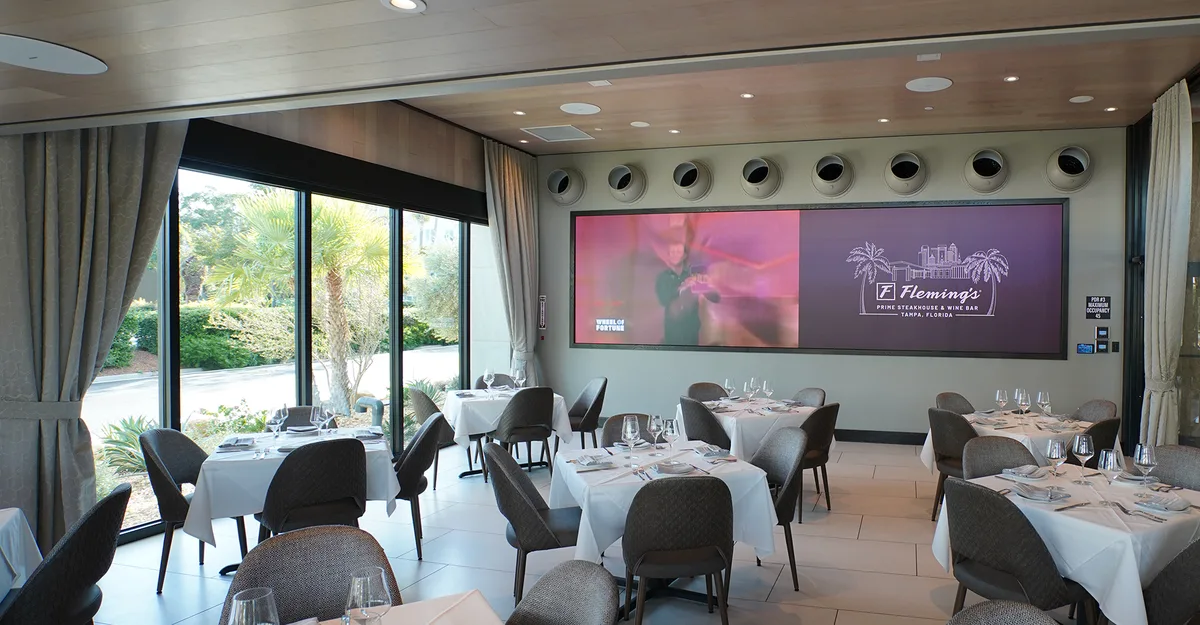
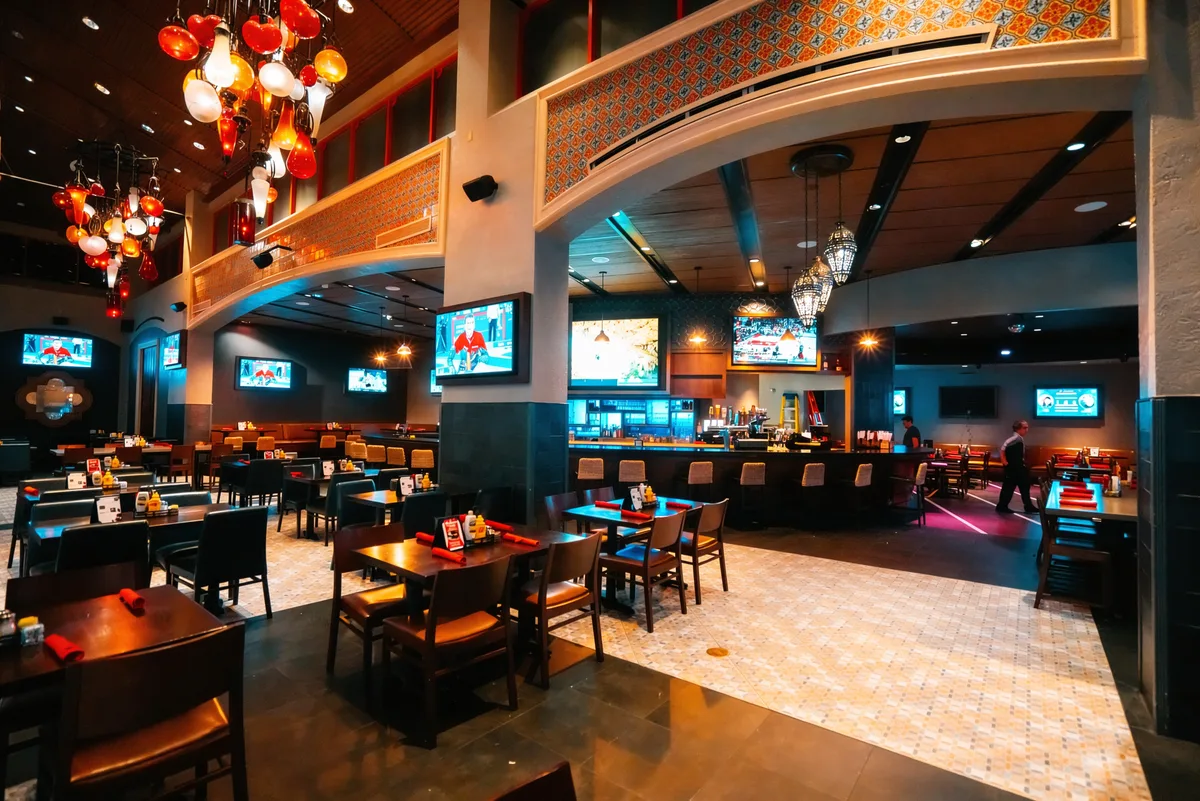
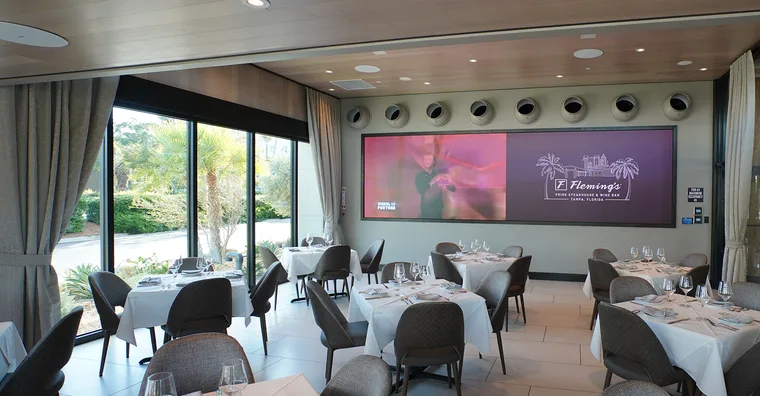
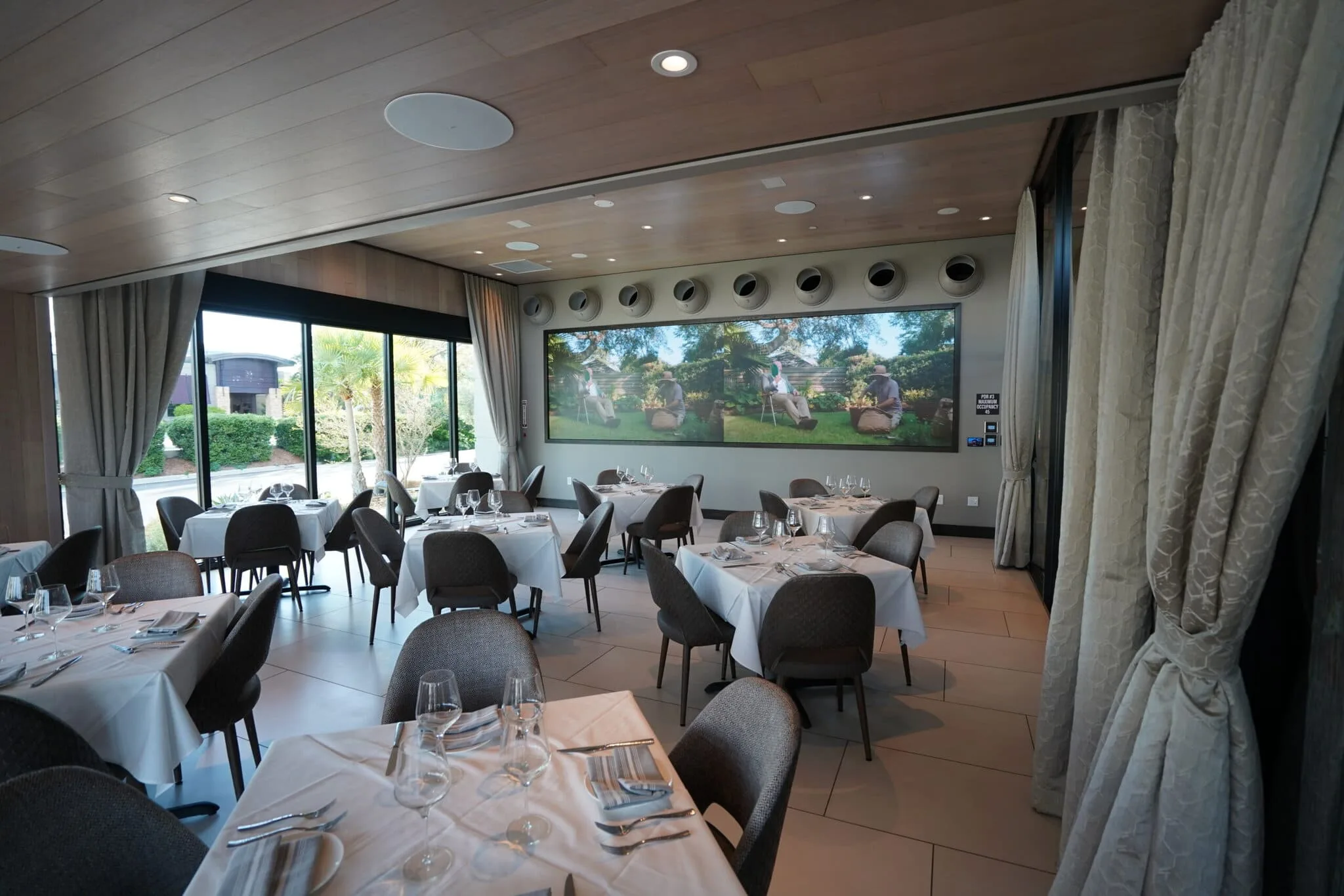
Coverage comes first indoors. More sources at lower level, placed so every table sits inside a pattern rather than under one or between two, is what makes a room comfortable to eat in, and it matters here because so much of the older stock is brick, tin, and tile that reflects rather than absorbs. The failure we walk into most often is speakers run around the perimeter, which leaves the middle with nothing while punishing anyone against a wall. A digital signal processor then splits the property into zones so the bar, the dining room, and the sidewalk each hold their own level and limit.
Permanent infrastructure for seasonal seating
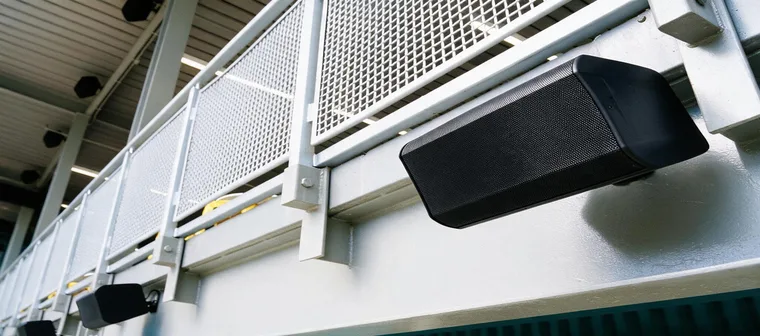
The outdoor half gets built once and used every year. Weatherproof, gasketed power and signal terminations get installed in the facade or the structure, rated to sit sealed through a Chicago winter and be live again in May. Speakers mount to points that already exist rather than being clamped to whatever is there, and the hardware itself gets specified for freeze and thaw so the pieces that stay out are not a replacement item each spring. What comes inside in October should be a short list, and it should be documented so the same person can put it back without a call.
Menu boards, control, and the network
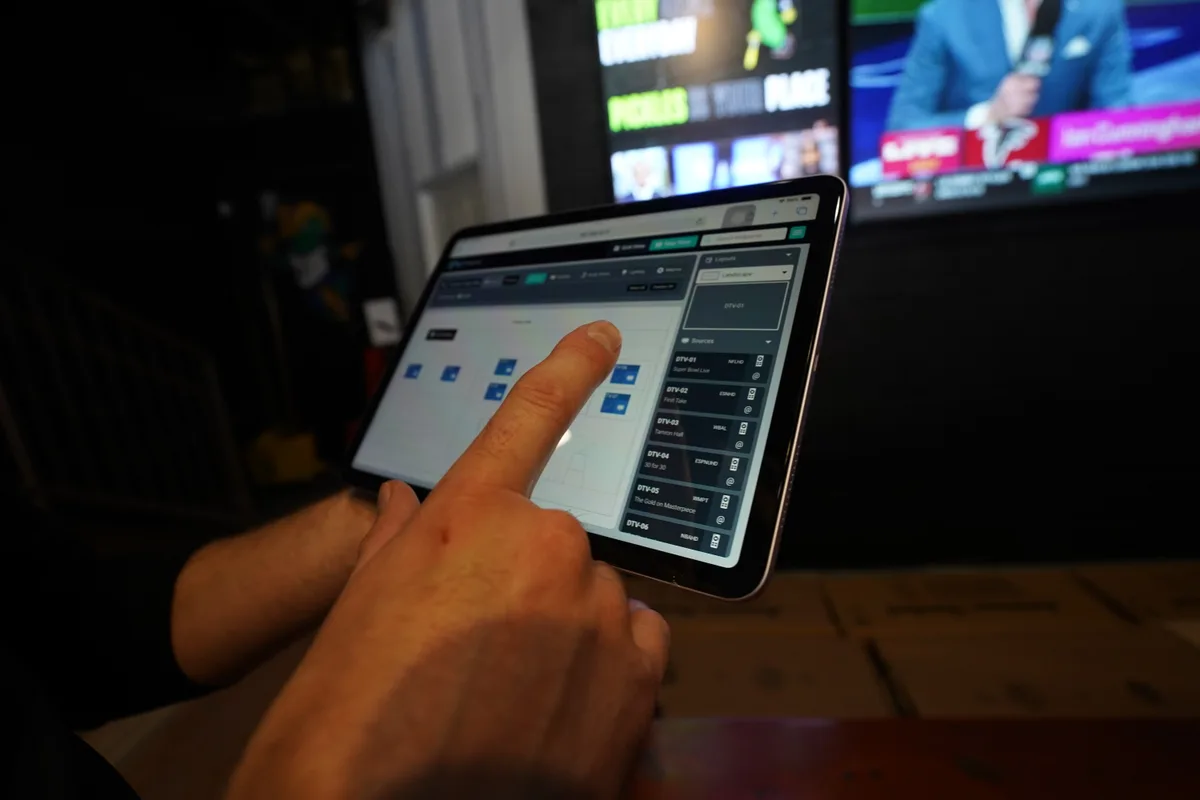
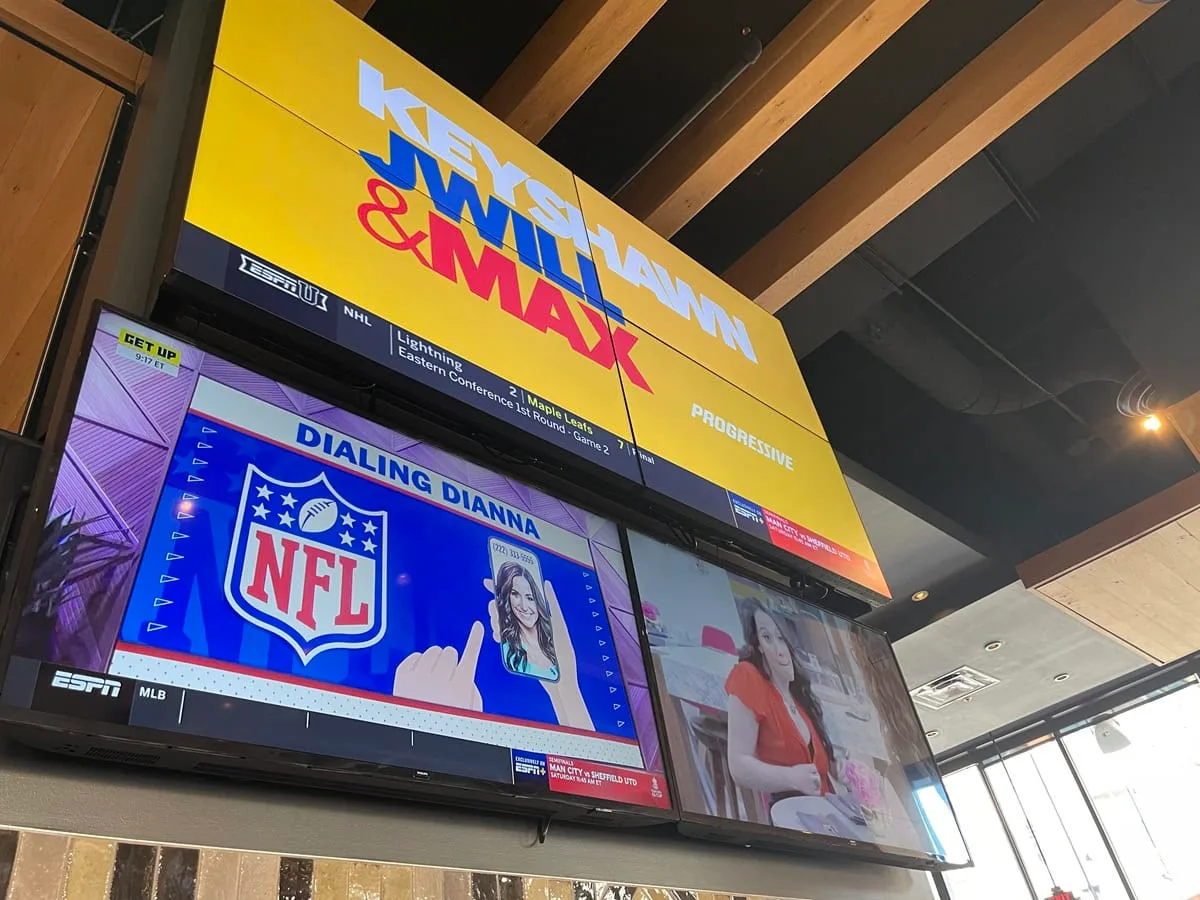
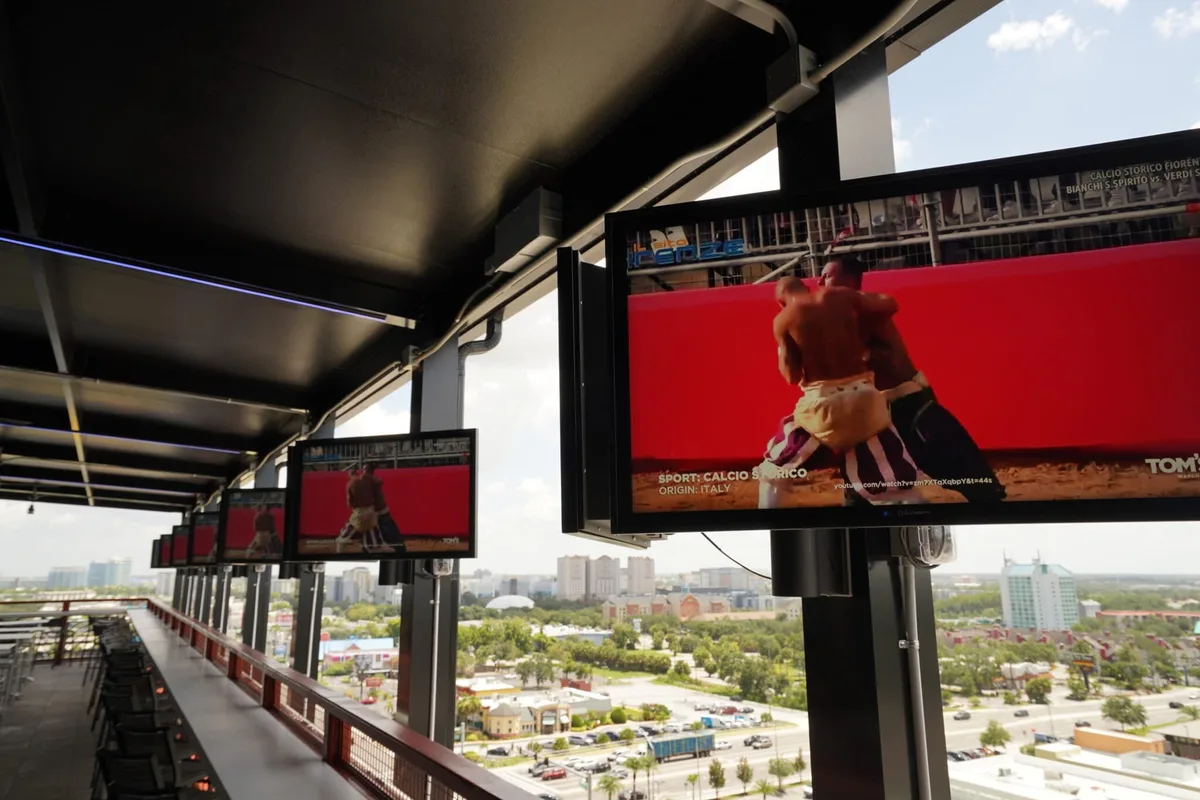
Digital menu boards get sized off reading distance from where the queue actually stands and driven from one place, so a change reaches every screen at once. Levels and sources move on a schedule, so the room lifts through the evening and settles at close on its own, and staff get a small set of clearly labeled presets including one for the sidewalk being open. The calibration that took a designer to establish sits behind credentials. Equipment lives in one enclosed, labeled rack on a dedicated AV network rather than sharing bandwidth with your point of sale.
Why Chicago restaurants trust us with it
Built for old rooms and hard winters
This city's dining rooms are old and reflective, its outdoor season is short and enormously valuable, and its winters test everything left outside. Here is where our depth shows, and where our scope ends.
The capacity swing is a design input
Most systems get set for one occupancy and left there, which is a problem in a room that gains and loses a third of its seats twice a year. A summer Saturday with the sidewalk full is a different acoustic situation from a February Tuesday, both indoors and out, and a single setting serves neither well. So levels get built and verified for both, as states rather than as a knob position somebody has to remember. It sounds minor and it is the difference between a room that feels right in July and one where staff spend the season adjusting.
Freeze, thaw, and old buildings
Three local realities shape the build. Winter is genuinely hard on anything left outside, so terminations get sealed and gasketed and outdoor hardware gets rated for repeated freeze and thaw rather than for the summer it was installed in. The building stock is old, with brick, tin ceilings, and hard floors that reflect sound and limit where things can be mounted or routed, so speaker type and cable path get planned rather than improvised. And the equipment room in these buildings is usually a basement or a back closet, so it gets ventilation, protection, and cooling, kept at or below 75 degrees.
Support after opening night
Crunchy Tech started in 2008 as an AV support operation, which is an unusual origin for an integrator and the reason the systems get built the way they do. When you spend years fixing other people's work, you learn exactly where installations cut corners. That shows up in a rack you can actually service: fully enclosed, every cable labeled at both ends, power separated from audio and data. We have opened racks that looked fifteen years old after three months in an uncooled closet, with dust caked on every surface. Around 47 percent of support tickets close inside an hour and roughly 72 percent within a day, which matters when the season is short.
Where we draw the line
We do not install or operate cameras, we do not produce or edit video, and we do not run streaming as a service. We do not build or permit your outdoor structures, though we will design the AV to work with whatever your contractor and the city agree on. We are not acousticians, and where a room's loudness is the surfaces rather than the system we will say so. We also generally do not take install-only work. If you already bought equipment we will look at it, but we need to understand the design first.
What it earns back
How the outdoor season pays for the build
Five months of extra seats is a large share of the year's revenue, and it currently runs on an extension cord.
Seats you can actually sell
Outdoor covers are some of the easiest seats a Chicago restaurant sells, and they are usually served by the least considered part of the system. Guests out there who cannot hear anything, or who are sitting next to the one speaker doing all the work, turn over the same way they do indoors: they eat, decline dessert, and go. Building the outdoor zone properly makes those seats as good as the ones inside for the months that matter most, and doing it on permanent terminations removes the annual scramble and the annual damage.
Good, Better, Best against one design
Most owners price AV like retail: a speaker costs a certain amount, so a room of speakers should not cost much more. Worth being plain about the gap, because the processor, the amplification, the cabling, and the control take a serious share of the budget before you buy a single speaker, and weatherproof terminations in an old facade are real labor. So we quote Good, Better, and Best against one design, per zone. Good is a real recommendation, not a strawman: even indoor coverage, a separate outdoor zone, seasonal states. Better usually adds the permanent outdoor infrastructure, which pays back across seasons rather than in one. If your budget is short of the room, we would rather value engineer it honestly.
Every spring we run cords out to the sidewalk. What should we be doing instead?
Installing the infrastructure once and treating the furniture as the seasonal part. What you want is weatherproof, gasketed power and signal terminations built into the facade or the structure, rated to sit sealed through a Chicago winter and come back live in May. Then the annual build is hanging speakers on connections that already exist, which takes an hour rather than an afternoon and does not involve a propped door. The hardware that stays outside gets specified for repeated freeze and thaw so it is not a replacement line item each spring, and whatever genuinely has to come inside gets documented so the same person can put it back without calling anyone. Beyond the practical side, a cord through a door is a safety and code question you do not want during a busy Saturday.
Our room feels completely different in July than in February. Is that fixable?
Yes, and it is a control problem more than a hardware one. A summer Saturday with the sidewalk full is a different acoustic situation from a February Tuesday: more people indoors absorbing sound, doors opening constantly, and an entire outdoor area that needs its own level while the inside stays comfortable. One setting cannot serve both, which is why staff end up adjusting through the season and never quite landing it. So we build the states separately and verify each at real occupancy, then put them behind clearly labeled presets. Sidewalk open, sidewalk closed, quiet afternoon, full service. Staff pick a mode rather than reconstructing one. The levels that took a designer to set sit behind credentials so the room does not drift a little every month.
How do we keep the sidewalk audible without the neighbors calling?
Coverage and limits do most of the work. Sidewalk seating covered by several small speakers at a moderate level is audible at every table and falls off quickly past the seating area, because no single speaker is throwing sound a long distance. One or two loud speakers do the opposite: they need real output to reach the far table, and the apartments above and across the street get all of it. So we aim inward and downward where the layout allows, set a hard limit for the outdoor zone in the processor that nobody can push past, and schedule a step down later in the evening so the level drops on its own. In a residential block this is worth solving properly at design time, since a complaint that turns into a condition on your café permit is far more expensive than the extra speakers.
Do you handle cameras, livestreaming, or video production?
No. We are a design-build AV integrator. We do not install or operate cameras, we do not shoot or edit video, and we do not run streaming as a service. We also do not build or permit outdoor dining structures, though we will design the AV to work with whatever your contractor and the city agree on. What we do is design the system around how the restaurant actually runs, procure the hardware, install it, calibrate it, train your staff, document all of it, and support it for the life of the system. Where a venue works with a production partner, we build the infrastructure that makes their job easy.
What We Do Here
Services available in Chicago
Every system is designed, installed, and supported by our own team in Chicago — never subcontracted.
AV Consulting
AV consulting from an audio visual consultant who joins at the architectural phase, designs the technology into the plan and steers the project around your business outcome.
AV Consulting in Chicagoarrow_forwardVideo Wall Solutions
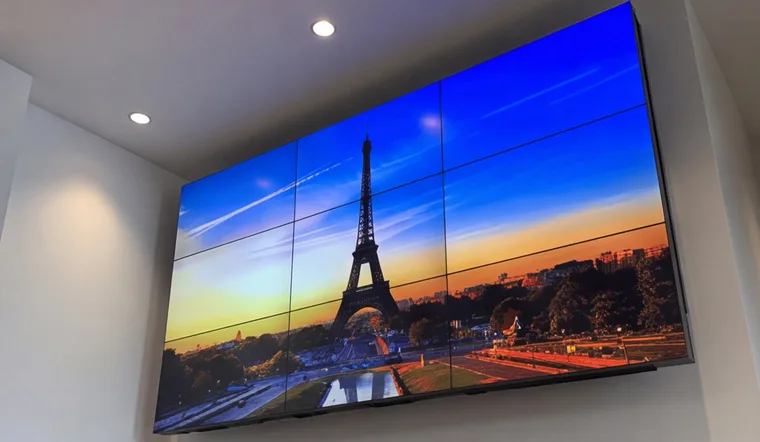
Commercial video walls across LED, LCD and Direct View. Designed, integrated, installed and supported by a national design-build AV integrator.
Video Wall Solutions in Chicagoarrow_forwardCommercial Sound Systems
Commercial sound system design and installation: multi-zone audio engineered around how your space is used, wired and tuned on site, and supported as a partner.
Commercial Sound Systems in Chicagoarrow_forwardDigital Signage Services
Design-build digital signage for hospitality and enterprise: commercial displays, content management, and installation that keeps your screens selling and current.
Digital Signage Services in Chicagoarrow_forwardAV Control Systems
Design-build AV control systems: one iPad, wall panel, or browser runs every display, audio zone, lighting scene, and source in the room. Programmed and supported in-house.
AV Control Systems in Chicagoarrow_forwardAV Programming
AV programming that starts with the right design: a vetted, interconnectable stack unified into one control system, so the whole room runs from one simple interface.
AV Programming in Chicagoarrow_forwardConference Room AV
Conference room AV designed around the people using the room: video conferencing, Zoom and Teams Rooms, displays, and audio, installed and supported as a partner.
Conference Room AV in Chicagoarrow_forwardLearn more about our Restaurant AV Systems solutions
Operators who run on our systems
Client successes drive Crunchy Tech to become better. Below is how our customers feel about us.
Working with Crunchy Tech was a fantastic experience from start to finish. They handled the sale and installation of all our sound and TV equipment at The County Bar in Aviston, IL, and absolutely nailed it. We were on a very tight deadline, and they not only met it—they delivered top-notch quality and service the entire way. Highly professional, responsive, and easy to work with. We couldn't be happier with the results.
Crunchy has done an amazing job on our A/V install. The sound is perfectly balanced throughout our many zones and the entire system is super simple to use.
Just do it. Spend the money. It’s well worth it. It’s not worth your time, hassle, energy, and stress of trying to make it look right and do it right when there’s somebody who has been doing it for years and has perfected the craft.
Working with Crunchy Tech was a fantastic experience from start to finish. They handled the sale and installation of all our sound and TV equipment at The County Bar in Aviston, IL, and absolutely nailed it. We were on a very tight deadline, and they not only met it—they delivered top-notch quality and service the entire way. Highly professional, responsive, and easy to work with. We couldn't be happier with the results.
Crunchy has done an amazing job on our A/V install. The sound is perfectly balanced throughout our many zones and the entire system is super simple to use.
Insights
Let's build the outdoor season once, not every year
Tell us about the restaurant: the neighborhood, the square footage, how many covers the sidewalk or patio adds and how long it stays, how power and signal reach it now, what the building is made of, and what guests say about the noise. We will start with a consult to understand what you are trying to accomplish, then walk the room during a real service, and come back with one engineered recommendation instead of a parts list.
- Weatherproof terminations installed once, sealed through winter and live again in May.
- Outdoor hardware rated for repeated freeze and thaw rather than for the summer it went in.
- Sidewalk-open and sidewalk-closed states, each verified at real occupancy.
- A hard limit on the outdoor zone, which matters on a residential block.