Just do it. Spend the money. It’s well worth it. It’s not worth your time, hassle, energy, and stress of trying to make it look right and do it right when there’s somebody who has been doing it for years and has perfected the craft.
Commercial Audio Visual Company in Seattle
Design-build audiovisual for Seattle offices, restaurants, and civic rooms, in a market where the network security policy usually predates the building.
In Seattle the IT policy was written before the room was
Most markets, the AV design leads and the network questions follow. Seattle runs backwards, and anyone who's built a conference floor here knows it. The buyers skew toward technology organizations, and their security standards, VLAN architectures, and device policies existed years before anyone sketched the room, written by teams who take them seriously because their business depends on them. An AV system here doesn't get to show up with its own networking assumptions and negotiate later. It arrives as a guest on somebody's network, and the guest either respects the house rules from the first drawing or spends commissioning week locked outside them. We've watched beautifully designed systems stall for a month because nobody asked the security team a question that would've taken ten minutes in week one.
So in this market we start where the market starts: with your IT team, early, as collaborators rather than gatekeepers to route around. Their network is the backbone of everything we install, their policies decide what the control system may touch and how it authenticates, and designing inside those rules from day one is faster, cheaper, and friendlier than discovering them at the end. The rest is our standard craft, engineering a contractor can bid, a rack that leaves our bench already proven, install, tune, train, document, and support that mostly resolves remotely, with about 47% of tickets closed inside an hour. One company, fluent in your network's language. Since 2008.
What We Do Here
Services available in Seattle
Every system is designed, installed, and supported by our own team in Seattle — never subcontracted.
AV Consulting
AV consulting from an audio visual consultant who joins at the architectural phase, designs the technology into the plan and steers the project around your business outcome.
AV Consulting in Seattlearrow_forwardVideo Wall Solutions
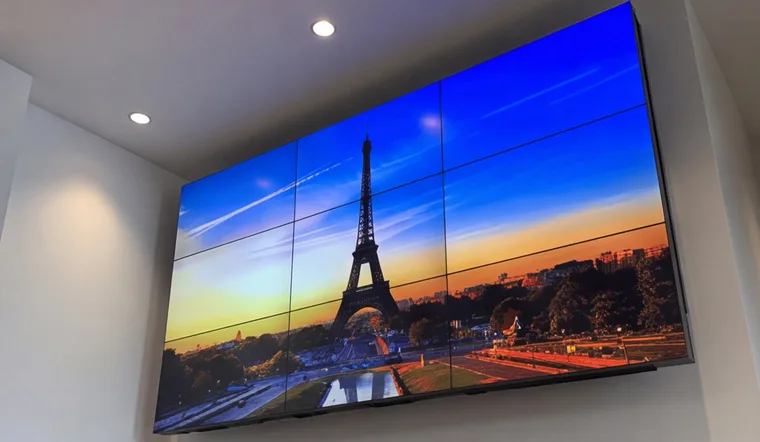
Commercial video walls across LED, LCD and Direct View. Designed, integrated, installed and supported by a national design-build AV integrator.
Video Wall Solutions in Seattlearrow_forwardDigital Signage Services
Design-build digital signage for hospitality and enterprise: commercial displays, content management, and installation that keeps your screens selling and current.
Digital Signage Services in Seattlearrow_forwardWho We Serve
Industries we serve in Seattle
Spaces we've wired across Seattle — each built and supported by the same local crew.
Commercial AV Across Puget Sound
Downtown and South Lake Union, the neighborhood districts from Ballard to Georgetown, and the Eastside cities that run their own reviews.
Months of bright overcast through big glass wash out displays specified from catalog photos, so brightness gets chosen against the actual window wall.
Persistent moisture works on outdoor connectors, seals, and enclosures, so exterior hardware gets specified for damp as the default condition, not the exception.
Waterfront addresses take real salt exposure, and the parts list shifts toward sealed enclosures and stainless hardware within reach of the Sound.
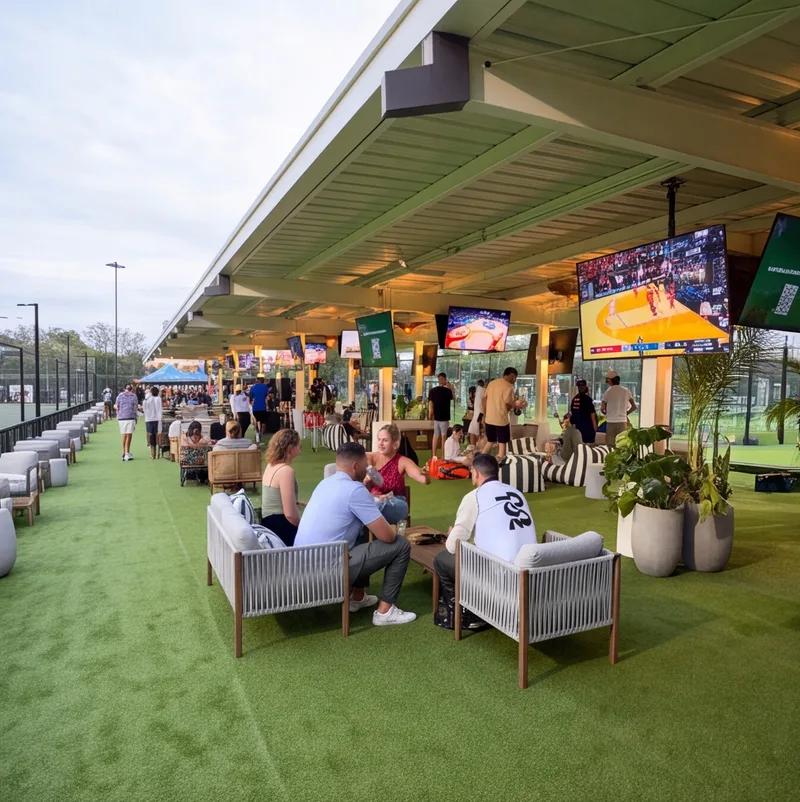
The outdoor money here is in covered, heated spaces that work in February, which deserve permanent weather-sealed audio instead of seasonal gear.
What we do here
Seattle Audio Visual Design, Network-Native First
Four kinds of buyers drive our Seattle work, and the biggest one interviews your network design before it interviews you.
Tech offices and engineering-led buyers
A Seattle conference floor gets bought by people who ship software for a living, and they evaluate an AV proposal the way they'd review a pull request: what's on my network, how does it authenticate, who patches it, and what happens when it fails. Good questions, all of them, and we'd rather answer them in the design phase than during a security audit. The work itself is floors of rooms that have to behave identically, sized from real dimensions rather than product photos, running the platforms these companies live on, and documented to a standard their own engineers would accept. One habit this market taught us that we now use everywhere: put the AV traffic exactly where the security team wants it, in writing, before a single cable gets pulled.
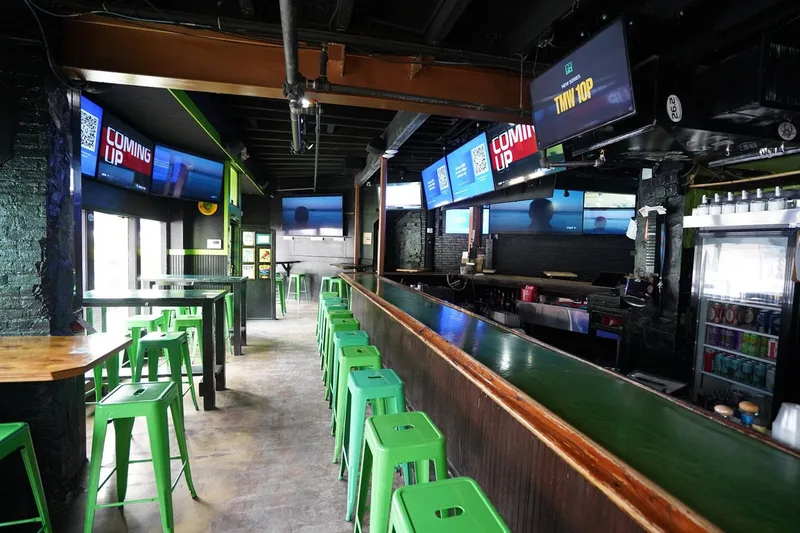
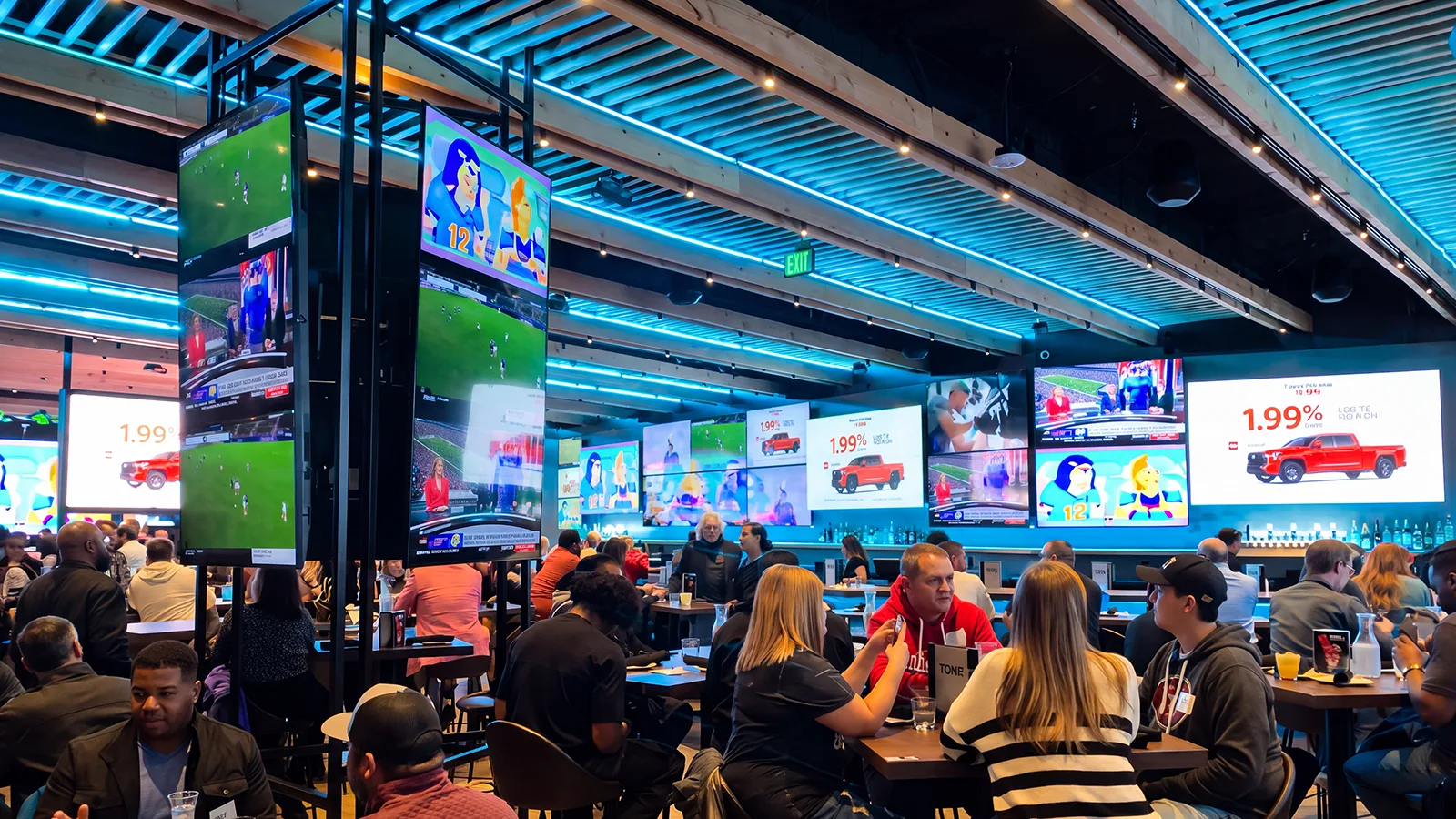
Restaurants, bars, and covered-patio rooms
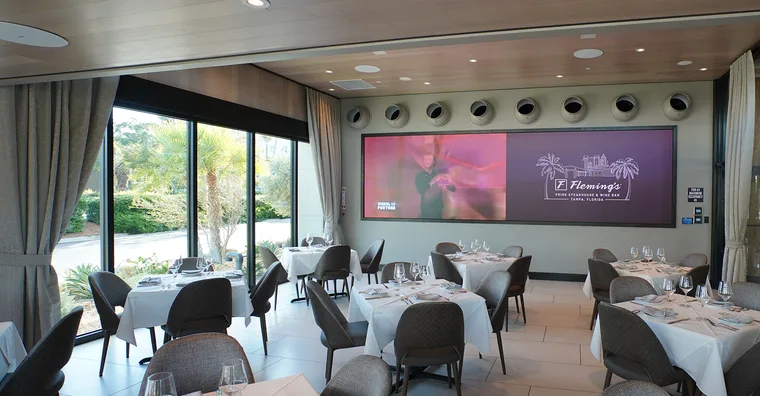
Seattle's dining rooms live in converted stock, Ballard's old storefronts, Pioneer Square's brick, Georgetown's industrial sheds, and those bones scatter sound with total indifference to the concept. Coverage comes from lots of small speakers running easy, zones let the bar lean forward while the tables stay conversational, and the neighbor through the century-old wall stays friendly. The patio calculus is pure Seattle: outdoor spaces earn here, but only covered and heated ones earn year-round, so the investment goes into all-weather rooms rather than fair-weather ones, with hardware sealed against nine months of damp rather than rated for a sunny brochure. A patio that works in February in this city prints money. One that only works in July is a storage problem.
Civic rooms and public buildings
City, county, and port facilities across this region buy speech rooms on public calendars, and the standard never moves: the resident in the last row follows every word or the room failed, whatever it cost. Microphone strategy leads, feedback margin gets engineered rather than trusted, and the controls get built for the clerk who runs the meeting solo, because a staff technician was never in the budget. Public buyers bring documentation rules and bid formats we price exactly as currently written. The bigger facilities add announcements, a different craft from music entirely, where the test is a ferry terminal's concrete volume and a traveler dragging a suitcase the other direction who still has to catch every word. Stream-ready rooms get the outlet built in. The broadcast itself stays yours.
Hotels and guest-facing spaces
Hotel work here means the lobby, the restaurant, the meeting floor, and the rooftop, never the guest room, and Seattle properties lean hard on interior atmosphere because the weather sends everyone inside for months at a stretch. That raises the stakes on the spaces guests actually occupy: a lobby that sounds right at a February check-in, a restaurant whose zones hold up when the whole city eats indoors, a rooftop that converts to a covered winter room without the audio becoming an afterthought. Waterfront properties add Puget Sound's marine air to the bill, which corrodes ordinary hardware near the water and moves the parts list toward sealed and stainless. One interface runs all of it, simple enough for the front desk, and support resolves remotely before anyone thinks about a truck.
Our security team has strict rules about what goes on the network. How do you work with that?
Gladly and early, because in this market your security team is the most important stakeholder in the room. The pattern that fails is familiar everywhere and fatal here: an integrator designs the system, shows up with gear that expects open network access, and then negotiates with IT during install week, which turns commissioning into a hostage situation nobody enjoys. We run it in reverse. The first design conversation includes your network and security leads, and the questions are theirs to answer, not ours to assume: which VLAN carries AV traffic, how devices authenticate, what may reach the internet and what never does, who patches firmware and on what cadence, and what monitoring your team wants visibility into. The design then gets built inside those answers, documented in a format your engineers can review like any other system on their network, because that's what it is. Crunchy Tech has been doing this since 2008, and the habit this city taught us, security review before cable pull, has saved projects in every market we work. Your policies aren't an obstacle to the design. In Seattle, they're the site conditions.
Why do our displays look washed out here when the same models looked great in our old office?
Almost certainly the sky, and you're not imagining it. Seattle's signature lighting condition is bright overcast, a soft directionless glow that pours through the floor-to-ceiling glass this city's architecture loves, and it's deceptive because it doesn't feel harsh the way direct sun does. To your eye it reads as gentle gray. To a display it's a wall of ambient light to compete against, hour after hour, most months of the year, and a panel that was specified for an interior room or a sunnier city's occasional glare simply gives up against it. The content looks flat, colors lose their depth, and everyone assumes the display is aging when it's actually just outgunned. The fixes are specification, placement, and honesty. Brightness gets chosen against the real window wall, not the showroom. Displays get positioned so the glass isn't directly behind or opposite them where the wash is worst. Conference cameras get aimed so the gray glow isn't blowing out the exposure behind someone's head. Sometimes the right answer is a different wall rather than a brighter panel, and we'll say so, because moving a display costs less than upgrading a fleet of them.
We're in Bellevue and Redmond too. Does the lake actually divide anything?
Administratively, completely, and the region is more divided than its commuters realize. Seattle, Bellevue, Redmond, Kirkland, and the rest of the Eastside cities each run their own building departments, their own reviewers, and their own schedules, so drawings blessed in Seattle start from zero across the water, and the suburban cities move at their own pace, sometimes faster than the big city, occasionally slower. We keep every approval native to its city hall, correct filings, correct inspectors, honest sequencing, and none of that paperwork geography lands on your desk. The system itself ignores the lake entirely, one interface, one set of presets, one training on both shores, documentation that doesn't care which bridge the technician crossed. Support ignores the lake too, closing about 47% of tickets remotely inside an hour from either shore. One Eastside note from experience: the tech tenants out there often carry the strictest network standards in the region, so the security-first conversation matters double in Redmond, and we schedule it accordingly. Your operation runs as one company. We keep the map's complications on our side of the table.
Is an outdoor space even worth wiring in this climate?
Worth it and then some, if you build the version this climate actually rewards. The fair-weather patio, uncovered tables and gear that hides indoors from October to May, earns three good months here and spends the rest of the year as a line item you regret. The Seattle patio that prints money is the other kind: covered, heated, sealed against the damp, and open every single day, because this city's diners have made peace with the weather and will happily sit outside in January under a roof and a heat lamp. That space deserves real infrastructure. Audio on its own zone with its own tuning, since heaters, rain on the cover, and street noise change the acoustic math out there. Hardware sealed for nine months of persistent damp rather than rated for occasional splash, with connectors and fasteners that shrug off moisture instead of quietly corroding through year two. Controls on the same panel as the dining room so staff treat it as a room rather than an accessory, plus a curfew button, because your neighbors kept their windows closed for a reason. Build it once, correctly, and it's the highest-earning square footage you own from November through March.
Operators who run on our systems
Client successes drive Crunchy Tech to become better. Below is how our customers feel about us.
You're a great partner with Florida Hospital and this project will make a difference in Children's Health.
Working with Crunchy Tech was a fantastic experience from start to finish. They handled the sale and installation of all our sound and TV equipment at The County Bar in Aviston, IL, and absolutely nailed it. We were on a very tight deadline, and they not only met it—they delivered top-notch quality and service the entire way. Highly professional, responsive, and easy to work with. We couldn't be happier with the results.
Crunchy's AV Services are outstanding. Staff members are experts, who really extend themselves to find the right technology for helping us reach our marketing goals in creative ways. The best thing about working with Crunchy is collaborating with the staff – they are patient, responsive, knowledgeable, and available.
Crunchy has been great to work with. They communicate well and deliver as promised.
The work Crunchy has been doing is a game changer for this industry.
Being able to reuse the existing structure created a much lower cost for the client and they were ecstatic.
Crunchy has done an amazing job on our A/V install. The sound is perfectly balanced throughout our many zones and the entire system is super simple to use.
Just do it. Spend the money. It’s well worth it. It’s not worth your time, hassle, energy, and stress of trying to make it look right and do it right when there’s somebody who has been doing it for years and has perfected the craft.
You're a great partner with Florida Hospital and this project will make a difference in Children's Health.
Working with Crunchy Tech was a fantastic experience from start to finish. They handled the sale and installation of all our sound and TV equipment at The County Bar in Aviston, IL, and absolutely nailed it. We were on a very tight deadline, and they not only met it—they delivered top-notch quality and service the entire way. Highly professional, responsive, and easy to work with. We couldn't be happier with the results.
Crunchy's AV Services are outstanding. Staff members are experts, who really extend themselves to find the right technology for helping us reach our marketing goals in creative ways. The best thing about working with Crunchy is collaborating with the staff – they are patient, responsive, knowledgeable, and available.
Crunchy has been great to work with. They communicate well and deliver as promised.
The work Crunchy has been doing is a game changer for this industry.
Being able to reuse the existing structure created a much lower cost for the client and they were ecstatic.
Crunchy has done an amazing job on our A/V install. The sound is perfectly balanced throughout our many zones and the entire system is super simple to use.
Insights
Design-Build AV Philosophy: How it Separates the Top 3% From the Rest of the Industry
We don’t sell you what we have. We design what you need. That line is the operating principle I’ve built Crunchy Tech around for the last 20 years. And it’s the single sentence that separates us - and the small handful of firms like us - from the other 97% of the commercial AV industry.
Read article arrow_forwardThe Spectacle Trap: Why Technology-Centric Hospitality AV Kills Brands
There’s a pattern I’ve watched play out for 20 years in hospitality AV, and it always ends the same way...
Read article arrow_forwardWhy AV Quotes Take Time (And Why That's a Good Thing)
"Where's my quote?"
Read article arrow_forwardLet's start with your network's rules
Tell us the address, what the space has to earn, and who runs your network, because in this market that conversation comes first and we like it that way. The consult covers the business outcome and the security posture in the same meeting, the walk covers the building and its glass, and what comes back is a scope priced for your contractor and written for your IT team's sign-off.
- Security review before cable pull, with your IT team as the first stakeholder.
- Display brightness specified against your actual glass, not a showroom.
- Covered outdoor rooms built for February, because that's when they earn.
- Seattle and Eastside permits each handled in their own city hall.