Just do it. Spend the money. It’s well worth it. It’s not worth your time, hassle, energy, and stress of trying to make it look right and do it right when there’s somebody who has been doing it for years and has perfected the craft.
Commercial Audio Visual Company in Phoenix
Design-build audiovisual for Phoenix offices, restaurants, patios, hotels, and venues across the Valley. Designed for the sun, scheduled around your season, supported after.
A Phoenix address often answers to another city's inspector
Phoenix sounds like one city and permits like two dozen. Mesa alone holds more people than Atlanta. Chandler, Gilbert, Scottsdale, Glendale, and Tempe each run their own building department with their own reviewers and their own opinions, and nothing about a street address warns you which one you've drawn. We've watched projects lose a week to exactly this. Everyone on the job calls it a Phoenix build, the drawings carry Phoenix assumptions, and then an inspector from a city nobody mentioned asks for details the set never showed. The permit fee was never the cost. The week was. It's a boring problem, which is exactly why it keeps winning.
So the first thing we settle on a Valley project is the least glamorous item on it: which authority actually reviews this address. Ten minutes of diligence, and it saves more schedule than any product decision ever will. After that the work runs the way it has since 2008. We figure out what each room needs to earn for the business, design and specify to that, and hand your architect and general contractor requirements they can build from instead of interpret. The rack gets built and tested at our shop so it shows up already proven. Then install, tune, train, document, and the support years after, where most tickets never need a truck at all.
What We Do Here
Services available in Phoenix
Every system is designed, installed, and supported by our own team in Phoenix — never subcontracted.
AV Consulting
AV consulting from an audio visual consultant who joins at the architectural phase, designs the technology into the plan and steers the project around your business outcome.
AV Consulting in Phoenixarrow_forwardVideo Wall Solutions
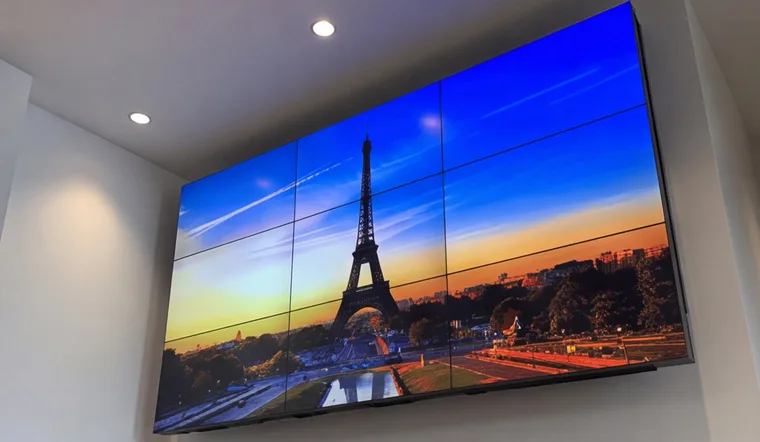
Commercial video walls across LED, LCD and Direct View. Designed, integrated, installed and supported by a national design-build AV integrator.
Video Wall Solutions in Phoenixarrow_forwardDigital Signage Services
Design-build digital signage for hospitality and enterprise: commercial displays, content management, and installation that keeps your screens selling and current.
Digital Signage Services in Phoenixarrow_forwardWho We Serve
Industries we serve in Phoenix
Spaces we've wired across Phoenix — each built and supported by the same local crew.
Commercial AV Across the Valley
Downtown and the Central Avenue corridor, the Camelback offices, Arcadia and Roosevelt Row dining rooms, and the separately governed cities of the East and West Valley.
Outdoor gear needs serious thermal headroom, and the equipment room needs dedicated cooling that holds 75 degrees. Borrowed building air is how components die young.
A west-facing wall changes what brightness the display needs and whether it survives its own operating temperature, so orientation gets decided before the product does.
Blowing dust works into connectors, fans, and enclosures, so sealing and filtration are specified up front on anything living outside.
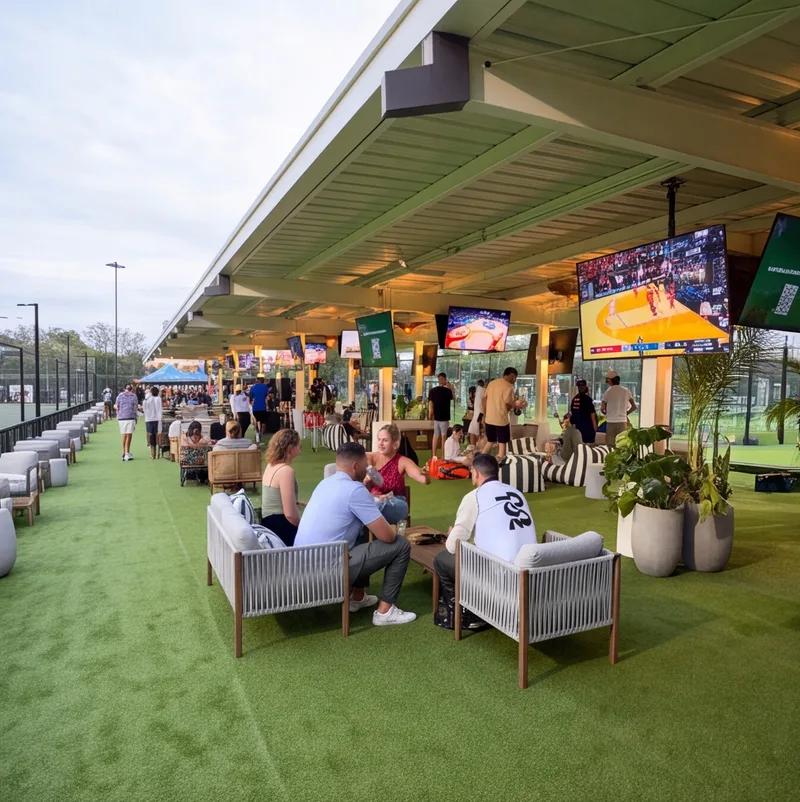
From fall through spring the patio carries the revenue, so outdoor audio and displays are permanent infrastructure and get designed like it.
What we do here
Phoenix Audio Visual Design, Sun and Distance
Four kinds of buyer make up most of our Valley work. Ambient light and drive time show up in all four, and the equipment list waits its turn.
Offices and conference rooms
Valley corporate space runs low and wide. A campus here is four buildings and a parking structure, not forty floors, which trades riser problems for distance problems: long horizontal runs, and dozens of rooms nobody can walk between in five minutes that still have to behave identically. Glass is the second fight. A west-facing conference room is unusable on camera by mid-afternoon unless somebody chose the display brightness and camera position with that exact light in mind, and no brochure mentions it. The sizing mistake lives here too. One small all-in-one unit gets trusted to cover a room three times its design size, and the far seats simply drop out of the conversation. We measure, we sit in the room at its worst hour, and then we specify.
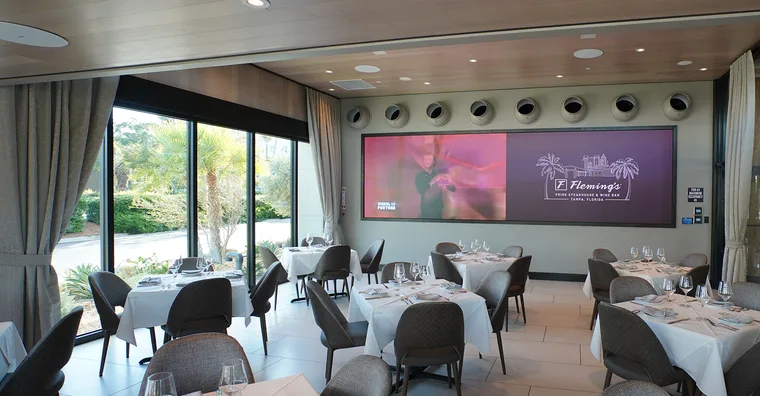
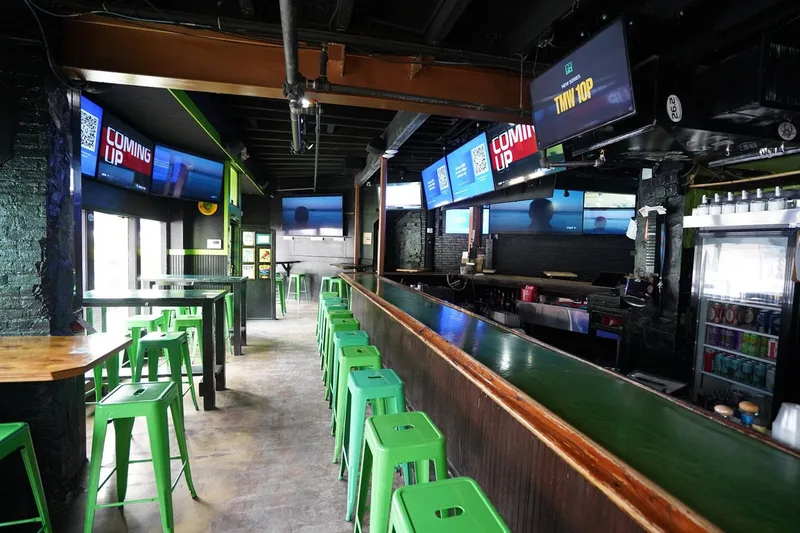
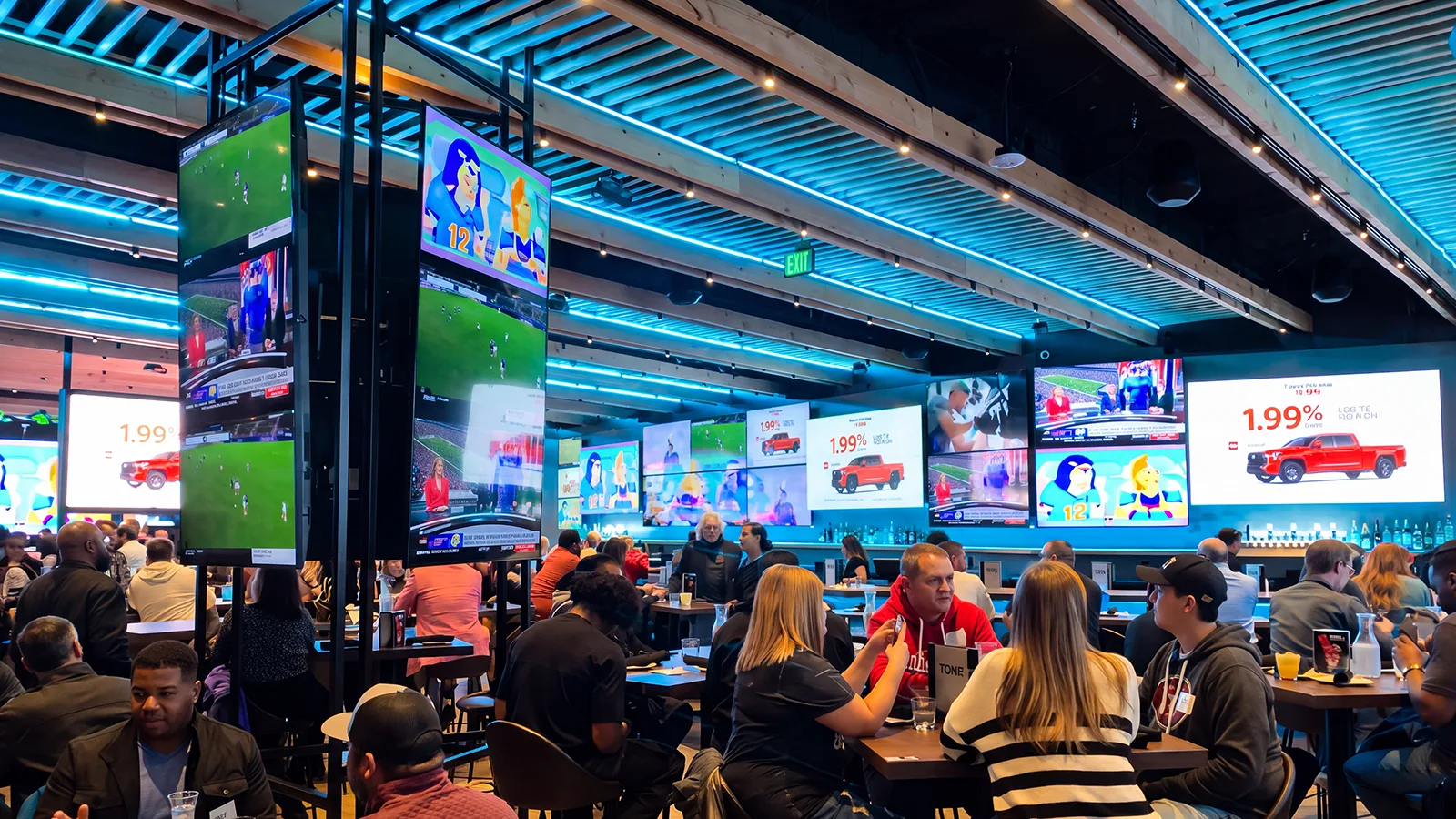
Restaurants, bars, and patios
For seven months a year the patio is the restaurant, and it deserves engineering rather than an extension cord. Outdoor zones get their own amplification and their own tuning, since open air swallows level that felt right indoors, and coverage comes from more speakers running easy instead of a few running hot. Hardware out here gets chosen for dust sealing and ultraviolet as much as for sound. The costliest miss we see is orientation. One property called us about an outdoor display that died every afternoon by its second summer. Nothing was broken. It faced west, and it was cooking. The panel was fine and the placement was the failure, so shade, orientation, and brightness get settled before any model number does. Indoors, the bar, the dining room, and the patio each hold their own zone.
Venues and large facilities
Big rooms don't need louder speakers. They need more of them, placed right and running moderate, since a handful of hot sources punishes the near tables and still leaves the far corner muddy. Paging is a separate craft from music and we design it separately. An announcement has to punch through crowd noise and stay intelligible to somebody who can't see where they're being sent, and background music never carried that responsibility. For venues that shift modes across a day, presets do the shifting. The performance zone drops out of the house mix for a set, and one button restores the building afterward. We do not book talent, we do not mix live shows, and we do not do production camera work. The install and its zoning are ours. The show is yours.
Valley-wide operators
Six locations across this metro can mean six building departments and a two-hour drive between the far pair, and both facts belong in the design. The permitting side we handle with diligence, address by address, no assumptions. The distance side we handle with architecture: monitoring that says what failed instead of that something failed, remote diagnosis as the default, and documentation good enough that the fix found in Chandler applies in Peoria without a site visit. Keep the human layer identical everywhere, interface, presets, training, and let the physical design flex per building, since no two of them sound alike. One opinion, free of charge: standardizing every site up to the flagship spec wastes money, and we'll name the locations that should get less.
We need this live before season starts. When do we actually have to begin?
Work backward from opening day and pad it, since the steps are predictable and it's the total that ambushes people. Engineering and design take two to three weeks once a project is signed. Equipment ordering commonly runs thirty to forty-five days for a full system, and nobody can compress that step, including us. The rack gets built, programmed, and tested at our shop before it ships, so it arrives proven instead of getting assembled on your floor. On-site installation takes days to weeks depending on size, then commissioning, tuning, and staff training add another day or two. Add it up and a mid-size renovation is a few months end to end when you're responsive and the gear is in stock. A new build realistically runs nine to twelve months from start to opening. So a room that needs to earn money in October should be in design in spring, not in August. Come to us in July asking for October and we'll tell you the truth about whether it's doable. Sometimes the right answer is waiting for the next window, since a system tuned in a panic is a system your staff fights all season. Crunchy Tech has been doing this since 2008.
Our patio is most of the business for half the year. What does it actually need?
Treat it as its own venue and the answers fall out fast. Amplification first. A patio needs its own channel and its own tuning, since a speaker firing into open air loses everything a ceiling used to give it, and a level that felt right inside vanishes out there. Hardware second, and this is where Phoenix patios live or die: genuine weather rating, sealing against monsoon dust, and gasket materials that survive ultraviolet and summer heat past two seasons. Coverage third, from more speakers running easy rather than a few running hot, or the near tables suffer while the far corner hears nothing. Control fourth, and it prevents most neighbor complaints before they exist. Give the outdoor zone its own schedule so staff can kill the patio at close without touching the bar. If a display is going outside, shade and orientation matter more than screen size does, and we'll say so before you spend. Everything on that list costs less at design time than any single item costs as a year-two replacement.
Can we reuse the TVs we already own, including the ones outside?
Indoors, sometimes, and we check rather than guess. Give us the make and model and we'll confirm whether the control system can run them properly, reliable power on and off plus source switching, and if it can't, then anything we do with them is best-effort rather than a designed result. Commercial panels from the major manufacturers are the standard for dull reasons: a three-year commercial warranty and a rating for the hours a business actually runs. A consumer TV mounted in a commercial space voids its own warranty on day one. Outdoors in this climate the answer is usually no, and the brand isn't the issue. A consumer panel outside faces two problems at once. It can't get bright enough to beat the ambient light, and direct sun on the wrong orientation pushes it past its rated operating temperature until it shuts itself down every afternoon. When that's what's happening, the real fixes are a rated outdoor display, engineered shade, or a different wall. We won't mount consumer gear outside and call it a solution, because you'd be calling us back to say it wasn't.
We run six locations spread across the Valley. Can you support them without driving to each one?
Mostly, and that's a design decision rather than a service promise. The far pair of your sites is probably two hours apart, which makes every truck roll expensive and every avoidable one money back in your pocket. So we build for remote work from the start. Networked control and audio processing. Monitoring that names the failed component rather than waving a generic alarm. Labeled, documented systems, so a remote tech reads a record instead of playing detective. Identical configuration across sites, so a fix found at one location applies at the rest. Around 47% of our support tickets close in under an hour with nobody leaving the office, and that number is a product of how the system was built, not how fast anyone drives. What still needs hands is physical: a dead display, a damaged speaker, a cable cut during a remodel, and for those we come out. What we won't do is design a system that can only be diagnosed in person and then invoice you for the personal visits. That's a business model. It just isn't ours.
Operators who run on our systems
Client successes drive Crunchy Tech to become better. Below is how our customers feel about us.
You're a great partner with Florida Hospital and this project will make a difference in Children's Health.
Working with Crunchy Tech was a fantastic experience from start to finish. They handled the sale and installation of all our sound and TV equipment at The County Bar in Aviston, IL, and absolutely nailed it. We were on a very tight deadline, and they not only met it—they delivered top-notch quality and service the entire way. Highly professional, responsive, and easy to work with. We couldn't be happier with the results.
Crunchy's AV Services are outstanding. Staff members are experts, who really extend themselves to find the right technology for helping us reach our marketing goals in creative ways. The best thing about working with Crunchy is collaborating with the staff – they are patient, responsive, knowledgeable, and available.
Crunchy has been great to work with. They communicate well and deliver as promised.
The work Crunchy has been doing is a game changer for this industry.
Being able to reuse the existing structure created a much lower cost for the client and they were ecstatic.
Crunchy has done an amazing job on our A/V install. The sound is perfectly balanced throughout our many zones and the entire system is super simple to use.
Just do it. Spend the money. It’s well worth it. It’s not worth your time, hassle, energy, and stress of trying to make it look right and do it right when there’s somebody who has been doing it for years and has perfected the craft.
You're a great partner with Florida Hospital and this project will make a difference in Children's Health.
Working with Crunchy Tech was a fantastic experience from start to finish. They handled the sale and installation of all our sound and TV equipment at The County Bar in Aviston, IL, and absolutely nailed it. We were on a very tight deadline, and they not only met it—they delivered top-notch quality and service the entire way. Highly professional, responsive, and easy to work with. We couldn't be happier with the results.
Crunchy's AV Services are outstanding. Staff members are experts, who really extend themselves to find the right technology for helping us reach our marketing goals in creative ways. The best thing about working with Crunchy is collaborating with the staff – they are patient, responsive, knowledgeable, and available.
Crunchy has been great to work with. They communicate well and deliver as promised.
The work Crunchy has been doing is a game changer for this industry.
Being able to reuse the existing structure created a much lower cost for the client and they were ecstatic.
Crunchy has done an amazing job on our A/V install. The sound is perfectly balanced throughout our many zones and the entire system is super simple to use.
Insights
Design-Build AV Philosophy: How it Separates the Top 3% From the Rest of the Industry
We don’t sell you what we have. We design what you need. That line is the operating principle I’ve built Crunchy Tech around for the last 20 years. And it’s the single sentence that separates us - and the small handful of firms like us - from the other 97% of the commercial AV industry.
Read article arrow_forwardThe Spectacle Trap: Why Technology-Centric Hospitality AV Kills Brands
There’s a pattern I’ve watched play out for 20 years in hospitality AV, and it always ends the same way...
Read article arrow_forwardWhy AV Quotes Take Time (And Why That's a Good Thing)
"Where's my quote?"
Read article arrow_forwardLet's plan it backward from the date it has to earn
Give us the address, the date the room has to be working, and which city actually issues the permit if you happen to know. We'll confirm it either way. The consult covers what each space has to earn, includes a walk to check sun exposure, glass, and whether the equipment room has a real path to cooling, and comes back as an engineered scope set against a schedule.
- Schedules built backward from your season, with straight answers about dates.
- Sun, orientation, brightness, and dust rating settled before any model number.
- Permanent commercial systems only, never residential or staging work.
- One company designs it, installs it, and owns the outcome.