AV Company Santa Clara | Commercial AV Integration
location_on Santa Clara, CA

Commercial AV in SantaClara

Design-build audiovisual for Santa Clara tech campuses, offices, restaurants, and civic rooms, planned around a city that runs its own power grid.

In Santa Clara the city ownsthepowercompany

Here's a fact about Santa Clara that changes AV projects and almost nobody designs for: the city owns its own electric utility. Silicon Valley Power isn't PG&E. It's municipal, it's run from city hall, and its rates come in far below the neighboring cities, which is a big part of why more standalone data centers sit in Santa Clara than in any other California city. For a commercial AV project, that's not trivia. Power is the quiet foundation under every rack, every video wall, every equipment room, and in this city the rates, the capacity, and the electrical approval path all run through one municipal utility instead of a distant investor-owned giant. Cross the city line and that advantage is gone.

So we treat the utility as part of the design, because here it genuinely is. Planning a rack room or a power-hungry video wall in Santa Clara means working with the city's own electrical review and its rates from the first drawing, and that's usually good news, since the municipal path is closer, cheaper, and more predictable than what your neighbors across the line deal with. We size the power honestly, coordinate the electrical approvals, and engineer the bracing and energy compliance California requires everywhere. The craft under it doesn't change: engineering drawings, a rack burned in before it leaves our shop, careful installation and tuning, hands-on training, and as-builts the next facilities lead can actually use, with support that rarely needs a truck. Since 2008.

In Santa Clara the city owns the power company
Install In Santa Clara the city owns the power company Santa Clara, CA

Who We Serve

Industries we serve in Santa Clara

Spaces we've wired across Santa Clara — each built and supported by the same local crew.

Commercial AV AcrossSiliconValley

The tech campuses and the stadium district, El Camino and Koreatown, the university and the data-center corridor, San Jose and Sunnyvale next door.

2008
Serving Santa Clara since
10
Neighborhoods
The north-side tech corridor
Corporate · Industrial

The north side holds the chip and cloud campuses that define the city, where corporate AV meets global standards.

Tech core
The data-center corridor
Industrial · Corporate

The data-center corridor grew here for the city's own cheap power, and its control rooms and NOCs run around the clock.

Compute · 24/7
The stadium district
Venues · Hotels · Restaurants

The stadium district pairs venue-scale events with the hotels and restaurants that absorb their crowds.

Event district
El Camino Real corridor
Restaurants · Retail

El Camino carries the city's everyday dining and retail, busy rooms that live on the lunch and commute crowd.

Commercial spine
Koreatown
Restaurants · Retail

Santa Clara's Koreatown packs some of the valley's best dining into dense blocks where small rooms work hard.

Dining district
Santa Clara University and Old Quarter
Institutional · Restaurants

The university, older than the state itself, anchors a campus and civic quarter with instructional rooms everywhere.

Campus · historic
Lawrence Expressway corridor
Industrial · Corporate

The Lawrence corridor runs flex and R&D space where labs and light manufacturing need working AV, not showpieces.

R&D · flex
Central Santa Clara
Institutional

Central Santa Clara holds city hall and the city's own utility, the civic machinery that makes this market unusual.

Civic core
San Jose
Corporate · Institutional · Restaurants

San Jose sits directly east with its own permits, its own utility territory, and the valley's downtown.

Separate city
Sunnyvale
Corporate · Industrial

Sunnyvale's tilt-up campuses border the city to the west, a separate government on a different grid.

Separate city

What we do here

Santa Clara AV, PoweredbytheCity

Four kinds of buyers drive our Santa Clara work, and every one of them plugs into a grid the city itself runs.

Tech campuses and corporate floors

Santa Clara's daytime population is a who's who of technology, chip makers, cloud companies, and the campuses that house them, and their AV expectations are as high as anywhere on earth. These buyers bring their own IT security standards, their own platforms, and often a global AV spec the local build has to match. We work inside those constraints: rooms that meet the corporate standard exactly, controls identical from this campus to the one overseas, and network behavior their security team signs off on. The engineering under it leans on the city's own advantage, power that's cheaper and closer at hand than anywhere nearby. A campus full of conference rooms is really one system wearing many doors, and building it that way is the job.

Data-center-adjacent and technical space

No California city holds more standalone data centers, and the gravity of all that compute shapes the buildings around it: network operation centers, control rooms, technical offices, and the training space that supports them. These rooms run all day, every day, and they're judged on uptime, a video wall that never goes dark, monitoring displays that a shift can rely on at 3 a.m., audio that works the first time in a room full of engineers. We build for that duty cycle, with redundancy where it earns its cost, thermal planning that respects a room already full of heat, and power design that leans on the municipal utility this whole industry came here for. It's demanding, precise work, and it's a natural fit for how we build.

Restaurants, bars, and hospitality

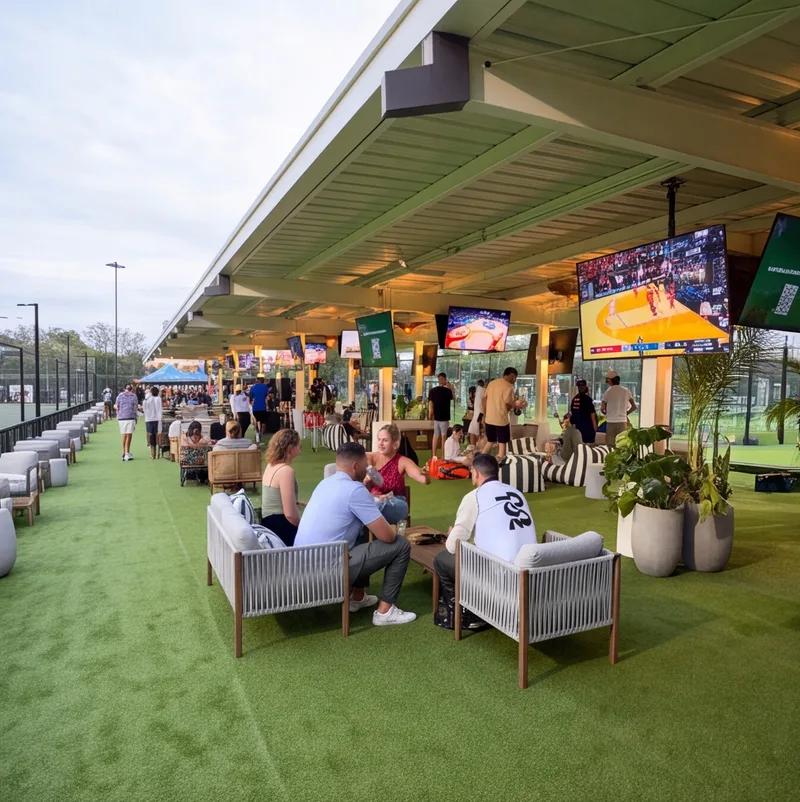
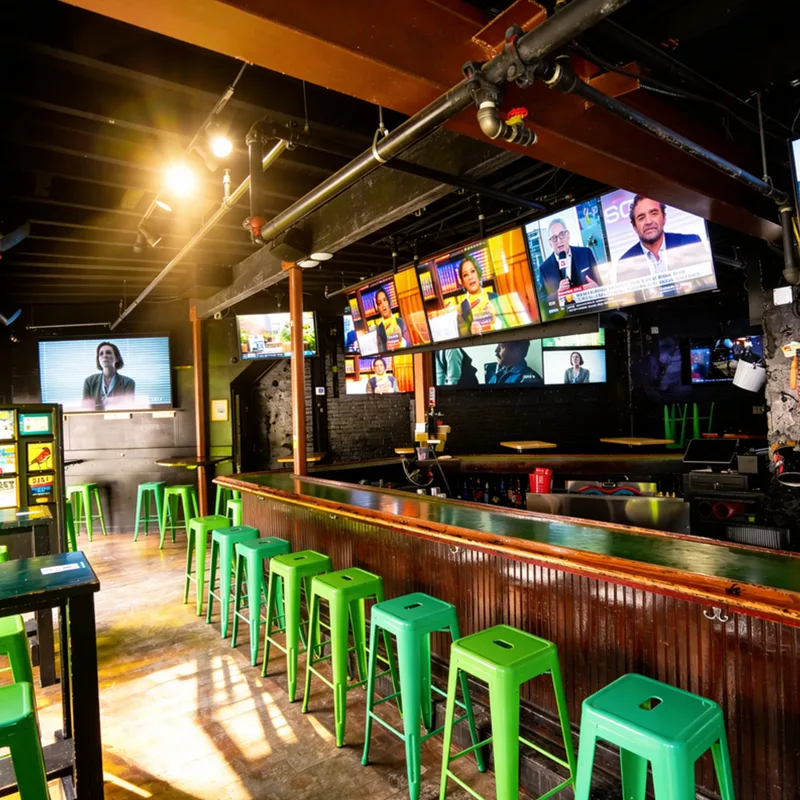
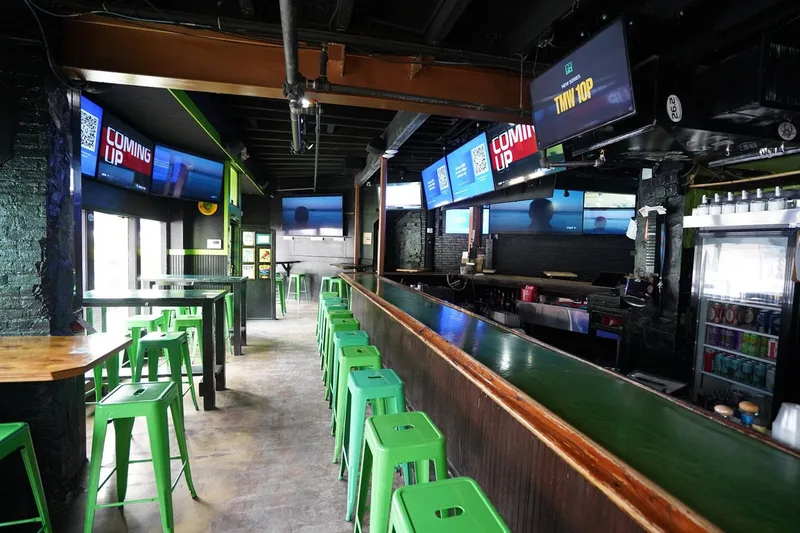
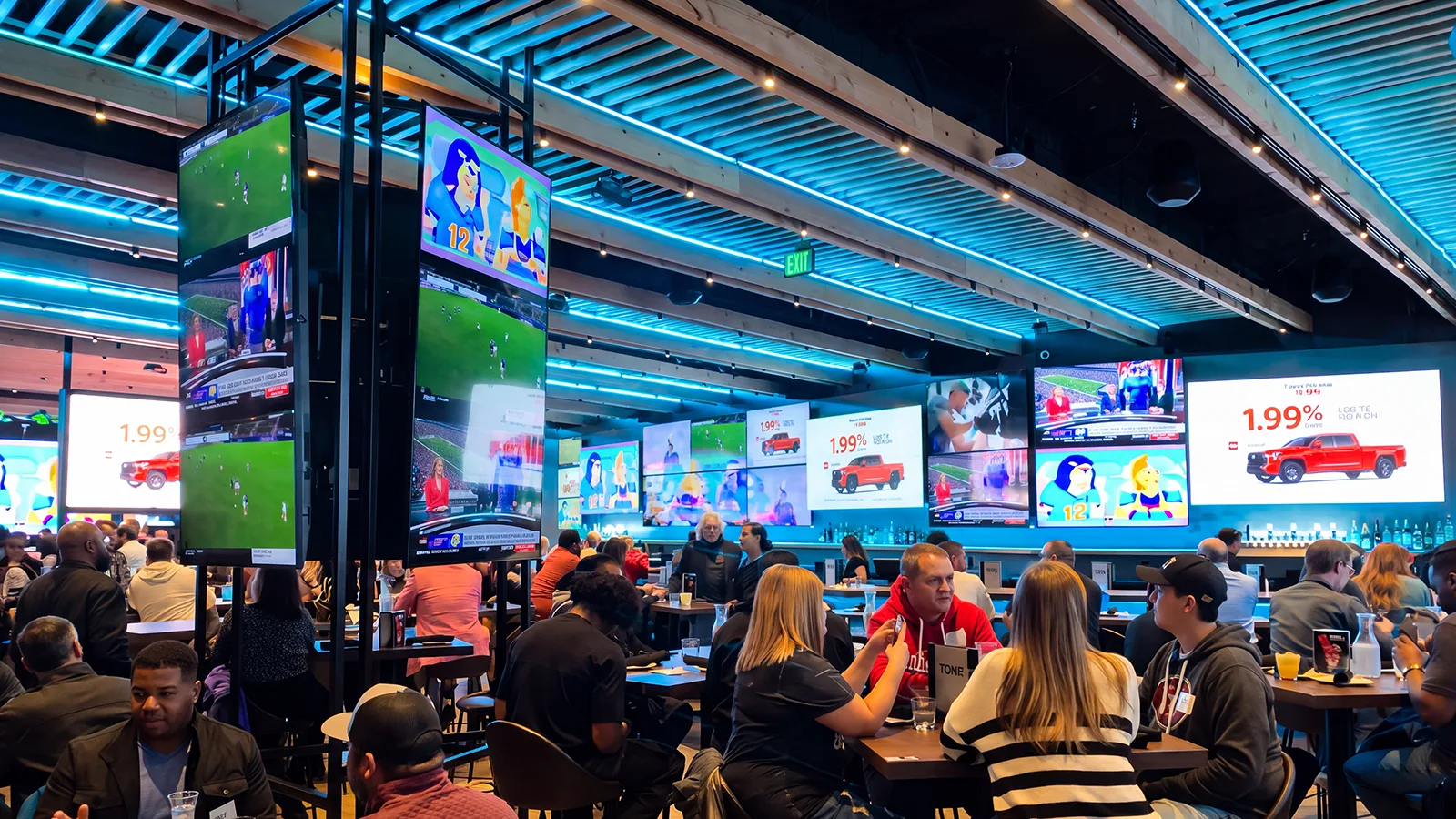
Santa Clara eats where its workers and visitors are, along El Camino, around the stadium district, in Koreatown's dense blocks, and at the mission-adjacent old quarter. Lunch rooms fill fast and hard, evening rooms swing with events nearby, so audio has to hold a conversation over a rush and still carry when a big night packs the place, zoned so a bar or a patio stays off the dining room. Screens go where a tech crowd will actually watch them. Where a venue hosts live entertainment, we build the connection points and hand the show to the performers' crew, because we do not book talent, we do not mix live shows, and we do not do production camera work. The goal is a room that works at Tuesday lunch and holds together on an event night, off one system the staff runs alone.

Civic, campus, and public buildings

The public side of Santa Clara is busier than outsiders expect: the city and its own utility, the county's rooms next door, the libraries, and a university campus that predates the state itself. Public rooms buy on bids and live on one test, whether the person in the back row follows the whole meeting, so the microphone and gain plan lead the design and the controls fit the clerk who actually runs the session. The university's lecture and event rooms get built so any instructor can drive them the first time. Bid formats and records rules get met as written, streaming rooms get the outlet wired in with the broadcast left to staff, and assistive listening goes in as standard. Patient, precise, well-documented work, which is the kind we like.

Does Santa Clara's city-owned utility actually change an AV project?

It does, in ways that mostly work in your favor. Silicon Valley Power is the city's own municipal utility, and its commercial rates run well below what the investor-owned utility charges across the city line, which is the main reason more standalone data centers operate in Santa Clara than in any other California city. For an AV project, that shows up three ways. First, the economics: a power-hungry system, a large video wall, a loaded rack room, a space that runs all day, costs meaningfully less to operate here, which changes what's worth building. Second, the process: the electrical review runs through the city's own utility and permit counter rather than a distant corporation, so coordination is closer and more predictable. Third, the planning: capacity and service questions get answered by people at city hall, not a call center. We fold all three into the design from the first drawing. Crunchy Tech has been doing this since 2008, and in Santa Clara, knowing the utility is half of knowing the city.

Our company has a global AV standard. Can you build to it here?

Yes, and in this city that's often the whole assignment. Santa Clara's campuses belong to companies that run offices worldwide, so the local build usually has to match a corporate AV specification written somewhere else, the same room types, the same platforms, the same control behavior an employee finds in any office on any continent. We treat that spec as the contract it is: equipment matched to the approved list, rooms configured to the standard exactly, and network behavior that satisfies a security team that has seen everything. Where the spec meets local reality, California seismic bracing, Title 24 power rules, the city's own electrical review, we handle the translation so the global standard and the local code both come out satisfied. The result is a room your global facilities team recognizes and your local inspector approves, which is exactly what a valley campus needs. Deviation is easy and matching is discipline, and discipline is what we sell.

We run technical space, control rooms and monitoring walls. Is that your kind of work?

It's some of our favorite work, because it's judged on the only measure that matters: uptime. A network operations center or a monitoring wall isn't a lobby showpiece, it's a tool a shift relies on at three in the morning, and it gets designed differently. Displays get chosen for continuous duty rather than showroom brightness, since a panel that's brilliant for eight hours a day can fail young at twenty-four. Redundancy goes where failure actually hurts, so one dead component never blanks the wall that people watch for a living. Thermal design respects a room already full of heat, and the power plan leans on the same municipal utility that makes this city a natural home for around-the-clock compute. Controls stay simple enough that any operator on any shift can run the room without a manual. It's precise, unglamorous engineering, and in a city with this much technical space, it's a real share of what we do.

What do California seismic and energy rules mean for our build?

They mean the mounting and the power get engineered up front, which is cheaper than discovering them at plan check. This is earthquake country, so anything with weight, racks, wall displays, ceiling speakers and projectors, gets braced and anchored to the building's structure so it stays put when the ground moves, and that changes mounting details an out-of-state spec never considered. Title 24, the state's energy code, governs how systems draw and manage power, so standby behavior, lighting-tied AV, and control logic get designed to comply rather than patched after a correction notice. In Santa Clara both reviews run through a city that also happens to own the utility, which keeps the conversation local and consistent. None of it is a burden when it's in the design from day one, and all of it is expensive when it isn't. We build to both as a matter of course, so the room passes review the first time and stays put in a shake.

What clients say

Operators who run on our systems

Client successes drive Crunchy Tech to become better. Below is how our customers feel about us.

Just do it. Spend the money. It’s well worth it. It’s not worth your time, hassle, energy, and stress of trying to make it look right and do it right when there’s somebody who has been doing it for years and has perfected the craft.

Matt Moore logo
Matt Moore
IT Systems Administrator · Capone's Hideout

You're a great partner with Florida Hospital and this project will make a difference in Children's Health.

Des Cummings logo
Des Cummings
Vice President of Florida Hospital · Florida Hospital

Working with Crunchy Tech was a fantastic experience from start to finish. They handled the sale and installation of all our sound and TV equipment at The County Bar in Aviston, IL, and absolutely nailed it. We were on a very tight deadline, and they not only met it—they delivered top-notch quality and service the entire way. Highly professional, responsive, and easy to work with. We couldn't be happier with the results.

Clint Flowers logo
Clint Flowers
Owner · The County Bar

Crunchy's AV Services are outstanding. Staff members are experts, who really extend themselves to find the right technology for helping us reach our marketing goals in creative ways. The best thing about working with Crunchy is collaborating with the staff – they are patient, responsive, knowledgeable, and available.

Shannon McHale logo
Shannon McHale
Marketing Specialist · IGT

Crunchy has been great to work with. They communicate well and deliver as promised.

Brian Dornbush logo
Brian Dornbush
Facilities & Operations Manager · Orange County Library System

The work Crunchy has been doing is a game changer for this industry.

Steven Fandozzi logo
Steven Fandozzi
VP of Information Technology · Foundation Partners

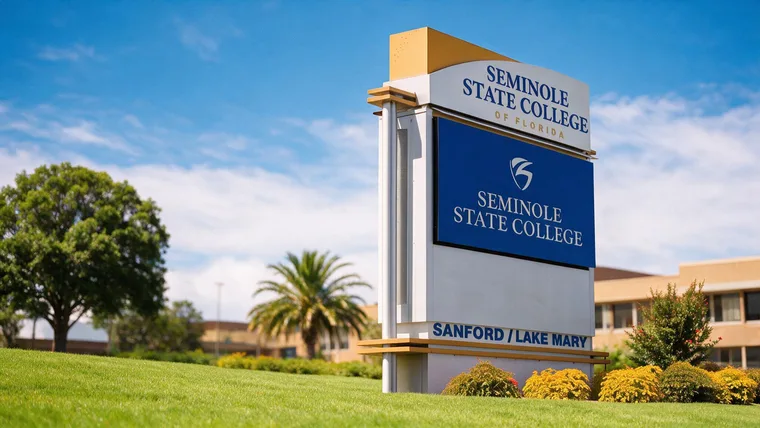
Being able to reuse the existing structure created a much lower cost for the client and they were ecstatic.

Seminole State College logo
Seminole State College
Facilities · Seminole State College

Crunchy has done an amazing job on our A/V install. The sound is perfectly balanced throughout our many zones and the entire system is super simple to use.
Steve Glum logo
Steve Glum
Chief Marketing Officer · Ace Cafe
Talk to a Santa Clara AV designer

Designed around thecity'sowngrid

Tell us the room, the standard it has to match, and how hard it'll run, because in Santa Clara the city's own power is part of the design and it usually works in your favor. We start with the outcome, check the space and its power and seismic realities on-site, and deliver a scope your corporate standard, the city, and the utility will all sign off on.

  • Power planning built around the city's own municipal utility.
  • Global corporate AV standards matched exactly, local code satisfied.
  • Control rooms and monitoring walls built for continuous duty.
  • Seismic bracing and Title 24 engineered in from the first drawing.