Just do it. Spend the money. It’s well worth it. It’s not worth your time, hassle, energy, and stress of trying to make it look right and do it right when there’s somebody who has been doing it for years and has perfected the craft.
Commercial AV Company in Tampa
Design-build audiovisual for Tampa offices, restaurants, hotels, and relocated headquarters, where half the specs in town were written for a building in another state.
In Tampa the AV standard usually arrived in a moving truck
Ask around any new Tampa office tower and you'll hear the same origin story: the company came from somewhere else. Finance from the Northeast, tech from California, back offices from Chicago, all part of the relocation wave that's been rebuilding this skyline for a decade. They bring their people, their culture, and their AV standard, a document written years ago for a building in Stamford or Charlotte that has never heard of the one they just leased on the Riverwalk. Then the standard meets the space. The ceiling heights differ, the glass runs floor to ceiling where the old office had drywall, the room proportions match nothing in the appendix, and somebody gets told to make it work anyway.
Making it work anyway is a real discipline, and it isn't improvisation. Crunchy Tech reads the inherited standard first, because it usually encodes real decisions worth keeping, the platform, the interface habits, the support expectations your people already know. Then we map it honestly against the Tampa building, keep what transfers, flag what physically can't, and document the deltas so your headquarters can approve them without a fight. The rest runs on our usual rails: drawings a contractor can price with confidence, a rack that leaves our shop tested and labeled, install, tune, train, and support for the years after. One company, fluent in both your old standard and your new address. Since 2008.
What We Do Here
Services available in Tampa
Every system is designed, installed, and supported by our own team in Tampa — never subcontracted.
AV Consulting
AV consulting from an audio visual consultant who joins at the architectural phase, designs the technology into the plan and steers the project around your business outcome.
AV Consulting in Tampaarrow_forwardVideo Wall Solutions
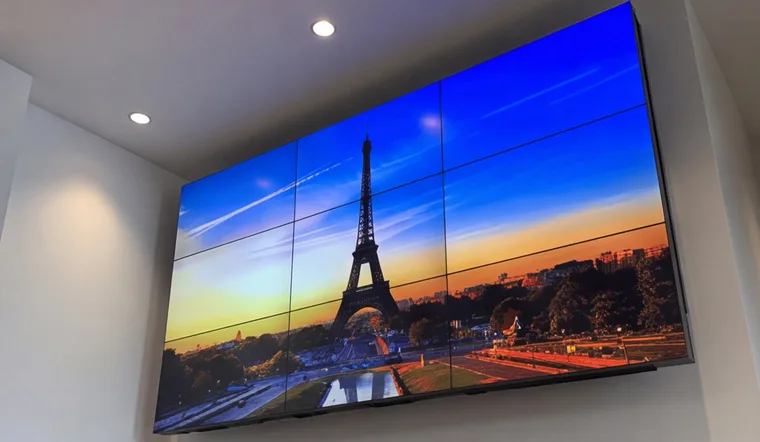
Commercial video walls across LED, LCD and Direct View. Designed, integrated, installed and supported by a national design-build AV integrator.
Video Wall Solutions in Tampaarrow_forwardCommercial Sound Systems
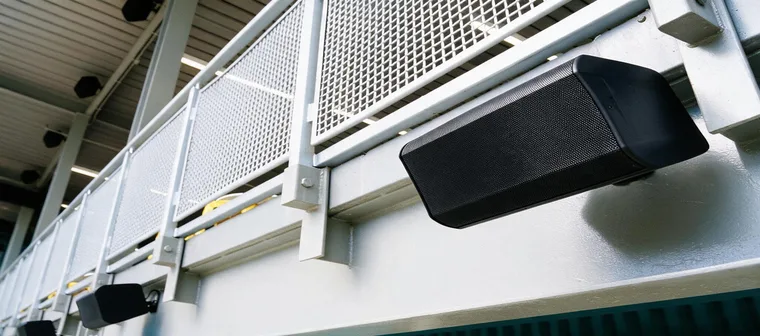
Commercial sound system design and installation: multi-zone audio engineered around how your space is used, wired and tuned on site, and supported as a partner.
Commercial Sound Systems in Tampaarrow_forwardDigital Signage Services
Design-build digital signage for hospitality and enterprise: commercial displays, content management, and installation that keeps your screens selling and current.
Digital Signage Services in Tampaarrow_forwardAV Control Systems
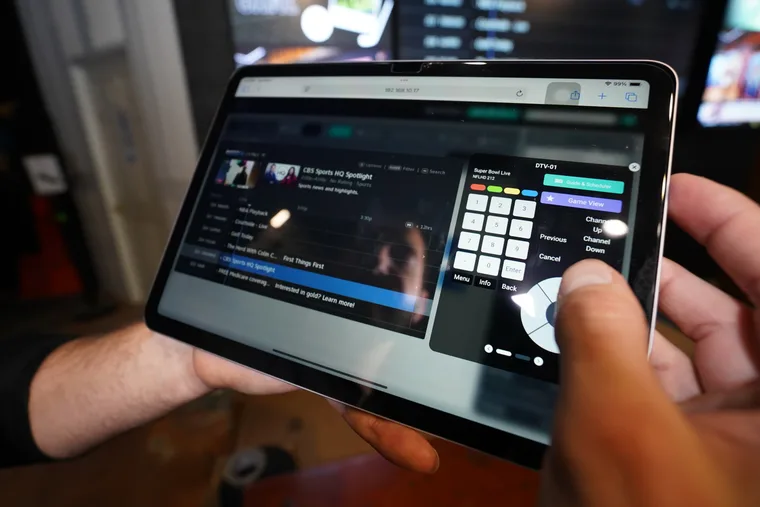
Design-build AV control systems: one iPad, wall panel, or browser runs every display, audio zone, lighting scene, and source in the room. Programmed and supported in-house.
AV Control Systems in Tampaarrow_forwardAV Programming
AV programming that starts with the right design: a vetted, interconnectable stack unified into one control system, so the whole room runs from one simple interface.
AV Programming in Tampaarrow_forwardConference Room AV
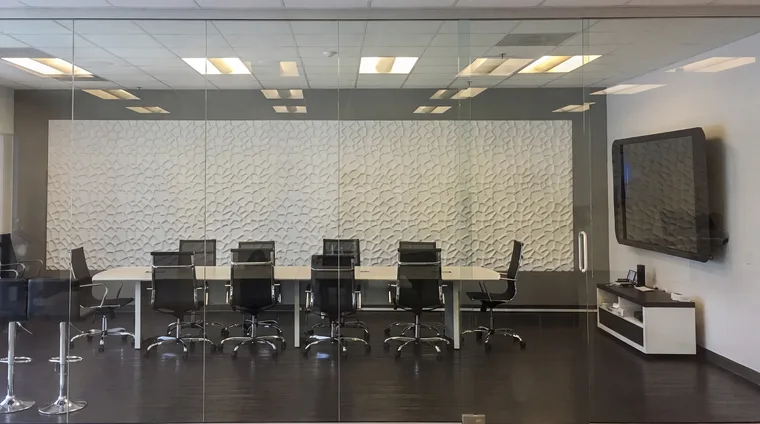
Conference room AV designed around the people using the room: video conferencing, Zoom and Teams Rooms, displays, and audio, installed and supported as a partner.
Conference Room AV in Tampaarrow_forwardWho We Serve
Industries we serve in Tampa
Spaces we've wired across Tampa — each built and supported by the same local crew.
Commercial AV Across Tampa Bay
Downtown and the Riverwalk, Ybor City, Westshore, the USF corridor, and across the bridges to St. Petersburg and Clearwater.
Tampa Bay leads the country in lightning strikes, so surge protection and grounding go into every design as standard equipment, never as an option.
Outdoor equipment gets anchored for named-storm gusts and sealed against driven rain, and the rack room sits above each address's flood story.
Humid air year-round and salt near the water corrode ordinary hardware on a schedule, so enclosures and connectors get specified by distance from the bay.
Patios and pool decks earn all year here, which makes the patio a permanent build with its own tuning and a curfew button wired in from day one.
What we do here
Tampa AV Design for Arrivals and Originals
Four kinds of buyers shape our Tampa work, split roughly between companies that just got here and rooms that never left.
Relocated offices and their inherited standards
The relocation playbook fails at a predictable spot: the standard says one thing, the new building says another, and whoever's managing the fit-out gets caught between a headquarters that wants compliance and a floor plan that won't provide it. We've made a specialty of that gap. The inherited document gets read line by line, since it usually carries real institutional knowledge, then measured against the actual space, and every divergence gets written up with a proposed equivalent your corporate team can approve on paper instead of on faith. What transfers, transfers. What can't, gets documented instead of improvised. Your people walk into the new office and the rooms already behave like the ones they left, which is the entire point of having a standard.
Restaurants, bars, and waterfront rooms
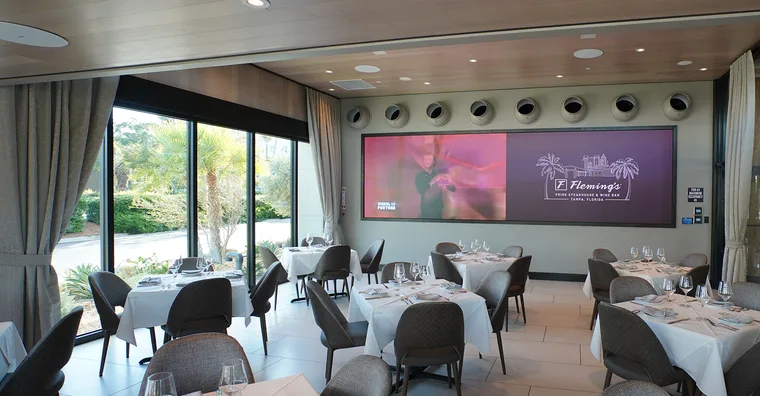
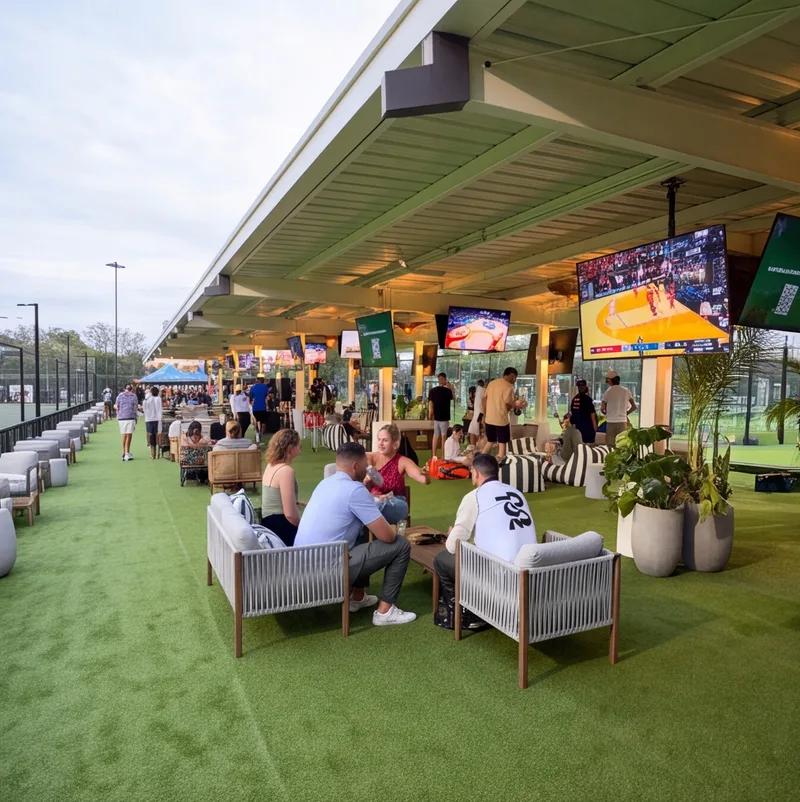
Tampa's dining scene runs from Ybor's century-old brick to brand-new shells along the water, and the two need opposite things from us. The old rooms are acoustics problems first, hard surfaces throwing sound everywhere, so coverage spreads across a dozen quiet speakers rather than four loud ones, zoned so the bar and the tables coexist. The new construction is a timing problem, since pathway, backing, and rack cooling cost almost nothing before drywall and a small fortune after. Waterfront and patio spaces earn most of the year here and pay for it in exposure, salt air working on connectors, storms testing every enclosure, and summer lightning that makes surge protection the cheapest insurance on the invoice. One button shuts the patio down at close. The neighbors notice the nights you don't have it.
Hotels and guest-facing spaces
Hotel work here means the lobby, the pool deck, the restaurant, and the meeting floors, never the guest room, and Tampa's mix runs from big meeting-market flags downtown to boutique properties trading on the water view. The pool deck is the signature space and the hardest one, since it faces sun, salt, storm exposure, and a twelve-month season all at once, so the hardware out there gets chosen for the climate first and the finish second, then concealed well enough that nobody can tell the order. Zoning keeps each space holding its own character, the lobby composed and the deck lively at the same hour, from a single panel the front desk actually understands. A property that can't fix its own audio between shifts needs support that answers remotely, and that's how ours is built.
Offices, campuses, and the businesses that were already here
Tampa had a commercial life long before the moving trucks, and the homegrown side of the market, healthcare systems, port operations, professional firms, universities, buys AV without an imported standard to argue with. Their failures are the classics. Conference hardware sized off a brochure photo instead of the actual table, floors of rooms that each evolved separately until staff trust none of them, and equipment closets with no cooling quietly cooking components toward a year-three funeral. The fixes are equally classic: measure the room, learn who uses it and on which platforms, standardize the control layer across the floor, and put the rack somewhere that holds 75 degrees. Then document it all, so the system outlives every staffing change between now and its retirement.
Our headquarters sent us their AV standard. The new building doesn't match it. Now what?
Now you do the one thing that satisfies both the document and the building: reconcile them in writing before anybody orders equipment. The standard deserves respect, since it encodes years of decisions about platforms, interfaces, and support that your company already runs on, and throwing it out means retraining everyone for no reason. The building deserves respect too, because it's physically real and the standard isn't. So we read the document first, walk the space second, and produce a deltas list, every place the two disagree, with a proposed equivalent for each that honors the standard's intent inside the building's constraints. That list is what your corporate team actually needs, since design reviewers approve documented equivalents all day and improvised deviations never. Florida adds its own amendments, surge protection the Stamford version never mentioned, outdoor and anchoring specs for weather the old building never met, and we write those in the same format so they read as extensions rather than exceptions. Crunchy Tech has been doing this since 2008, and the relocation wave has made this reconciliation work half our Tampa calendar.
Everyone warns us about lightning here. Is it actually a real problem for AV?
It's the most statistically real problem this metro has, and it's refreshingly cheap to handle if you handle it at design time. Tampa Bay sits at the top of national lightning maps nearly every year, and a strike doesn't need to hit your building to hurt you, since surges ride in on power lines, network cable, and anything conductive that crosses your wall. What dies first is whatever wasn't protected: amplifiers, processors, display inputs, the expensive electronics at the end of long cable runs. The defense is layered and boring, which is the best kind. Whole-system surge protection at the rack, protection on the circuits feeding remote equipment, proper grounding verified by your licensed electrician rather than assumed, and network isolation where cable runs between buildings. All of it together usually costs less than replacing one cooked processor, and August will sell you on the math eventually either way. We design it in from the first drawing, because retrofitting protection after the first casualty is the most popular and most expensive sequence in Florida.
We're opening on the water. What does salt air actually do to equipment?
It eats it, patiently and from the inside, and the closer to the bay you sit, the faster the meal goes. Salt-laden air works into connectors and corrodes the contacts, swells into enclosure seams as gaskets age, and turns ordinary steel fasteners into rust streaks down your nice stucco. The failures read as mysteries at first, a display input that got flaky, a speaker that started crackling, until somebody opens the housing and finds the green crust. The fix is specification, not maintenance heroics. Within salt range, and on this bay that range is generous, hardware gets marine-grade ratings, enclosures get sealed rather than vented toward the water, connectors get treated or covered, and fasteners go stainless as a matter of course. It costs more per part and dramatically less per decade, since the alternative is replacing standard gear on a two-to-three-year rhythm forever. We've opened enough corroded housings on this coast to specify by zip code now, and the beach properties get a different parts list than the Westshore towers, which is exactly as it should be.
Our offices are in Tampa but half our staff lives in St. Pete. Do you cover both sides of the bay?
Both sides, all three bridges, and the honest version of what changes when you cross: paperwork, not design. Tampa, St. Petersburg, and Clearwater are three separate cities with three building departments, three review queues, and three sets of local expectations, plus Hillsborough and Pinellas county layers where unincorporated addresses come into play. We keep the approvals native to each city, right filings, right inspectors, honest schedules, and none of it becomes your problem beyond a status update. The system itself crosses the bay untouched, same interface, same presets, same training on either shore, with documentation that doesn't care which bridge the technician took. Support works the same way, since about 47% of our tickets close remotely in under an hour and the bay has never once widened that number. For an operator running rooms on both sides, the practical promise is one standard, three jurisdictions, zero of the friction landing on your desk. The bridges are for commutes, not for excuses.
Operators who run on our systems
Client successes drive Crunchy Tech to become better. Below is how our customers feel about us.
You're a great partner with Florida Hospital and this project will make a difference in Children's Health.
Working with Crunchy Tech was a fantastic experience from start to finish. They handled the sale and installation of all our sound and TV equipment at The County Bar in Aviston, IL, and absolutely nailed it. We were on a very tight deadline, and they not only met it—they delivered top-notch quality and service the entire way. Highly professional, responsive, and easy to work with. We couldn't be happier with the results.
Crunchy's AV Services are outstanding. Staff members are experts, who really extend themselves to find the right technology for helping us reach our marketing goals in creative ways. The best thing about working with Crunchy is collaborating with the staff – they are patient, responsive, knowledgeable, and available.
Crunchy has been great to work with. They communicate well and deliver as promised.
The work Crunchy has been doing is a game changer for this industry.
Being able to reuse the existing structure created a much lower cost for the client and they were ecstatic.
Crunchy has done an amazing job on our A/V install. The sound is perfectly balanced throughout our many zones and the entire system is super simple to use.
Just do it. Spend the money. It’s well worth it. It’s not worth your time, hassle, energy, and stress of trying to make it look right and do it right when there’s somebody who has been doing it for years and has perfected the craft.
You're a great partner with Florida Hospital and this project will make a difference in Children's Health.
Working with Crunchy Tech was a fantastic experience from start to finish. They handled the sale and installation of all our sound and TV equipment at The County Bar in Aviston, IL, and absolutely nailed it. We were on a very tight deadline, and they not only met it—they delivered top-notch quality and service the entire way. Highly professional, responsive, and easy to work with. We couldn't be happier with the results.
Crunchy's AV Services are outstanding. Staff members are experts, who really extend themselves to find the right technology for helping us reach our marketing goals in creative ways. The best thing about working with Crunchy is collaborating with the staff – they are patient, responsive, knowledgeable, and available.
Crunchy has been great to work with. They communicate well and deliver as promised.
The work Crunchy has been doing is a game changer for this industry.
Being able to reuse the existing structure created a much lower cost for the client and they were ecstatic.
Crunchy has done an amazing job on our A/V install. The sound is perfectly balanced throughout our many zones and the entire system is super simple to use.
Insights
Design-Build AV Philosophy: How it Separates the Top 3% From the Rest of the Industry
We don’t sell you what we have. We design what you need. That line is the operating principle I’ve built Crunchy Tech around for the last 20 years. And it’s the single sentence that separates us - and the small handful of firms like us - from the other 97% of the commercial AV industry.
Read article arrow_forwardThe Spectacle Trap: Why Technology-Centric Hospitality AV Kills Brands
There’s a pattern I’ve watched play out for 20 years in hospitality AV, and it always ends the same way...
Read article arrow_forwardWhy AV Quotes Take Time (And Why That's a Good Thing)
"Where's my quote?"
Read article arrow_forwardLet's help your standard survive the move
Tell us the address, and if you're arriving from somewhere else, send the standard you brought, because reading it is where we start. The consult covers what each room has to earn, the walk covers what the building and the weather will demand, and the deliverable is an engineered scope with the deltas documented for whoever back home needs to sign.
- Inherited standards read, reconciled, and documented for corporate approval.
- Lightning, salt, and hurricane exposure engineered in at selection.
- Three cities and two counties of paperwork carried natively.
- New construction caught before drywall, where infrastructure is nearly free.