Just do it. Spend the money. It’s well worth it. It’s not worth your time, hassle, energy, and stress of trying to make it look right and do it right when there’s somebody who has been doing it for years and has perfected the craft.
Commercial Audio Visual Company in Los Angeles
Design-build audiovisual for Los Angeles restaurants, offices, hotels, and retail, engineered around the building you lease, the landlord who owns it, and the county's patchwork of permits.
In LA your landlord has a vote on your AV system
Most commercial space in Los Angeles is leased, and most AV projects here are tenant improvements inside somebody else's building. That changes who's actually in charge. The lease says what you may touch. The landlord's engineer signs off on anything anchored to structure, which in this county means nearly everything heavy. The restoration clause, the paragraph nobody reads at signing, says what you'll owe when you leave, and a system designed without reading it can turn into a six-figure removal bill at the end of the term. We've reviewed designs that were fine as engineering and disastrous as lease decisions. The drawings weren't wrong. They were just written for a building the tenant didn't own.
Crunchy Tech designs with the lease on the table from day one. Which walls can carry weight, which penetrations the landlord will approve, what has to come out at surrender and what can be negotiated to stay, and where the line runs between your improvements and their building. Then the normal discipline takes over: work out what each room earns for the business, put buildable requirements in front of your architect and general contractor, assemble and test the rack at our shop, install, tune, train, and document. One company accountable from the first drawing through the support years, and through the lease renewal after that. Since 2008.
What We Do Here
Services available in Los Angeles
Every system is designed, installed, and supported by our own team in Los Angeles — never subcontracted.
AV Consulting
AV consulting from an audio visual consultant who joins at the architectural phase, designs the technology into the plan and steers the project around your business outcome.
AV Consulting in Los Angelesarrow_forwardVideo Wall Solutions
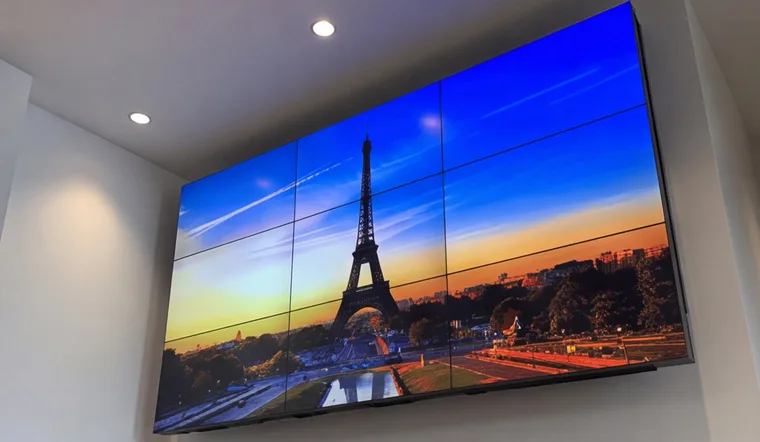
Commercial video walls across LED, LCD and Direct View. Designed, integrated, installed and supported by a national design-build AV integrator.
Video Wall Solutions in Los Angelesarrow_forwardDigital Signage Services
Design-build digital signage for hospitality and enterprise: commercial displays, content management, and installation that keeps your screens selling and current.
Digital Signage Services in Los Angelesarrow_forwardWho We Serve
Industries we serve in Los Angeles
Spaces we've wired across Los Angeles — each built and supported by the same local crew.
Commercial AV Across LA County
Downtown and the east side conversions, the Westside towers, the beach cities, the Valley, and the separately permitted cities stitched between them.
Within a few miles of the coast, salt air corrodes standard enclosures on a schedule, so metals and gaskets get chosen by distance from the water.
Dry gusts carry grit and smoke inland, punishing cheap seals and filters, so outdoor equipment gets specified for both directions of weather.
Year-round ultraviolet degrades housings, jackets, and mounts steadily, and west-facing displays need brightness and thermal ratings chosen for the exposure.
Outdoor rooms earn all year in this climate, which makes patio audio permanent infrastructure deserving the same engineering as the dining room.
What we do here
Los Angeles Audio Visual Design, Lease-Smart and Buildable
Four kinds of rooms drive our LA work. Nearly all of them sit inside leased buildings, and the lease shapes the design as much as the acoustics do.
Restaurants and bars
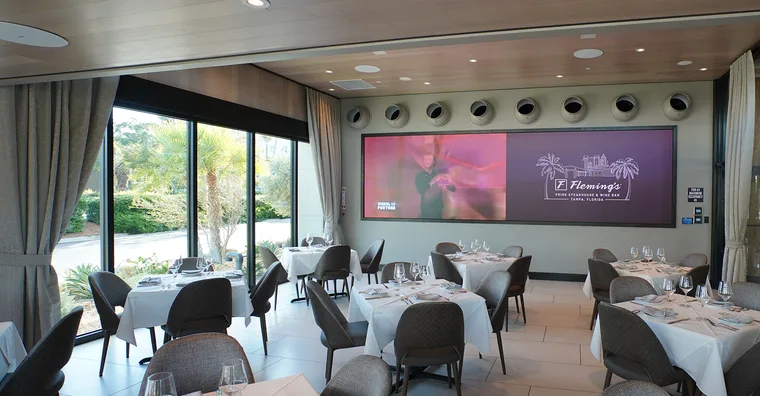
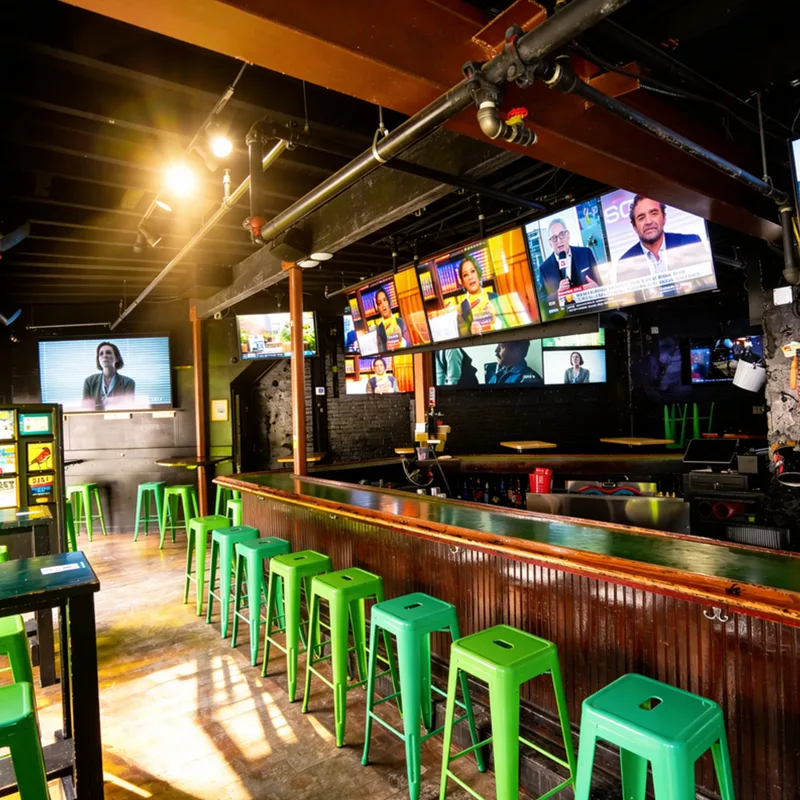
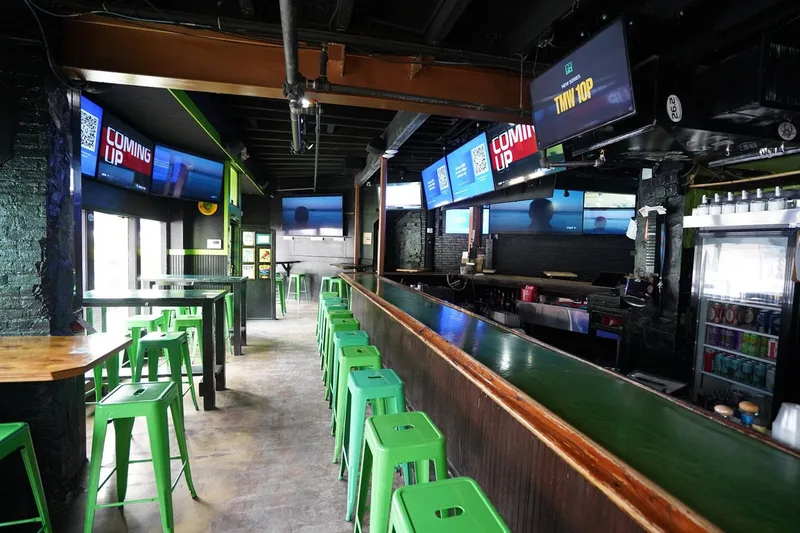
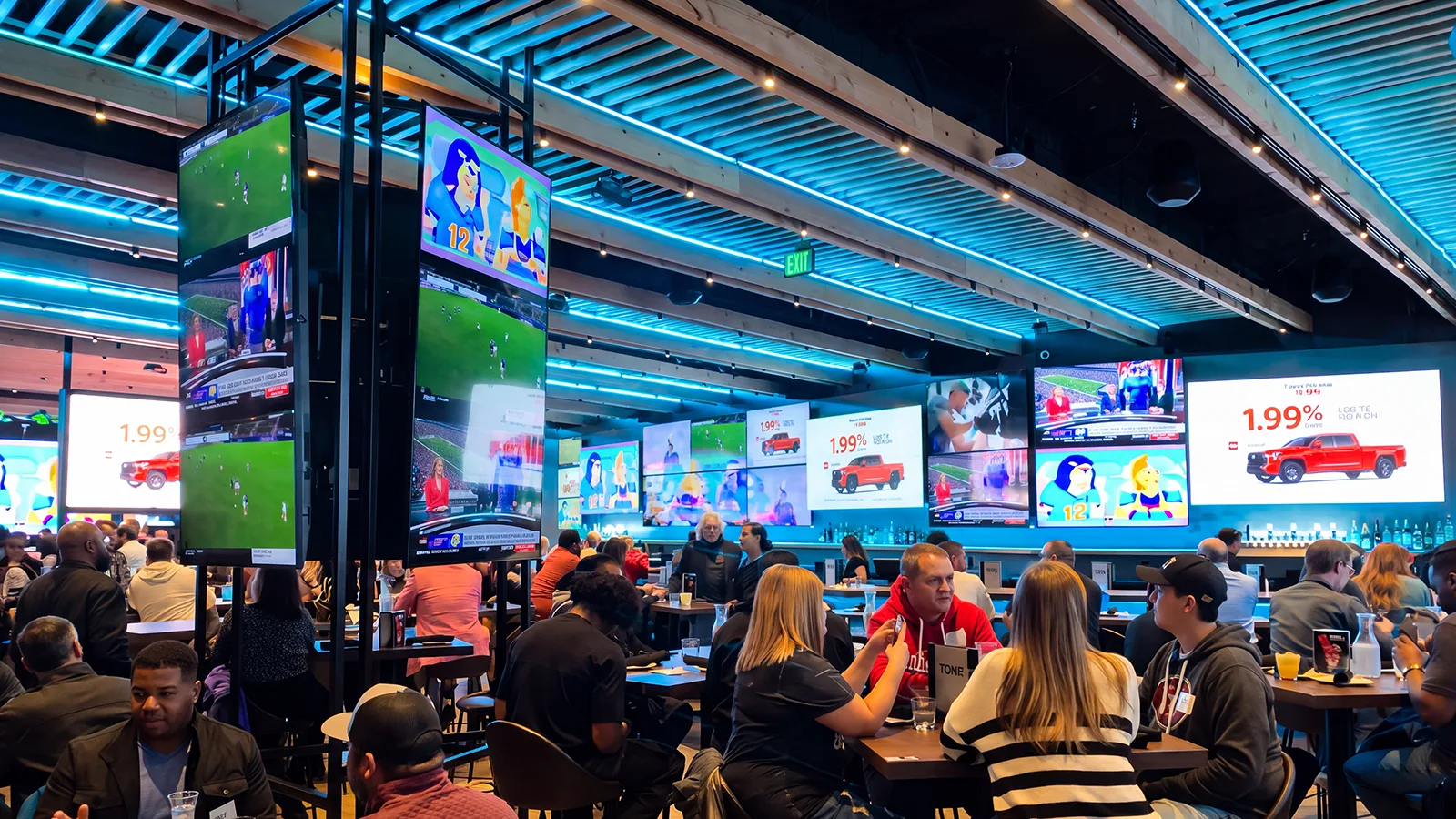
LA dining rooms compete on atmosphere in a market where diners have infinite alternatives, and atmosphere starts with whether people can talk. The rooms themselves fight you, since so much of the good stock is converted retail or industrial with hard floors, brick, and glass, and a perimeter of speakers turned up loud just makes an echoing room louder. Coverage wants many quiet sources aimed with intent, zones split so the bar can run hot while the tables stay conversational, and a patio on its own channel, because in this climate the patio is a twelve-month room. The lease sneaks in even here. That exposed ceiling you love may be the landlord's, and what you can hang from it is a paragraph, not a preference. We read the paragraph before we draw.
Offices and creative space
The county's office market runs from Century City towers to converted warehouses on the east side, and the same tenant often occupies both. What they need is consistency their building stock refuses to provide: a conference room in a 1920s brick conversion and one on a glass tower floor should feel like the same company. We get there by standardizing the layer people touch, one interface, one behavior, one training, while engineering each room for what it physically is. Sizing stays the eternal trap, since hardware built for a small huddle space keeps getting pointed at long tables where the far seats vanish from calls, and the platforms complicate it further because Teams, Zoom, and Meet each certify different gear. Measure first. Buy last. It's dull advice and it saves careers.
Hotels and guest-facing spaces
Hotel work here means the spaces guests move through, the lobby, the restaurant, the rooftop, the pool deck, the meeting floor, and never the guest room itself. LA properties lean hard on their rooftops and outdoor spaces because the weather lets them, and that's where the engineering earns its fee. Marine air moves inland every night and salt-heavy coastal air is genuinely corrosive within a few miles of the water, so enclosure metals and gasket materials get chosen by zip code. Santa Ana winds bring the opposite problem, dry gusts and airborne grit that punish cheap seals. Rooftop mounting on older buildings routes through the structural engineer and often the landlord too. The system underneath all of it stays brand-standard: one control surface, every zone independent, and a failure in the pool audio never touching the lobby.
Retail and multi-location brands
A brand rolling out across this county is really rolling out across dozens of separately permitted cities, and the physical variety is wild even by rollout standards. A Melrose storefront, a Century City mall unit, and a converted Arts District warehouse share nothing structurally, yet the customer expects one brand in all three. Our answer is a portable standard: identical control, identical content behavior, identical staff training, with the physical design engineered per site and documented so well that a technician who's never seen the store can service it off the file. On scope we'll argue for your wallet, since not every location justifies the flagship build, and we'll name which ones don't. Digital signage gets designed as content infrastructure with a management layer, never as televisions with a thumb drive.
We lease our space. What does the landlord actually control on an AV project?
More than most tenants expect, and finding out at design time is dramatically cheaper than finding out at move-out. Three documents run the show. The lease itself defines what you may alter, and heavy wall loads, ceiling penetrations, and rooftop equipment almost always need landlord consent in writing. The building rules govern how work happens, meaning approved hours, approved contractors sometimes, insurance certificates, and elevator protection, all of which belong in the project schedule rather than the surprise column. The restoration clause is the sleeper, since it defines what must be removed and made good when the lease ends, and an AV system designed obliviously to it becomes a demolition bill years later. Our approach is unglamorous: we ask for the lease excerpts early, design anchor points and pathways the landlord's engineer can approve without drama, and flag which parts of the system should be negotiated as permanent improvements now, while you're the tenant they want, instead of at surrender, when you're the tenant who's leaving. Crunchy Tech has been doing this since 2008, and a healthy share of that work has been inside other people's buildings.
How do earthquakes change what you install, and who signs off?
Seismic reality in this county is simple to state and strict in practice: anything heavy mounted overhead or on a wall has to stay put when the ground moves, and deciding what qualifies isn't our call to make alone. The division of labor is clean. We identify every load the design places on the structure, meaning displays, video walls, speaker clusters, projector rigs, and rack anchoring, with weights and locations. Your structural engineer determines what the building can carry and how attachment happens, and their stamp governs. Your licensed electrician owns the circuits feeding it all. We design to what they approve, coordinate the details with your general contractor, and never perform electrical work, make structural determinations, or rule on code compliance ourselves. What we bring from our side is designing for serviceability inside those constraints, since seismic-rated mounting done thoughtlessly can make equipment impossible to service without a lift and a permit. Done right, the room is safe, the inspector is satisfied, and a technician can still swap a component in twenty minutes.
Our locations are spread from Santa Monica to Pasadena. How does that work in practice?
Two facts govern LA rollouts, and neither is the traffic joke, though the traffic is real. Fact one: this county holds dozens of independent cities, and Santa Monica, West Hollywood, Culver City, Pasadena, Burbank, and Glendale each run their own building departments with their own tempers. The same drawing can sail through one counter and bounce off the next, so we confirm the reviewing authority per address and adjust the submittal per city rather than praying one set fits all. Fact two: distance across this basin is measured in hours, not miles, which makes every avoidable truck roll a tax on your operation. So the systems get built for remote work first, monitoring that names the failed part, configurations identical across sites so a fix travels, and documentation thorough enough that any competent local tech can execute hands-on work off the file. Your staff see one interface at every location. Your permits stay native to each city. That combination is the whole trick, and it's why about 47% of our tickets close without anyone driving anywhere.
Half our seating is on a patio or rooftop. What's different about outdoor AV here?
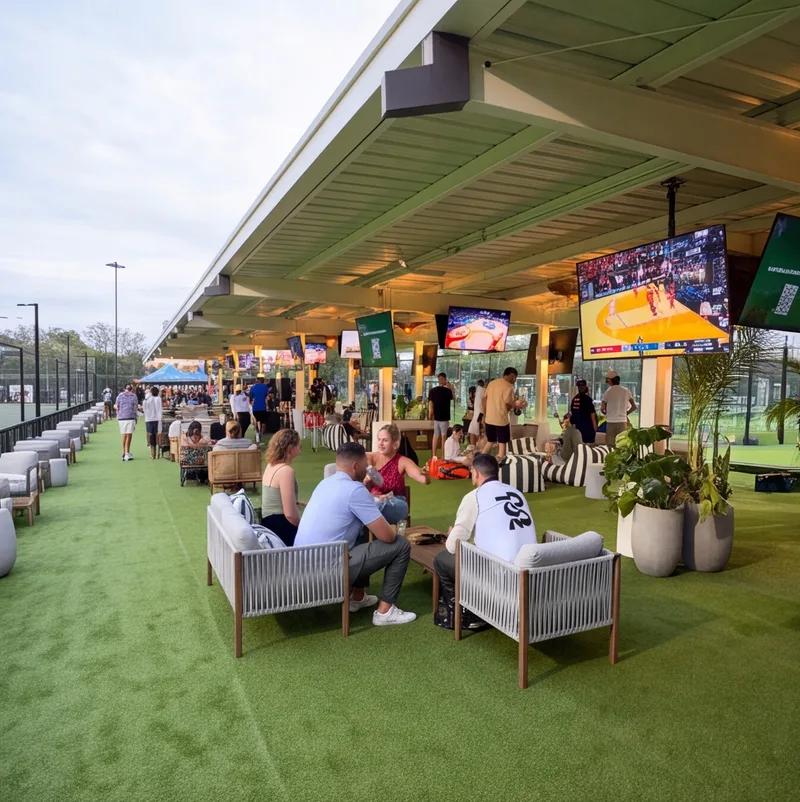
LA outdoor spaces earn twelve months a year, which justifies real engineering, and they sit in microclimates that punish guesswork. Near the coast, salt air is the enemy, and it corrodes standard enclosures, fasteners, and connectors on a schedule you can practically calendar, so within a few miles of the water the metallurgy changes before the audio design does. Inland, Santa Ana events reverse the weather, driving dry grit and smoke through cheap seals. Everywhere, the sun works on plastics and gaskets year-round. Rooftops stack the lease question on top, since mounting to a roof structure needs the landlord's consent and the structural engineer's approval, and drainage and membrane warranties get a vote too. The audio itself follows outdoor physics: no ceiling to help you, so level that felt right inside disappears, and coverage comes from more sources run gently with the zone on its own channel and its own schedule. Give the closing shift one button that shuts the patio down at curfew and you've prevented the neighbor complaint before it exists.
Operators who run on our systems
Client successes drive Crunchy Tech to become better. Below is how our customers feel about us.
You're a great partner with Florida Hospital and this project will make a difference in Children's Health.
Working with Crunchy Tech was a fantastic experience from start to finish. They handled the sale and installation of all our sound and TV equipment at The County Bar in Aviston, IL, and absolutely nailed it. We were on a very tight deadline, and they not only met it—they delivered top-notch quality and service the entire way. Highly professional, responsive, and easy to work with. We couldn't be happier with the results.
Crunchy's AV Services are outstanding. Staff members are experts, who really extend themselves to find the right technology for helping us reach our marketing goals in creative ways. The best thing about working with Crunchy is collaborating with the staff – they are patient, responsive, knowledgeable, and available.
Crunchy has been great to work with. They communicate well and deliver as promised.
The work Crunchy has been doing is a game changer for this industry.
Being able to reuse the existing structure created a much lower cost for the client and they were ecstatic.
Crunchy has done an amazing job on our A/V install. The sound is perfectly balanced throughout our many zones and the entire system is super simple to use.
Just do it. Spend the money. It’s well worth it. It’s not worth your time, hassle, energy, and stress of trying to make it look right and do it right when there’s somebody who has been doing it for years and has perfected the craft.
You're a great partner with Florida Hospital and this project will make a difference in Children's Health.
Working with Crunchy Tech was a fantastic experience from start to finish. They handled the sale and installation of all our sound and TV equipment at The County Bar in Aviston, IL, and absolutely nailed it. We were on a very tight deadline, and they not only met it—they delivered top-notch quality and service the entire way. Highly professional, responsive, and easy to work with. We couldn't be happier with the results.
Crunchy's AV Services are outstanding. Staff members are experts, who really extend themselves to find the right technology for helping us reach our marketing goals in creative ways. The best thing about working with Crunchy is collaborating with the staff – they are patient, responsive, knowledgeable, and available.
Crunchy has been great to work with. They communicate well and deliver as promised.
The work Crunchy has been doing is a game changer for this industry.
Being able to reuse the existing structure created a much lower cost for the client and they were ecstatic.
Crunchy has done an amazing job on our A/V install. The sound is perfectly balanced throughout our many zones and the entire system is super simple to use.
Insights
Design-Build AV Philosophy: How it Separates the Top 3% From the Rest of the Industry
We don’t sell you what we have. We design what you need. That line is the operating principle I’ve built Crunchy Tech around for the last 20 years. And it’s the single sentence that separates us - and the small handful of firms like us - from the other 97% of the commercial AV industry.
Read article arrow_forwardThe Spectacle Trap: Why Technology-Centric Hospitality AV Kills Brands
There’s a pattern I’ve watched play out for 20 years in hospitality AV, and it always ends the same way...
Read article arrow_forwardWhy AV Quotes Take Time (And Why That's a Good Thing)
"Where's my quote?"
Read article arrow_forwardLet's design around the building and the lease
Send the address, the project timeline, and if you lease, the alterations and surrender clauses, which we'll read before we draw anything. The consult covers what each room needs to earn, includes a walk to check structure, exposure, and what the landlord and the city will each require, and returns an engineered scope your contractor can price and your landlord's engineer can approve.
- We read the lease before we design, because the restoration clause is an AV document.
- Anchor points and loads packaged for your structural engineer's stamp, not ours.
- Permits handled per city, because this county has dozens of building departments.
- Systems built for remote service, because this basin is measured in hours.